Press Release

In Morceaux Choisis, Bertrand Lavier’s latest exhibition with the gallery, the artist unveils two new bodies of work, alongside extensions of his ongoing chantiers or ‘worksites’. The exhibition title—French for ‘selected pieces,’ or ‘anthology’—sets the tone, invoking notions of choice, arrangement, and display that lie at the centre of Lavier’s practice. It also speaks to the breadth and variety that define his work, making it an especially apt name for these new bodies of work.

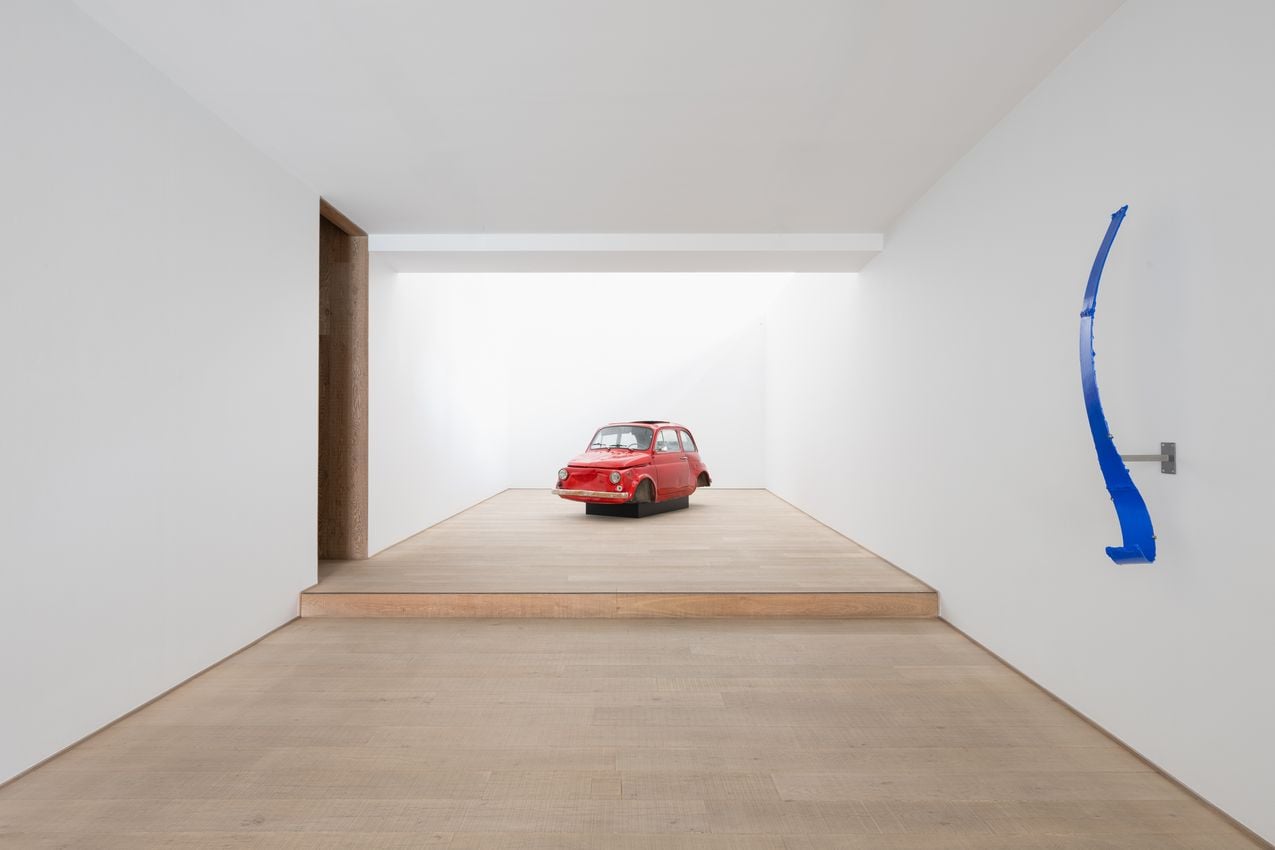
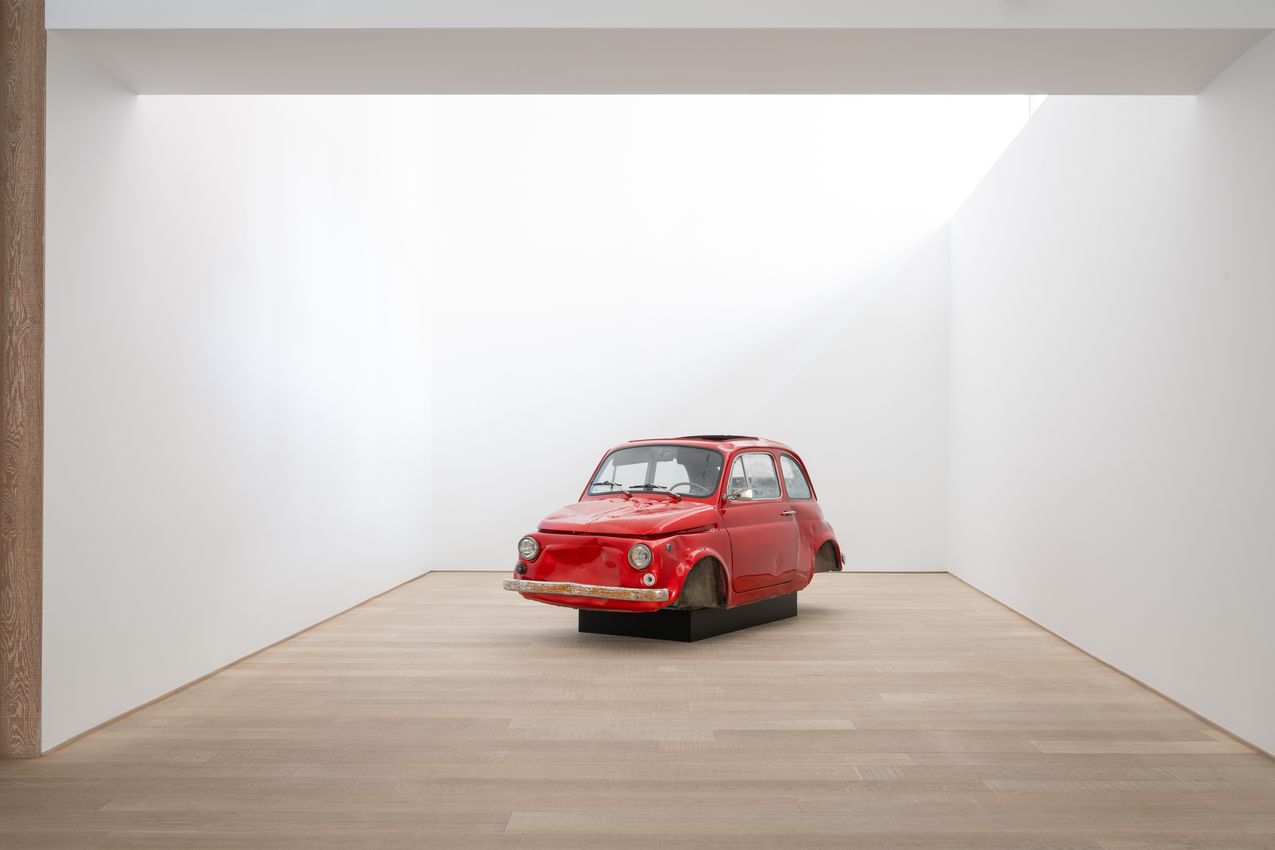
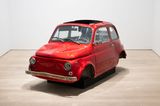
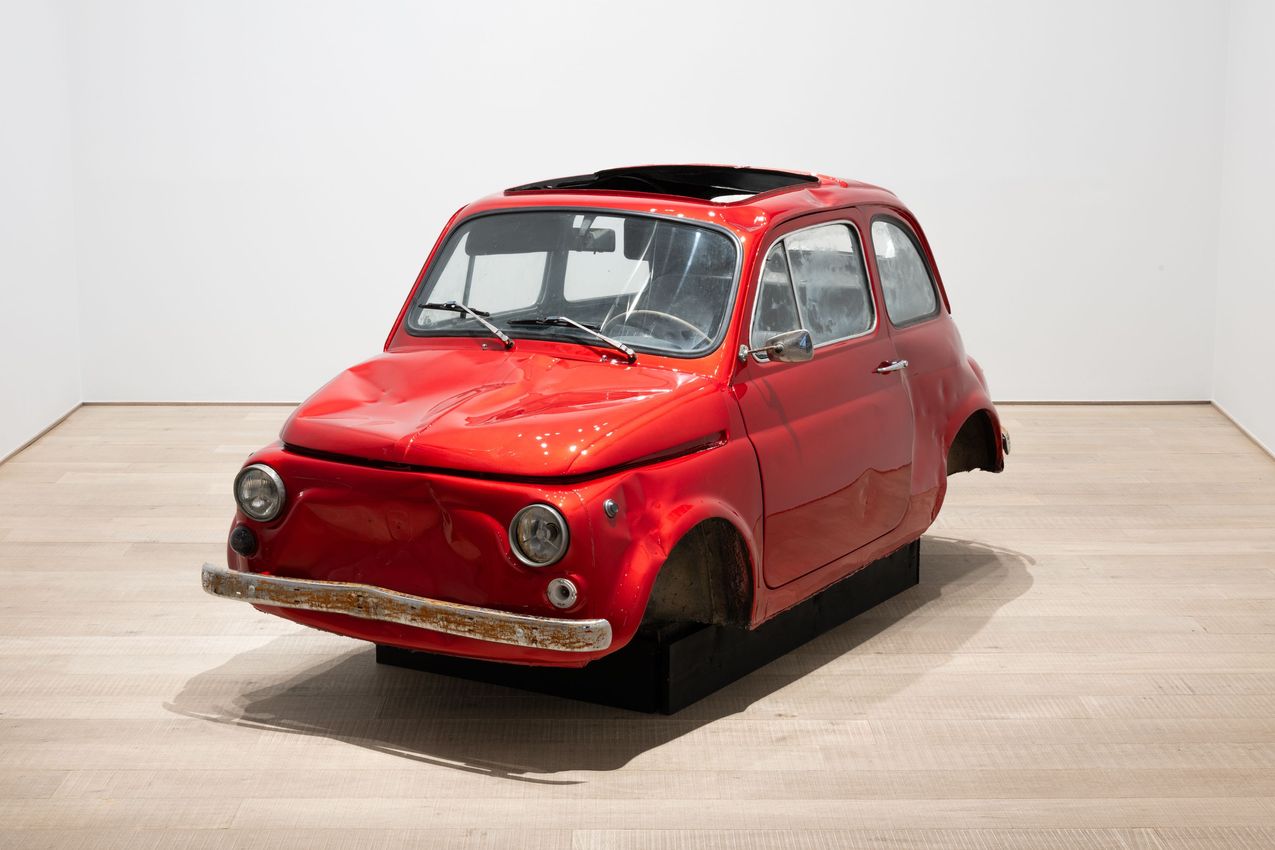
The exhibition opens with a metaphorical bang: the wreckage of a Fiat 500, one of the icons of the last century’s golden era of the automobile, its crushed body painted in a glossy, enticing red. Standing in isolation at the end of the gallery, on a platform that functions more like a stage than a plinth, Fiat 500 is the latest of Lavier’s damaged car works, the origins of which can be traced back to his seminal Giulietta (1993). Emblematic of the irony, humour and semantic play that characterise Lavier’s practice, Fiat 500 introduces some of the exhibition’s central concerns: the boundary between art and the everyday; between representation and reality; between language and meaning; and the status of the object in relation to authorship.

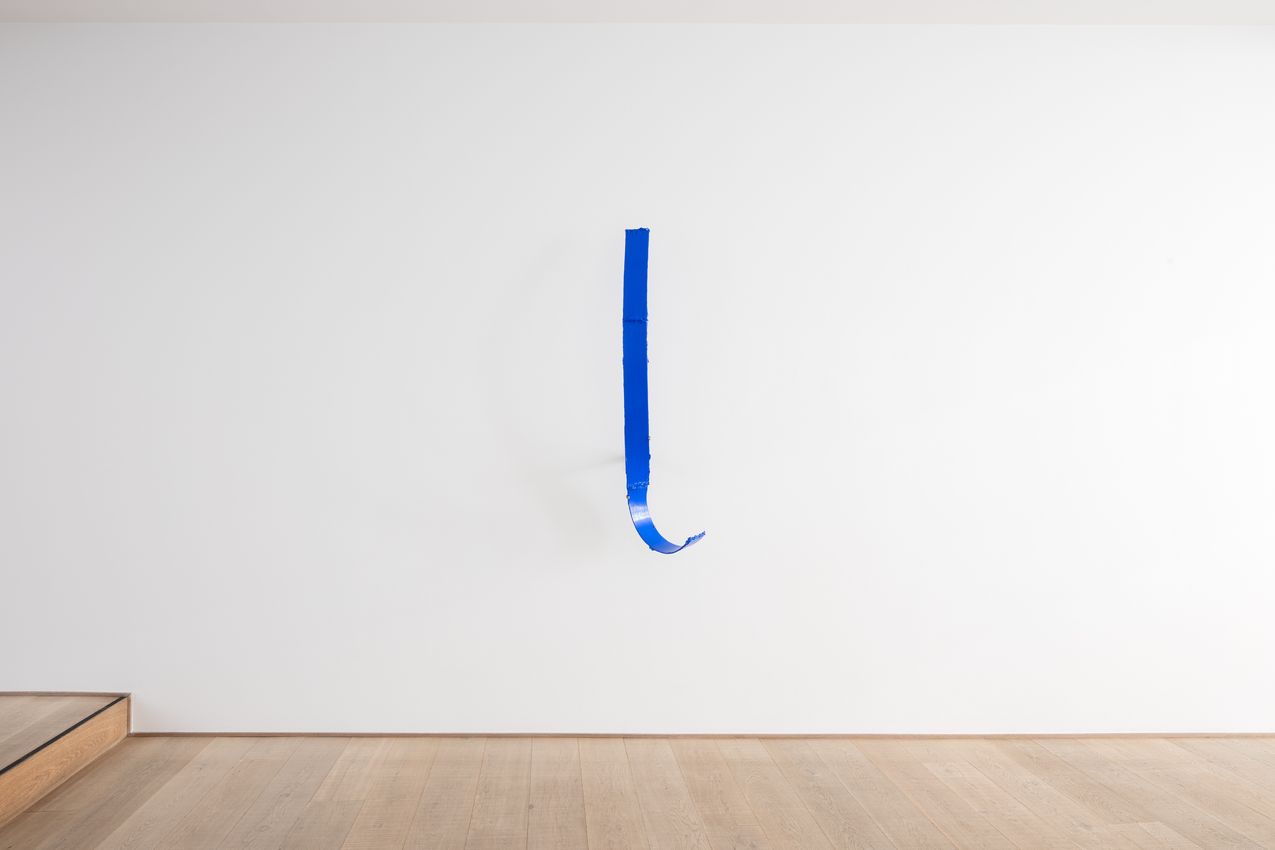
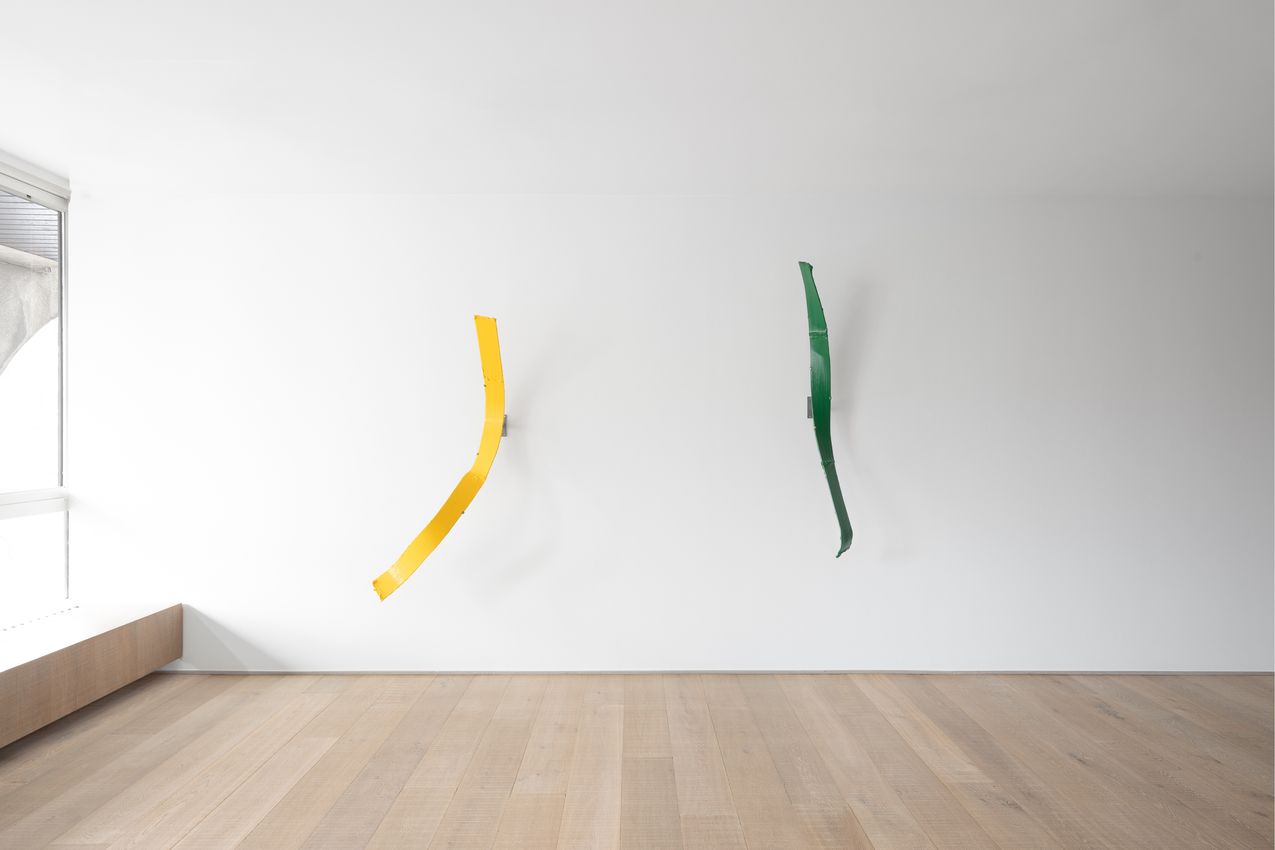
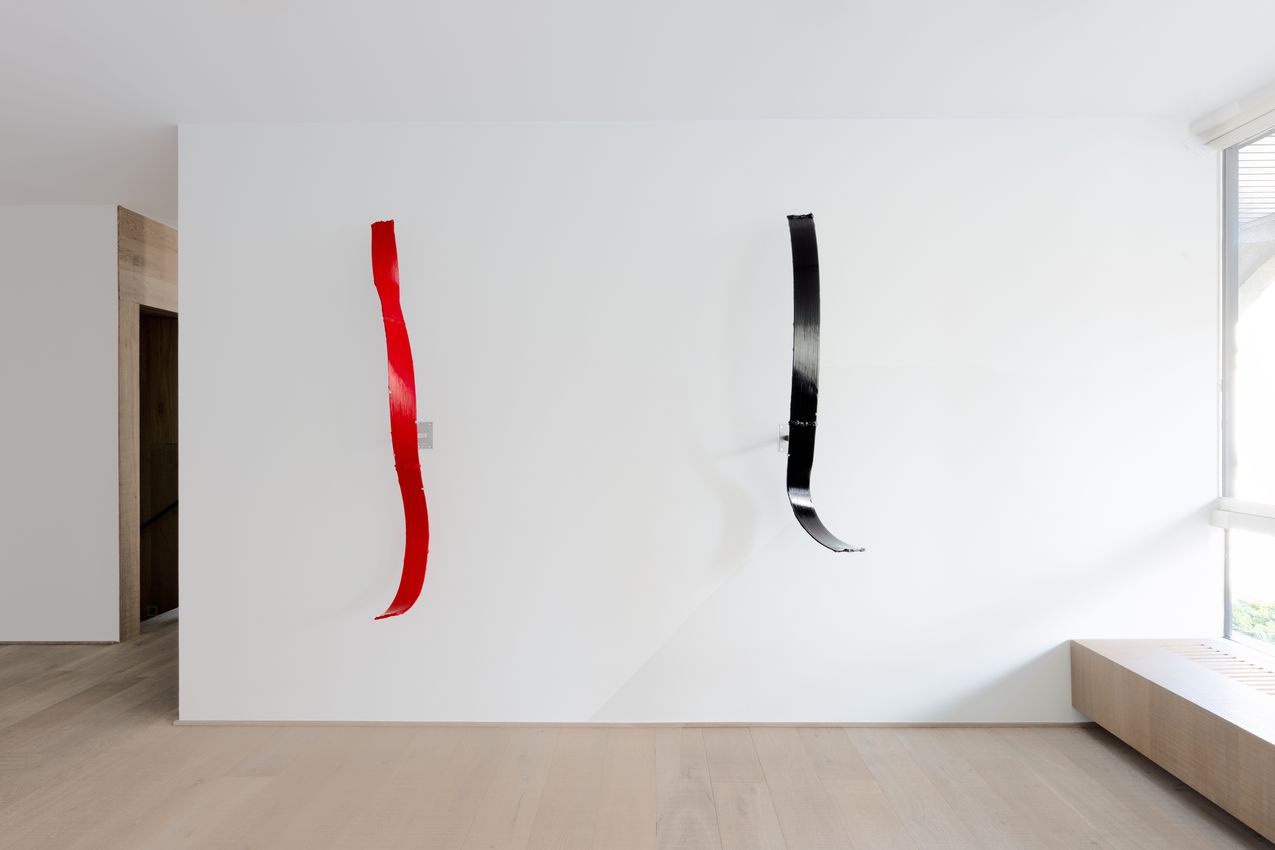
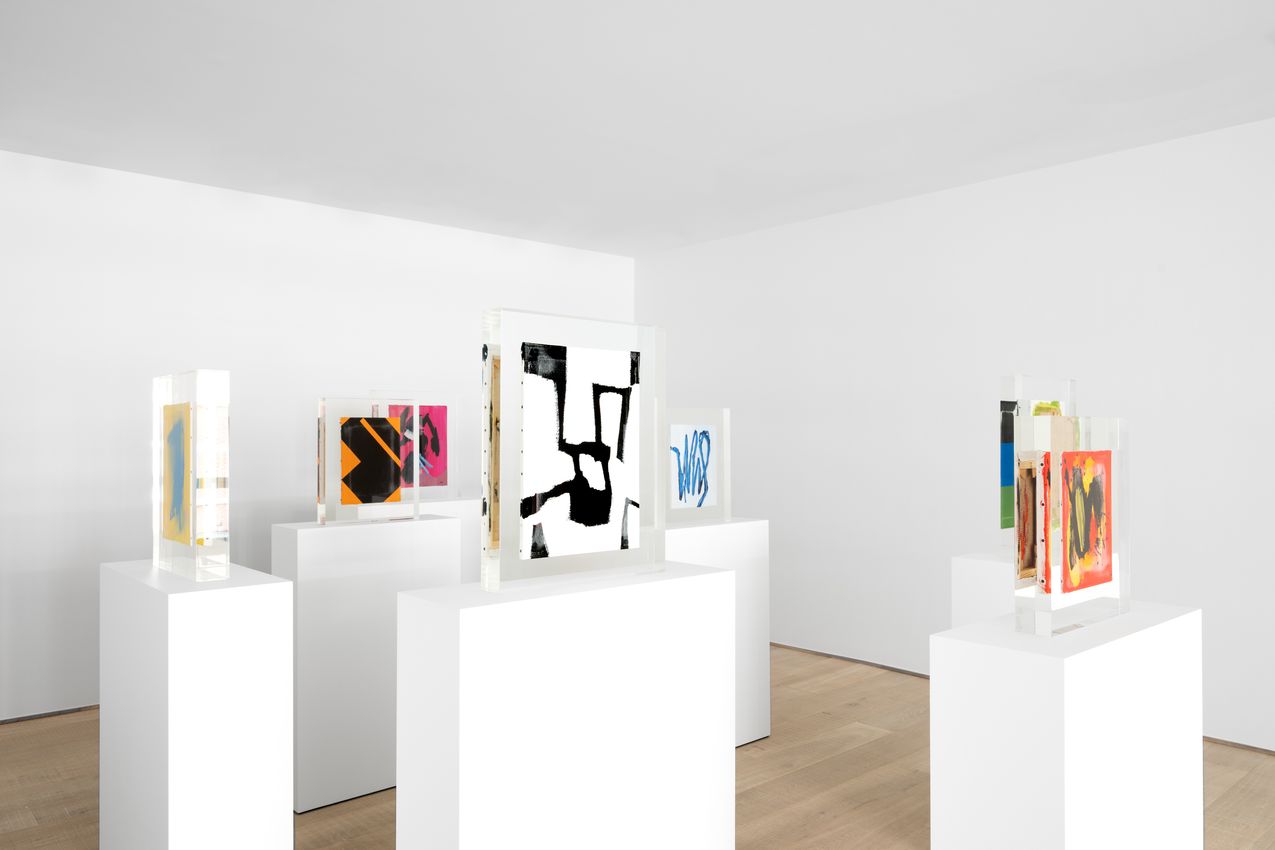
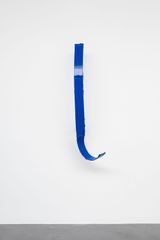
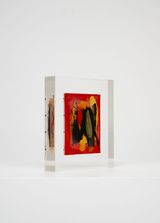
Upstairs, Lavier introduces a new body of work: Inclusions. These abstract canvases—found in flea markets and junk shops—are encased in blocks of acrylic resin. As with the wrecked Fiat 500, these works are ‘found’ rather than made: Lavier’s intervention is conceptual, grounded in selection and display rather than painterly authorship. Encapsulation produces another kind of perceptual short circuit. With both the front and back of each canvas visible, traditional viewing hierarchies dissolve. Arranged as what Lavier calls an ‘abstract bouquet’, the seven works playfully challenge orientation and display. Shown in the same gallery, Brushstrokes forms the exhibition’s second new body of work, fabricated from painted steel and translating gesture into three-dimensional form.

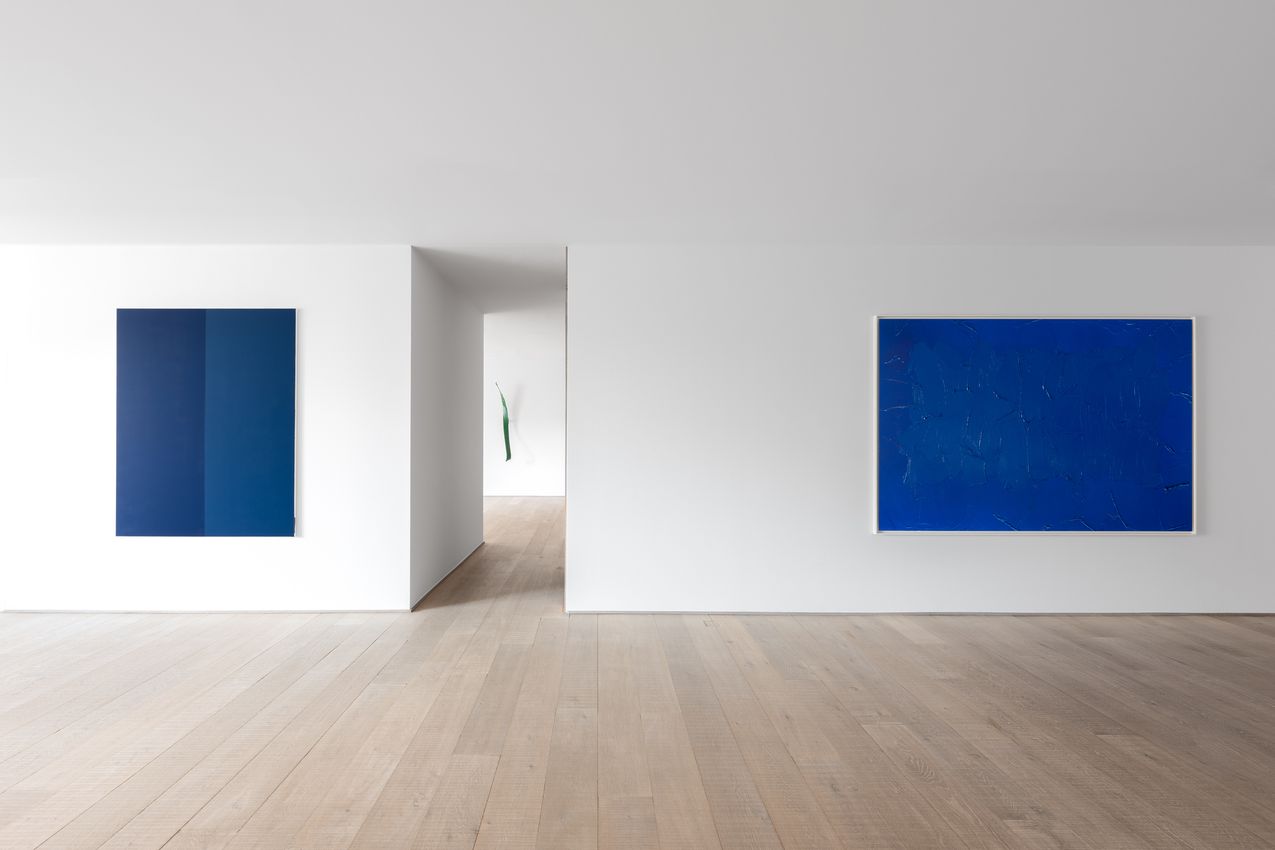
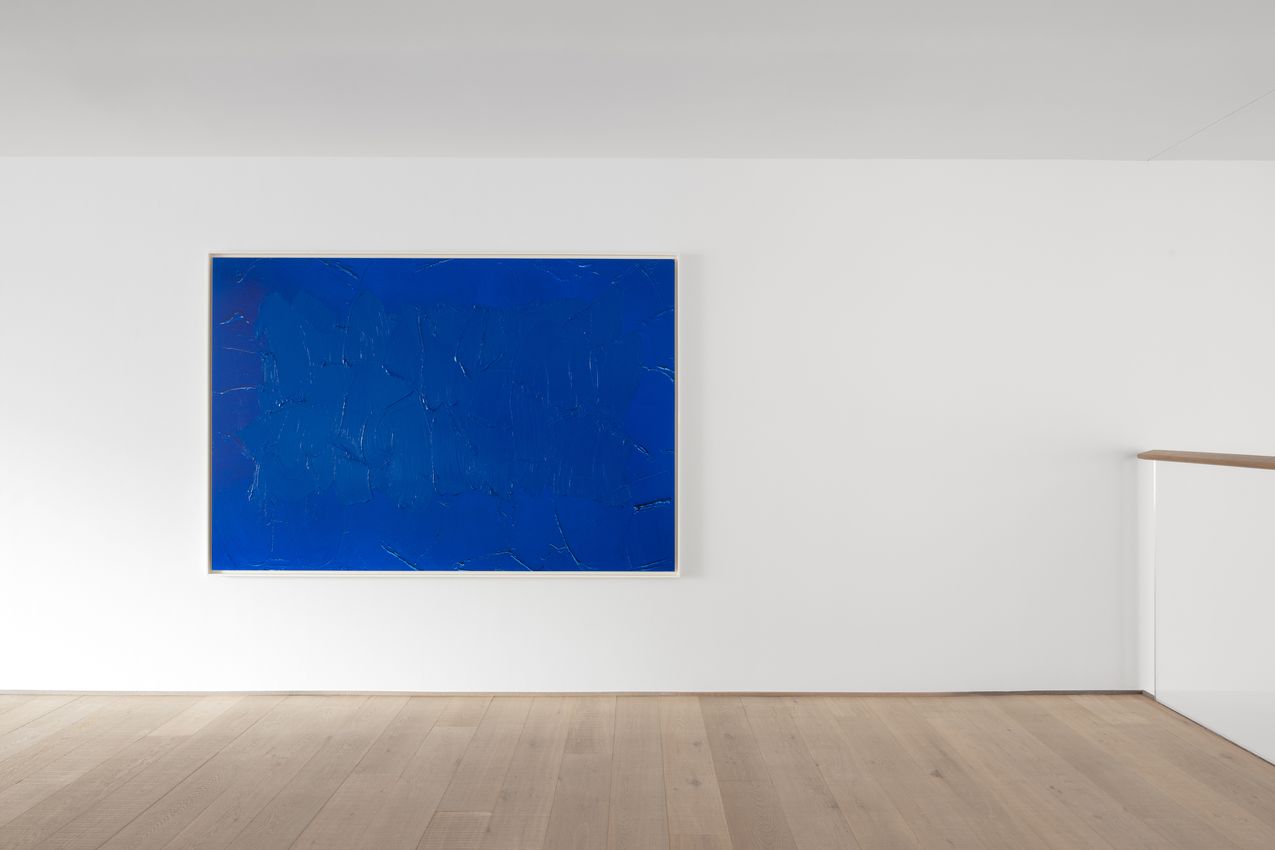
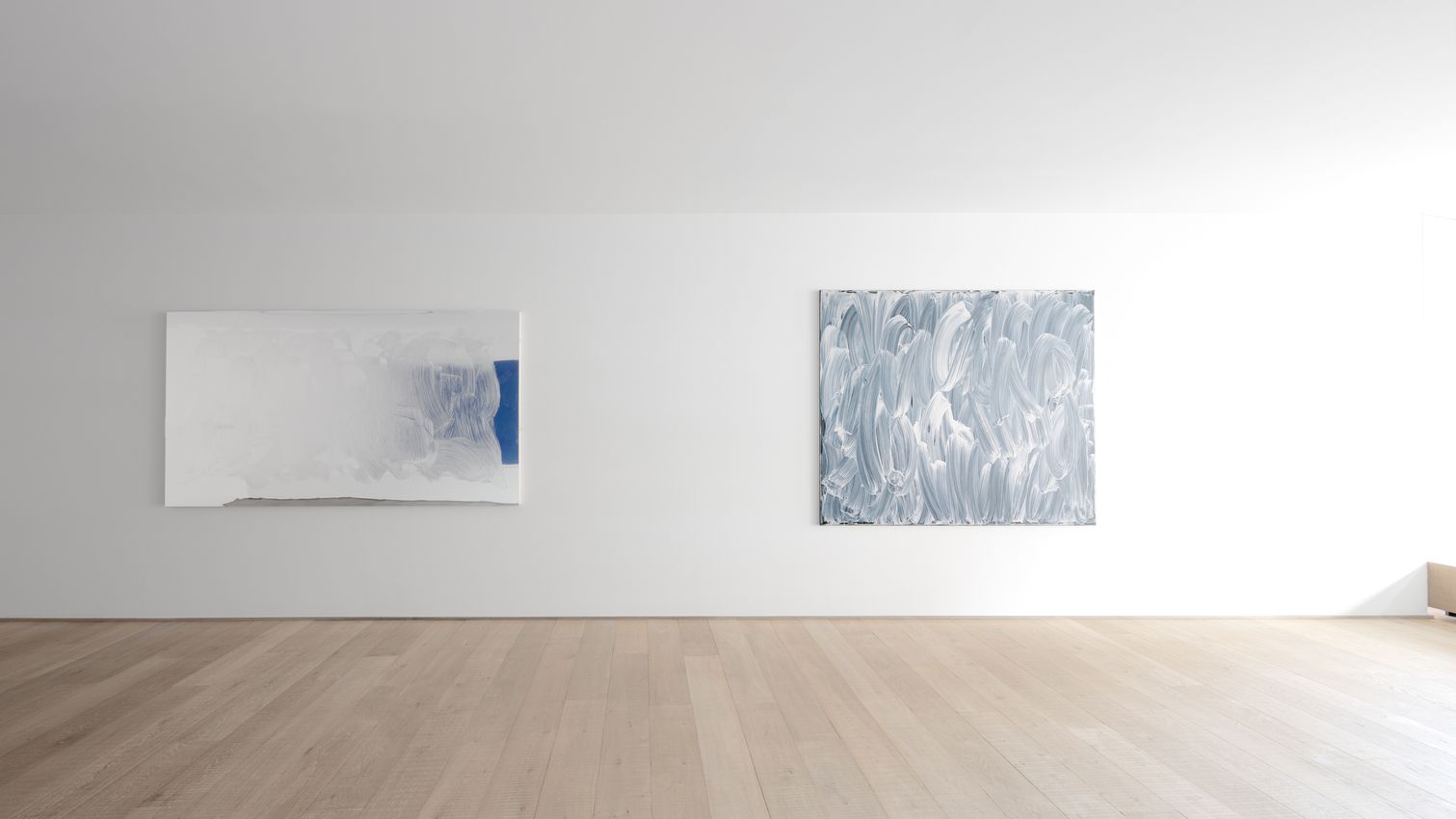
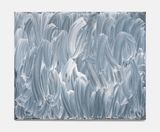
In the adjacent gallery, Lavier presents four new paintings from a selection of his most renowned chantiers: a painted vitrine (based on Parisian shop windows), a painted mirror, a painted Fujichrome, and a juxtaposed colour painting. These works probe thresholds between transparency and surface, reflection and image, photography and painting, and assert painting as a physical and material presence rather than a purely representational system.

Read More

Installation Views

About the Artist

Although French post-modern philosophers had a profound impact on American art during the 1980s, concepts such as simulacra and appropriation had less of an influence in their country of origin. The work of Bertrand Lavier, however, is an exception. Thanks to the heritage of Marcel Duchamp and the Nouveaux Réalistes, Lavier was able to give the art of the found object a typical French touch. Since the late 1960s, Lavier has reflected upon the relationship between painting and sculpture, representation and abstraction, life and art. An overriding characteristic of his work is its tongue in cheek attitude. In order to shape his ideas, Lavier developed a series of ‘demonstrations’: methods and strategies that enable him to question our intellectual baggage and to disrupt our most entrenched visual habits. His best-known intervention is to cover everyday objects with what he refers to as typical ‘Van Gogh-brushwork’. With this act, banal objects become artworks but, even more importantly, the object becomes a painted image of itself. Paradoxically, the representation of reality only occurs when the original object is hidden from view and completely disappears. Another ‘demonstration’ consists of combining two different objects in an absurd associative manner, such as a sculpture of Alexander Calder placed upon a radiator with an identical brand name, or La Bocca (Dali’s famous lip-shaped sofa) balanced upon a white freezer manufactured by Bosch.

View Artist Profile

Also Exhibiting at Xavier Hufkens

About the Gallery
Xavier Hufkens is one of Europe’s leading galleries for contemporary art. Located in Brussels, the gallery maintains a diverse exhibition programme with solo exhibitions of the gallery artists as well as group exhibitions and special projects. The gallery deals in a distinctive combination of painting, drawing, sculpture, photography, video and installation-based work.

The origins of the gallery date back to 1987, when Xavier Hufkens opened a gallery space in an un-refurbished warehouse in the neighbourhood of the South Station (Midi) in Brussels. During the early years, the focus of the gallery was upon mid-career and emerging artists and the gallery is known for having introduced some of the most influential contemporary artists to Brussels at a time when they were still relatively unknown. British sculptor Antony Gormley, who is still affiliated with the gallery, Felix Gonzalez-Torres and Rosemarie Trockel all showed in Belgium for the first time with Xavier Hufkens (Gormley in 1987; Gonzalez-Torres in 1991 and Trockel in 1993).

In 1992, the gallery moved to a 19th-century townhouse at 6 rue Saint-Georges, close to the Avenue Louise. Completely renovated by Belgian architects Paul Robbrecht, Hilde Daem and Marie-José Van Hee, the house quickly gained a reputation for being not just one of the most beautiful contemporary art spaces in the Belgian capital, but also one of the most interesting. The expanded exhibition programme coincided with the additional representation of a number of established artists from Belgium and abroad, including Richard Artschwager, Thierry De Cordier and Jan Vercruysse. In 1997, Hufkens expanded the gallery further by annexing the adjacent building and a number of new artists joined the gallery, including Louise Bourgeois, Roni Horn and Thomas Houseago.

A second space in the same street, at 107 rue Saint-Georges, opened in spring 2013. Located in the Galerie Rivoli, a mixed-use commercial development from the 1970s, the new gallery space was designed by Swiss architect Harry Gugger, who was previously in partnership with Herzog and De Meuron. Slegten & Toegemann, Brussels, managed the project.

An eclectic but very clear vision underpins all of the gallery’s activities: ‘The definition of the gallery was established from the start. The common thread, then and now, is quality over and above everything else, which I find more intellectually challenging than a forced definition. From the early days I juxtaposed established artists such as Michelangelo Pistoletto with someone like Felix Gonzalez-Torres when he was totally unknown. Today I still mix my work: I have no problem showing Malcolm Morley … alongside Robert Ryman, or Willem de Kooning.’ [Xavier Hufkens in The Art Newspaper, Issue 220, January 2011, published online: 20 January 2011]

Xavier Hufkens represents some thirty artists from different generations. He was part of the six-member selection committee for Art Basel during seven years and also participates in up to five international Arts Fairs annually. The gallery has partnerships with the estates of Louise Bourgeois, Willem de Kooning, Robert Mapplethorpe and Alice Neel.
View Gallery Profile
Address
107 rue St-Georges
St-Jorisstraat
Brussels
Belgium
Opening Hours
Tuesday – Saturday
11am – 6pm
(1)
Brussels 107 rue St-Georges
Xavier Hufkens
107 rue St-Georges, St-Jorisstraat, Brussels, Belgium

Opening hours
Tuesday – Saturday
11am – 6pm
The art world in focus