



Press Release

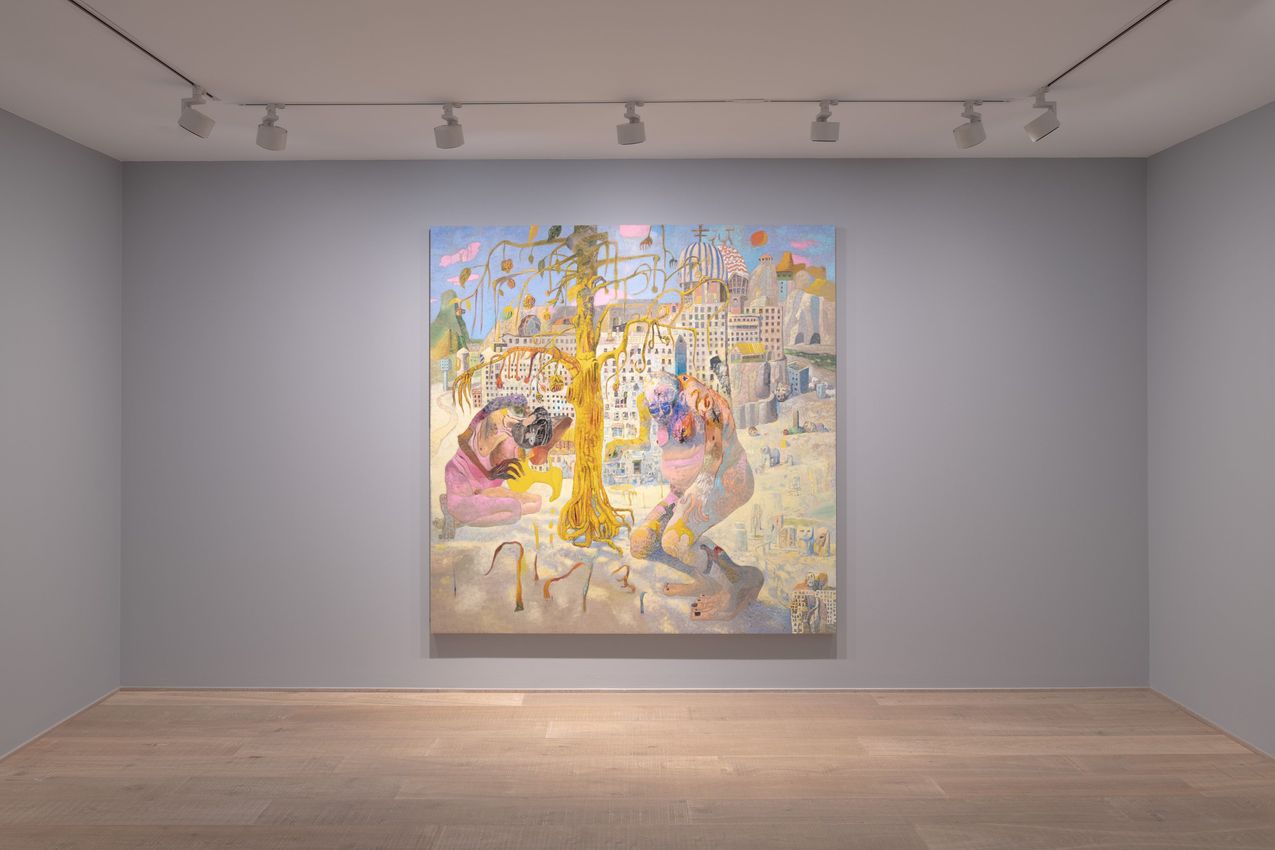
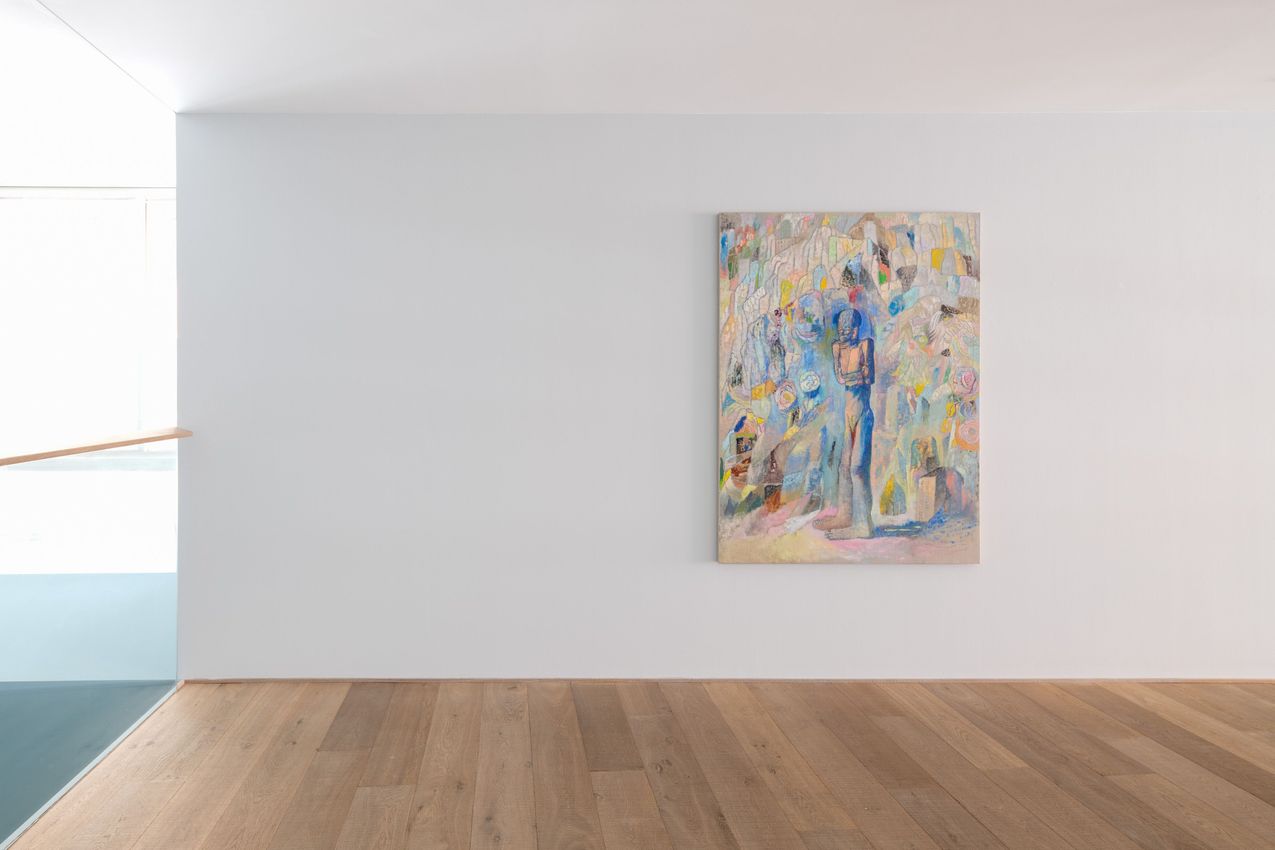
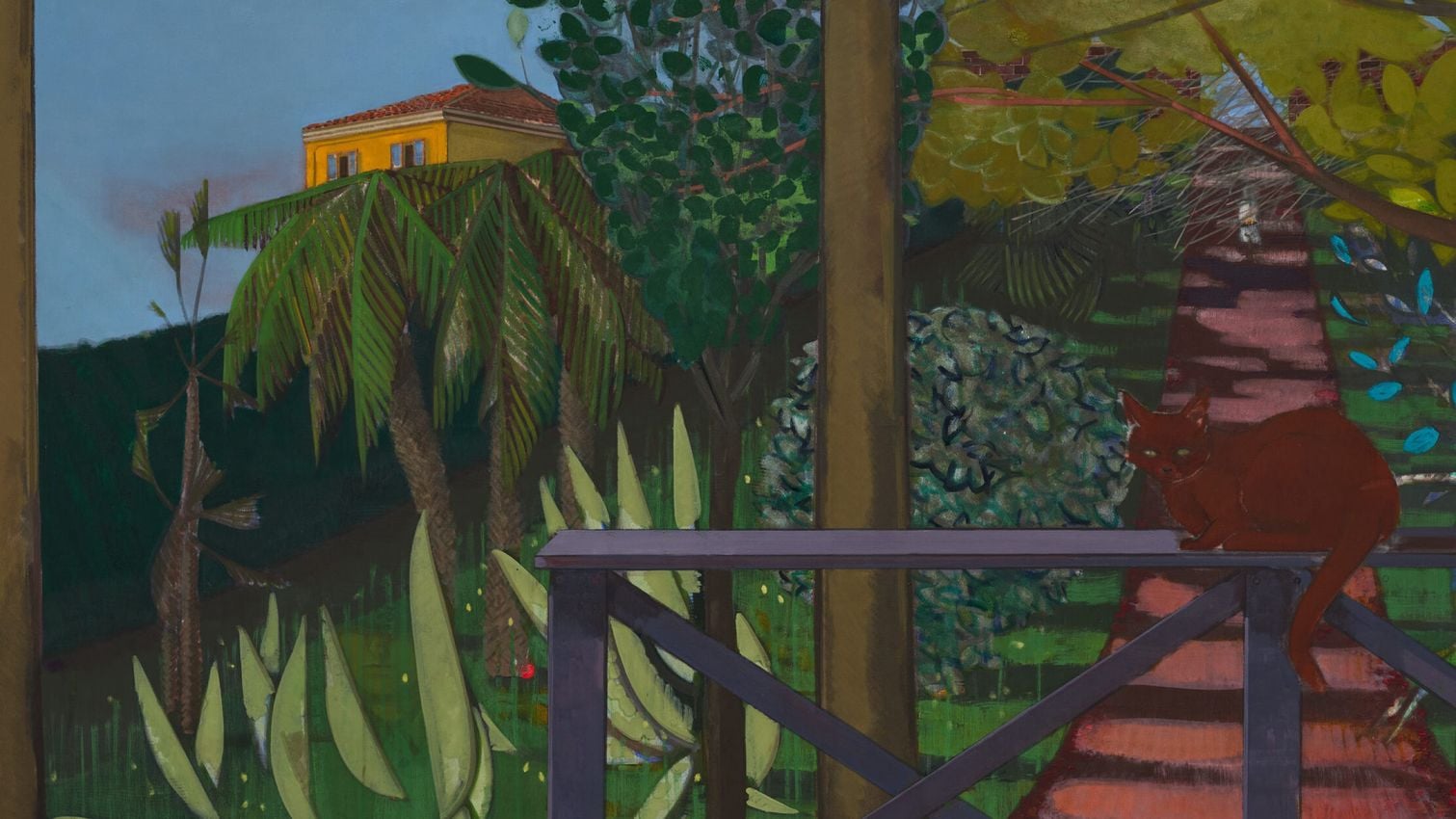
Xavier Hufkens is pleased to present Chinese artist Qiu Xiaofei’s debut exhibition in Europe. Entitled BARE, the presentation showcases a new series of paintings created between 2021 and 2023. Referencing Eastern and Western aesthetic traditions, while also drawing on the literary, musical, and intellectual worlds of both cultures, the works straddle the border between observation and imagination, exploring the depths of human consciousness and the boundaries of reality.

The title of the exhibition alludes to a famous sentence from the poem First Day of the Year Wu Shen by the Ming Dynasty writer, Wang Zhideng (1535- 1612): ‘Bare-skinned, I pound the drum with unrestrained fervour, unleashing my untamed soul.’ The poem tells of a man who ages overnight and awakens on the first morning of the New Year naked, entering a state of mania, as he fervently searches for his most authentic inner self. By conjuring up the image of a naked man beating the drum, Qiu depicts this unbridled attitude to life and a desire to transcend its mundanity in his works.

In recent years, Qiu has returned to one of the leitmotivs in his oeuvre: the exploration of madness, hallucinations, and the irrational energy of the human psyche. Inspired by psychoanalysis which links the ideas of dreams, nakedness, and self-image, Qiu seeks to penetrate the superficial aspects of life and to uncover deeper existential insights through painting. For Qiu, painting serves not only as an interaction between physical sensation and the mind, but also as an evocation of spiritual energy, aiding us in navigating the complexities of existence. Combining vivid colours with the exaggerated deformities and Aesopian language of magical realism, the painting Drunken Moon takes its name from composer Arnold Schoenberg’s Pierrot lunaire (1912), a melodrama known for its neurotic atmosphere (Moondrunk is the title of the first song in the series). The narratives in Schoenberg’s multi-part composition are reflections on the inner psyche, appearing as impulsive yet authentic expressions that emerge from the depths of the subconscious.

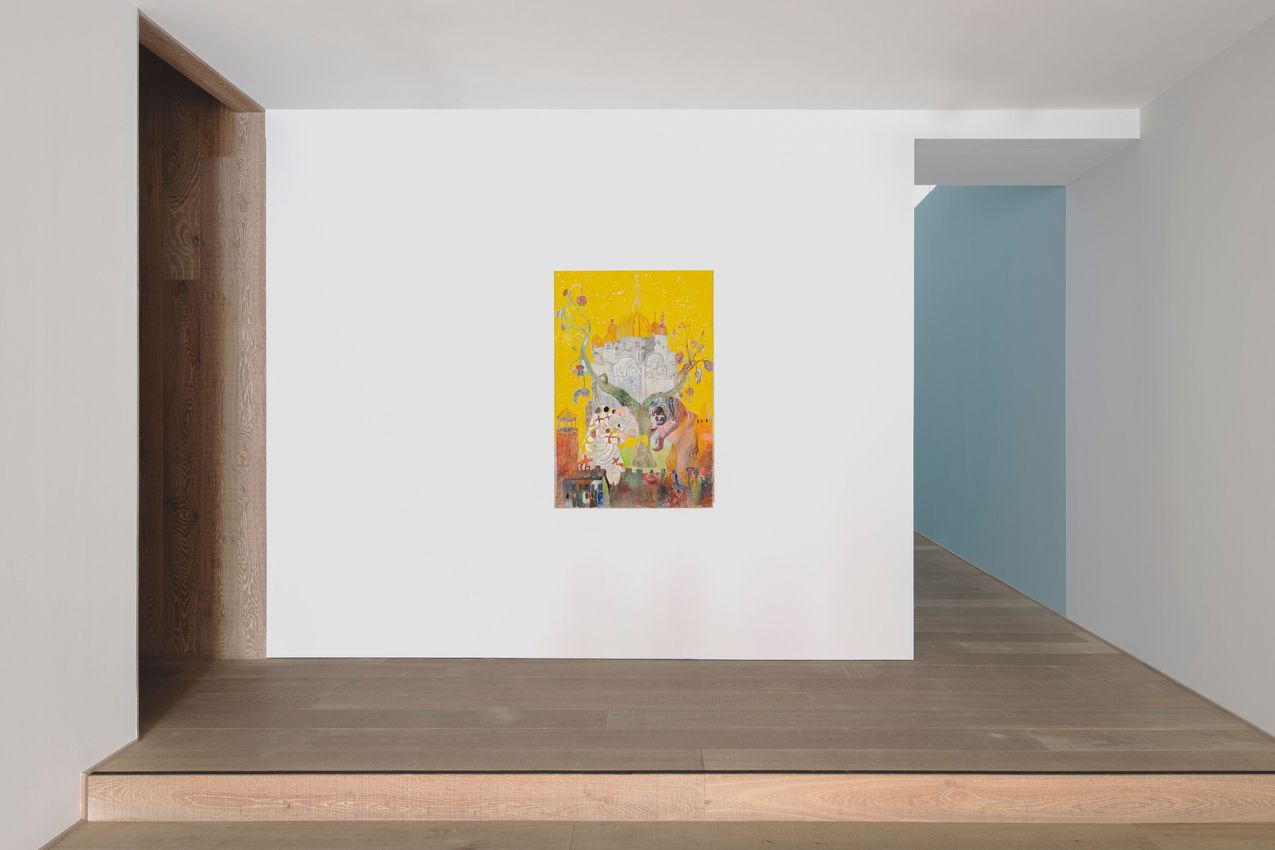
In Qiu’s works, the philosophical ideas of Chinese literati from the Wei and Jin (220-420) dynasties are reimagined as contemporary images: faces with ambivalent smiles, the chaos of inebriated dances and chants, and naked bodies, all set amidst strange flowers and plants in utopian ruins. The influences of traditional Eastern painting and European religious art of the late Middle Ages are also evident in his work: the use of aerial views creates a spacious realm for contemplation, while scattered perspectives and lines delineate deep mountains and desolate terrains, forming a thought-provoking imagery. Traditional Chinese art’s significant influence is noticeable in the painting Bare, evoking the concise depictions of the Arhat found in traditional Chinese art. With an extensive use of yellow, the painting evokes a striking apocalyptic landscape that, despite its grandeur, is collapsing into decay with a frail body on a bed. As the place where life begins and ends, this specific motif conveys both positive and negative connotations.

The artist’s inspiration further extends from personal recollections of his family to the geopolitical relationship between his hometown of Harbin, in China, and the former Soviet Union. These influences are visible in works such as The One Tree Forest and La Source, where the imagery of the deserted church and labourer’s shelter from his hometown combines to form futuristic architectures. Such distinctive architectures serve as vehicles for the artist’s recollections and fantasies, further merging the threads of past and present, the individual and collective, and observation and imagination.

In BARE, Qiu offers a profound exploration of reality and the human psyche, reflected in the mystical allure of his paintings. Drawing from memory, fantasy, and historical references, his works unveil the depths of human consciousness while seamlessly blending Eastern and Western aesthetics across different time periods. Transcending mere representation, Qiu’s paintings invite the viewer to delve deeper into the complexities of existence in a dream-like manner.

Qiu Xiaofei (b. 1977, Harbin, China) graduated from the Central Academy of Fine Arts Beijing in 2002, and now lives and works in Beijing. His work has been featured in major exhibitions internationally, including in M+, Hong Kong (2023); Taikang Art Museum, Beijing (2023); G Museum, Nanjing (2023); UCCA Edge, Shanghai (2022); He Art Museum, Guangdong (2021); Fort Gansevoort, New York (2018); Crystal Bridges Museum of American Art, Bentonville (2018); Tampa Museum of Art, Florida (2014); Museum Boijmans Van Beuningen, Rotterdam (2014); Ullens Center for Contemporary Art, Beijing (2013); Long Museum, Shanghai (2013); The 10th Havana Biennial, Havana (2009); Tate Liverpool, Liverpool (2007); ZKM | Museum of Contemporary Art, Karlsruhe (2007); Kunstmuseum Bern, Switzerland (2005).

Read More

Installation Views

About the Artist

Contemporary Chinese artist Qiu Xiaofei is known for his improvisational canvases that interrogate personal and collective memory, and painting as a practice.

View Artist Profile

Also Exhibiting at Xavier Hufkens

About the Gallery
Xavier Hufkens is one of Europe’s leading galleries for contemporary art. Located in Brussels, the gallery maintains a diverse exhibition programme with solo exhibitions of the gallery artists as well as group exhibitions and special projects. The gallery deals in a distinctive combination of painting, drawing, sculpture, photography, video and installation-based work.

The origins of the gallery date back to 1987, when Xavier Hufkens opened a gallery space in an un-refurbished warehouse in the neighbourhood of the South Station (Midi) in Brussels. During the early years, the focus of the gallery was upon mid-career and emerging artists and the gallery is known for having introduced some of the most influential contemporary artists to Brussels at a time when they were still relatively unknown. British sculptor Antony Gormley, who is still affiliated with the gallery, Felix Gonzalez-Torres and Rosemarie Trockel all showed in Belgium for the first time with Xavier Hufkens (Gormley in 1987; Gonzalez-Torres in 1991 and Trockel in 1993).

In 1992, the gallery moved to a 19th-century townhouse at 6 rue Saint-Georges, close to the Avenue Louise. Completely renovated by Belgian architects Paul Robbrecht, Hilde Daem and Marie-José Van Hee, the house quickly gained a reputation for being not just one of the most beautiful contemporary art spaces in the Belgian capital, but also one of the most interesting. The expanded exhibition programme coincided with the additional representation of a number of established artists from Belgium and abroad, including Richard Artschwager, Thierry De Cordier and Jan Vercruysse. In 1997, Hufkens expanded the gallery further by annexing the adjacent building and a number of new artists joined the gallery, including Louise Bourgeois, Roni Horn and Thomas Houseago.

A second space in the same street, at 107 rue Saint-Georges, opened in spring 2013. Located in the Galerie Rivoli, a mixed-use commercial development from the 1970s, the new gallery space was designed by Swiss architect Harry Gugger, who was previously in partnership with Herzog and De Meuron. Slegten & Toegemann, Brussels, managed the project.

An eclectic but very clear vision underpins all of the gallery’s activities: ‘The definition of the gallery was established from the start. The common thread, then and now, is quality over and above everything else, which I find more intellectually challenging than a forced definition. From the early days I juxtaposed established artists such as Michelangelo Pistoletto with someone like Felix Gonzalez-Torres when he was totally unknown. Today I still mix my work: I have no problem showing Malcolm Morley … alongside Robert Ryman, or Willem de Kooning.’ [Xavier Hufkens in The Art Newspaper, Issue 220, January 2011, published online: 20 January 2011]

Xavier Hufkens represents some thirty artists from different generations. He was part of the six-member selection committee for Art Basel during seven years and also participates in up to five international Arts Fairs annually. The gallery has partnerships with the estates of Louise Bourgeois, Willem de Kooning, Robert Mapplethorpe and Alice Neel.
View Gallery Profile
Address
107 rue St-Georges
St-Jorisstraat
Brussels
Belgium
Opening Hours
Tuesday – Saturday
11am – 6pm
(1)
Brussels 107 rue St-Georges
Xavier Hufkens
107 rue St-Georges, St-Jorisstraat, Brussels, Belgium

Opening hours
Tuesday – Saturday
11am – 6pm
The art world in focus