Press Release

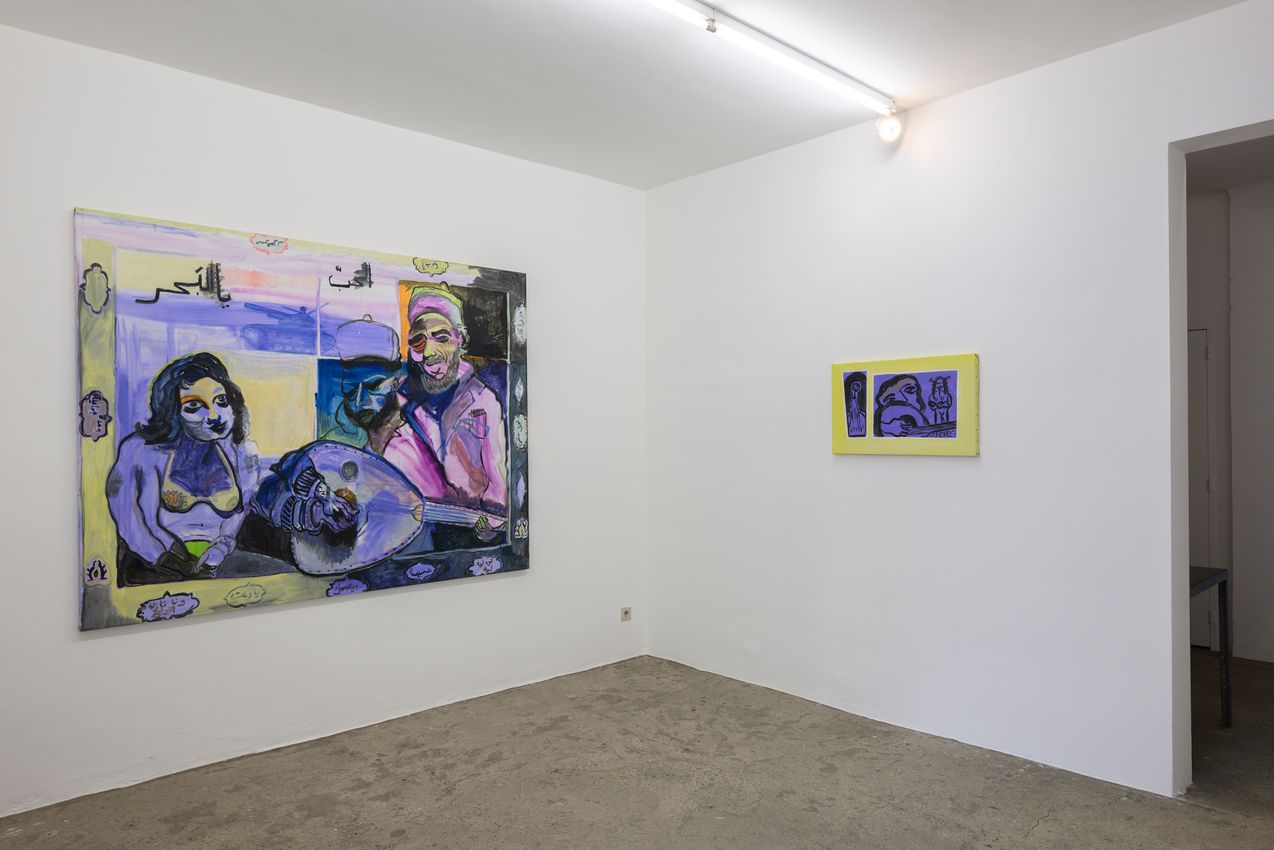
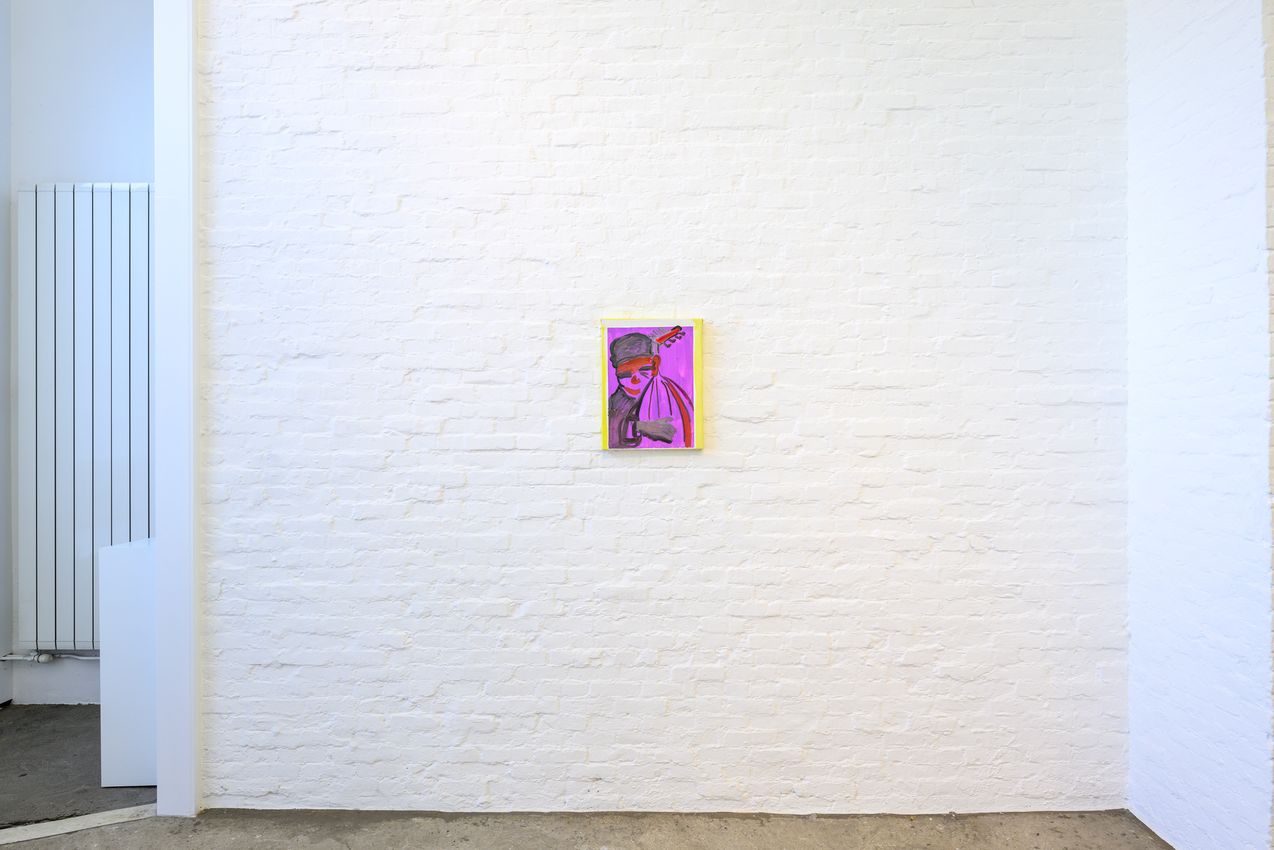
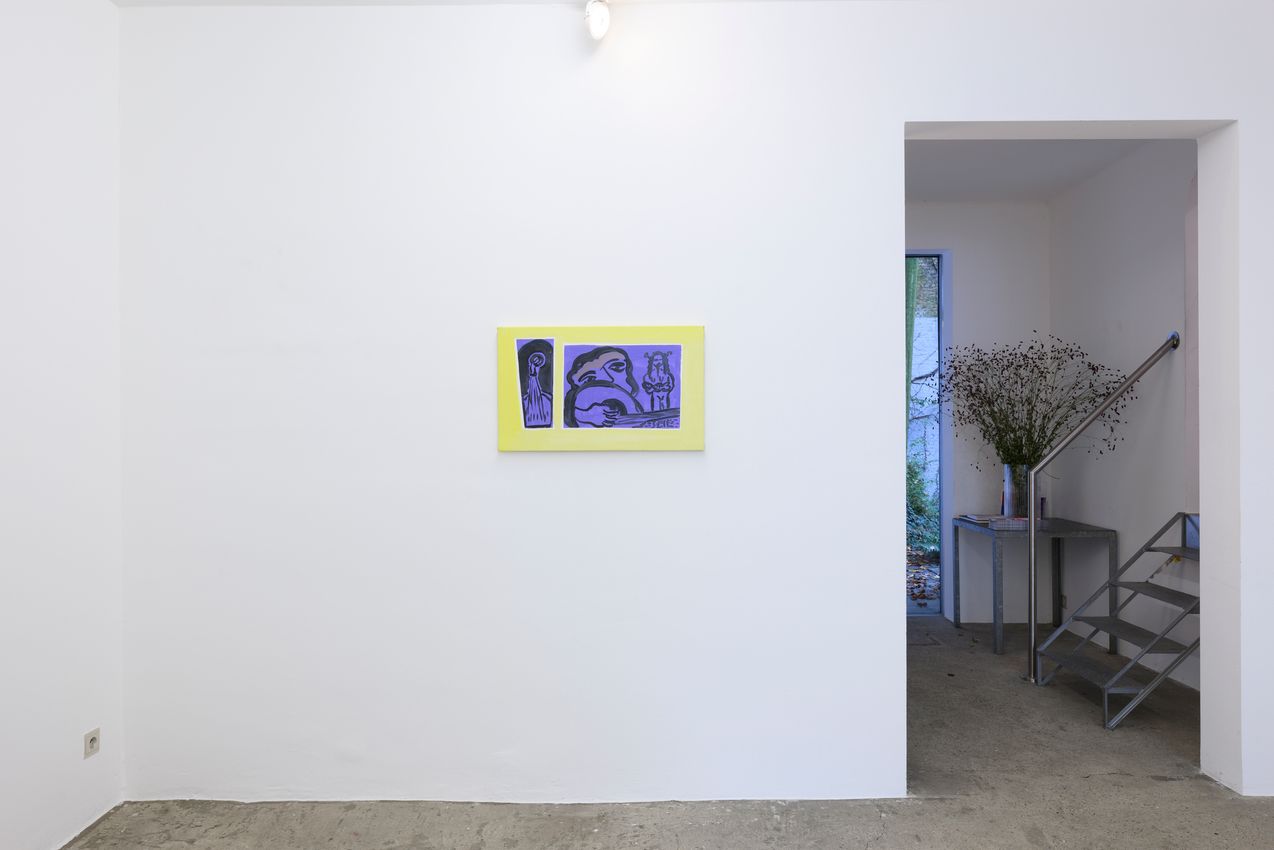
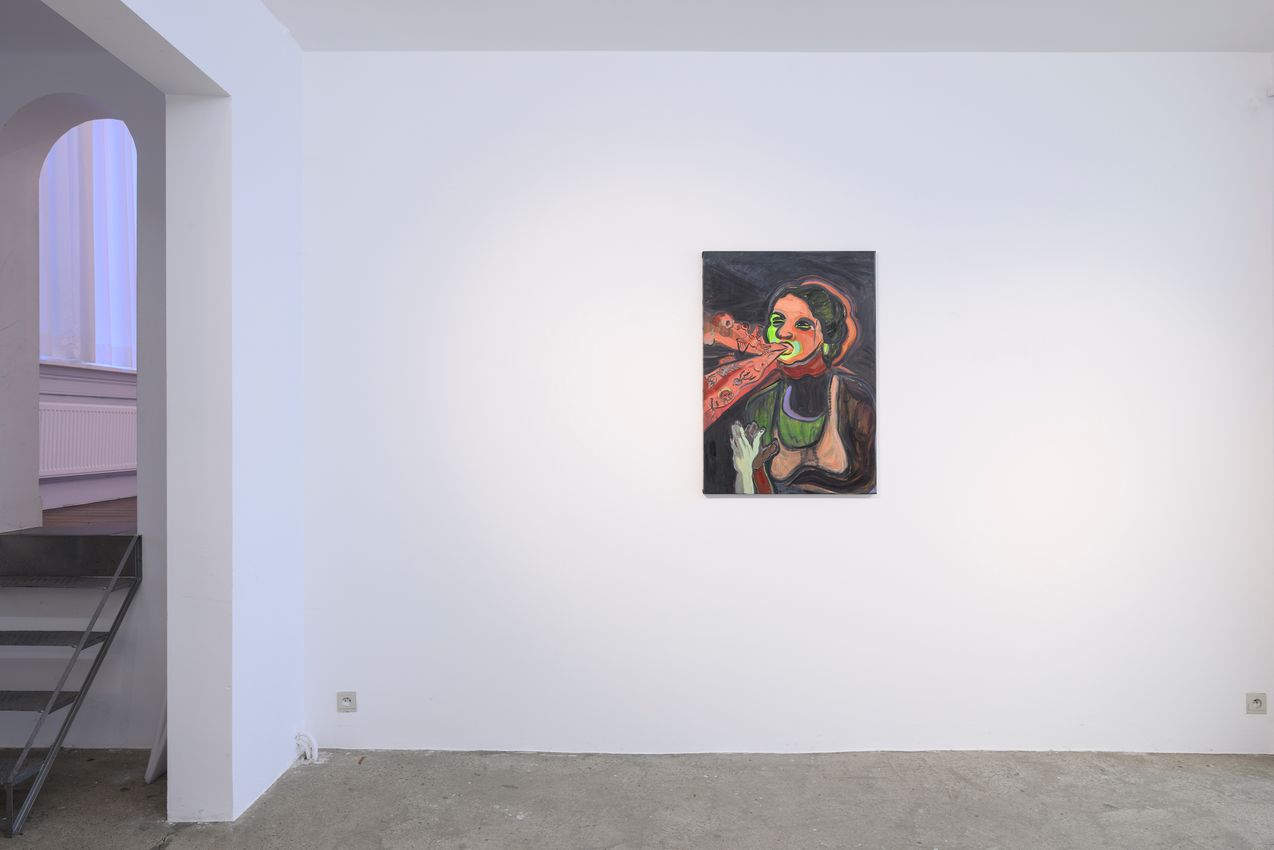
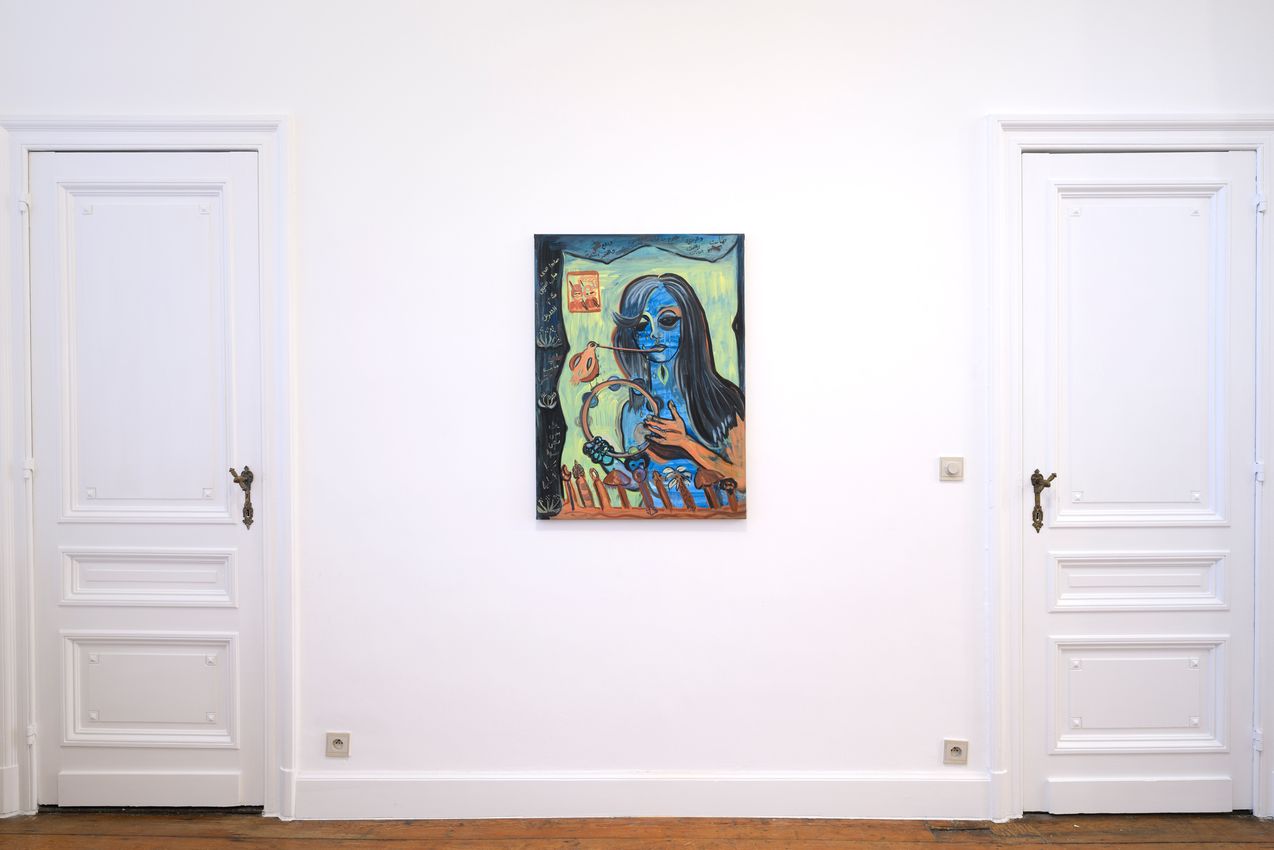
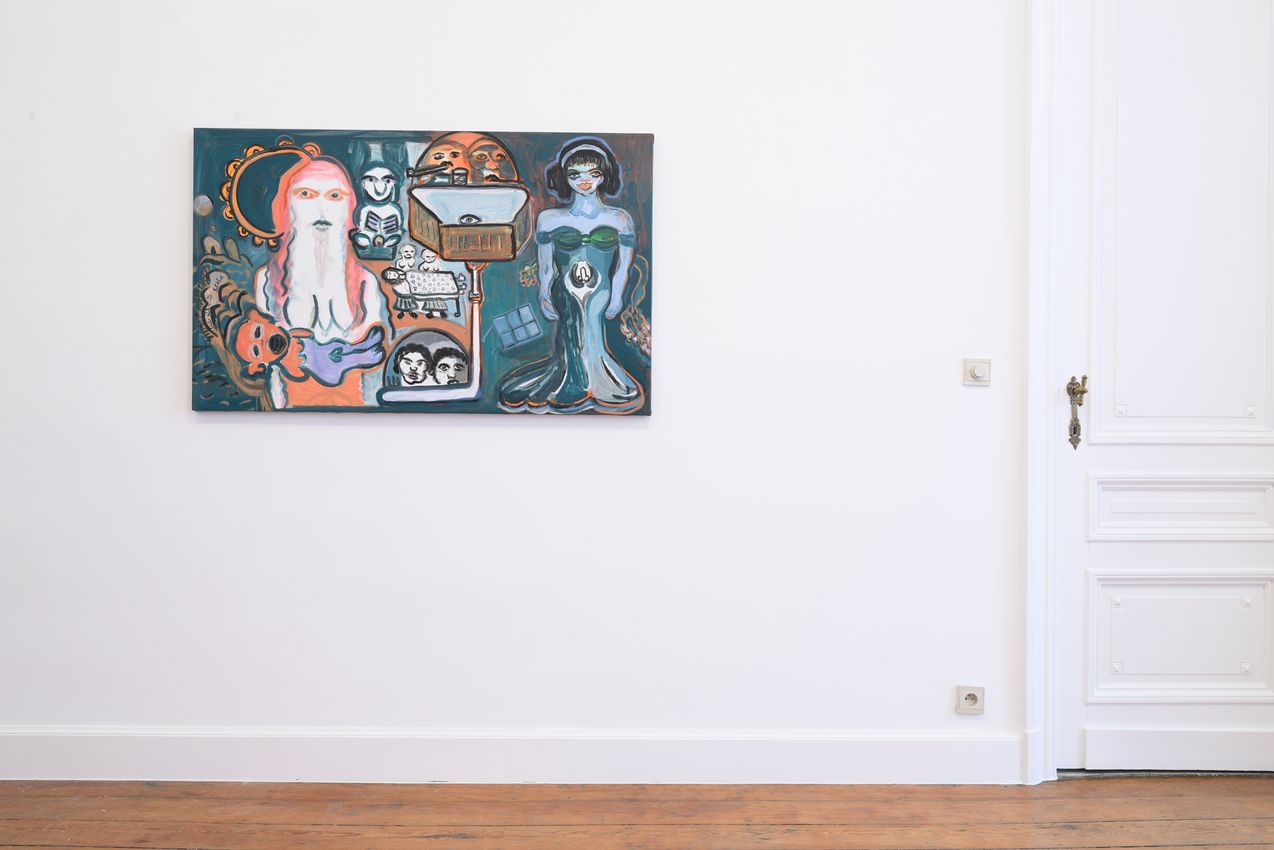
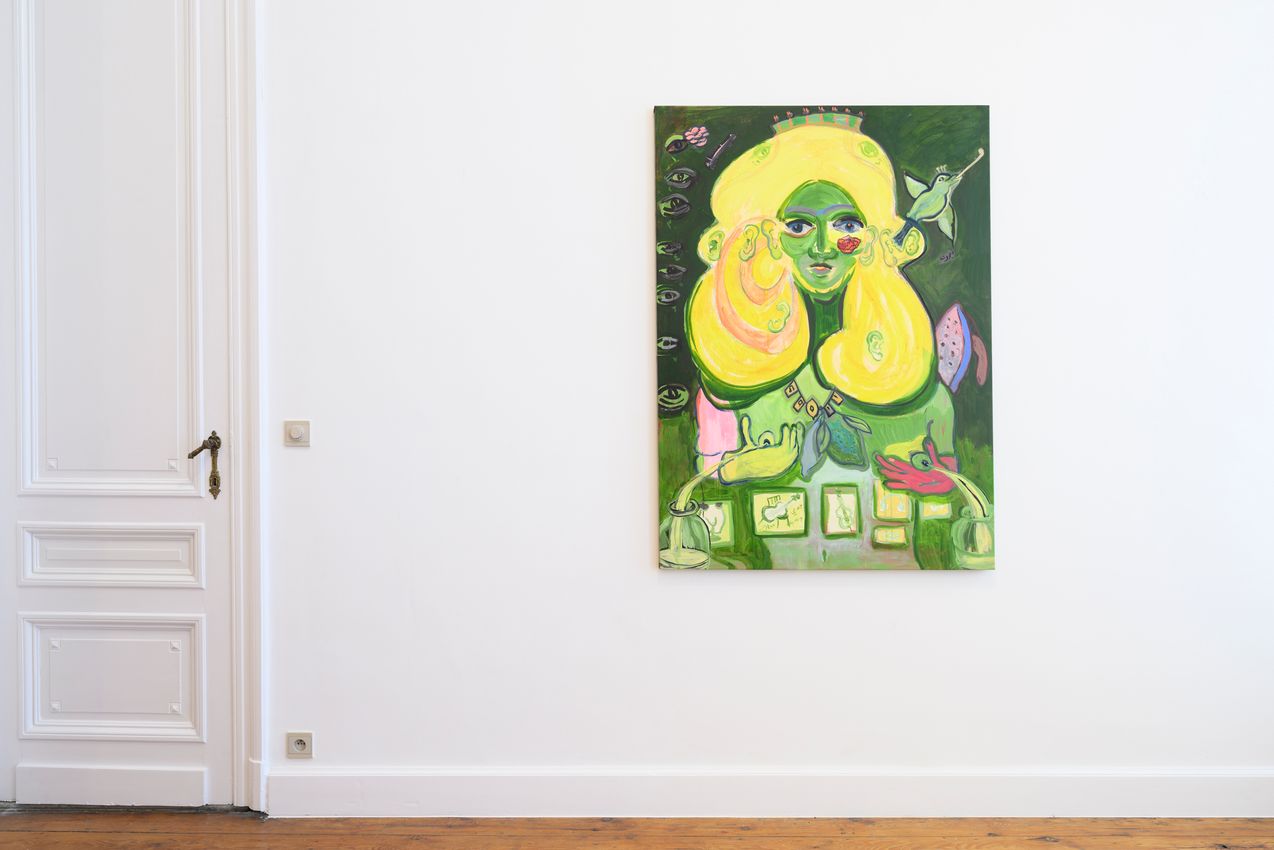
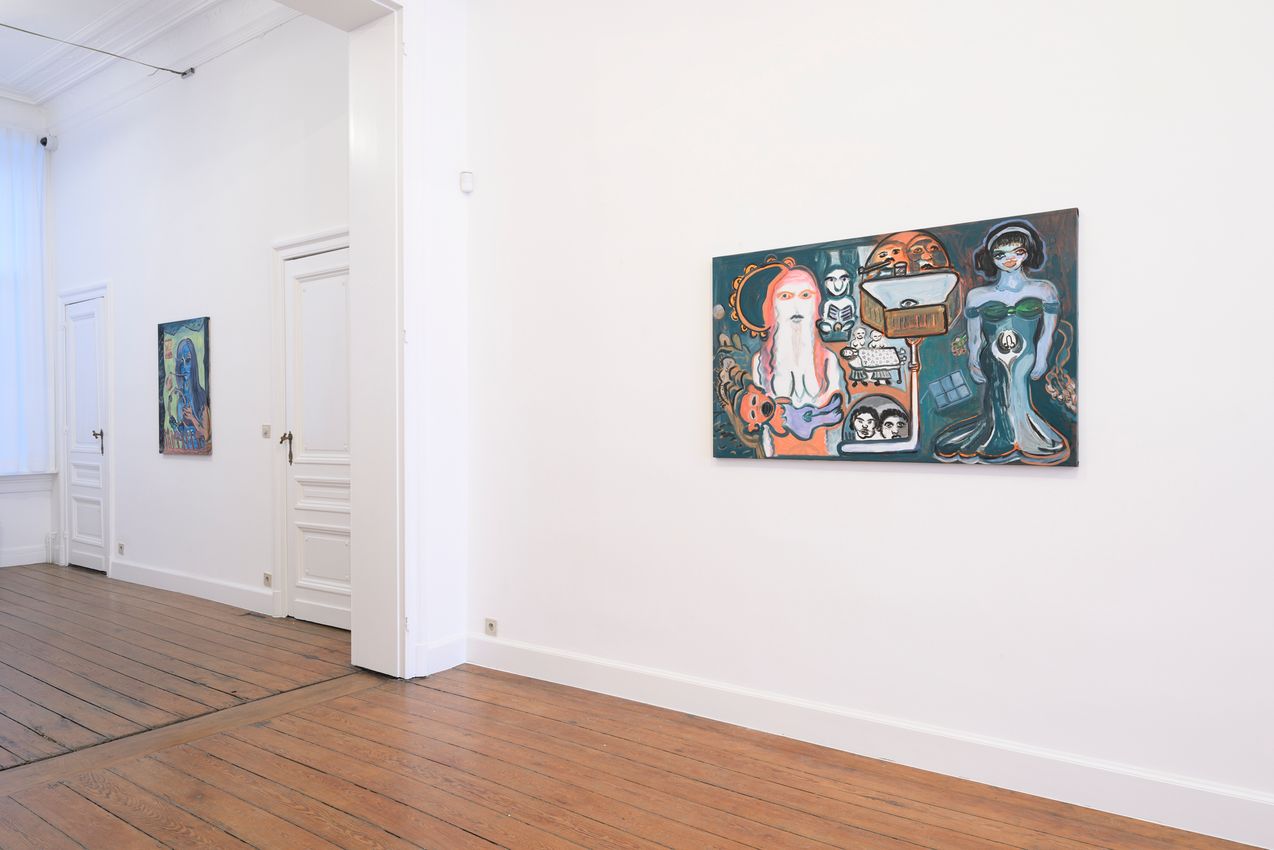
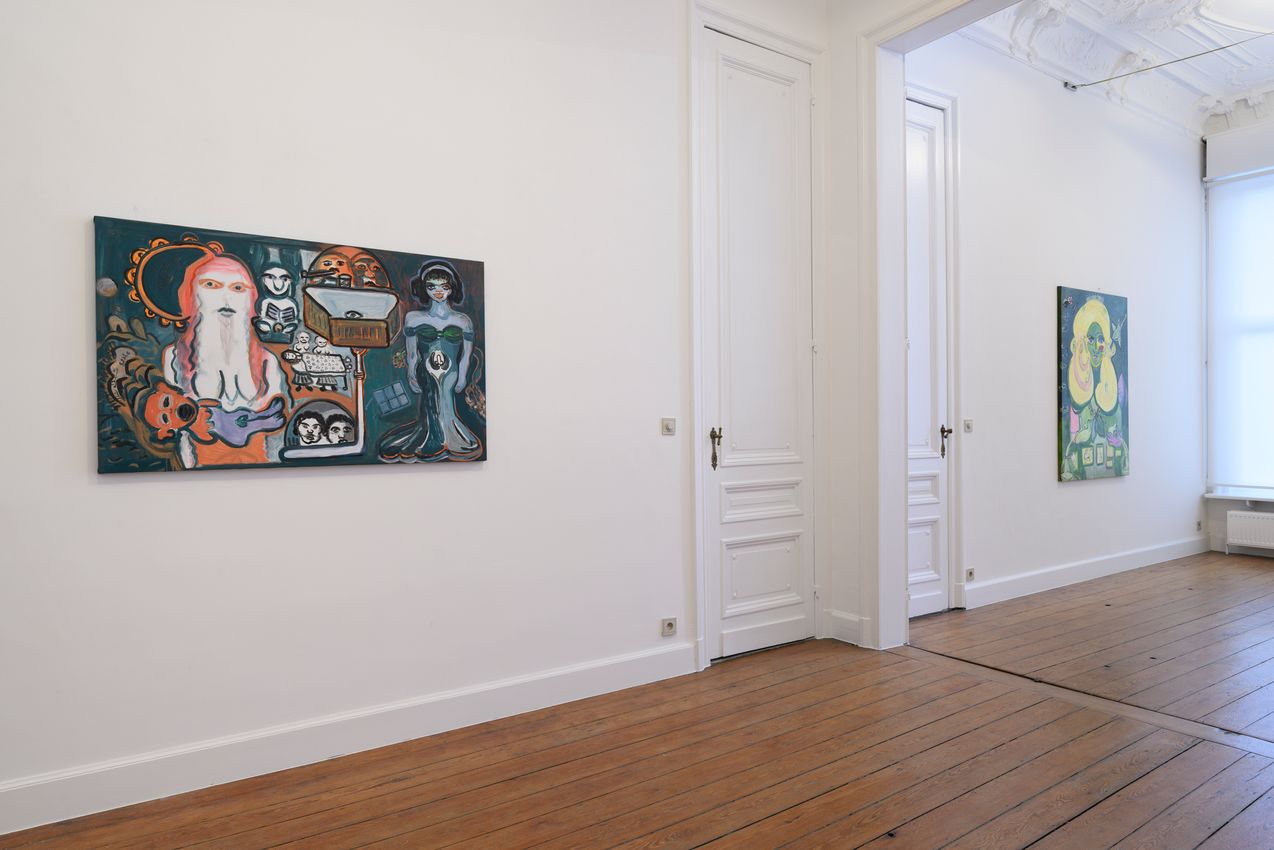
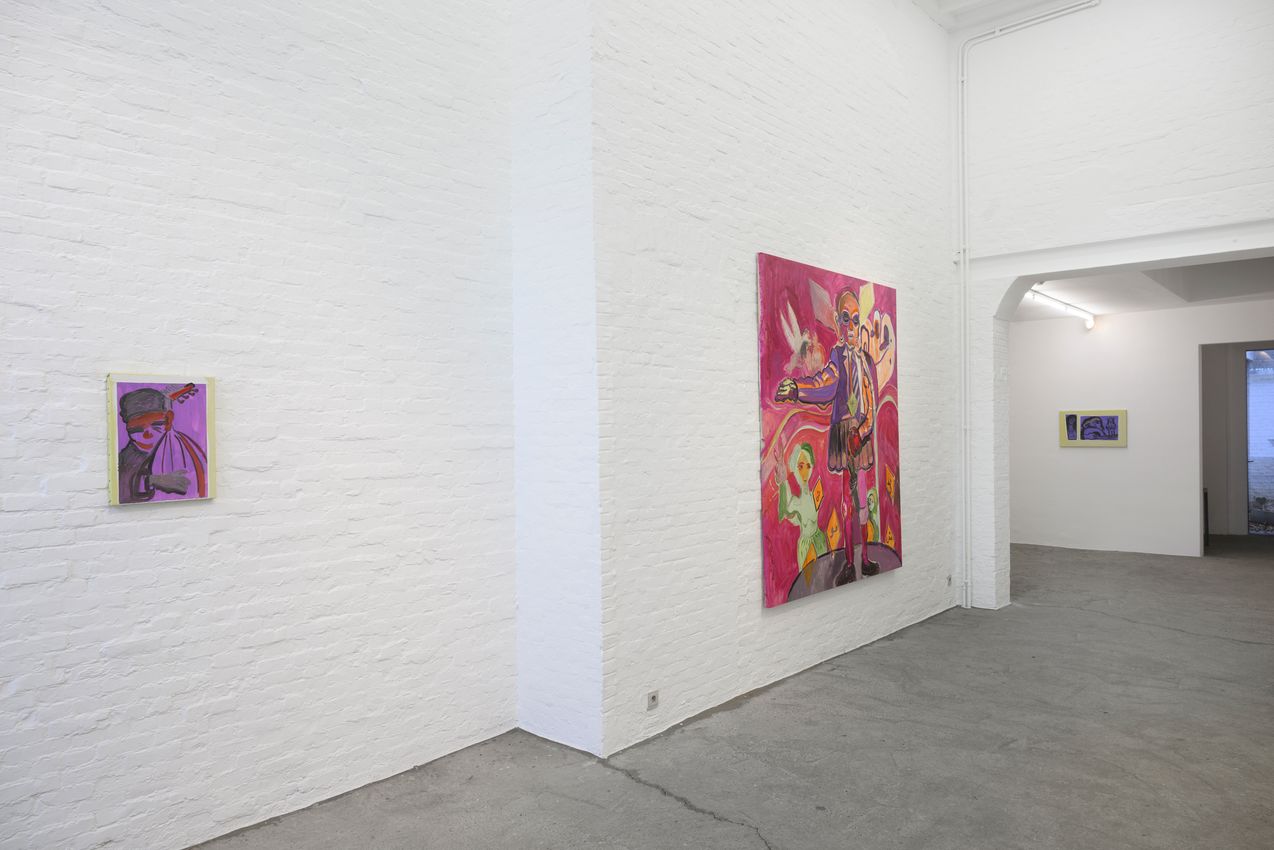
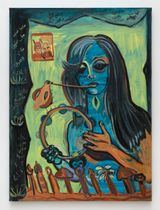
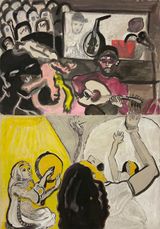
Mounira Al Solh presents her first solo exhibition at Zeno X Gallery, following an initial presentation of herwork in the group exhibition OFF ROAD II in 2021. The Lovers, Nahawand and Saba exhibition consists ofnew paintings as well as works on paper and a film.

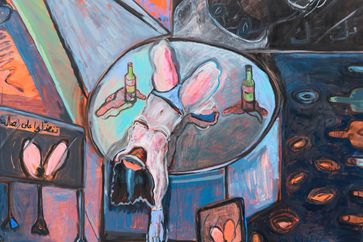
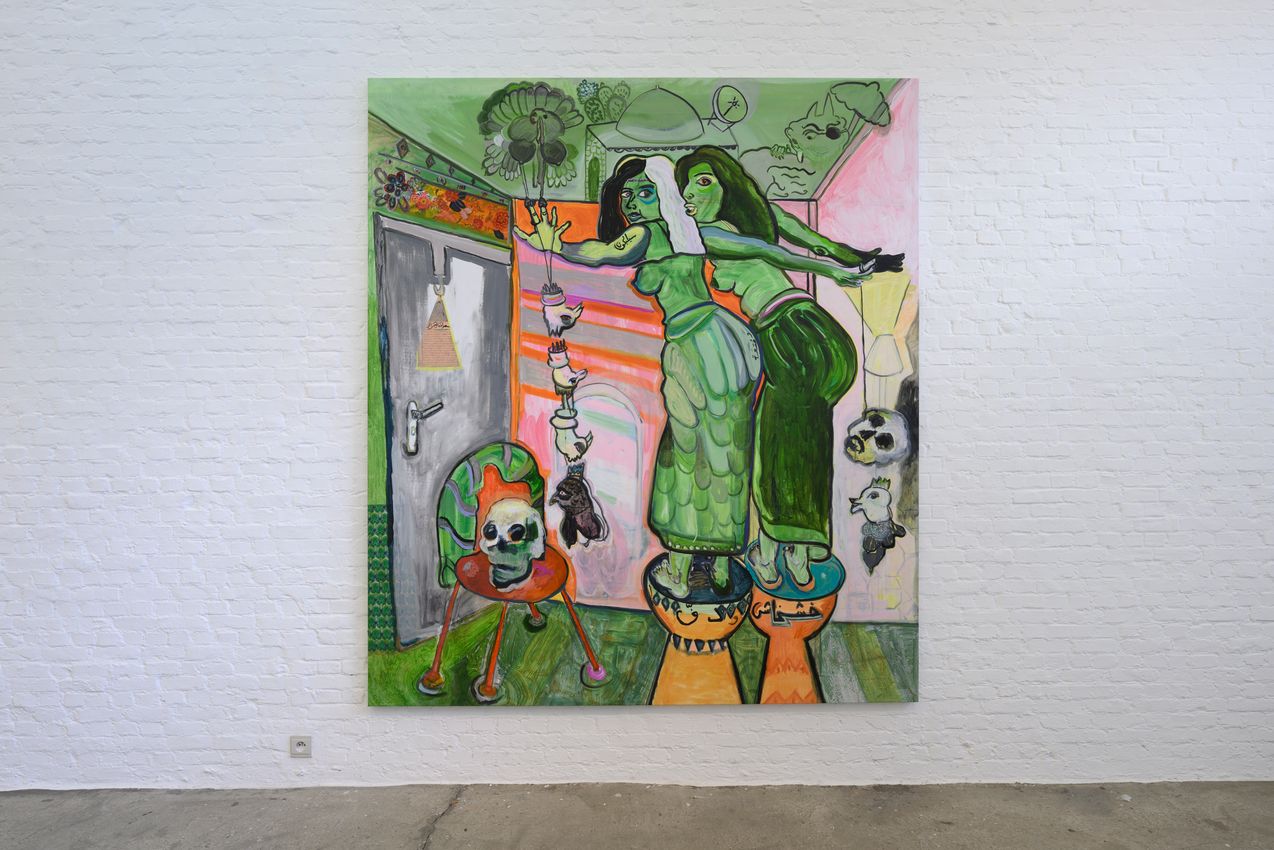
The exhibition evokes images of Beirut’s rich music scene: it flourished in the 1950s and 1960s and thenbloomed again after the Lebanese Civil War (1975–90). The paintings conjure up the elated atmospherethat prevailed in the numerous concert halls and cafés, but also refer to the rich film industry from Egypt,Syria and Morocco, in which singers often featured in leading roles.

Al Solh’s exuberant use of colour is reminiscent of the flamboyant, occasionally kitschy sets of MiddleEastern TV shows and concerts. Famous musicians from the Arab world such as Umm Kulthum, Fairuz,Sabah and Samira Tawfik as well as Sabah Fakhri are shown without being literally portrayed; rather, thepaintings call up the charisma or aura of the performers and refer to the content of their most famoussongs. Just as a certain smell or taste can propel someone to a far-off moment, music can also evokecertain feelings from the past. Fairuz’s songs, for instance, remind Mounira Al Solh of mornings as a childduring the Lebanese Civil War; many of Fairuz’s songs are listened to in the Arab world in the morningbecause both the rhythms and the lyrics have a compelling effect. The painting The Sea, in Love; and theCockroach Sings also illustrates a personal memory of a committed Egyptian singer her parents met inthe 1970s.

‘Nahawand’, ‘Saba’ and ‘Ou’shak’ (playfully translated as ‘Lovers’) are three names of keys used in Arabic,Turkish and Persian music. After all, music transcends linguistic as well as geographical boundaries andbrings people together. From Syria and Morocco to Iraq and Sudan, for instance, people know the samelive recordings of Egyptian singer Umm Kulthum, or Warda and Baligh Hamdi, including the cheers andapplause of the audience. The Arabic words and phrases in Al Solh’s paintings are sonic elements which,like the many other visual elements, evoke several associations and lend rhythm to the compositions.

The words can often also be read as voices rising up against injustice. Music played an important roleduring the Lebanese revolution in 2019. The resistance was mainly led by women and young people, withdancing and singing in the streets as a peaceful form of protest. Music can also help process trauma, suchas the recent explosion at the Port of Beirut on 4 August 2020.

The film The Un-Musical Vase is a compilation of self-made clips in which Al Solh dances and sings, as away to warm up and relax in the studio. To amplify the music in her studio, the artist often uses a vase. Theshort music videos refer to the ubiquity of dance videos on social media–with technical imperfections–and the way people shared intimate videos with each other during the pandemic. With this work, Al Solhexplores the boundaries between the private and public spheres.

Mounira Al Solh (1978) lives and works in the Netherlands and Lebanon. She studied painting at theLebanese University in Beirut and fine arts at the Gerrit Rietveld Academie in Amsterdam. From 2006 to2008 she was a resident at the Rijksakademie in Amsterdam.

In 2017 she participated in documenta 14 in Kassel and Athens. In 2022 she had solo exhibitions atBALTIC Centre for Contemporary Art in Gateshead and Felix Nussbaum Haus in Osnabrück. Other soloexhibitions took place at Mori Art Museum in Tokyo (2020), Musée National Pablo Picasso in Vallauris(2020), The Art Institute of Chicago (2018), Mathaf in Doha (2018), Alt Art Space in Istanbul (2016), KWInstitute for Contemporary Art in Berlin (2014), Centre for Contemporary Arts in Glasgow (2013), Art inGeneral in New York (2012) and Stedelijk Museum Bureau Amsterdam (2011).

Read More

Installation Views

Mounira Al Solh: How to Live Musically Conversation Mounira Al Solh: How to Live Musically Mounira Al Solh’s new paintings explore sounds across the Arab world, their histories, and the clamours of revolution. Read the story
About the Artist

Mounira Al Solh’s paintings, drawings, performances, textiles, videos, and installations narrate the histories and experiences of her broad family and community. The personal stories are often closely interwoven with the political: Al Solh’s work reflects on themes such as migration, identity, language, trauma and feminism. Many of her projects are rooted in a collaborative and socially engaged practice.

View Artist Profile Mounira Al Solh contemporary artist
About the Gallery

In 1981, Frank and Eliane Demaegd founded Zeno X Gallery in an early 20th century townhouse in the Antwerp South district. In the early years the program of the gallery was mainly focused on architecture and installations with artists such as John Körmeling, Rem Koolhaas, Anne-Mie Van Kerckhoven and Patrick Van Caeckenbergh. Nowadays the gallery represents around thirty artists which operate in many different mediums such as painting, sculpture, film, photography and performance.

View Gallery Profile
Address

30 November–17 December 2022
&
11 January–28 January 2023

(1)
Antwerp Leopold De Waelplaats 16, 2000 Antwerp South
Zeno X Gallery
Leopold De Waelplaats 16, 2000 Antwerp South, Antwerp, Belgium
+32 3 216 16 26
http://www.zeno-x.com

Opening hours
Wed - Sat, 1pm - 5pm
Or by appointment
The art world in focus