





DAWOUD BEY
b. 1953, United StatesDawoud Bey, based in Chicago, was born in 1953 in Queens, New York. Celebrated for his rich, psychologically compelling portraits, Bey explores in his work a range of formal and material methodologies to create images and projects that connect deeply with the communities he photographs.
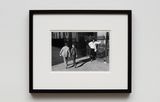
Bey came to attention with Harlem, U.S.A. (1975–1979) a visual journey through the iconic neighbourhood that, in 1979, also comprised his first solo exhibition at The Studio Museum in Harlem. Since then, Bey’s photographic and social practice—he is highly regarded as an educator as well as a photographer—has been defined by the empathy he brings to his subjects and the complexity with which he depicts them. In succeeding decades and successive bodies of work, Bey has moved from working ‘in the streets’ with a small, hand-held 35mm camera to creating more formally structured portraits using a tripod mounted 4 x 5 camera and the monumental 20 x 24 Polaroid View Camera.
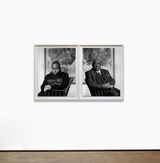
Bey’s conceptual and material evolution is, in part, a desire to find other ways of making his work within the context of his community and museum-based projects. Bey has pioneered programs that redefine how artists engage with institutions, while striving to make those spaces more accessible to the communities they serve. ‘Class Pictures’ (2002–2006) expands upon a series of portraits the artist first created during a residency in 1992 at the Addison Gallery of American Art at Phillips Andover. In this series Bey collaborated with young people and institutions throughout the United States. These striking, large-scale colour portraits of students depict teenagers from a range of economic, social, and ethnic backgrounds, creating a diverse collection of portraits of a generation that challenge teenage stereotypes.
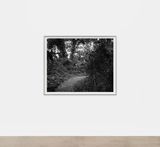
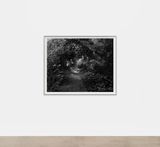
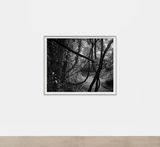
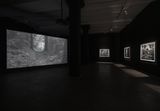
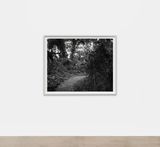
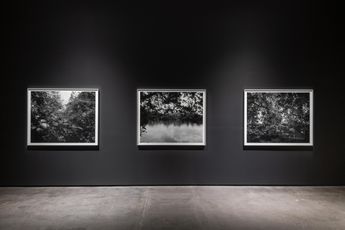
Recent bodies of work focus on the construction of history and memory. The Birmingham Project (2013) memorialises the lives of six young African American children killed in the bombing of the 1963 Sixteenth Street Baptist Church in Birmingham, Alabama and its aftermath: for ‘Harlem Redux’ (2014–2017), Bey revisited the neighbourhood to witness an urban landscape dramatically transformed by gentrification; and in ‘Night Coming Tenderly, Black’ (2017) Bey focused on architecture and landscape to visualise the historical subject of the Underground Railroad. Bey continues his visualisation of collective experience and history, using photography as a vehicle to make them resonant in the contemporary moment.
Dawoud Bey holds a Master of Fine Arts degree from Yale University School of Art and is currently Professor of Art and a former Distinguished College Artist at Columbia College Chicago. In 2017 Bey was awarded the MacArthur Foundation ‘Genius’ Fellowship. He is also the recipient of fellowships from United States Artists, the John Simon Guggenheim Memorial Foundation and the National Endowment for the Arts, amongst other honours. In 2020, the San Francisco Museum of Modern Art and the Whitney Museum of American Art will open a major retrospective exhibition of Bey’s work that will also travel to the High Museum of Art, Atlanta.
Bey’s work is featured in numerous publications, and is the subject of numerous monographs and publications, including Class Pictures (Aperture, 2007), Harlem, USA (Yale University Press, 2012), Picturing People (Renaissance Society at the University of Chicago, 2012), and Dawoud Bey: The Birmingham Project (Birmingham Museum of Art, 2013). In 2018 a major forty-year retrospective publication, Dawoud Bey: Seeing Deeply, was published by the University of Texas Press and in 2020, Dawoud Bey: Two American Projects will be published by Yale University Press and SFMOMA.
Dawoud Bey’s work has been included in important solo and group exhibitions worldwide and is included in the permanent collections of the Addison Gallery of American Art, the Art Institute of Chicago, the Brooklyn Museum, the Detroit Institute of Arts, the Fogg Art Museum at Harvard University, the High Museum of Art, the J. Paul Getty Museum, the Museum of Contemporary Art Chicago, the Museum of Contemporary Photography, the Museum of Modern Art, NY, the San Francisco Museum of Modern Art, the Solomon R. Guggenheim Museum, the Studio Museum in Harlem, the Tate Modern, the Whitney Museum of American Art, and other museums internationally.
Courtesy Sean Kelly

Works at Sean Kelly

















Explore and Follow Artists Shaping Contemporary Art
A respected voice in contemporary art discourse.
Focusing on ambitious storytelling and insightful art-world commentary. Ocula Magazine publishes in-depth interviews, critical essays and timely analysis on the artists, exhibitions and ideas driving the global art world.
Learn more about Ocula Magazine
Showcasing the best of the art world.
Ocula partners with galleries from around the world to highlight their artists, artworks and exhibitions. Gallery membership is by application and invitation, with each member vetted by an independent panel.
Learn more about Ocula Membership
Specialises in the sale of major artworks.
Led by a team with deep ties to the world’s leading auction houses, galleries and collectors. Ocula’s advisory team offers bespoke services to high-net-worth clients from around the world who are looking to acquire the best of contemporary and modern art.
Learn more about our team and services