






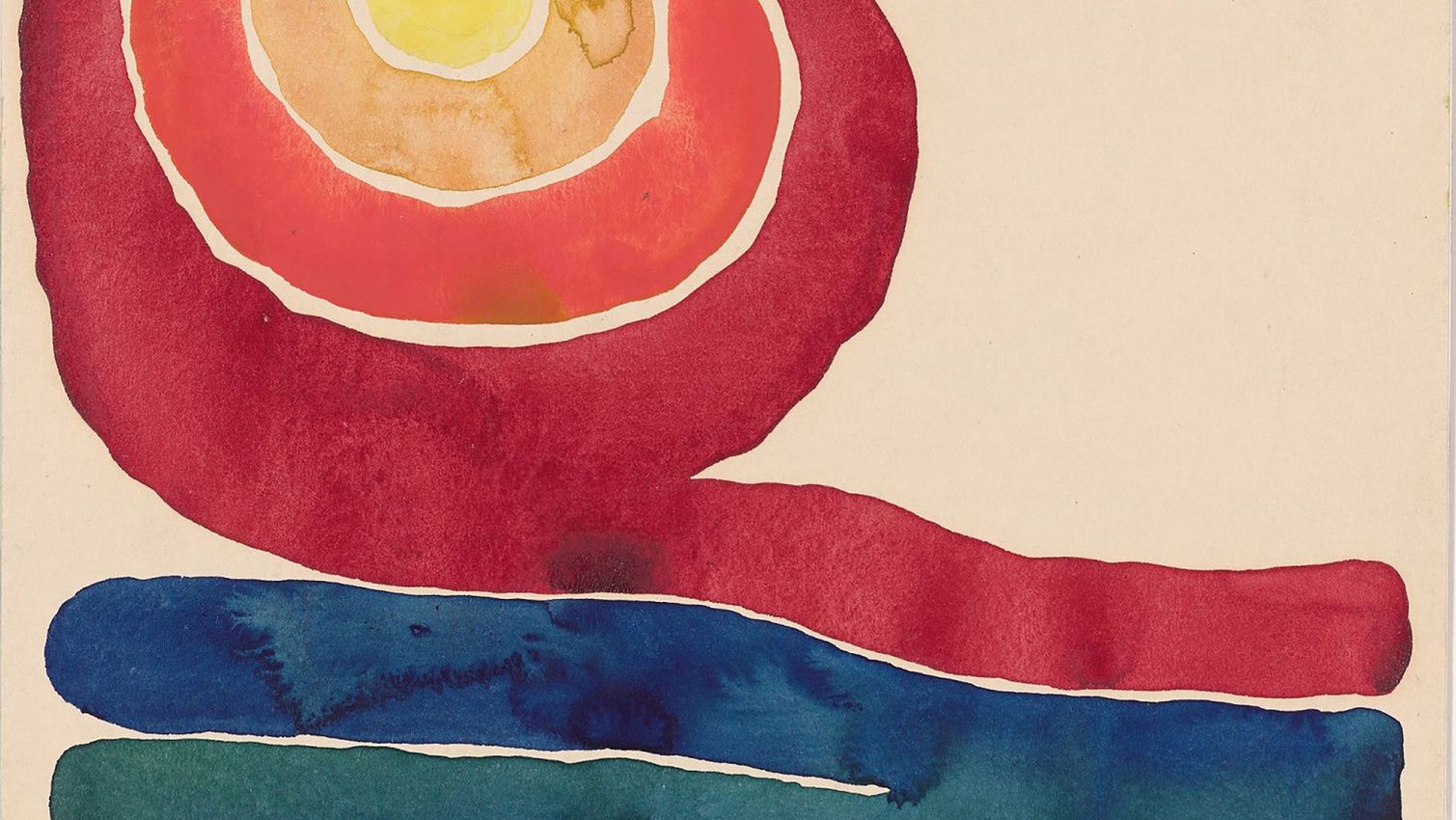
GEORGIA O'KEEFFE
1887-1986, United StatesGeorgia O’Keeffe was an American modernist painter, famous for her close-up flower images, towering skyscrapers, cattle skulls and dramatic semi-abstracted desert landscapes and was greatly admired as an extraordinarily independent creative spirit.
Early years and Education
Georgia Totto O’Keeffe (b. 1887, Sun Prairie, Wisconsin – d. 1986, Santa Fe, New Mexico) was initially an art teacher, after first being trained at the Art Institute of Chicago (1905), the Art Students League of New York (1907–8), and the University of Virginia (1912) where she was influenced by the modernist theories of Alon Bement and through him, Arthur Wesley Dow, who promoted a harmonious use of line, colour and tone.
Teaching and early career
She also attended Teachers’ College at Columbia University, N.Y. (1914–16), then taught at primary and high schools in Texas and South Carolina. At this time, she also made a series of innovative abstract charcoal drawings (1915–16) which she exhibited at 291, the photographer Alfred Stieglitz‘s pioneering gallery in downtown Manhattan, an example of which is Drawing XIII (1915).
Encouraged by Stieglitz she stopped teaching in 1918 to work at painting full-time and made friends in the Stieglitz circle with other modernist avant-garde artists like Arthur Dove, Marsden Hartley, John Marin and Paul Strand: a community of articulate intellectuals who shared similar ideas. In 1924 she and Stieglitz got married, remaining so until to his death in 1946. He made many striking portraits and figure studies (nude and clothed) of her.
Skyline paintings
In the early 1920s she made paintings of the New York skyline, depicting the gridded architectural configurations from a distance or close-up, from ground-level or out of high windows as seen variously in Radiator Building—Night, New York (1927); Manhattan (1932); East River from the Shelton Hotel (1932).
Origin of the flower paintings
After making a series of visits to the Stieglitz family home in Lake George in the early 1920s, she became interested in organic, semi-abstract close-ups of flowers, as in Jimson Weed / White Flower #1 (1932); Abstraction White Rose (1927); Red Canna (1923); Grey Line with Black, Blue and Yellow (1923), and doing preparatory botanical studies in watercolour.
With these, haunting abstract shapes began to emerge, and she developed an ‘immersive’ way of depicting botany, exploiting the expressive, undulating edges of flattened forms.
Landscapes and New Mexico
In the late 20s, when her relationship with Stieglitz became strained, she began to take annual trips to New Mexico where she became captivated by the distinctive landforms, earth colours and the sky. An elegant drama and distinctive atmosphere became apparent in her desert depictions, or in images of bleached animal bones (such as skulls or pelvises) with symmetrical osseous horned icons suspended in the aether, or bone holes that enclosed the sky. Examples of such works are: Black Mesa Landscape, New Mexico / Out Back of Marie’s II (1930); New Mexico Landscape (1930); Ranchos Church, New Mexico (1931); Near Abiquiu, New Mexico (1931); The Cliff Chimneys (1938); Pedernal (1941); Ram’s Head, White Hollyhock-Hills (Ram’s Head and White Hollyhock, New Mexico) (1935); and Pelvis IV (1944).
Later developments
In 1949, after Stieglitz’s death, she moved to New Mexico where she lived between two houses, one in Ghost Ranch and the other in Abiquiú, and continued painting for another 35 years depicting her surroundings as seen in works such as The Mountains (1951) and Mountains and Lake (1961). In the late 70s she also began making ceramics under the influence of her personal assistant Juan Hamilton. In 1984 deteriorating eyesight forced her to stop making art. She died two years later in Santa Fe.
Exhibitions
Georgia O’Keeffe has been the subject of many solo and group exhibitions. Notable solo exhibitions include:
- Georgia O’Keeffe, Centre Pompidou, Paris (2021);
- Georgia O’Keeffe: Pattern of Leaves, The Hyde Collection, Glen Falls (2021);
- Spotlight On Spring, Georgia O’Keeffe Art Museum, Santa Fe (2021);
- Georgia O’Keeffe: Things I Had No Words For, Newport Art Museum, Rhode Island (2022);
- Georgia O’Keeffe, Photographer, Denver Art Museum, Denver (2022);
- Georgia O’Keeffe and American Modernism, McNay Museum, San Antonio (2022).
Recent group exhibitions include:
- The Beyond: Georgia O’Keeffe and Contemporary Art, Crystal Bridge Museum of American Art, Bentonville (2018);
- Women Take the Floor, Museum of Fine Arts, Boston (2019);
- Departures and Divisions, Variations in American Styles, 1900-1950, Tacoma Art Museum, Tacoma, Washington (2022);
- At the Dawn of a New Age; Early Twentieth Century Modernism, Whitney Museum of American Art, New York (2022).
Where to find Georgia O’Keeffe’s art:
Georgia O’Keeffe Museum, Santa Fe; Phillips Collection, Washington, DC; Hyde Collection, Glen Falls, New York State; Tate, London; Fondation Beyeler, Basel; Smithsonian American Art Museum, Washington, DC; Hirshhorn Museum and Sculpture Garden, Washington, DC; The Art Institute of Chicago; Crystal Bridge Museum of American Art, Bentonville.
Georgia O'Keeffe FAQs
Who was Georgia O’Keeffe?
Georgia O’Keeffe was an iconic American modernist painter, celebrated for her close-up depictions of flowers, dramatic desert landscapes, and striking cattle skulls. Known for her innovative approach to abstraction, O’Keeffe’s art captured the beauty of nature in a deeply personal way. She became one of the most influential artists of the 20th century, with renowned works like “Jimson Weed / White Flower #1” and “Black Mesa Landscape”.
What influenced Georgia O’Keeffe’s art?
O’Keeffe’s artistic development was influenced by her education at the Art Institute of Chicago and the Art Students League of New York, where she was taught by modernist theorists like Alon Bement. Her work was further shaped by her relationship with photographer Alfred Stieglitz, who encouraged her to pursue painting full-time. The landscapes of New Mexico and the organic forms of flowers deeply inspired her later works, reflecting her unique ability to blend abstraction with nature’s intricate details.
Where can I see Georgia O’Keeffe’s art?
Georgia O’Keeffe’s art can be found in major galleries and museums around the world. Notable locations include the Georgia O’Keeffe Museum in Santa Fe, the Tate in London, the Smithsonian American Art Museum in Washington, DC, and the Crystal Bridges Museum of American Art in Bentonville. Her work is regularly featured in exhibitions, such as “Georgia O’Keeffe: Pattern of Leaves” at The Hyde Collection and “Georgia O’Keeffe, Photographer” at the Denver Art Museum.
What are Georgia O’Keeffe’s most famous paintings?
Georgia O’Keeffe’s most famous paintings include her close-up flower studies such as “Jimson Weed / White Flower #1” (1932) and “Red Canna” (1923), as well as her distinctive New Mexico landscapes like “Black Mesa Landscape” (1930) and “Pedernal” (1941). Her work often explored organic, semi-abstract shapes, with themes such as towering city skylines and the stark beauty of desert landscapes.
John Hurrell | Ocula | 2025






Explore and Follow Artists Shaping Contemporary Art
A respected voice in contemporary art discourse.
Focusing on ambitious storytelling and insightful art-world commentary. Ocula Magazine publishes in-depth interviews, critical essays and timely analysis on the artists, exhibitions and ideas driving the global art world.
Learn more about Ocula Magazine
Showcasing the best of the art world.
Ocula partners with galleries from around the world to highlight their artists, artworks and exhibitions. Gallery membership is by application and invitation, with each member vetted by an independent panel.
Learn more about Ocula Membership
Specialises in the sale of major artworks.
Led by a team with deep ties to the world’s leading auction houses, galleries and collectors. Ocula’s advisory team offers bespoke services to high-net-worth clients from around the world who are looking to acquire the best of contemporary and modern art.
Learn more about our team and services