





KAWAYAN DE GUIA
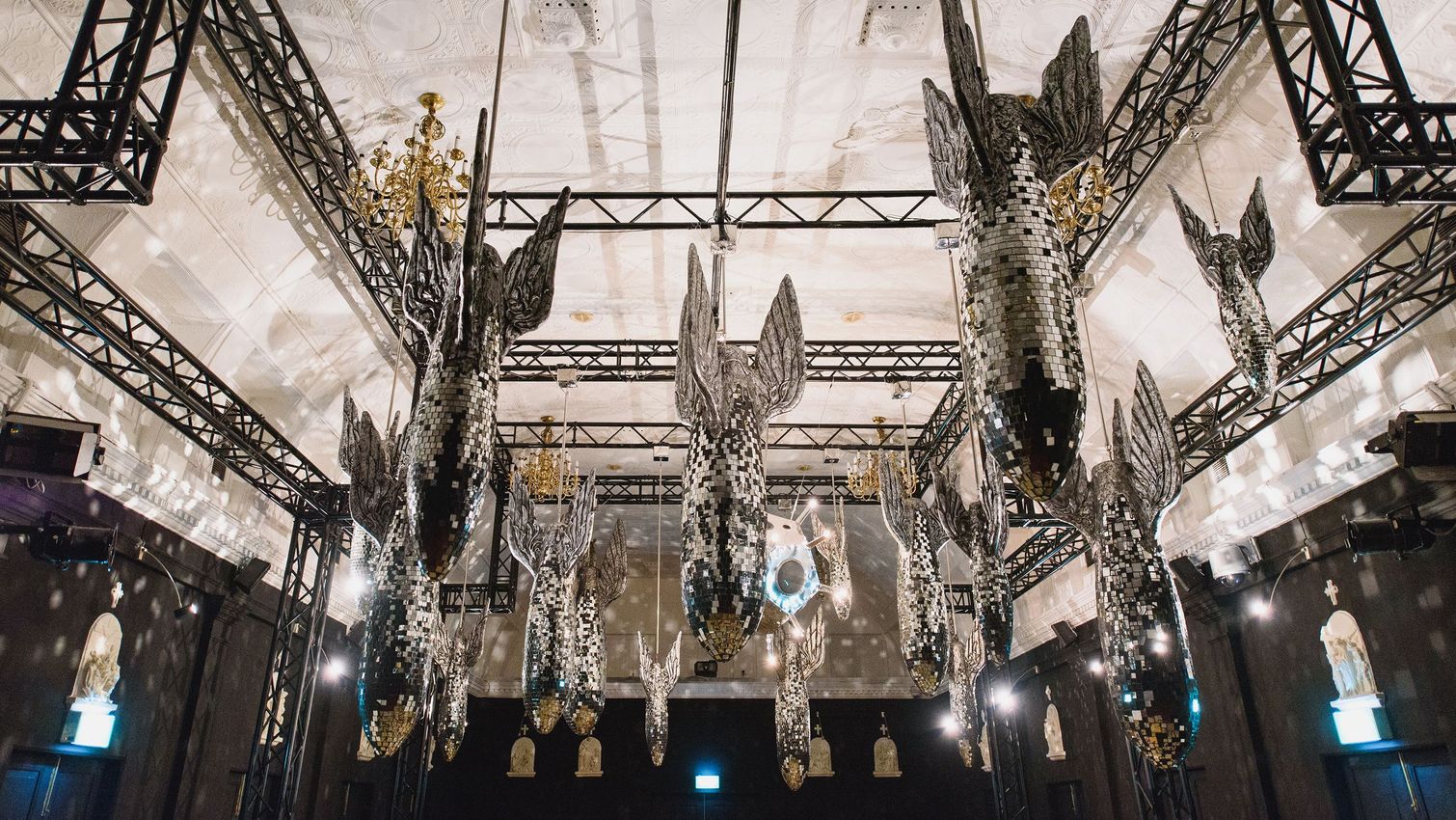
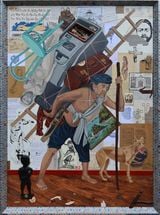
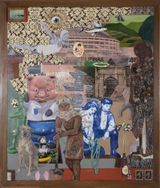
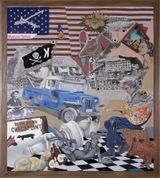
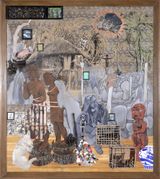
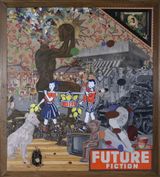
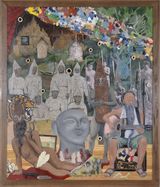
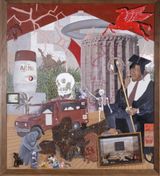
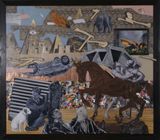
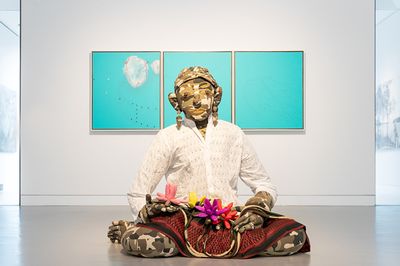
b. 1979, PhilippinesKawayan de Guia is a Baguio City-based artist and curator whose practice spans painting, installation and sculpture. His artworks use indigenous and colonial artefacts, playfully transforming them into lavish and often ironic critiques of consumerism, global trade and the impact of the American occupation of the Philippines.
Born in 1979, De Guia draws upon a wide array of Pinoy material culture including Jeepneys, Dangwa buses, jukeboxes, torpedoes and Ifugao rice gods. By juxtaposing remnants of differing periods, meanings and methods of production, de Guia unfolds the precarious narratives in which these objects come into being, and how they shape the complex social and political milieu of the mountainous Cordillera region in which the artist’s work is deeply embedded.
The son of renown filmmaker Kidlat Tahimik, de Guia came of age in an era when culture was utilised as a tool for nation-state building in the Philippines. His father helped inaugurate the Baguio International Arts Festival in 1989, which spotlighted the region as an epicentre for indigenous heritage and art, and introduced the young artist to a number of his mentors including Santiago Bose, Benedicto Cabrera and Robert Villanueva. After graduating, De Guia sought to ‘find his own way’, walking a Buddhist path from Japan to Kathmandu, making and documenting art as he went. The results of this were exhibited at his solo show at Lopez Museum in Pasig. In 2007, he received the prestigious Ateneo Art Award for his exhibition ‘Incubator’, which paid homage to his many artistic forebears. The surreal ‘portraits’ in ‘Incubator’ are emblematic of his hermetically sealed environments, canvases that are adorned with an eclectic mix of religious and secular, high and low art imagery.
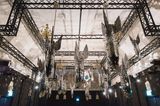
In 2012, the artist initiated AX(iS) Art Project, a biannual festival that engages curators and contemporary artists with local communities and artisans. Across five days, participants travelled by bus along the Halsema highway between Baguio and Bontoc in northern Luzon, creating site-specific works that responded to the changing cultural fabric of the region. In 2014, he participated in ‘Markets of Resistance’, a collaborative art project that allowed members of the public to barter for artworks. De Guia’s De Liberating a Fall (2014) consisted of a large-scale Statue of Liberty mounted above Baguio City Public Market. The work interrogates the ‘liberating’ force of capitalism and the economic impacts of globalisation on domestic workers and regional trade.
Amy Weng | Ocula | 2020


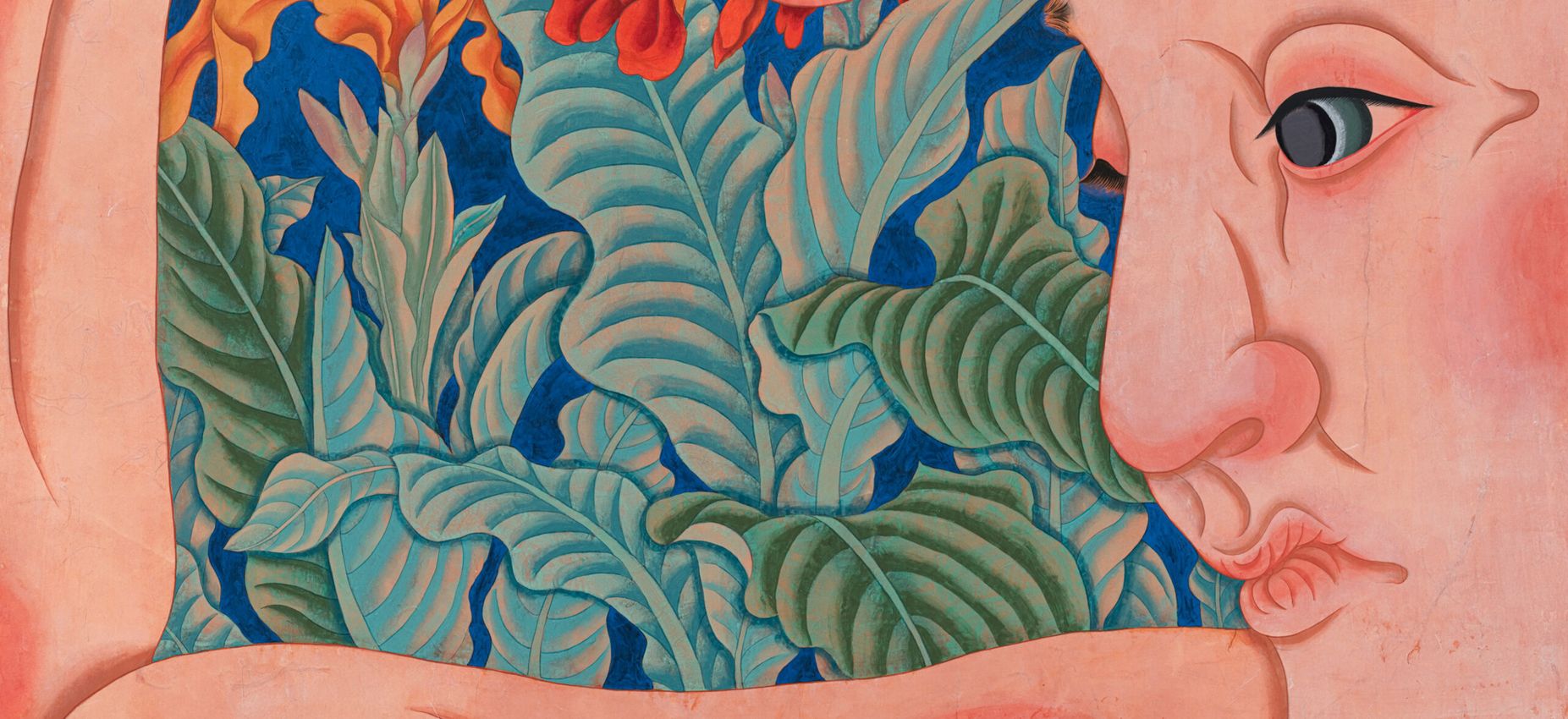


327 x 168.5 cm
Ames Yavuz Request Price & Availability














Explore and Follow Artists Shaping Contemporary Art
A respected voice in contemporary art discourse.
Focusing on ambitious storytelling and insightful art-world commentary. Ocula Magazine publishes in-depth interviews, critical essays and timely analysis on the artists, exhibitions and ideas driving the global art world.
Learn more about Ocula Magazine
Showcasing the best of the art world.
Ocula partners with galleries from around the world to highlight their artists, artworks and exhibitions. Gallery membership is by application and invitation, with each member vetted by an independent panel.
Learn more about Ocula Membership
Specialises in the sale of major artworks.
Led by a team with deep ties to the world’s leading auction houses, galleries and collectors. Ocula’s advisory team offers bespoke services to high-net-worth clients from around the world who are looking to acquire the best of contemporary and modern art.
Learn more about our team and services