

KRZYSZTOF GRZYBACZ
Krzysztof Grzybacz’s artistic practice depicts the nuances of the human body and the natural world in a style frequently described as having “painterly precision”. From still lifes to flowers, and fantastical figures to renderings of textiles, he blends abstract and figurative elements to explore emotion, intuition, and the way nature co-exists with the everyday structures of humanity.
Early Years
Krzysztof Grzybacz was born in 1993 and raised in what he has described (in translation) as “a rather conservative village”. Grzybacz’s father was a painter and used to sell his artworks from a popcorn machine he has set up at the ice rink in Rabka-Zdrój (south of Kraków). Wanting to be an artist too, Grzybacz was inspired by his father’s works and originally tried to paint like him: flowers, landscapes and sunsets. However, he has described his existence as a young gay man in conservative Poland as being “a mermaid” and he adapted his artistic practice, using portraiture to protect himself from bullying by painting pictures of his friends. “Painting became a way for me to survive,” he has said (in translation). He graduated from the Academy of Fine Arts in Kraków in 2019.
Krzysztof Grzybacz: Artworks
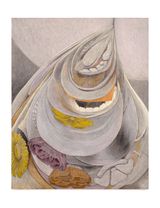
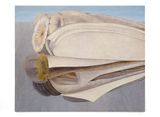
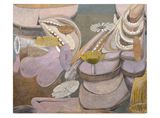
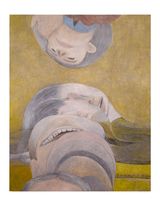
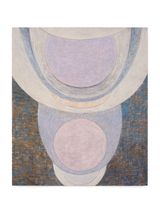
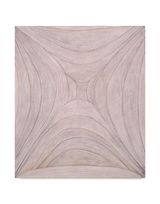
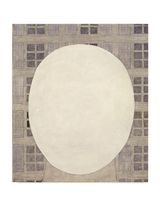
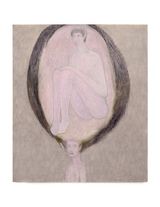
Krzysztof Grzybacz’s early paintings foregrounded manufactured products including lighters, nail clippers and cosmetics, as well as figures with multiple eyes and mouths, as part of a practice that considers how humans, the natural world and everyday objects interact. From 2022, he moved towards botanical forms, and his practice has subsequently considered how bodies retain traces of earlier selves and lived experiences. Painting mostly in oil on canvas, he rubs away areas of paint to reveal space beneath; his pencil drawings use delicate lines to capture emotions and quiet moments in daily life.
- In Talk (2023), Grzybacz invites viewers to share a moment of gossip: two figures are talking through cupped hands, but out of their mouths fall other mouths, which morph into breasts and bottoms (a metaphor for the transformation of gossip when it is passed around?) Next to a multitude of pointing fingers, in the bottom left of the picture, an ear is listening.
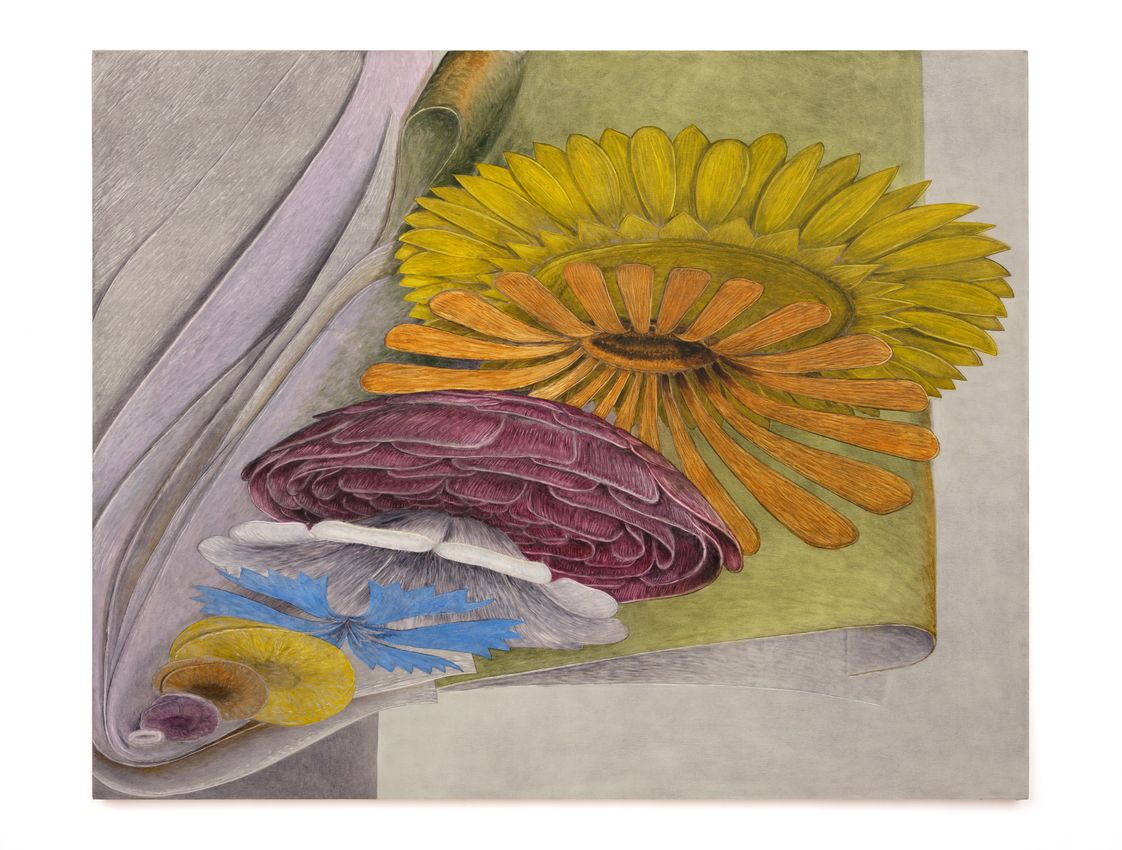
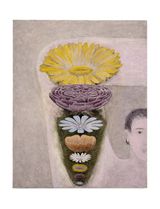
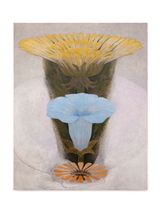
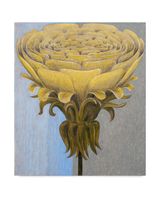
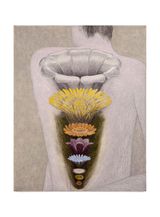
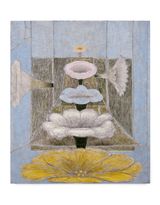
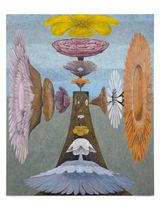
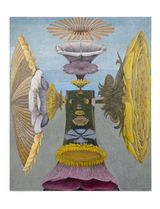
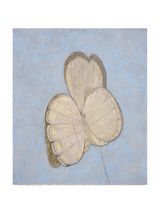
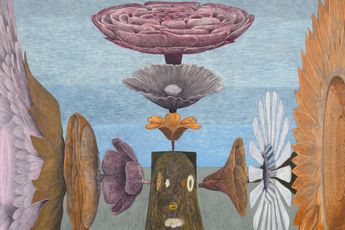
- Flowers are a frequent subject of Grzybacz’s artworks and represent two distinct meanings. First, the compositions and colours of the formal history of painting; second, a reference to the LGBTQ+ community—for flowers grow and bloom, they negotiate space and establish boundaries.
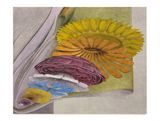
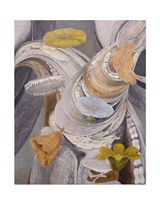
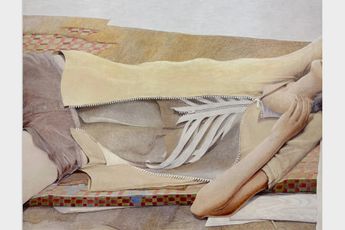
- Grzybacz’s 2026 London exhibition, Haruspex took its title from an ancient Etruscan religious figure who interpreted the entrails of sacrificed animals to read signs of divine will. The idea of looking beyond the surface resonates with Grzybacz’s painting practice (removing elements and peeling back). In Torso (2026) it appears as if a body is covered in partially unzipped textiles, but actually they are merging into one.
Krzysztof Grzybacz: Select Exhibitions
Select Solo Exhibitions
- Haruspex, Pace, London (2026)
- To Empty Out, Mendes Wood DM, Brussels (2025)
- Floral arrangements, Dawid Radziszewski Gallery, Warsaw (2025)
- Krzysztof Grzybacz: Does It Ever Happen, X Museum, Beijing (2024)
- At the Centre of the Onion is Another Onion, Harkawik Gallery, New York City (2023)
- Krzysztof Grzybacz, Dawid Radziszewski and Clay Warsaw (2022)
- Windowless car, Nicola Pedana Gallery, Caserta (2022)
- By mail today eleven thoughts, six of them were about love, Serce human, Warsaw (2020)
- Balsam, with Filip Rybkowski, Krupa Gallery, Wrocław (2020)
- Night diary, JEST Gallery, Wrocław (2019)
Select Group Exhibitions
- Birds and Flowers, Dawid Radziszewski, Vienna (2024)
- Weaving in Entanglement, Mending in Punctures, 69 Art Campus, Beijing (2024)
- De Profundis Oscar Wilde, Daniel Malarkey, Paris (2023)
- Gypsum Flesh Story, ASP Kraków Gallery (2023)
- Manscaping, The Hole Gallery, Los Angeles (2022)
- No Body, Henryk Gallery, Kraków (2022)
- Paulinka and Lucynka, Henryk Gallery, Kraków (2021)
- In these days of tumult, heat and dazzle I retreat in my mind, Stefan Gierowski Foundation, Warsaw (2021)
- Hyperbole, Nicola Pedana Gallery, Caserta (2021)
- We paint what ghosts and angels tell us to (with Zuzanna Bartoszek) Serce Człowieka, Warsaw (2020)
- Will you still love me, magically?, Cyrki, Kraków (2020)
- 44th Painting Biennale Bielska Jesień 2019, Galeria Bielska BWA, Bielsko-Biała (2019)
- Honey, as long as you’re happy, I’m happy, Galeria Bronowice, Kraków (2019)
- When I’m bored, I send myself into the future, Ślusarska 9, Kraków (2018)
- DeKaThLoN, gallery #404, Stradomska 27/7, Kraków (2017)
- Boring, Skład Długa, Kraków (2016)
Further Reading
- Krzysztof Grzybacz’s website
- Krzysztof Grzybacz’s Instagram
- Artist profile page at David Radziszewski
Krzysztof Grzybacz FAQs
What materials and techniques does Krzysztof Grzybacz use?
Grzybacz starts his artistic process with drawing. “I produce stacks of them,” he said in 2022. He also makes sketches of paintings, and these allow him to imagine future works and to consider what will make sense on canvas. He paints exclusively on wet oil paint, applying the paint in thin layers and then removing and washing it to reveal the canvas beneath, mostly using sponges.
How does Krzysztof Grzybacz perceive colour?
The description of his 2026 London exhibition, Haruspex connected Grzybacz’s use of colour to his interest in the idea that the evolution of colour in plants has shaped the development of the perception of colour in animals and humans, so colour has biological and cultural significance.
What are Krzysztof Grzybacz’s influences?
Growing up in the countryside, but also consuming mass media including animation, Polish films and digital culture, Krzysztof Grzybacz’s style adopts both surreal and expressive elements from these sources in his interpretation of the ordinary moments from daily life.
Ocula





















Explore and Follow Artists Shaping Contemporary Art
A respected voice in contemporary art discourse.
Focusing on ambitious storytelling and insightful art-world commentary. Ocula Magazine publishes in-depth interviews, critical essays and timely analysis on the artists, exhibitions and ideas driving the global art world.
Learn more about Ocula Magazine
Showcasing the best of the art world.
Ocula partners with galleries from around the world to highlight their artists, artworks and exhibitions. Gallery membership is by application and invitation, with each member vetted by an independent panel.
Learn more about Ocula Membership
Specialises in the sale of major artworks.
Led by a team with deep ties to the world’s leading auction houses, galleries and collectors. Ocula’s advisory team offers bespoke services to high-net-worth clients from around the world who are looking to acquire the best of contemporary and modern art.
Learn more about our team and services