





MAO YAN
b. 1968, ChinaMao Yan is a leading figure in Chinese contemporary art, celebrated for his hauntingly subtle portraits that evoke the quiet disappearance of individual identity in a rapidly changing world.
Named by renowned art critic Li Xianting as the representative of Chinese Neo-realism, Mao Yan’s works have redefined the possibilities of portraiture, earning him solo exhibitions at major galleries and institutions including Beijing Commune, Pace Gallery, as well as the Song Art Museum, Beijing.
Early Years
Mao Yan was born in 1968 in Xiangtan, Hunan Province, China. Encouraged by his father, he began painting in childhood and was exposed early to both Soviet-era art and European masters such as Eugène Delacroix. By his teenage years, Mao Yan had mastered advanced painting techniques. He graduated from the Oil Painting Department of the Central Academy of Fine Arts in Beijing in 1991, after which he moved to Nanjing to teach at Nanjing University of the Arts—a city whose historical atmosphere resonates with the introspective spirit of his art. Mao Yan continues to live and work in Nanjing.
Mao Yan Artworks
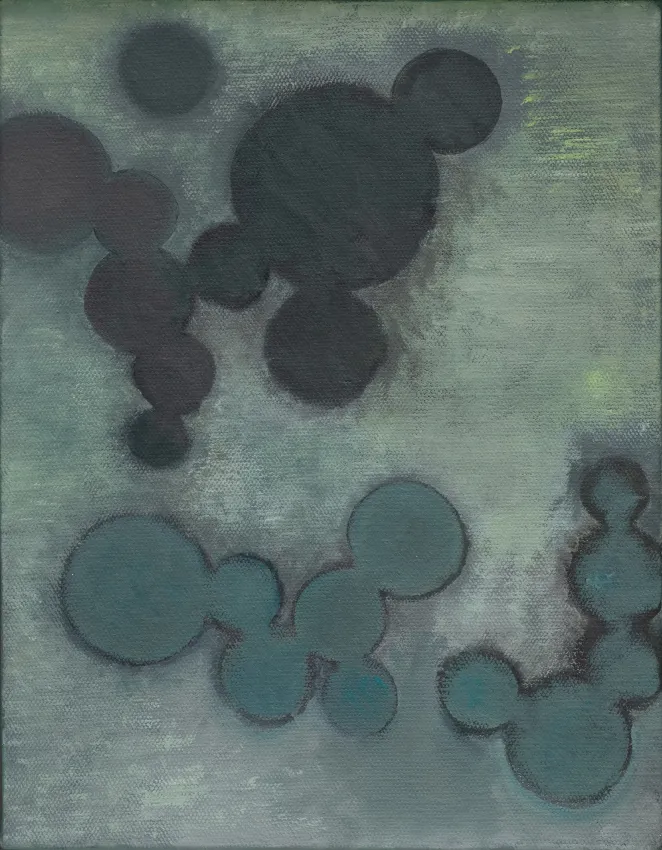
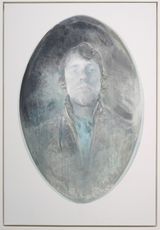
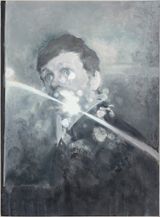
Mao Yan’s contemporary art practice is defined by his meditative approach to portrait painting, using a restrained palette of blue-grey and ashen tones to create ethereal, almost spectral images that transcend time and place. His works are instantly recognisable for their technical finesse and emotional depth, focusing on the essence of his subjects rather than their specific identities.
Early Portraiture and Technical Mastery
In the early 1990s, Mao Yan’s portraits were often full-length figures or tightly cropped busts, rendered with expressive gazes and detailed clothing, using brighter colours and classical poses. These works reflected his classical training and early interest in the psychological depth of the human figure.
The ‘Thomas’ Series and Neo-Realism
Since 1998, Mao Yan has been best known for his ongoing ‘Thomas’ series, using Thomas Rohdewald, a European student, as his model. Over decades, these portraits have evolved from detailed likenesses to increasingly abstracted and ambiguous faces, rendered in his signature cool grey palette. This process, often based on photographs rather than live sittings, reflects Mao Yan’s private, introspective painting method and his desire to move beyond cultural or national identity As Li Xianting writes, Mao Yan’s art ‘portrays an era of disappearing faces’, capturing the spiritual and existential condition of contemporary humanity.
Recent Developments
In recent years, Mao Yan has expanded his practice to include still-life and landscape paintings, while maintaining his poetic, meditative style. His brushwork continues to balance technical precision with expressive abstraction, inviting viewers into a contemplative space.
Select Awards and Accolades
- Martell Artist of the Year, Today Art Museum, Beijing (2013)
- Chinese Oil Painting Art Prize Award, China (1994)
- Excellent Art Work Prize Award, China (1994)
Exhibitions
Mao Yan has been the subject of both solo and group exhibitions at important galleries and institutions. Below is a selection of important exhibitions.
Solo Exhibitions
- Mao Yan: New Paintings, Pace Gallery, London, 2024
- Mao Yan, Song Art Museum, Beijing, 2023
- Mao Yan: By The Edge, Pace Gallery, Hong Kong, 2018
- Mao Yan, Pace Gallery, New York, 2015
- Longing for More; Mao Yan Solo Exhibition, Shanghai Art Museum, 2009
- Mao Yan, N3 Gallery, Beijing, 2016—2017
Group Exhibitions
- Mahjong: Contemporary Chinese Art from the Sigg Collection, Kunstmuseum Bern, Hamburger Kunsthalle, Salzburg Museum der Moderne, UC Berkeley Art Museum, Peabody Essex Museum, 2005—2009
- Chinese Oil Painting in the 20th Century, National Art Museum of China, Beijing and Shanghai Art Museum, 2000—2001
- 30 Years of Chinese Contemporary Art, Minsheng Art Museum, Shanghai, 2010
- Ethos: Mao Yan Works, Art & Public, Geneva, 2012
- Today’s China, Belvue Museum, Brussels, 2008
Mao Yan FAQs
What is Mao Yan best known for in the contemporary art world?
Mao Yan is best known for his ethereal portrait paintings, particularly the ‘Thomas’ series, which use a muted grey-blue palette to evoke the fading individuality of his subjects.
Where can I see Mao Yan’s artworks?
Mao Yan’s artworks are held in public collections such as the Yuz Museum (Shanghai), University Museum and Art Gallery (University of Hong Kong), Shanghai Art Museum, Shenzhen Art Museum, Upriver Gallery (Chengdu), and the Start Museum (Shanghai). His work is also regularly exhibited at Pace Gallery and Beijing Commune.
What artistic influences shape Mao Yan’s work?
Mao Yan’s art is influenced by both European Old Masters like Rembrandt and Delacroix and the traditions of Chinese painting. He consciously avoids overt cultural symbolism, focusing instead on universal spiritual and psychological themes.
How does Mao Yan’s technique distinguish his portraits?
Mao Yan’s technique is marked by delicate, layered brushwork and a restrained palette, creating portraits that balance realism with abstraction. His work is known for its meditative quality and emotional subtlety.
Has Mao Yan received any notable awards?
Yes, Mao Yan has received several honours, including the Martell Artist of the Year (2013) and national painting prizes in China
Are there any random and interesting facts about Mao Yan?
Mao Yan often paints from photographs rather than live sittings, allowing for a more introspective and private creative process. He is also recognised for revitalising classical painting techniques within the context of contemporary art.
How do you pronounce Mao Yan’s name?
Mao Yan is pronounced ‘Mow Yahn’ (rhymes with ‘how’ and ‘yarn’).
Ocula | 2025










Explore and Follow Artists Shaping Contemporary Art
A respected voice in contemporary art discourse.
Focusing on ambitious storytelling and insightful art-world commentary. Ocula Magazine publishes in-depth interviews, critical essays and timely analysis on the artists, exhibitions and ideas driving the global art world.
Learn more about Ocula Magazine
Showcasing the best of the art world.
Ocula partners with galleries from around the world to highlight their artists, artworks and exhibitions. Gallery membership is by application and invitation, with each member vetted by an independent panel.
Learn more about Ocula Membership
Specialises in the sale of major artworks.
Led by a team with deep ties to the world’s leading auction houses, galleries and collectors. Ocula’s advisory team offers bespoke services to high-net-worth clients from around the world who are looking to acquire the best of contemporary and modern art.
Learn more about our team and services