







MICHAEL CRAIG-MARTIN
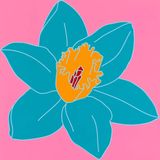
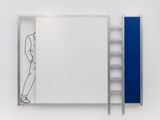
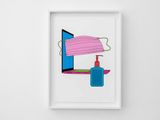
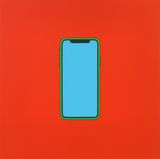
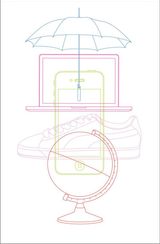
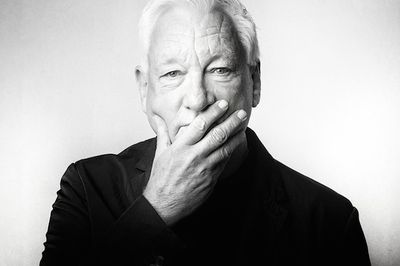
b. 1941, IrelandA principal figure of British conceptual art, Michael Craig-Martin probes the relationship between objects and images, harnessing the human capacity to imagine absent forms through symbols and pictures. The perceptual tension between object, representation, and language has been his central concern over the past four decades. In his early work Craig-Martin often incorporated readymades into sculpture and made knowing reference to American Minimalism. His elegant restraint and conceptual clarity is exemplified by An Oak Tree (1973), comprising a glass of water on a shelf and a text written by him asserting that the glass of water is, in fact, an oak tree. This interest in semantics, the play between rhetoric and object, continues to be a core theme in his work. In the 1990s Craig-Martin made a decisive shift to painting and developed his hallmark style of precise, bold outlines demarcating flat planes of intensely vibrant colours. Through exacting draftsmanship, he uses composition to explore spatial relationships by juxtaposing and layering colour.
Craig-Martin was born in 1941 in Dublin. He attended Fordham University, New York, from 1959 to 1961, then Yale University, where he received a BA in 1963 and an MFA in 1966. In the mid-1960s he returned to Europe, becoming one of the key figures in the first generation of British conceptual artists. Craig-Martin taught at Goldsmiths College School of Art, London, from 1974 to 1988 and from 1994 to 2000. During this time he became a powerful influence on a generation of his students who would become known as the Young British Artists, including Gary Hume, Sarah Lucas, and Damien Hirst, among others. Craig-Martin’s work has been featured in solo museum exhibitions worldwide, including Always Now, Kunstverein Hannover, Germany (1998); Institut Valencià d’Art Modern, Spain (2000); Living, Museu de Arte Moderna–Colecção Berardo, Sintra, Portugal (2001); Arp Museum, Remagen, Germany (2005); Le Magasin–Centre National d’Art Contemporain, Grenoble, France (2006); Irish Museum of Modern Art, Dublin (2006–2007); Signs of Life, Kunsthaus Bregenz, Austria (2006); New Art Centre, Roche Court, England (2006, 2011); Goss-Michael Foundation, Dallas (2010, 2015); Rugby Art Gallery and Museum, England (2012); Less Is Still More, Museum Haus Esters, Krefeld, Germany (2013); Chatsworth House, England (2014); and NOW, Shanghai Himalayas Museum (2015, traveled to Hubei Museum of Art, Wuhan, China). Craig-Martin’s work is featured in various public collections, including the Museum of Modern Art, New York; Tate, London; Centre Pompidou, Paris; and Museo Nacional Centro de Arte Reina Sofía, Madrid. Craig-Martin was an artist trustee of Tate from 1989 to 1999, and was elected to the Royal Academy in 2006. In 2016 he was knighted in the Queen’s Birthday Honours for his services to art.
Craig-Martin lives and works in London.
Courtesy Gagosian

Recently Exhibited


Works Elsewhere


















Explore and Follow Artists Shaping Contemporary Art
A respected voice in contemporary art discourse.
Focusing on ambitious storytelling and insightful art-world commentary. Ocula Magazine publishes in-depth interviews, critical essays and timely analysis on the artists, exhibitions and ideas driving the global art world.
Learn more about Ocula Magazine
Showcasing the best of the art world.
Ocula partners with galleries from around the world to highlight their artists, artworks and exhibitions. Gallery membership is by application and invitation, with each member vetted by an independent panel.
Learn more about Ocula Membership
Specialises in the sale of major artworks.
Led by a team with deep ties to the world’s leading auction houses, galleries and collectors. Ocula’s advisory team offers bespoke services to high-net-worth clients from around the world who are looking to acquire the best of contemporary and modern art.
Learn more about our team and services