





THE ESTATE OF MRINALINI MUKHERJEE
1949-2015, IndiaWorking intuitively, sculptor Mrinalini Mukherjee combines elements drawn from mythology and nature to create her large-scale sculptures known for their evocation of sensuality and fecundity, and movement and vitality.
Mrinalini Mukherjee was born to Benode Behari Mukherjee and Leela Mukherjee, themselves artists, and grew up in Dehradun, Uttarakhand, located near the Himalayan foothills—a location that later surfaced in the scenery of her work. After graduating from the Maharaja Sayajirao University of Baroda in 1970, she studied mural design under KG Subramanyan, whose emphasis on borrowing from traditional Indian art and craft similarly influenced Mukherjee’s practice.
In 1978, Mukherjee travelled on a British Council Scholarship for Sculpture to study at the West Surrey College of Art and Design for a year. Throughout the early 1970s, Mukherjee had established a practice of creating fibre sculptures in New Delhi, which began gaining critical attention, leading to her first solo exhibition at Shridharani Art Gallery in 1972.
Mukherjee’s fibre sculptures, which began as wall-based works, consist of densely knotted hemp or jute ropes that are defined by bright colouration. Often drawing their names from Hindu mythology, such as Nag Devta (1979) and Black Devi (1980), they stem from the vernacular statues of deities and spirits that she encountered in local temples and shrines throughout India. Abstracted yet anthropomorphic, Mukherjee’s fibre sculptures make ample references to symbols of fertility and sexuality.
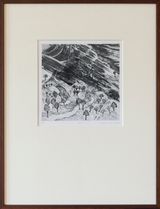
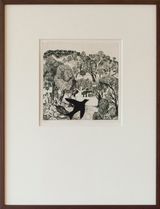
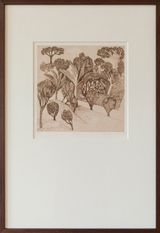
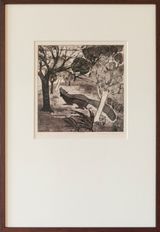
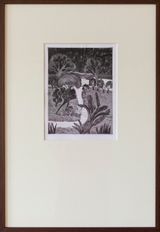
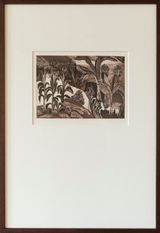
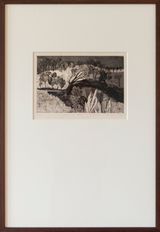
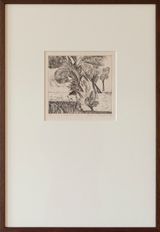
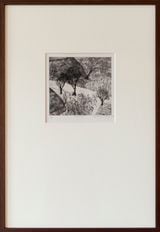
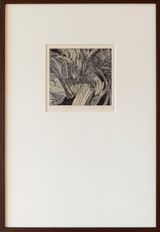
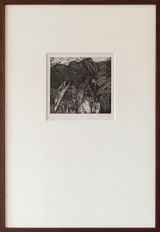
Continuing to employ dyed fibre ropes into the 1980s, Mukherjee’s monumental creations involved a laborious process, yielding only a few works per year including Van Raja I (1981) and Yakshi (1984), among others. During this period, the artist also produced etchings that recall scenes from her youth in Northern India.
By the mid-1990s, Mukherjee began experimenting with ceramic. Using a dome-shaped base, she layered slabs of clay over one another to create contorted forms such as the 13 terracotta sculptures in Lotus Pond (1995), which feature folds and protrusions that evoke mouths, foliage, or tubes.
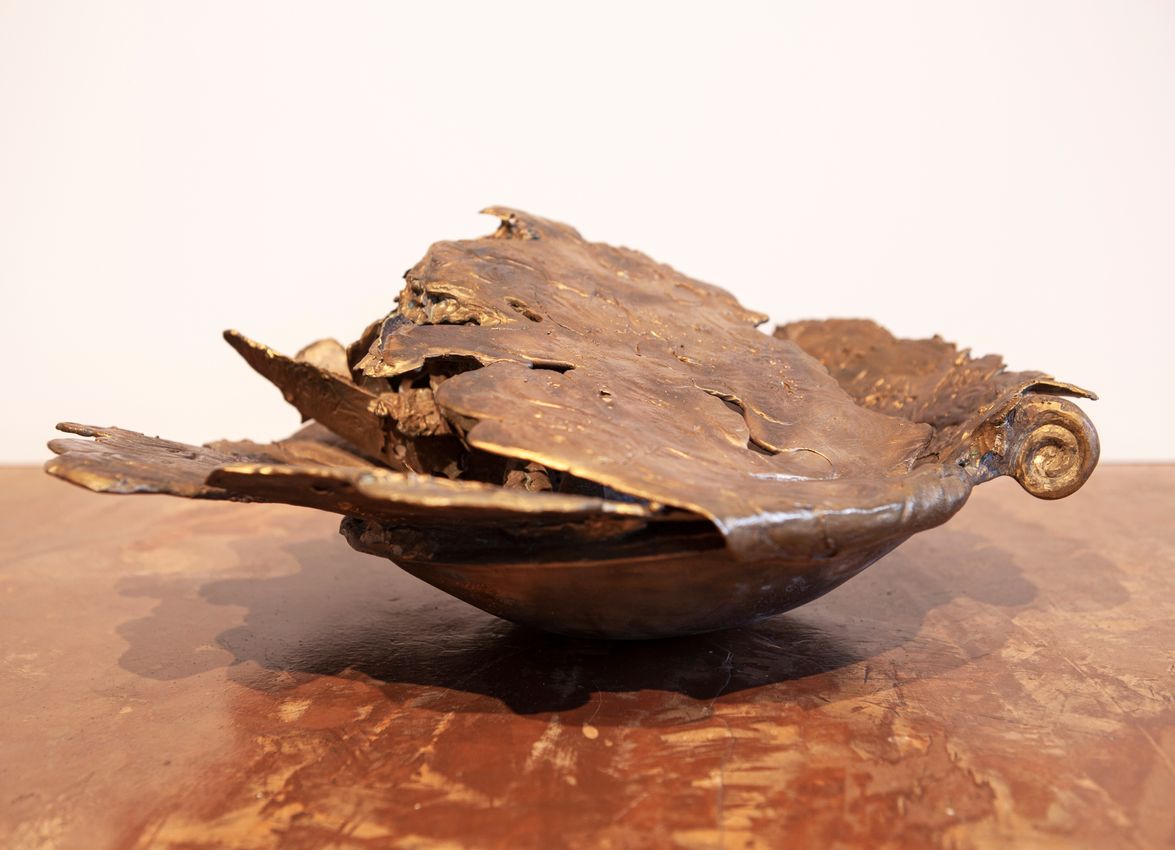
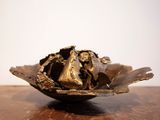
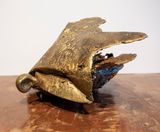
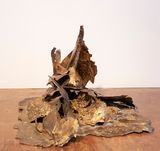
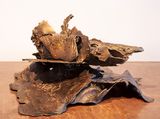
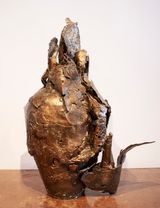
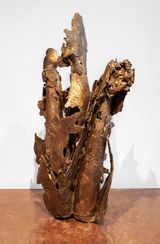
Mukherjee’s next venture in the early 2000s was with bronze and reflects the influence of her mother, who also worked with the medium. Mrinalini Mukherjee employed the lost-wax technique to create abstract works such as ‘Cluster’ (2006–2008) and ‘Palmscape’ (2013), whose surfaces have been finished with tools sourced from a dentist, creating flowing and textured bronze pieces that seemingly defy gravity.
Mrinalini Mukherjee Exhibitions
Her work has been shown internationally in solo and group shows, including Museum of Modern Art, New York (2024-25); Barbican Art Gallery, London (2024); La Biennale di Venezia, Venice (2022); Met Breuer, Metropolitan Museum of Art, New York (2019); Kochi-Muziris Biennale, Kerala (2018); Dhaka Art Summit, Dhaka (2018); Camden Art Centre, Camden (2016); National Gallery of Modern Art, New Delhi (2015); Jewish Museum, New York (2015); 10th Gwangju Biennale, Gwangju (2014); BOZAR, Brussels (2013).
Mukherjee’s work forms part of numerous public collections, including British Museum, London; Cleveland Museum of Art, Cleveland; Metropolitan Museum of Art, New York; Guggenheim Abu Dhabi; Museum of Modern Art, New York; Stedelijk Museum, Amsterdam; Tate Modern, London and Yorkshire Sculpture Park, Yorkshire.
Sherry Paik | Ocula | 2020

View The Estate of Mrinalini Mukherjee's Artworks

























Explore and Follow Artists Shaping Contemporary Art
A respected voice in contemporary art discourse.
Focusing on ambitious storytelling and insightful art-world commentary. Ocula Magazine publishes in-depth interviews, critical essays and timely analysis on the artists, exhibitions and ideas driving the global art world.
Learn more about Ocula Magazine
Showcasing the best of the art world.
Ocula partners with galleries from around the world to highlight their artists, artworks and exhibitions. Gallery membership is by application and invitation, with each member vetted by an independent panel.
Learn more about Ocula Membership
Specialises in the sale of major artworks.
Led by a team with deep ties to the world’s leading auction houses, galleries and collectors. Ocula’s advisory team offers bespoke services to high-net-worth clients from around the world who are looking to acquire the best of contemporary and modern art.
Learn more about our team and services