





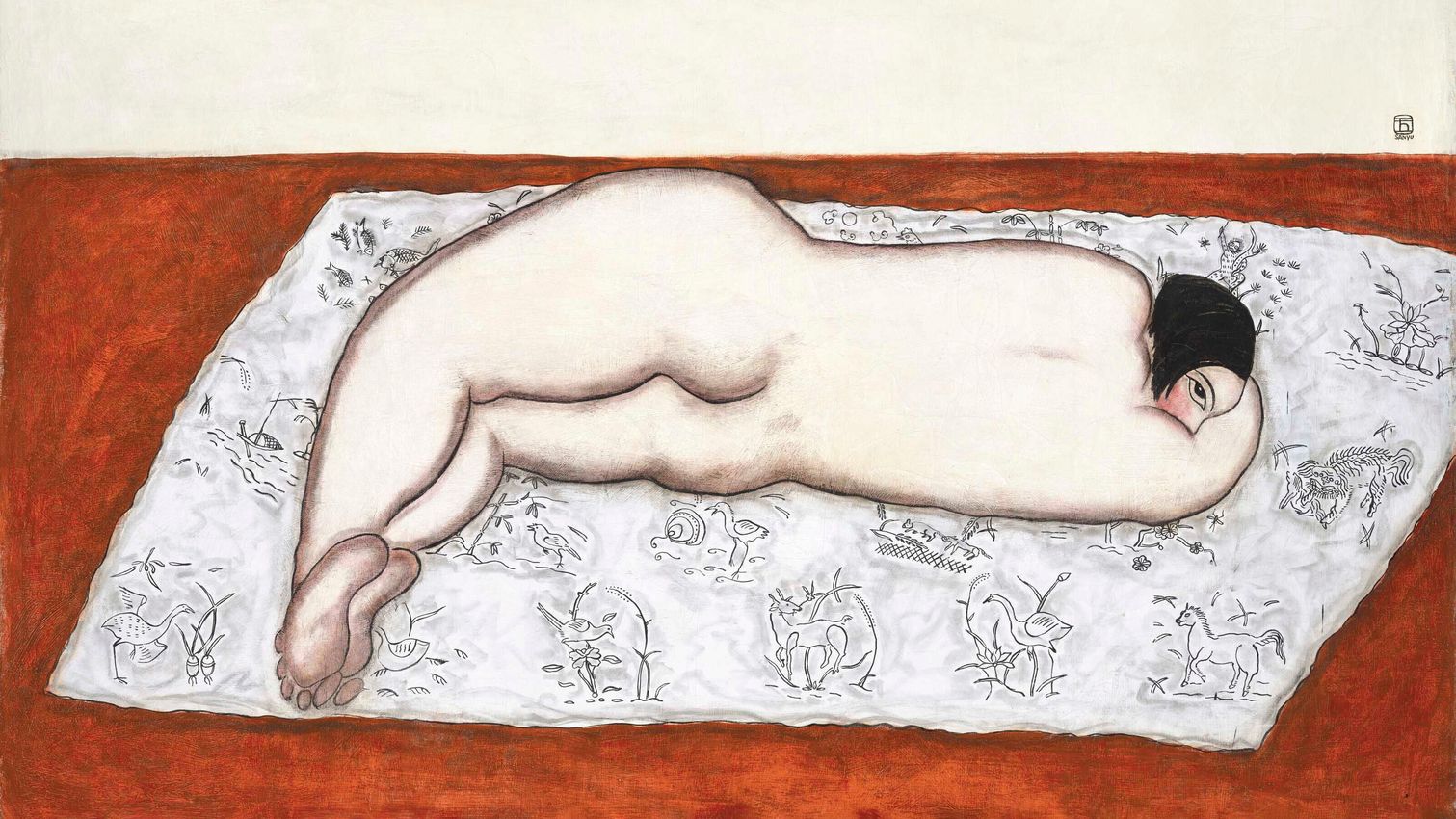
SANYU
1895-1966, ChinaHailing from Szechuan Province, China, Sanyu (常玉) was among the first generation of Chinese artists to study and settle in Europe. His life and oeuvre was characterised by liminality—a fusion of Eastern and Western traditions, informed by his training in traditional Chinese painting and calligraphy and inspired by the new Modernist trends he encountered in Paris that defined his work. After decades of obscurity, both during and after his life, Sanyu is today regarded as one of the most significant and earliest Chinese modernists.
Europe
Sanyu departed China for France in 1921, joining the first wave of Chinese artists to study overseas on a government-sponsored programme. After a brief stint in Berlin, he settled permanently in Paris in 1923, where he readily integrated himself into the city’s avantgarde scene. While he befriended European artists, notably Alberto Giacometti, he also continued to maintain ties with fellow Parisian-Chinese artists and was a member of the Heavenly Dog Society. A short-lived association in the early 1920s, the Society had been founded by Chinese intellectuals in Europe to promote the introduction of realism into traditional Chinese art, an opinion that greatly differed from the celebration of Impressionism by Shanghai’s Heavenly Horse Society.
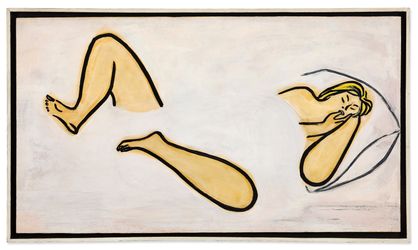
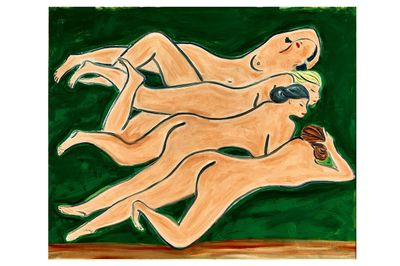
During this period, Sanyu studied at the Académie de la Grande Chaumière in Montparnasse, regularly exhibited in local salons, and began to experiment with incorporating Western techniques into traditional Chinese art. Working primarily in ink, he favoured the female nude, rendering figures with what poet Xu Zhimo described as ‘cosmically grand legs’.
Still lifes
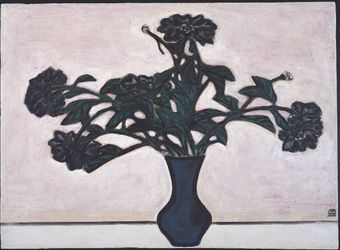
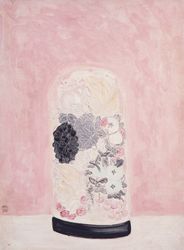
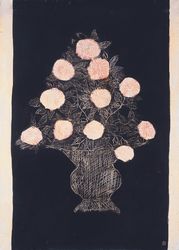
At his most prolific in the 1930s and 1940s, Sanyu painted still lifes of flowers and fruits with a palette of mainly pink, black and white. Having shifted from ink to oil in 1929, he deployed traditional Chinese techniques such as the feibai (‘flying white’) technique—which leaves the marks of the widening brush hairs visible—and the use of a scratch tool. In paintings such as Marriage Bouquet or Basket of Flowers, both completed in the 1930s, the outlines or details of flowers have been scraped into the paint, demonstrating Sanyu’s attempt to merge the Western medium of oil with Chinese traditions. White Peonies and Four Ponies, another painting from the same decade, features four Han dynasty-style horses whose lines the painter has delineated with a scratch tool.
Style and technique development
Despite Sanyu’s remarkable integration of Chinese and Western traditions, and his characteristic use of saturated colours and thick outlines that would earn him the posthumous nickname ‘Chinese Matisse’, the painter achieved little success during his life. Sanyu seems to have preferred to give away his paintings rather than sell them, perhaps because he had a reliable source of income from his affluent family back home. With the onset of the Great Depression in 1929, however, he was compelled to find a way to support himself. Henri-Pierre Roché, the art dealer with whom the painter would work for three years and who also collected Braque, Duchamp, Picasso and Modigliani, encouraged Sanyu to explore oil painting and printmaking. In the 1930s, Sanyu was the first Chinese artist to engage with Western intaglio; despite his innovations, however, he continued to suffer from poverty and obscurity.
Subjects and themes
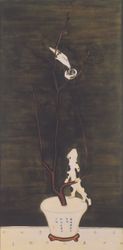
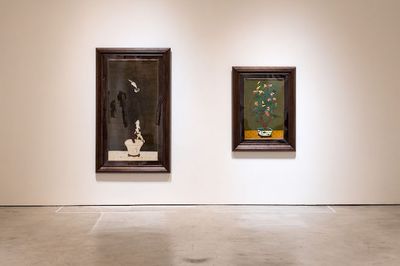
Later in life, Sanyu began to paint more explicitly Chinese motifs. Cats and Birds, shown at Salon des Independents in 1955, depicts a bird and its nest on a barren plant, a scene witnessed by the cat below. On the Ming planter, Sanyu wrote a poem by Song dynasty scholar Chen Yi. Similarly, Still Life of Flowering and Fruit Plant with a Green Ground, painted between 1950 and 1965, is imbued with Chinese symbols of prosperity, happiness and longevity. In light of Sanyu’s circumstances—coming from a wealthy Chinese family but later living in destitute conditions—perhaps the painting reflects upon a time now in the past. A sense of loneliness is also found in his later landscapes, featuring an animal in the vast expanse of nature, as in Elephant from the 1960s.
Legacy
Sanyu died from a gas leak accident in 1966 and remained largely forgotten in art history until Taiwanese art dealers rediscovered his work in the 1980s. Numerous galleries and museums in Taiwan have since organised exhibitions of his legacy, including the National Museum of History, Eslite Gallery, Lin & Lin Gallery and Tina Keng Gallery.
Exhibitions
In 2014, his paintings were also included in Legacy of 20th-Century Chinese Masters, an exhibition jointly organised by the Hong Kong Museum of Art; the Museum of the Asian Arts, Paris; the Musée Guimet, Paris; and the Musée Cernuschi, Paris.
Notable recent solo exhibitions include:
- Sanyu’s Hidden Blossoms: Through the Eyes of a Dandy, Tina Keng Gallery, Taipei (2018)
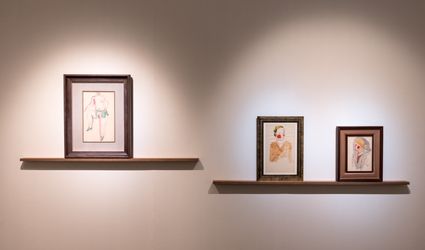
- An Intimate View — Sanyu’s Small Masterpieces, Eslite gallery, Taipei (2018)
- Sanyu: Watercolors and Drawings 1920–1930, Bureau d’Art - Nadine Nieszawer, Paris (2005)
- In Search of a Homeland — The Art of San Yu, National Museum of History, Taipei (2001)
- Sanyu Solo Exhibition, National Museum of History, Taipei (1995)
Notable group exhibitions
- City of Others: Asian Artists in Paris, 1920s-1940s, National Gallery Singapore, Singapore (2025)
- Cézanne, Morandi, and Sanyu, Gagosian, Hong Kong (2019)
- Breeze From Paris, Eslite Gallery, Taipei (2017)
Sanyu FAQs
Who was Sanyu?
Sanyu (常玉; 1901–1966), also known as Chang Yu, was a Chinese-French painter associated with the School of Paris. Born in Nanchong, Sichuan Province, China, he moved to Paris in 1921, where he developed a unique artistic style that blended traditional Chinese calligraphy with Western modernist influences. His work encompasses paintings, drawings, and prints, often featuring nudes, still lifes, and animals.
What is distinctive about Sanyu’s artistic style?
Sanyu’s art is characterised by its synthesis of Eastern and Western aesthetics. He employed the fluid lines of Chinese calligraphy and combined them with the compositional techniques of Western modernism. His works often feature simplified forms, a restrained colour palette, and a focus on line and space, creating a sense of harmony and balance.
Where can I view Sanyu’s artworks?
How has Sanyu’s work been received posthumously?
Although Sanyu struggled with recognition during his lifetime, his work gained significant acclaim after his death. In recent decades, his paintings have achieved high auction prices, and he is now regarded as a pioneer of modern Chinese art. His unique fusion of Eastern and Western styles has been celebrated in numerous exhibitions and scholarly works.
Ocula | 2025

Explore Sanyu's Exhibitions


Representative Artworks
View story
View story
View story
View story
View story





Explore and Follow Artists Shaping Contemporary Art
A respected voice in contemporary art discourse.
Focusing on ambitious storytelling and insightful art-world commentary. Ocula Magazine publishes in-depth interviews, critical essays and timely analysis on the artists, exhibitions and ideas driving the global art world.
Learn more about Ocula Magazine
Showcasing the best of the art world.
Ocula partners with galleries from around the world to highlight their artists, artworks and exhibitions. Gallery membership is by application and invitation, with each member vetted by an independent panel.
Learn more about Ocula Membership
Specialises in the sale of major artworks.
Led by a team with deep ties to the world’s leading auction houses, galleries and collectors. Ocula’s advisory team offers bespoke services to high-net-worth clients from around the world who are looking to acquire the best of contemporary and modern art.
Learn more about our team and services