


SOPHIE CALLE
b. 1953, FranceSophie Calle brings us into her investigative practice via photography, film, books, video and performance. Considering the balance of absence/presence, public/private and truth/fiction, she explores sociological and autobiographical themes via surveillance and personal narrative.
Early Years
Sophie Calle was born in October 1953 in Paris. Her father was an oncologist and an art collector; her mother was a literary critic. For seven years, she travelled the world but returned to Paris aged 25 and, directionless, she became depressed. To structure her time, she started following strangers through the city streets. One evening at an art exhibition, she recognised a man she’d followed and he said he was planning a trip to Venice. So she followed him. Suite Vénitienne became one of her earliest artist’s books, featuring photographs and a diary of her voyeurism, in which she donned disguises and asked strangers to help locate him.
Sophie Calle: Artworks
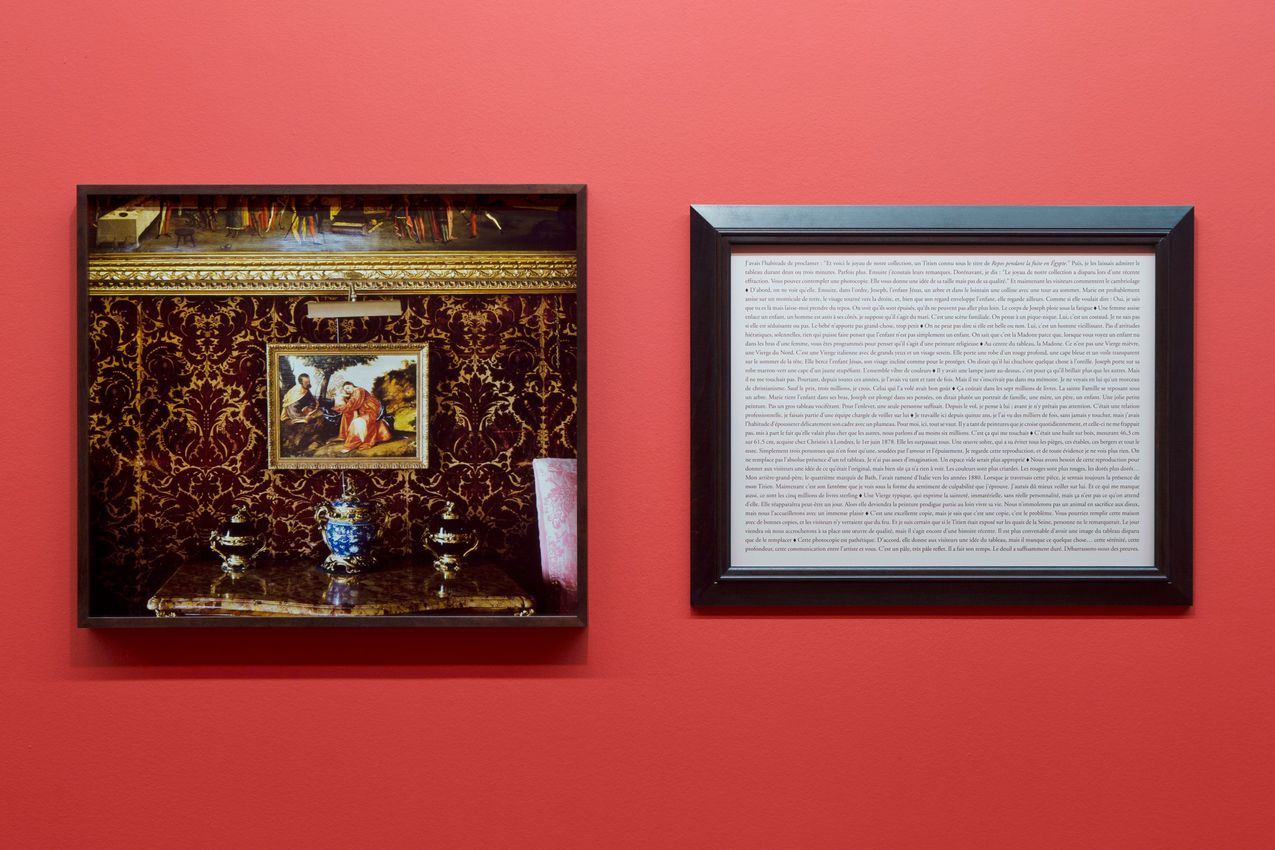
Is Sophie Calle a conceptual artist? A photographer? Perhaps a sociologist. The artist is known for her investigative artistic practice, which takes a provocative, detective-esque approach to consider ideas of absence, grief, mourning, love and intimacy. Her work blurs the line between looking at art and being part of it.
- Representing France in the 2007 Venice Biennale, Calle presented Take Care of Yourself, in which she asked 107 women to respond to a break-up email she had received in 2004 that ended with the sentence: “Take care of yourself.” Each woman offered a different interpretation, from reading (and correcting the spelling and grammar) to dance and artistic performance.
- 2011’s epic Voir la Mer took Calle to Istanbul, a city by the sea, yet also a place where not everyone had seen the ocean. She took people who had never seen the sea and made videos of that first encounter. Each participant was filmed with their back to the camera, looking at the water, and then facing Calle.
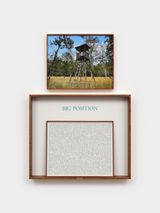
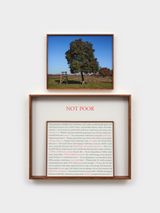
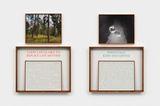
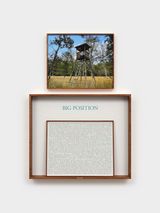
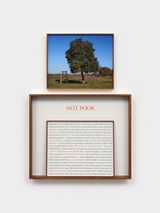
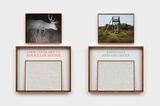
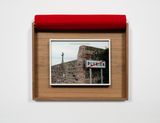
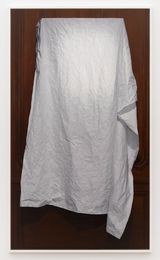
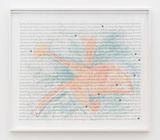
- Because (2018) was a series of cloths Calle had embroidered with text, each concealing a picture in a frame. Viewers reading the text naturally created a picture in their minds, but the images themselves revealed surprising twists.
Sophie Calle: Select Awards
- Praemium Imperiale, Tokyo (2024)
- Fondation Henri Cartier-Bresson Honorary Award, Paris (2024)
- Centenary Medal, Royal Photographic Society, Bristol (2019)
- Infinity Award—Art, International Centre of Photography, New York City (2017)
- The Essay Prize, University of Iowa (2014)
- Hasselblad Award, Hasselblad Foundation, Gothenburg (2010)
Sophie Calle: Select Exhibitions
Select Solo Exhibitions
- Sophie Calle—Something Missing?, Louisiana Museum of Modern Art, Humlebaek (2026) (and touring)
- Sophie Calle: On the Hunt, Paula Cooper Gallery, New York City (2025)
- Sophie Calle: Behind the Curtain, Perrotin, New York City (2025)
- Sophie Calle. Beyond the Gaze: Sharing Perspectives, Golden Thread Gallery, Belfast (2025)
- Sophie Calle: Overshare, The Walker Art Centre, Minneapolis (2024) (and touring)
- Sophie Calle, Musée Picasso, Paris (2023)
- Sophie Calle: Les fantômes d’Orsay, Musée d’Orsay, Paris (2022)
- Sophie Calle, Centre Pompidou Málaga (2021)
- Sophie Calle: What Remains, Kunstmuseum Ravensburg (2020)
- Sophie Calle: My Mother, My Cat, My Father, In That Order, Perrotin, Tokyo (2019)
- Sophie Calle: Dead End, Chateau La Coste, Le Puy-Sainte-Réparade (2018)
- Pour la dernière et pour la première fois, Toyota Municipal Museum of Art (2015) (and touring)
- Room, Crossing the Line, The Lowell Hotel, New York City (2011)
- Sophie Calle, Whitechapel Art Gallery, London (2009)
- Take Care of Yourself, Venice Biennale (2007) (and touring)
- M’as-tu vue, Martin-Gropius-Bau, Berlin (2004) (and touring)
- The True Stories of Sophie Calle, Museum Fridericianum, Kasse (2000) (and touring)
- Proofs, University Art Museum, University of California, Santa Barbara (1995) (and touring)
- Institute of Contemporary Art, Boston (1990)
- Centre d’Art Contemporain, Orléans (1986)
Select Group Exhibitions
- Panorama, Perrotin, Paris (2026)
- Persona: Photography and the Re-Imagined Self, Isabella Stewart Gardner Museum, Boston (2026)
- Chase a Crooked Shadow: Film Noir as a Contemporary Mirror, The Warehouse, Dallas (2026)
- Borderline, Paula Cooper Gallery, New York City (2025)
- In a Maze, Form / Design Centre, Malmö (2025)
- Unsold Unsold, Gallery Koyanagi, Tokyo (2024)
- Colour as Programme, Bundeskunsthalle, Bonn (2022)
- The Wonderfulness of Memory, Cukrana, Kunsthalle Ljubljana (2021)
- Fond Illusions, Galerie Perrotin, New York City (2017)
- Urban Archives: The Rituals of Chaos, Bronx Museum of the Arts, New York City (2012)
- The Lens and the Mirror: Self-Portraits from the Collection, 1957—2007, MoMA, New York City (2009)
- Seeing Things, Dorsky Gallery, Long Island City (2007)
- Beauty Matters, Tina Kim Fine Art, New York City (2004)
- L’empire du temps, myths at creation, Louvre, Paris (2000)
- Crossing: France / Hawaii, Honolulu Academy of Arts (1997)
- Whitney Biennial, Whitney Museum of American Art, New York City (1993)
- At Face Value, Kettle’s Yard Gallery, Cambridge (1989)
- “F” Four French, Lang and O’Hara, New York City (1986)
- Biennale des Jeunes_, ARC Musée d’Art Moderne de la Ville de Paris (1980)
Further Reading
- Artist profile page at Perrotin
- Artist profile page at Paula Cooper Gallery
- Artist profile page at MoMA
- Review of Sophie Calle’s Something Missing? exhibition in Ocula (2026)
Sophie Calle FAQs
Did Sophie Calle ask strangers to sleep in her bed?
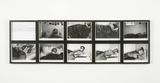
Yes. In 1979, lacking direction having returned to Paris after travelling for seven years, Sophie Calle started following strangers around the French capital, keeping a diary of their movements and taking their pictures. She was printing the photographs in a basement she shared with another girl, Gloria Friedman and one night, rather than making the journey home, Friedman asked if she could share Calle’s bed. Thinking about the trust that sharing a bed required, Calle was inspired to ask 29 people—including her mum, local bakers and a woman she’d met at the market—to take turns sleeping in her bed in eight-hour stints over an eight-day period. She photographed them asleep and awake, which became Les Dormeurs (The Sleepers) (1979). One of her sleepers was married to an art critic, who invited her to exhibit at the Biennale des Jeunes. “Suddenly, I found myself showing at the Museum of Modern Art,” she remembers. “My work became art the day it was shown on the wall.”
Did Sophie Calle take pictures off the walls at MoMA?
In her 1991 project Ghosts, created for the MoMA exhibition Dislocations, which asked viewers to question the mental landmarks that orient their thinking, Calle arranged for the temporary removal of well-known works by artists including Edward Hopper and René Magritte, then asked museum staff to sketch and describe the missing paintings. The project highlighted the way that artworks exist beyond the gallery space, and in the minds of viewers.
Did Sophie Calle commission art and an album about her dead cat?
Yes, Sophie Calle adored her cat Souris, and when he died in 2014 she made art about him and also commissioned an album]7 of songs about her much-loved pet, with contributions from artists including Bono, Pharrell Williams, Michael Stipe and Jarvis Cocker.
Ocula


View Sophie Calle's Artworks














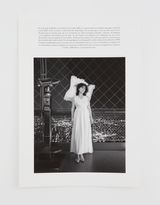



Sophie Calle in Ocula Magazine











Explore and Follow Artists Shaping Contemporary Art
A respected voice in contemporary art discourse.
Focusing on ambitious storytelling and insightful art-world commentary. Ocula Magazine publishes in-depth interviews, critical essays and timely analysis on the artists, exhibitions and ideas driving the global art world.
Learn more about Ocula Magazine
Showcasing the best of the art world.
Ocula partners with galleries from around the world to highlight their artists, artworks and exhibitions. Gallery membership is by application and invitation, with each member vetted by an independent panel.
Learn more about Ocula Membership
Specialises in the sale of major artworks.
Led by a team with deep ties to the world’s leading auction houses, galleries and collectors. Ocula’s advisory team offers bespoke services to high-net-worth clients from around the world who are looking to acquire the best of contemporary and modern art.
Learn more about our team and services