





ZHANG DAQIAN
1899-1983, ChinaZhang Daqian, also known as Chang Dai-chien (1899–1983) was perhaps China’s most well-known artist, whose prolific career spanned traditional ink painting and bold modernist experimentation. He is widely regarded as one of the most influential Chinese painters of the 20th century, and his works are highly sought after on the auction market.
Early Years
Born into an artistic family, Zhang Daqian was encouraged to pursue painting from a young age. He initially studied textile dyeing in Kyoto, Japan, before returning to China to learn painting and calligraphy under masters such as Zeng Xi and Li Ruiqing. His early works were deeply influenced by classical Chinese artists like Shitao and Bada Shanren.
The artist’s widespread popularity rose relatively quickly after he started painting in the 1920s. Notable solo exhibitions in Nanjing in 1927, and Beijing in 1934, saw many paintings sold, and further interest in Zhang’s art rise across China. Zhang’s fame and intrigue was also augmented by an idiosyncratic way of dressing and a long beard that he maintained since the age of 26. The artist had a penchant for wearing long traditional Chinese robes which would later be paired with an unusual cane.
Overseas travels
In 1949 Zhang left China due to the political climate, and settled in Argentina, living in both Mendoza, and Sao Paulo until moving to the Monterey Peninsula in Northern California in 1967. Zhang would stay in California for a decade, but travel extensively. In 1957 Zhang visited Paris for exhibitions of his work at The Louvre and Musée Guimet. There he met Picasso, whom he gave advice on painting in Chinese techniques. He later moved to in Taipei 1978, where he settled and would eventually pass away in 1983.
Zhang Daqian’s Artworks
Zhang Daqian’s artistic journey is marked by a transition from traditional Chinese guohua painting techniques to more expressive innovative styles that incorporated modernist Western influences.
Traditional mastery and forgery
In his early career, Zhang was known for his meticulous copies of ancient Chinese masterpieces, particularly those from the Dunhuang caves. His meticulous study and understanding of not only classical techniques, but materials, such as ink, brushes, pigment, scroll mountings, and seals, earned him recognition as a master forger.
Zhang’s forgeries of Chinese master artists have been identified within collections of major art museums in the United States. Notably, the Boston Museum of Fine Arts, acquired what they believed to be a rare masterpiece landscape by Guan Tong, however it would later be discovered to be one of Zhang Daqian’s masterful forgeries.
Splashed-Ink Innovation
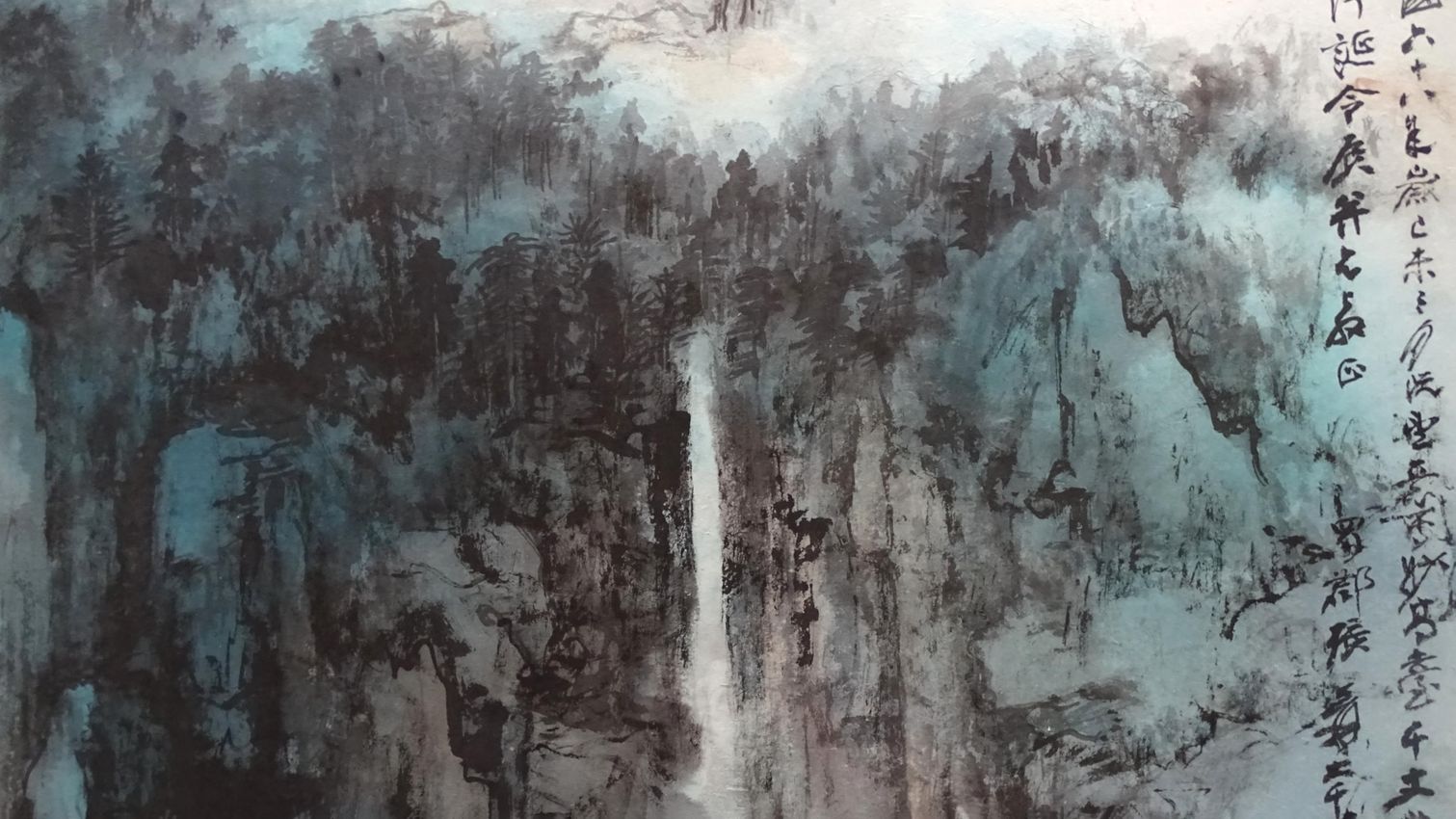
Developed in the 1960s, Zhang’s splashed ink technique marked a radical shift in Chinese painting. Inspired in part by his partial loss of eyesight, this technique involved pouring and splashing ink and colour onto paper or silk, allowing spontaneous forms to emerge. Notable examples include the monumental scroll landscape mural, Panorama of Mount Lu (1981-83), held by the National Palace Museum in Taipei, and Peach Blossom Spring (1982), which sold for $34.7 million (USD) to the Long Museum in Shanghai in 2016. Both works exemplify Zhang’s masterful control of chance and gesture.
Exhibitions
Zhang Daqian’s works feature in many of the world’s most prominent public art museums, such as the Metropolitan Museum of Art in New York, The Art Gallery of New South Wales in Sydney, and the British Museum, in London. Zhang’s work has been featured in numerous exhibitions worldwide. Notable solo presentations include:
Solo Exhibitions
- Chang Dai-chien in California, San Francisco State University (1999)
- Zhang Daqian, Painter, Collector, Forger, Museum of Fine Arts, Boston (2007)
- The Treasures of Chang Dai-Chien — His Daughter’s Collection, Long Museum West Bund, Shanghai (2015)
- Zhang Daqian Art Exhibition, National Museum of China, Beijing (2018)
- Zhang Daqian: The Master, Sotheby’s Hong Kong (2019)
Zhang Daqian FAQs
Where can I view Zhang Daqian’s artworks?
Zhang Daqian’s works are held in major institutions worldwide, including the British Museum and the National Museum of China. His paintings frequently appear in exhibitions and auctions globally.
What is Zhang Daqian’s most expensive artwork?
Did Zhang Daqian interact with Western artists?
Yes, in 1956, Zhang met Pablo Picasso in a well-publicized encounter that symbolized a meeting of Eastern and Western art traditions.
Was Zhang Daqian involved in art forgery?
Zhang was known for his skill in replicating ancient Chinese paintings, with some of his forgeries being mistaken for originals. He often revealed these forgeries himself, showcasing his mastery of traditional techniques.
How prolific was Zhang Daqian as an artist?
Over his lifetime, Zhang produced an estimated 500 paintings annually, resulting in a vast and diverse body of work that spans traditional and modern styles.
Ocula | 2025

Explore and Follow Artists Shaping Contemporary Art
A respected voice in contemporary art discourse.
Focusing on ambitious storytelling and insightful art-world commentary. Ocula Magazine publishes in-depth interviews, critical essays and timely analysis on the artists, exhibitions and ideas driving the global art world.
Learn more about Ocula Magazine
Showcasing the best of the art world.
Ocula partners with galleries from around the world to highlight their artists, artworks and exhibitions. Gallery membership is by application and invitation, with each member vetted by an independent panel.
Learn more about Ocula Membership
Specialises in the sale of major artworks.
Led by a team with deep ties to the world’s leading auction houses, galleries and collectors. Ocula’s advisory team offers bespoke services to high-net-worth clients from around the world who are looking to acquire the best of contemporary and modern art.
Learn more about our team and services