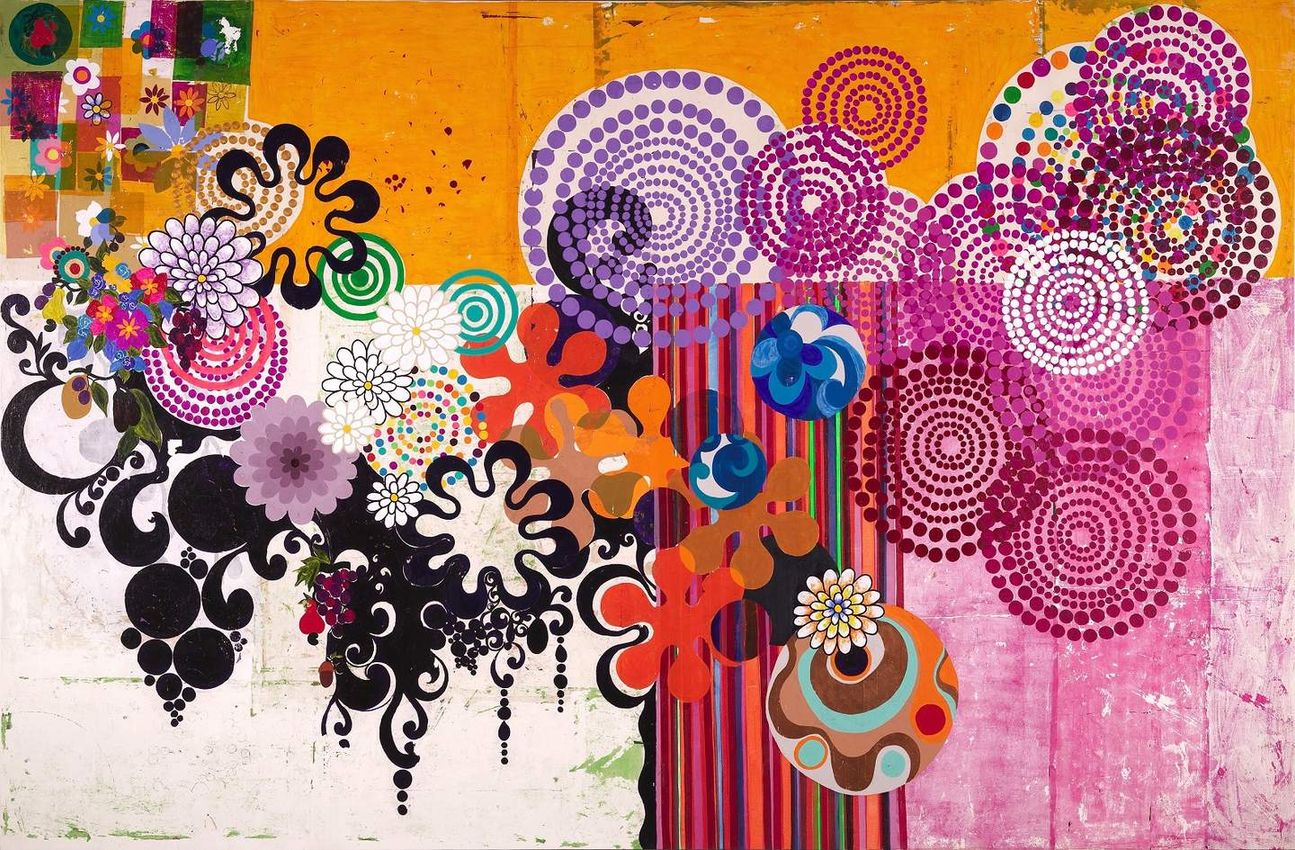
Tate St Ives presents a retrospective of the work of artist Beatriz Milhazes, who is known for intensely colourful, large-scale abstract canvases. The exhibition Beatriz Milhazes: Maresias traces the evolution of her artistic approach over the past four decades.
Beatriz Milhazes (born 1960, Rio de Janeiro) rose to prominence in the 1980s as a leading figure of the Geração Oitenta (1980s Generation), a pivotal Brazilian art movement that saw a return to painting as a dynamic medium for artistic expression, moving away from the conceptual art of the previous decade.
Milhazes is influenced by multiple sources including Brazilian and European modernism, Catholic iconography, Baroque colonial architecture, and the vernacular culture and heritage of Brazil.
Adapting the concept of collage to painting, Milhazes creates exuberant, densely layered works. In 1989 she developed her distinctive ‘monotransfer’ technique in which she paints her own motifs onto plastic sheeting before transposing them onto canvas. This process offers the possibility to retain the fidelity of the colours and intensify the effects of fluorescent and metallic pigments. It also allows Milhazes to create a smooth and defiant surface without losing the painterly quality.
In Portuguese, Maresias refers to the salty sea breeze that is part of Milhazes’ everyday life in the coastal city of Rio de Janeiro, where she lives and works. Nature is an enduring and increasingly important theme, and she finds inspiration in the landscapes around her studio, as well as in the forms and structures of the natural world.

Beatriz Milhazes is a leading Brazilian contemporary artist whose vibrant abstract paintings, collages, prints and sculptures fuse the visual culture of Rio de Janeiro with the legacies of European modernism and global abstraction. She has become one of Brazil’s most internationally recognised artists, with major institutional exhibitions including Beatriz Milhazes: Rigor and Beauty at the Solomon R. Guggenheim Museum, New York, and participation in the Venice Biennale.


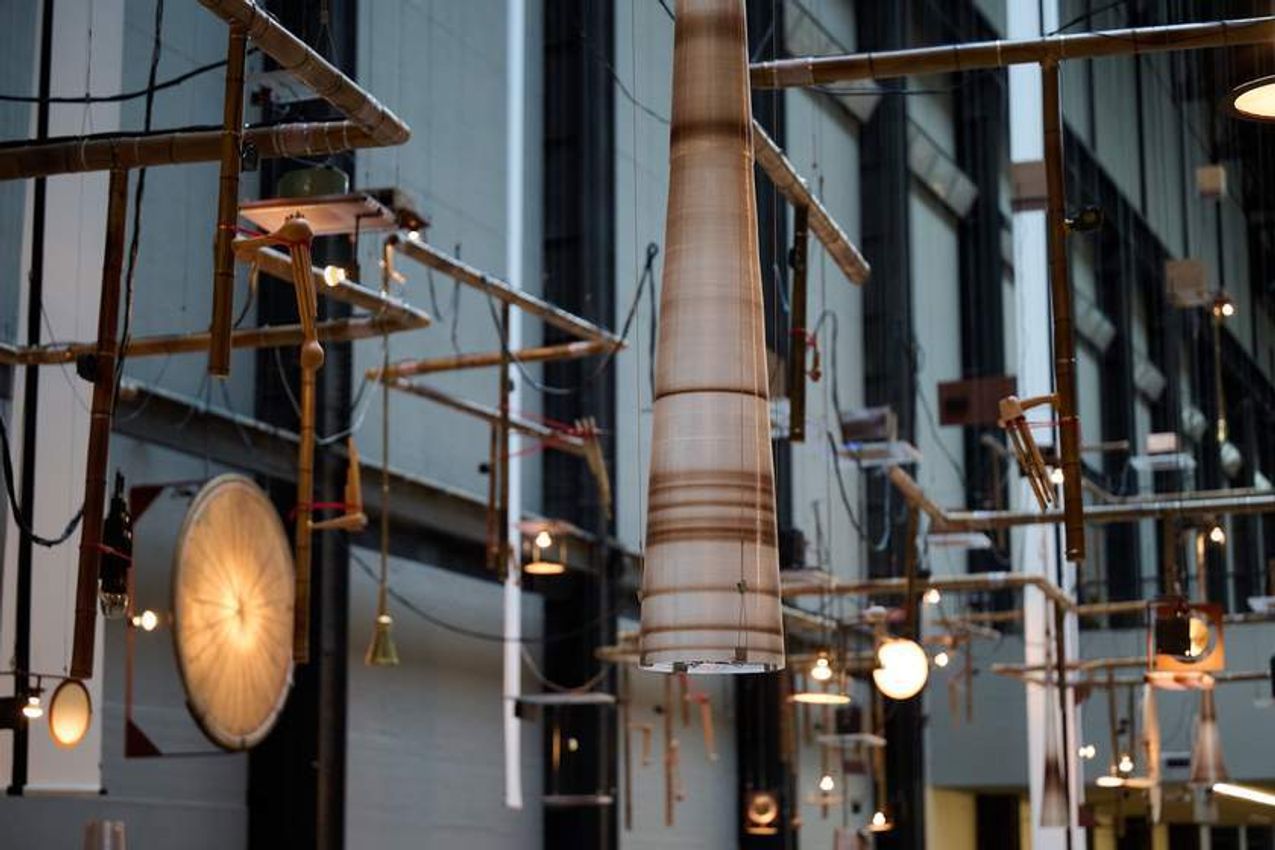
Tate Modern is one of the world’s most iconic museums of modern and contemporary art, located on the South Bank of the River Thames in London. Occupying the former Bankside Power Station, the museum’s dramatic industrial architecture—most notably its cavernous Turbine Hall—has made it a destination for art lovers and architectural enthusiasts alike.

A respected voice in contemporary art discourse.
Focusing on ambitious storytelling and insightful art-world commentary. Ocula Magazine publishes in-depth interviews, critical essays and timely analysis on the artists, exhibitions and ideas driving the global art world.
Learn more about Ocula Magazine
Showcasing the best of the art world.
Ocula partners with galleries from around the world to highlight their artists, artworks and exhibitions. Gallery membership is by application and invitation, with each member vetted by an independent panel.
Learn more about Ocula Membership

Specialises in the sale of major artworks.
Led by a team with deep ties to the world’s leading auction houses, galleries and collectors. Ocula’s advisory team offers bespoke services to high-net-worth clients from around the world who are looking to acquire the best of contemporary and modern art.
Learn more about our team and services