





'Vibe-Driven' Global Art Market Expands to Bring in Risk-Averse Buyers
More accessible prices could benefit the overall market by initiating new buyers to art without the corresponding risk. Save to My Ocula

Plummeting sales in the global market’s upper segments over the past year will make recently released market results no surprise to industry insiders.
This segment, making up most of the global market’s value, has seen the overall value of the sector fall for a second year.
That’s according to the newly released Art Basel and UBS Art Market Report, which records gallery and auction sales falling by 12 percent year-on-year in 2024 with fewer $1 million-plus lots consigned, sinking the market’s total value to $57.5 billion (all prices USD), or below the yet-to-be inflated pre-pandemic levels.
Unlike previous years, the top performing countries—the U.S., U.K., and China, which account for 74 percent of the global market—all registered declines, as did the great majority of markets worldwide.
Economist Clare McAndrew, founder of art research firm Arts Economics, told Ocula the results could be put down to people waiting to see how events like elections in the U.S. and Europe would pan out: ‘They were not sure of the outcomes.’
’[Auction houses] had no problem selling things once they could get them to market,’ McAndrew said. ‘But the problem was getting them to market.’
The economist said that as ‘financial confidence tends to drive purchases’, amid the national and geopolitical tensions of the past year, ‘people may not be as sure of the future, especially for high-value discretionary purchases like art’.
‘It’s a very vibe-driven market,’ McAndrew said. ‘When everyone’s saying the same thing, the things people talk about become reality.’
On the bright side, the same stagnation pushed dealers and auction houses to reshape the pool of buyers by reaching out to complementary luxury and crypto sectors and listing work at more accessible price points.
Transactions in the mid-to-lower segments soared as collectors’ appetite for risk decreased, suggesting buyers maintain confidence in art’s capacity to provide personal or financial value.
McAndrew said that new clients accounted for close to half of sales galleries and auction houses made last year. Dealers with a turnover below $250,000 and between $1 and $5 million also saw an increase in sales, while those with a revenue above $10 million saw a nine percent drop.
Gallerists also told the economist they found it easier to sell lower-priced works to existing clients. Mirroring the trend, an odd segment of works priced below $5,000 became the rare category that grew at auctions both in terms of value and lots sold, accounting for a staggering 75 percent of lots auctioned.
‘Even when the low end was doing better than the high end in 2023, it was under $50,000,’ McAndrew said. ‘It’s the very, very low end.’
Nonetheless, more accessible price points could benefit the overall market by attracting new buyers, who can become acquainted with art without the corresponding risk.
‘People tend to start lower and build up,’ McAndrew said, adding that the market’s broadening at the bottom is a positive.
‘More positive news would be good for the market now because it was a fairly slow cycle and this stuff with tariffs has taken the confidence out of it again,’ she said. —[O]
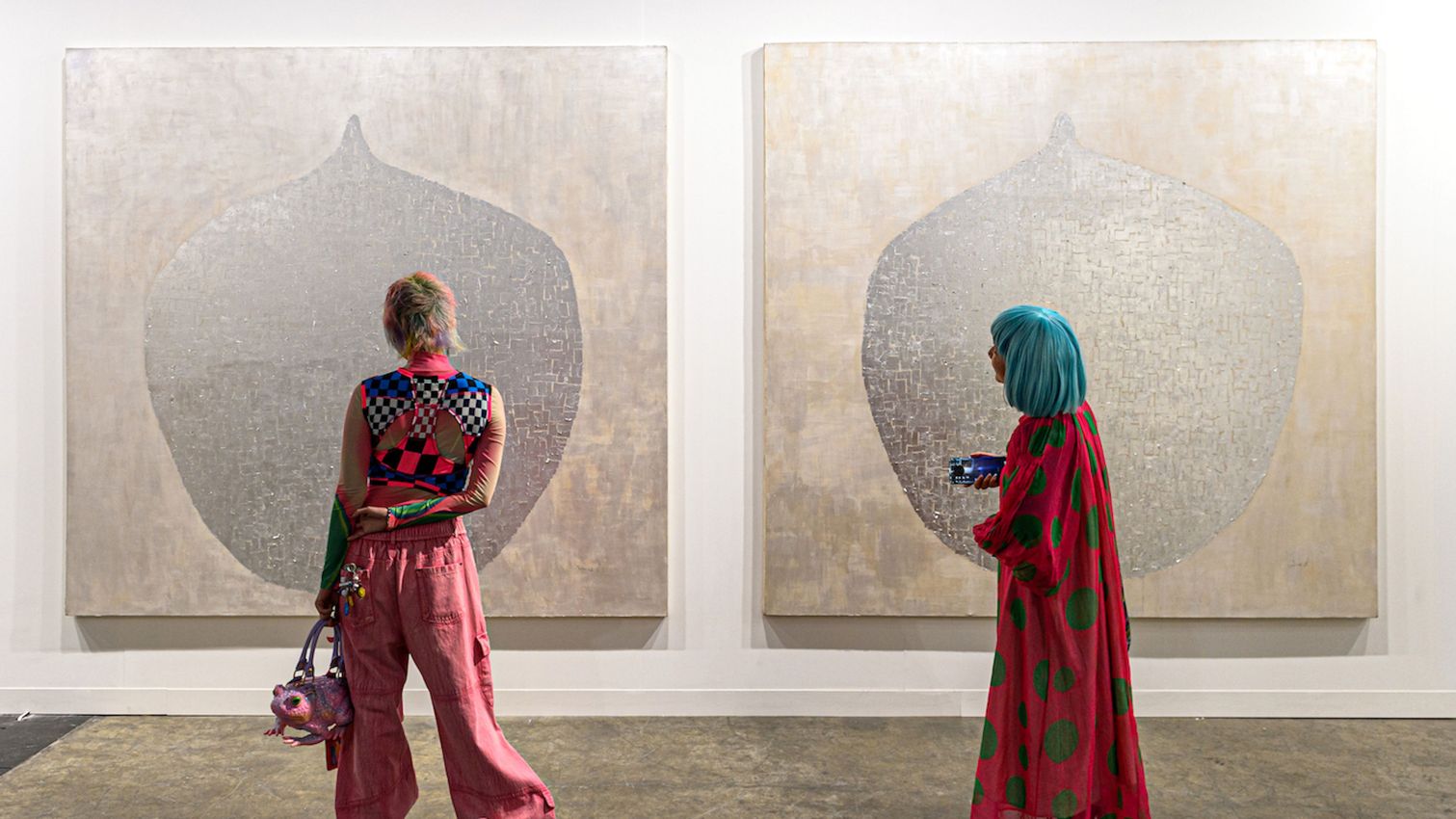
Main image: Ames Yavuz, Art Basel Hong Kong (28–30 March 2025). Courtesy Art Basel.
A respected voice in contemporary art discourse.
Focusing on ambitious storytelling and insightful art-world commentary. Ocula Magazine publishes in-depth interviews, critical essays and timely analysis on the artists, exhibitions and ideas driving the global art world.
Learn more about Ocula Magazine
Showcasing the best of the art world.
Ocula partners with galleries from around the world to highlight their artists, artworks and exhibitions. Gallery membership is by application and invitation, with each member vetted by an independent panel.
Learn more about Ocula Membership
Specialises in the sale of major artworks.
Led by a team with deep ties to the world’s leading auction houses, galleries and collectors. Ocula’s advisory team offers bespoke services to high-net-worth clients from around the world who are looking to acquire the best of contemporary and modern art.
Learn more about our team and services