





Is It Time to Rethink the Royal Academy's Summer Exhibition?

Exhibition view: Summer Exhibition 2023, Royal Academy of Arts, London (13 June–20 August 2023). Photo: © Royal Academy of Arts, London / David Parry.


Every summer, the London art world converges on Piccadilly for the Royal Academy’s Summer Exhibition. ‘The world’s largest open submission exhibition’ has been ‘held every year without interruption since 1769’, the Royal Academy proudly asserts.
For the 2023 edition, the Royal Academy (the RA) accepted 16,500 entries from artists of all career stages. Whittled down to a shortlist of 4,000 entries, 1,613 works of art are ultimately on display and for sale from 13 June through 20 August.
Despite various rounds of judging, the resulting amount of work on the walls, plinths, and even the floor, is staggering. The sheer volume, while impressive, is hard to digest. The best works get swallowed by the vast majority of subpar artworks stacked from floor to ceiling.
This horror vacui, or fear of empty spaces, is not unique to this edition, entitled Only Connect and coordinated by celebrated British painter and Royal Academician David Remfry. From the days of Joshua Reynolds, who founded the Royal Academy, a salon hang has covered the RA’s hallowed walls.
‘The Summer Exhibition, now in its 255th year, has traditionally been hung in the salon style,’ explains Sintra Berry, Summer Exhibition Managing Curator.
‘Works are selected by members of the Summer Exhibition Committee, who serve in rotation, ensuring that every year the exhibition has a distinctive character, with each Royal Academician responsible for a particular gallery space. The committee selects the art works, meaning the number of art works on display vary. In 2017, there were approximately 1,000 art works, while this year there were approximately 1,600 works on display.’
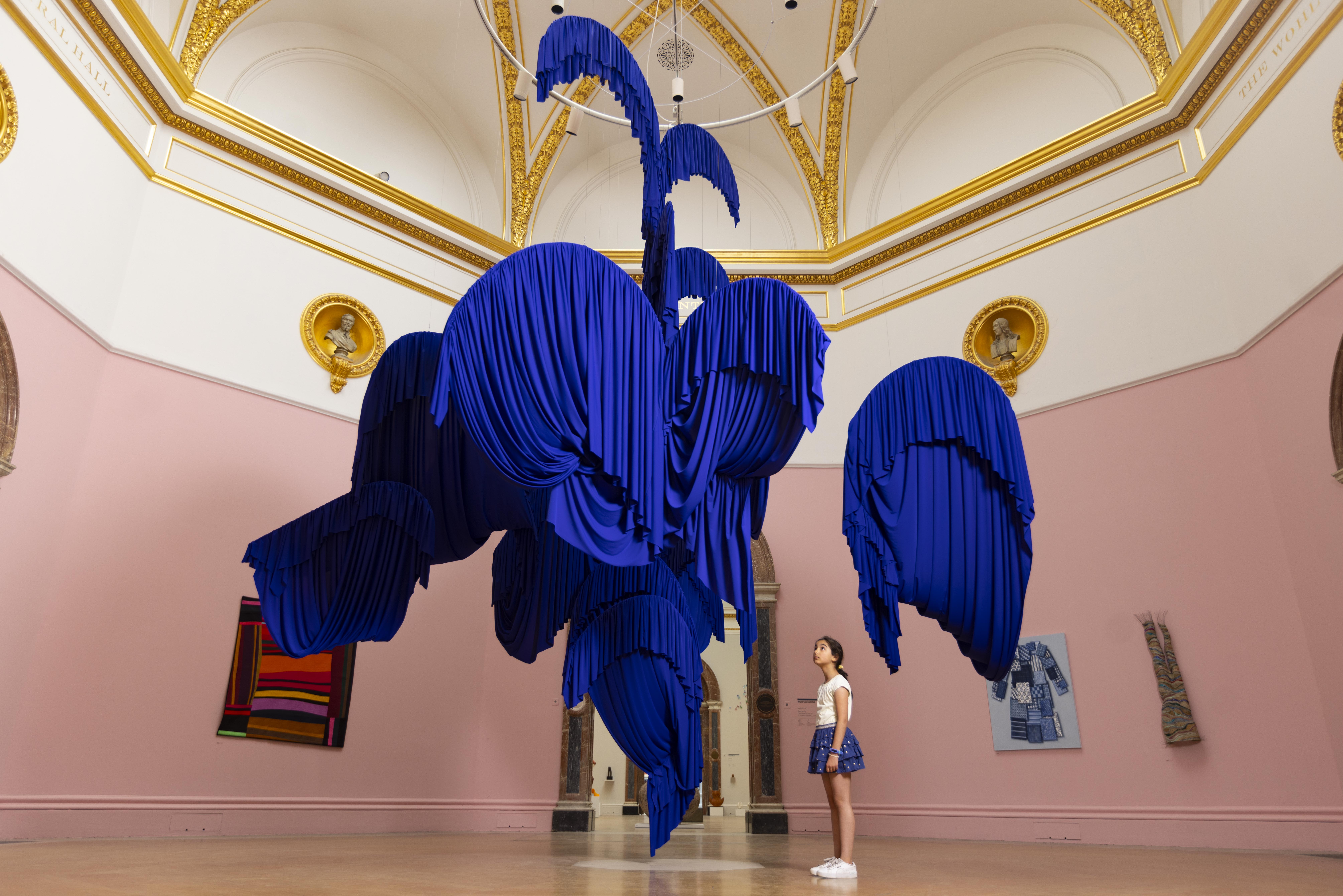
To Remfry’s credit, the rooms curated by him are comparatively sparse, allowing paintings by veteran artists like Frank Bowling and newcomers like Sabrina Shah to breathe. Another room including an arresting Paula Rego altarpiece and Paul Benney’s ode to the Grenfell tragedy, is especially effective. The central hall is consumed by Richard Malone‘s serene, blue mobile, which pops against the bubblegum-pink walls omnipresent in the exhibition’s marketing (even the RA has not escaped Barbiecore).
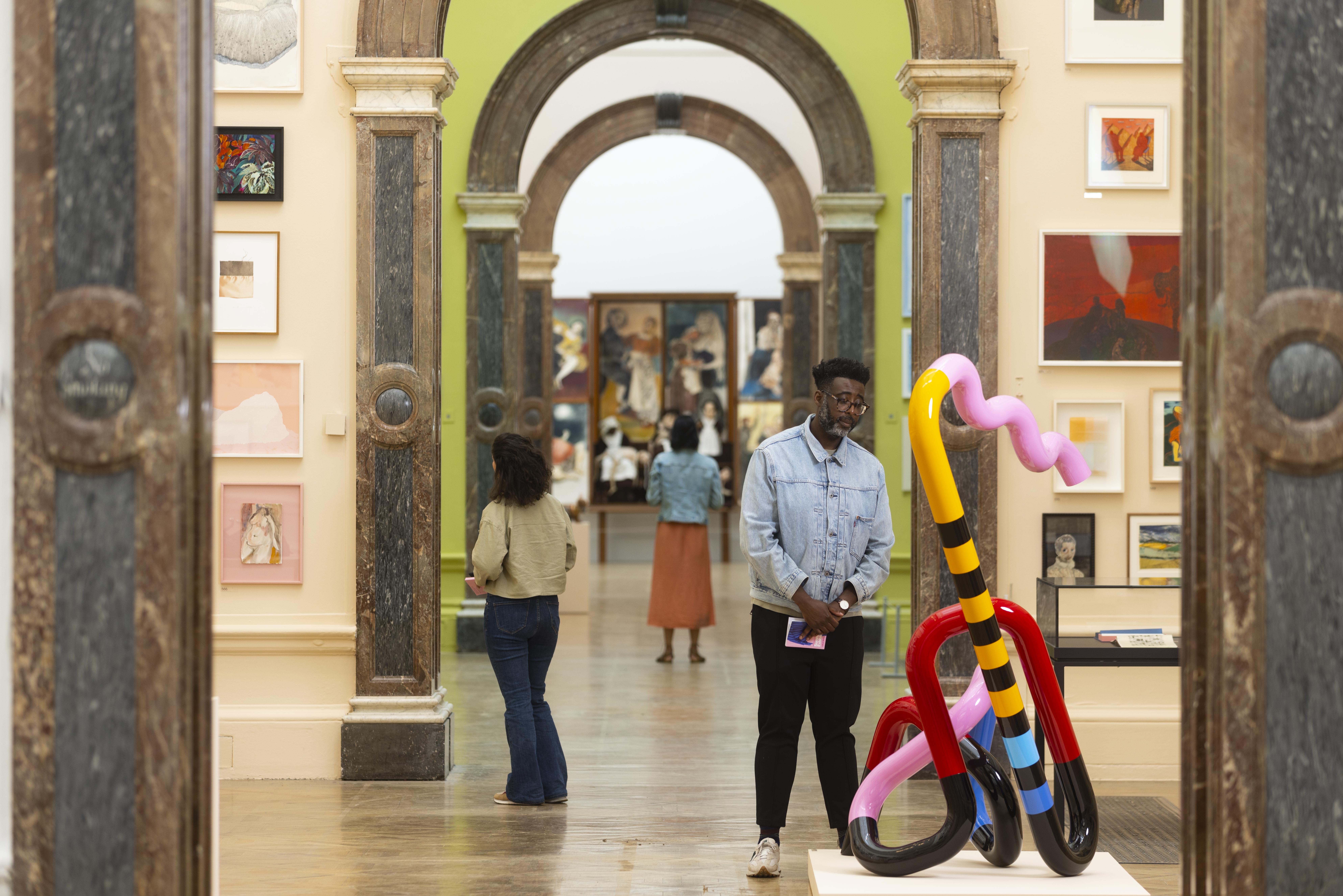
Several of the following galleries curated by other Royal Academicians, however, become crowded—one is described by the RA itself as a ‘busy display’ in the accompanying booklet. One begins to wonder what could have possibly been rejected. (REJECTS, organised by Art Friend in Bermondsey, sheds some light on this, opened today through 3 August).
This is not to criticise the artists who have carefully curated their respective spaces. They have been given the impossible task of fitting a gargantuan number of works into 13 galleries. Tate Modern, for comparison, has 1,113 artworks on display, a full 500 fewer.
‘The Summer Exhibition provides a unique platform for emerging and established artists to showcase their works to an international audience, and an opportunity for all visitors to discover what is happening right now in the art world,’ says Berry.
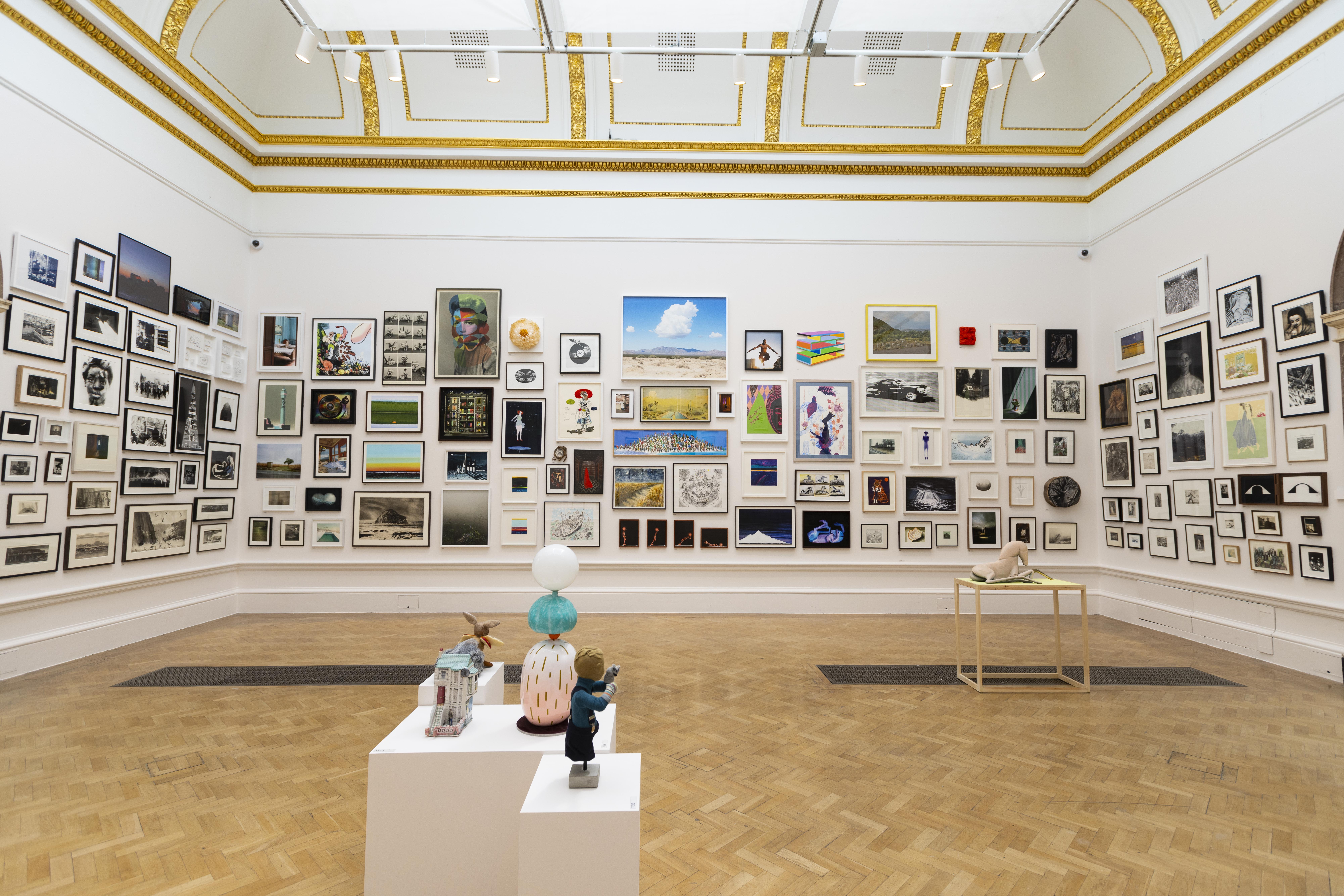
While the RA’s commitment to displaying emerging artists is admirable, it does not inherently do up-and-comers justice with this quantity-first approach. The Summer Exhibition has become what The Times called ‘art’s annual car boot sale’ and The Guardian described as an ‘anondyne jumble sale’. A two-star review in The Evening Standard refers to it as a ‘display of depressing mediocrity’.
A look at past years’ exhibitions shows similar or worse reviews. In 2020, The Telegraph stated that ‘this annual embarrassment should be put out of its misery’. The boredom is palpable, with The Week this year defeatedly declaring ‘it is what it is.’
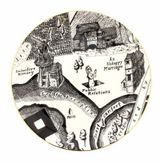
Grayson Perry’s 2018 edition for the RA’s 250th anniversary received rare glowing reviews by poking fun at the institution. Through comedic curation and an emphasis on outsider art and absurdity, it ‘saved the Summer Exhibition from its stultified self’, according to critic Jonathan Jones. But how many times can an exhibition be rescued without substantial change?
It’s time for the RA to rethink this Georgian tradition—from its anachronistic salon hang to its insurmountable volume of work—to stay relevant for the years to come. —[O]
Main image: Exhibition view: Summer Exhibition 2023, Royal Academy of Arts, London (13 June–20 August 2023). Photo: © Royal Academy of Arts, London / David Parry.















A respected voice in contemporary art discourse.
Focusing on ambitious storytelling and insightful art-world commentary. Ocula Magazine publishes in-depth interviews, critical essays and timely analysis on the artists, exhibitions and ideas driving the global art world.
Learn more about Ocula Magazine
Showcasing the best of the art world.
Ocula partners with galleries from around the world to highlight their artists, artworks and exhibitions. Gallery membership is by application and invitation, with each member vetted by an independent panel.
Learn more about Ocula Membership
Specialises in the sale of major artworks.
Led by a team with deep ties to the world’s leading auction houses, galleries and collectors. Ocula’s advisory team offers bespoke services to high-net-worth clients from around the world who are looking to acquire the best of contemporary and modern art.
Learn more about our team and services