






Whitney Museum Suspends Independent Study Program After Cancelling Pro-Palestinian Performance
Save to My Ocula
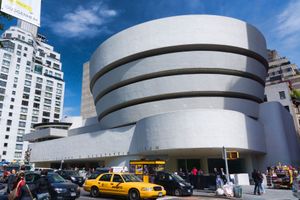
Whitney Museum of American Art will not hold a study programme this year which has propelled the careers of important artists like LaToya Ruby Frazier, Glenn Ligon, Jenny Holzer, and Felix Gonzalez-Torres since 1968.
On Monday, the respected New York institution announced its decision to ‘pause’ the curriculum of the Independent Study Program (ISP) over 2025 and 2026.
This comes just weeks after the museum cancelled a performance on Palestinian grief by curatorial students—a decision met with backlash from alumni and current students.
Scheduled to open two days later, the cancelled performance, No Aesthetic Outside My Freedom: Mourning, Militancy, and Performance by artists Noel Maghathe, Fadl Fakhouri, and Fargo Tbakhi, sought to mourn the over 50,000 Palestinians killed in Gaza.
First staged last autumn with East Village initiative The Poetry Project, the work was flagged for its prelude asserting audiences should remain only if they ‘love Palestinians wholly and completely’, and leave if they ‘[believe] in Israel in any incarnation, given its ontological structure as a continual process of extermination, disposition, and daily cruelty’.
Whitney director Scott Rothkopf told Hyperallergic the declaration went against the museum’s ‘community guidelines’, and while ISP associate director Sara Nadal-Melsió said this prelude would not feature in the Whiteney iteration, the museum kept to their decision.
Around 50 protestors occupied the museum’s lobby last Friday, protesting the museum board’s ties to institutions enabling violence and condemning its decision.
The sentiment was echoed by over 300 alumni and former seminar leaders, including respected artists like Mark Dion, Louise Lawler, and Walid Raad, who signed an open letter voicing their ‘unequivocal support’ for current students and reproaching the institution for ‘censorship’, while questioning the integrity of an organisation whose stated mission and values are ‘grounded precisely in its acceptance of dissent, reinvention, and activism’.
The letter put the decision in the context of a ‘broader political climate of fear and intimidation in the United States’, following recent ‘crackdowns on free expression, protest, and speech by artists and scholars supporting Palestine’.
The three ISP cohorts—curatorial, studio, and critical studies—similarly denounced the institution’s decision in a public statement that framed the act as ‘unprecedented surveillance’ and a ‘denigration’ of the criticality associated with the programme.
A museum spokesperson told Hyperallergic this year’s ISP will not take place, citing absent leadership: Gregg Bordowitz, who has led the ISP since 2023, transitioned to a director-at-large role in February, leaving the programme in the hands of associate director Nadal-Melsió.
In a public statement, Nadal-Melsió said she disagreed with the museum’s decision to cancel the performance, noting the programme’s integrity has been ‘seriously compromised’. —[O]
Editor’s note: This article was updated on 3 June to reflect that Gregg Bordowitz was leading the independent study programme before transitioning into the role of director-at-large earlier this year, rather than Scott Rothkopf.
Main image: Independent Study Program at Roy Lichtenstein Studio. Courtesy Whitney Museum of American Art. Photo: Max Touhey.




A respected voice in contemporary art discourse.
Focusing on ambitious storytelling and insightful art-world commentary. Ocula Magazine publishes in-depth interviews, critical essays and timely analysis on the artists, exhibitions and ideas driving the global art world.
Learn more about Ocula Magazine
Showcasing the best of the art world.
Ocula partners with galleries from around the world to highlight their artists, artworks and exhibitions. Gallery membership is by application and invitation, with each member vetted by an independent panel.
Learn more about Ocula Membership
Specialises in the sale of major artworks.
Led by a team with deep ties to the world’s leading auction houses, galleries and collectors. Ocula’s advisory team offers bespoke services to high-net-worth clients from around the world who are looking to acquire the best of contemporary and modern art.
Learn more about our team and services