





Heman Chong on the ‘Deeply Political’ Nature of Time
Save to My Ocula

Curators Kathleen Ditzig and June Yap attempt to tease out Chong’s relationship to technology and ‘the ghosts of futures we once believed in’ in light of his career-charting exhibition at Singapore Art Museum.
As one of Singapore’s most iconic contemporary artists, Heman Chong is known for concept-based art and an expansive cultural practice that spans image, performance, situations and writing.
It’s a practice that interrogates how knowledge and culture are constructed and transmitted in the 21st Century, and where meaning is often codified through information transmission in the form of a story, image, book, library, or digital archive. This transmission is framed in his practice as systems of governance, products of human labour, but also collective acts that require the viewer to be complicit in the artist’s meaning-making.
Rising to prominence in the 2000s, Chong first represented Singapore at the Venice Biennale in 2003 and participated in the 10th India Triennale in 2000. Chong epitomises a generation of Asian artists who found in conceptual art a shared idiom that superseded identity politics and was legible across multiple art worlds.
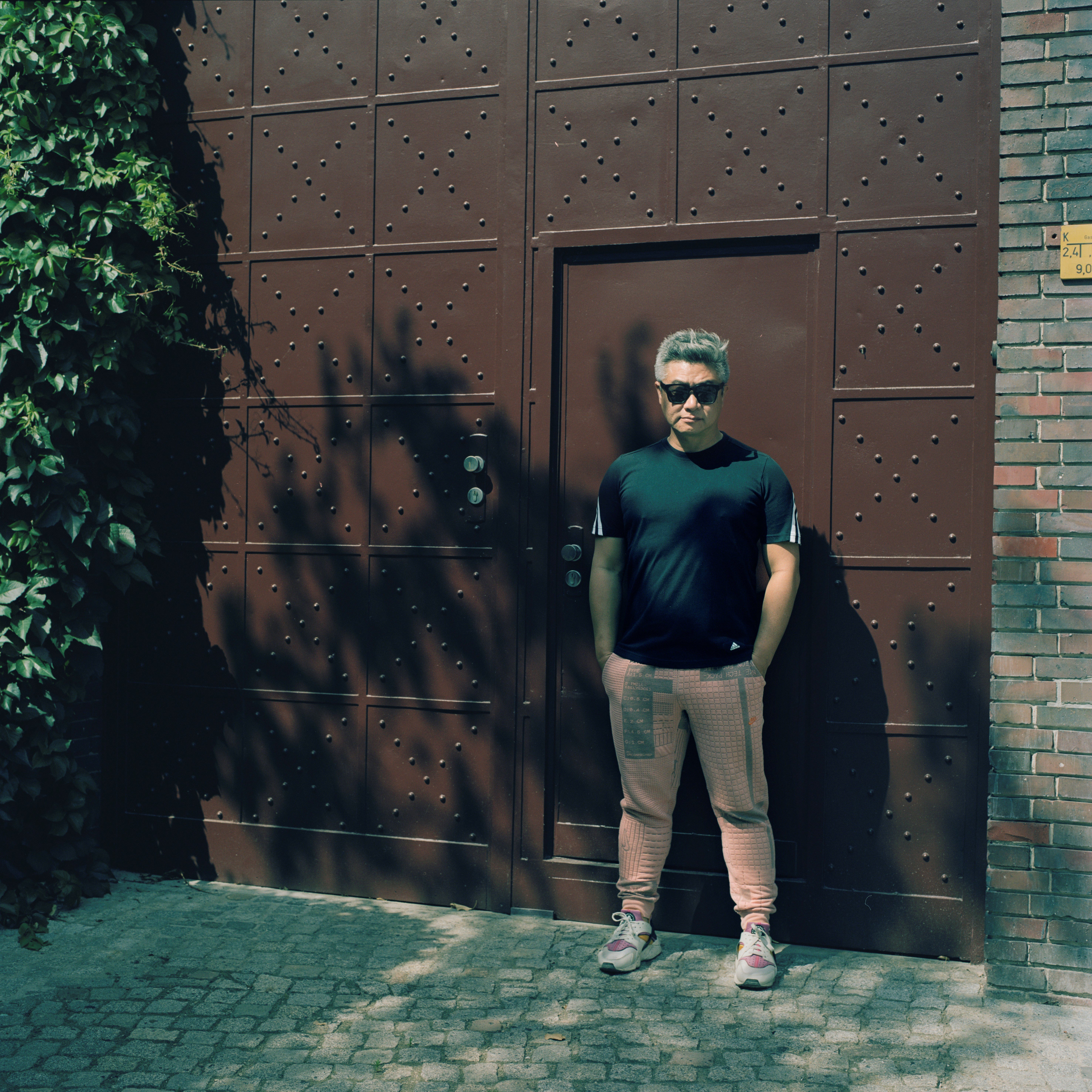
Along with his oeuvre, his circulation as a contemporary artist who has lived in London, Berlin, New York, Hong Kong and Singapore parallels the evolution of the international contemporary art world and discourses that have afforded an artist from the region both visibility and mobility.
While his artistic career was initially bolstered by Singapore’s public investment in contemporary art in the early 2000s, his work retains a productively agonist collaboration with bureaucracy and policy—especially visible in his treatment of themes like censorship, speculative futures, and an ‘infrastructural’ aesthetics. His development as an artist has also been historically informed by the Internet age and the increasing ubiquity of social media. From this milieu, his practice critically challenges the ontologies of the art object and raises questions about circulation and reproduction in our hypermediated digital culture.
Whereas recent exhibitions featuring Chong, such as Individuals, Networks, Expressions (2021) at the M+ Museum in Hong Kong, Lustrous Like Plastic (2022) at Hessel Museum, and Brian Kuan Wood’s curation of Chong’s solo exhibition Meditations on Shadow Libraries at STPI last year, have framed his practice in relation to networks and digital cultures, an interrogation of Chong’s post-studio practice and his relationship to technology has not been undertaken.
That’s despite Chong having made works that are reliant on digital technologies, web-based databases and infrastructures, and his production of work significant within the digital art history of Southeast Asia. Heman Chong collaborated with Alfian Sa’at to develop Geograffiti (2000), Singapore’s first website-based artwork.
In this interview, curators Kathleen Ditzig and June Yap attempt to work out exactly why that is.


KD + JY: This is a dynamic list and may never be able to satisfy particular standards for completeness is a readymade text-based artwork, appropriated from a disclaimer for lists on Wikipedia, and which is the exhibition title for your survey at SAM. References to technology recur in the exhibition and more generally throughout your oeuvre, and as its title, the show reminds everyone of this underlying logic within your practice. Was there a reason for your wish to title the exhibition as such, and how does it distinguish this exhibition from earlier ones?
HC: Between 1997 to 2024, I actively resisted repeated showings of works in different exhibitions because I wanted to challenge myself to make as many new works as possible. The idea of a survey show was never on my mind until Eugene Tan and June Yap had approached me to produce one.
I see this exhibition as a way of forming a vessel to contain work from the past 27 years that would form multiple entry points into my work. Similar to how I’ve designed Ifs, Ends, or Buts’ – my large-scale solo show at the Rockbund Art Museum in 2016– I’ve chosen to split the show into smaller parts so there are many different ways of accessing my practice without being confronted with a singular monolith.
The exhibition’s title is extremely important because titles are often the first objects an individual encounters. I chose an artwork as the title of the show because so many of my works involve appropriated texts from my everyday. But specifically, this one sentence really resonated with me because it is written in legalese, and serves a primary function as a disclaimer for a body of lists on Wikipedia.


There is a lot of poetry in technical language that I am drawn to: the description of a national flag, sentences appropriated by a psychologist from horoscope readings, an apology written by a tech bro, instructions for sabotaging a corporation from within…
We live in a world that is defined by digital hyper-connectivity, and it’s impossible to withdraw from this fact when I make work. At the core of thinking about these modes of connections, I am most interested in how an image is passed from one person to another and another, how one thing is photographed and shared, and re-photographed and shared, and how this decontextualised image often takes on a life on its own.
[The titular work] was originally installed as an accompanying art work within The Library of Unread Books. I love installing works upon works as I feel that this strategy of layering things on top of each other often forms a palimpsest of meanings that can be very discombobulating, and that is the effect I wish for, a certain kind of destabilisation of ways of seeing art.

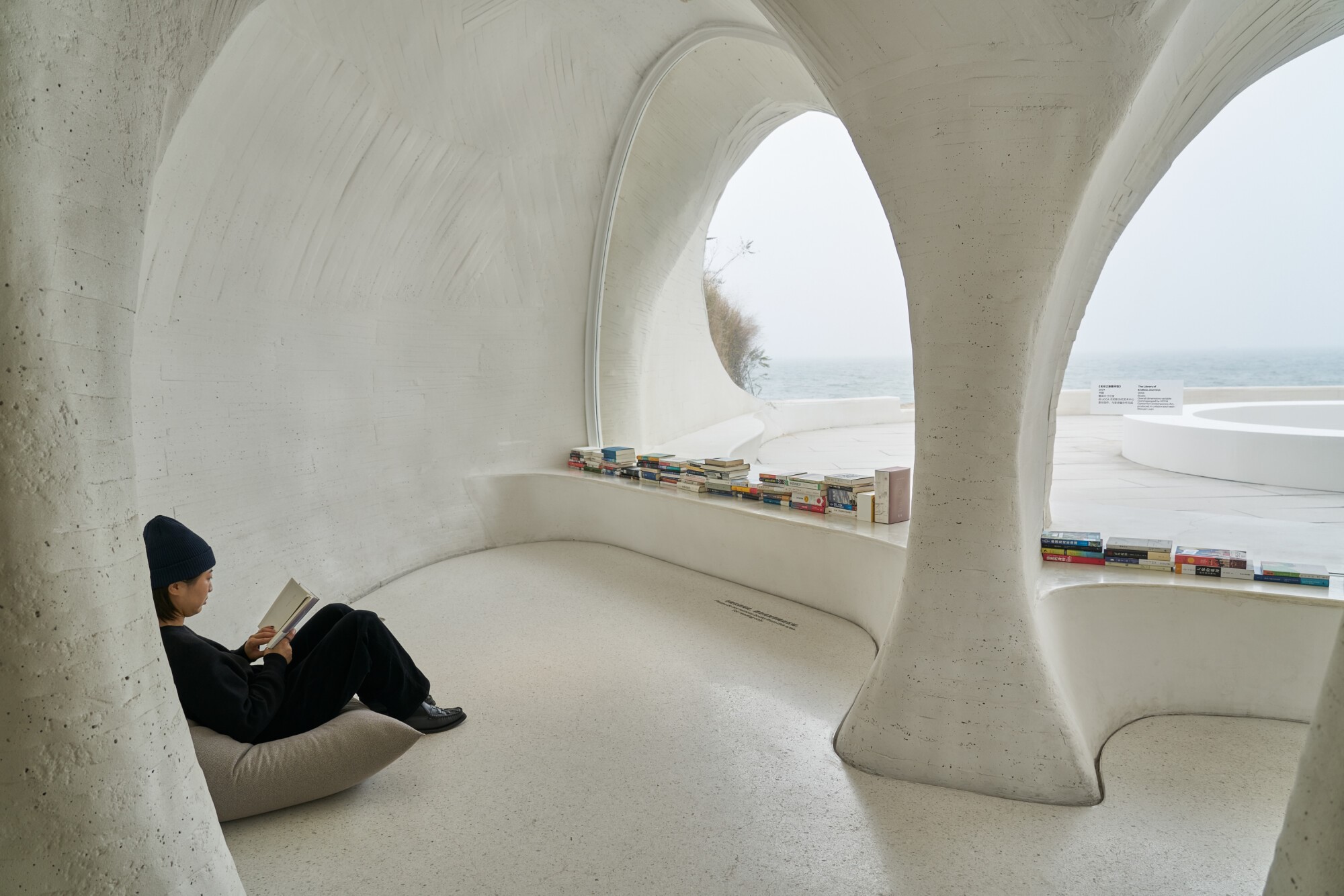
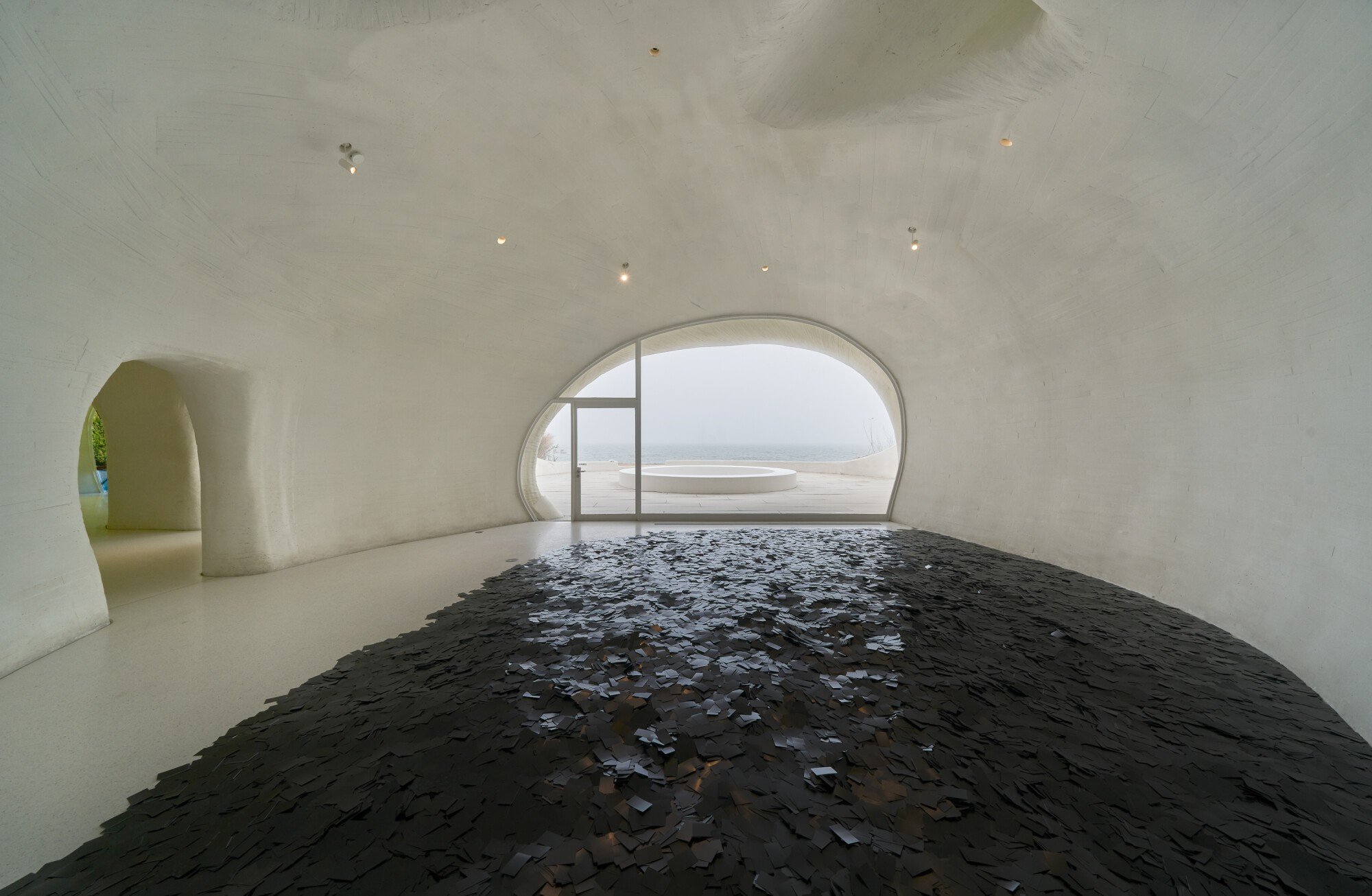

KD + JY: This survey builds upon a series of exhibitions from Serpentine’s showing of The Library of Unread Books, to your participation in both Lahore and Sharjah Biennials, and more recently, your solo exhibition ‘The Endless Summer’ at UCCA Dune. Could you share how you developed these exhibitions and your way of working iteratively with exhibitions across institutions? Why do you choose to do this, and how can we expect the exhibition to evolve?
HC: Exhibitions, whether they are group or solos, are all points of a trajectory that I travel along. I’m running a marathon, not a sprint. I do not usually try and aim for cohesion or closure. These exhibitions are part of a longer open-ended conversation, which might begin in one place and echo in another, sometimes years apart. They mutate. I revisit ideas, recycle materials, carry gestures forward. It’s important to me that these works do not end with any specific exhibition. They leak, they haunt, they persist as old works with the possibility of remixing into new ones.
Working iteratively allows for time, a commodity that’s increasingly rare in the world. It allows for doubt, failure, and slowness. A place of testing. I’m interested in how meaning accumulates across time and space and how institutions can be used as tools for thinking rather than mere display mechanisms. It’s not about control or authorship. It’s about allowing a work to live, to be contaminated, and to remain, crucially, unfinished.
KD + JY: Are you consistently thinking about past work as you make new work? Or is this hauntology more about your digital archives, which is recurrently embodied in your work and maybe it is the superstructure of hyperlinks that defines the way you make?
HC: The past is always present in my work. Not just as memory but as a kind of infrastructure. Something that shapes the way I think, organise, and produce. [The work] is exactly that: a text that keeps generating itself, never finished, never whole. It’s a readymade, yes, but it’s also a kind of ghost—a system known as Wikipedia that reflects how knowledge is stored, fragmented, and repeatedly edited. That’s where the hauntology comes in for me. It’s not nostalgia for a specific past, but an awareness that every new work is a residue of something that came before—something that may have been deliberately concealed, incomplete, discarded, or misunderstood.
My archive isn’t just folders on a hard drive. A lot of it is mental, emotional, algorithmic, hyperlinks, metadata, timestamps, autofill. How I move through this archive often mirrors how we move through the internet. A non-linear, referential, distracted, intuitive deep dive. I’m not trying to escape that structure; I’m using it as material. The hyperlink is both a tool and a metaphor: it connects, disorients, loops back, opens multiple windows at once. That’s how I make work now. One piece points to another, sometimes years apart, sometimes seconds. It’s not about producing closure. It’s about staying inside a system of relations—an ecology of ghosts and links.


KD + JY: How has time and the future functioned in your practice and why are these themes which you keep going back to?
HC: Time, for me, has always been both a material and a subject. It’s not something that simply passes in the background of the work, it’s something embedded in the structure, the repetition, the durational logic of how the work is made and how it unfolds. I’m drawn to the ways in which time organises our lives quietly, almost bureaucratically, through dates, calendars, meetings, passive aggressiveness, routines, delays, waiting rooms, deadlines. These systems feel neutral, but they’re deeply political. They tell us when to act, when to rest, when to expect catastrophe.
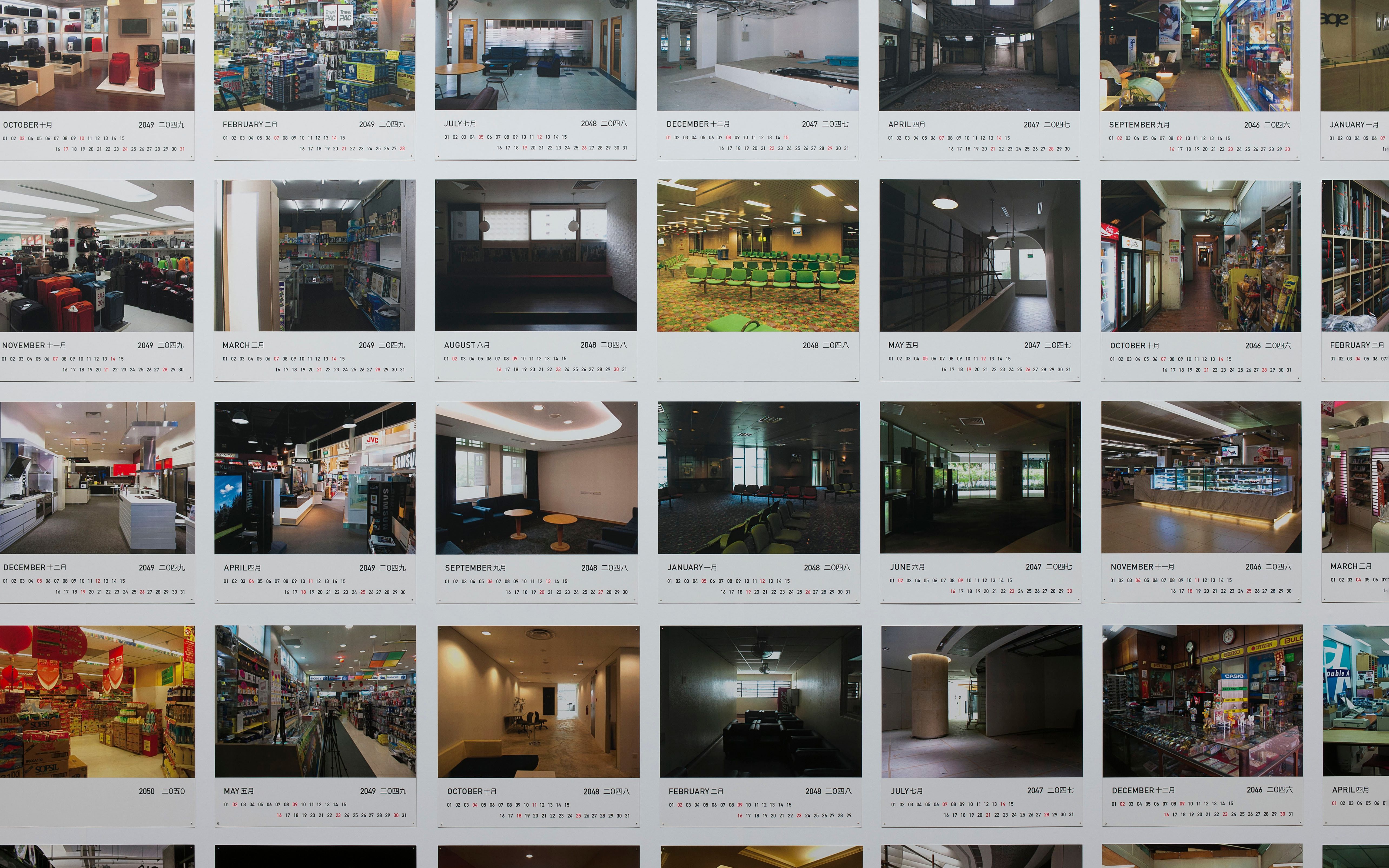
When I made Calendars (2020–2096) between 2004 and 2010, I wasn’t thinking specifically of a pandemic, but I was thinking about contingency, about the unknown, about how we prepare—or fail to prepare—for the future. The work is a vast collection of future dates, printed and framed like documents from a future archive. There’s something absurd and melancholic about assigning form to something that hasn’t happened yet. But that’s what we do, constantly—we try to structure the future before it arrives. And when it does, it never looks the way we imagined it.
Hauntology and anticipation are both embedded in that logic. I’m interested in the ghosts of futures we once believed in, and in the emotional charge of possible futures that we can’t yet grasp. In some sense, I think all my work deals with a kind of speculative realism—not in the science fiction sense, but in the sense of being attuned to the texture of a moment that hasn’t arrived yet but is already shaping how we live.
AI, global shifts, ecological collapse, pandemics… these aren’t future events, they’re conditions of the now. I return to themes of time and futurity again and again because they allow me to touch that tension between what is and what might be. They allow the work to function not as prediction, but as navigation. Tools for sensing where we are and where we might be going, even if the route is unclear or impossible.

KD + JY: This idea of speculative realism of moments that are emerging seems to relate to a technological realism in how you work. You photograph with handheld cameras or your mobile phone - a ubiquitous facet of contemporary life. How does this technological materiality inform your work?
HC: I’m deeply interested in how the everyday tools we carry, especially digital ones, shape not merely what we see, but how we see, which these days is almost exclusively through machine ‘eyes’. Using handheld cameras or my mobile phone isn’t just about convenience; it’s about working within the conditions of contemporary life. These devices are extensions of our bodies now. They blur the line between observation and participation.
The technological condition is integral to the work because it mirrors the fluid, relentless pace of information, of images, of fleeting encounters. There’s something democratic and unstable about working this way, images are easily made, easily forgotten, just like names, just like people. The handheld device becomes both a recorder and a filter, shaping the material of the work in real time. It allows for a kind of procedural realism that’s rooted in the messiness of now; glitches, noise, banality, ephemerality. I’m not aiming for clarity or permanence; I’m interested in accumulation, in residue, in what happens when you don’t look away.
“Conceptual art became a crucial framework for me, because I was drawn to a serial way of working.”
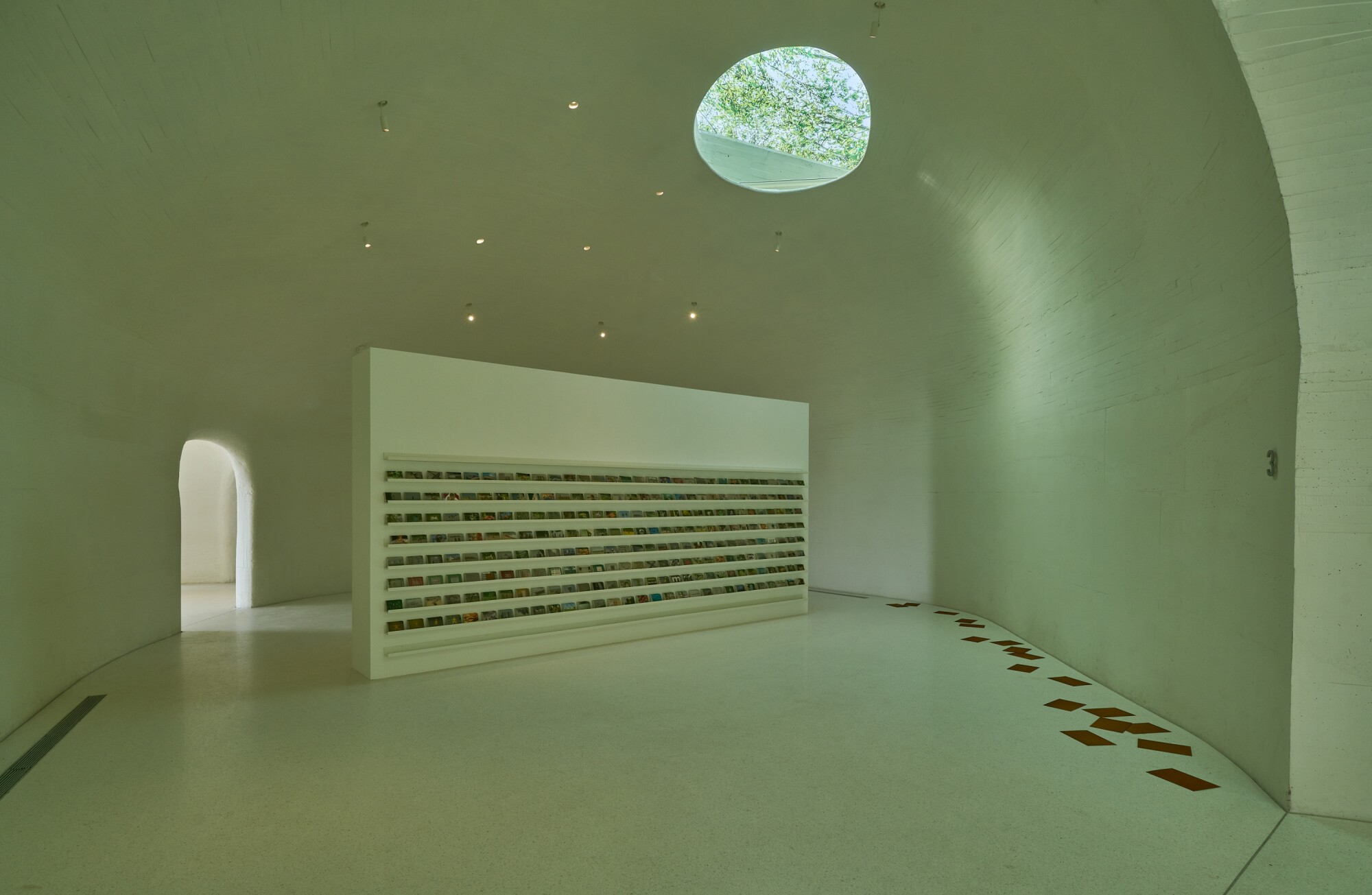
KD + JY: The physical circulation of an image is also integral to many of your works, specifically in the recurrent idea of a postcard shop, as seen in Perimeter Walk (2024), which in particular calls for a more precise affective engagement with Singapore’s geography rather than a vague idea of the world. It is an extremely infrastructural work in that it materializes the infrastructure of the transaction that can happen between a public and an artist. It materialises the labour of your gathering of the image and it materialises the geographic edges of Singapore without being a map. Could you unpack this for us a bit?
HC: Perimeter Walk is my latest postcard distribution installation made up of 550 postcards, each one featuring a photograph I took while walking the entire border of Singapore over 2013-2024, a period of 10 years. As I traced the island’s edges on foot, I used my small compact (now digital) camera to quietly document the shifting landscapes I encountered; a white cat living in the void deck of the HDB block facing Johor Bahru, a melted Mars Bar, a photograph of a woman making a love symbol with her hands, hands filled with anxieties at in wax museum depicting the Japanese surrender of Singapore back to the British, a sign that says ‘Island Under Surveillance’.
These scenes capture more than just the physical boundaries of my country; they reveal a complex portrait of a place shaped by control, order, and invisible lines.
I chose to print these images as standard postcards, objects meant to be touched, collected, sent, or shared, like souvenirs from a journey. In doing so, I invite visitors to engage with the work not just as viewers, but as participants in its circulation. As these postcards are exchanged and carried beyond the walls of the exhibition, these images take on a different life as images that will be stuck onto fridges or walls of whoever receives them.
Postcards represent a very primitive form of social media. Images and words are exchanged between people in an intimate way. The interest in the overlooked in Singapore has a very important political function for me as I feel that it’s important to think about what constitutes Singapore outside of prescribed, official symbols, slogans and images fed to us. We need to imagine a Singapore beyond Marina Bay Sands, The Singapore Airlines girl, otters swimming in the river, ever-smiling politicians on banners, and think about what other Singapores can exist for the everyday person.

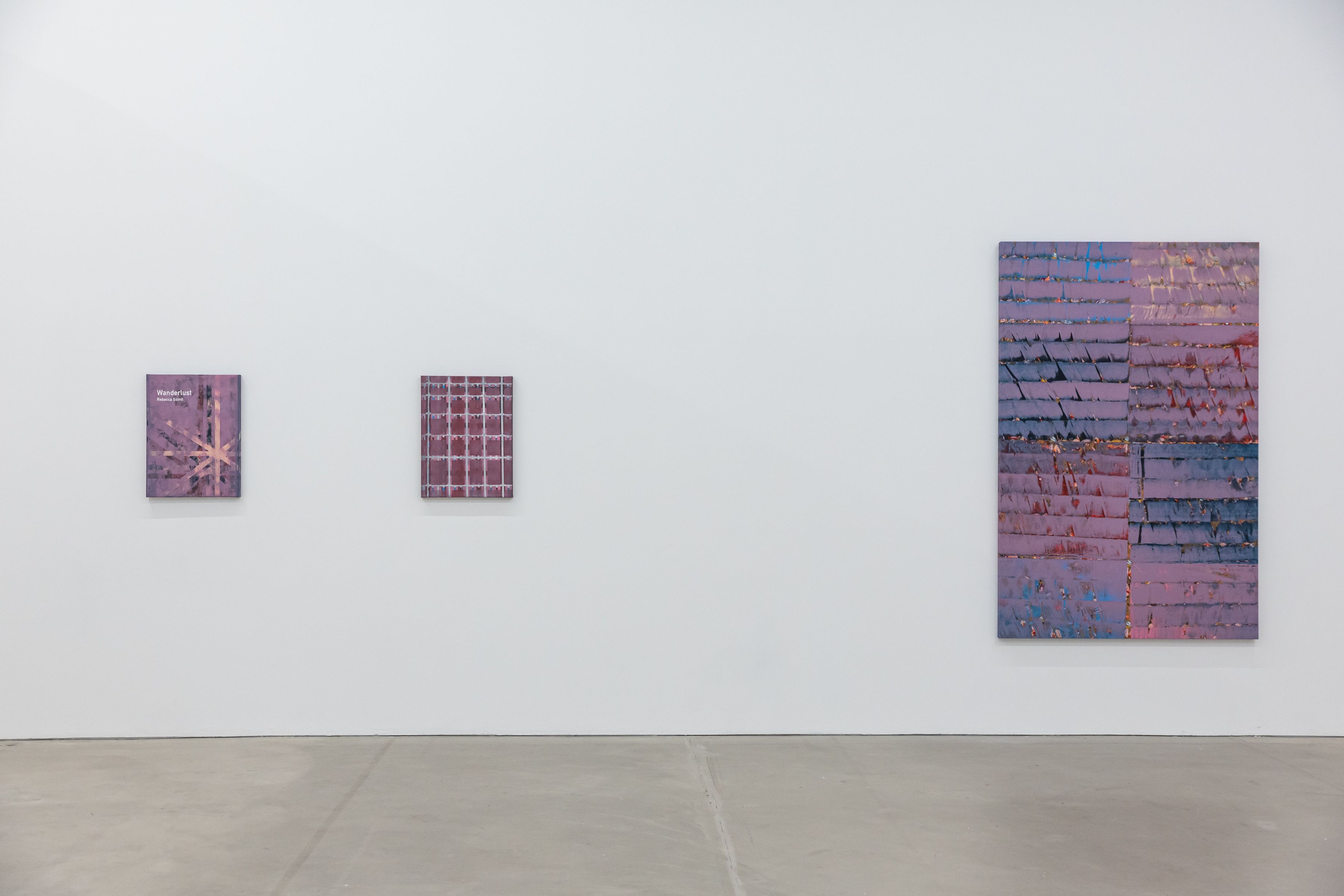
KD + JY: Your paintings deftly point to the image as interface. In SafeEntry Version 2.4 (2020) the painting surface links directly to a video of Changi Airport Terminal 2 that you recorded on 30 April 2020. In addition, you’ve described Emails from Strangers (kami coar) (2025) as a physical and painterly forwarding on of an email. How is the painting a kind of material transmutation of data in your work?
HC: Painting, for me, is a way to slow down data—to force it into a state where it can no longer just flow or disappear into the endless stream… until it’s photographed and enters that fluid state again. It’s a kind of low level resistance to how we experience images today. In much of my work, especially the paintings, I’m taking fragments of information—text, color, form, systems, and putting them through a process of material transmutation. Data becomes image, image becomes object, a spam email becomes a tombstone, a book recommendation from a friend becomes a painting.
I think of painting as a way to metabolise data. It’s not about representing information, but about embodying it, allowing it to take on weight, texture, time. There’s a tension between the speed at which data moves and the slowness, the insistence, of painting. It’s durational. It asks something of both the maker and the viewer.
Each painting is a placeholder in time, but it’s emptied out, abstracted, turned into a field of colours, lines, layers and systems. It’s still data, but it’s also something else now—intimate, irrational, tactile, autobiographical.
The Book of Equators is a series of paintings that utilises the line as a central motif to think about the idea of lines in our everyday lives. A line can be drawn to connect us. It can be drawn to separate.
I live one degree north of a ubiquitous imaginary line. It is called The Equator. It is a defining line that separates the world into two; the Global North and the Global South. High and low. Up and down.


Longitudes and latitudes are also imaginary lines, slicing the world into time zones and inequalities and fictional tales of differences.
I have chosen to paint these lines over an existing pattern that has been printed on polyester fabric, where these fabrics are usually used for curtains. These commercially available found objects are all produced in countries that have been colonised by The British Empire. The motifs found on the curtains depict the flora and fauna found in tropical and subtropical territories and are images exorcised for international global consumption.
The patterns are familiar tropes found in these countries; palm trees, huge cascading vines and leaves, exotic flowers. They represent visual ways of extracting resources from the colonies. By painting lines upon lines over these patterns, they obliterate the patterns from view, creating new textures and stories.
History is constantly being painted over, blacked out, or given a white wash. You can always detect slippages and leaks that come with these processes, just as in my paintings that form The Book of Equators. History peeks through the cracks in between the lines. There are always echoes.

KD + JY: In some ways your turn to concept-based art has been a means to create what you call cultural objects. It also historically dovetails with the emergence of platforms which would come to define our current social media landscape. LinkedIn, MySpace, Friendster were all launched in 2003, and Facebook launched in 2004. This was the beginning of human subjectivity becoming codified through metrics and media logics. Retrospectively, we can see why conceptual art with its strategies of dematerialisation and its procedural logics resonated with the digital age of the early 2000s. Do you recall this moment and how you came to frame your work through the idiom of culture?
HC: By 2006, I felt a rupture in my life. A shift in how subjectivity, communication, and even presence itself were being mediated and reformatted. I came late to social media, and wasn’t on platforms like MySpace and Friendster. I felt like my life changed upon getting onto Facebook. I was instantly addicted. I posted without thinking. It became the dumping ground of my subconscious, dying for attention as a young artist.
Suddenly, there were ever-increasing new platforms that began codifying who we were through likes, connections, profile pictures, status updates. It was subtle at first, almost playful and very nostalgic. It made me feel seen, which is something I craved because I was practically an unknown artist then. But very quickly, it became apparent that these tools were changing how we understood ourselves, how we related to others, and how we occupied space—social, emotional, political.
“Whether it’s a novel, a calendar, a business card, a painting, a library, or a situation, I treat each of these forms as components of an ecology.”
At the same time, I was moving toward making what I now think of as cultural objects—not just art objects, but things that exist inside the everyday circuits of language, information, behavior, and repetition. Conceptual art became a crucial framework for me, because I was drawn to a serial way of working. It wasn’t about making things that lasted forever. Many of my works are made to not resist destruction. I wasn’t thinking about object conservation as much as the ease of how objects can circulate between people. I was mulling about systems, ideas, gestures, and how they repeated, mutated, disappeared.
I became interested in how artworks could behave like bits of culture—like memes, rumours, spam emails, postcards sent between friends, posters pasted on public walls, business cards furiously exchanged between gallerists and collectors, ASMR YouTube videos.
At some point I felt that the strategies of dematerialisation that conceptual artists used in the ’60s and ’70s took on a new urgency in the 2000s, when culture itself was becoming something you could copy, paste, edit, delete. I was drawn to that friction between presence and absence, between materiality and the virtual, between what is visible and what is merely circulating. Culture not as something fixed or monumental, but as a fluid set of codes and habits—things we inherit, perform, and sometimes interrupt.
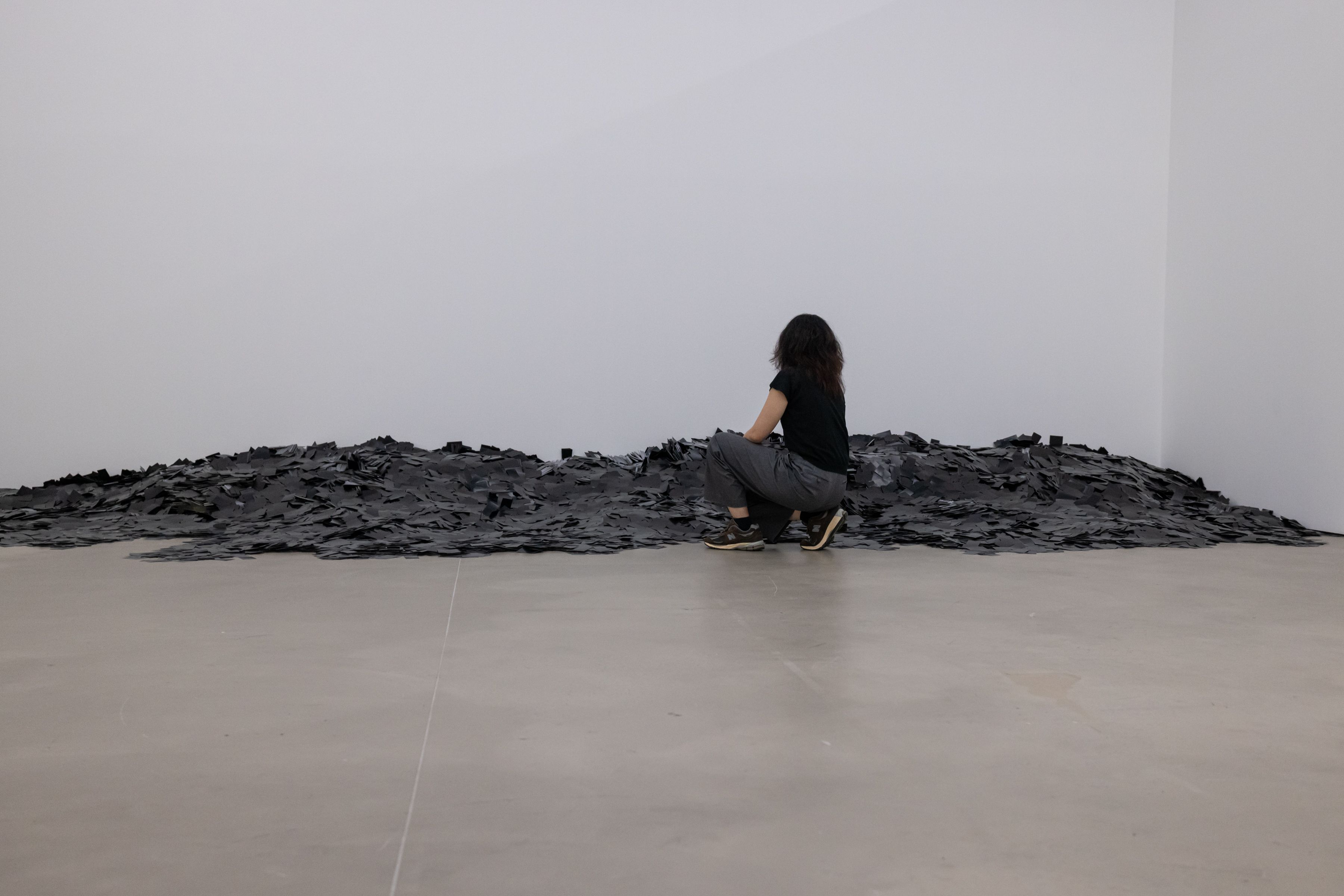


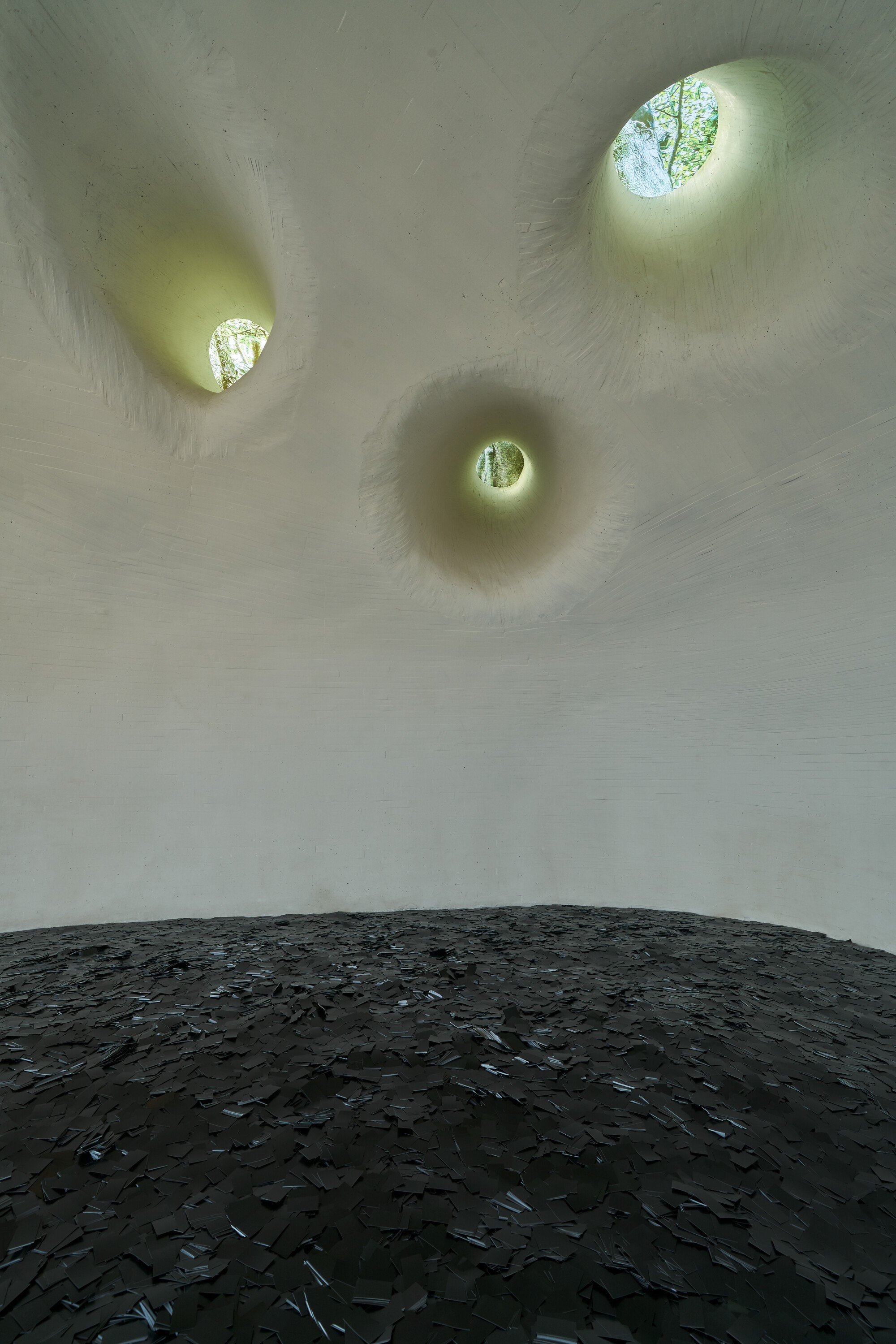

I feel that this rupture in 2006 is most pronounced in my 2008 work, Monument to the People I Have Forgotten (I Hate You). It began with a single, ordinary object, a business card, that I multiplied a million times. Each one is 8.5 x 5.5 cm, printed in black on both sides. I scattered them across the floor in layered piles, creating a dense, unstable surface—quietly overwhelming and physically unsettling. Walking across them is uncomfortable, even dangerous. That is the point.
These name cards evoke for me the feeling of failed promises and the superficial closeness that comes from fleeting personal connections. This work is my monument to the nameless, the forgotten, the insignificant. It’s a reflection on how thin and volatile the boundary can be between remembering and forgetting. It was made near the starting point of 2008-2009 global financial crisis, an event that I couldn’t have predicted but the work just dovetailed so nicely into all the doom and gloom of the forthcoming situation.

KD + JY: There are a lot of accidents in the making of your works that start from a general curiosity with life. You’ve described The Library of Unread Books (2016) as an ‘accidental socialist artwork’. Why is intuition and the accident so important within your practice, and is there a particular work or moment in your practice that you realised that this was an integral part of art making for you?
HC: Binna Choi said it was an accidental socialist art work and that term stuck with me. I didn’t come up with it. I do like it though. Even the terms used in my practice are often lent by other people. I like the inclusion. It makes me feel like I’m a part of things that are floating around in the greater world, and not only necessarily the art world.
Intuition and accident are absolutely central to how I work. I don’t believe in fully controlling a process. I’m more interested in creating a set of conditions, and then seeing what emerges. There’s something deeply human about that, about allowing for ambiguity, messiness, for contradiction, for things that don’t make sense at first but feel necessary. I think a lot of the art I’m drawn to, comes from that liminal space, where thinking meets feeling, where meticulous planning collapses into the unknown and chaos.
The Library of Unread Books is a perfect example. It wasn’t conceived as some grand, ideological gesture. It started with a simple curiosity: what do people do with books they never read? I asked around, collected a few, and very quickly, it grew into this living archive—a collection of personal intentions, failures, fantasies. It became a kind of accidental socialist artwork because the logic behind it was redistribution, care, and shared access, but it emerged from something very intuitive, very affective. People donate their unread books, and in doing so, they share a piece of themselves—not through authorship, but through absence. Someone else will now read their books for them. An instant connection.


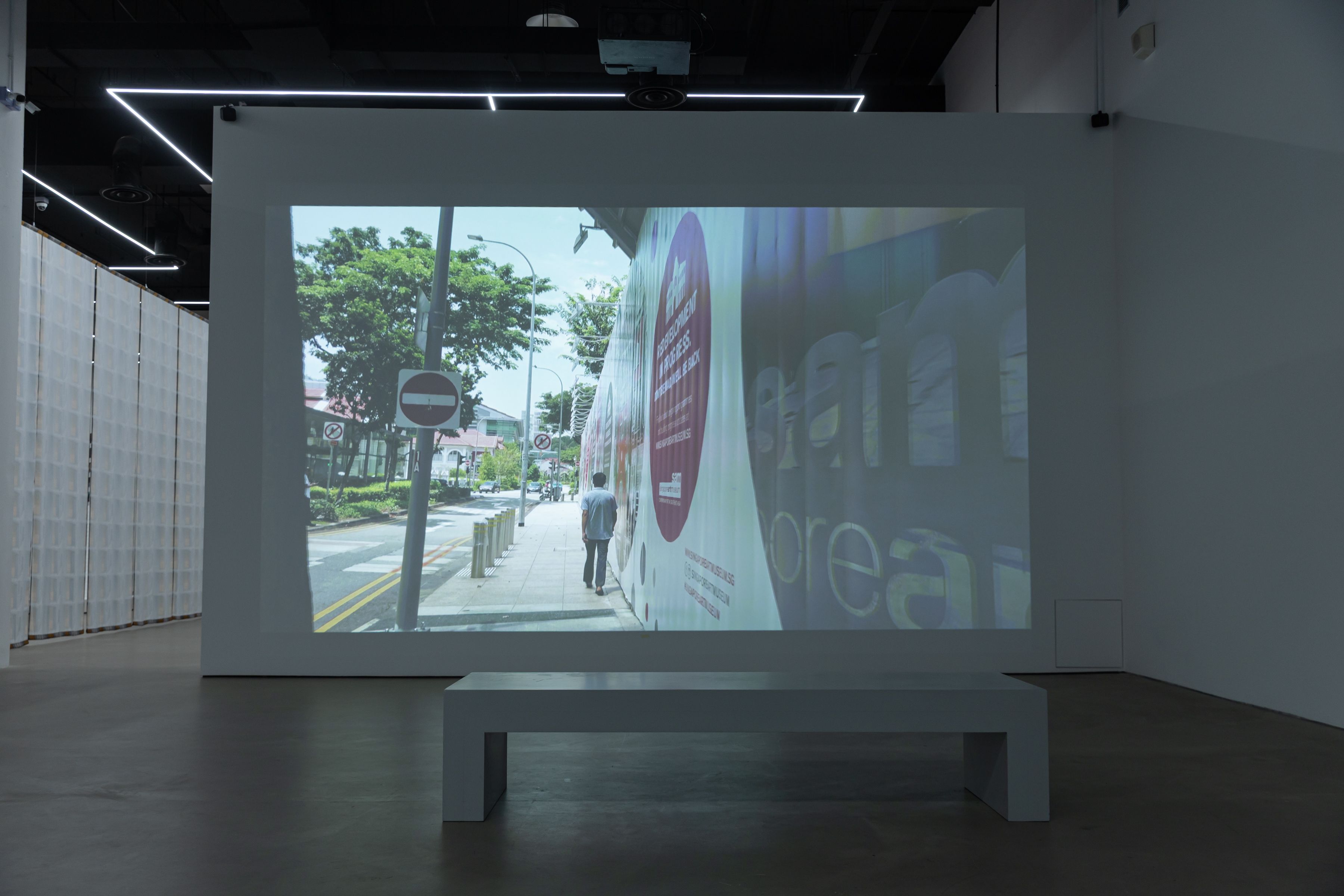
KD + JY: In this respect, your role in art making could also be considered as being that of a ‘systems operator’. Systems appear in your work as literal frameworks: as something that you gesture to as much as that produce the work. What kind of system is the art world for you?
HC: I’ve always seen the art world as a system like any other; one built on rules, codes, permissions, exclusions. It’s a place where huge egos, shifting notions of beauty, slippery language, old and new money, visibility, and access are constantly negotiated. But what makes it strange, is that it pretends not to be a system. It often wants to present itself as a space of pure expression, freedom, even chaos. And yet underneath that, there are deeply entrenched structures, economic, social, institutional, that shape what can be seen, what can be said, who gets to speak.
In my work, especially in projects like Foreign Affairs, I’m interested in inhabiting those structures, sometimes very literally, like engaging with bureaucracies, legal frameworks, or diplomatic spaces—and seeing where they can bend, where they crack, where they start to reveal their absurdities. I don’t want to simply critique systems from the outside. I’d rather act from within, in the shadows, like a kind of secret agent, rerouting signals, inserting noise, highlighting glitches.
Foreign Affairs began as a series of banal photographs of embassy backdoors. I was drawn to these sites not for their drama, but for their quiet, repetitive infrastructure. Photographing them over and over again, I started to think of the images as both cinematic frames and as echoes of surveillance footage, something that watches everything and nothing at once. There’s a strange power in that banality. Each image accumulates not just as documentation, but as a kind of system, a pattern of gates, locks, cameras, and greenery carefully arranged to both obscure and secure. These are thresholds to spaces we’re not meant to enter, spaces that exist because two sovereign states have agreed they should.
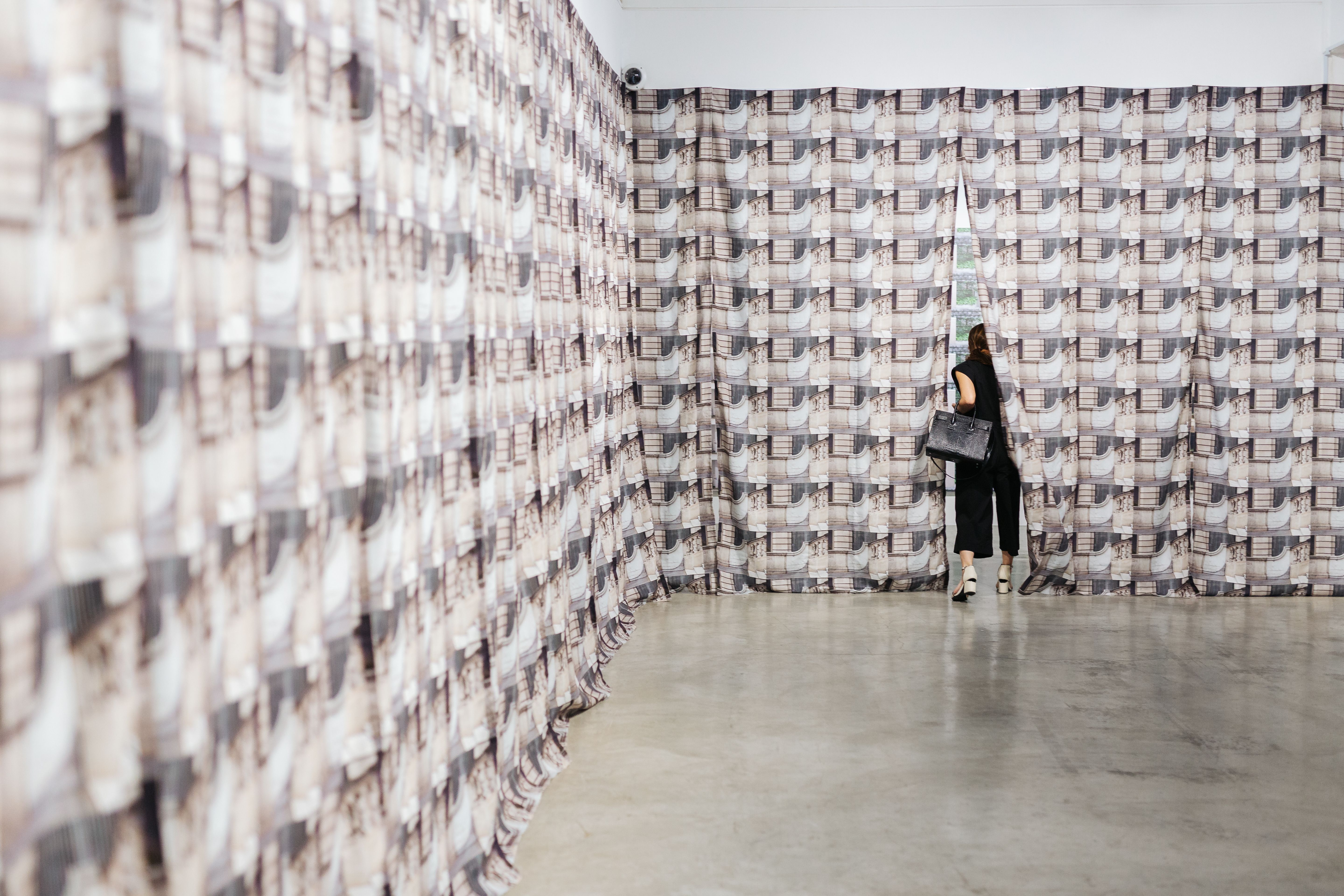
To me, Foreign Affairs is about these overlooked sites of infrastructural power. They’re physical, bureaucratic, symbolic. They are points where diplomacy and secrecy overlap, where the machinery of international relations is quite literally housed. The images speak, without speaking, to fears we carry about what happens behind closed doors, about secret deals, invisible actors, the backstage manipulations that shape front-stage performances of national stability or crisis.
I’ve always thought of infrastructure as more than just buildings or networks, it’s the soft architecture of how the world runs. It’s supposed to remain invisible, to blend into the everyday, and that’s precisely what makes it powerful. In that sense, Foreign Affairs is part of a broader exploration in my work—an attempt to, quite literally, touch the hidden seams of political life through everyday forms.
Whether it’s a novel, a calendar, a business card, a painting, a library, or a situation, I treat each of these forms as components of an ecology. They’re not isolated objects; they’re systems. I use conventions, like the cinematic frame or the structure of a calendar, not to mimic, but to reveal how fear, control, and desire are produced in the mundane. I’m always trying to understand how the world is held together, and where its fractures might be.
The art world, for all its contradictions, is still a system where certain types of cultural labour are made visible. So I use it, while also questioning it. I see it as a platform, not a sanctuary. A machine that processes culture, assigns value, and creates visibility, but also one that can be interfered with, slowed down, or momentarily redirected. I’m not interested in escaping systems. I’m interested in what happens when you push against their edges, when you misuse them, when you make them say something they weren’t designed to say.
It is like what my text work points to and holds space for – ‘Oops! Something went wrong. We’re working on getting it fixed as soon as we can’. —[O]
Main image: Heman Chong. Courtesy the artist. Photo: Linda Bournane Engelberth.






A respected voice in contemporary art discourse.
Focusing on ambitious storytelling and insightful art-world commentary. Ocula Magazine publishes in-depth interviews, critical essays and timely analysis on the artists, exhibitions and ideas driving the global art world.
Learn more about Ocula Magazine
Showcasing the best of the art world.
Ocula partners with galleries from around the world to highlight their artists, artworks and exhibitions. Gallery membership is by application and invitation, with each member vetted by an independent panel.
Learn more about Ocula Membership
Specialises in the sale of major artworks.
Led by a team with deep ties to the world’s leading auction houses, galleries and collectors. Ocula’s advisory team offers bespoke services to high-net-worth clients from around the world who are looking to acquire the best of contemporary and modern art.
Learn more about our team and services