





Kinship, K-holes and Consciousness: Inside the World and Artistic Practice of Sebastián Silva
Painter and filmmaker Sebastián Silva is fascinated by clothed chimps, aliens and discovering new kinds of human and intellectual connections. Toniann Fernandez spoke to the artist to coincide with his Imaginary Friends exhibition in Los Angeles. Save to My Ocula
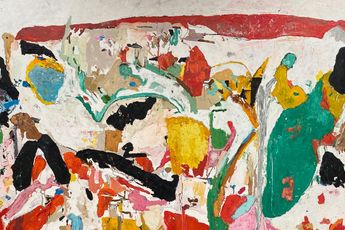
Sebastián Silva’s work explores noetic connection. The Chilean painter and filmmaker’s newest exhibition, Imaginary Friends, is his first show at James Fuentes, and gathers a set of hallucinatory figures and characters-turned-landscapes that map portals to a psychic terrain. The paintings were originally created for a small gallery in Japan, Silva says, and he wanted the works to be ‘cute’ in homage to Japanese character culture and the kawaii idioms of anime and manga. He laughs when giving me this ‘disclosure’ and tells me his tarot card that day told him to let go of control—something he is in constant tension with, that painting forces him to do and that filmmaking forbids.
Silva, who currently resides in Los Angeles, draws a distinction between filmmaking and painting. ‘When I make movies,’ he says, ‘the narrative is very clear. The subject matter is very clear. And even when ambiguity exists, it’s part of the dialogue that I want to start.’ Painting, on the contrary, is a more intimate, uncertain practice that he likens to creating and solving problems for himself, over and over. Some paintings are made in intuitive gestures, while others are planned and worked digitally before being completed. Sometimes Silva agonises for hours over the shape of a small line in an abstraction to evoke something that feels incommunicable, like a K-hole, or interspecies communication. ‘There’s so much unknown and so little resolved in painting.’
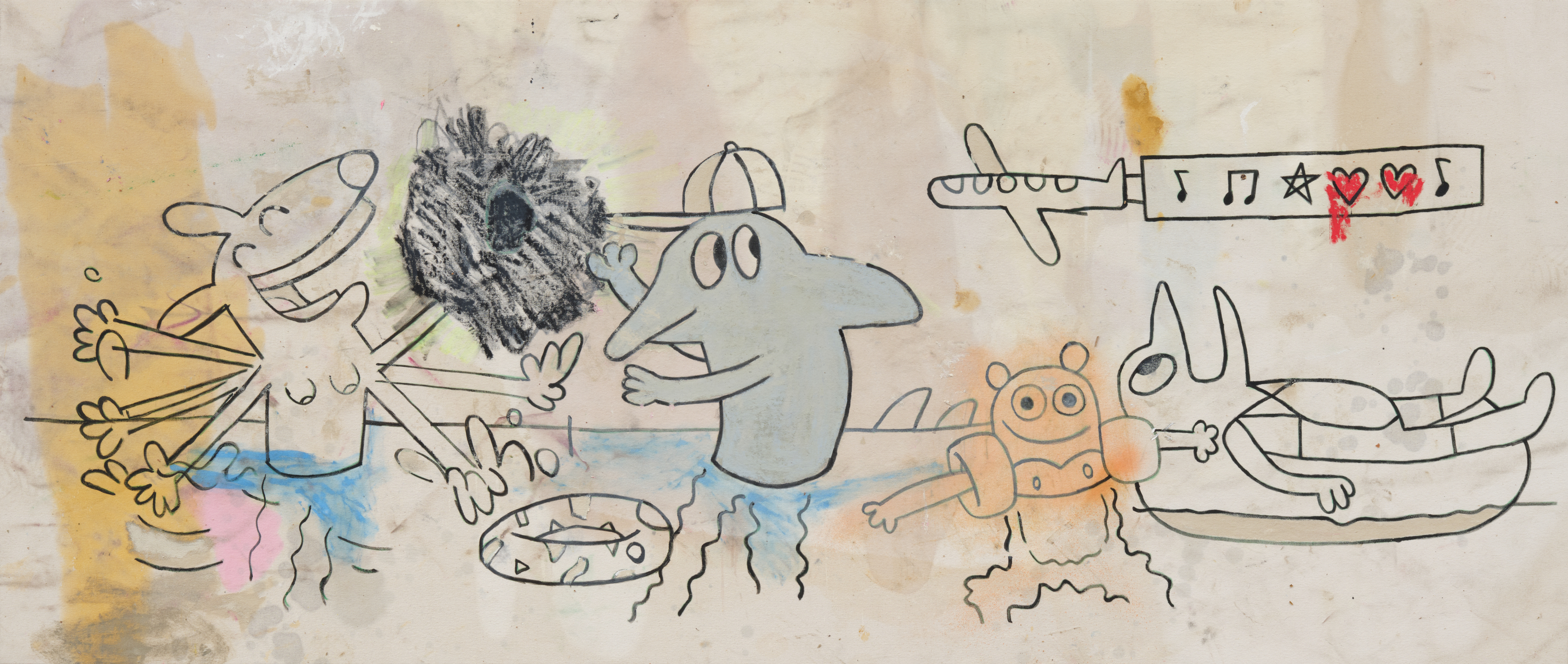
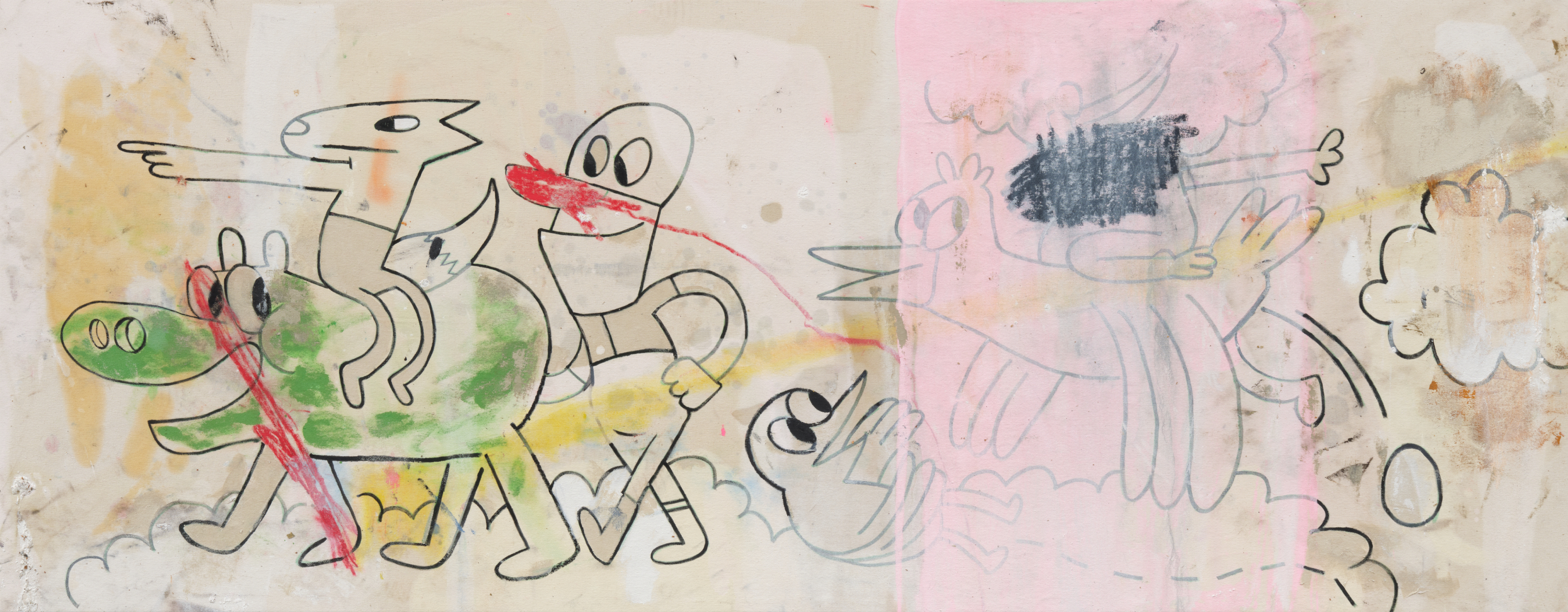
The artist describes his painting You Don’t Have to Know How to Swim (2025) as a parody of innocence. A smirking dolphin in a baseball cap wades in the ocean with his friend, a busty flailing lady animal. A third companion floats belly-up nearby. They are childlike, but they also look as if they could steal a car. More than anything, they look like memories, smiling for the camera. Silva says they might live in other realms. ‘Maybe they are remnants of the imaginary companions I created as a child,’ he says. He tells me that growing up, even when he had friends, he always felt alone. ‘That’s really why I started making things.’
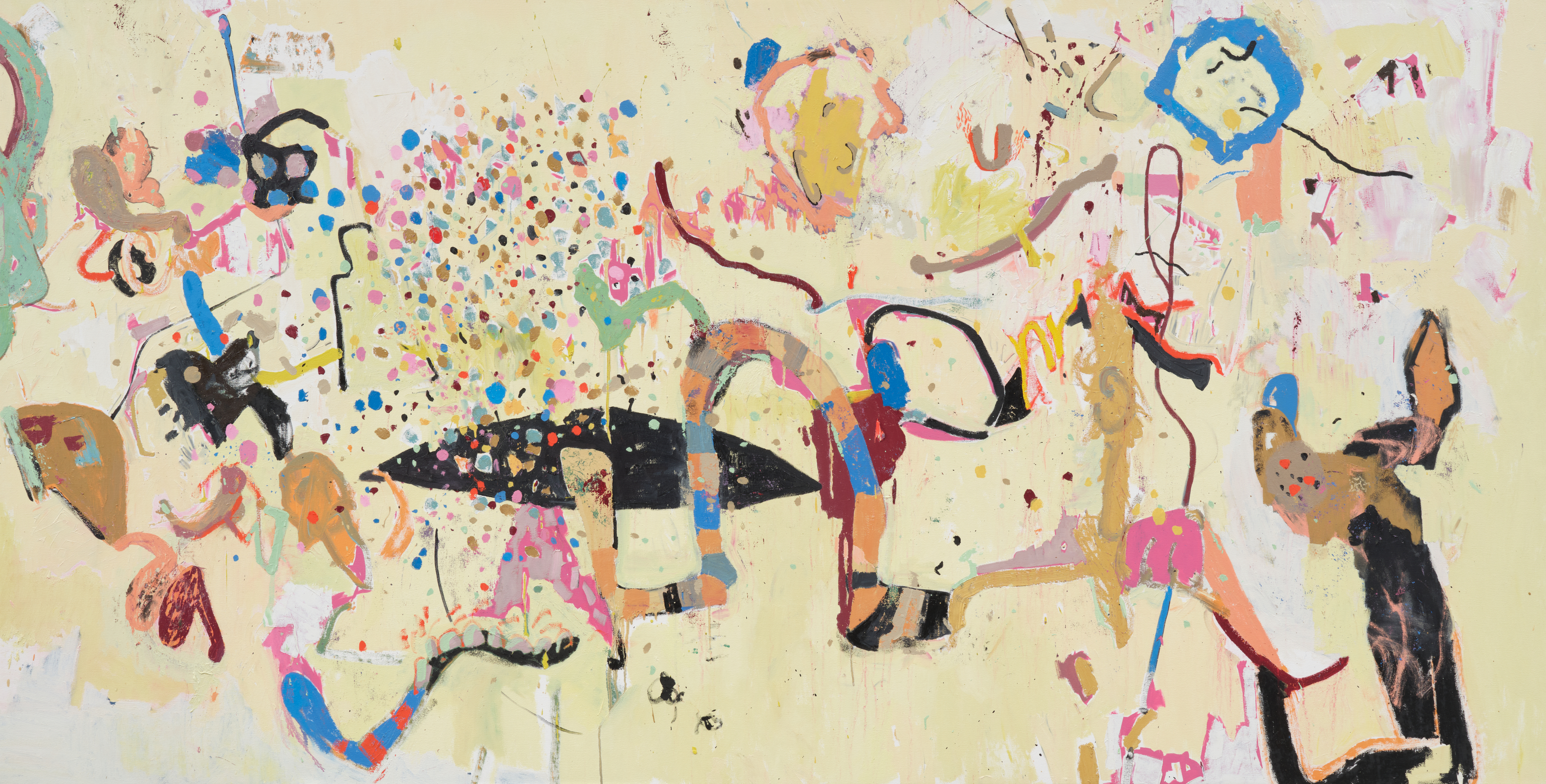
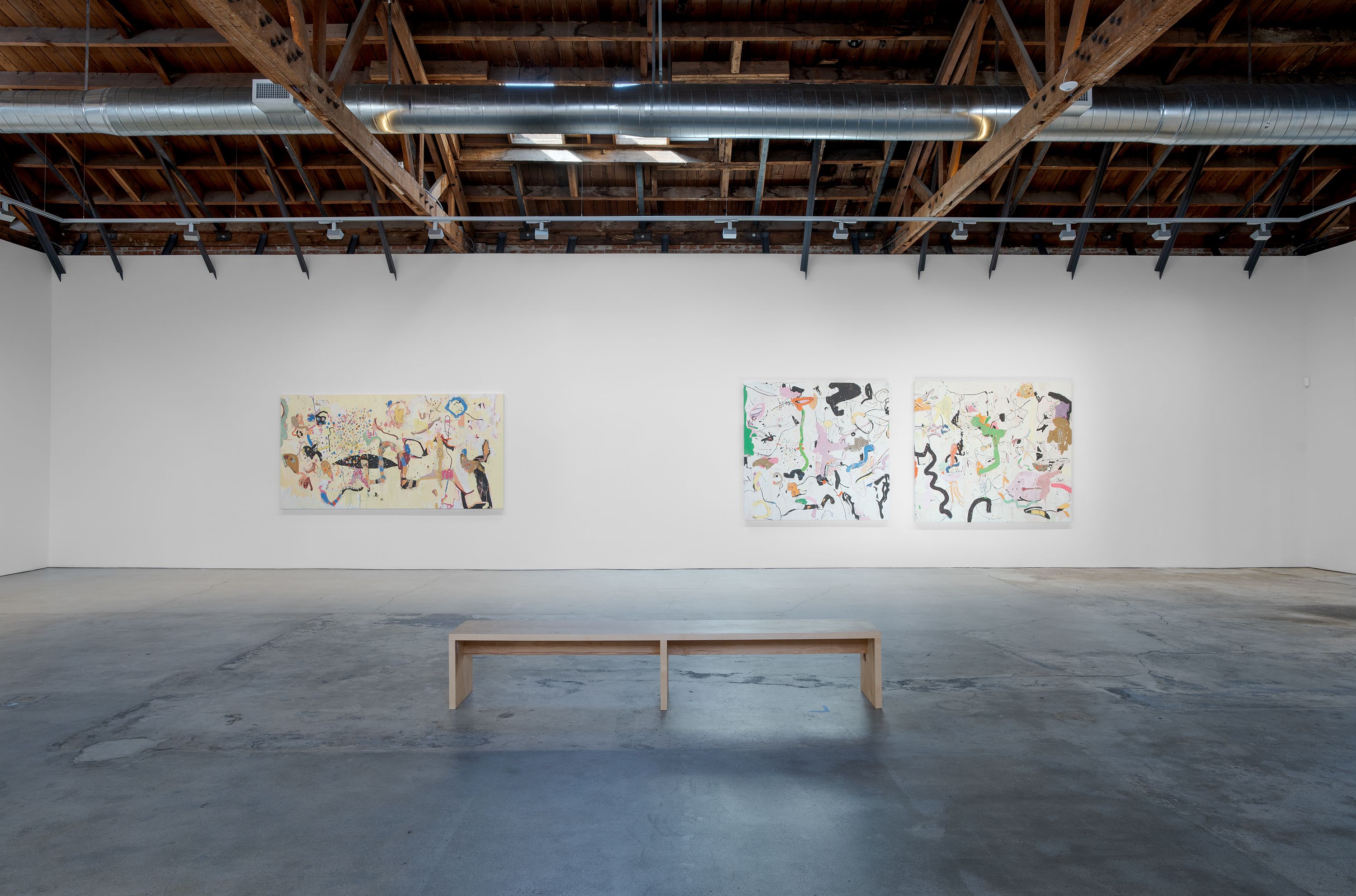
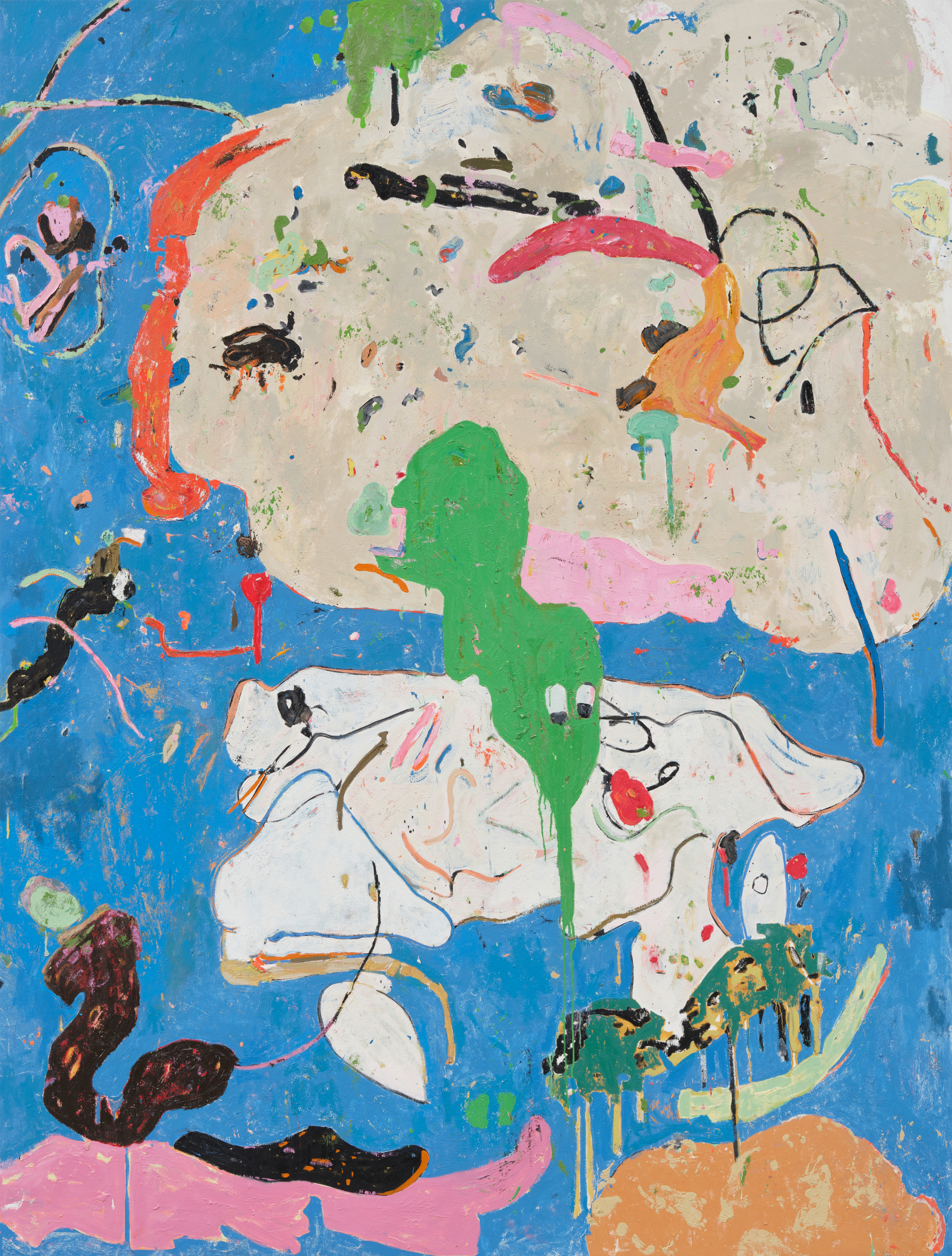
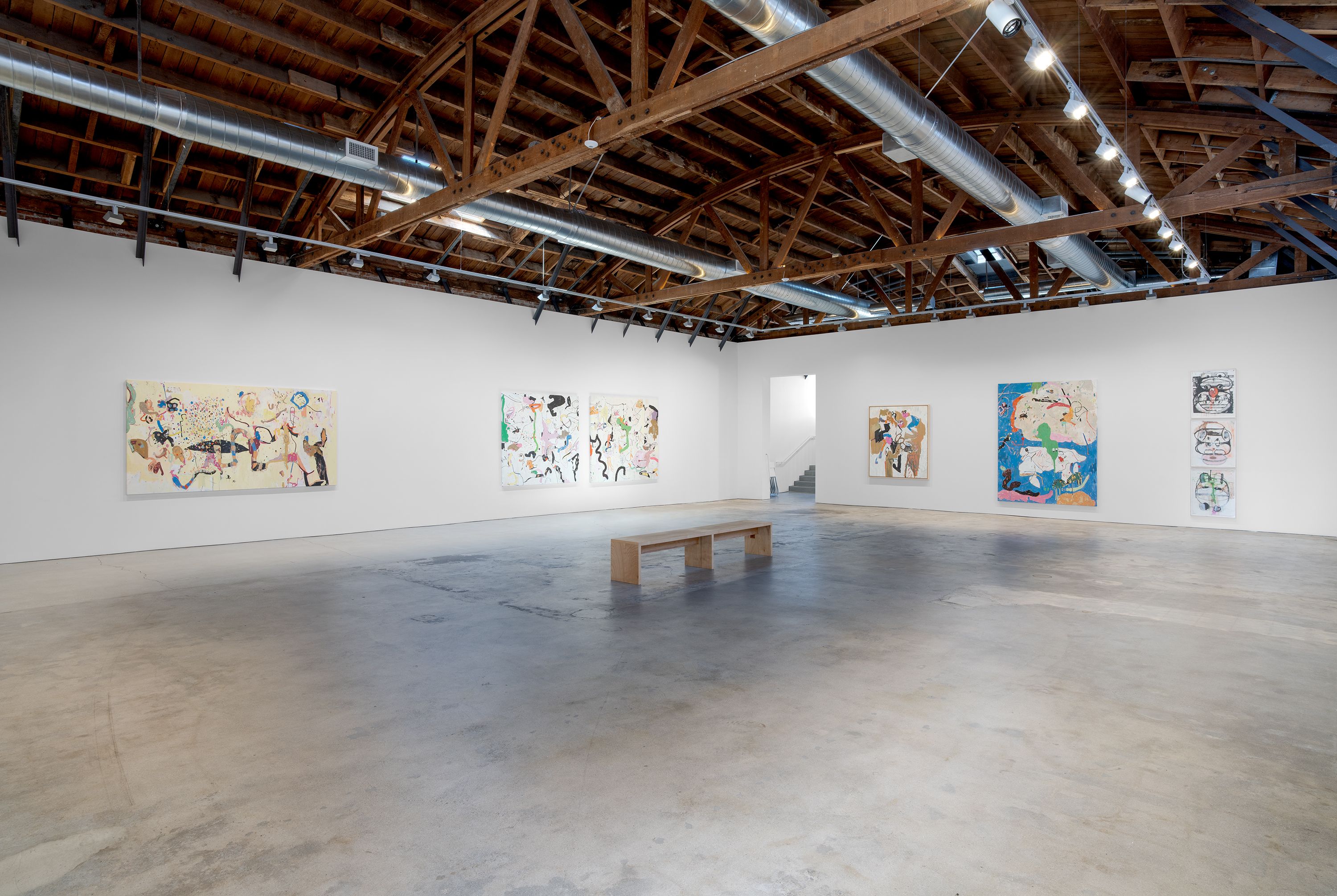
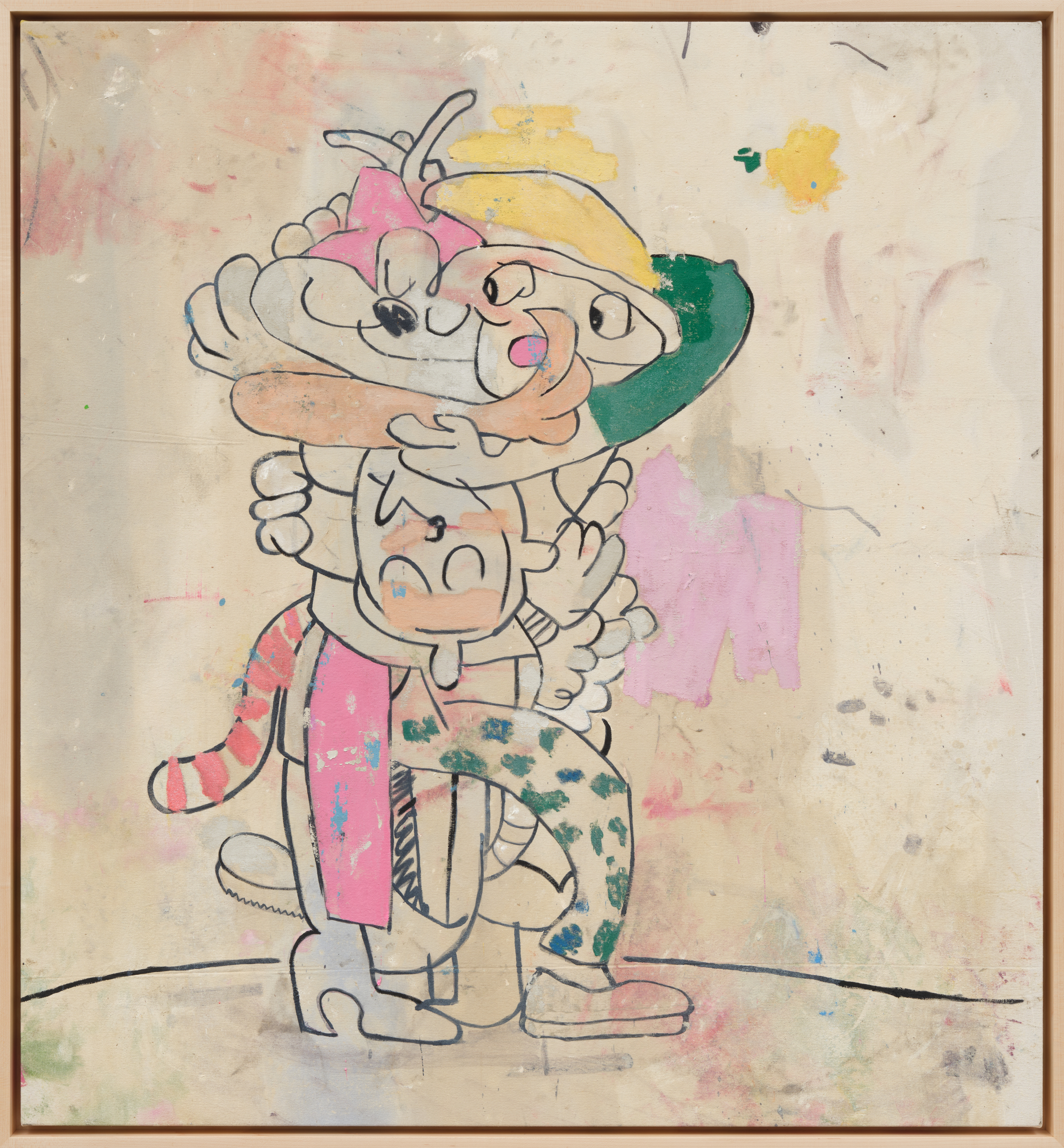
His more abstract works are like deconstructed ‘friends’ blasted into vast, spiritual terrains. In these paintings, he explores feelings beyond language and form, like exploring the inner world of an imaginary friend. Favorite Hole (2025) feels like the place where Silva’s invented characters go to disappear. The surface of this abstraction pulses with colour, like memory leaking through skin. What could have been a void instead becomes an ecstatic site of undoing. In I’m Vain, But You Too (2025), a face emerges from the fog of its own vanity. The figure is barely held together, and its outline trembles. Feral (2025) presents characters twisted in warm and mischievous embrace that seems to ask, where is the line between public displays of affection and eroticism?
Intimacy with something you can’t understand is a point of focus for Silva. He tells me of his obsession with clothed chimpanzees. He finds them ‘demonic yet endearing’, and lives with framed photos of chimps in overalls and polo shirts drinking Coca-Cola in his home. They are a perfect example of a real-life imaginary friend—wild creatures draped in projections of personhood that can never really be tamed. Silva says he often thinks of making large-scale paintings of the chimps.

Silva is fascinated too by the life and work of U.S. artist David Huggins, who has previously claimed to have been abducted by extraterrestrials, to have lost his virginity to a female alien named Crescent, and to have fathered hybrid alien children who live on another planet. Huggins has painted hundreds of serene images of his ‘encounters’ with his family of aliens within a domestic setting. Silva, who has always dreamed of being abducted by aliens (a dream he explores in his forthcoming sci-fi feature White Light). has met Huggins and owns several of his works. There is a kinship between the two artists; each places an impossible ‘Other’ into the quotidian, twisting the natural from the supernatural, and tenderly expanding ideals of the family into a glowing mythos.
In Silva’s cosmology, the ‘Other’ often loops back to include the self: the cartoon companions of childhood melt into abstraction, then re-cohere as totems that house a shared point of view. That circuit closes most clearly in the three works Doodem Animosh, Manidoo Doodem, and Nindinawemaaganidog (2025), where numerous faces are stacked together as they act like a family device. Alongside Silva, Wendy and Chima (the artist’s real-life greyhound ‘clique’) fold into one organism, their borders and even their eyes overlapping until kinship reads as a single, breathing pattern.
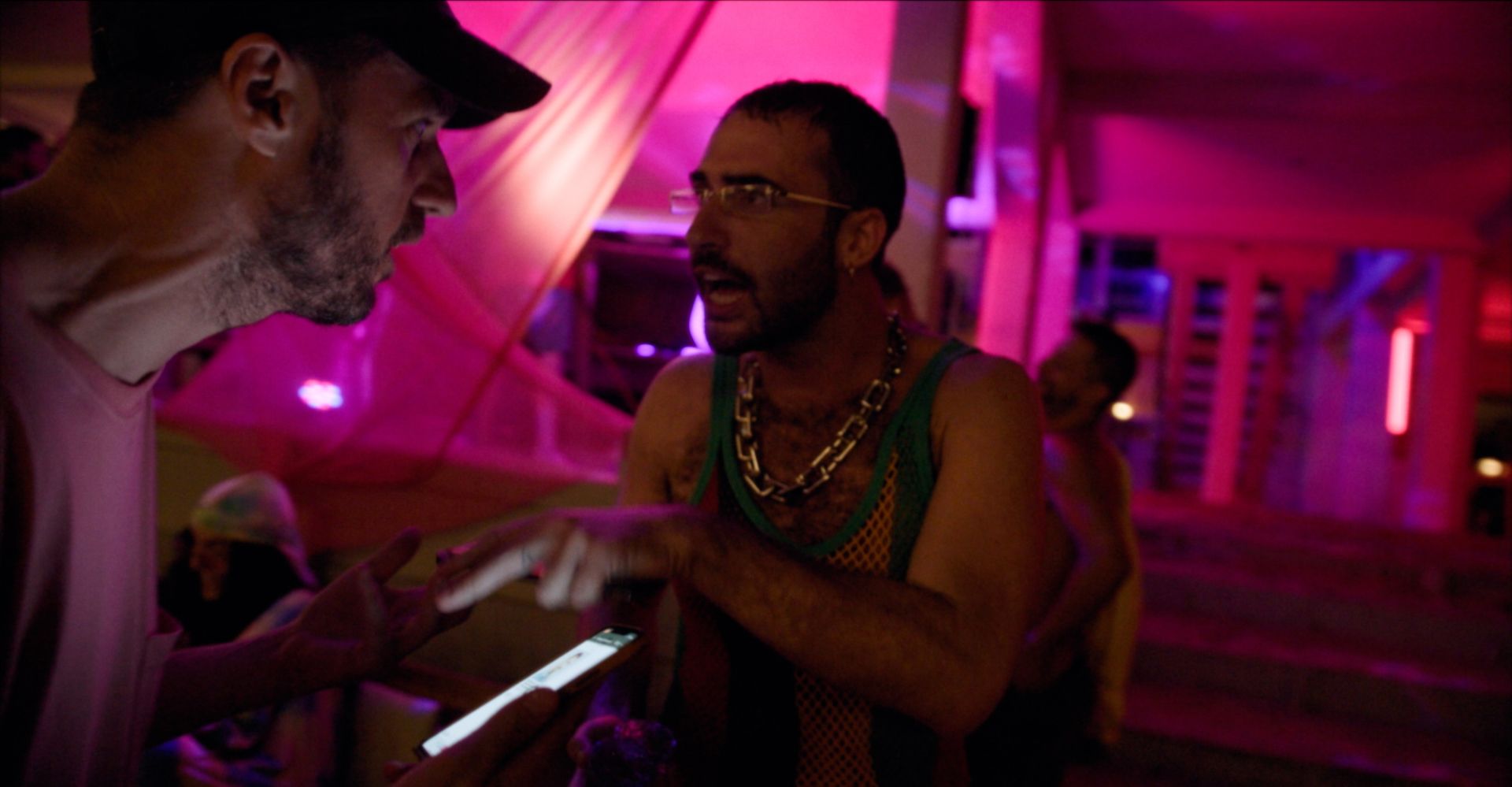
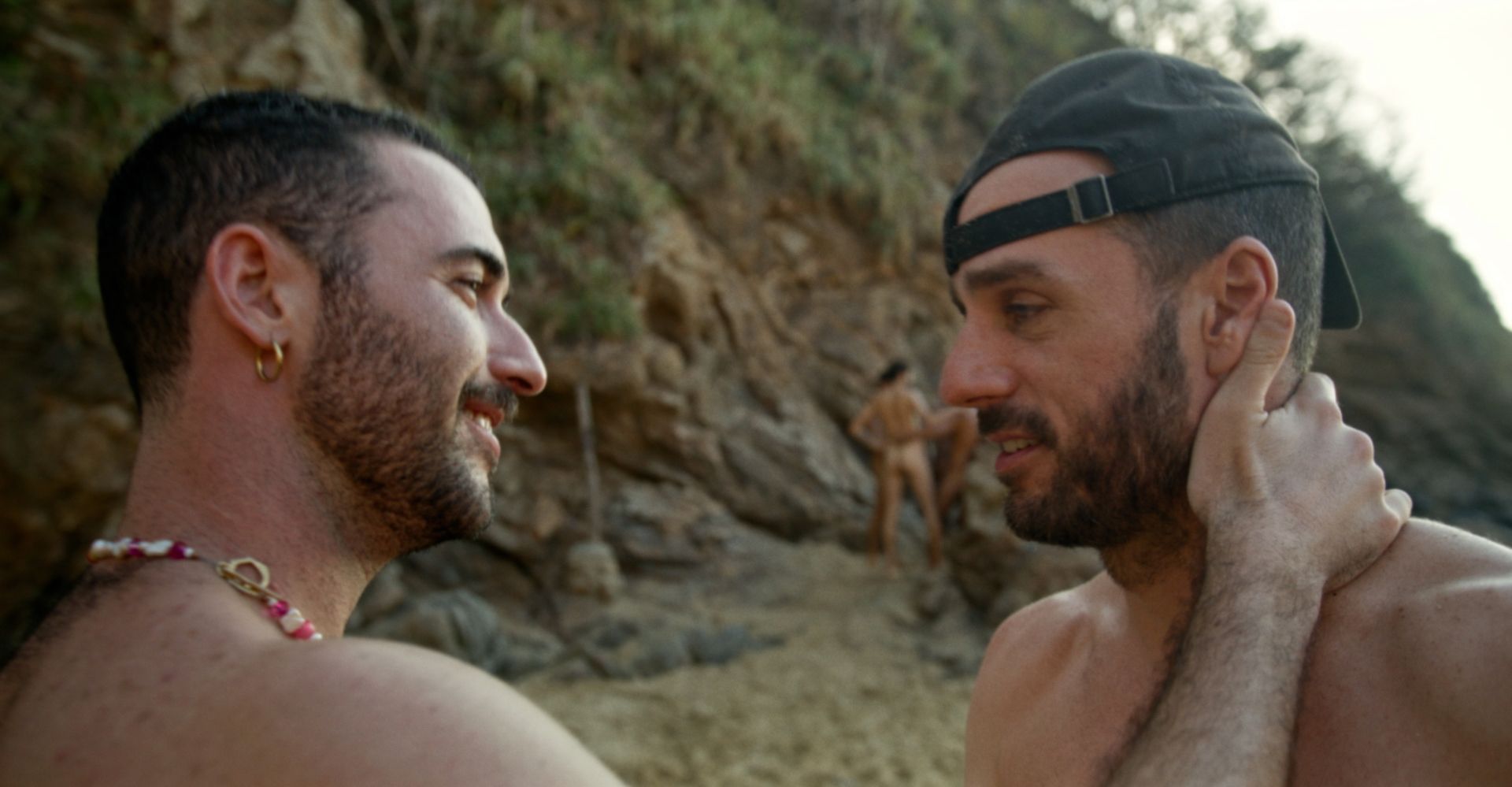
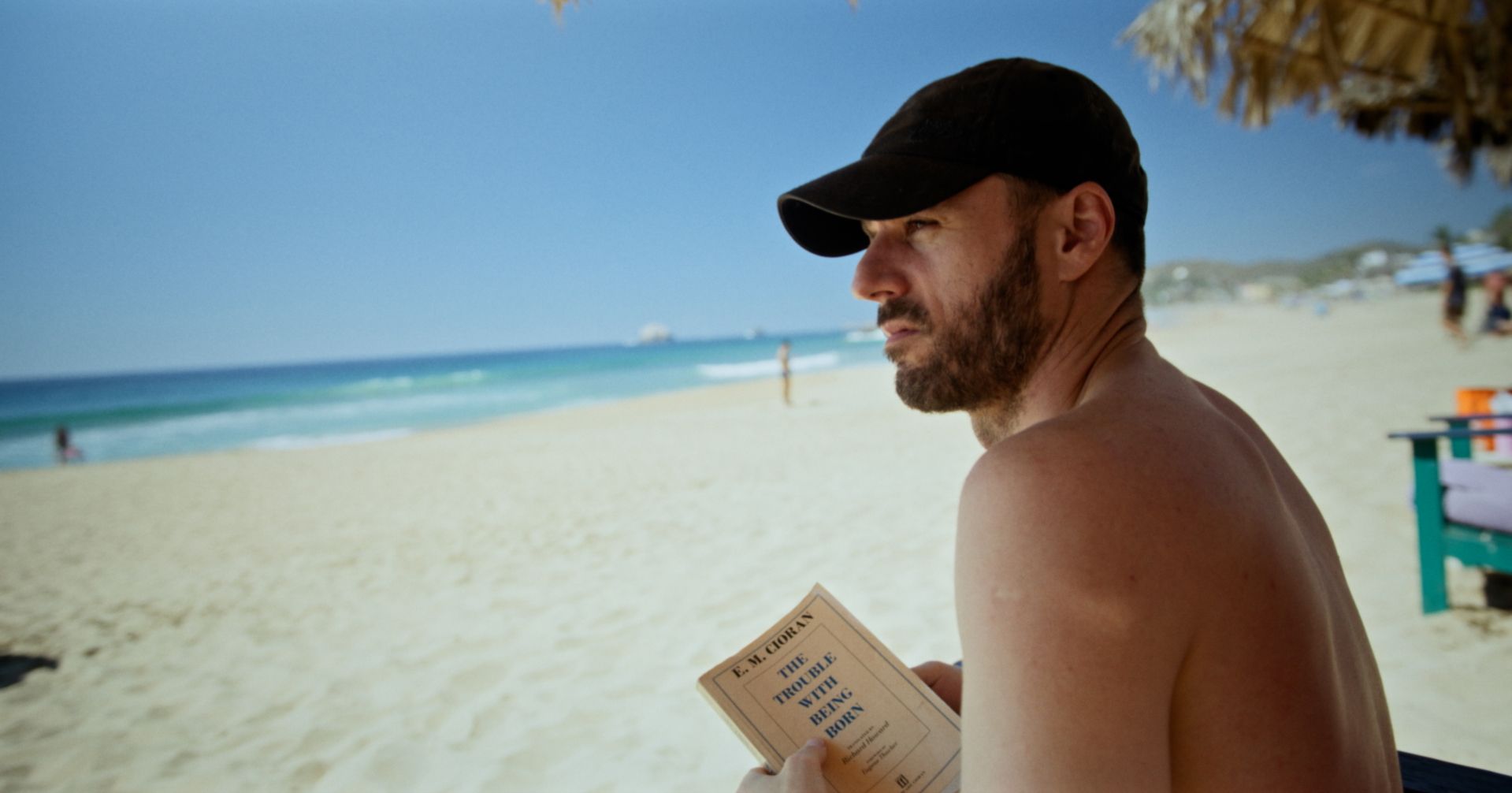
Chima appears in Silva’s feature film Rotting in the Sun (2023) eating human shit in a park in Mexico City. Silva plays a warped, hyperbolic, ketamine-addicted and indulgently depressed version of himself in the film. In a display of existential nausea and black humour, Silva’s voiceover reading of Romanian philosopher Emil Cioran’s The Trouble with Being Born (1973)—‘It is not worth the bother of killing yourself, since you always kill yourself too late’—is interrupted when Silva must run over and tell Chima (and, perhaps, himself) to ‘stop eating shit’.
Silva’s character takes an interest in the sedative phenobarbital. He wants to go somewhere. A photographer friend recommends he go on vacation and so he goes to the south-west coast of Mexico, where he almost drowns and meets a caricature of comedian J.T. Firstman, played by Firstman himself. Firstman’s character is a ‘happy clown’ influencer with a sort of schizo-positivity. His presence feels invented by psychosis, like a dolphin in a baseball cap. He is at once endearing and nauseating, innocent and seeming to have come from some unreal place, like the internet. He forces the audience to reckon with who and what is ‘real’. Later on, Silva’s character is preparing for a visit from Firstman, and falls to his death while moving a couch with his maid, in some metonym for getting oneself out of the way, one way or another.
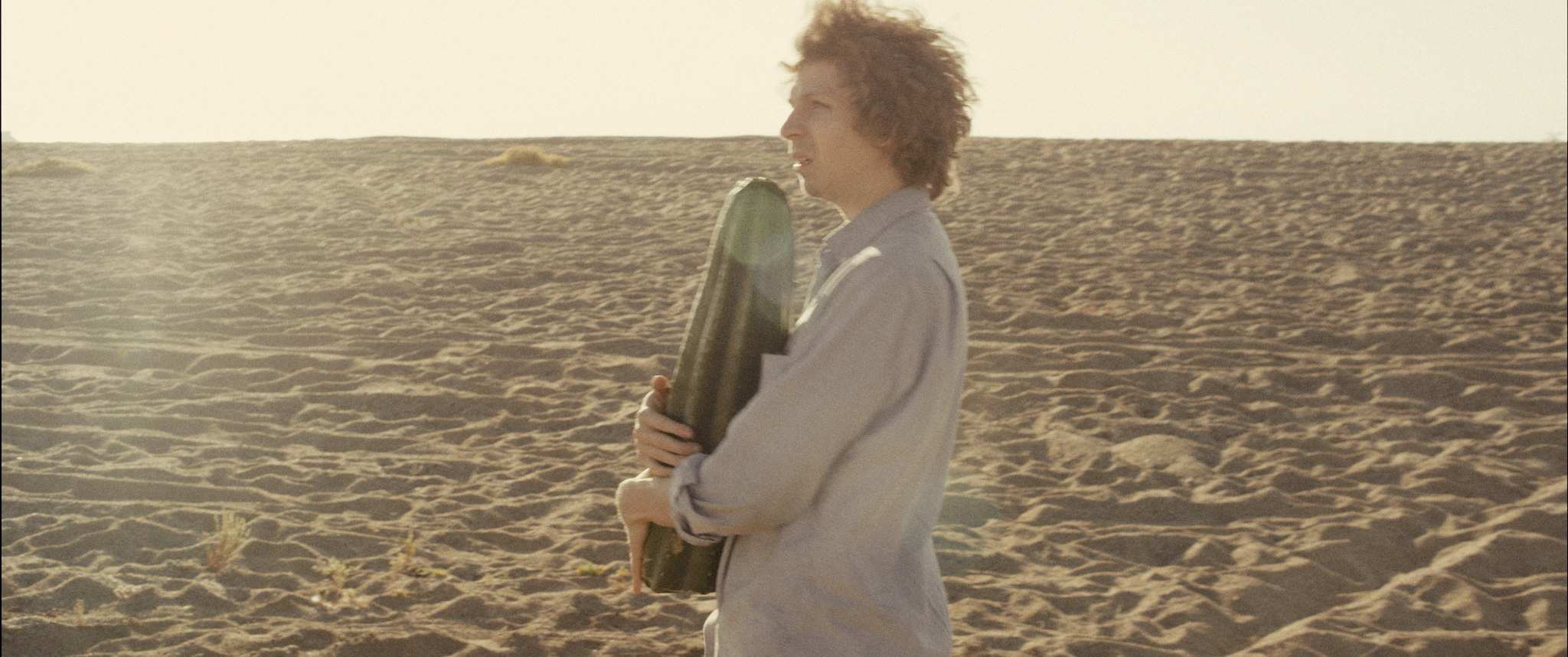
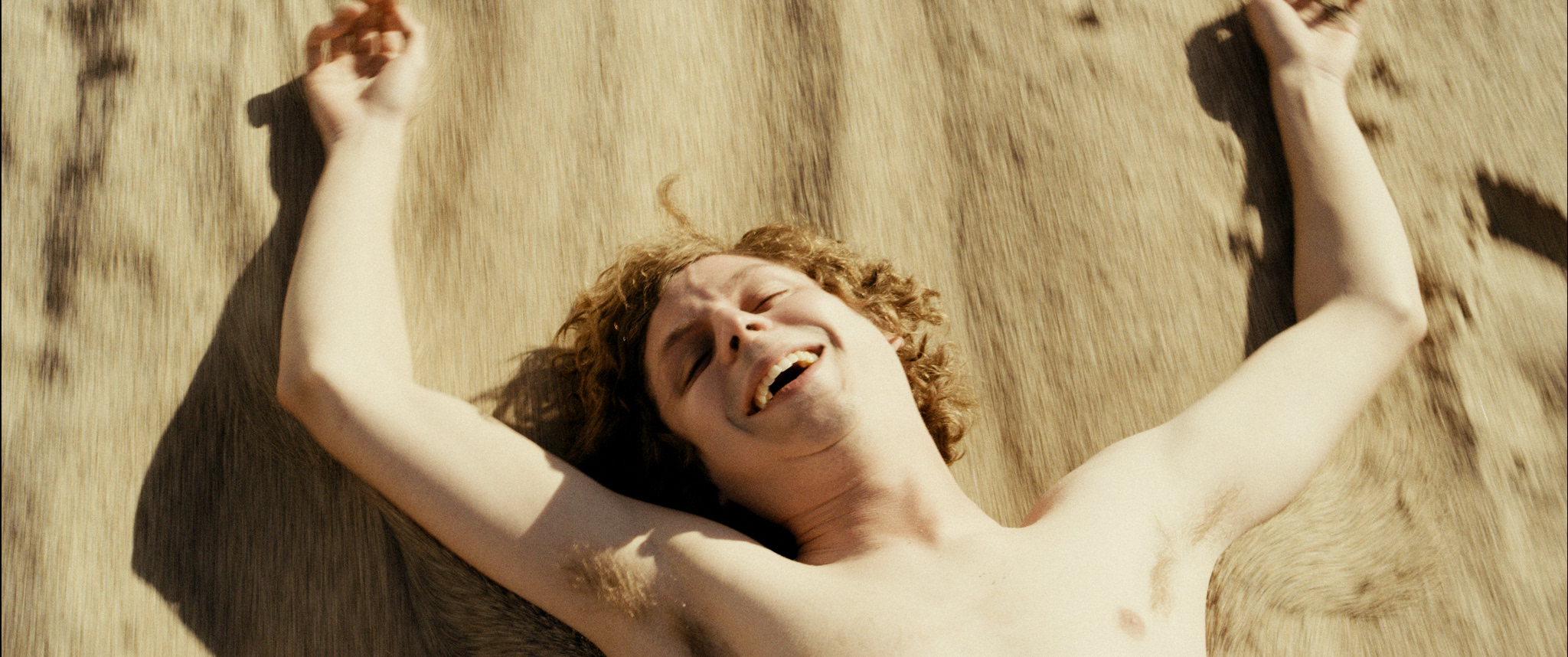
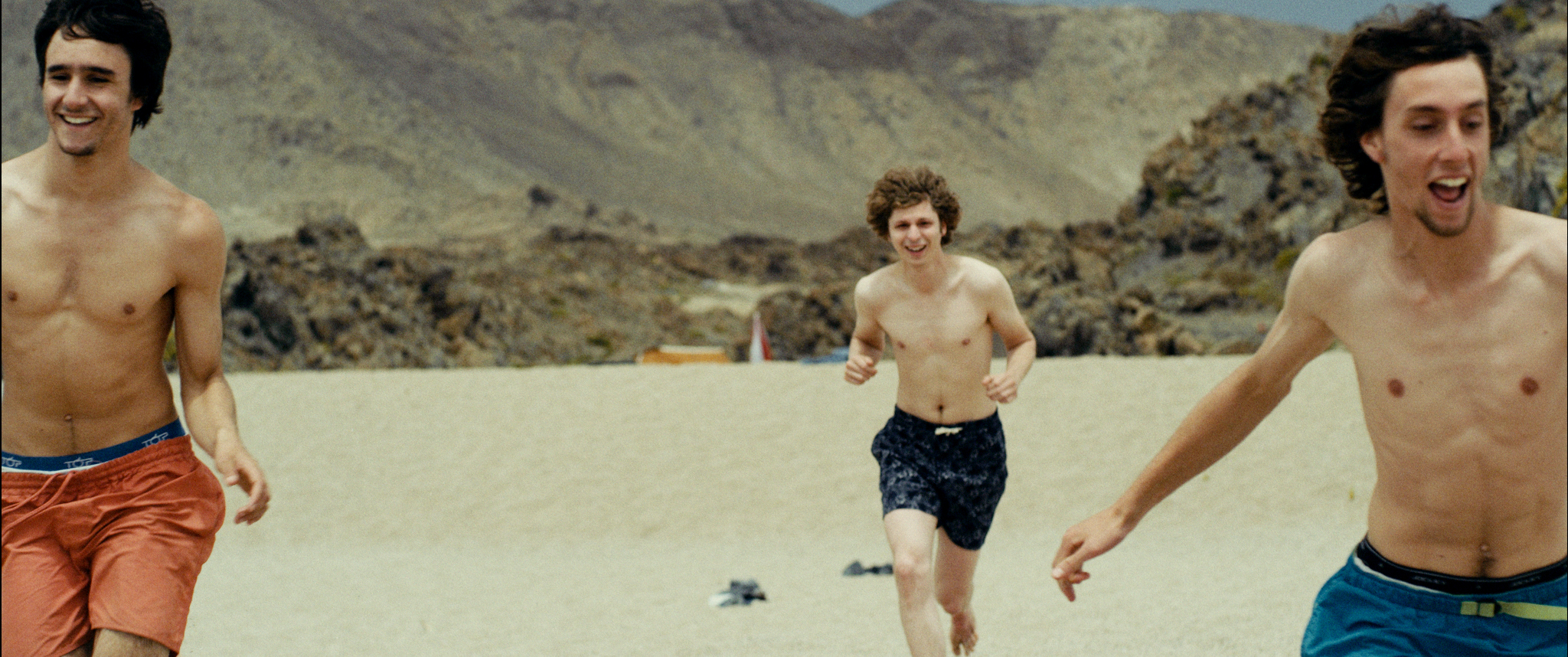
His earlier feature film, Crystal Fairy and the Magic Cactus (2013), is an example of Silva’s mystical ability to unearth new forms of connection. Jamie (played by Michael Cera) is an American guy in Chile who doesn’t speak Spanish and will not stop talking about his pursuit of a spiritual state of enlightenment that his insistence upon taking up the most space possible at all times betrays his claim to. The night before he is meant to go on a journey through to the Argentine desert to take the psychedelic San Pedro cactus with some Chilean friends, a cocaine-addled Jamie meets Crystal Fairy (played by Gaby Hoffman) and invites her on the trip. Later on, he treats her like an unwanted guest in an effort to soothe his in-group cringe, or distance himself from the naïvete he seems to think her presence will uncover to their Chilean journeymen.
Crystal Fairy can be unbearable, too. Her overwrought white-girl spirituality has something in common with Jamie’s claims to enlightenment, yet Crystal Fairy has more immediate access to an innate goodness that Jamie only gains access to as the film is coming to a close. For viewers of the film, a parallel journey from the gnawing friction to fondness is available. Silva says the film is about the birth of compassion.
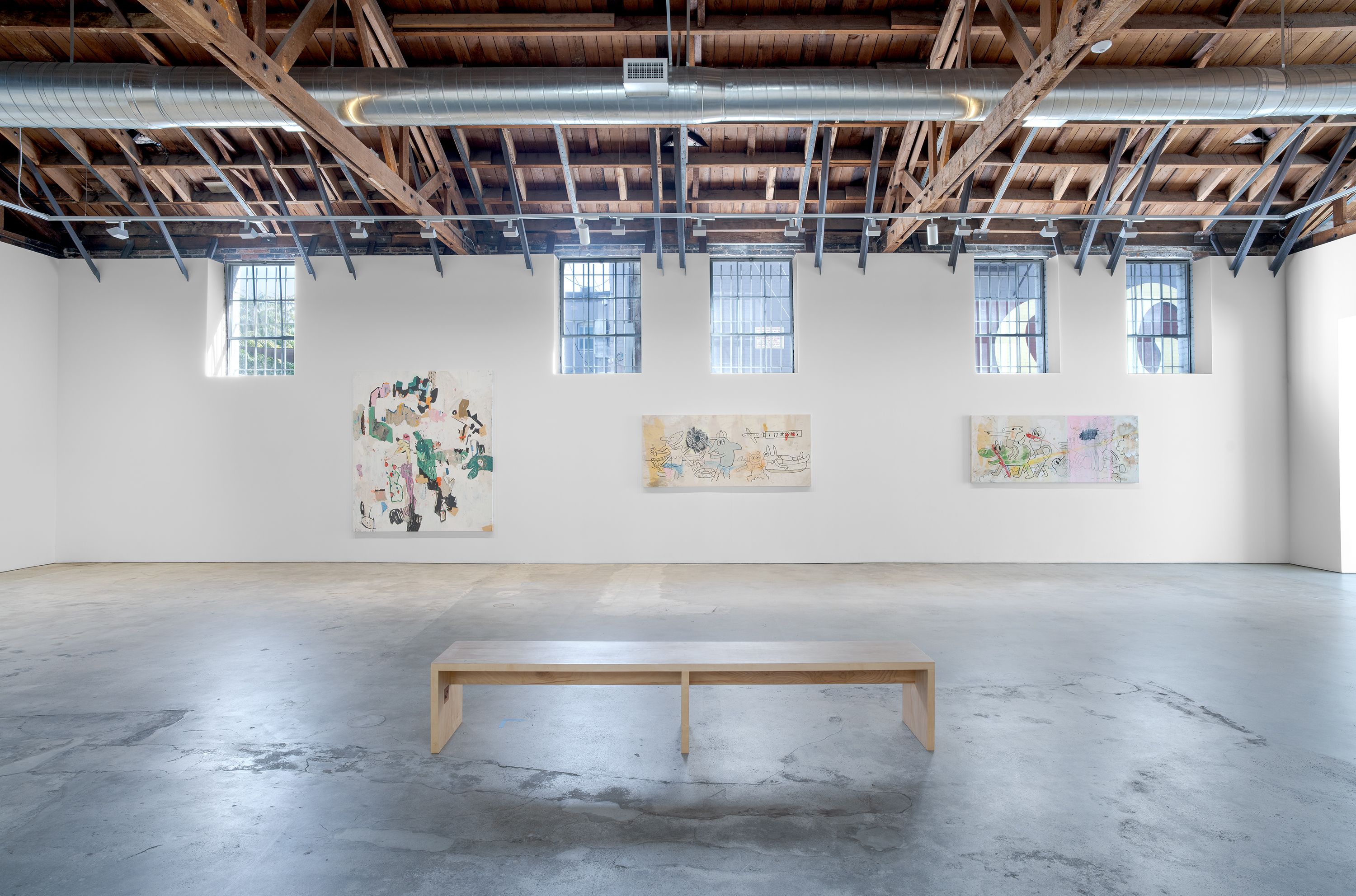
Silva’s work gives fears and truths permission to rise to consciousness in protean forms. His paintings and films feel like group photos of Silva and the beings he has always kept close. They are snapshots slipping through the veil between two worlds like some evidence of the naïvete and transcendence that lives on either side. His figures allow for cathartic confrontation with things the mind struggles to categorise, and his lack of pretension allows him to take on topics as complex as life and death and compassion with a precision that feels like stating the obvious.
There is a joy in his articulation that everyone, at one time or another, thinks about killing themselves, that you can live in more than one world, that compassion is available to even the most irritating and irritated among us, and that we all eat shit sometimes, and that loneliness can be navigated if you submit. —[O]
Main image: Sebastián Silva, I'd follow (2025) (detail). Oil on canvas. 86.4 x 221 cm. Courtesy the artist and James Fuentes, Los Angeles/New York.



A respected voice in contemporary art discourse.
Focusing on ambitious storytelling and insightful art-world commentary. Ocula Magazine publishes in-depth interviews, critical essays and timely analysis on the artists, exhibitions and ideas driving the global art world.
Learn more about Ocula Magazine
Showcasing the best of the art world.
Ocula partners with galleries from around the world to highlight their artists, artworks and exhibitions. Gallery membership is by application and invitation, with each member vetted by an independent panel.
Learn more about Ocula Membership
Specialises in the sale of major artworks.
Led by a team with deep ties to the world’s leading auction houses, galleries and collectors. Ocula’s advisory team offers bespoke services to high-net-worth clients from around the world who are looking to acquire the best of contemporary and modern art.
Learn more about our team and services