The art world in focus
Subscribe to our newsletter for news and insights on artists, galleries and exhibitions.

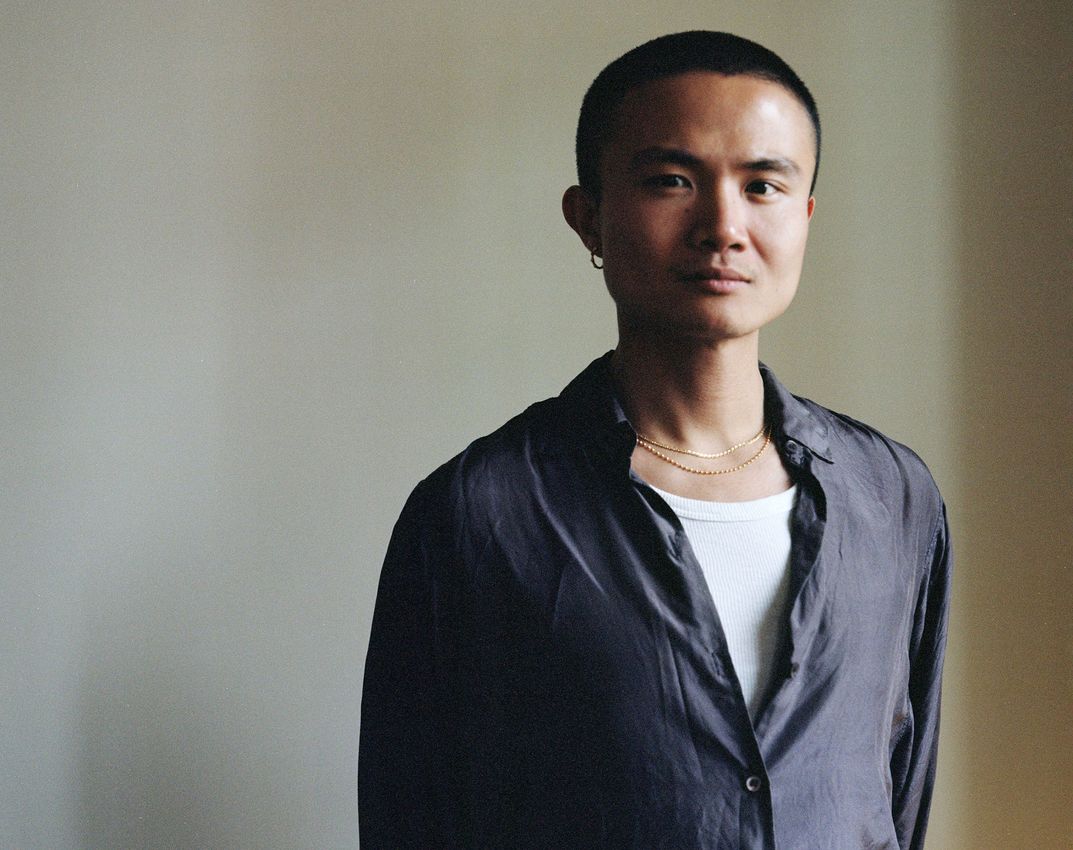
At Shanghai’s Antenna Space, Li Yong Xiang unveils a chapel-like installation that unravels the painterly realism he both reveres and resists.
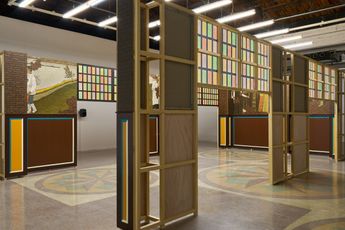
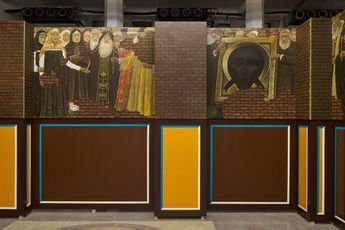
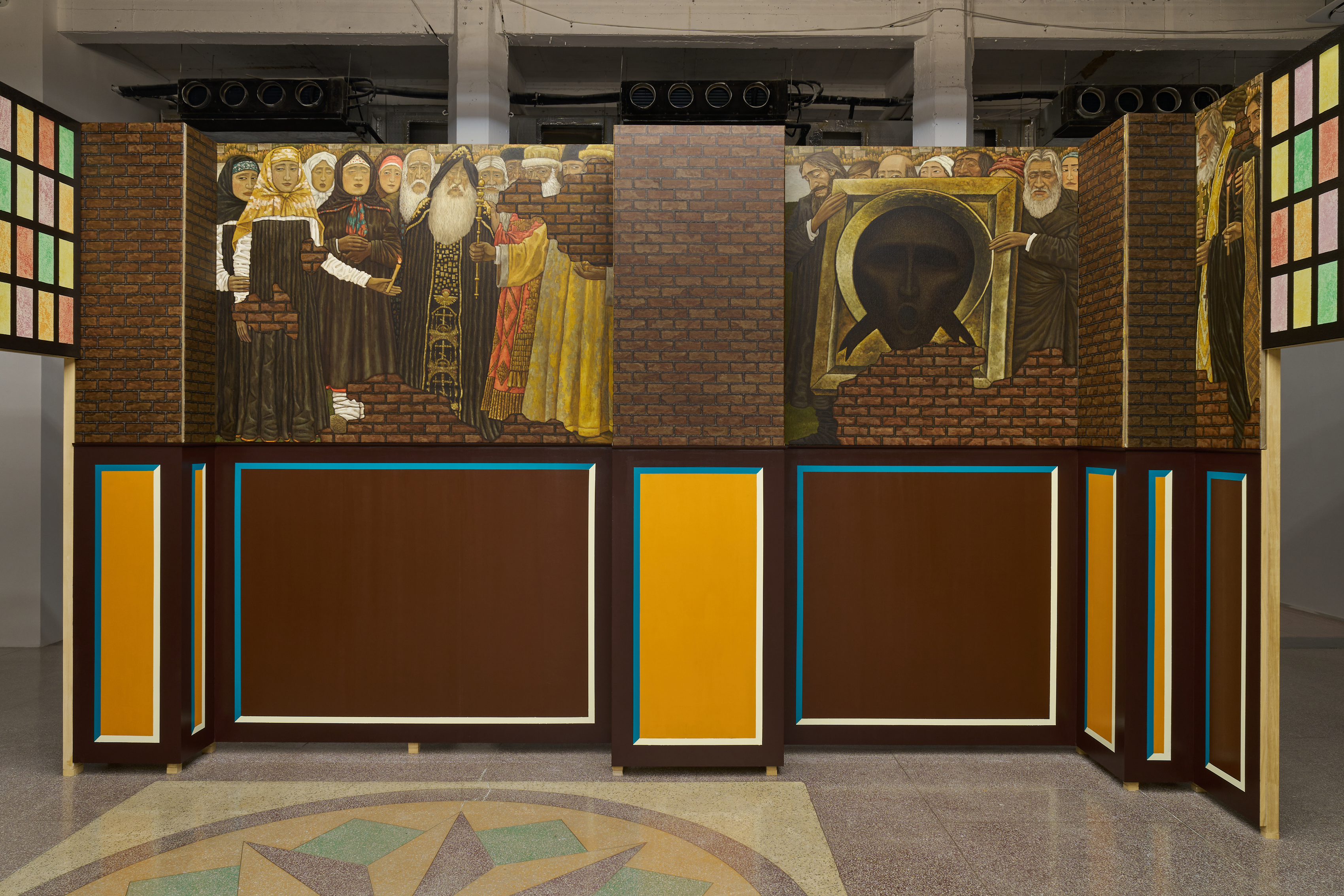
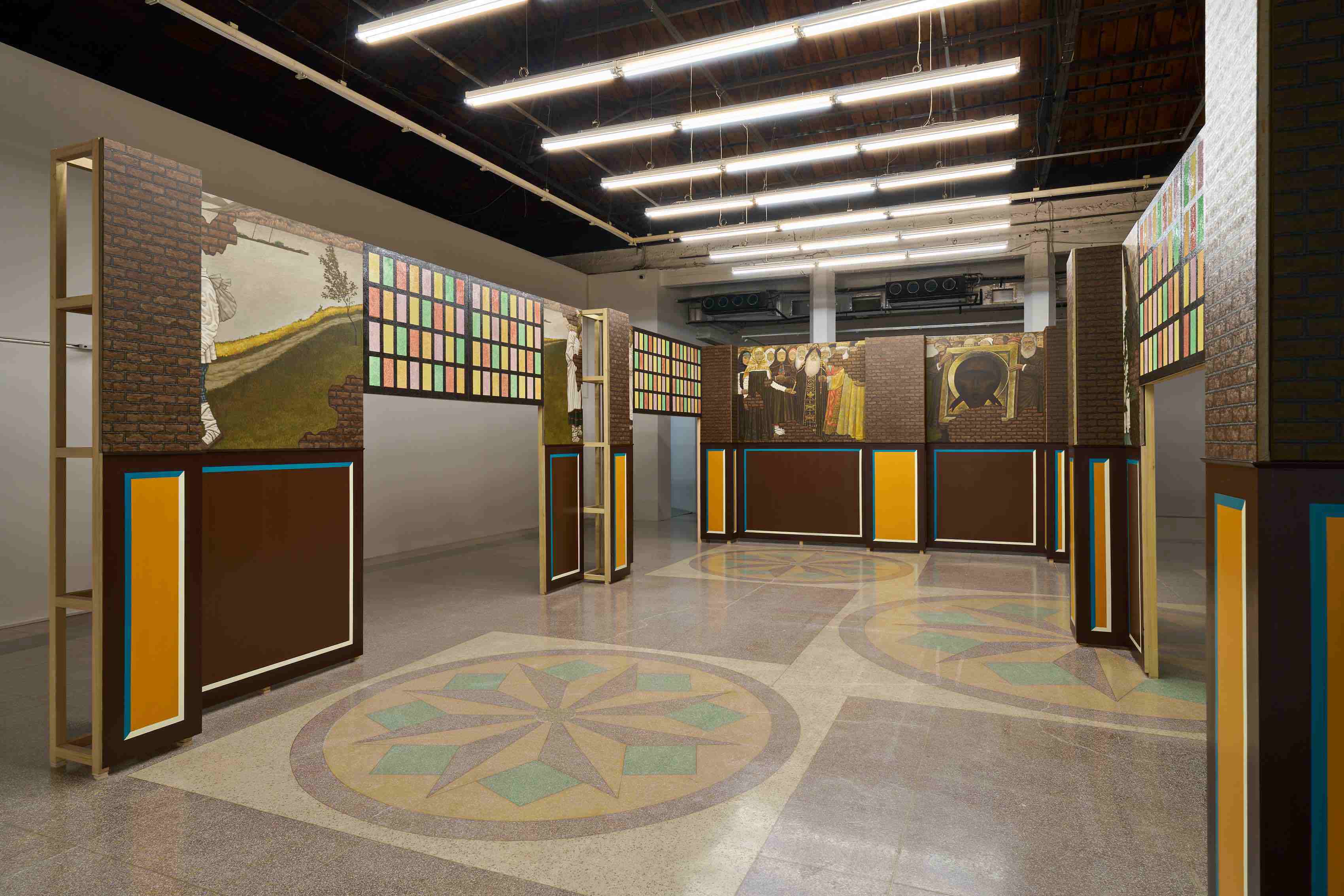
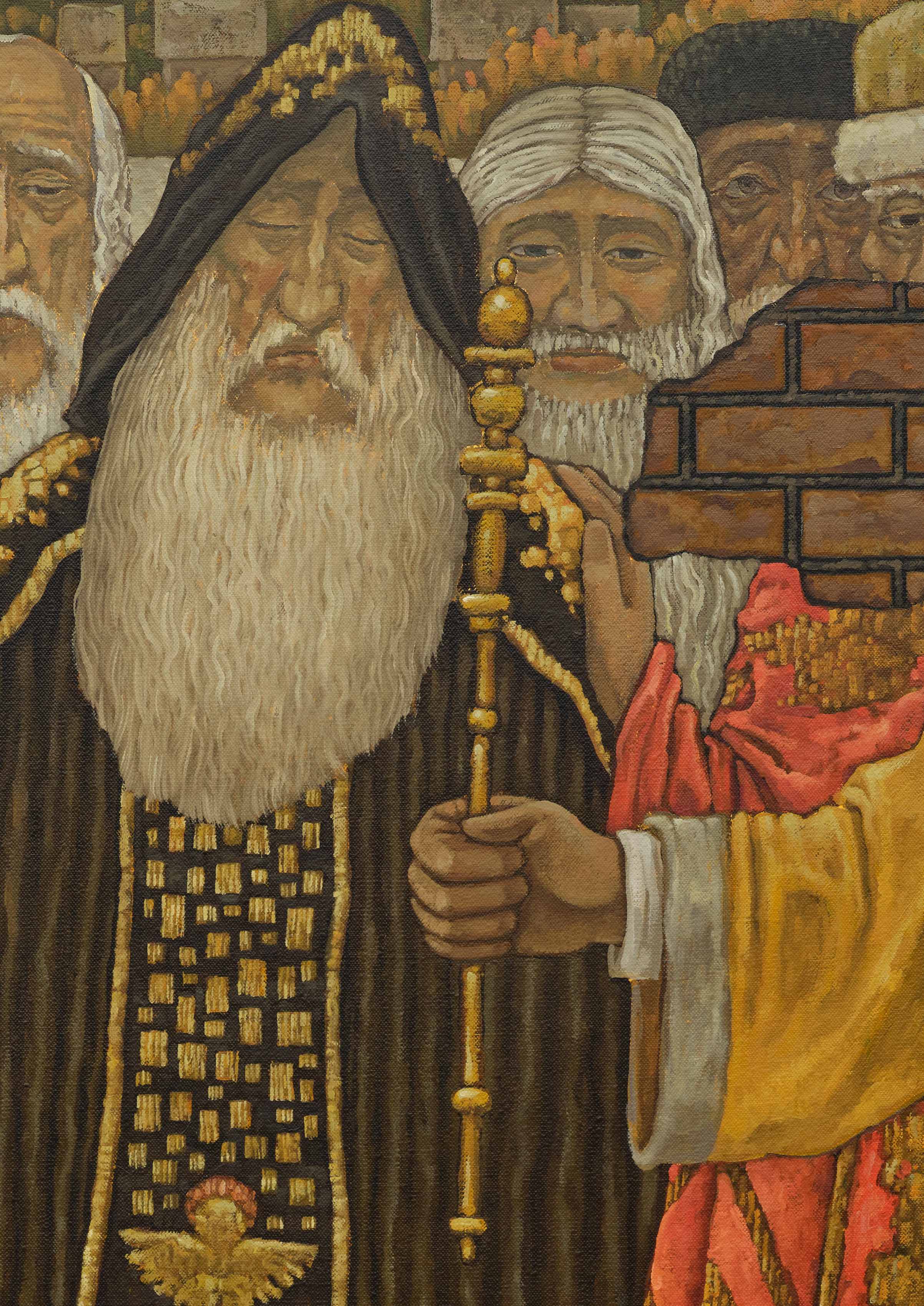
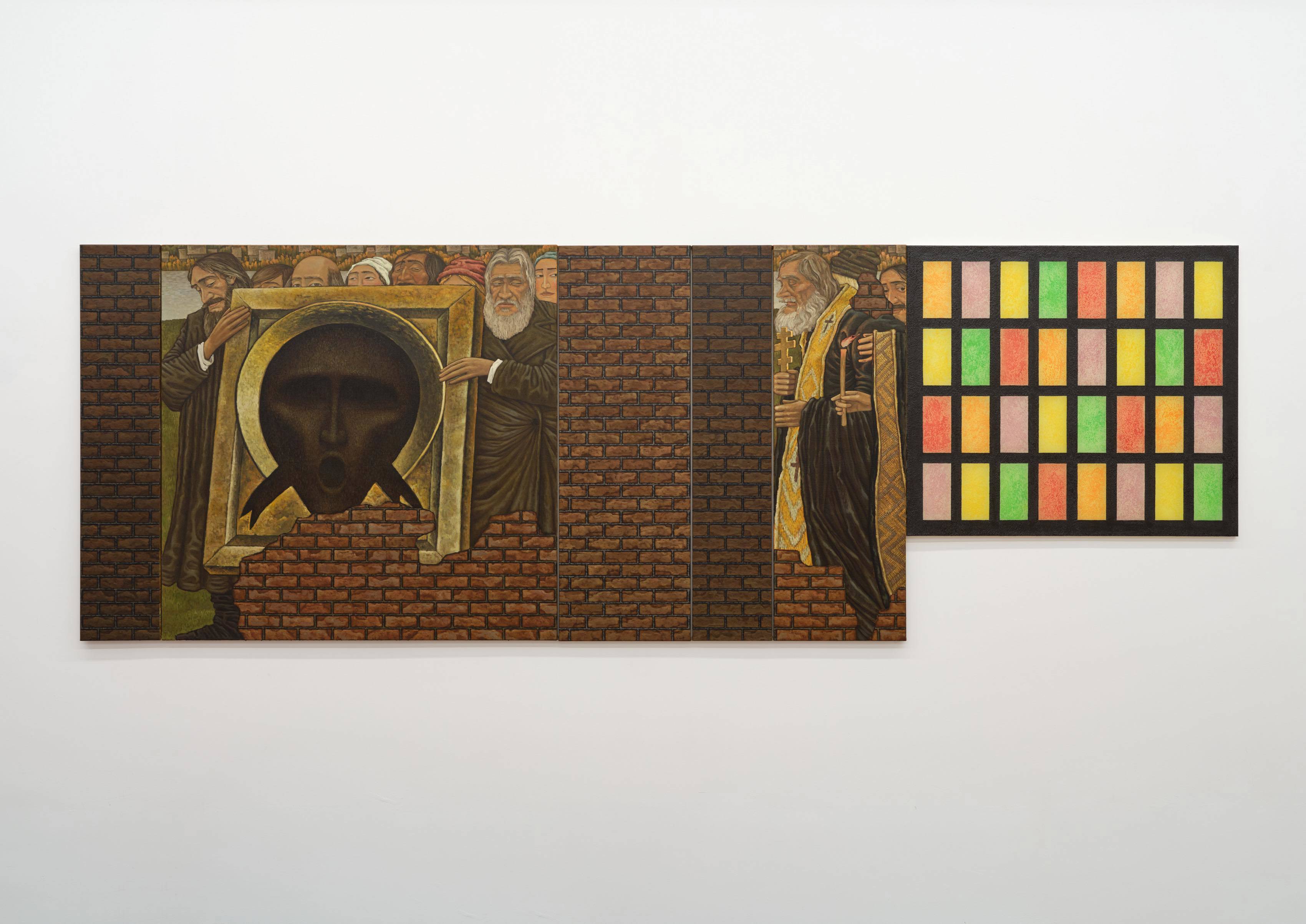
When I met Changsha-born, Berlin-based artist Li Yong Xiang at Antenna Space as he was installing his exhibition In Rust, he was intently focused on adjusting the lighting illuminating the painted bricks that clad the surface of his work’s church-like structure. Measuring 25 by three metres, the installation is composed of 31 panels, rendered in meticulous detail, which together form an epic serial painting. The piece deconstructs a painting that, in contemporary times, has become a symbol of Russian nationalism: In Rus: The Soul of the People (1914–1916) by Russian artist Mikhail Nesterov (1862–1942), whose oeuvre existed at the fringes of avantgarde movements, including Peredvizhniki and Mir Iskusstva.
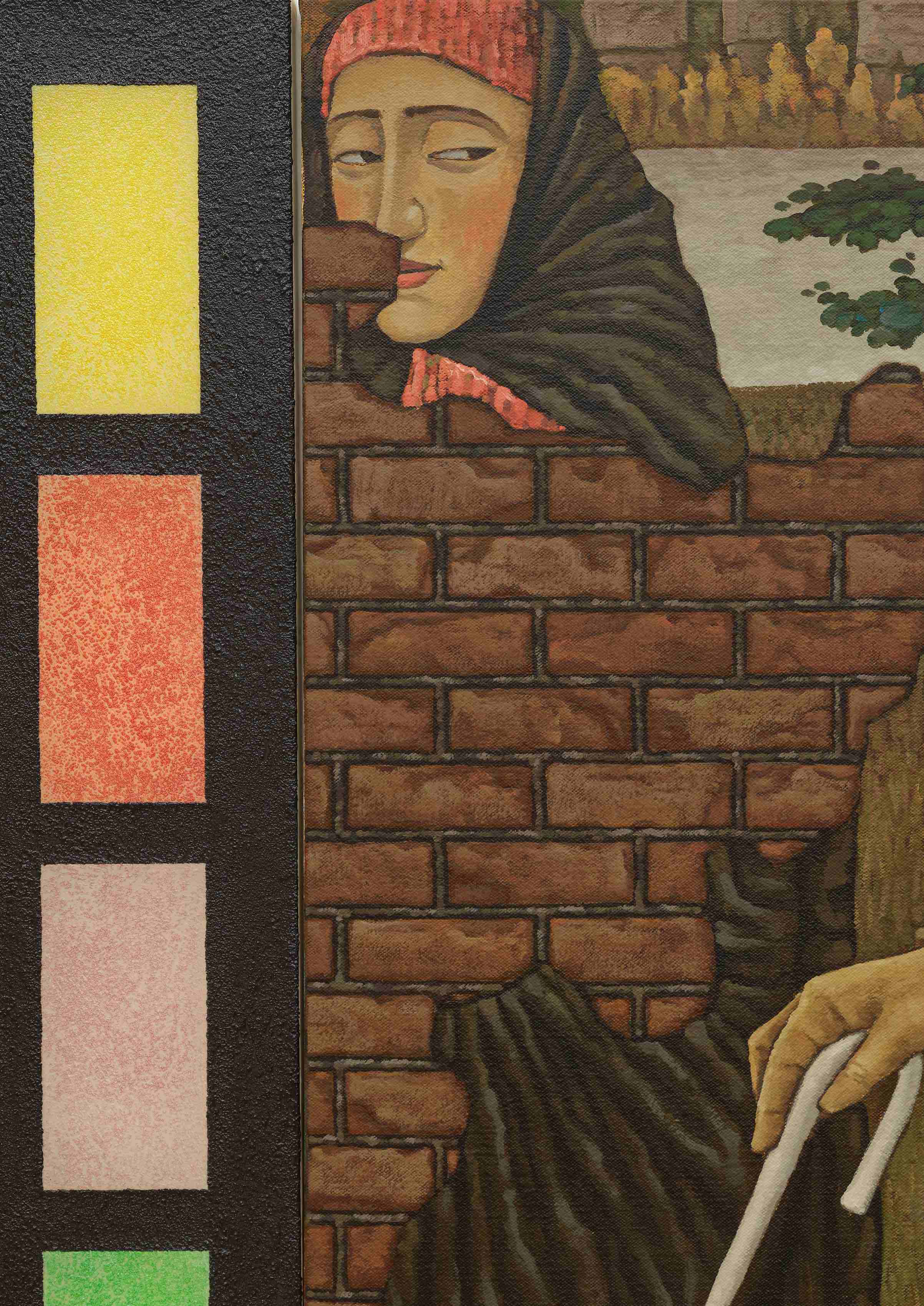
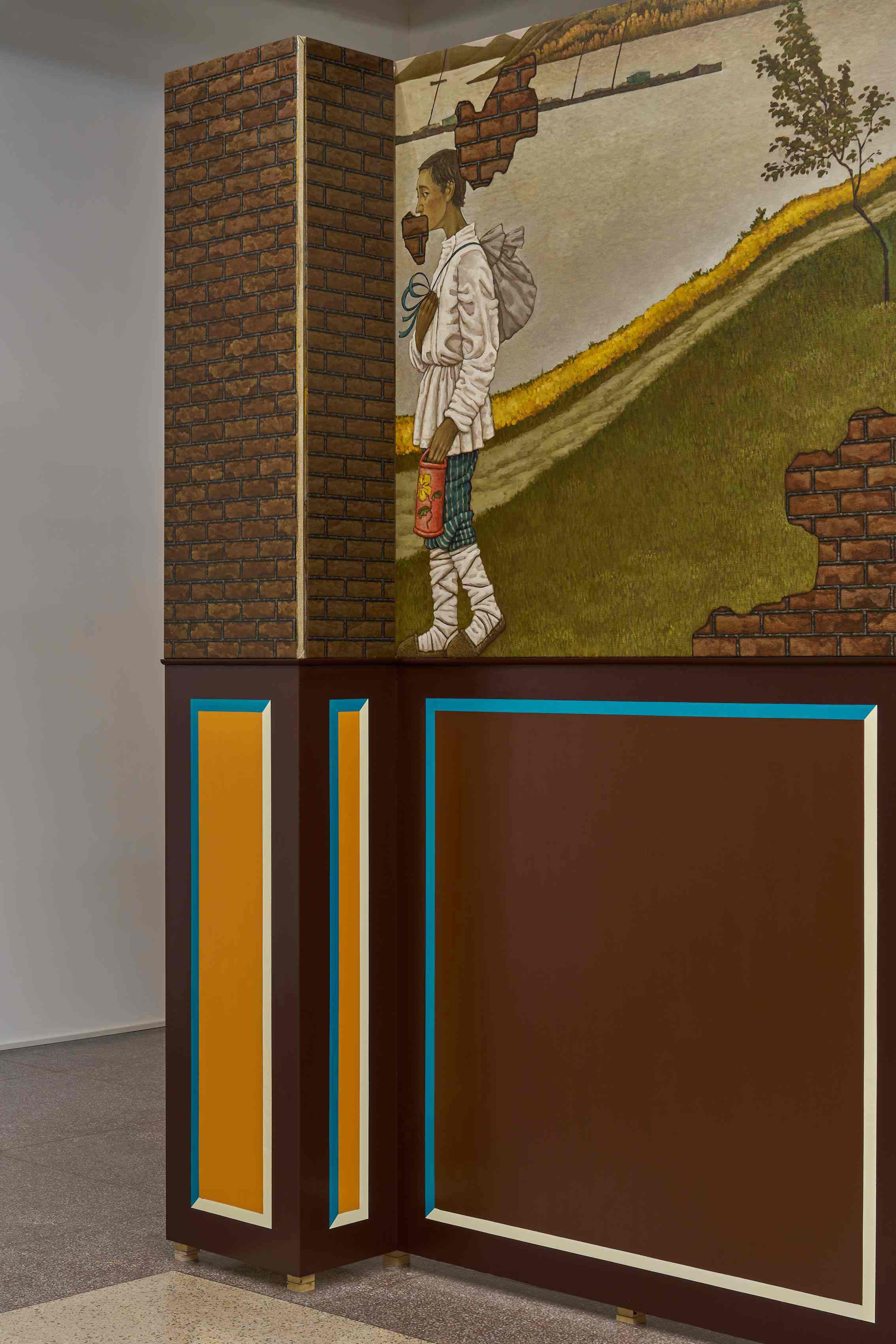
As I examined the details of one panel, in which a figurative landscape is progressively concealed by bricks extending from a painted trompe-l’oeil wall, I was reminded of works such as Brick on Brick (1988) by Chinese American painter Martin Wong (1946–1999). While Li acknowledged Wong’s influence in other aspects of his work, he quickly refuted this as direct appropriation, explaining that his brick paintings engage with the aesthetics of Soviet-style collective apartments, while also reflecting his ongoing exploration of the intersections between painting, its structural support, and trompe-l’œil. This exchange reminded me that Li is exactly the kind of artist who is drawn to subtle references and coded allusions.
Following the exhibition’s opening, Li sat down with Ocula to discuss his time in Georgia, where he visited one of Nesterov’s murals, as well as the intersection of his painting practice with sound and other performative mediums. The conversation reflects on themes of identity, alienation, and the artist’s evolving sense of home.
LYX: The impetus for this project traces back to 2022, towards the end of a brief residency in Tbilisi when I learnt about a series of murals by the Russian artist Mikhail Nesterov at Akhali Zarzma Monastery in the small Georgian town of Abastumani, and I returned with friends a couple of months later to visit this site.
What struck me about these murals was their cosmopolitan rendering of Russian Orthodox iconography, with deliberate, richly decorative patterns and a sense of graphic clarity—a style reminiscent of painters such as Alphonse Mucha and Léon Bakst. I’ve long been fascinated by the modern styles of late 19th-century Europe, with their messy cross-cultural influences. What captivated me was seeing this style applied to a traditional, religious theme in a small-town monastery—only for the work to then fade into obscurity.
“I wanted to pull artworks into a utilitarian realm while simultaneously entangling the act of painting within a not-quite-liberated sphere.”
For this exhibition, I have produced a large installation of paintings inspired by both my visit to the monastery murals and a later work by Nesterov—a politically charged and some might say problematic history painting from 1916. Created on the eve of the 1917 Revolution, In Rus: The Soul of the People marked the end of a particular thematic exploration in Nesterov’s oeuvre, and remains one of the most unambiguous examples of it. Depicting the Volga River as a spiritual unifier of an imagined Russian community, the painting resurfaced in the public eye after the 1980s and, unfortunately, has since become a prominent symbol of Russian alt-right nationalism.
LYX: I came to Nesterov’s oeuvre somewhat obliquely, and my experience of his painting has been shaped by both temporal and thematic distance. Apart from what I saw at the monastery in Georgia, I’ve encountered none of his original works, and my grasp of Orthodox iconography is minimal. Nor have I ever been particularly interested in religious themes. Still, something in his formal language resonates with me—a fascination perhaps precisely indebted to that distance. For example, I find his more religious paintings often bear a dramatic solemnity; however, its intensity almost edges into camp, which I find captivating.
It was only after my trip to the monastery that I began researching his work in greater depth and became somewhat obsessed with his heroic yet, in my view, awkward and deeply contradictory magnum opus. Seeing the monastery frescoes also convinced me to think about my own spatial approach. I consider large-scale painting to be almost a genre in itself—one that demands a certain tour de force which blends together physical perseverance, ideological/performative conviction, and ego too embarrassing to be admitted, though these qualities are often treated as if they were invisible.
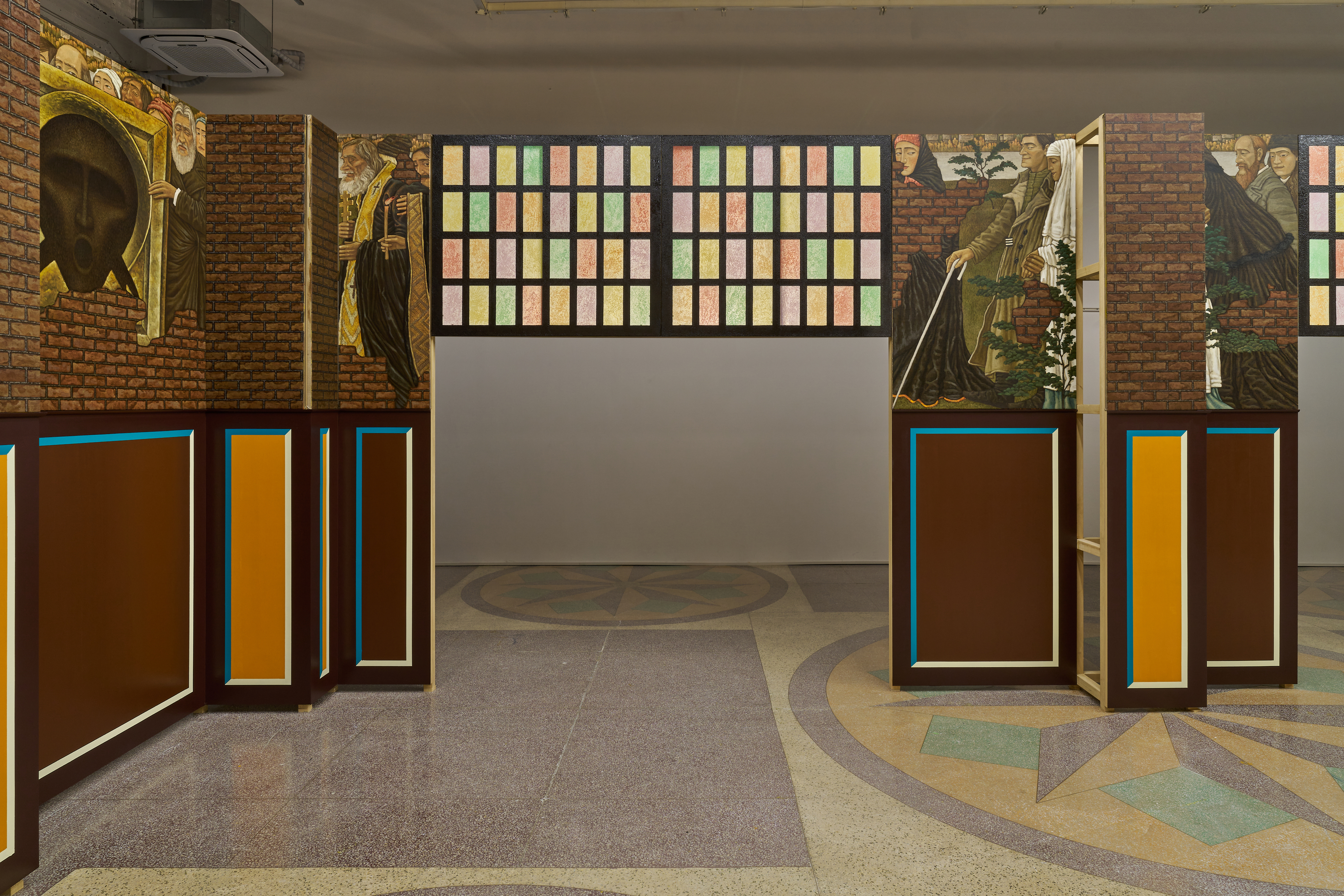
So, I approached the work literally like I was building a house, with the top half of the installation painted to imitate a worn and damaged mural, while the bottom half incorporates an abstract interpretation of wall panelling. For the painted figures, I grouped, rearranged, and transformed most of them from In Rus, emphasising the graphic quality I found in Nesterov’s strokes and aligning them like a procession in a frieze.
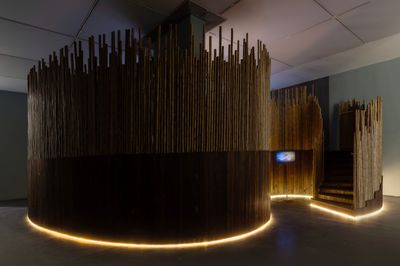
In addition to the oil-painted canvases, I also created a series of stained-glass window imitations using semi-transparent fabric, glass bead and transparent paint, which are backlit to emphasise their translucency. Lastly, audible throughout the entire space is a six-channel sound work, Untitled (Ebb Tide) (2025), in which I recorded my vocals in the style of a barbershop harmony.
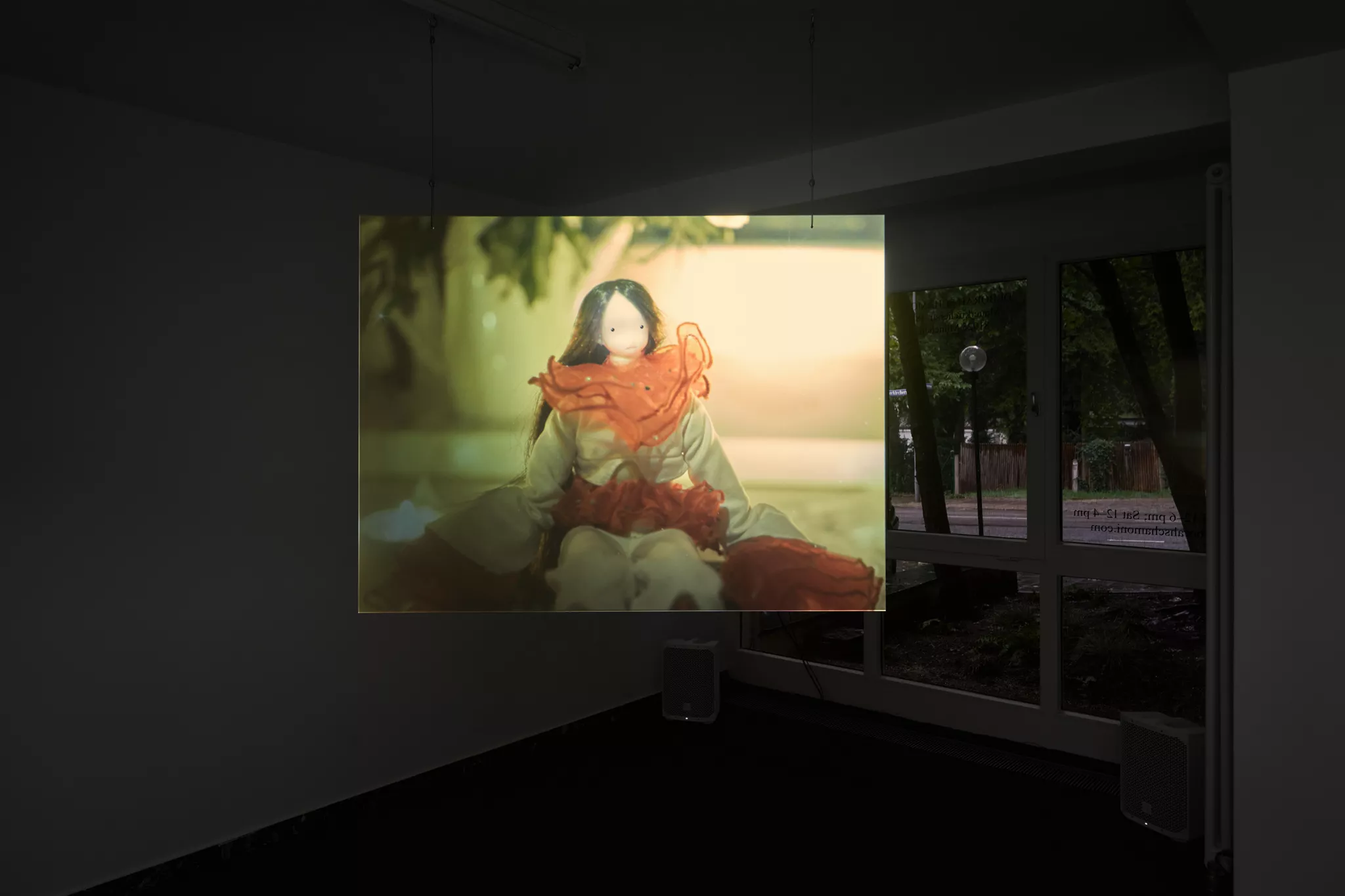
LYX: I wouldn’t call myself a performer—I tend to approach performance more as an intermediary. From early on, I used recordings of myself humming or singing, not as expressions of an authentic self, but as material to shape and play with. I never sought to hide my voice, either. In my DIY recording and editing process, I align with a close-yet-removed quality, where my voice retains a raw simplicity but feels distant from my everyday sound.
Sometimes I see painting as performatively mediated, too. Some projects take a long time to prepare and produce, and, during that process, I can find myself inhabiting a certain performative mindset rather than operating as an all-knowing, autonomous artist. For example, while carefully layering transparent hues, I might imagine myself as a well-trained service worker performing a familiar task in a hotel, perhaps with a florid touch to impress. Doing this often helps me adjust my state of mind.
LYX: I don’t see home strictly as the place where you’re born. At the moment, I find a sense of belonging in the fact that I have left ‘home’, and I’ve formed deep friendships with many people who share similar experiences. Despite the alienation I often feel in Germany, I currently regard Berlin and its community of foreigners as a kind of home. So, from this perspective, holding an exhibition in China doesn’t feel particularly special. Perhaps certain personal, and also collective, histories—such as my early art education in China, which carries a socialist imprint—have become the driving force behind this exhibition.
LYX: An unhomed-home, or a home-unhomed. To some extent, this template does encapsulate my life. From another perspective, there’s a deep sense of depression and unhomeliness within the Berlin art crowd right now, watching Germany’s horrific 20th-century history being weaponised—by the far-right and, increasingly, by the political mainstream—to attack migrants and citizens, to justify Islamophobia, and to impose censorship on critical voices. My friends and colleagues come from diverse geographic and economic backgrounds, living here as migrants, refugees, expats, or brats—depending on who’s labelling us. This group of people is a constant source of inspiration and joy for me in an otherwise homogeneous society.
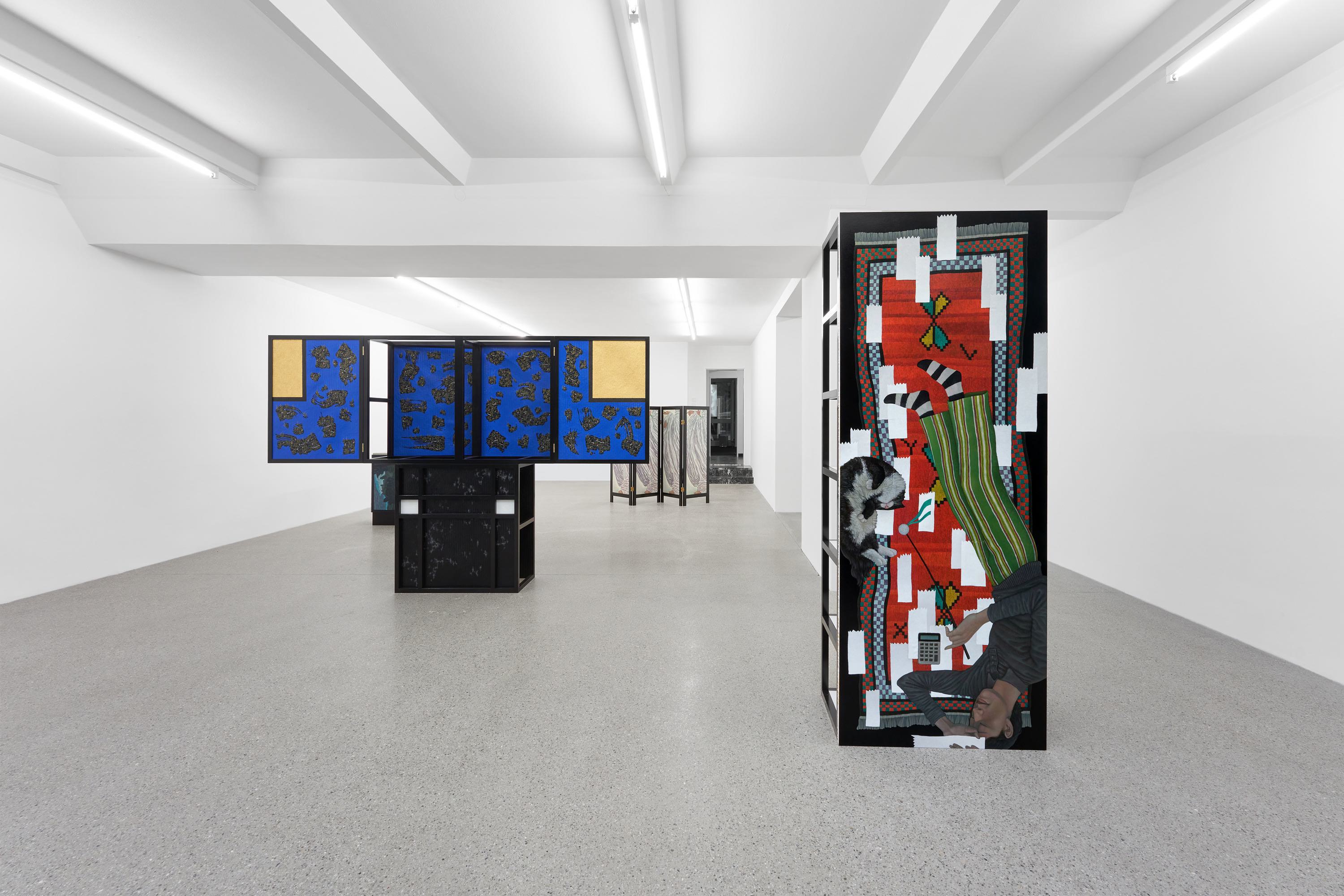
LYX: I was thinking about the functionality of a large-scale painting: creating heroic, monumental works is always a deliberate choice. It requires careful planning, and the physical act of making poses a challenge for most artists. That alone raises the question: why take on such a task? The motivations could be ideological, spiritual, bureaucratic, diplomatic, or economic.
Yet, when we talk about the myth of the totally autonomous artist—someone who supposedly maintains radical independence while working in an inherently public, exhibition-oriented field—these external influences are often treated as secondary or irrelevant. I take issue with that dichotomy because I don’t believe such a pure split truly exists in any artist’s life.
With my earlier works that take the form of furniture, I was also playing with the tension between painting as a supposedly independent, liberated act and painting as something in service of a functional, three-dimensional object. I wanted to pull artworks into a utilitarian realm while simultaneously entangling the act of painting within a not-quite-liberated sphere. In that sense, rather than seeing this project as a stark departure, I see it more as a continuation—despite its specificity, it extends my ongoing interest in these blurred boundaries.
LYX: Growing up in China, surrounded by paintings that embodied nation-building ambitions through the visual language of ‘realism’, I was taught to see them as noble and important. I internalised much of that passion, yet it often left me feeling unsettled. Over time, I made significant efforts to break away—efforts backed by my later, more cosmopolitan surroundings. But with every attempt at clean and thorough severance, I found myself confronting a kind of self-erasure that felt crippling, even suffocating.
I’ve learned a lot from oscillation and from steering through confusion. In some ways, it allows me to reflect critically on patriotic fervor—quietly passed down through generations via state narratives shaped by historical trauma—while also questioning the vanguardist’s ego of painting broad strokes on behalf of someone else. This constant push and pull—the inability, or perhaps unwillingness, to detach while still craving independence—mirrors what I see in the act of painting itself: a convergence of ideas, inertia, breakthroughs, muscle memory, ecstasy, shoulder pain, swagger, humiliation, political participation, isolation, anticipation, disappointment, spirit, economy, and so much more. —[O]
A respected voice in contemporary art discourse.
Focusing on ambitious storytelling and insightful art-world commentary. Ocula Magazine publishes in-depth interviews, critical essays and timely analysis on the artists, exhibitions and ideas driving the global art world.
Learn more about Ocula Magazine
Showcasing the best of the art world.
Ocula partners with galleries from around the world to highlight their artists, artworks and exhibitions. Gallery membership is by application and invitation, with each member vetted by an independent panel.
Learn more about Ocula Membership
Specialises in the sale of major artworks.
Led by a team with deep ties to the world’s leading auction houses, galleries and collectors. Ocula’s advisory team offers bespoke services to high-net-worth clients from around the world who are looking to acquire the best of contemporary and modern art.
Learn more about our team and services