





Olukemi Lijadu: ‘Electronic Music Has a Sonic Continuum Across the Black Atlantic’
“Feedback” refers to both sustained response and, in musical contexts, to the noise produced by live electronic instruments. It is a loop, but the transmission changes as it’s circulated. In a new show of the same name at Spike Island in Bristol, Olukemi Lijadu draws out the implications of feedback loops, recursive recall, and call-and-response, in a wide-ranging examination of the interrelated musical worlds of West Africa, the US, and the UK.
Centring on a film commission formed through extensive research in Chicago, Lagos, and the UK, Feedback follows the influence of West African drumming on diasporic music traditions in the West. Lijadu was born in London, but her parents relocated to Nigeria soon after her birth. “As someone who grew up in Lagos,” she says, “drums accompanied every major moment in my life.” The film, alongside its intensive research, is also a personal archive of sound and moving image, featuring shots taken by Lijadu over the last two decades on a small camcorder she was given for her sixteenth birthday.
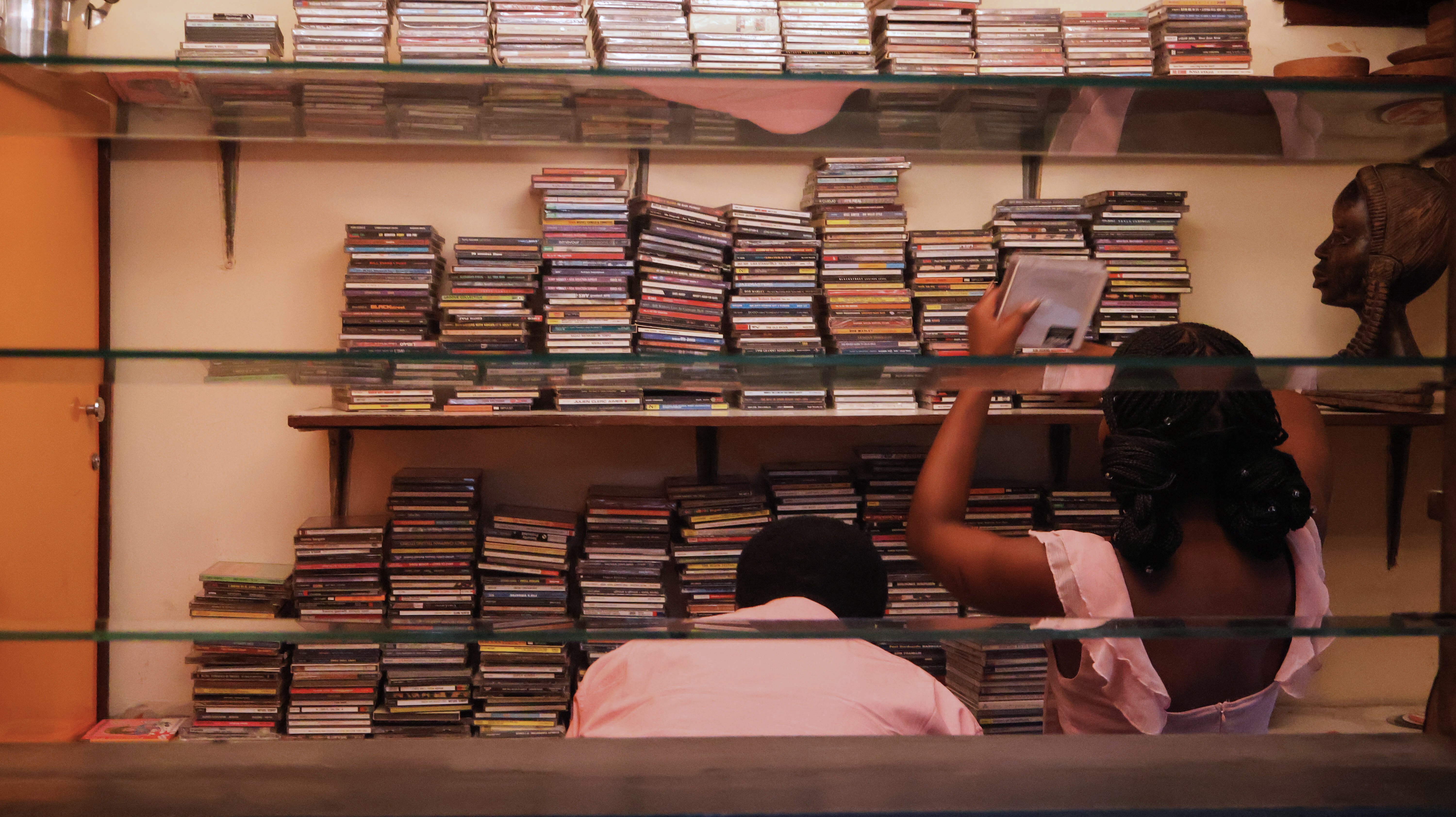


“As someone who grew up in Lagos, drums accompanied every major moment in my life”
Feedback from microphones and amplifiers can often be discordant and confronting; similarly, the story of how these sound elements were distributed across the globe is violent. Lijadu draws on British sociologist Paul Gilroy’s seminal work Black Atlantic (1993) to describe the enforced rupture that distributed West African people and their culture across the sea. Lijadu’s maternal grandmother comes from Jamaica, and her paternal side relocated from Brazil back to Nigeria. Lijadu is born from the political and cultural formations born from these movements, and the resulting film is similarly interested in the restless modes of transmission and co-exchange. “I think of myself,” she says, “as a child of the Atlantic.”
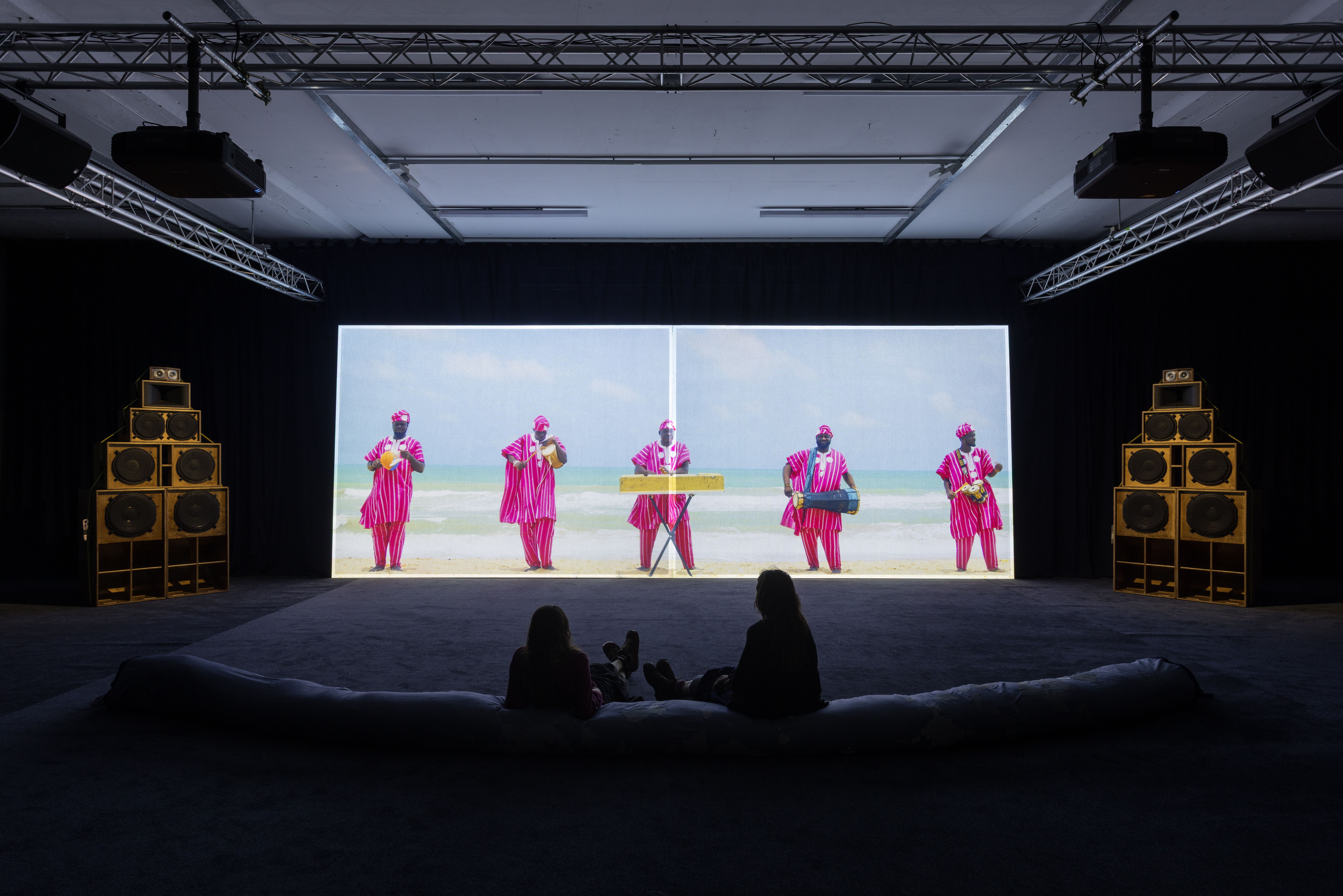
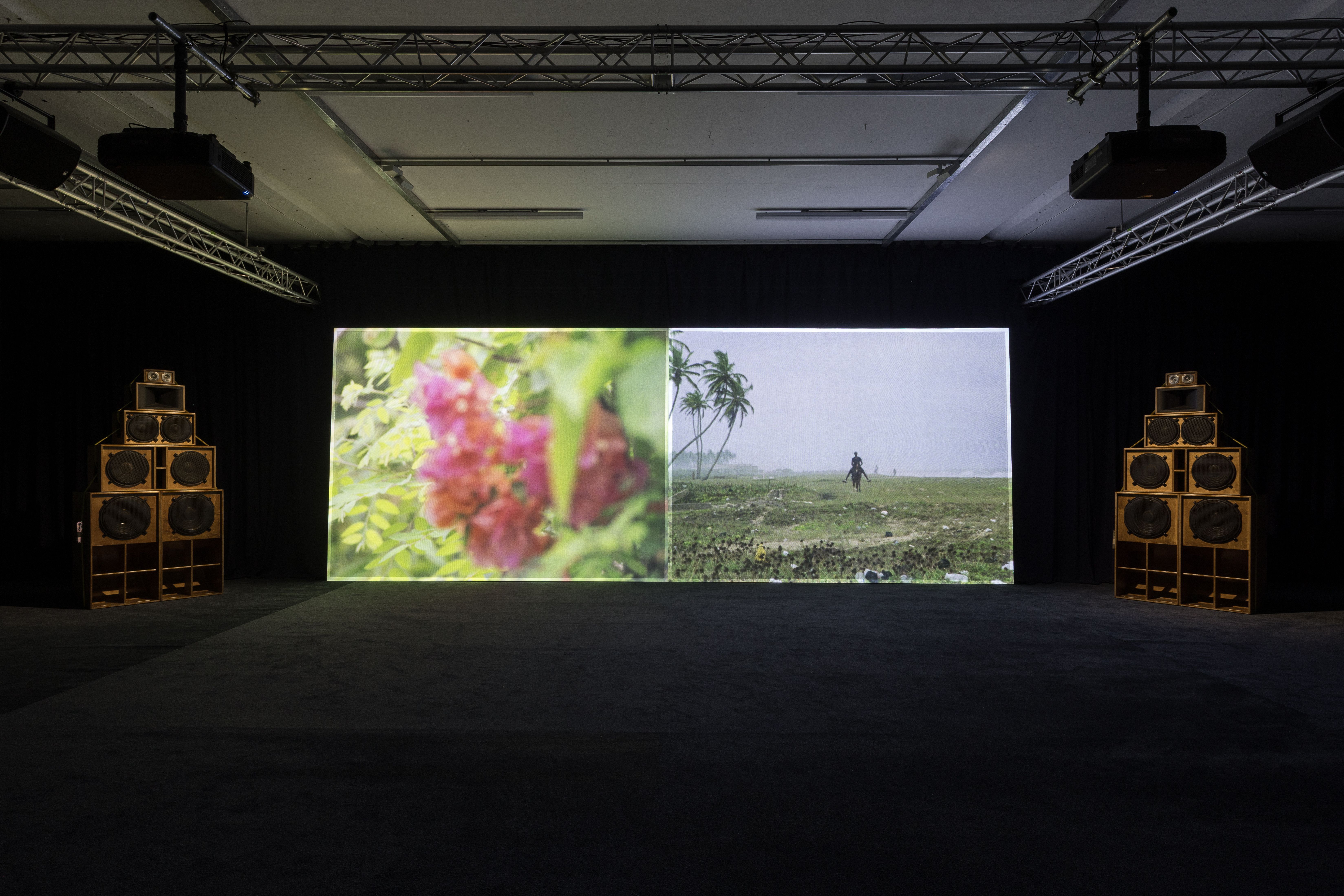
“I think of myself as a child of the Atlantic”
The Black electronic music traditions that emerged in Chicago and Detroit are also evident in Bristol, though the UK city receives far less recognition than its US counterparts for its role in popularising House music in Britain. At Spike Island, the exhibition is presented as a mutable environment, alternating between a soundscape designed by Lijadu and screenings of the film itself. The soundscape issues from a sound system made by a local artisan, forging another link to Bristol’s grassroots sound system culture, adapted from Caribbean communities that emigrated to the UK in the 1970s. These sound systems became powerful symbols of resistance in the racially fraught 1980s. As a central metaphor, the idea of amplification has long been used by minority groups to increase status and control in environments hostile to their self-determination.
Lijadu welcomed Ocula into the exhibition space and her London studio to discuss the film and its roots in her multiple creative practices as an artist, musician and DJ. —[O]






A respected voice in contemporary art discourse.
Focusing on ambitious storytelling and insightful art-world commentary. Ocula Magazine publishes in-depth interviews, critical essays and timely analysis on the artists, exhibitions and ideas driving the global art world.
Learn more about Ocula Magazine
Showcasing the best of the art world.
Ocula partners with galleries from around the world to highlight their artists, artworks and exhibitions. Gallery membership is by application and invitation, with each member vetted by an independent panel.
Learn more about Ocula Membership
Specialises in the sale of major artworks.
Led by a team with deep ties to the world’s leading auction houses, galleries and collectors. Ocula’s advisory team offers bespoke services to high-net-worth clients from around the world who are looking to acquire the best of contemporary and modern art.
Learn more about our team and services