





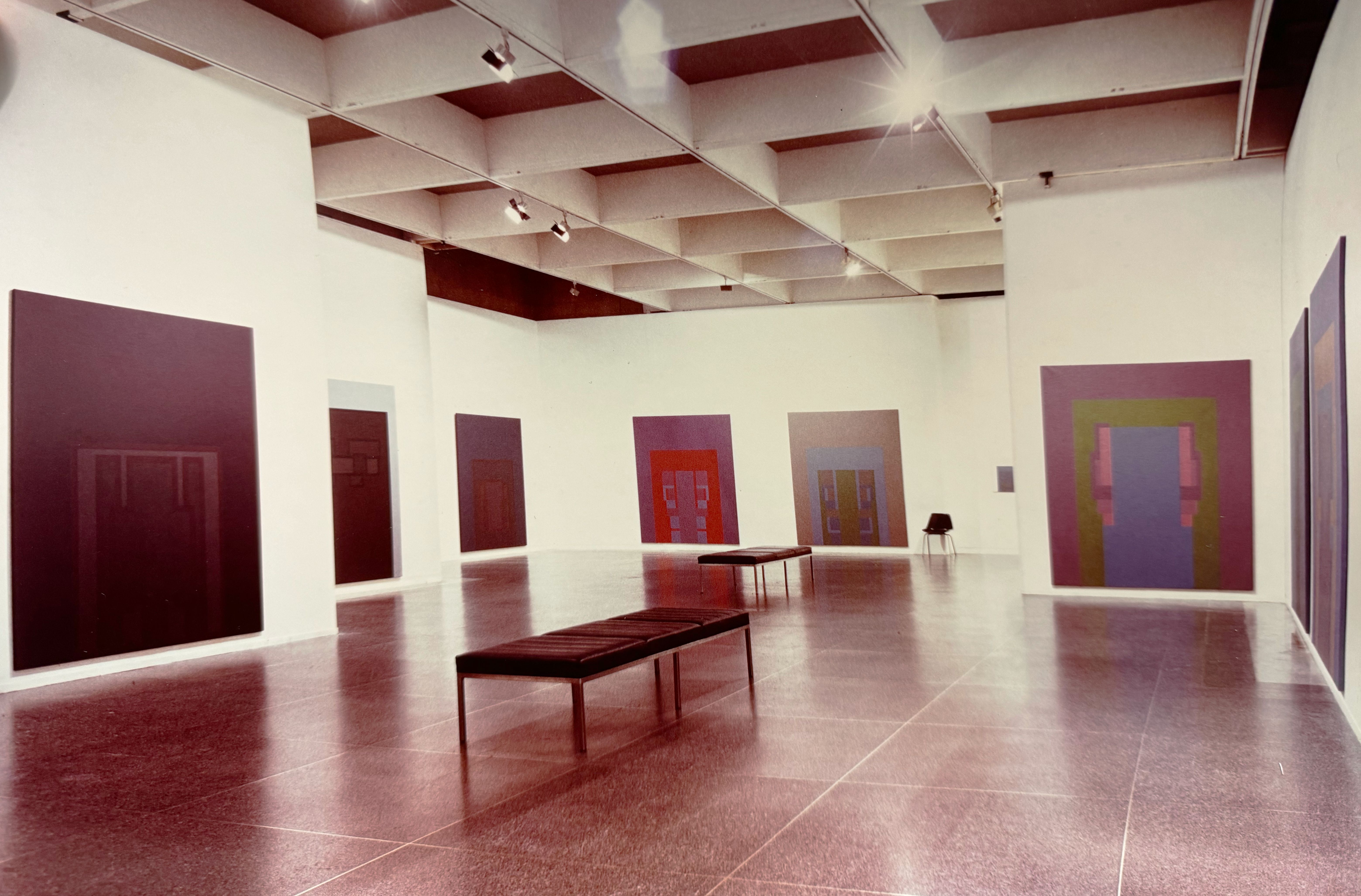
Robyn Denny, Tate Retrospective, 1973. Courtesy Vardaxoglou Gallery.
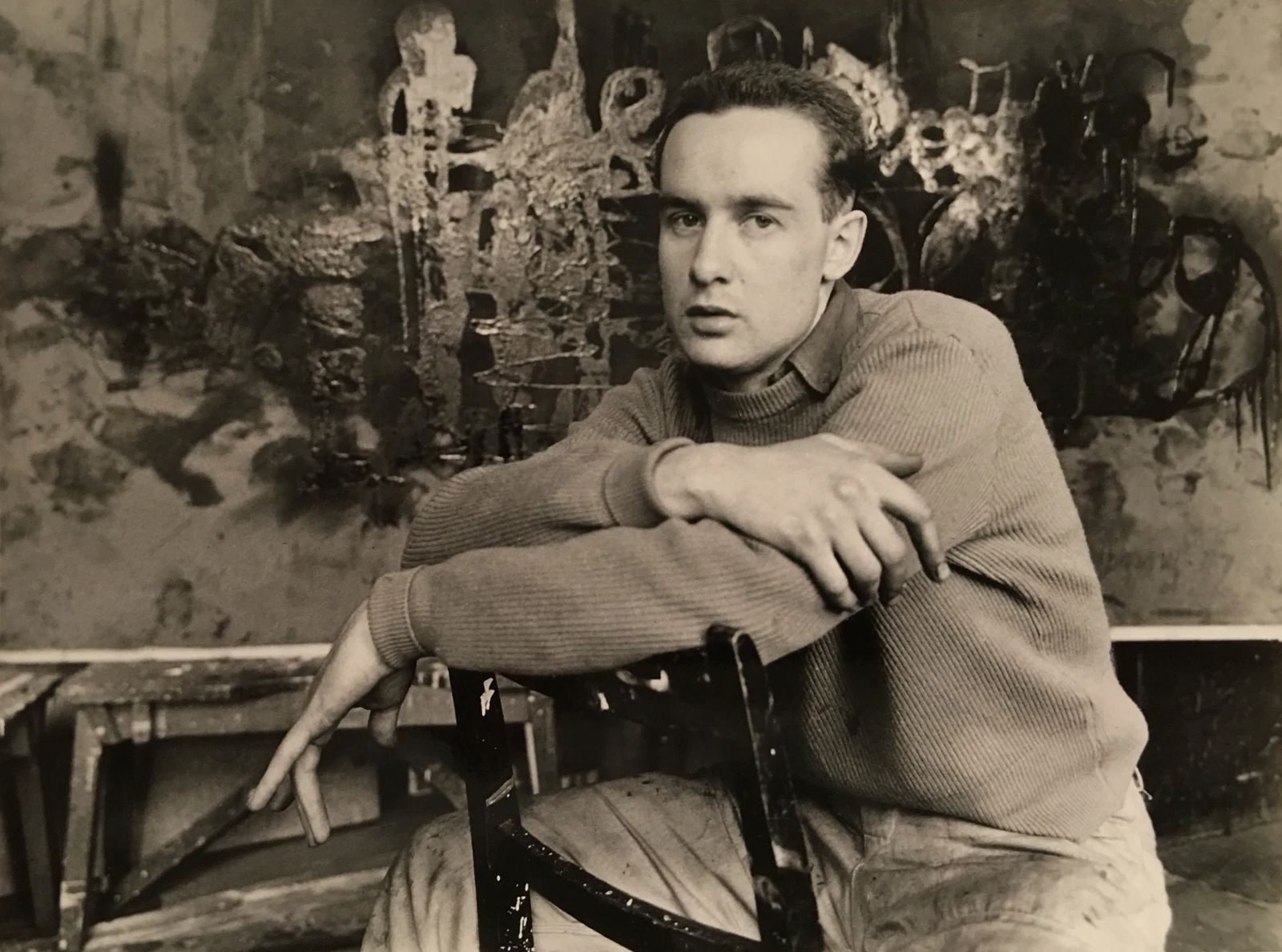
Robyn Denny with Eden Come Home. Courtesy Vardaxoglou Gallery, London.
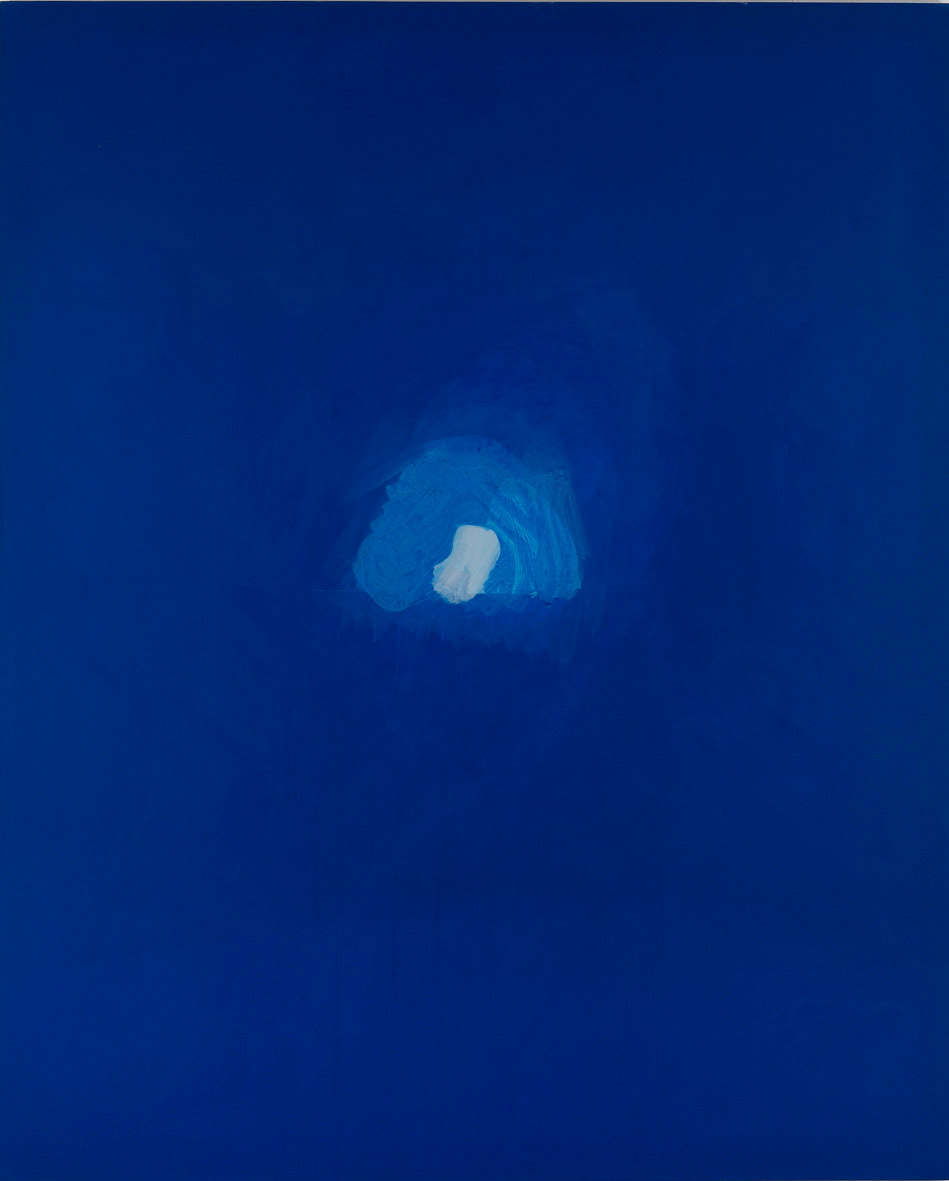
Robyn Denny, My Blue Heaven (1985-1986). Acrylic on canvas. 244 x 198 cm. © The Estate of Robyn Denny. Courtesy Vardaxoglou Gallery, London.
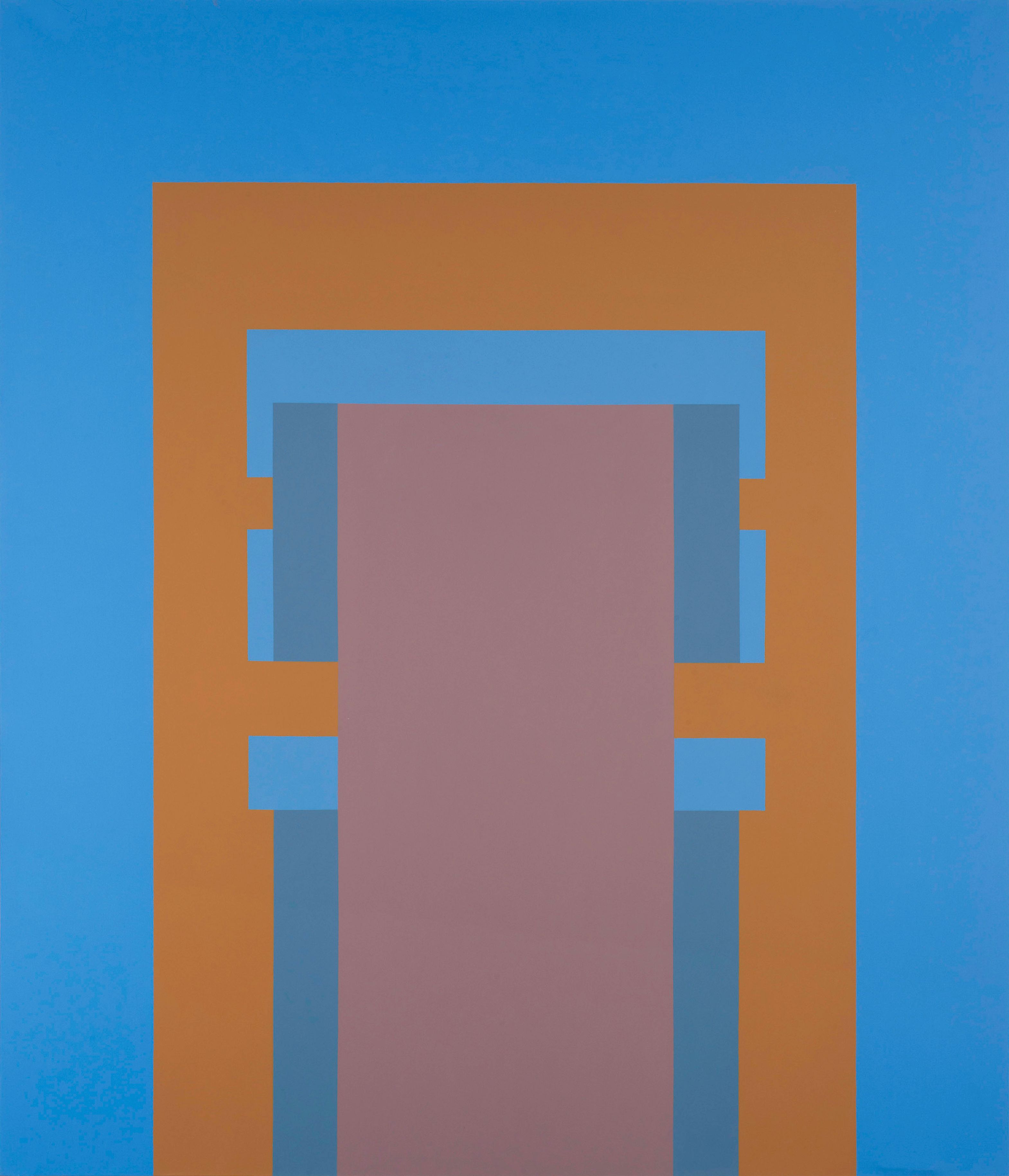
Robyn Denny, A time (1968-1969). Oil on canvas. 244 x 198 cm. © The Estate of Robyn Denny. Courtesy Vardaxoglou Gallery, London.
‘I must have had as many exhibitions as anyone in the past 15 years,’ Robyn Denny told the Daily Telegraph in 1973, ‘but I still feel invisible.’
As one of five young artists to represent Britain at the Venice Biennale in 1966, and in 1973 was the youngest recipient of a Tate retrospective, this seems an inconceivable and sad observation.
Hoping to rectify this is Vardaxoglou Gallery, who are hosting their first exhibition of the British painter since announcing representation of Denny’s estate in April last year. The exhibition distinguishes works from each decade of Denny’s career, showing his development from the 1950s to the 2000s.
An early work includes Eden Come Home (1957), a large-scale abstract painting conceived the year he graduated from Royal College of Art in London. Abstract works such as these emerged from Denny’s disillusionment with the ‘insidious duality’ and quaintness of the mainstream St Ives School and a bad attitude that ran right through British art, with modernised landscape its root.’
His effort was inspired by the vitality and ambition Denny saw in American abstract expressionists such as Mark Rothko and Jackson Pollock, and came to define his 1960s oeuvre. Beginning with his participation in Situation (1960), a peer-group exhibition in which artists were required to make abstract work of no less than 30 square feet, Denny’s blank colour fields became increasingly spatially ambiguous and hard-edged, as seen in A Time (1968–69) at Vardaxoglou Gallery.
Representation with the ultra-modern Kasmin Gallery in London came in the early 1960s, with his Venice debut the following decade in 1973. He moved to Los Angeles in 1981, where the southern Californian light introduced a monochromatic austerity to his paintings. One such example—on view at Vardaxoglou Gallery—is My Blue Heaven (1985–86), whose overwhelmingly azure body is interrupted by a nub of lighter tone in the centre of the large-scale canvas.
The renewed focus on figurative art in the 1980s, along with the arrival of the Young British Artists on the scene in the 1990s, no doubt helped to sideline Denny’s hard-edged abstractions. A similar fate was dished to Carmen Herrera‘s chromatic planes until her 2012 exhibition at Lisson Gallery reset the record. One can only hope the London gallery can work similar wonders in rendering the ‘invisible’ visible.
Robyn Denny is on view at Vardaxoglou Gallery in London until 11 May 2024.
Main image: Robyn Denny, Tate Retrospective, 1973. Courtesy Vardaxoglou Gallery.



A respected voice in contemporary art discourse.
Focusing on ambitious storytelling and insightful art-world commentary. Ocula Magazine publishes in-depth interviews, critical essays and timely analysis on the artists, exhibitions and ideas driving the global art world.
Learn more about Ocula Magazine
Showcasing the best of the art world.
Ocula partners with galleries from around the world to highlight their artists, artworks and exhibitions. Gallery membership is by application and invitation, with each member vetted by an independent panel.
Learn more about Ocula Membership
Specialises in the sale of major artworks.
Led by a team with deep ties to the world’s leading auction houses, galleries and collectors. Ocula’s advisory team offers bespoke services to high-net-worth clients from around the world who are looking to acquire the best of contemporary and modern art.
Learn more about our team and services