The art world in focus
Subscribe to our newsletter for news and insights on artists, galleries and exhibitions.


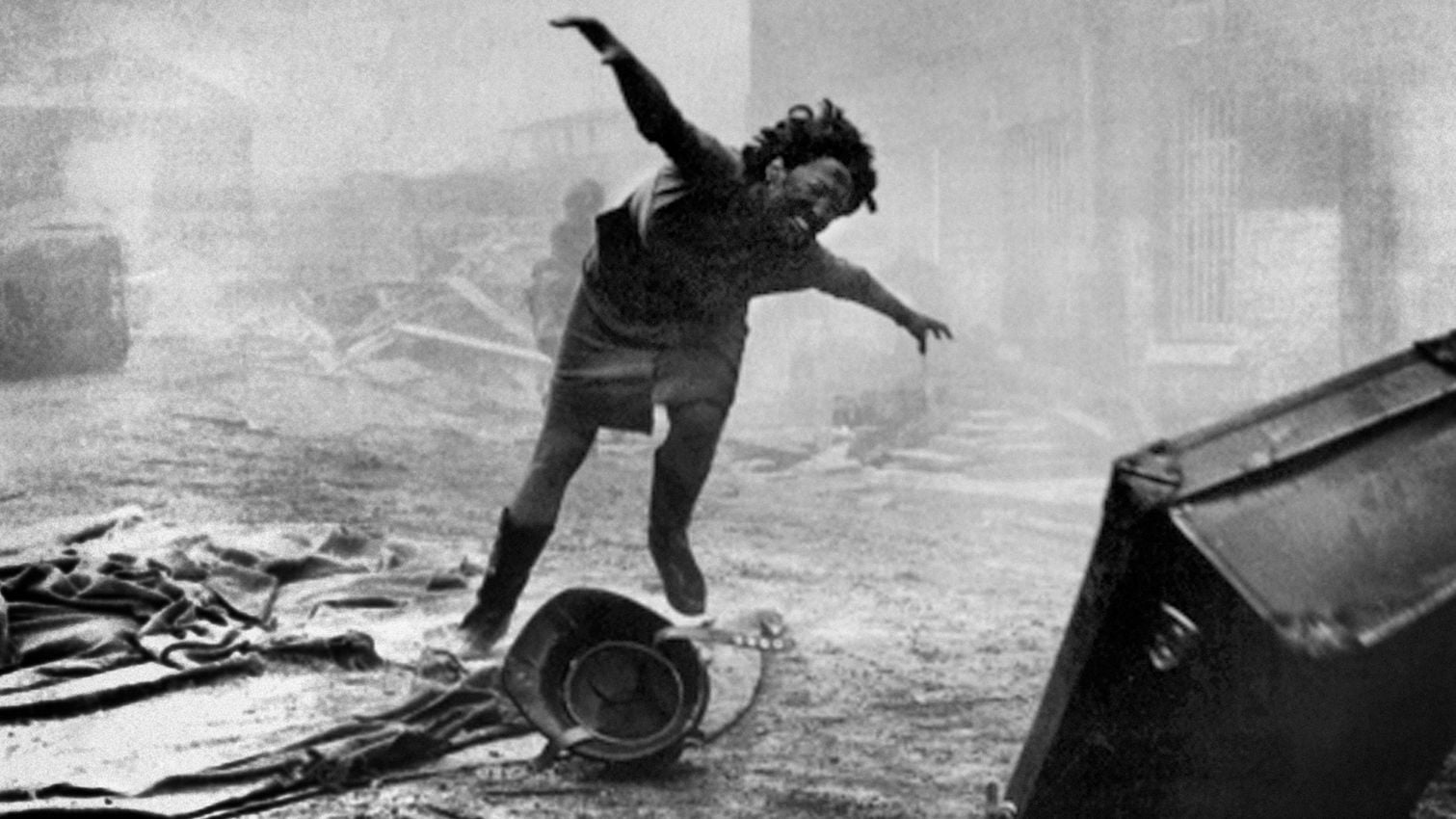
I’d never expected to meet Peter Watkins. The English filmmaker, documentarian, writer and theorist, who died at the end of October, made his final work at the end of the 20th century (La Commune (Paris, 1871) first shown at the Musée d’Orsay in 2000 and then screened on French TV) and had been in self-imposed exile from the United Kingdom for decades before that. But ever since I saw Watkins speak about his efforts to strike a balance between the freedom (and obscurity) that comes with being a video artist and the formal constraints of making television, and about the impossibility of artistic ‘neutrality’, in a candid interview for Lithuanian artist Deimantas Narkevičius’ short film Role of a Lifetime (2003), I felt as if I’d known him.

By the time we met, I’d already seen The War Game (1965), Watkins’ nuclear disaster mockumentary that heaves closely to 1960s television conventions, and been utterly floored by it: in particular, the child telling an interviewer ‘I don’t want to be nothing’ after the nuclear attack remained utterly chilling. I watched it first as part of a double bill with Mick Jackson’s Threads (1984), which imagines the potential medical, economic, social and environmental consequences of a nuclear war in Britain. Of both made-for-television films, Threads is perhaps more familiar in popular consciousness, in part because it is a feature-length, character-led piece, formally more recognisable to modern audiences, but mainly because the BBC commissioned The War Game and then refused to show it. It was this suppression, and the cold critical and commercial reception of Watkins’ feature Privilege (1967), about a pop star recruited for Christian fundamentalist ends, that led to him leaving the U.K.
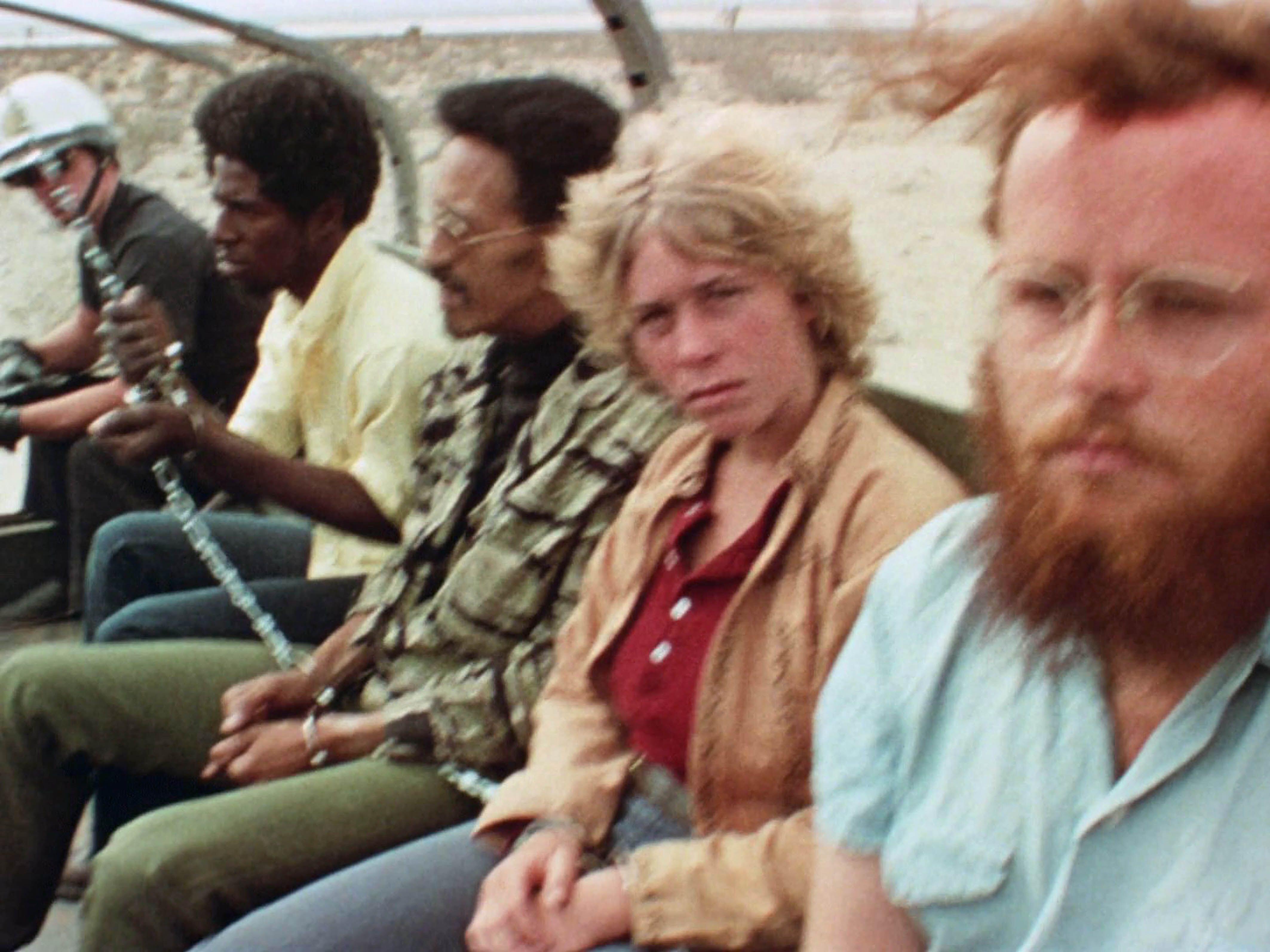
It was at a screening of The War Game in September 2018 that I had the unexpected opportunity to see Watkins speak, when Close-Up in London (my favourite cinema) invited him to discuss how it was first pulled from broadcast, and what he called ‘the global media crisis’. By then, I knew Watkins’ voice well from the narration of his sharp, striking pseudo-documentaries. These delved into the past with the BBC commission that made his name, Culloden (1964), in which he forensically applied contemporary techniques such as on-location interviews to a film about the defeat of the Jacobite rebellion of 1745. While with Punishment Park (1971) he looked to the near future in a mockumentary that depicts a state-run dystopian challenge in which young dissidents, mainly played by non-professional actors, are invited to bet their freedom on negotiating a deathly assault course to retrieve an American flag in the California desert. Their attempts at freedom are hopeless as it becomes increasingly clear there is no way out for them. (Although made during the Vietnam War, it was just as relevant when I saw the film during the War on Terror.)
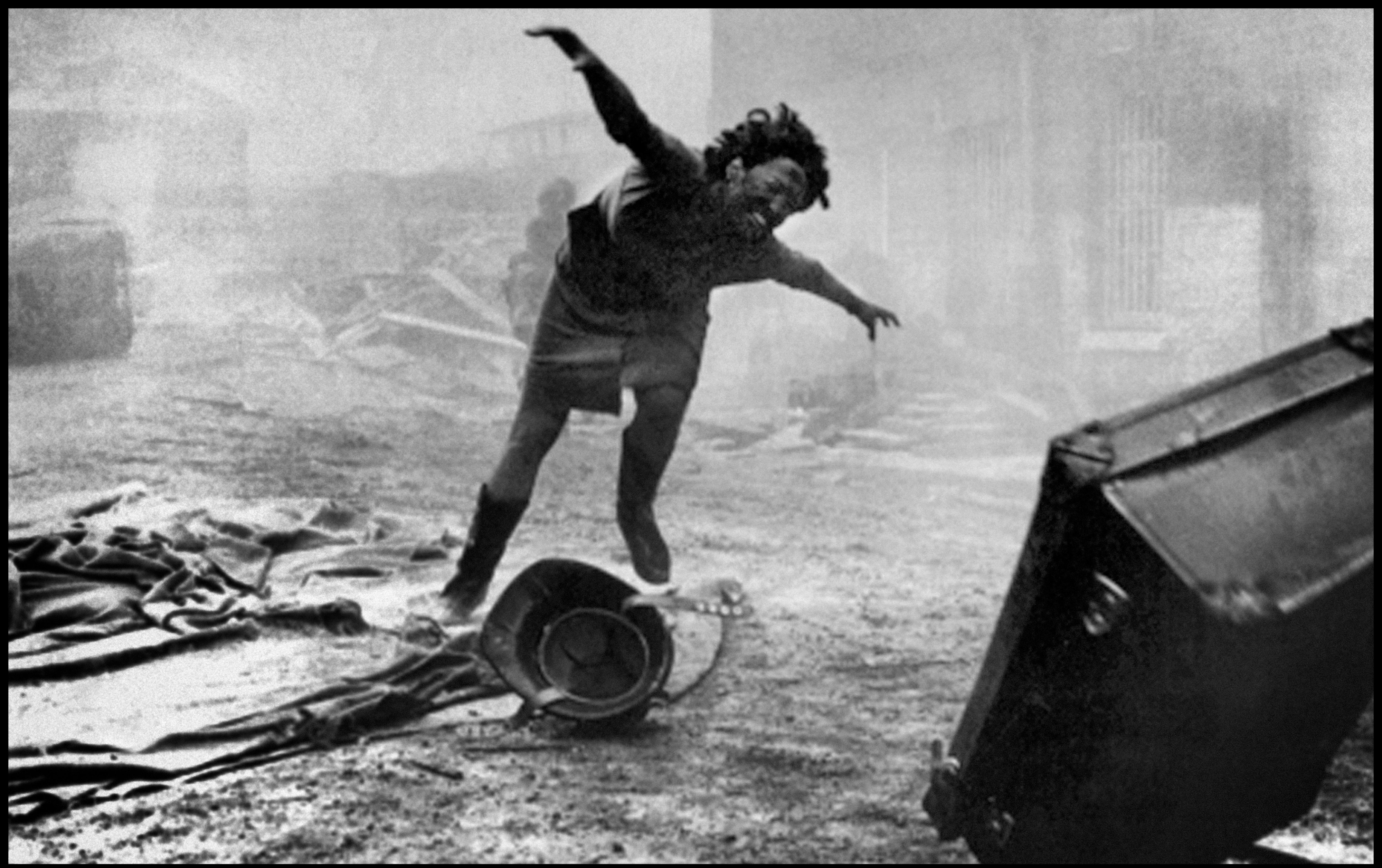
In person, Watkins was exactly as I’d expected: urgent and irascible, fiercely analytical and mordantly funny. He recounted the story of The War Game: the BBC asked him to make a film about a nuclear bomb hitting the U.K., and were horrified by the result. Its brutal portrayals of people being blinded by the explosion and poisoned by radiation are difficult to watch, but it also troubled the censors by striking at two national myths. One was that of the ‘Blitz spirit’, in which the people of the U.K. and especially London supposedly met the German bombing campaign with stoic reserve and resilience, which Watkins undercut by showing people in Rochester refusing to take refugees from London (where the bomb was expected to hit), setting up a critique of the government’s absurdly inadequate advice for such an eventuality. The bomb mistakenly strikes Rochester, which is completely unprepared and descends into lawlessness. The build-up, in which tensions between western Europe and the USSR in Berlin and the U.S. and China in South Vietnam, culminates in the U.S. launching a nuclear attack on the U.S.S.R., reminding viewers of NATO’s refusal to adopt a ‘no first use’ policy.
After the screening, Watkins discussed his theory of the ‘monoform’, where he tied analysis of news media’s formal conventions—use of sound, rapid cutting, the tone and language of its narrators—to its conservative function, pacifying viewers by denying them the mental space to question the information being imparted to them. To me, this was always less convincing than, say, Edward S. Herman and Noam Chomsky’s Manufacturing Consent: The Political Economy of the Mass Media (1988), reminding me that Watkins was a filmmaker before he was a theorist, with his only book, Media Crisis (2004), being published four years after his final film.
He took the mockumentary format to the end of his career with his epic Brechtian masterpiece La Commune (Paris, 1871), interviewing participants in the Parisian insurrection of 1871 and the French army who crushed it—these were non-professional actors, who were cast according to their political sympathies, leading to bad-tempered clashes between some of them. He was better at inventing such stories than making more straightforward documentary, as in Resan: The Journey (1987), a global survey of the impact of the nuclear weapons industry that is still the longest non-experimental film ever made, piling up formal devices so relentlessly that I crashed out after less than two-thirds of its 14 hours and 33 minutes.

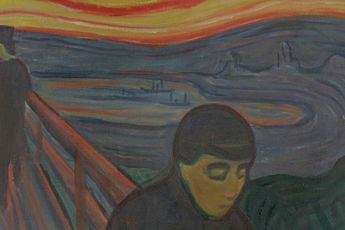
Watkins was not all sadness at historical defeats and despair about the near future, though: Edvard Munch (1974) is the greatest film I have ever seen about an artist and the creative process. Most biopics focus on a troubled relationship or a single work but, over almost three hours, Watkins explores the impact of poverty, the class system and religion on Munch’s childhood, brings in a John Berger-style discourse on how Munch’s multi-layered texturing of paint on a cut canvas in The Sick Child (1885–1886) affected the development of modern art, and looks at the impact of public and media criticism on Munch’s mental state and work. I’m sure Watkins empathised with Munch in exile, and he shows how the artist’s creative circle in Berlin, which in the late 19th century included authors Stanisław Przybyszewski and August Strindberg, further changed his practice. He would have identified too with Munch’s determination to keep working in the face of calls to boycott his work, and for the police to confiscate it.
Each of these works confirms Watkins in my mind as the U.K.’s greatest ever filmmaker. He was determined to reach a large audience but unwilling to compromise to do so, genuinely speaking truth to power, and finding ways to continue making ambitious, thought-provoking work despite opposition. His home country lost him in exile and the film world lost him in retirement. Now we have lost him in death, we should revisit his work. Specifically, we should look at our catastrophic media environment, in which plutocrats use their ownership of newspapers, broadcast networks and social media platforms to rig global politics for their own ends with little regard for human connection. We must think about how we might use art to turn all that media against the repressive powers that it currently serves. —[O]
A respected voice in contemporary art discourse.
Focusing on ambitious storytelling and insightful art-world commentary. Ocula Magazine publishes in-depth interviews, critical essays and timely analysis on the artists, exhibitions and ideas driving the global art world.
Learn more about Ocula Magazine
Showcasing the best of the art world.
Ocula partners with galleries from around the world to highlight their artists, artworks and exhibitions. Gallery membership is by application and invitation, with each member vetted by an independent panel.
Learn more about Ocula Membership
Specialises in the sale of major artworks.
Led by a team with deep ties to the world’s leading auction houses, galleries and collectors. Ocula’s advisory team offers bespoke services to high-net-worth clients from around the world who are looking to acquire the best of contemporary and modern art.
Learn more about our team and services