





The Sensorial Overload of the Taipei Biennial Is Bittersweet
Taiwan’s colonised history provides the foundations for the theme of ‘yearning’ at this year’s biennial, Whispers on the Horizon, but veers too close to sentimentality. Save to My Ocula
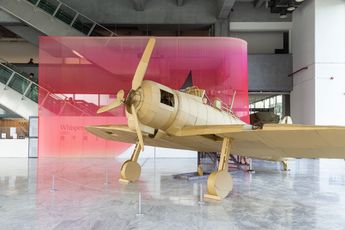
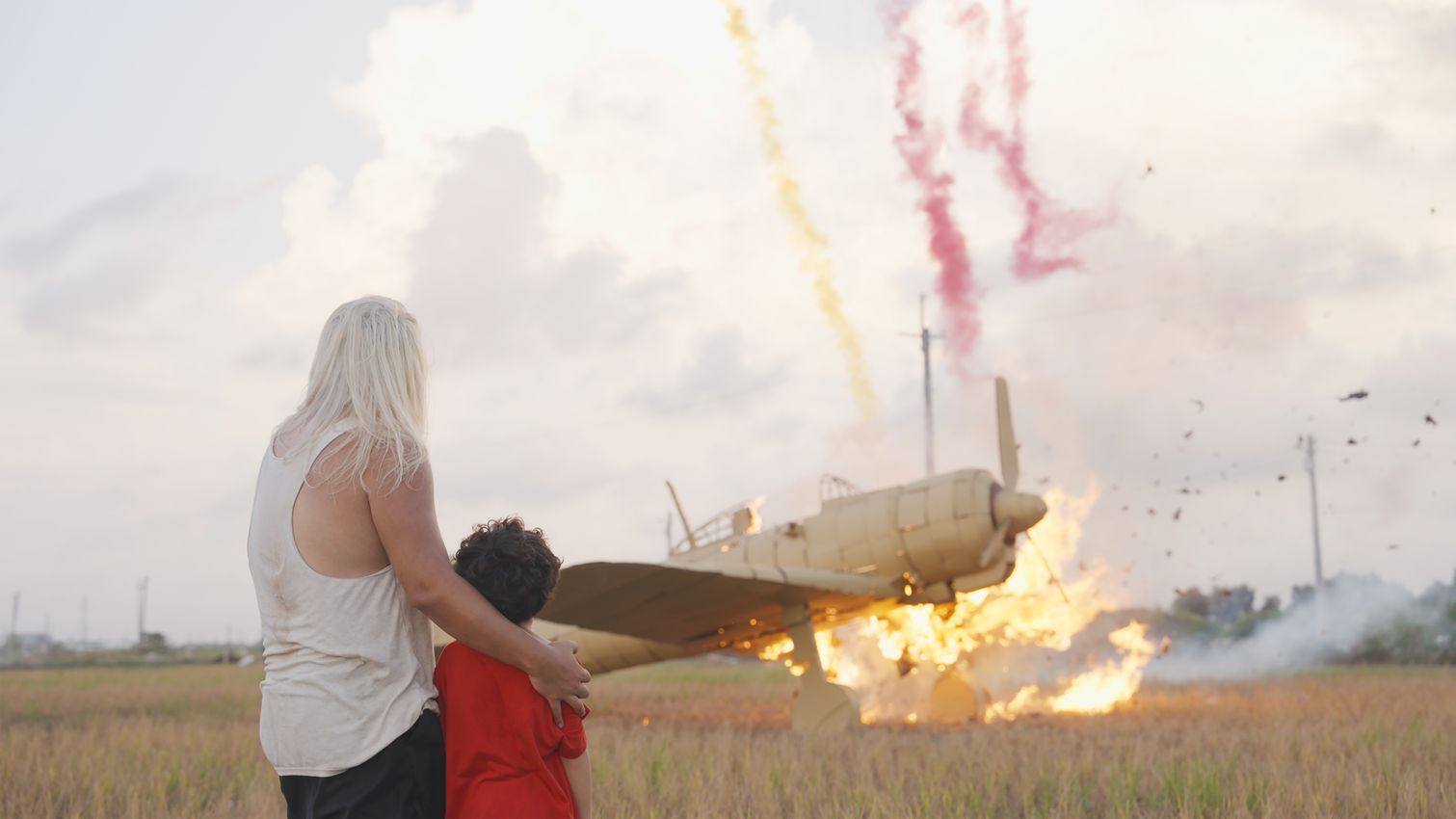
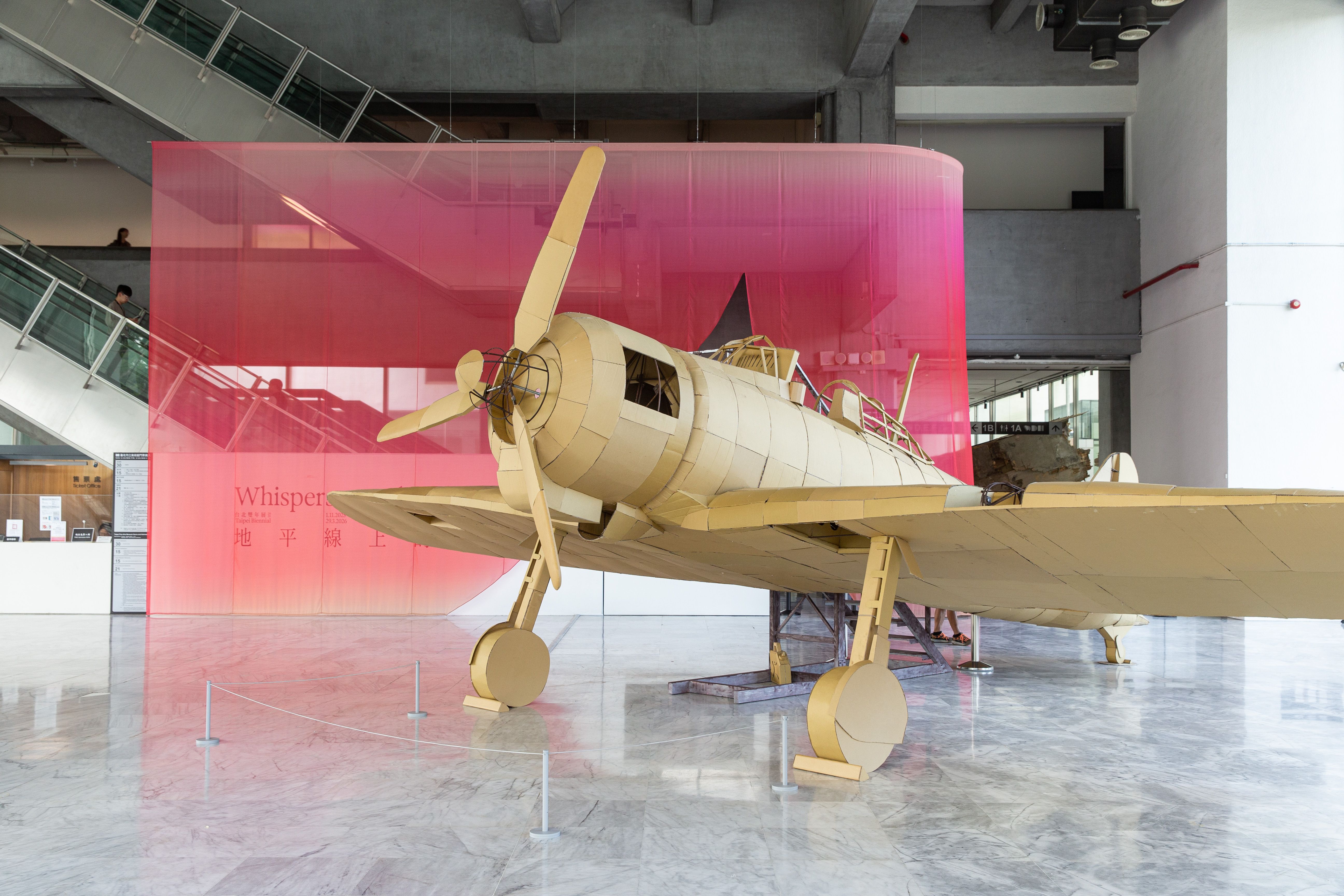
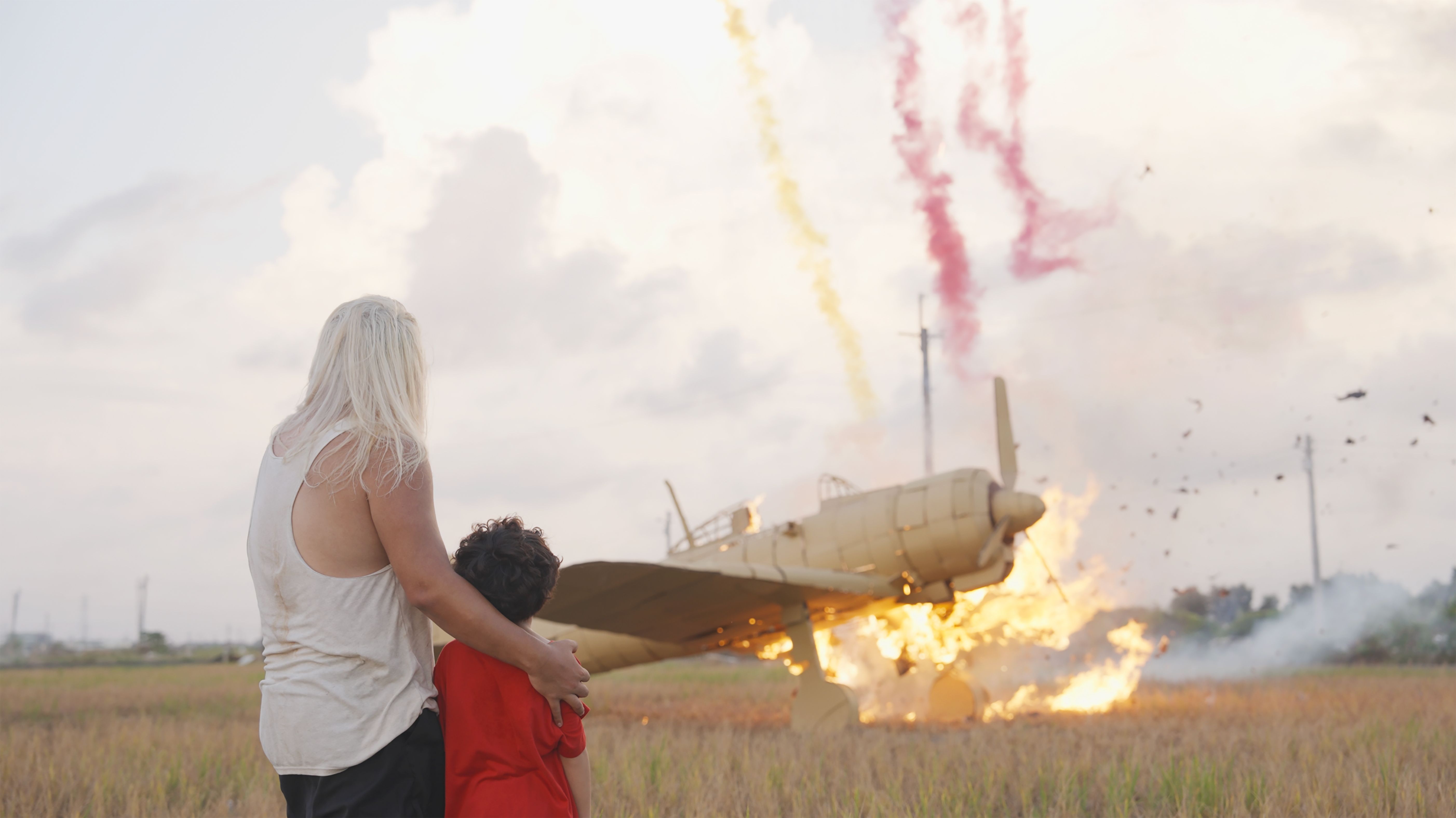
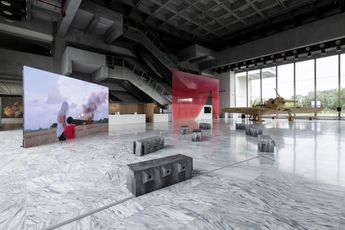
The 2025 Taipei Biennial opens with a jolt of theatre. Step inside the museum and you’re confronted by a life-sized cardboard Mitsubishi A6M Zero fighter plane (operated by the Imperial Japanese Navy from 1940–1945) complete with a climb-in cockpit and a virtual take-off monitor. Taiwanese artist Ciou Zih-Yan has transformed the atrium into Fake Airfield (2025), modelled on the decoy airfields the Japanese built across Taiwan during the final years of occupation. A neighbouring video shows the artist constructing this playful contraption with his young son before launching into a homemade augmented-reality dogfight alongside Japanese fighters. Yet the video evades clear allegiance: it’s impossible to tell who is firing at their cardboard plane, which ultimately bursts into whimsically fairytale fireworks. That evening, I came across a themed bar in which every cocktail was named after episodes from the period of Japanese rule in Taiwan. Still thinking about Ciou’s work, I ordered one. It occurred to me that once history is smoothed over and subjective positions are blurred, sentimentality becomes universally palatable.
Curators Sam Bardaouil and Till Fellrath have built this year’s Taipei Biennial edition, Whispers on the Horizon, around ‘yearning’—at once geopolitical and occasionally personal—a theme that recalls the biennial’s own origins, notably its 1996 theme, The Quest for Identity. If Taiwan has spent decades edging away from its other ‘self’, China, in the fight for national independence, the biennial’s better moments face that unresolved relationship head-on without drowning in cliché. It is no small feat, given how many exhibitions from Taiwan have orbited similar themes.
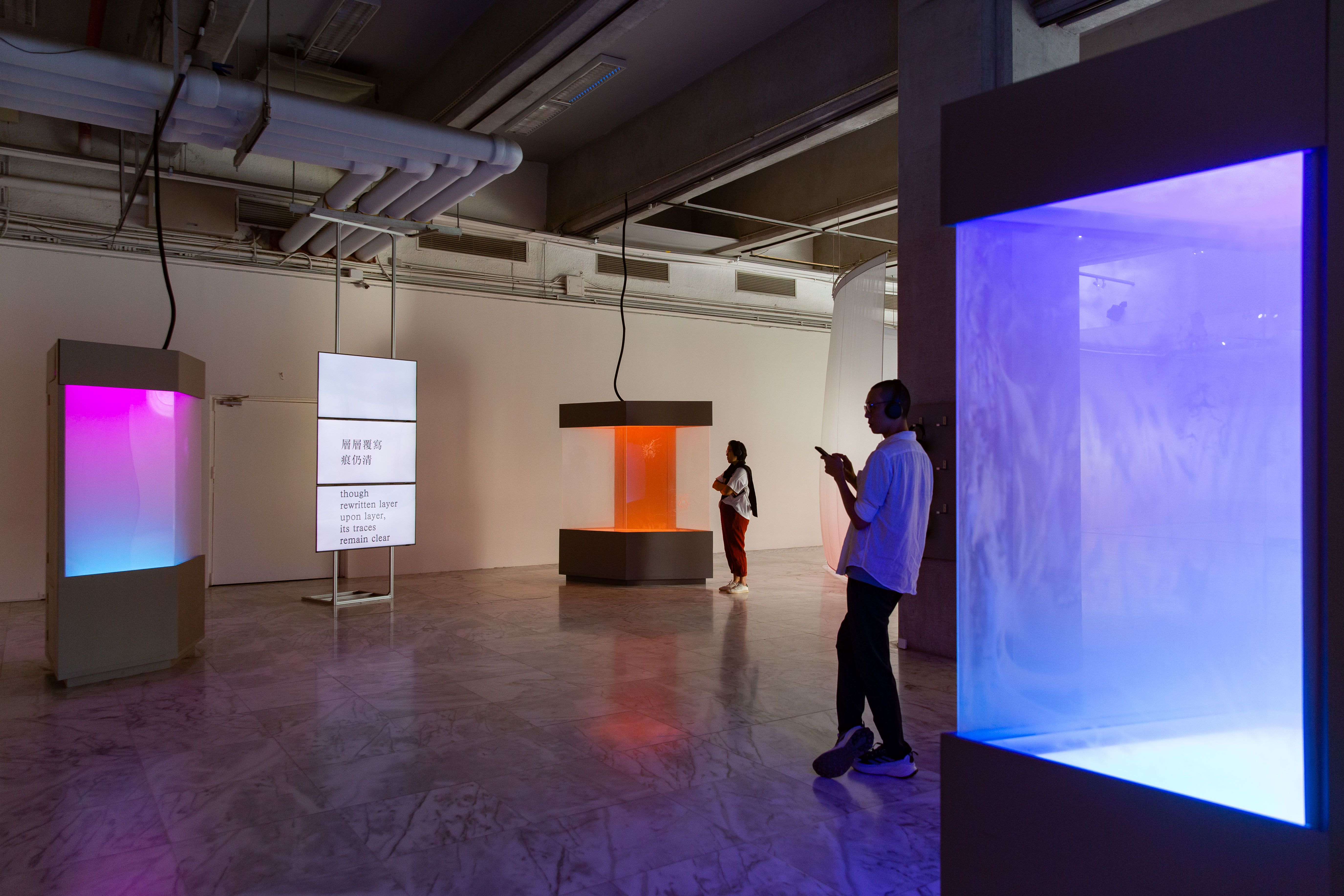
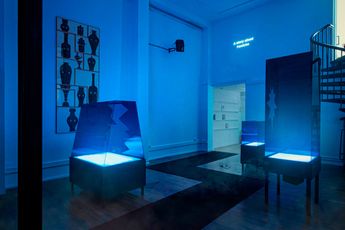
A central curatorial gambit involves commissioning artists to engage with the materials and myths of Taipei’s Palace Museum, whose vast collection of Chinese antiquities arrived in Taiwan as part of the Nationalist government’s wartime retreat from the mainland between 1948 and 1949. While many of these engagements feel more asserted than visually legible, Musquiqui Chihying’s The Recasting (2025) stands out for its intricacy. The Taiwanese artist riffs on a copper cauldron forged by Japanese troops in wartime China, repatriated after Japan’s defeat, then overwritten—quite literally—by the Kuomintang’s inscriptions asserting legitimacy. Chihying stages this tangle of imperial afterlives in an installation combining song, mist, and the cauldron’s conspicuous absence in three conspicuously empty broken display vitrines.
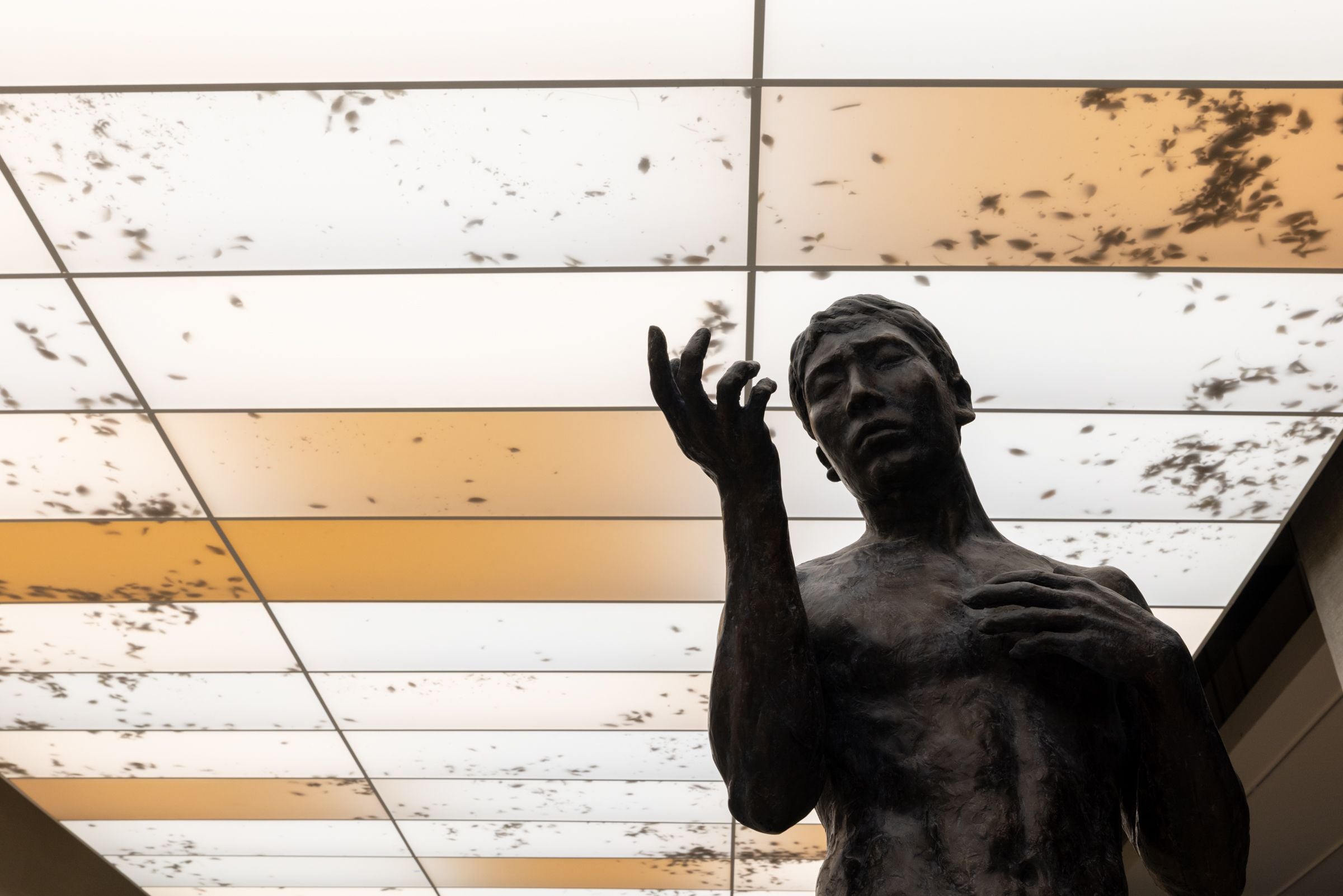
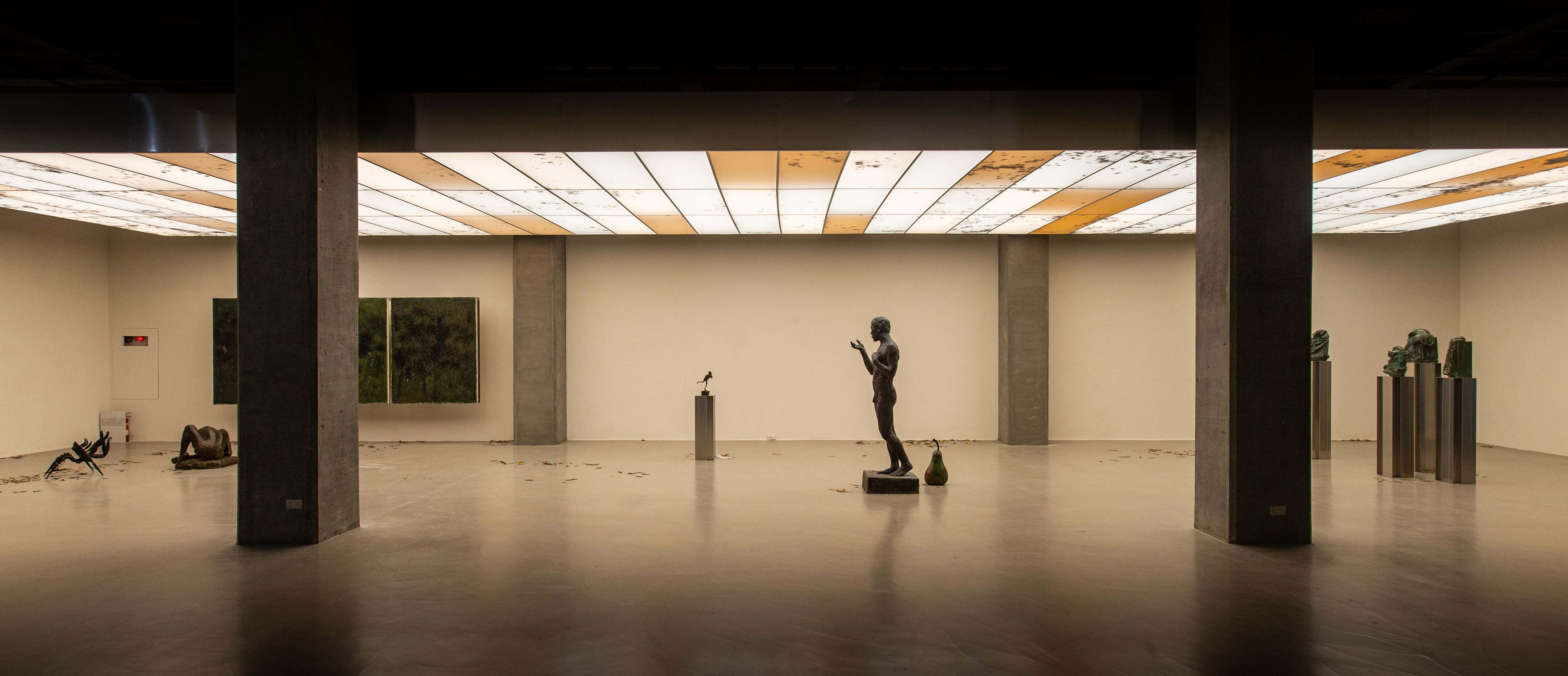
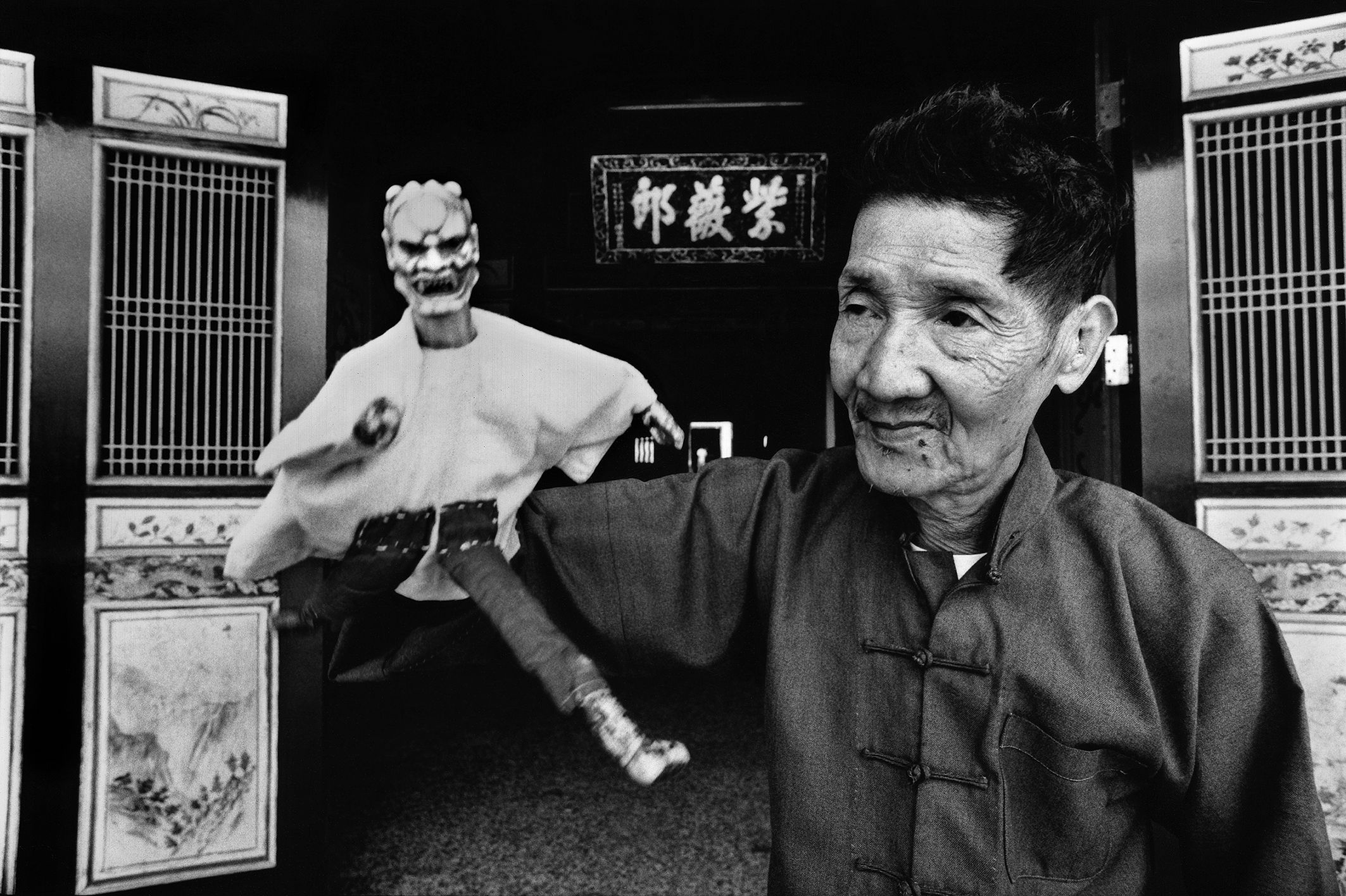
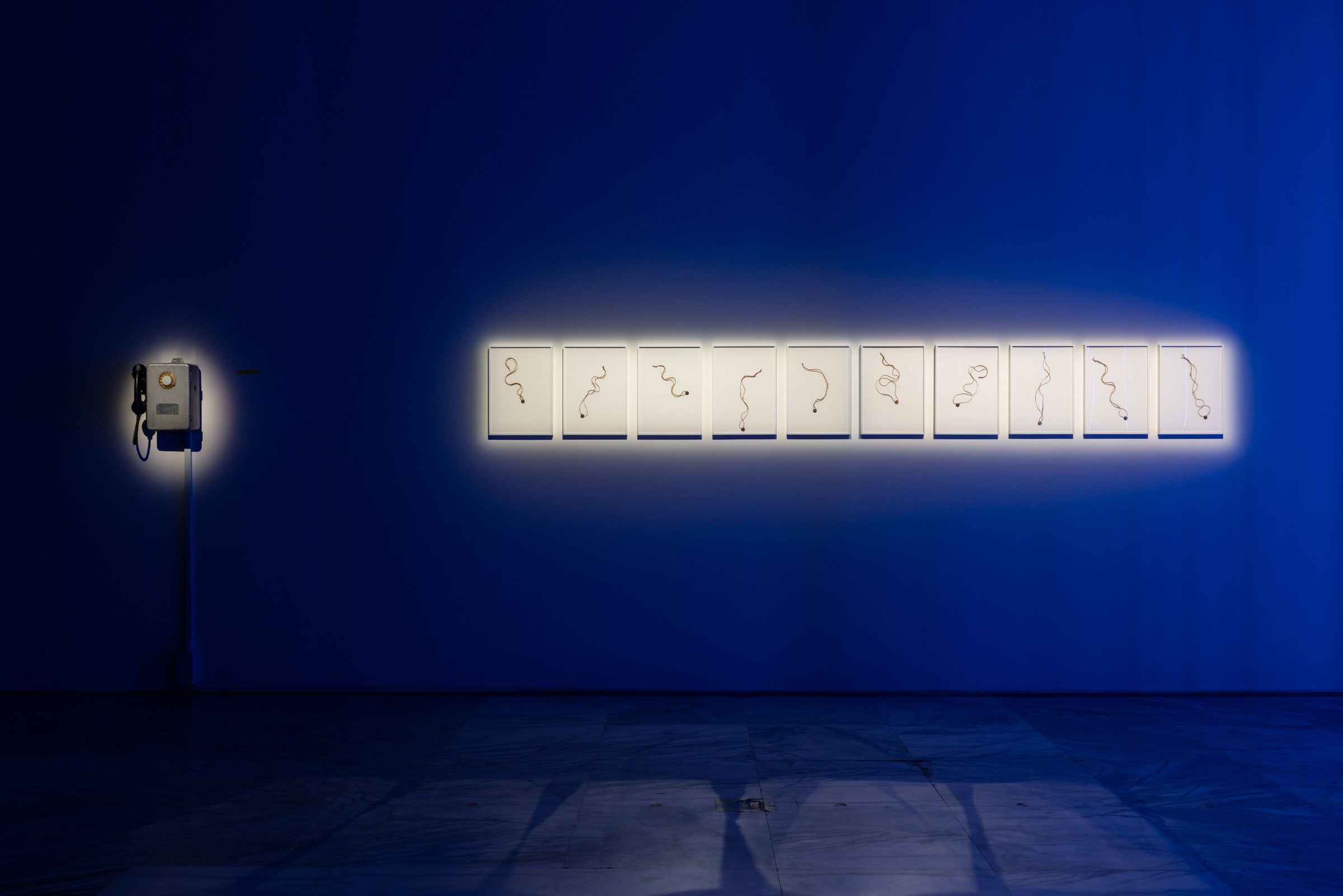
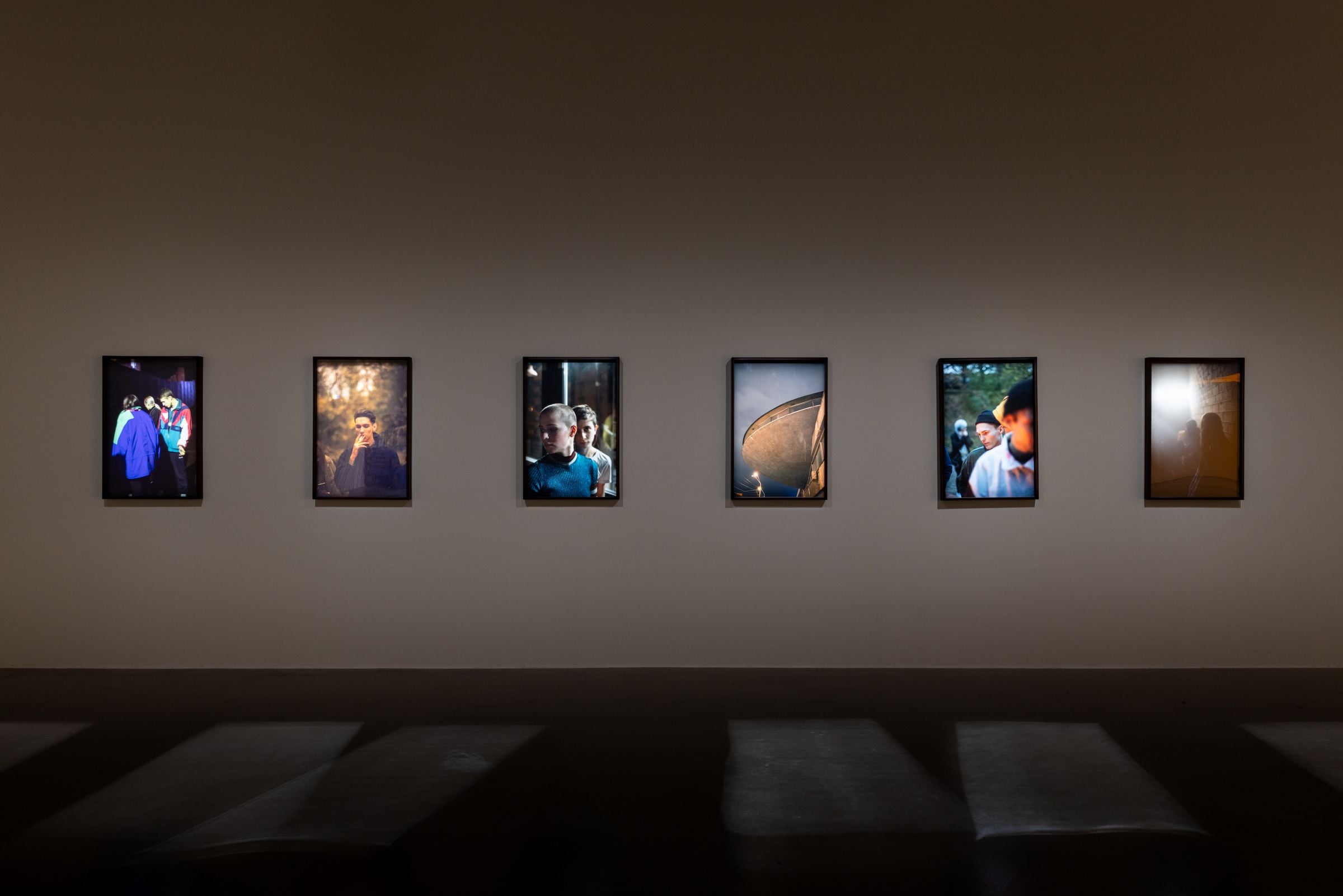
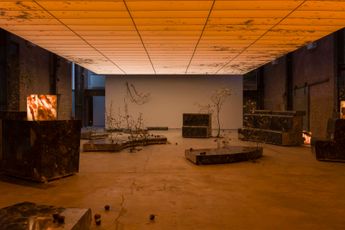
Aesthetically, the exhibition toggles between the monumental and the miniature: airy, room-devouring works set against small, tightly wound pieces. One of the tone-setting early sequences is Tableau Vivant (2024–2025), Álvaro Urbano’s sunset pavilion, which gathers disparate sculptural objects from the museum’s holdings into a tender, faintly nostalgic mise-en-scène. Nearby, Nari Ward’s Sound System (2025) uses monumental bass speakers (carved entirely from marble) to invoke Jamaican culture by way of geological metaphor: compression, pressure, and the forms created under duress. The surrounding works, much smaller in scale, counter these more sensuous set pieces with brisk, pointed geopolitical edges. Anna Jermolaewa’s On the Line (2025) installs three Soviet-era payphones rigged with coins tied to strings, enabling visitors to make free calls—a simple, mischievous reminder of parallel histories of scarcity and ingenuity. Tobias Zielony’s Golden and Maskirovka series about post-Soviet queer youth (photos taken on various dates) glow against soft curtains.
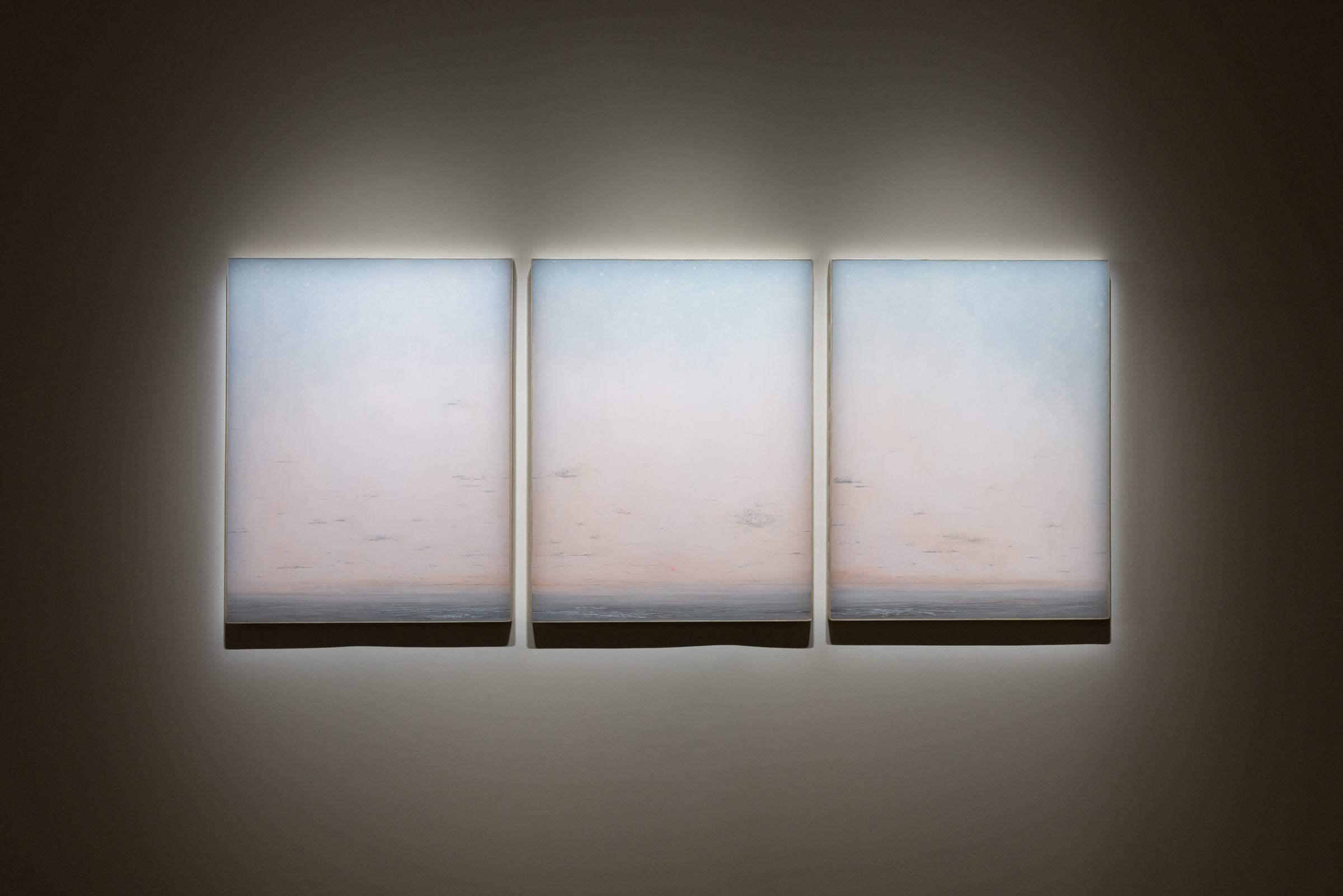
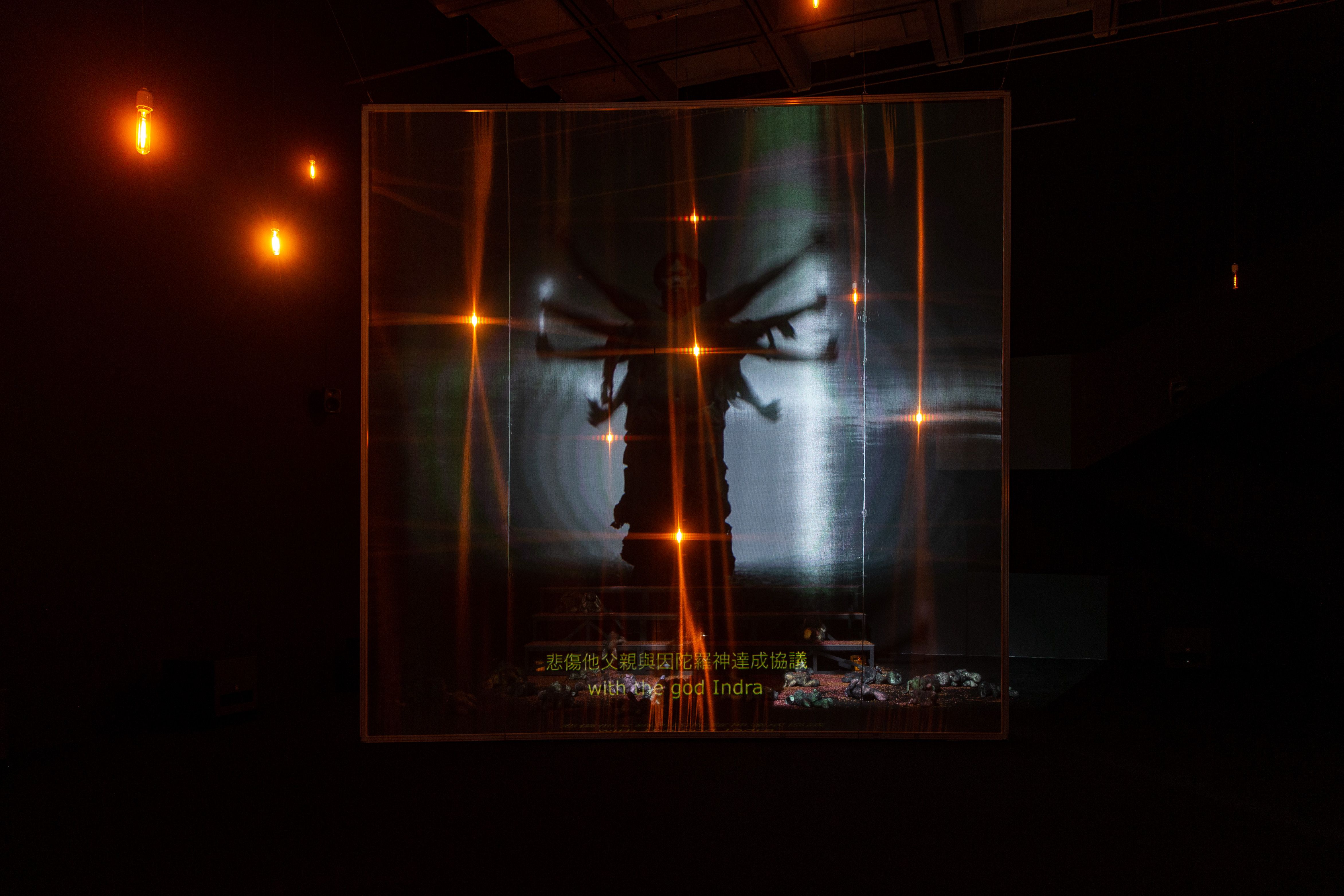
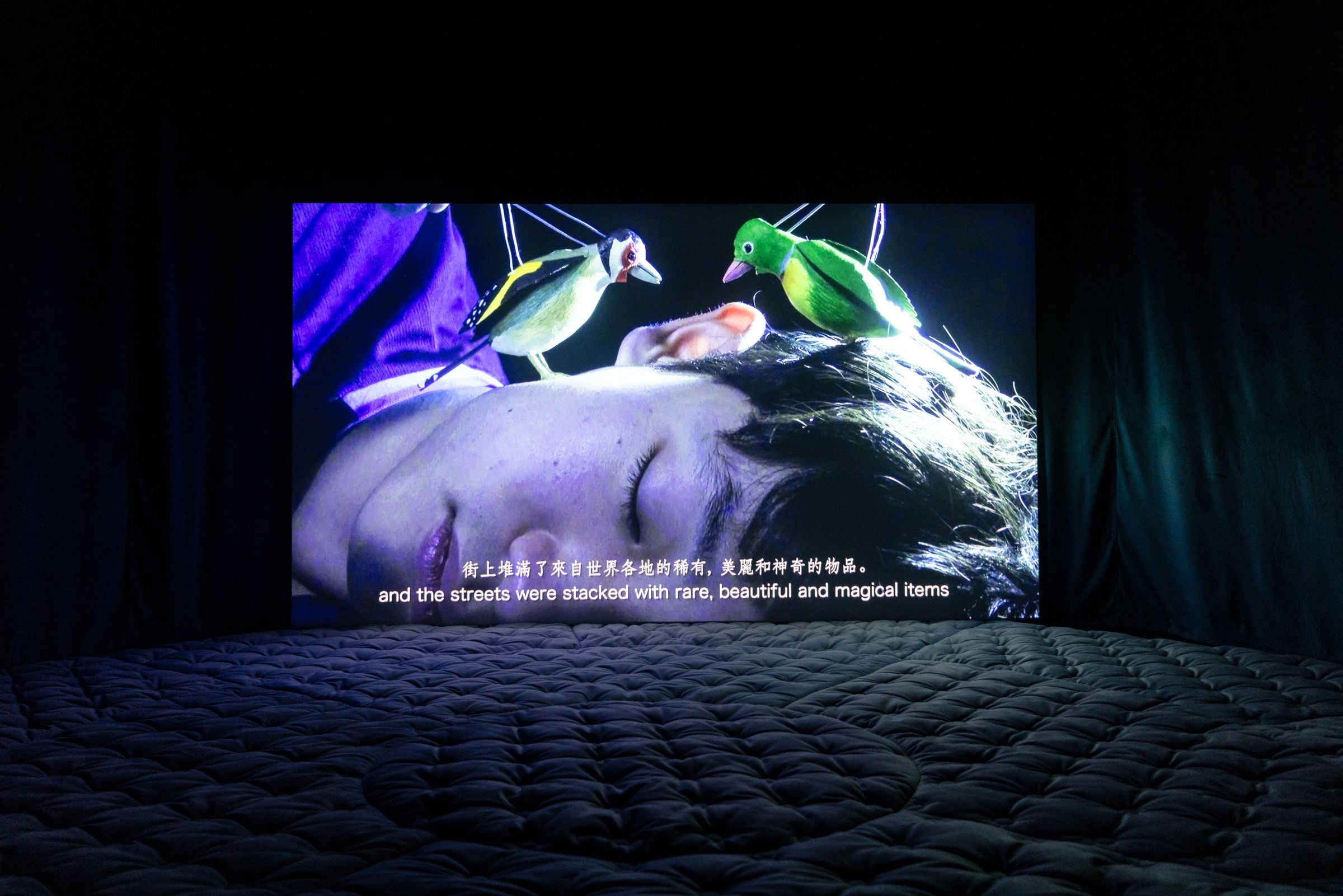
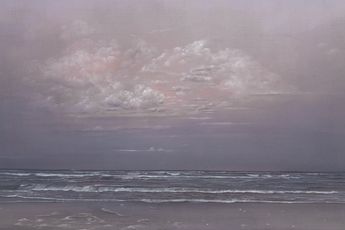
The curtain, in fact, becomes a key device in shaping the exhibition’s tone—though its saturated gradation, seemingly lifted from Fran Chang’s sunset triptych Nothing is really beautiful but truth (2025), edges toward the overdesigned. Born to a Taiwanese mother but raised abroad, Chang paints a twilight horizon steeped in an ambiguity many Taiwanese instinctively recognise. The warm colour gradient of twilight could suggest either sunrise or sunset, yet Taiwan’s coasts make the distinction absolute: dawn to the east, dusk to the west. Here, the calm of the waves leaves little doubt that this is a west-coast sunset, its serenity edged with distance. Yet for all its elegance, the biennial’s ‘yearning’ feels dissipated rather than coherent—not unlike Ciou’s fake atrium, graceful but thin on the historiography. Likewise, Love after Death (2025), Korakrit Arunanondchai’s longing for communion with monkeys and ghosts—despite the hallucinatory installation that spectacularly fills the museum’s most challenging room—still reads like a teen fraternity cult posing as a New Age sect.
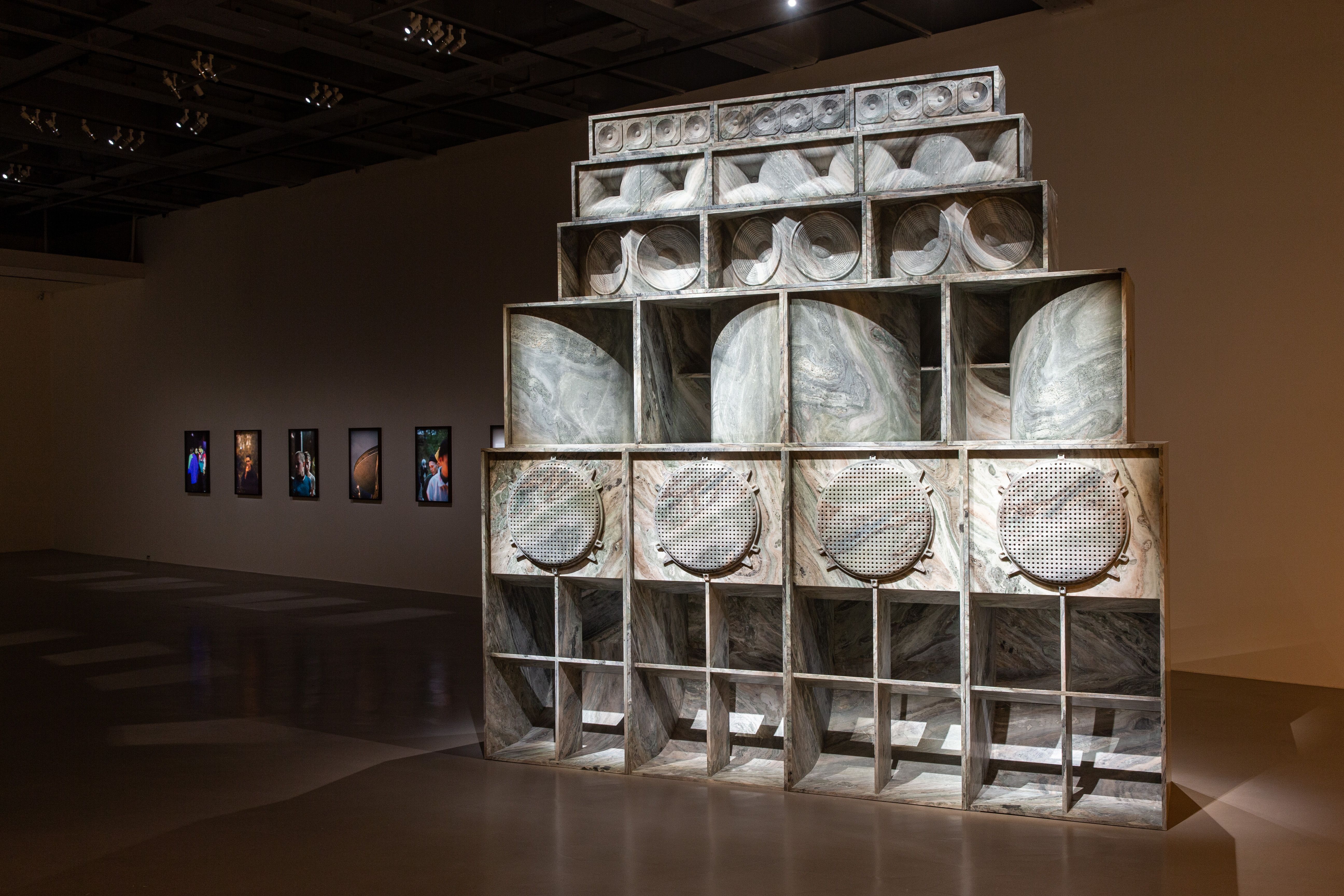
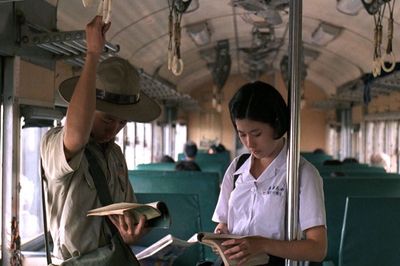
This remains true even as the exhibition draws on Taiwan’s native-soil motifs by way of citation. For one, The Puppetmaster (1993), a key work of Taiwanese New Wave cinema depicting a puppetmaster witnessing colonial terror, offers a strong reference—but the nod is fleeting. Its presence is invoked through archival gestures: Three photographs from the museum collection, showing puppetry figures from 1964 to 1978, feel overly literal, functioning more as atmospheric flavouring—like black-and-white photos hung in a bar.
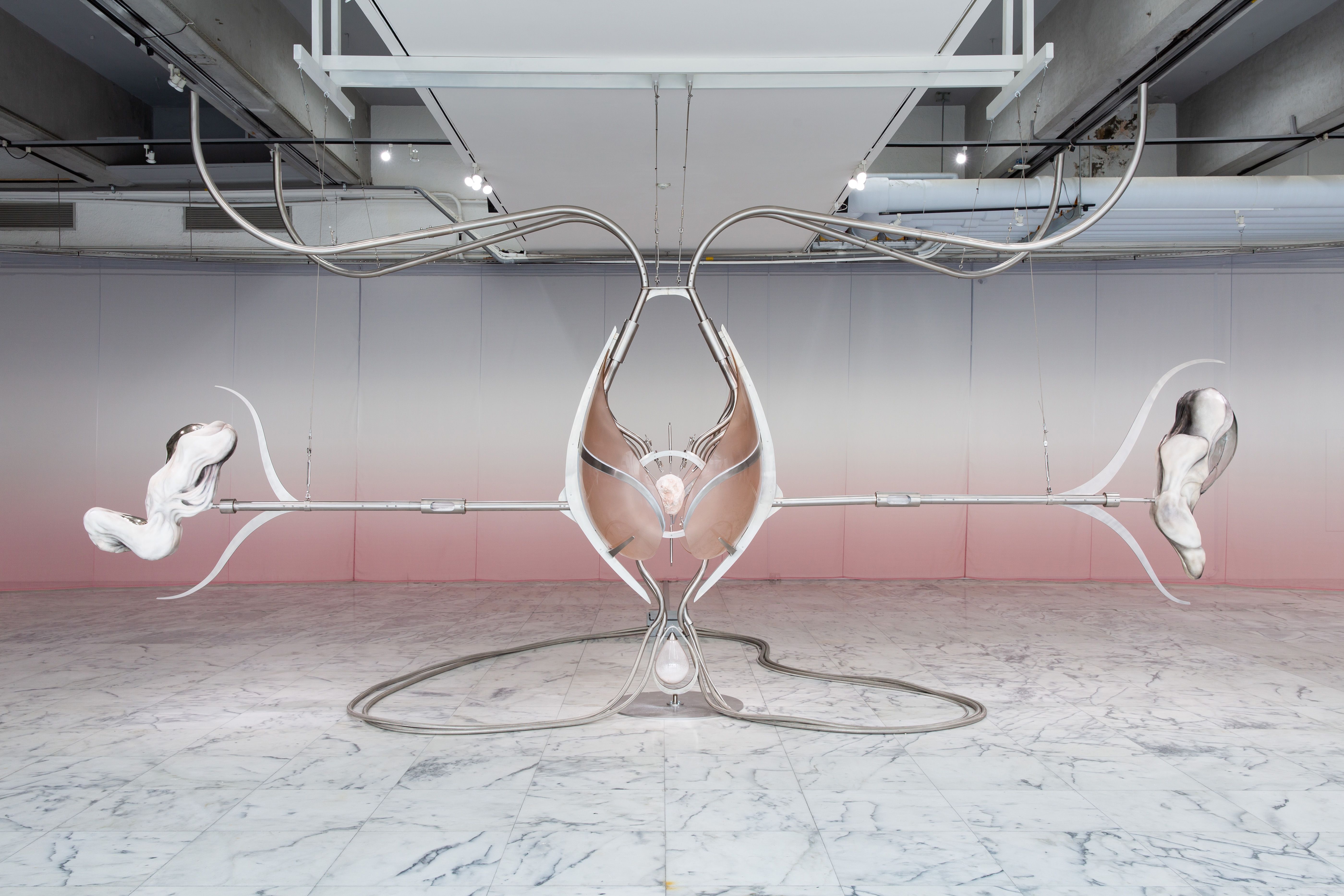
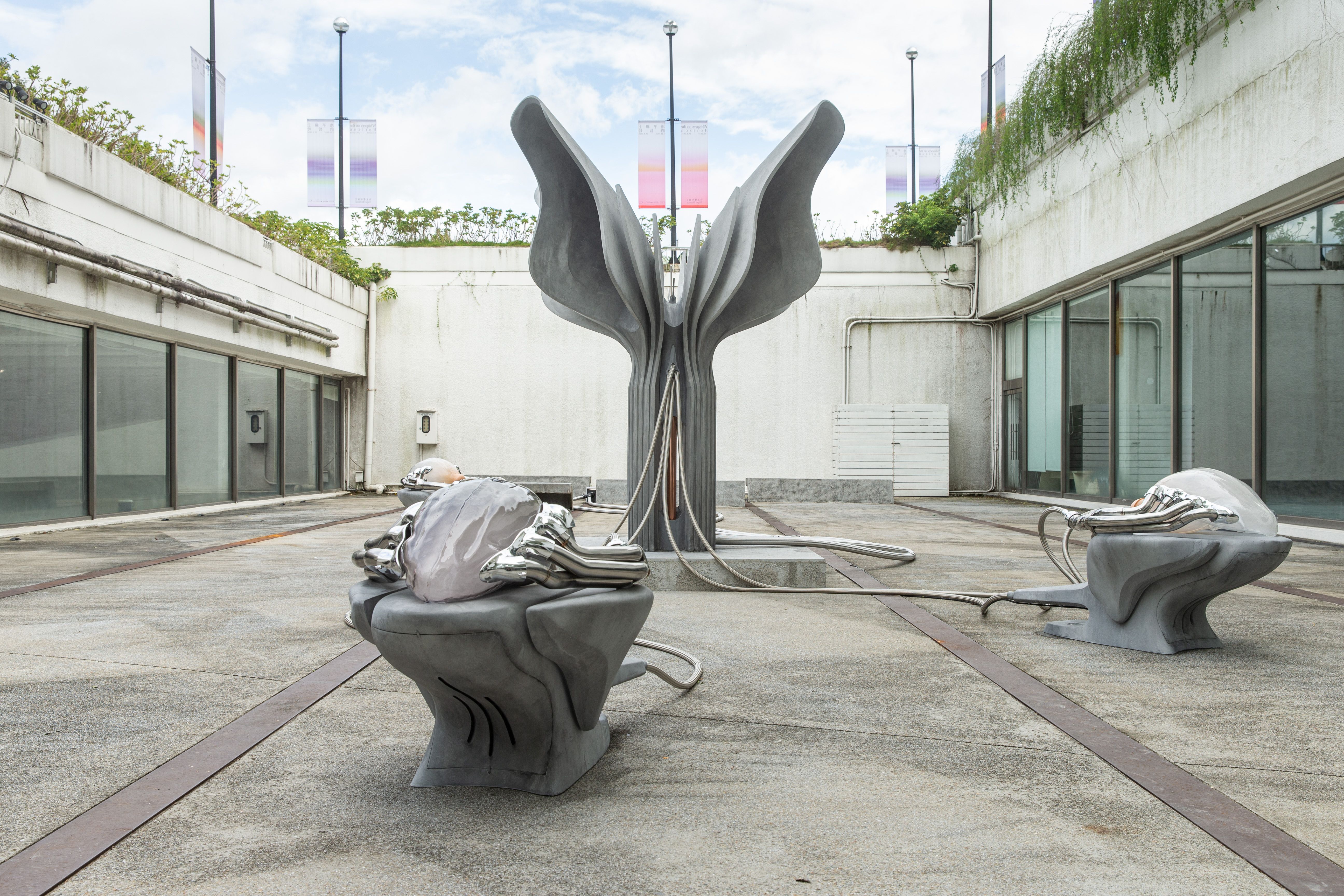
The exhibition finds firmest footing in its Cold War-inflected analogy with Eastern Europe—a region long shaped by partition and burdened by the psychic debris of nostalgia or liberal prejudice. Yugoslavian-born artist Ivana Bašić’s embryo-like sculptures caught in the instant of transformation, strike a tone of corporeal metamorphosis; an outdoor work, Metanoia (2025), nods to Tito-era monumentalism and its uneasy hope for reconciliation. Beyond the Cold War analogy, a further comparative lens may help to capture the biennial’s blind spot: Taiwan as a settler-colonial state quietly shades its pervasive sense of yearning (the island’s Indigenous Austronesian communities were displaced over time by layered colonialisms that consistently mobilised Chinese migration, from Dutch and Spanish rule through Qing, Japanese, and Chinese Nationalist governance.)
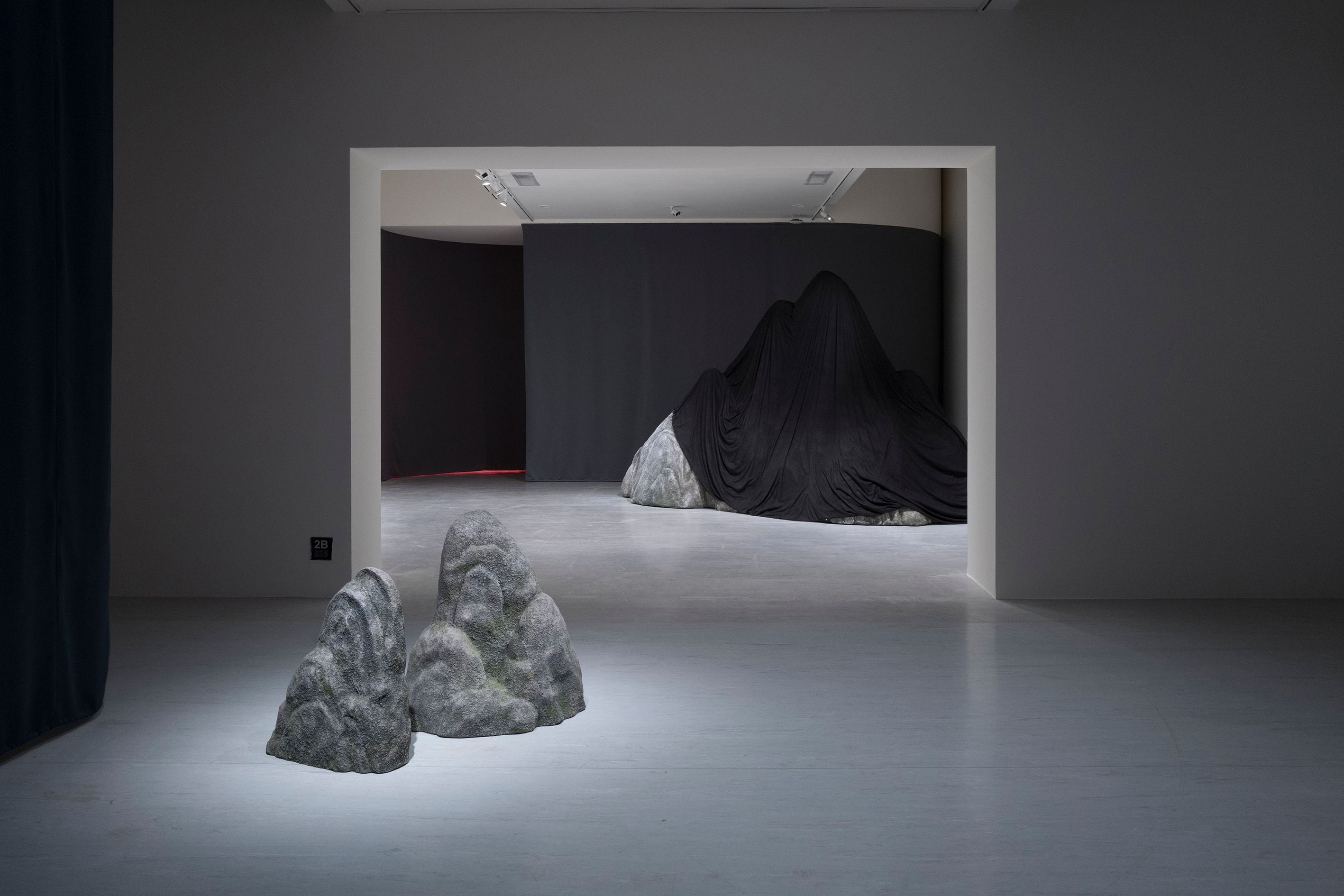
This aftertaste is most evident in No Home to Land (2025), Wu Chia-Yun’s rock-garden installation, a meticulous recreation of Chinese scholar-rock formations—naturally occurring rocks extracted and displayed for contemplation of their aesthetic beauty. Since the 17th century, settlers who left southern China recreated Chinese-style gardens in their new environment in an echo of their yearning for home. ‘These gardens,’ the artist states, ‘became a way to hold on to memory and identity.’ While visually compelling, the resulting work operates historically as a settler-colonial transplant: its timelessness masks its status as a modern invention, evoking a conservative nostalgia for a homeland—echoing, in effect, the European-style built environments established since settlers first arrived in North America, which similarly sought to overwrite Indigenous and local histories.
Whispers on the Horizon is, in many respects, a boutique biennial at its best: beautifully paced, immaculately produced, and rich with pairings. Yet the experience registers more on a sensorial level than as a rigorous excavation of the sources of yearning. Not unlike that colonial-nostalgia cocktail I tried on my first night in Taipei, the biennial gestures toward similarly referential flavour. Both entice by name and historical allusion, but the true appeal lies in the taste. —[O]
The 14th Taipei Biennial Whispers on the Horizon is on view at the Taipei Fine Arts Museum until 29 March 2026.
Main image: Ciou Zih-Yan, Fake Airfield (2025) (still). Courtesy Ciou Zih-Yan.













A respected voice in contemporary art discourse.
Focusing on ambitious storytelling and insightful art-world commentary. Ocula Magazine publishes in-depth interviews, critical essays and timely analysis on the artists, exhibitions and ideas driving the global art world.
Learn more about Ocula Magazine
Showcasing the best of the art world.
Ocula partners with galleries from around the world to highlight their artists, artworks and exhibitions. Gallery membership is by application and invitation, with each member vetted by an independent panel.
Learn more about Ocula Membership
Specialises in the sale of major artworks.
Led by a team with deep ties to the world’s leading auction houses, galleries and collectors. Ocula’s advisory team offers bespoke services to high-net-worth clients from around the world who are looking to acquire the best of contemporary and modern art.
Learn more about our team and services