





Everyday Practices: Artists Confront Adversity
At Singapore Art Museum, artists use routines, repetition, and endurance as expressions of resistance and resilience. Save to My OculaAt Singapore Art Museum, artists use routines, repetition, and endurance as expressions of resistance and resilience.
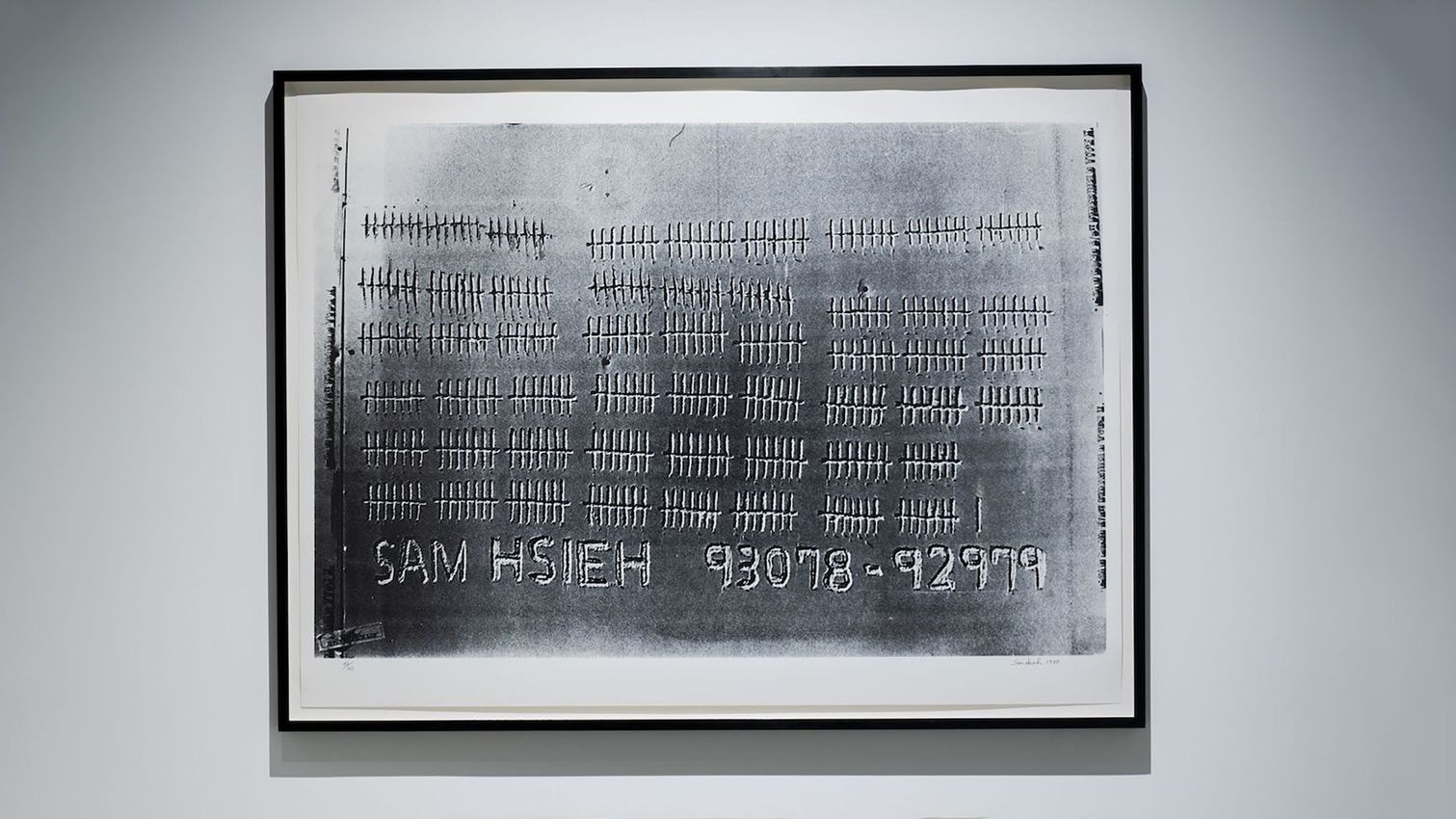
In 1978, artist Tehching Hsieh imprisoned himself in his New York apartment, embarking on a year of solitary confinement. This act formed the basis of One Year Performance (1978–1979) (1978–1979), the first in a series of five, year-long durational artworks. Adopting a specific set of conditions and rules, the artist used his daily existence and the passage of time as both the medium and subject of his art.
Documentation of Hsieh’s performance—a print of the notches he etched into a wall to mark each day of his confinement—introduces Everyday Practices at Singapore Art Museum (SAM). Presented in a new gallery space specifically dedicated to showing SAM’s collection, the exhibition reflects the institution’s commitment to artists from Asia and the depth and breadth of its holdings. Taking Hsieh’s philosophical approach as a springboard, the show brings together works by 19 artists and one collective to examine how artists have appropriated the routines of daily life to make poignant statements on the capacity of humans to endure.
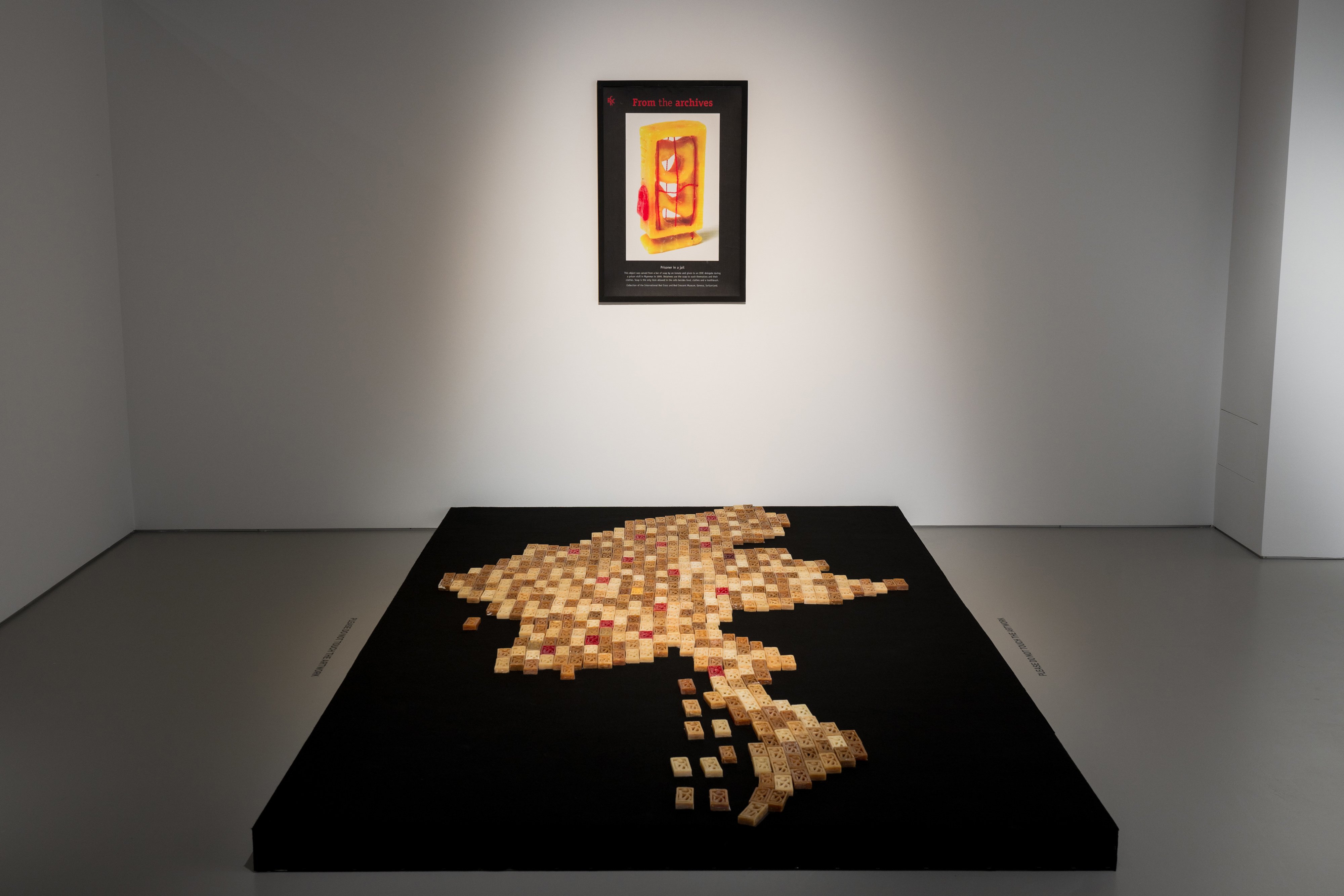
Many artists in the show address personal and collective trauma in their work, grappling with ongoing conflicts, humanitarian crises, and asymmetrical power relationships. Burmese artist Htein Lin, incarcerated in his home country for political dissent between 1998 and 2004, presents a map of Myanmar made from soap blocks on the gallery floor (Soap Blocked, 2016). Within each bar appears a tiny, entrapped figure; red blocks mark the sites where political prisoners have been held. Also hailing from Myanmar, Min Thein Sung transforms a pollutant in our everyday environments—dust—into art. Time: Dust (2017–2019) was created by allowing fine particles to accumulate on canvases in tropical humidity, gradually coalescing into precise geometric shapes. With their subtle tonal gradients and sharply delineated forms, Min’s works reference the march of time and offer a moment of respite that contrasts with the turbulence of Myanmar’s troubled history.
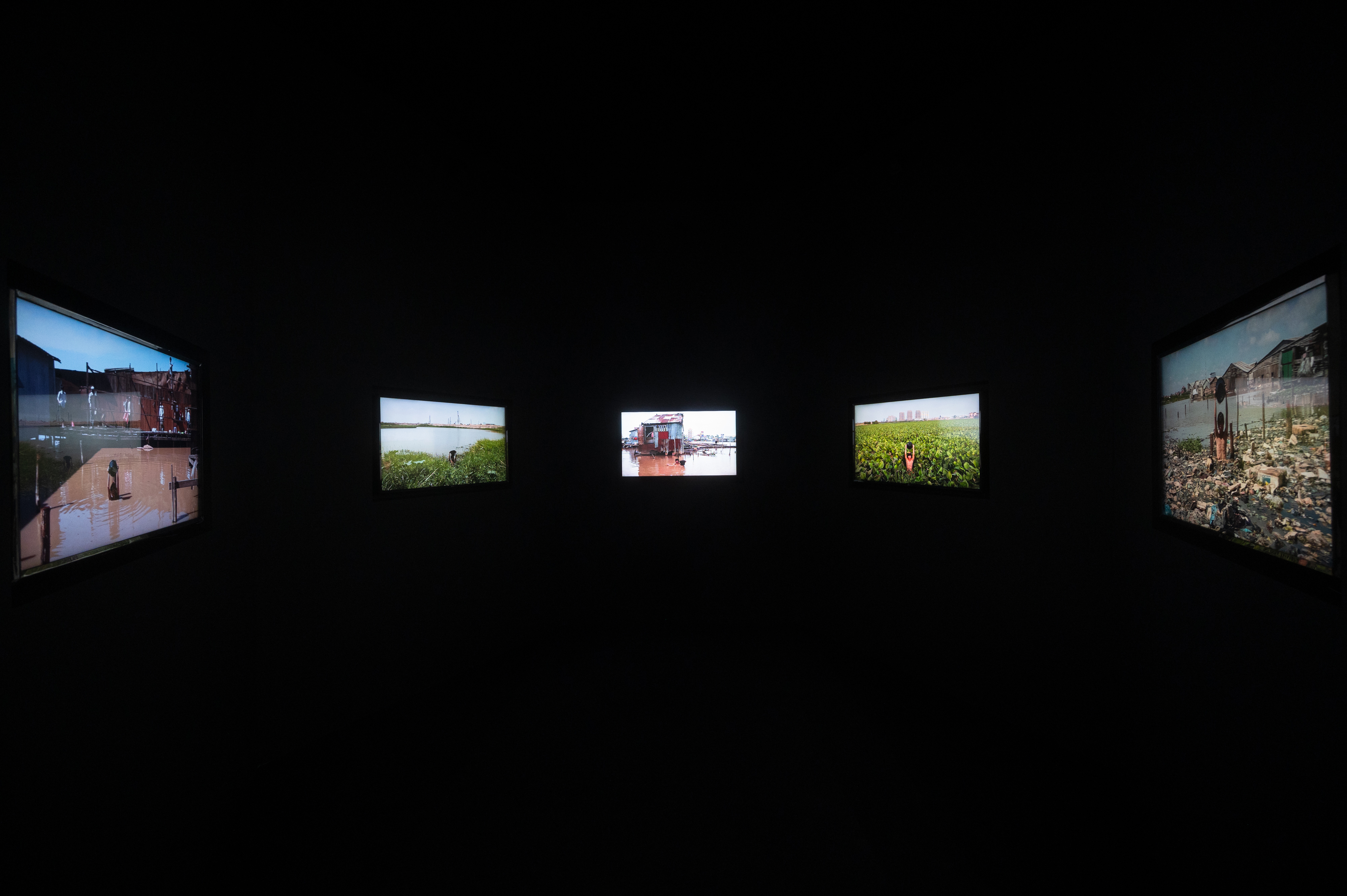
Khvay Samnang‘s five-channel video Untitled (2011–2013) reflects a sense of collective helplessness while acknowledging art as a site of resistance. In the videos, the artist is shown repeatedly pouring a bucket of sand over his head and partially submerged in government-owned lakes sold to private enterprises in Cambodia. His seemingly futile actions allude to the stark realities of these transactions—notably, the displacement of local communities and the degradation of the natural environment that follows.
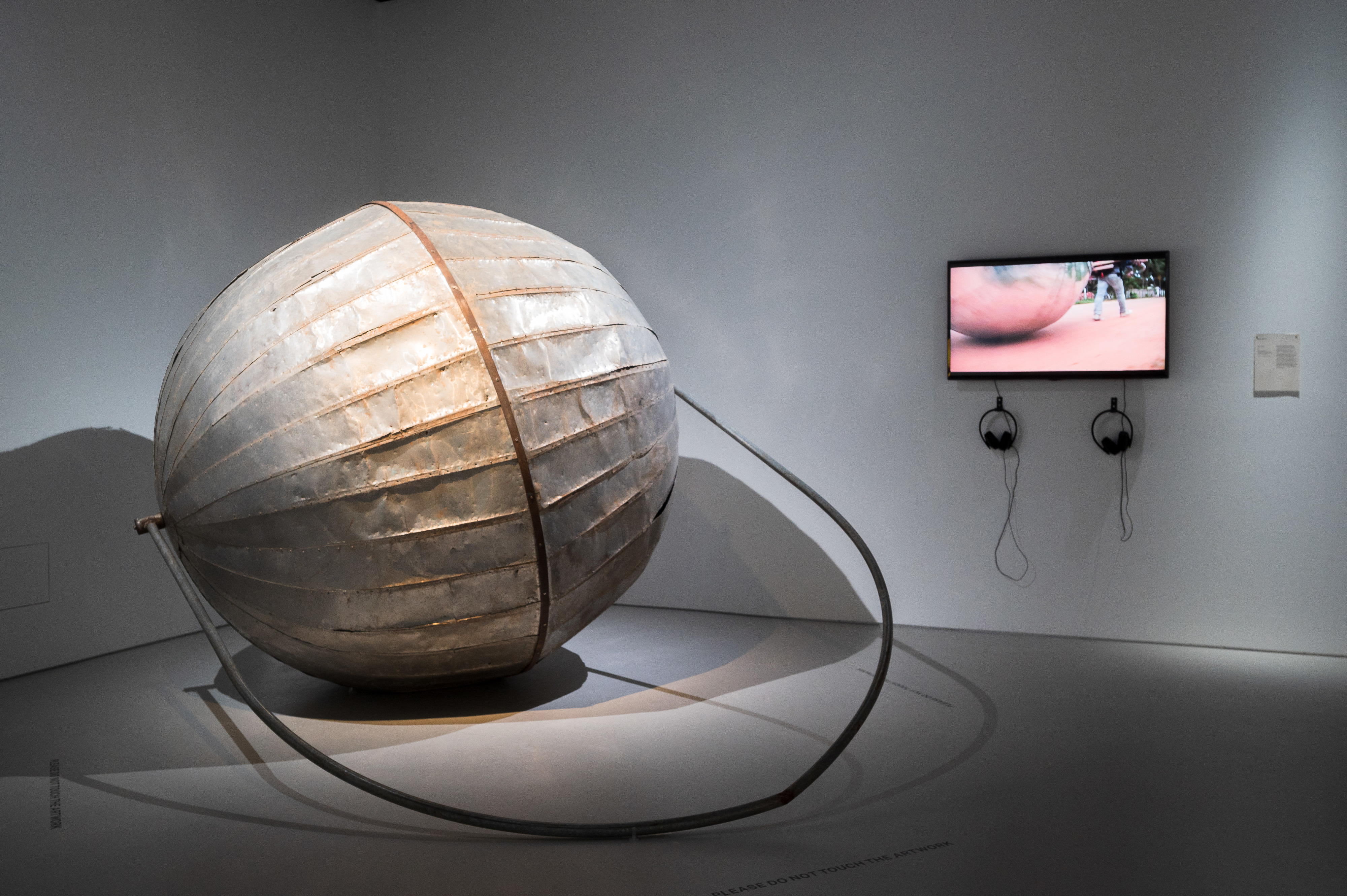
Svay Sareth addresses an earlier period of Cambodian history in Mon Boulet (2011), featuring an 80-kilogramme metal sphere with an accompanying video that documents the artist’s gruelling 250-kilometre journey dragging the orb from his home in Siem Reap to Phnom Penh over six days. The performance evokes the forced labour imposed by the Khmer Rouge, whose rule led to the deaths of more than 1.5 million Cambodians between 1975 and 1979, while simultaneously highlighting the capacity of the human spirit.
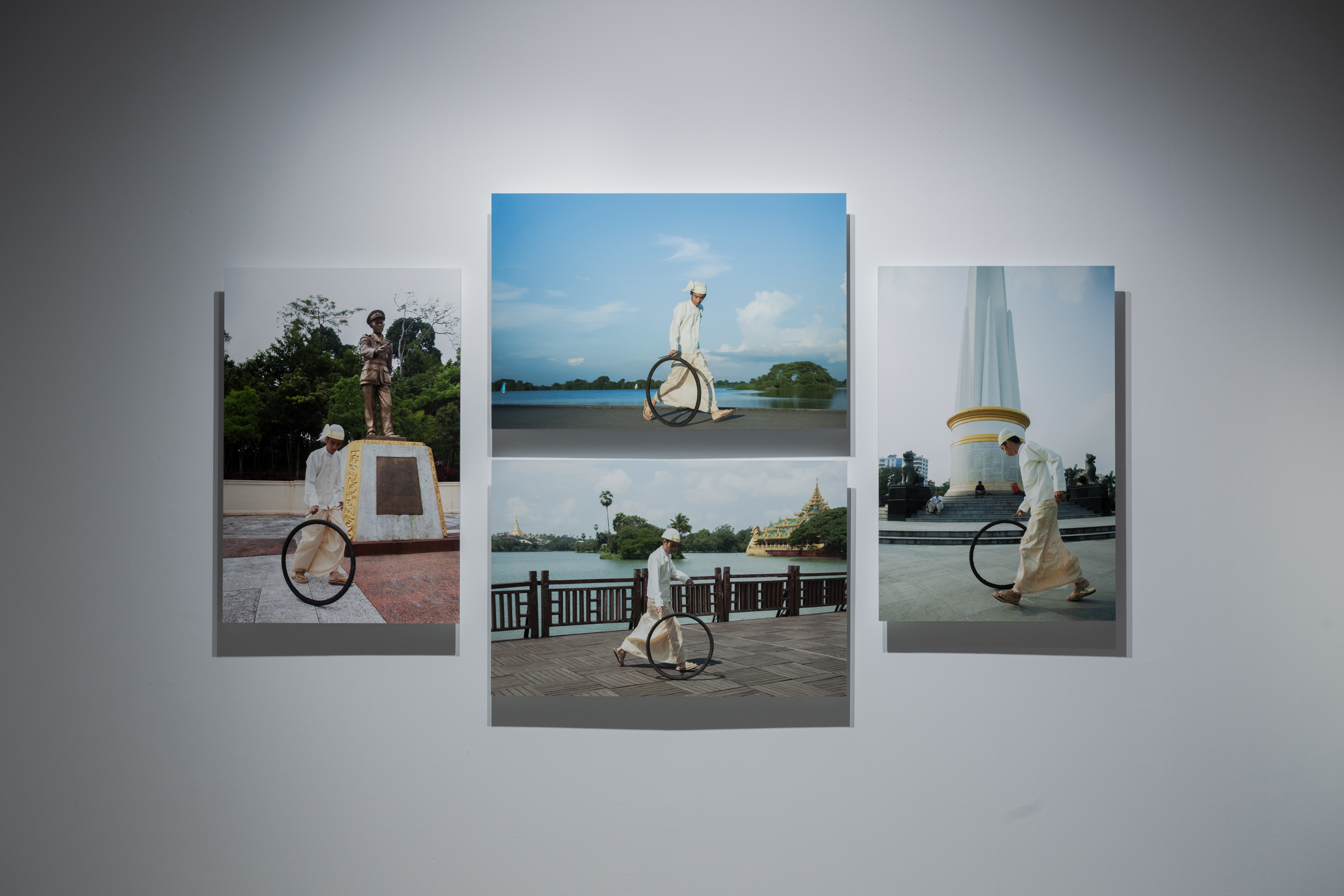
A similar act of protest is captured in Moe Satt‘s photographic series, Bicycle Tyre Rolling Event from Yangon (2013). Dressed in the traditional Burmese attire often worn by politicians, the artist is pictured playing a tyre-rolling game popular with children in Myanmar while the country was under a military regime. Concealed within his playful actions is an allusion to the exclusion of citizens from political decisions. By photographing himself at historically significant sites, such as in front of a bronze statue commemorating the Burmese revolutionary hero Bogyoke Aung San, Satt revisits this turbulent period, embedding political critique within an act of play.
In Static Friction: Burning Rubber (2012), The Propeller Group also employs street games as a form of defiance and commentary on Vietnam’s socioeconomic landscape. The work features a rider repeatedly spinning a scooter’s wheels in a stunt called ‘a burnout’—typically associated with luxury vehicles—generating smoke plumes and black rubber trails on the asphalt. This act, evoking both repetition and a sense of exhaustion, suggests the weariness of relentless cycles of resistance.
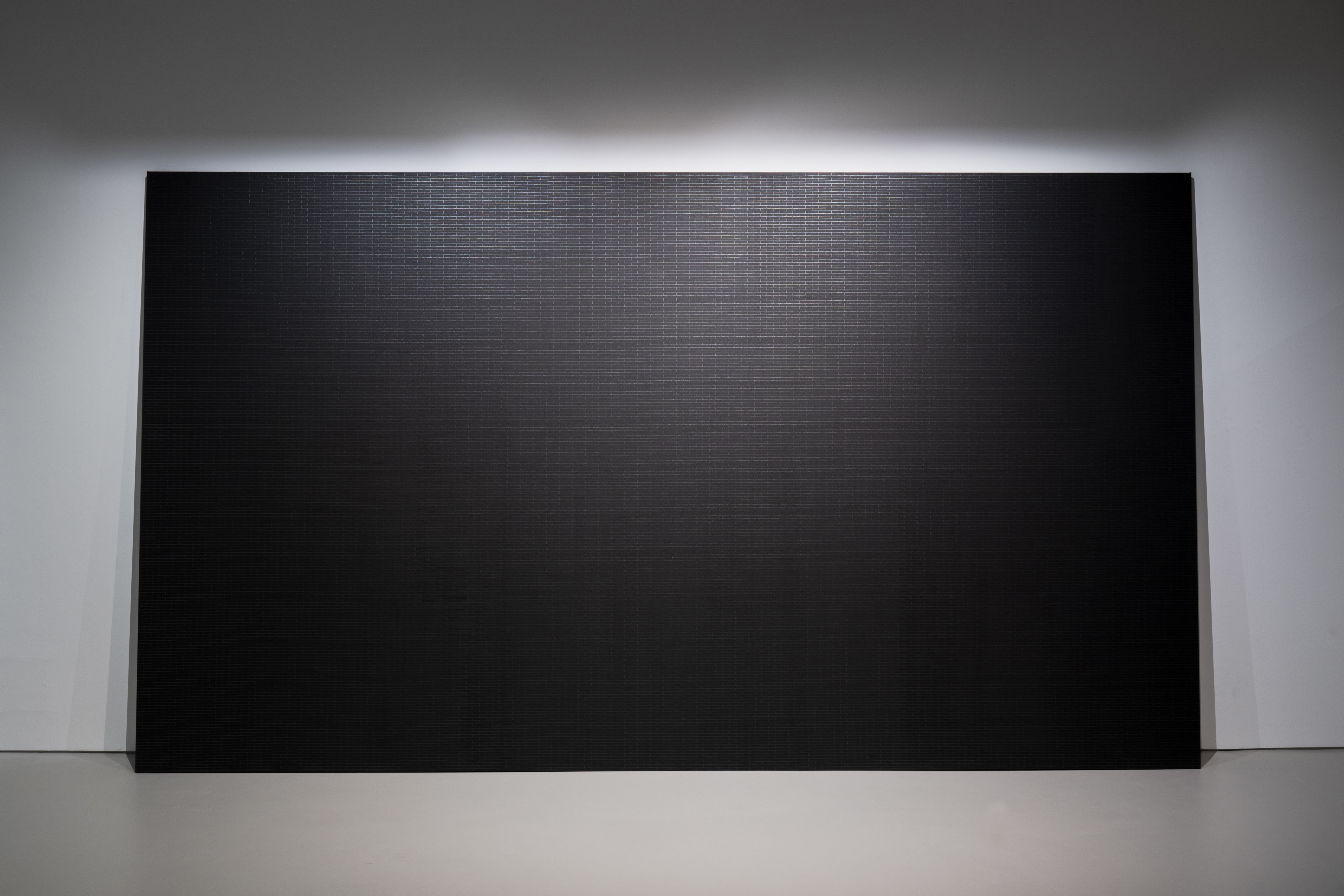
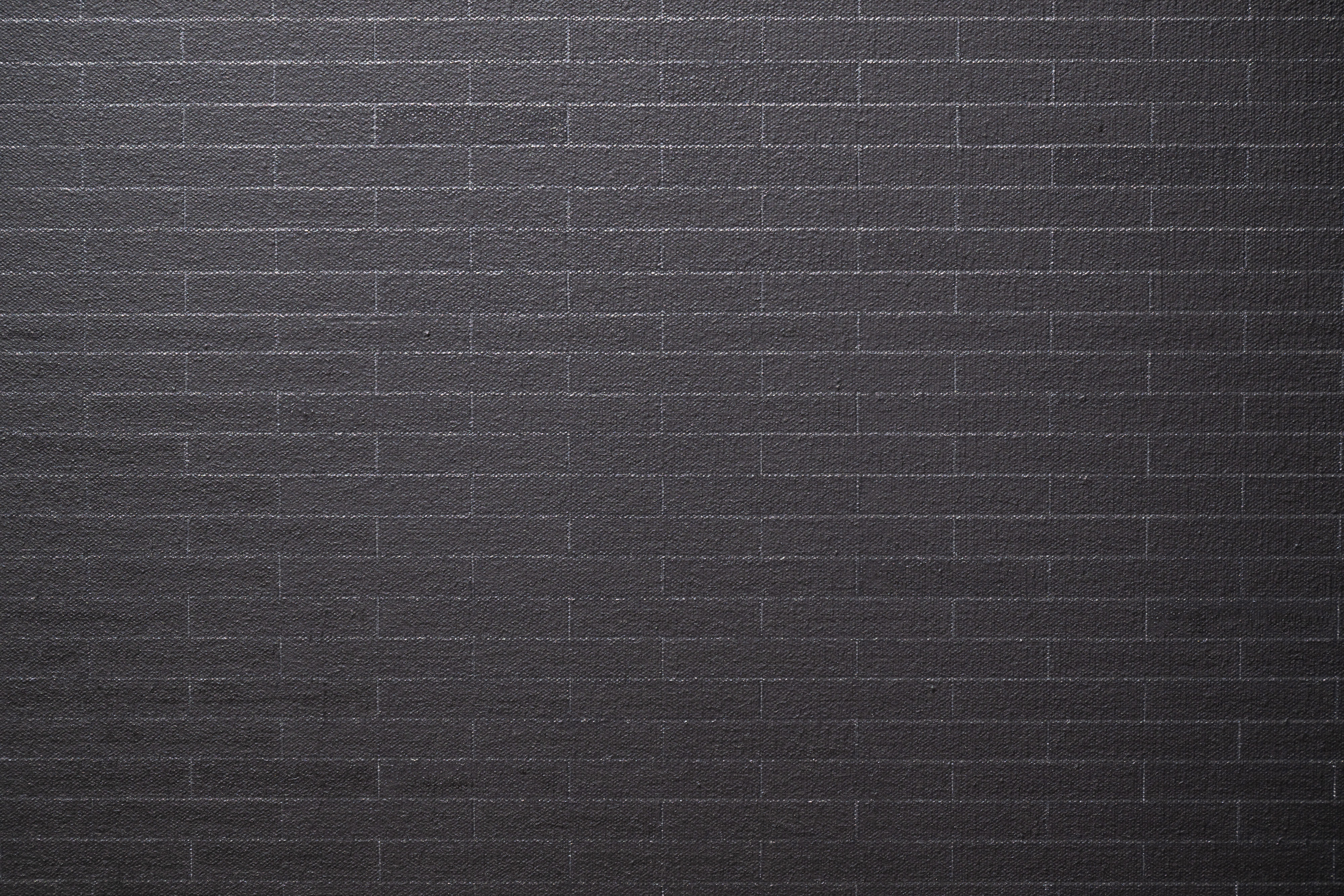
Throughout the show, repetitive actions and marks are used by artists to different effects. The monochromatic surface of Maria Taniguchi‘s large-scale canvas Untitled (2017) is densely packed with modular building blocks, first outlined in graphite and then painted with a black acrylic wash. In a 2016 interview with Ocula, Taniguchi described these works as ‘a confrontation’ and ‘not Zen’. For Taniguchi, creating art is a deeply engaging process filled with intense focus and emotional struggle, rather than a calm and passive experience.
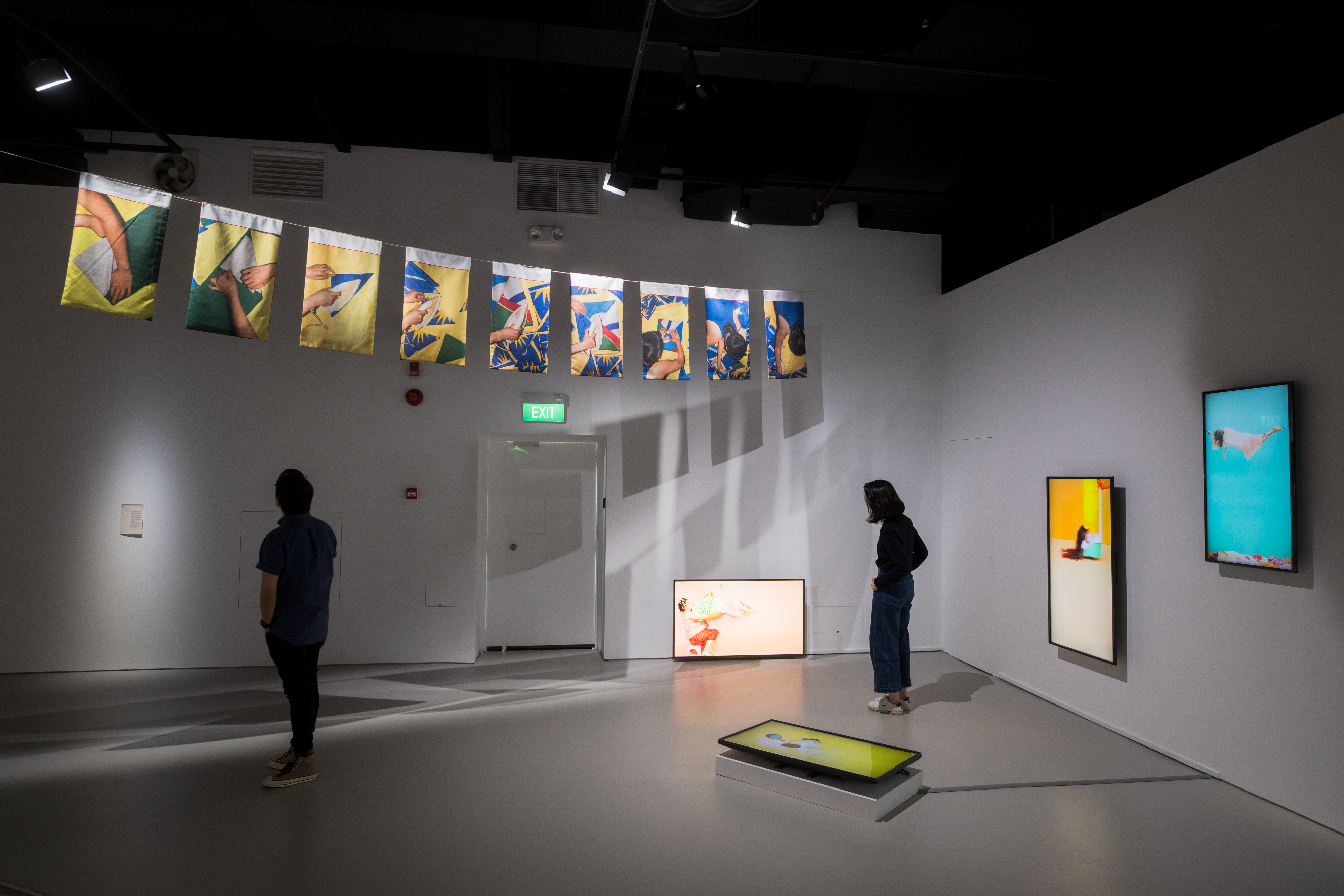
More obviously ‘not Zen’ is Kawita Vatanajyankur‘s candy-coloured video series ‘TOOLS/WORK’ (2012–2014), in which the artist assumes the role of various domestic objects and mirrors the pressure on women to conform to societal stereotypes. Wet Rag (2012), for instance, screened on a monitor laid flat on the gallery floor, shows her body being violently rolled back and forth against a vivid yellow background.

Reflecting on the association between masculinity and governance, Minstrel Kuik’s Domesticated Politics (2015) sees the artist ironing and folding flags promoting Malaysian political parties during the country’s 2013 General Elections; her actions, documented in images printed onto nine pillowcase-shaped fabrics that hang on a laundry line, further ‘domesticate’ the political.
Another ceiling-hung work is Wong Hoy Cheong‘s Tapestry of Justice (1999–2004), a two-metre-high installation containing more than 10,000 photocopies of thumbprints gathered by the artist during Malaysia’s Reformasi movement in the late 1990s as a protest against legislation that enabled police to arrest and detain citizens without a warrant.
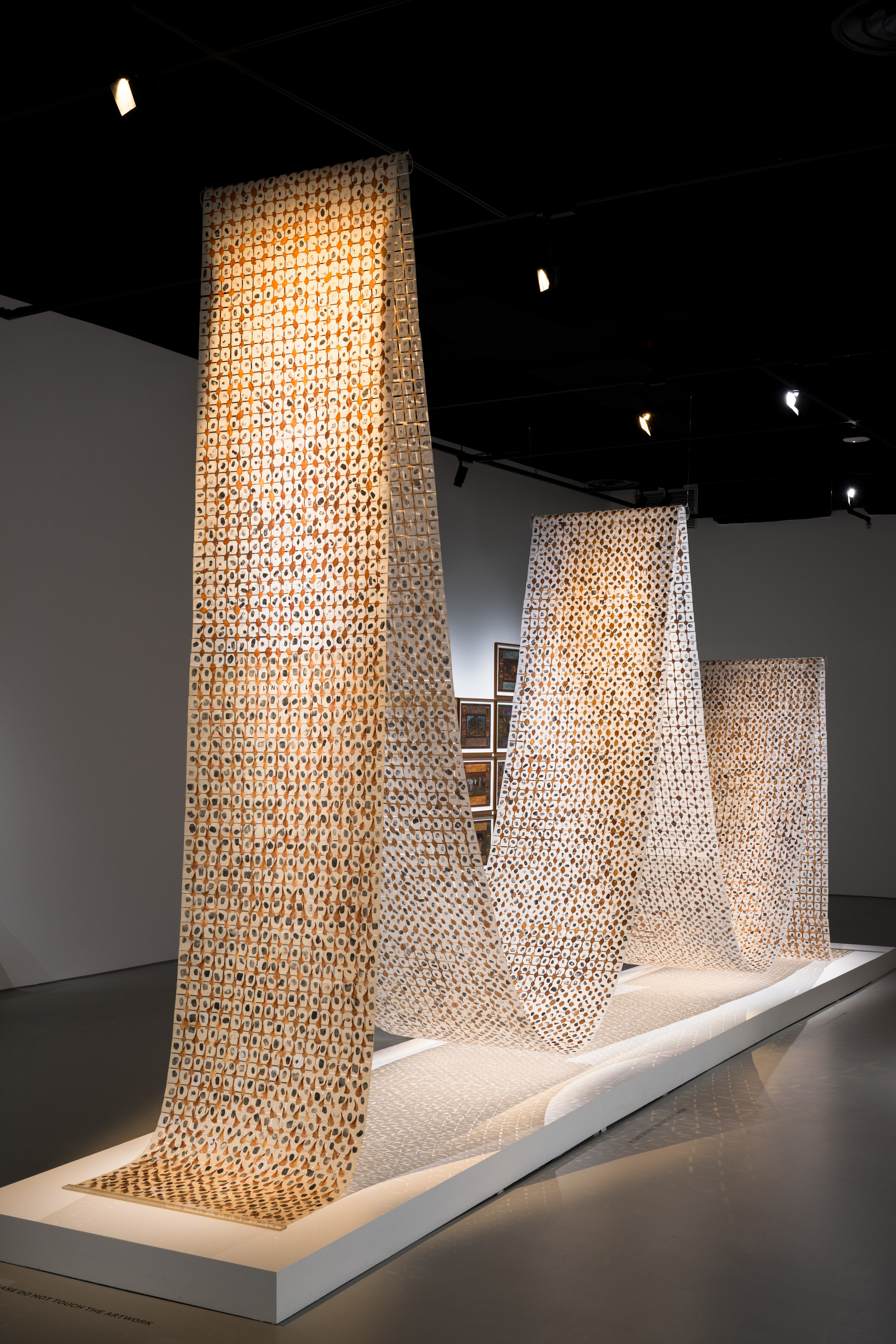
The result is a delicate and evocative installation incorporating hibiscus flowers and leaves, symbolising Malaysian independence, using markers commonly associated with identification and criminality. The work intertwines personal identity with political resistance, making a powerful statement about the transformative power of collective action when individuals come together for a shared cause.

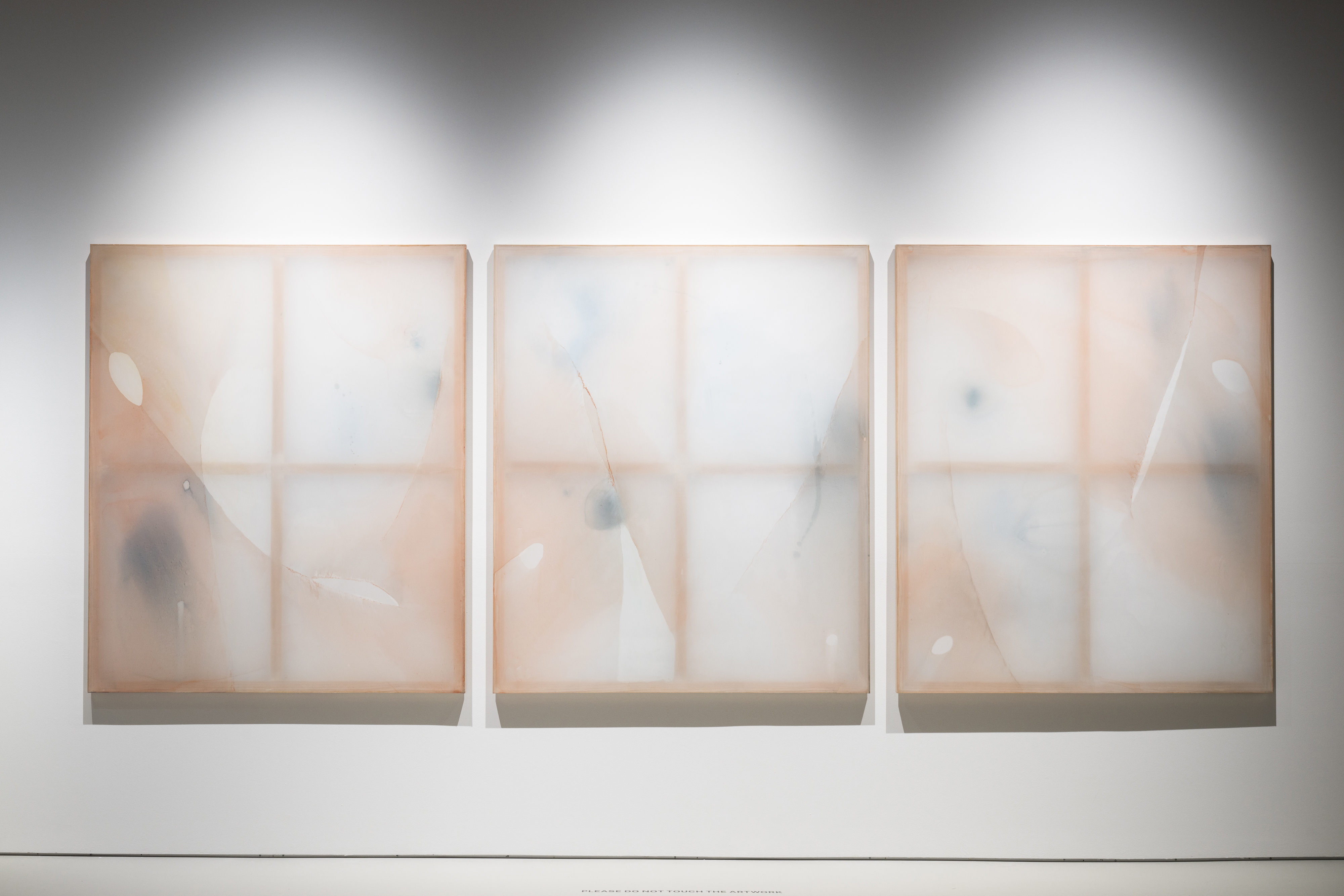
Throughout the show, works speak to the shared frailties of the human condition but also to the everyday heroism that ordinary people undertake in surviving and persevering through life’s trials. Using various physical gestures such as shifting, tilting, and turning, Guo-Liang Tan’s Peripheral Ritual I–III (2018)—three paintings made with thinned paint on aeronautical fabric—creates amorphous hues that evoke the appearance of bruised skin. Imhathai Suwatthanasilp’s lightbox installation The Flower Field (2012) features donated hair meticulously hand-spun into floral forms placed on a bedframe, while Jerome Kugan’s ‘The Internalised Self’ series (Atlas, Apollo, Icarus, Ganymede) (2018) contends with the artist’s HIV-positive status, in which androgynous figures are rendered against a crimson backdrop made from recycled cartons of antiviral medication.
A poignant suite of exquisite ink drawings by Malaysian artist Tengku Sabri Tengku Ibrahim reveals—with raw and unflinching honesty—the aftermath of a debilitating stroke he suffered in 2014, which left him paralysed in the left side of his body. He learned to draw with one hand and completed a series of finely detailed portraits, Kumpulan Lukisan-Lukisan Gelap (A Suite of Dark Drawings) (2015). The brooding, contemplative nature of these works mirrors the sombre reality of his struggle and the emotional and physical toll of illness. One figure, missing the left side of its body, nods to the work’s autobiographical nature. The series attests to Ibrahim’s perseverance in adversity and the strength of the human spirit more broadly.

While the artists in this exhibition might hail from different generations and regions, they share an understanding of artistic practice as a means of making sense of the world and coping with its travails, providing an array of responses to the fundamental question: ‘In the face of life’s challenges, how do we go on?’ —[O]
Everyday Practices runs until 20 July 2025 at Singapore Art Museum at Tanjong Pagar Distripark, Level 3, Gallery 4.
Main image: Tehching Hsieh, One Year Performance 1978–1979 (1978–1979) (detail). Exhibition view: Everyday Practices, Singapore Art Museum at Tanjong Pagar Distripark (30 August 2024–20 July 2025). Courtesy Singapore Art Museum.






A respected voice in contemporary art discourse.
Focusing on ambitious storytelling and insightful art-world commentary. Ocula Magazine publishes in-depth interviews, critical essays and timely analysis on the artists, exhibitions and ideas driving the global art world.
Learn more about Ocula Magazine
Showcasing the best of the art world.
Ocula partners with galleries from around the world to highlight their artists, artworks and exhibitions. Gallery membership is by application and invitation, with each member vetted by an independent panel.
Learn more about Ocula Membership
Specialises in the sale of major artworks.
Led by a team with deep ties to the world’s leading auction houses, galleries and collectors. Ocula’s advisory team offers bespoke services to high-net-worth clients from around the world who are looking to acquire the best of contemporary and modern art.
Learn more about our team and services