





High Season on Hydra with Dakis Joannou
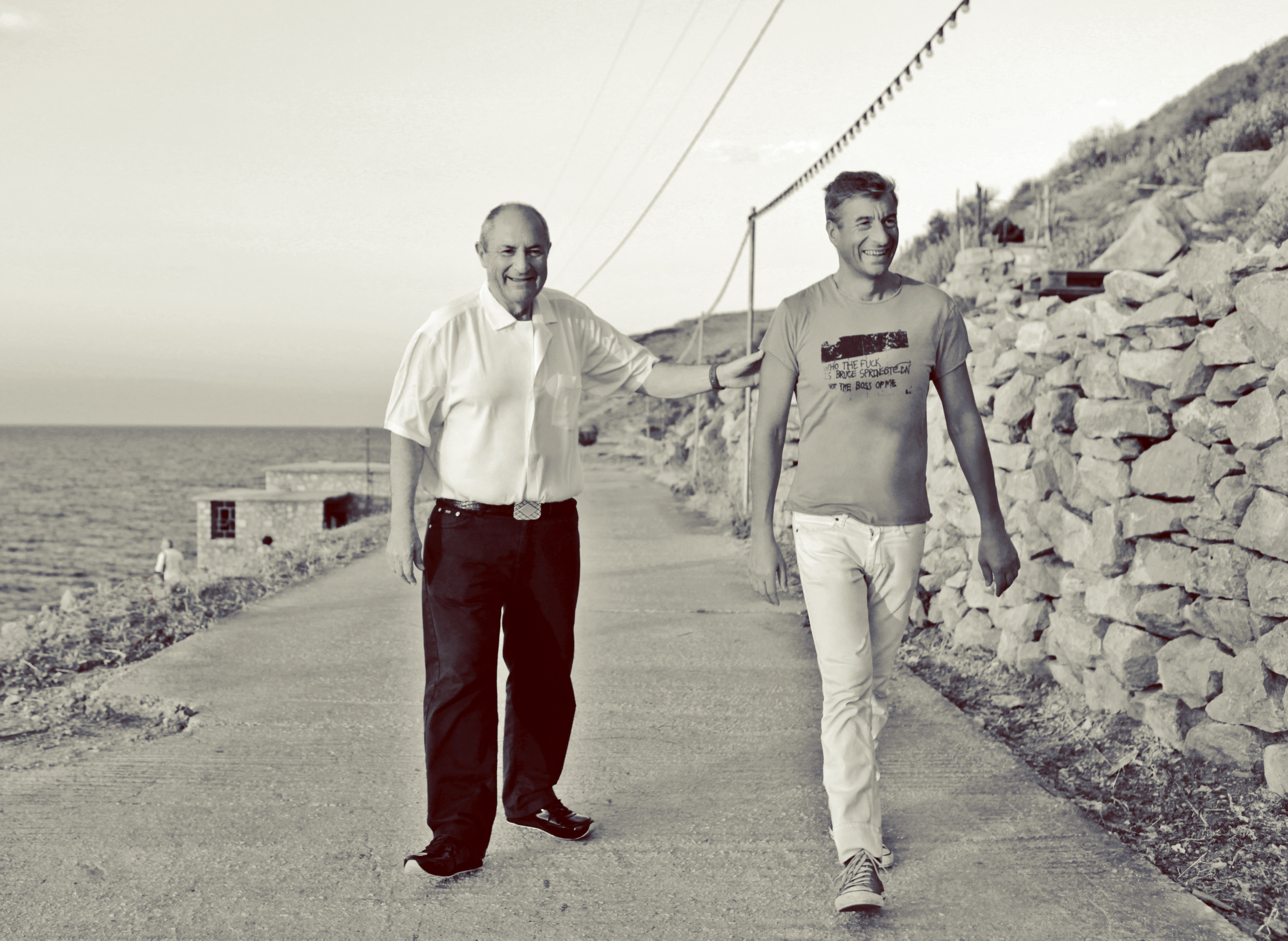
The Greek Cypriot collector talks to Ocula about DESTE’s latest Andra Ursuța show and the continued lure and magic of the Foundation’s project space on Hydra. Save to My OculaDetermined. Artistic. Kamikaze. Inventive. Sexy. That’s how Italian artist Maurizio Cattelan once described his friend, the Greek Cypriot art collector Dakis Joannou. The two first met in the late 1990s, when they were introduced by British art dealer Anthony d’Offay. The meeting prompted a lasting friendship and the beginning of Joannou’s growing collection of Cattelan’s work.
It’s a familiar story for all the artists in Joannou’s collection—Ashley Bickerton, Peter Halley, Jeff Koons, Kiki Smith, Kaari Upson: friends first, collection second. It was only after meeting Koons in his studio near Wall Street in the mid-1980s that Joannou decided to commit to the purchase of One Ball Total Equilibrium Tank (1985)—a single basketball suspended in a glass tank, and the artwork that would launch what is now considered one of the world’s most significant contemporary art collections. Today, Joannou is godfather to one of Koons’ children.
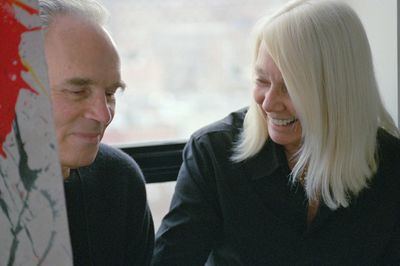
‘The relationships are what binds the whole thing together,’ explains Joannou. ‘The relationships and the works of art, with me in the middle.’
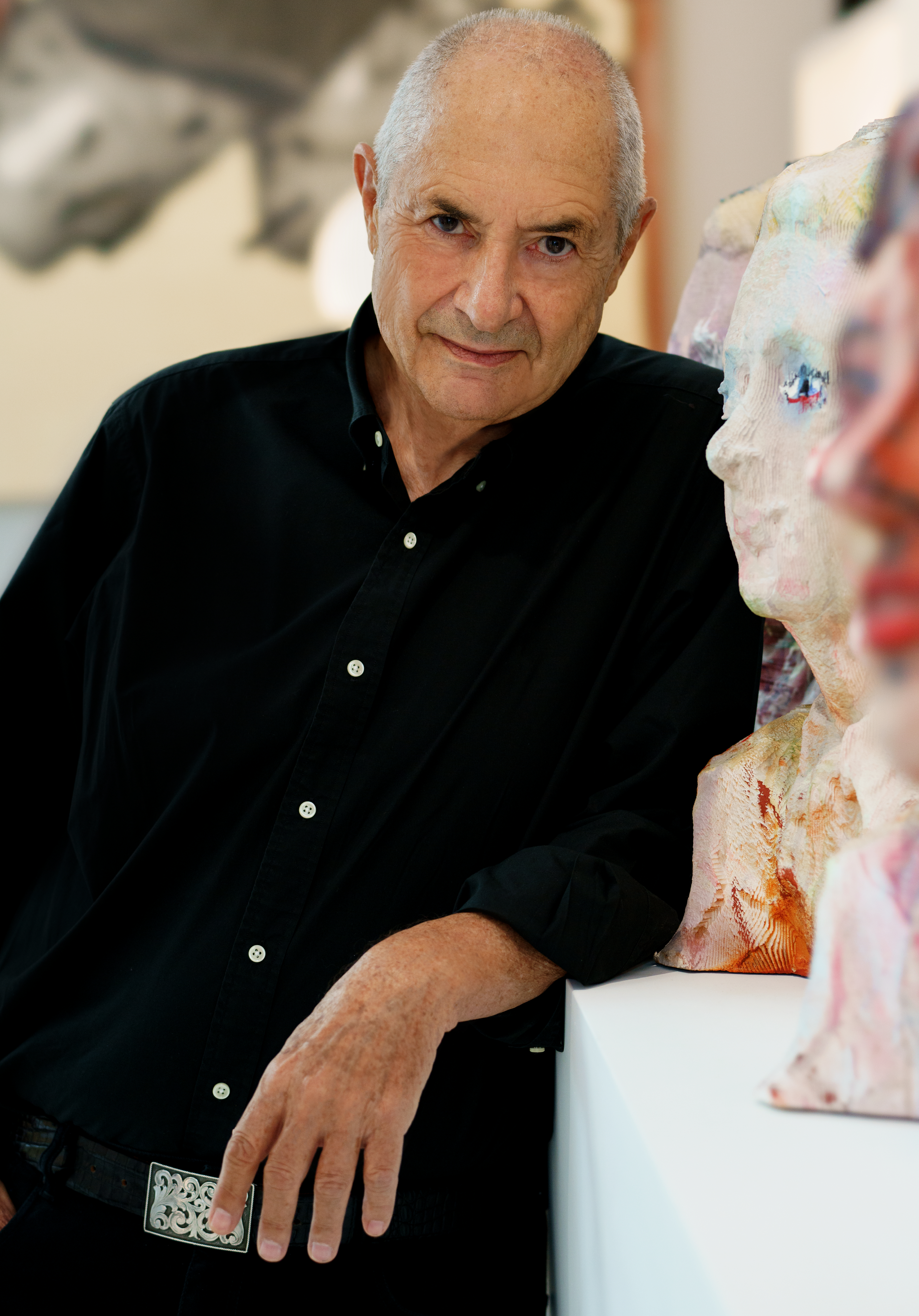
Before his collection began to take shape, Joannou had already laid the groundwork for his role in contemporary art. The 85-year-old industrialist established the DESTE Foundation for Contemporary Art in 1983. Based in Athens, the non-profit was originally intended to support emerging artists in Greece, Cyprus, and Switzerland. As the collection grew, so too did DESTE’s mission. What began as a support structure evolved into a platform for staging exhibitions, commissioning new works, and awarding a biennial prize to a Greek artist. In 2009, Joannou expanded DESTE’s reach to the Saronic island of Hydra, transforming a former abattoir into a summer project space known simply as the Slaughterhouse. Perched above the sea on a rocky bluff, it has hosted annual solo exhibitions by artists from his collection ever since. This year, Andra Ursuța got the call-up.
The Romanian American artist was introduced to Joannou by the gallerist Jeffrey Deitch at Art Basel in 2014. There, he acquired Orthodoctinator (2014), a whacking great freestanding sculpture featuring a row of 1950s-style hairdryers nested beneath steep spires, echoing the witch-hat rooftops of Transylvania. Equal parts devotional and domestic, the work channels Ursuţa’s trademark blend of absurdity and function—what she has called a distinctly Romanian strain of strange utilitarianism. Since that encounter, Joannou has become a committed collector of her work, drawn to the dark symbolism and emotional weight of her sculptures and installations, which confront the vulnerability of the human form and the complexities of desire.
‘The way I look and decide and connect with pieces is very complicated and emotional,’ Joannou explains. ‘I don’t think like a museum; my decisions are not informed by art history. The artists in this collection tell their own story; but it is one of universal interest and universal value. It’s a collection built on relationships, understanding, and connection.’
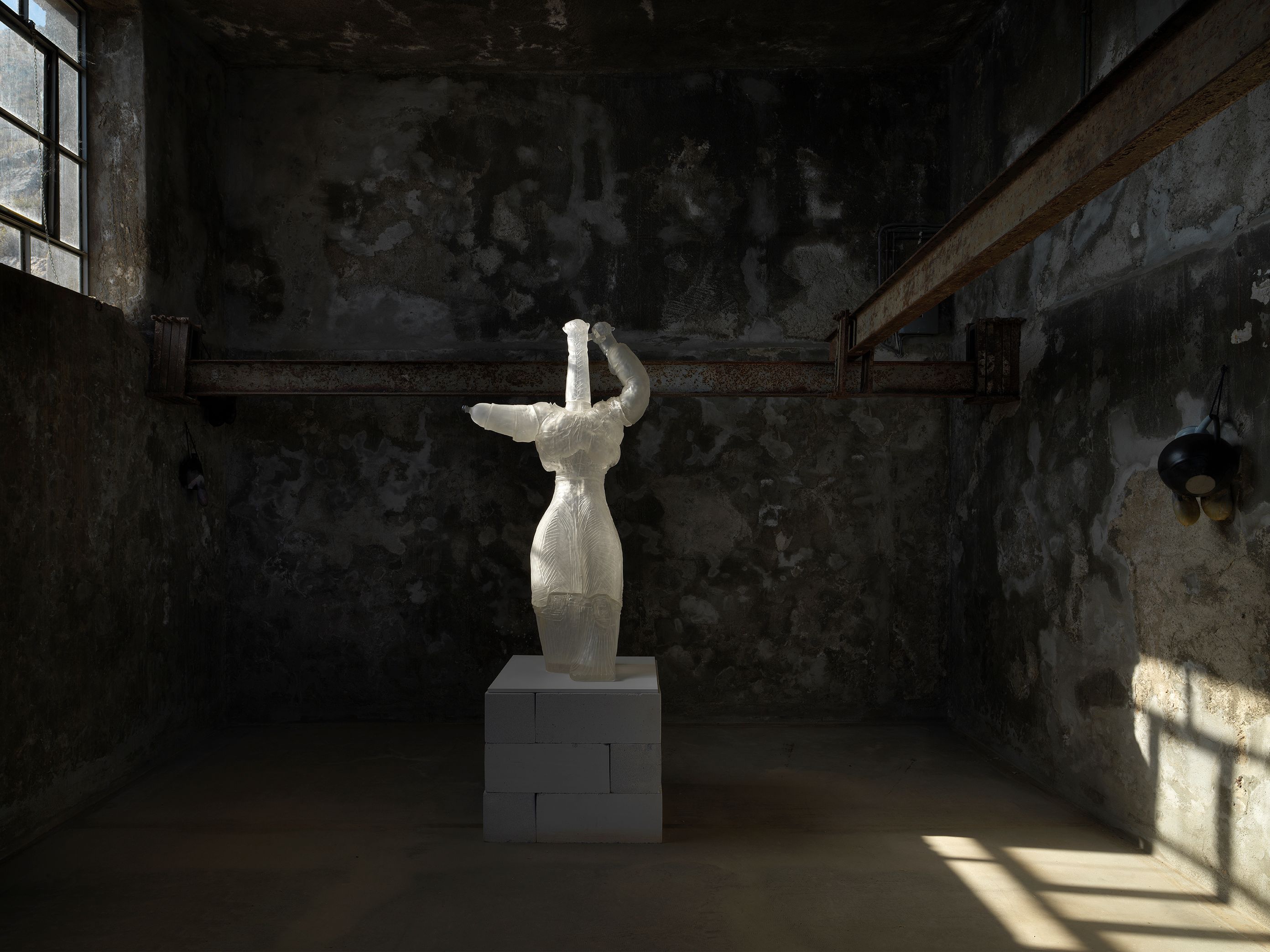
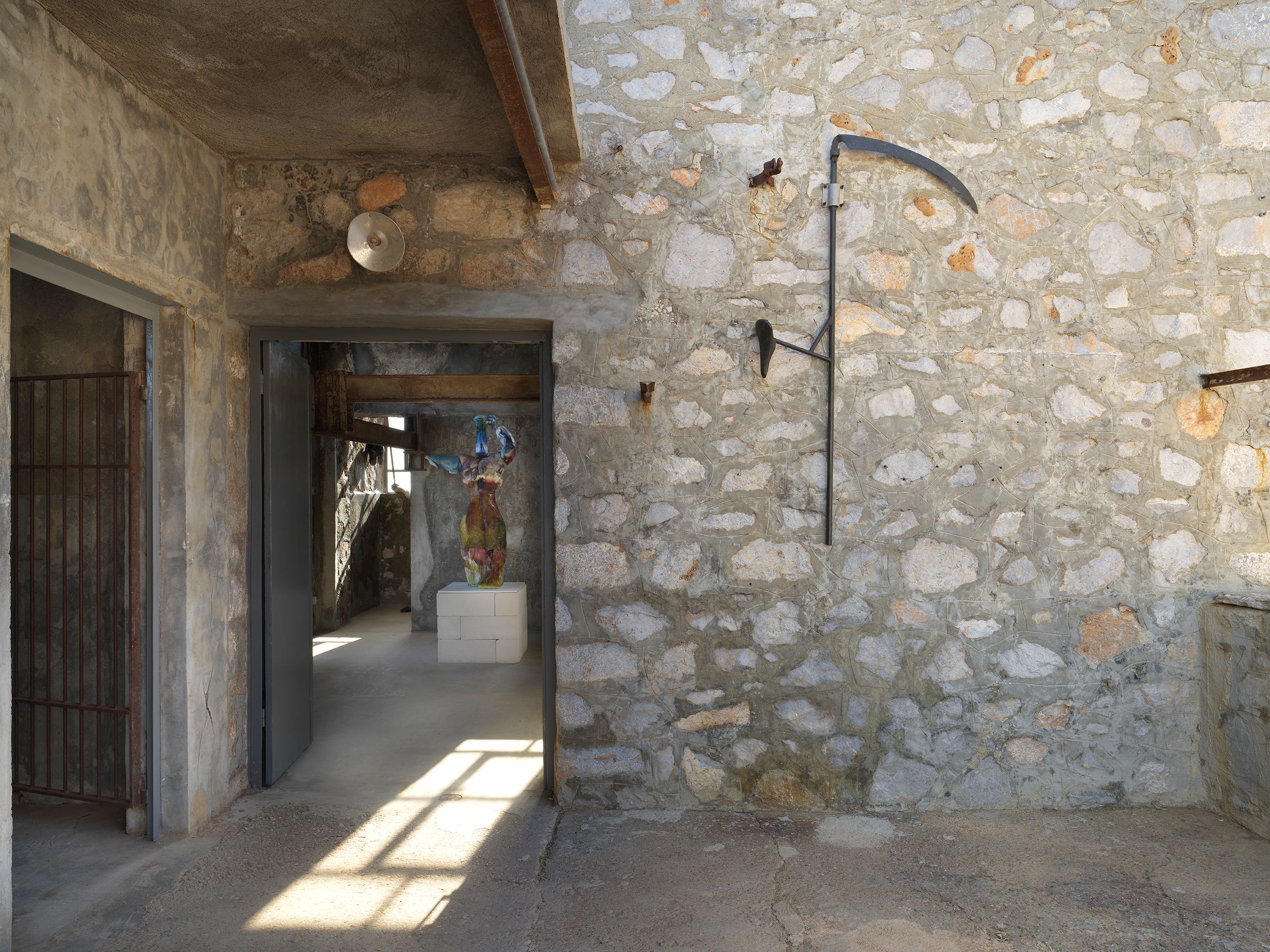
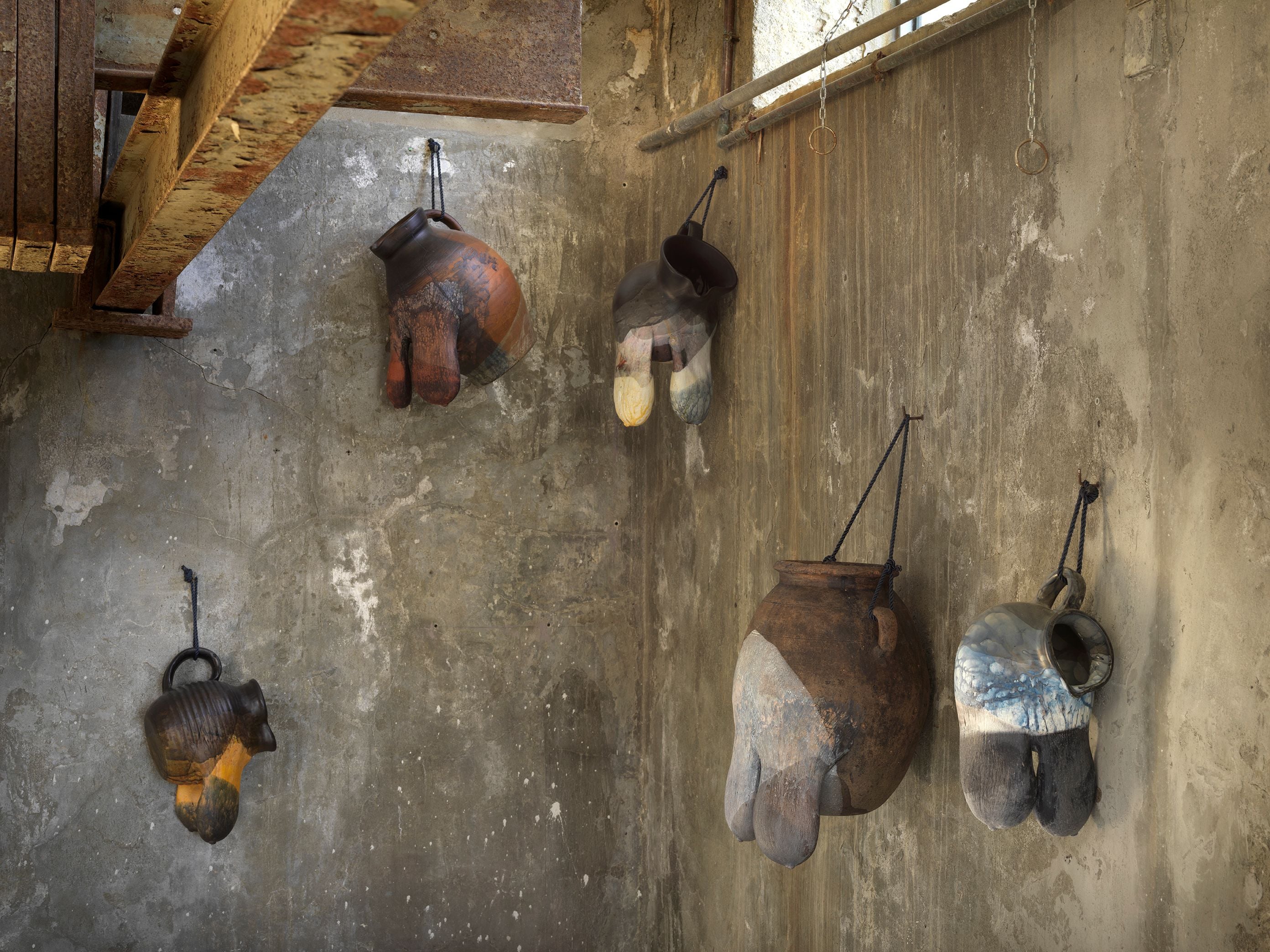
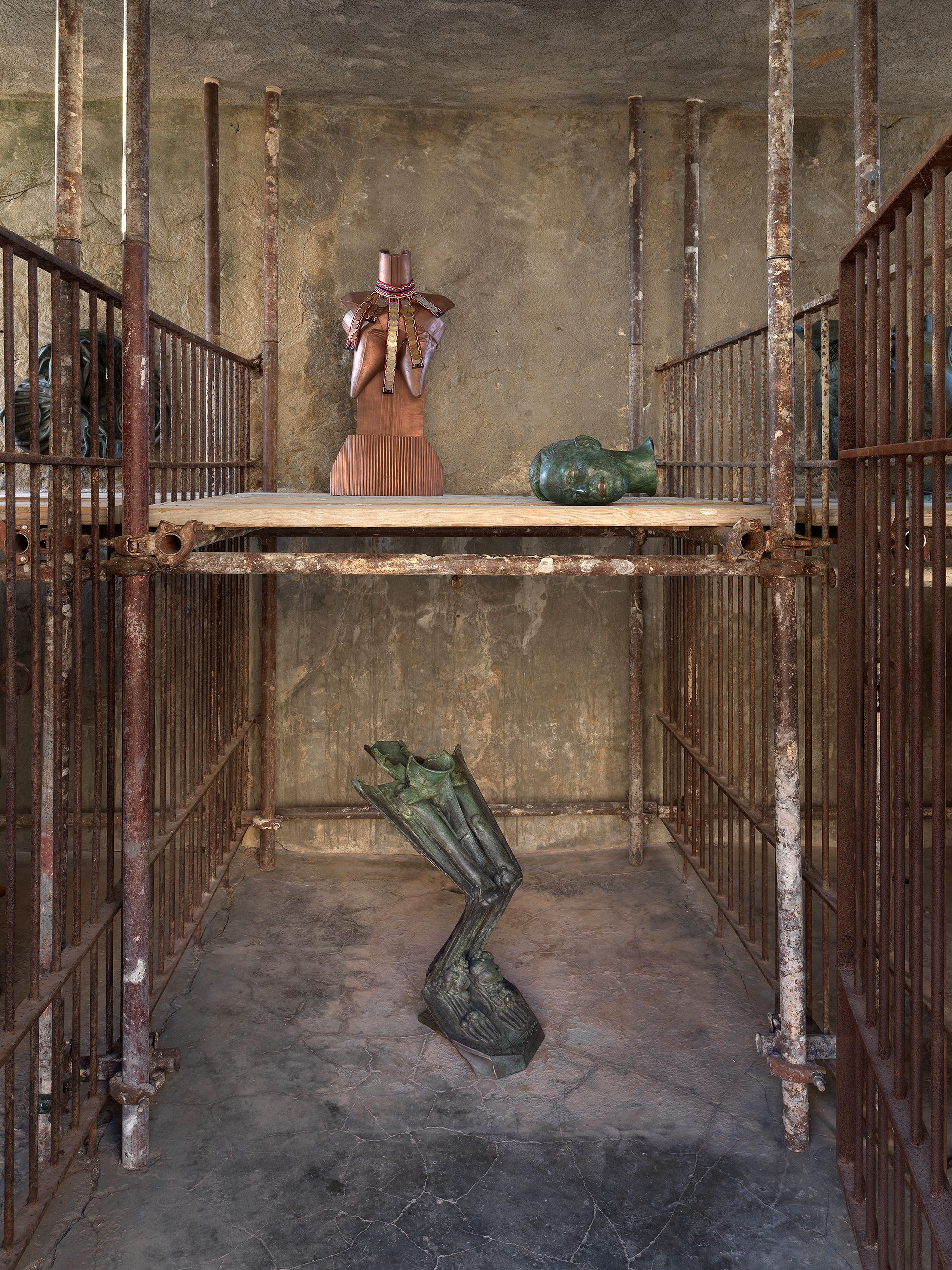
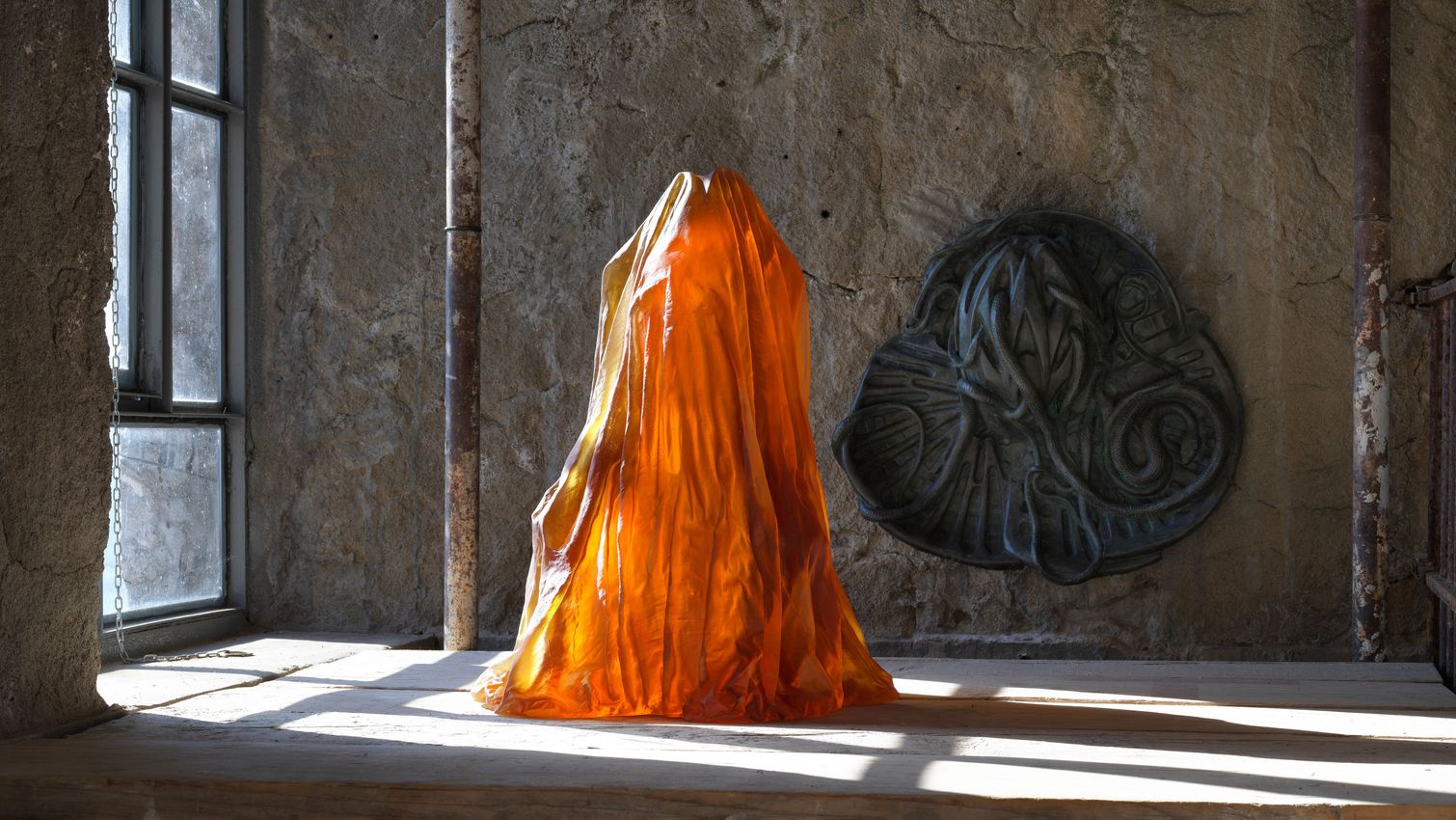
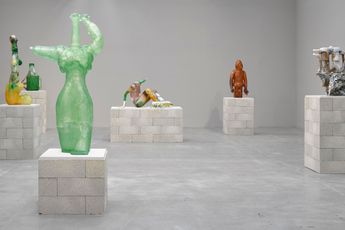
Ursuța’s exhibition Apocalypse Now and Then features new and existing works, including the debut of ‘Desolation Ware’ (2025), a series of lost-wax cast bronze sculptures. Drawing from the languages of decorative art and interior design, the series reimagines familiar objects as vessels of existential tension: a mass of snakes coil from a bicycle helmet, and a zoomorphic jug folding together creaturely anatomy and pre-Renaissance landscapes.
Elsewhere, fragments of sculptures and detritus from Ursuța’s New York studio, built up and purposely destroyed. In making her sculptures, Ursuța sculptures cast her own body and fuses it with everyday objects. The results are cyborg-like mutations: tentacled slippers replace feet, plastic bottles stand in for hands, and the figures are presented like relics from a dystopian future. For Hydra, Ursuța has installed sculptures both inside and outside the Slaughterhouse, creating a viewing experience inspired by historical museums and archaeological sites throughout Greece and the Mediterranean.
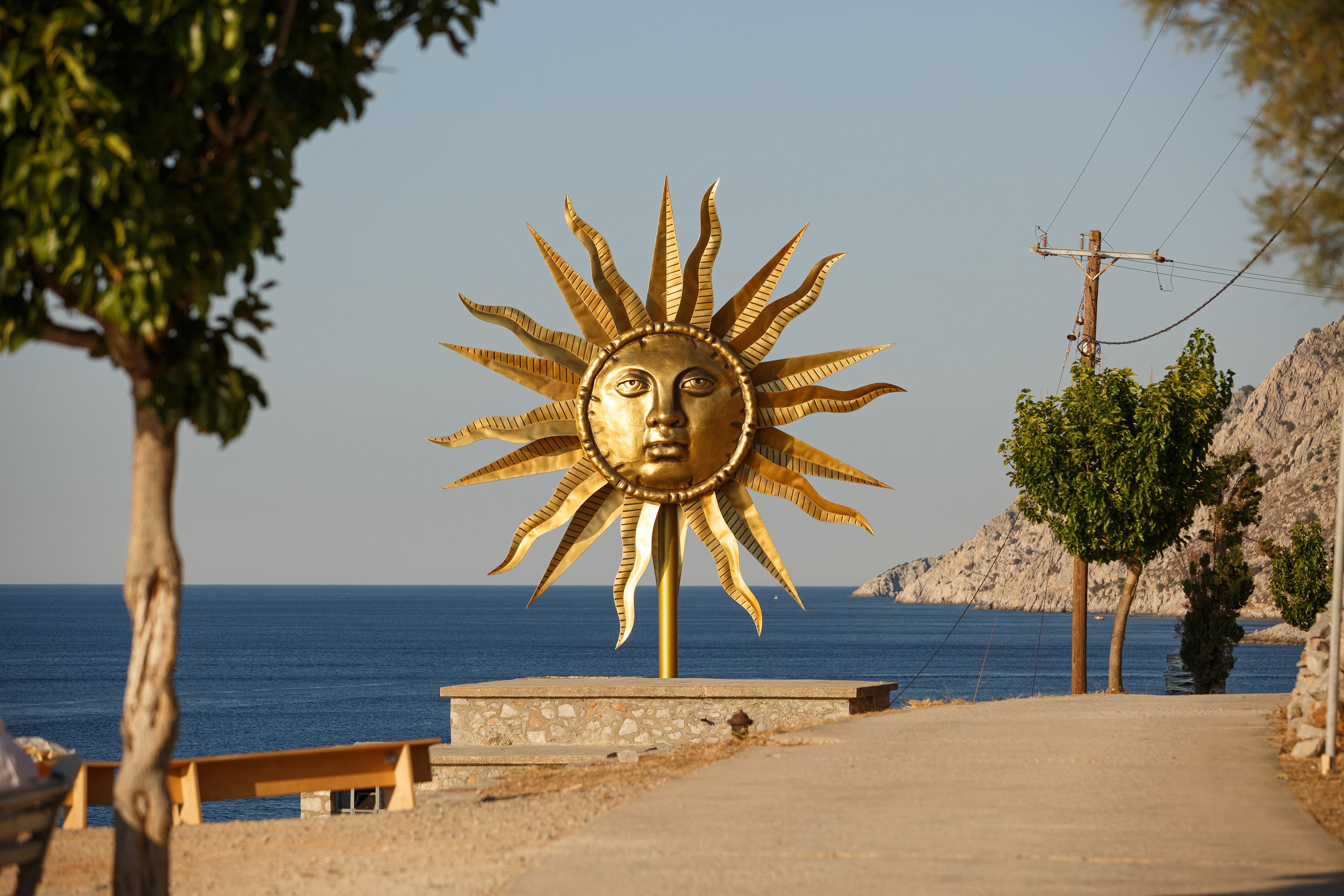
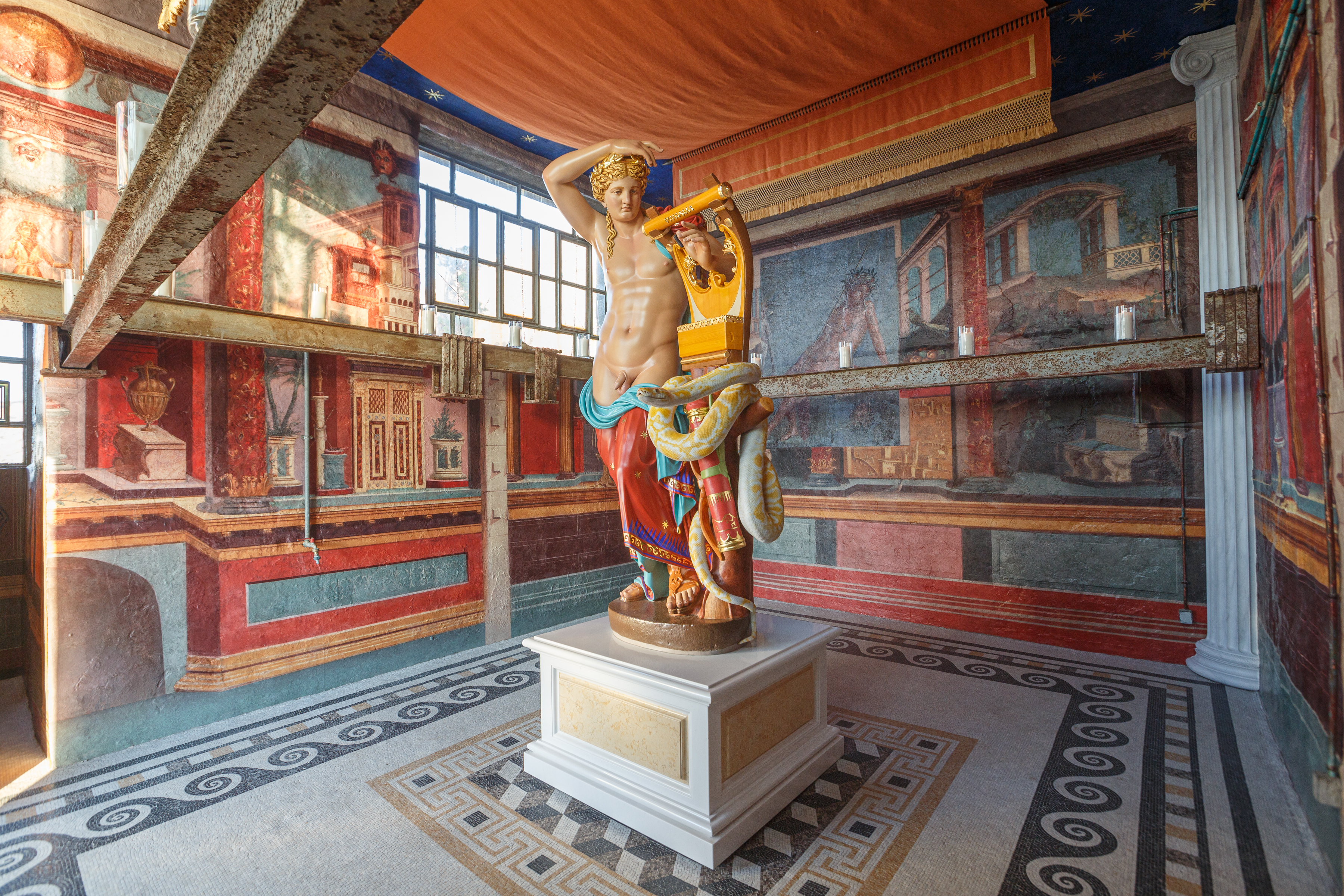
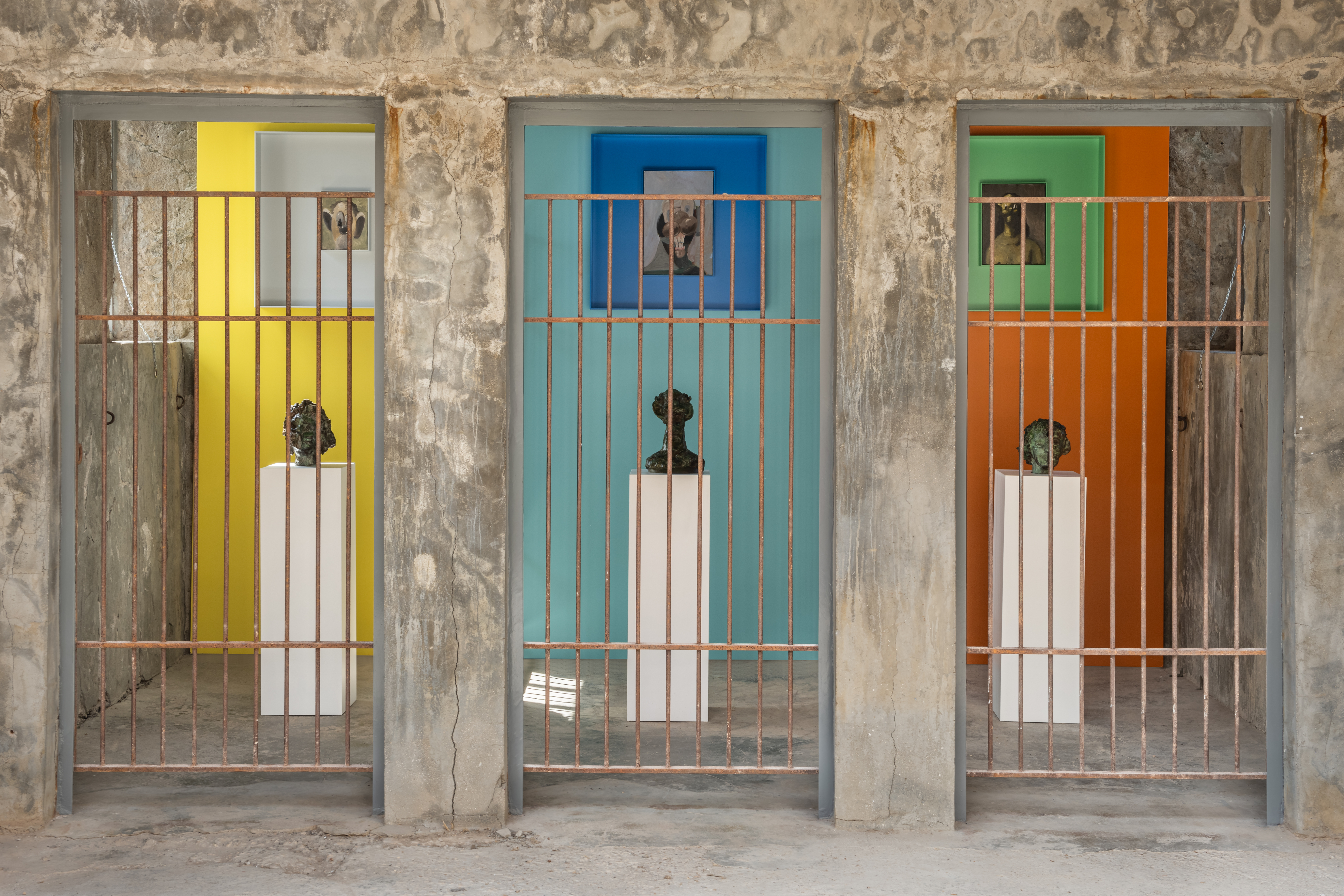
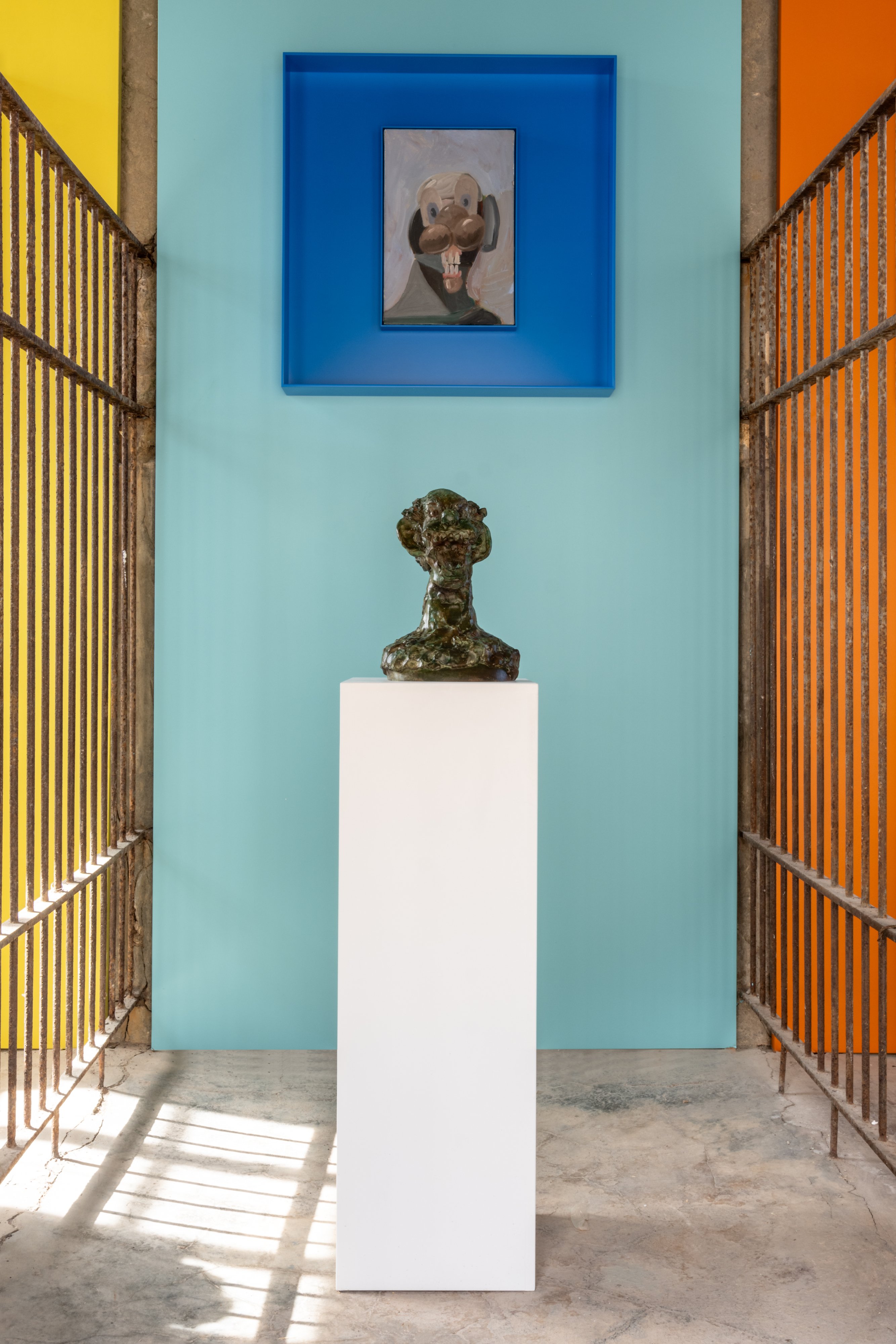
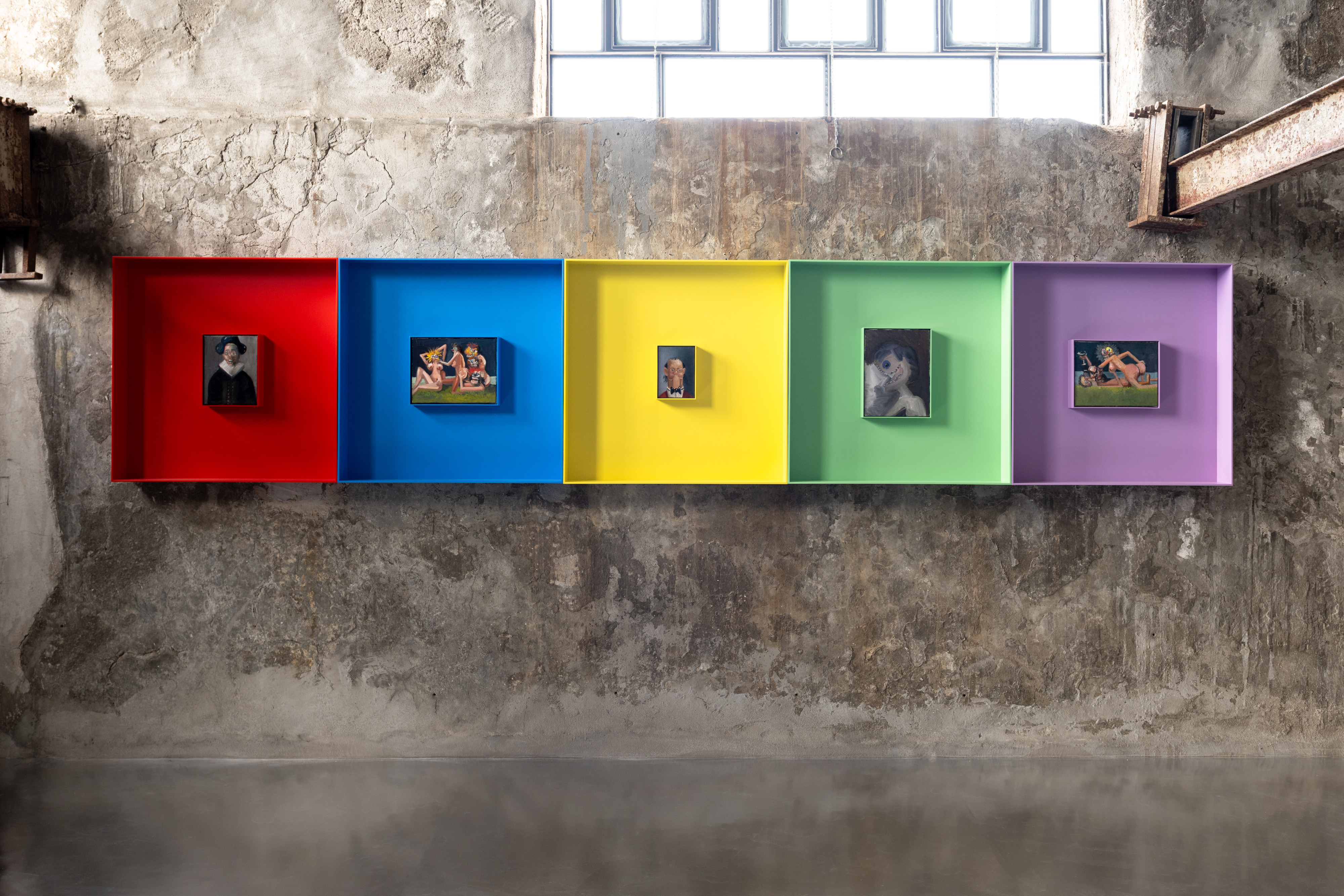
‘We have a very interesting process of choosing the artists for the Hydra show,’ says Joannou. ‘I decide.’ Since its inception in 2009, the Slaughterhouse has staged 16 exhibitions, from Cattelan (2010) and Kiki Smith (2019) to Koons (2022) and George Condo (2024). There’s no curatorial brief. ‘They can either connect with the island, or use it as a loose point of reference. It’s really up to them.’ The only constraint, Joannou adds, is the budget. ‘It’s very limited. Whether they work within it or bring in gallery support—that’s their call.’
In 2022, Koons transformed the Slaughterhouse into a temple-like space, lining its stone interior with mosaic tile floor and frescoes inspired by ancient Roman villas near Pompeii. Last year, George Condo—who had never set foot on Hydra before his 2024 exhibition—installed his small-scale paintings and sculptures of humanoid creatures throughout the gallery, with an emphasis on proportion within the space—because, after all, the Greeks were the ones who mastered it.
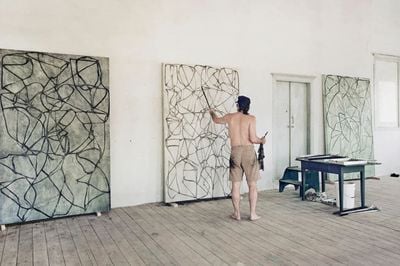
Hydra has long held a magnetic pull for artists, writers, and poets. Greek cubist artist Nikos Hadjikyriakos-Ghika, singer-songwriter Leonard Cohen, and American poet Allen Ginsberg all spent time on the island. In 1973, the abstract painters Helen and Brice Marden, then in their early 30s, bought their first home in Hydra. Brice continued to paint in his island studio until his death in 2023. Joannou himself has been visiting since the early 1980s. With his wife Lietta, he bought a house on the island, then another, visiting regularly with their four children. In more recent years, the family home has given way to Guilty, Joannou’s 115-foot, Ivana-designed, Jeff Koons-painted superyacht, which docks in Hydra’s harbour throughout June.
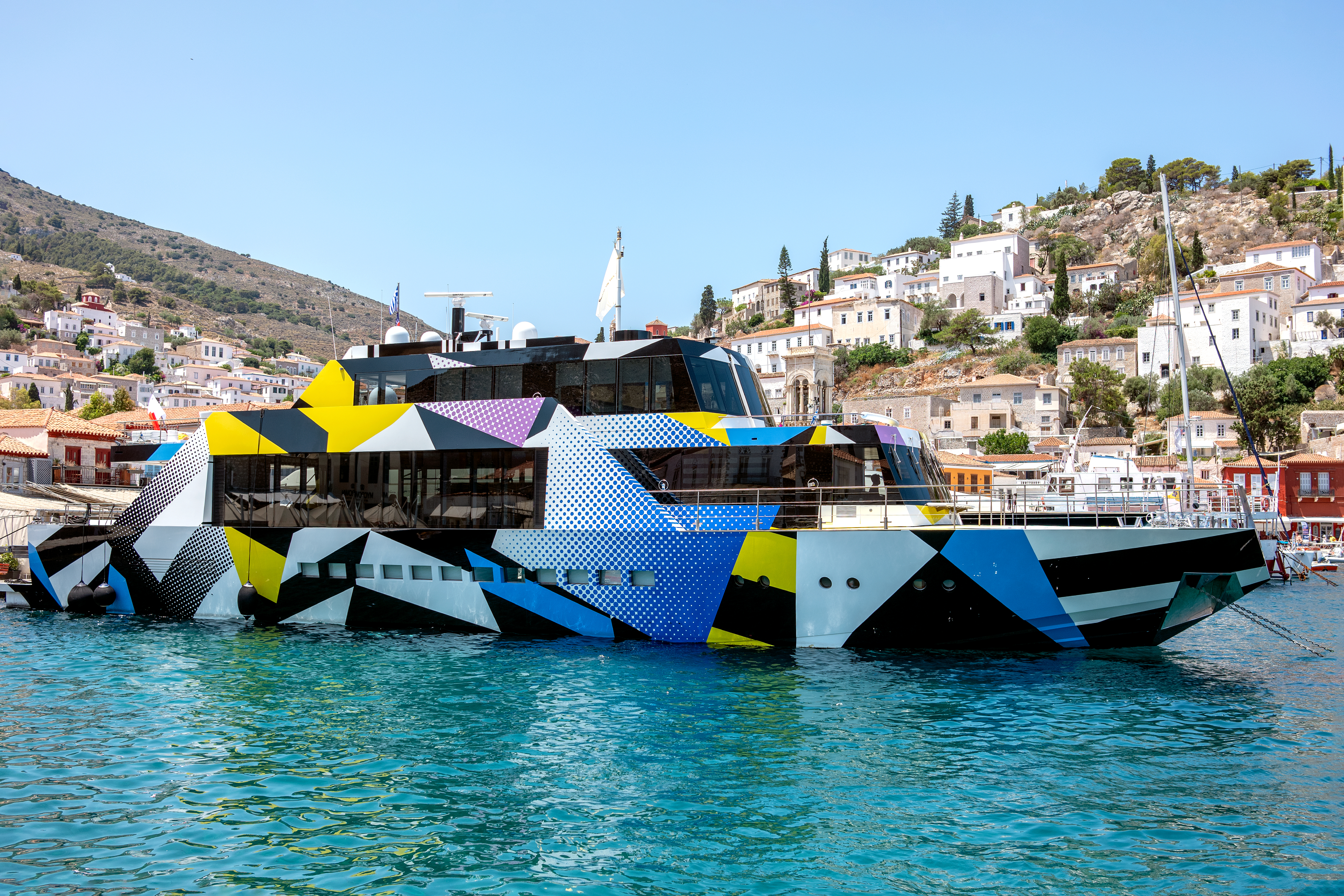
‘There’s an energy on Hydra that you just don’t feel on any other island,’ says Joannou. ‘Where other islands are idyllic—whitewashed houses and sandy beaches—Hydra is tough.’ A major sea power during the Greek War of Independence of 1821 to 1829, the architecture on the island is imposing, built around the needs of shipbuilders and their captains, housing the riches brought from ports east and west of the Aegean Sea. Joannou is quick to note that the island has produced five prime ministers and two presidents of modern Greece, including Greek revolutionary fighter Dimitrios Voulgaris, who impressively served seven terms in office—albeit one of which, in 1865, lasted all of three days.
As in its maritime past, when Hydra’s harbour was a hub for ships returning from far-flung ports, the island—thanks to DESTE—now hosts a different kind of passage, one shaped by the flow of artists, curators, and collectors. ‘There must have been about 2,000 people at the Condo opening,’ the artist and curator Dimitrios Antonitsis told Ocula Magazine last year. ‘It’s fantastic that this space exists on Hydra ... every show at the Slaughterhouse addresses the unexpected.’
Asked about legacy, Joannou recoils. ‘It’s not for me to say,’ he says. ‘What I can say is we are interested in getting involved in the creation of culture and being part of the creativity. What we’ve done for Hydra in the long term—history will be the judge of that.’ —[O]
Andra Ursuţa: Apocalypse Now and Then is on view at DESTE Foundation Project Space, Slaughterhouse, Hydra from 24 June through 31 October 2025.






A respected voice in contemporary art discourse.
Focusing on ambitious storytelling and insightful art-world commentary. Ocula Magazine publishes in-depth interviews, critical essays and timely analysis on the artists, exhibitions and ideas driving the global art world.
Learn more about Ocula Magazine
Showcasing the best of the art world.
Ocula partners with galleries from around the world to highlight their artists, artworks and exhibitions. Gallery membership is by application and invitation, with each member vetted by an independent panel.
Learn more about Ocula Membership
Specialises in the sale of major artworks.
Led by a team with deep ties to the world’s leading auction houses, galleries and collectors. Ocula’s advisory team offers bespoke services to high-net-worth clients from around the world who are looking to acquire the best of contemporary and modern art.
Learn more about our team and services