





Peter Hujar and David Wojnarowicz: More Than and Less Than Lovers
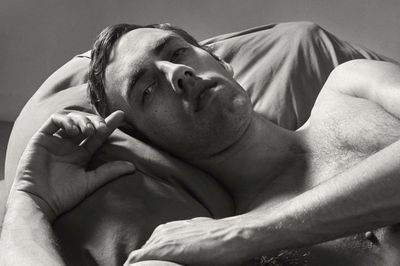
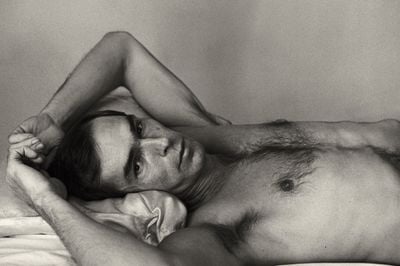
Peter Hujar, David Wojnarowicz (II) (1981). © 2025 Peter Hujar Archive/Artists Rights Society, New York; DACS London; Pace Gallery, NY; Fraenkel Gallery, San Francisco; Maureen Paley, London; and Mai 36 Galerie, Zurich.

Eyes Open in the Dark is the first survey to take on works from the American photographer’s later oeuvre. Will Ferreira Dyke zooms in on three images that trace a singular kinship.
While no photographic evidence exists of the first encounter between Peter Hujar (1934–1987) and David Wojnarowicz (1954–1992)—only anecdotes from a gay bar in downtown Manhattan—numerous images of the two artists can be seen in an exhibition at Raven Row in London. Eyes Open in the Dark, a survey of Hujar’s later work co-curated by his close friend and master printer Gary Schneider, his biographer John Douglas Millar, and gallery director Alex Sainsbury, features 130 prints including eight newly printed, never-before-seen works.
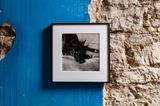
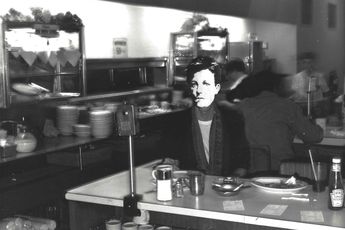
The show foregrounds intimacy and artistry across subjects that range from lustful cruising piers and skylines to tender and playful portraits of animals and personalities of 1970s New York. Three prints—Self-Portrait (1975), David Wojnarowicz (II) (1981), and Dead Gull (1985)—eloquently attest to Hujar and Wojnarowicz’s profound bond. While their physical affair lasted just a few months and Wojnarowicz himself described his relationship with Hujar as ‘very complicated’, Stephen Koch, director of the Peter Hujar Archive, has argued that friendship is ‘too mild a word’.
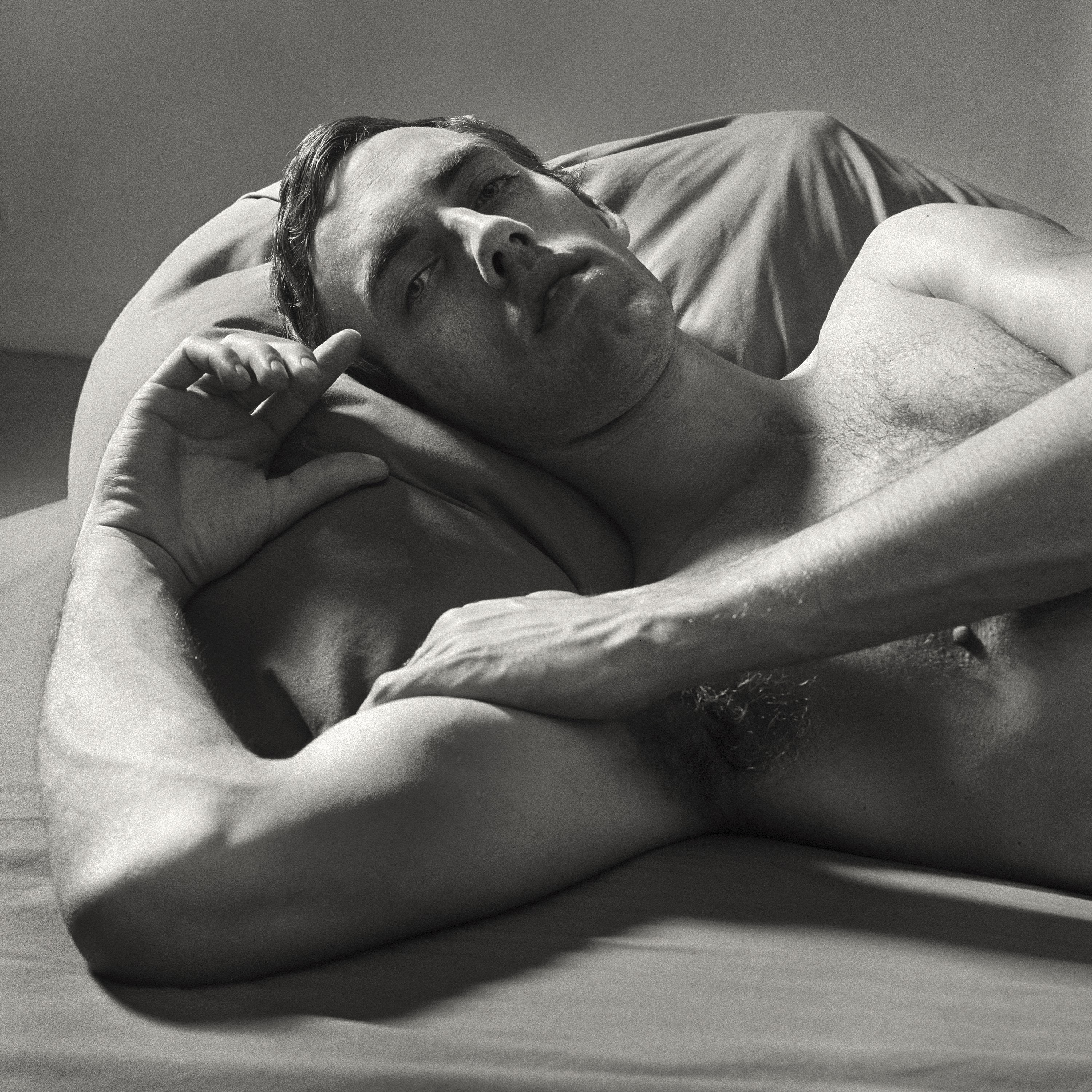
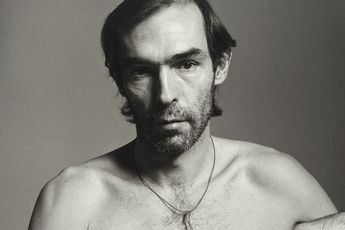
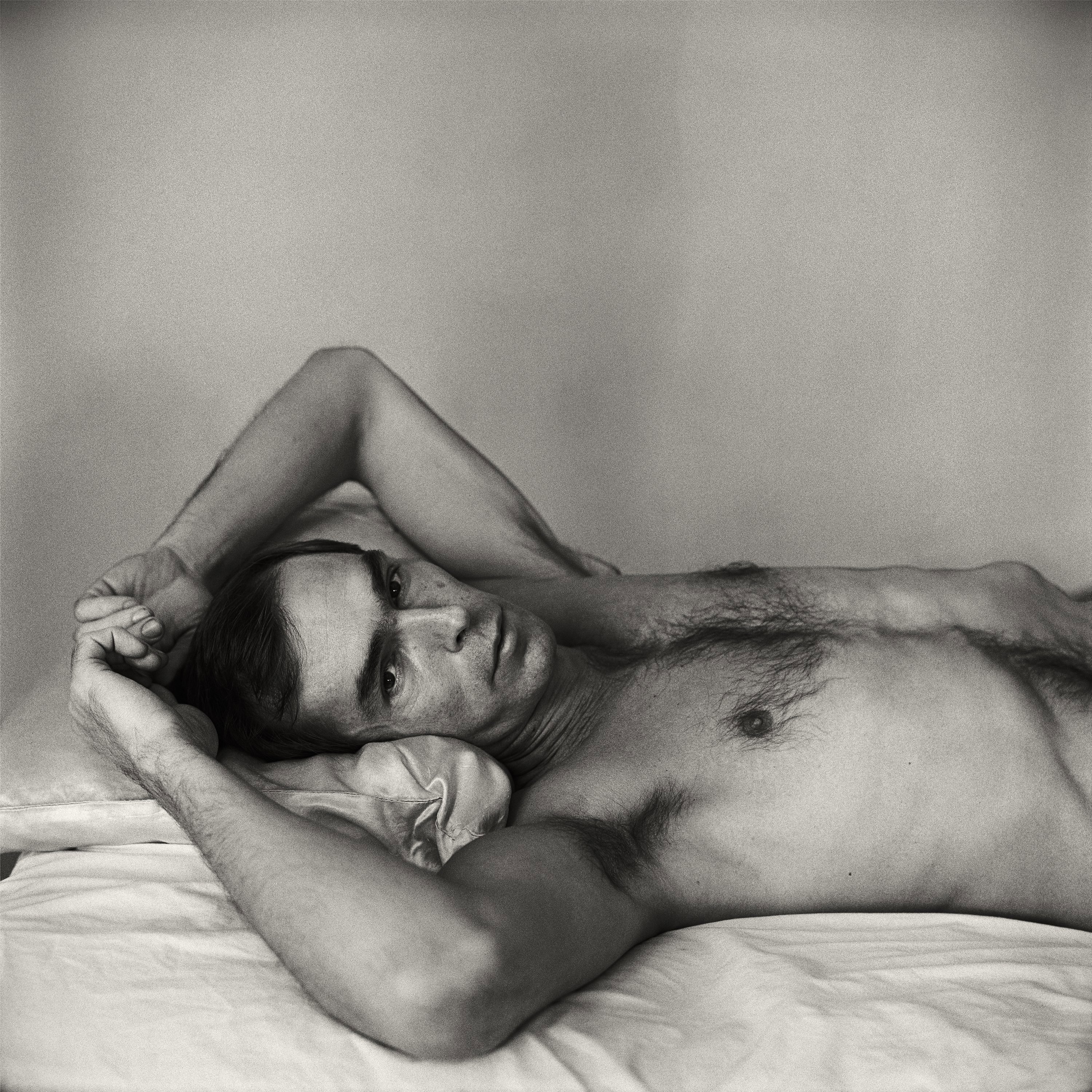
The photographs of Hujar and Wojnarowicz were taken six years apart, yet they bear an undeniable symmetry. Both feature the subject reclining with their arms bent around their heads. There is no elaborate lighting, no complex backdrop or props. The crinkled sheets mirror the topographies of their exposed bodies. The self-portrait is slightly pulled back, with Hujar appearing almost like a fallen marble statue. Wojnarowicz’s portrait—framed from the ribs up—feels more intimate, with a familiarity that seems to carry the scent of desire, as if the pair are caught lying in bed together, propped up, lost in deep, endless conversation. Hujar’s close friend Vince Aletti once said: ‘As I saw Peter’s photos of [Wojnarowicz], I realised what Peter saw in him. Then I could see how sexy he was. It was like seeing him through Peter’s eyes.’1
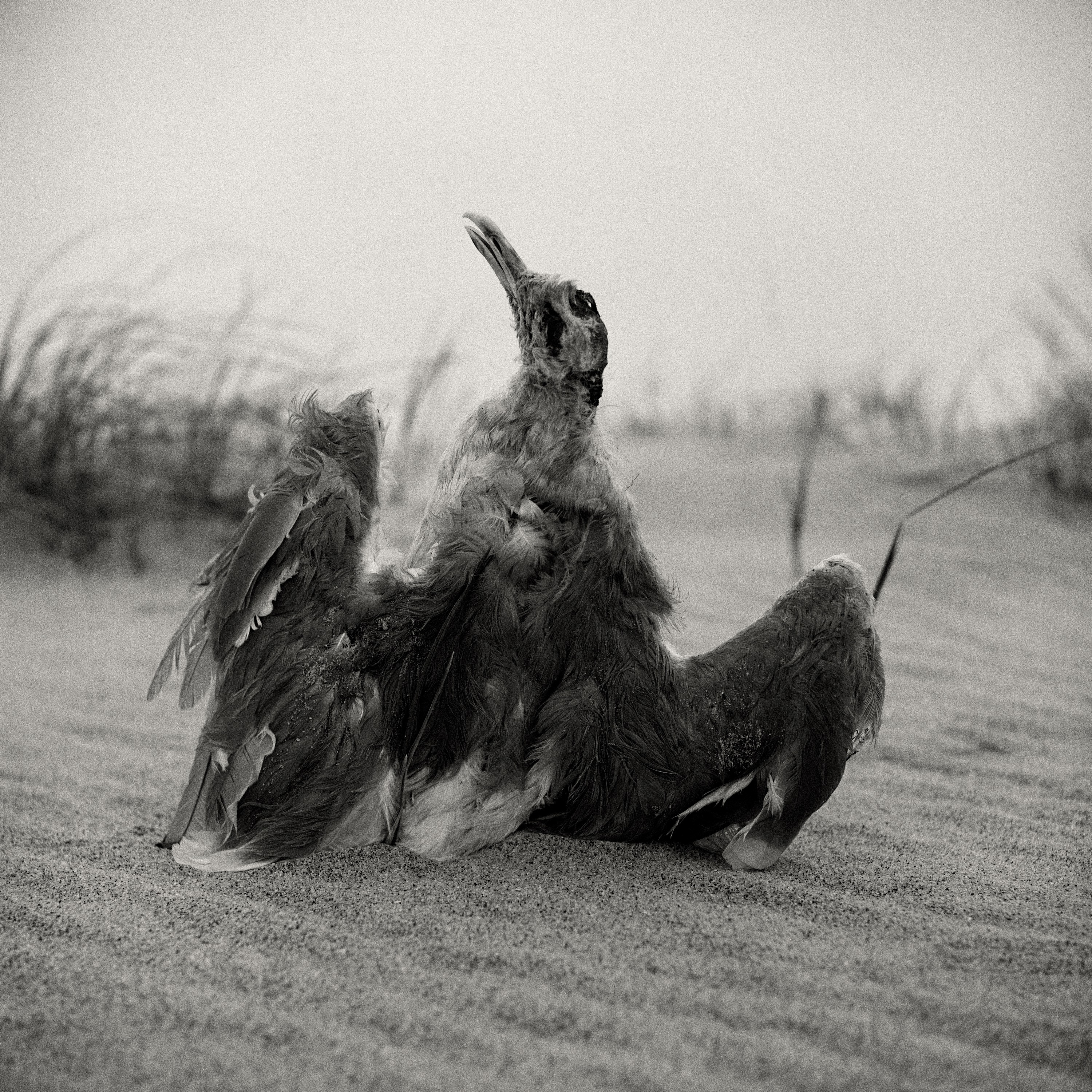
In the mid-eighties, Hujar and Wojnarowicz would visit desolate sites in New Jersey. During one exploration through an abandoned railway yard, Wojnarowicz found a lifeless gull. Lifting it up by its wings, he turned to Peter with a grin before positioning the bird for Hujar’s lens. The resulting Dead Gull invokes Albrecht Dürer‘s watercolour Wing of a European Roller (1512), a print of which Hujar kept above a mirror in his loft, and later by his hospital bed as he died of AIDS-related pneumonia in 1987. Standing beside Hujar in the hospital, Wojnarowicz described, ‘This body of my friend on the bed, the body of my brother, my father, my emotional link to the world.’ He designed Hujar’s gravestone with his name, dates, and a reproduction of the Dürer wing.
Eyes Open in the Dark constitutes a portrait of the East Village and those who called it home. Hujar was central to this community; at his funeral, Nan Goldin noted that ‘everyone thought he was their best friend’. But there was something special about the bond between Wojnarowicz and Hujar: lover-beloved, mentor-mentee, father-son. These three photographs, traversing time and place, visualise the complex beauty of a relationship that Tom Rauffenbart, Wojnarowicz’s partner, described as ‘more than and less than lovers [...] kindred souls.’2 —[O]
Peter Hujar: Eyes Open in the Dark is on view at Raven Row, London, from 30 January to 6 April 2025.
1 Vince Aletti in Cynthia Carr, Fire in the Belly: The Life and Times of David Wojnarowicz (New York: Bloomsbury, 2012), p.182.
2 Tom Rauffenbart in Carr, Fire in The Belly, p.380.
Main image: Peter Hujar, David Wojnarowicz (II) (1981). © 2025 Peter Hujar Archive/Artists Rights Society, New York; DACS London; Pace Gallery, NY; Fraenkel Gallery, San Francisco; Maureen Paley, London; and Mai 36 Galerie, Zurich.




A respected voice in contemporary art discourse.
Focusing on ambitious storytelling and insightful art-world commentary. Ocula Magazine publishes in-depth interviews, critical essays and timely analysis on the artists, exhibitions and ideas driving the global art world.
Learn more about Ocula Magazine
Showcasing the best of the art world.
Ocula partners with galleries from around the world to highlight their artists, artworks and exhibitions. Gallery membership is by application and invitation, with each member vetted by an independent panel.
Learn more about Ocula Membership
Specialises in the sale of major artworks.
Led by a team with deep ties to the world’s leading auction houses, galleries and collectors. Ocula’s advisory team offers bespoke services to high-net-worth clients from around the world who are looking to acquire the best of contemporary and modern art.
Learn more about our team and services