




JOAN SEMMEL
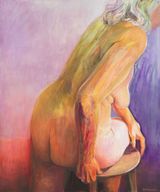
b. 1932, United StatesJoan Semmel is an American painter whose work has transformed how the female body is seen in contemporary art. Best known for large-scale nude self-portraits painted from her own point of view, she presents the body as a site of agency, desire, and ageing rather than an object of spectacle. Over six decades, and across series such as the Erotic Series (1970–73) and Transparencies (2014–ongoing), Semmel has developed a distinctive language of vivid colour, tight cropping, and layered imagery that confronts the male gaze and foregrounds lived bodily experience. Her paintings have been featured in major exhibitions including the retrospective Joan Semmel: Skin in the Game at the Pennsylvania Academy of the Fine Arts (2021–22) and Joan Semmel: In the Flesh at the Jewish Museum, New York (2025–26).
Her work is held in the collections of the Art Institute of Chicago, the Brooklyn Museum, the Dallas Museum of Art, the Jewish Museum, New York, the Museum of Fine Arts, Houston, the Museum of Modern Art, New York, Tate, London, and the Whitney Museum of American Art, New York, among others. Semmel is Professor Emeritus of Painting at Rutgers University and lives and works between New York City and East Hampton, Long Island.
Early life and Career
Born in 1932 to a secular Jewish family in the Bronx, New York, Semmel studied at Cooper Union with Nicolas Marsicano and at the Art Students League with Morris Kantor before completing a BFA at Pratt Institute in 1963. That same year she moved to Madrid with her young family, exhibiting in Spain and South America and developing an Abstract Expressionist style with a bright palette that gradually edged toward figuration.
Semmel returned to New York around 1970, amid a divorce and a moment of rising feminist and anti-censorship activism, and began an MFA at Pratt Institute, which she completed in 1972. Immersed in a community that included Judith Bernstein, Louise Bourgeois, Joyce Kozloff, Joan Snyder, Anita Steckel, and Hannah Wilke, she turned decisively to the figure, driven by what she described as a need to work from a more personal viewpoint and an emerging feminist consciousness.
Works, Series and Methods
Since the 1970s, Semmel’s paintings have challenged popular representations of women’s bodies, and their attendant narratives of sexual passivity or male utility, by depicting the female body and female desire in a frank, unidealised manner. Her figurative practice began with images of heterosexual couples having sex, rendered in non-naturalistic colours; when New York galleries refused to exhibit these works, she rented a SoHo loft to show her early Erotic Series (1970–73), drawing critical attention.
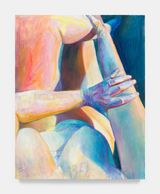
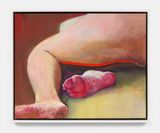
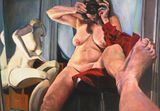
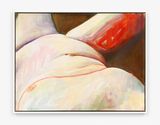
In the early 1970s she began to incorporate her own body into her paintings. These cropped, realistically rendered self-portraits depict Semmel’s nude, often supine body as seen from her own perspective and sometimes include a male partner, as in Intimacy and Autonomy (1974). Responding to the fetishization of women’s bodies in popular media, these paintings assert bodily autonomy and aim, in the artist’s words, to visualise “the idea of myself as I experience myself.”
In the 1980s Semmel expanded her figurative practice in several series that place the body within a broader context. The Beach series, like her self-images, depicts the artist’s body from a downward view on the sand, this time surrounded by other figures, while the Locker Room series (1988–91), based on photographs taken in women’s changing rooms, explores multi-figure compositions in which her body is often absent or appears doubled in mirrors, as in Mirror Mirror (1988).
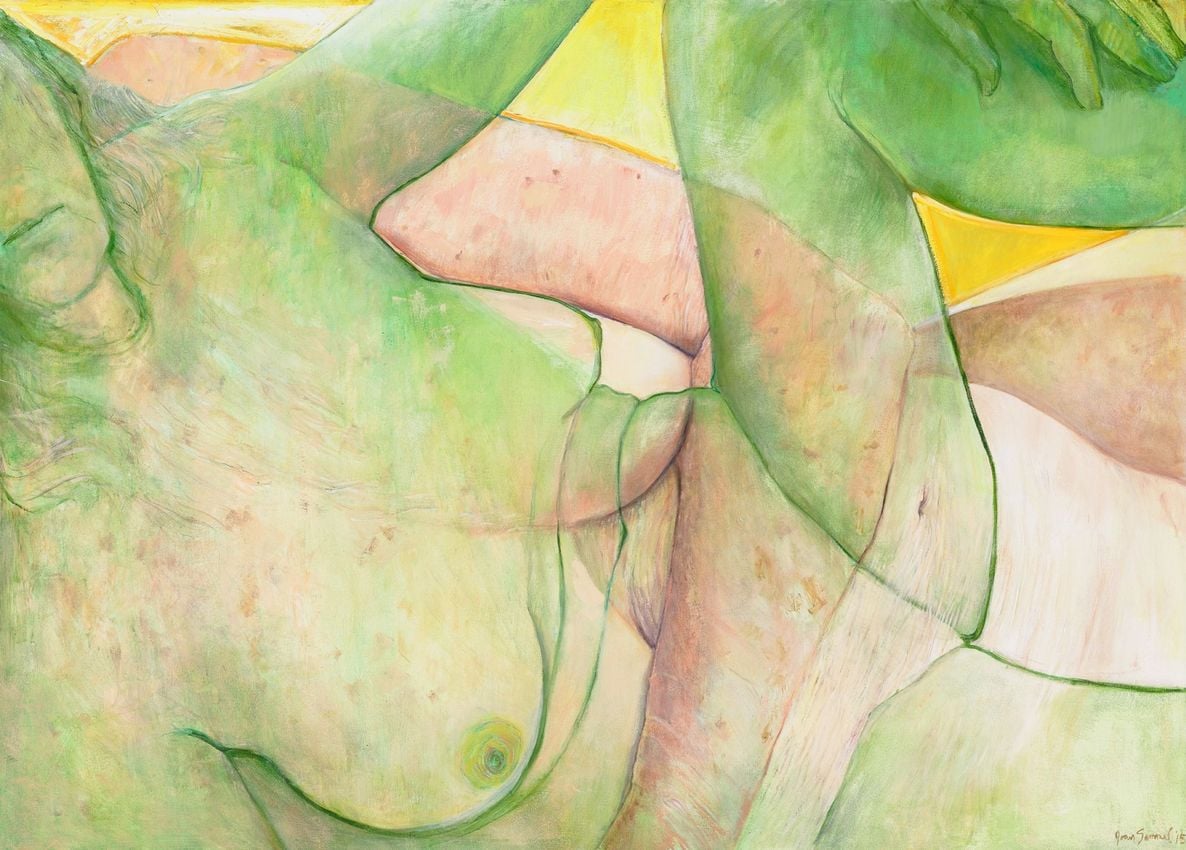
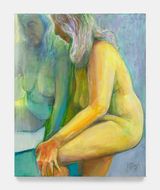
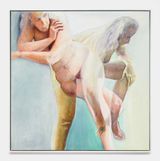
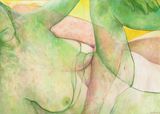
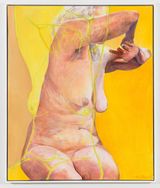
From the 1990s onward, Semmel has continued to paint her nude body as it ages, charting wrinkles, shifts in skin tone, and changes in musculature to insist that the older female body is a valid and compelling subject. Her Transparencies series (2014–ongoing) recalls techniques from Overlays (1992–96), superimposing faint images of herself over pre-existing depictions of her body so that it appears doubled or tripled; these layered iterations serve as meditations on memory and the passage of time and, crucially, do not shy away from the ageing body as a legitimate subject for artistic enquiry.
Feminism, Themes and Context
Semmel’s practice is closely tied to feminist art and activism. In 1976 she contributed a widely cited definition of feminist art as work that validates female experience, in a letter now held in the Woman’s Building records in Los Angeles, and in New York she joined groups such as the Ad Hoc Committee of Women Artists, Fight Censorship, Women in the Arts, and the Art Workers Coalition, campaigning for gender equality in museums and resisting censorship of sexual imagery.
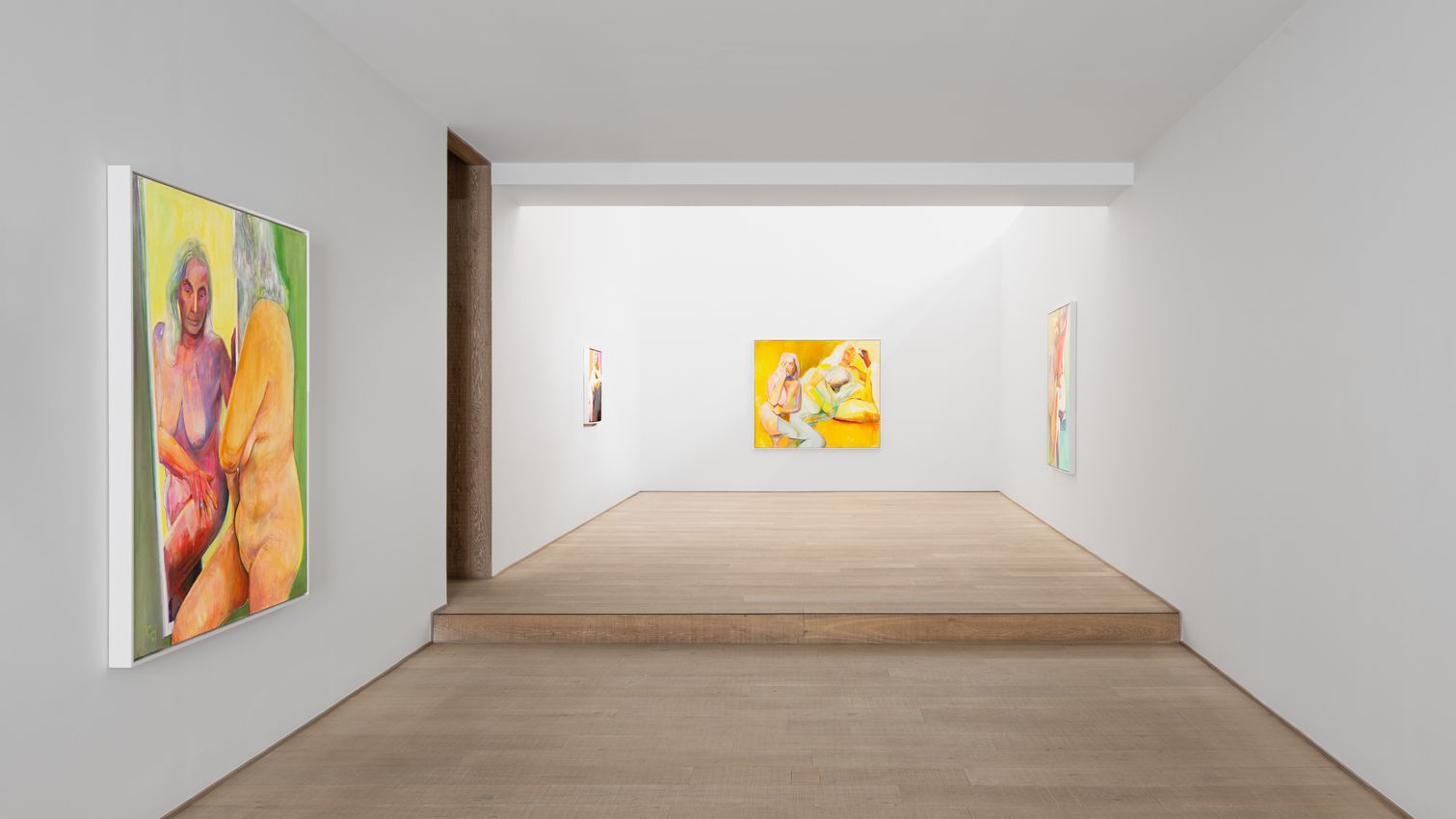
Her work repeatedly confronts the male gaze, eroticisation, and the cultural erasure of older women. By painting her own body in frank, sometimes uncomfortable detail well into her nineties, she insists that the ageing female form is central to contemporary figurative painting and integral to conversations about sexuality, consent, and visibility. Her paintings move between gestural abstraction and hyperreal detail, using saturated colour, tight cropping, and layered figures to hold viewers in a charged space between looking and being looked at.
Exhibitions, Collections and Recognition
Semmel’s work has been widely exhibited in the United States and internationally. She received a major career retrospective, Joan Semmel: Skin in the Game, at the Pennsylvania Academy of the Fine Arts in 2021, which travelled to the Herbert F. Johnson Museum of Art at Cornell University in 2022. Recent highlights include Joan Semmel: In the Flesh at the Jewish Museum, New York (2025–26), and Continuities, a two-venue exhibition of recent paintings at Xavier Hufkens, Brussels, and Alexander Gray Associates, New York (2026).
Her work has featured in group exhibitions such as Sixties Surreal at the Whitney Museum of American Art (2025), Get in the Game: Sports, Art, Culture at SFMOMA (2024), Capturing the Moment at Tate Modern (2023), and Women Painting Women at the Modern Art Museum of Fort Worth (2022), as well as earlier shows at the Brooklyn Museum, the Jewish Museum, the Bronx Museum of the Arts, the Wexner Center for the Arts, and Stadtgalerie Saarbrücken.
Over her career she has received the Women’s Caucus for Art Lifetime Achievement Award (2013), an Anonymous Was a Woman grant (2008), National Endowment for the Arts fellowships (1980, 1985), the Richard Florsheim Art Fund Grant (1996), and the Cooper Union Distinguished Alumnus Award (1985), among other honours.
Joan Semmel FAQs
What is Joan Semmel best known for?
Joan Semmel is best known for her large-scale nude self-portraits painted from her own vantage point, which confront the male gaze and foreground the lived experience of the female body, including its ageing.
Why is Joan Semmel important in feminist art?
Semmel is a key figure in feminist painting because she combines explicit erotic imagery, self-representation, and activism to challenge censorship, objectification, and the exclusion of women from institutions, while insisting that women define their own images.
What themes does Joan Semmel explore in her paintings?
Her work explores sexuality, consent, embodiment, ageing, and the politics of looking, often using mirrors, cameras, and layered figures to question who controls images of women; she also addresses how older female bodies are edited out of mainstream culture and reasserts their visibility.
Where can I see Joan Semmel’s work?
Semmel’s paintings can be seen in museum collections such as the Museum of Modern Art and the Brooklyn Museum in New York, Tate in London, the Museum of Fine Arts, Houston, and the Whitney Museum of American Art, among others, as well as in current and recent exhibitions including Joan Semmel: In the Flesh (2025–2026) at the Jewish Museum and Continuities at Xavier Hufkens and Alexander Gray Associates (2026)
What is Joan Semmel: In the Flesh about?
Joan Semmel: In the Flesh at the Jewish Museum brings together key paintings from the early 1970s to recent years, placing them in dialogue with works from the museum’s collection selected by the artist and focusing on beauty, agency, intimacy, and self-perception to show how her paintings reframe the nude and foreground the ageing female body.
Ocula | 2026



















Explore and Follow Artists Shaping Contemporary Art
A respected voice in contemporary art discourse.
Focusing on ambitious storytelling and insightful art-world commentary. Ocula Magazine publishes in-depth interviews, critical essays and timely analysis on the artists, exhibitions and ideas driving the global art world.
Learn more about Ocula Magazine
Showcasing the best of the art world.
Ocula partners with galleries from around the world to highlight their artists, artworks and exhibitions. Gallery membership is by application and invitation, with each member vetted by an independent panel.
Learn more about Ocula Membership
Specialises in the sale of major artworks.
Led by a team with deep ties to the world’s leading auction houses, galleries and collectors. Ocula’s advisory team offers bespoke services to high-net-worth clients from around the world who are looking to acquire the best of contemporary and modern art.
Learn more about our team and services