Press preview with Nicholas Fox Weber, Executive Director, The Josef and Anni Albers Foundation: Thursday, November 3, 10 AM.
Special Event: Guided tour of the exhibition with Brenda Danilowitz, Chief Curator, The Josef and Anni Albers Foundation: Saturday, November 19, 11 AM.
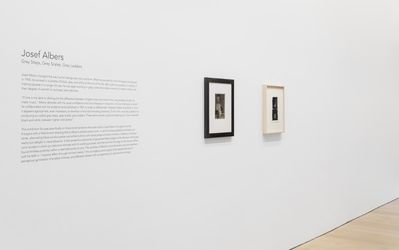
‘To this end, we study gradation by producing so-called grey steps, grey scales, grey ladders. These demonstrate a gradual stepping up or down between white and black, between lighter and darker.— Josef Albers, Interaction of Color
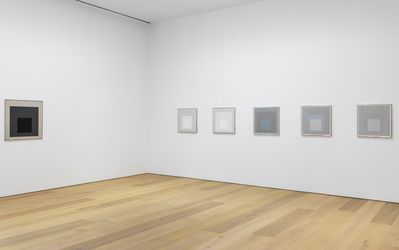
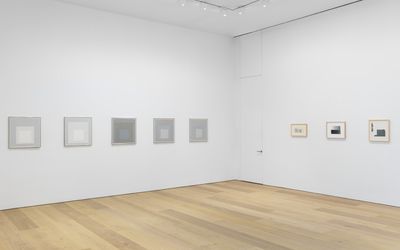
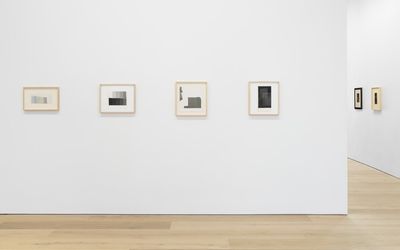
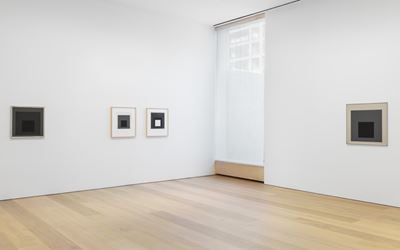
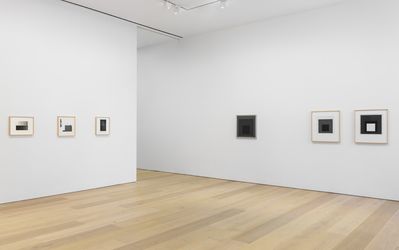
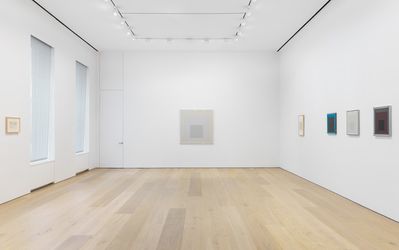
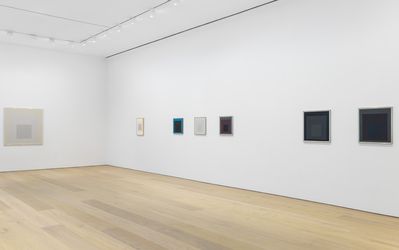
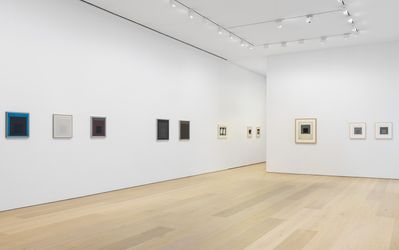
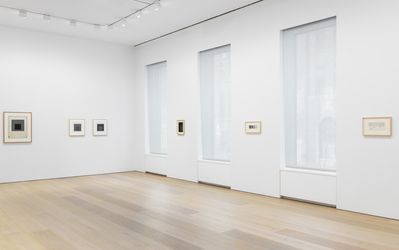
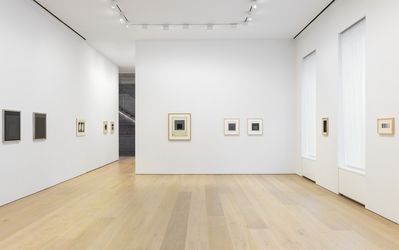
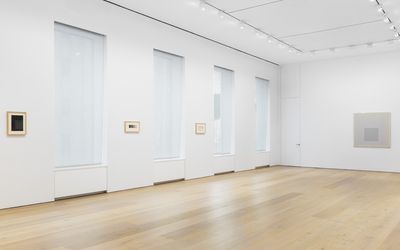
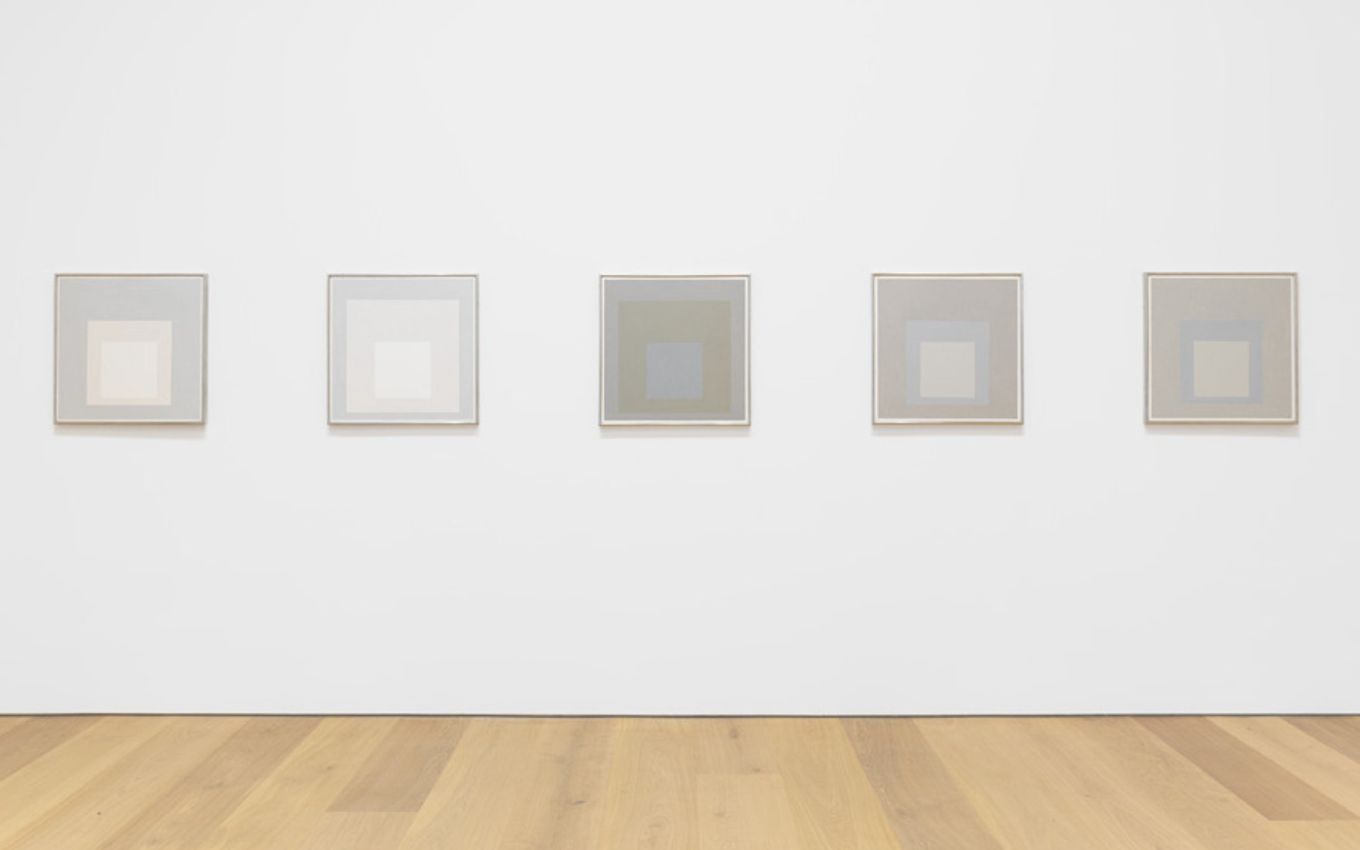
David Zwirner is pleased to announce the gallery’s first exhibition dedicated to the work of Josef Albers since having announced its representation of The Josef and Anni Albers Foundation. The exhibition will take place at the gallery’s 537 West 20th Street location and will present a selection of works that explore Albers’s use of black, white, and grey across the full breadth of his career.
Josef Albers is considered one of the most influential abstract painters of the twentieth century, as well as an important designer and educator noted for his rigorously experimental approach to spatial relationships and colour theory. The exhibition’s title is taken from a passage in Interaction of Color (1963), Albers’s significant treatise on colour studies and an essential handbook for artists and teachers. Particularly concerned with the study of chromatic interaction, in which visual perception of a colour is affected by those adjacent to it, Albers writes, ‘To this end, we study gradation by producing so-called grey steps, grey scales, grey ladders. These demonstrate a gradual stepping up or down between white and black, between lighter and darker.‘1
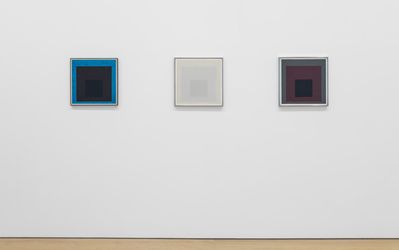
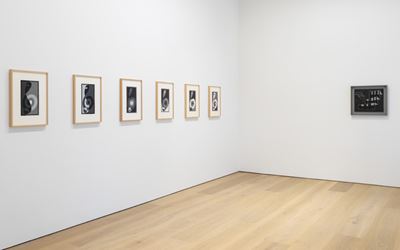
The centrality of these gradations between black, white, and grey to Albers’s overall theory of colour is demonstrated by the inclusion of his first Homage to the Square painting, Homage to the Square (A) (1950), which inaugurated the series that would occupy him until his death in 1976. Establishing the configuration of nested squares for which the series is known, the work moves progressively from deep black at its centre to pale grey at its edge. In addition to this key painting and its related studies, the exhibition will also present a range of works in a variety of media that attest to Albers’s lifelong investigation into black, white, and grey, from ink and watercolour works on paper that pre-date his time at the Bauhaus, to gouaches executed during his tenure at Black Mountain College, to colour studies that shed light on his working process. Known primarily for his intensive exploration of colour, Albers often utilised tones of black, white, and grey while working out new ideas and new techniques, crafting finely tuned studies of light and perception while emphasizing the graphic and rhythmic qualities of his compositions. Examples of this tendency include not only the first Homage to the Square, mentioned above, but also earlier works, among them his series of Treble Clefs (1932–35)–important gouaches that bridge the period from his departure from the Bauhaus to his arrival in America–and selections from his Kinetics series of the early 1940s.
The gallery is also preparing a major exhibition of the work of Josef Albers that will open in January 2017 at David Zwirner’s London location.
Josef Albers (1888–1976) was born in Bottrop, Germany, and studied briefly at the Königliche Bayerische Akademie der Bildenden Kunst, Munich in 1919 before becoming a student at the Weimar Bauhaus in 1920. In 1922, Albers joined the school’s faculty, first teaching stained glass and eventually teaching design as well. In 1933, he and Anni Albers emigrated to North Carolina, where they both began to teach at Black Mountain College. During their time at Black Mountain, Albers began to show his work extensively within the United States, including solo exhibitions at Addison Museum of American Art, Andover (1935); J.B. Neumann’s New Art Circle, New York (1936, 1938); The Germanic Museum at Harvard University, Cambridge (1936); the Katharine Kuh Gallery, Chicago (1937); the San Francisco Museum of Art (1940); and the Nierendorf Gallery, New York (1941). The Alberses remained at Black Mountain until 1950, when they moved to New Haven, Connecticut, where Josef Albers was invited to direct the department of design at Yale University School of Art. In 1949, he developed what would become his seminal Homage to the Square series, which he continued to elaborate until his death in 1976. This body of work was featured in a major exhibition organised by The Museum of Modern Art, New York in 1963 that traveled to 11 venues in the United States and 11 venues in Latin America.Albers retired from teaching in 1958, just prior to the publication of his important Interaction of Color (1963), which was reissued in an expanded format in 2013. Following numerous gallery and museum exhibitions, as well as his participation in documenta 1 (1955) and documenta 4 (1968), Albers became the first living artist to be the subject of a solo exhibition at the Metropolitan Museum of Art with his career-spanning retrospective there in 1971.
More recent exhibitions include Painting On Paper: Josef Albers In America, which originated at the Pinakothek der Moderne, Munich, in 2010 (travelled to Josef Albers Museum, Quadrat, Bottrop, Germany; Louisiana Museum of Modern Art, Humlebæk, Denmark; Kunstmuseum Basel; Centre Pompidou, Paris; Centro de Arte Moderna, Gulbenkian Museum, Lisbon; and the Morgan Library and Museum, New York); Josef Albers: Minimal Means, Maximum Effect, at the Fundación Juan March, Madrid, in 2014 (traveled to Henie Onstad Art Centre, Høvikodden, Norway); and A Beautiful Confluence: Anni and Josef Albers and the Latin American World at Mudec, Museo delle Culture, Milan, in 2015–2016. The Musée d’Art Moderne de la Ville de Paris is planning a major survey exhibition of the work of both Josef and Anni Albers for 2019.
1 Josef Albers, Interaction of Color: New Complete Edition (New Haven and London: Yale University Press in association with the Josef and Anni Albers Foundation, 2009), p. 16.


Josef Albers (1888–1976) is considered one of the most influential abstract painters of the twentieth century, as well as an important designer and educator. Albers’s artistic career, which bridged European and American Modernism, consisted mainly of a tightly focused investigation into the perceptual properties of colour and spatial relationships. Working with simple geometric forms, Albers sought to produce the effects of chromatic interaction, in which the visual perception of a colour is affected by those adjacent to it. Albers’s precise application of colour also created plays of space and depth, as the planar coloured shapes that make up the majority of his works appear to either recede into or protrude out of the picture plane.

A respected voice in contemporary art discourse.
Focusing on ambitious storytelling and insightful art-world commentary. Ocula Magazine publishes in-depth interviews, critical essays and timely analysis on the artists, exhibitions and ideas driving the global art world.
Learn more about Ocula Magazine
Showcasing the best of the art world.
Ocula partners with galleries from around the world to highlight their artists, artworks and exhibitions. Gallery membership is by application and invitation, with each member vetted by an independent panel.
Learn more about Ocula Membership

Specialises in the sale of major artworks.
Led by a team with deep ties to the world’s leading auction houses, galleries and collectors. Ocula’s advisory team offers bespoke services to high-net-worth clients from around the world who are looking to acquire the best of contemporary and modern art.
Learn more about our team and services