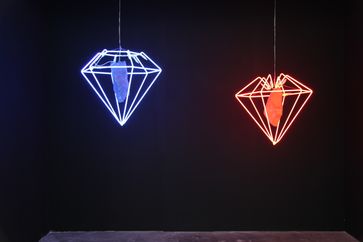
DE SARTHE is pleased to present Room 1005, a solo exhibition by Beijing-based artist Zhou Wendou that explores the inexplicable and helpless state experienced by the artist during a time of social suspension. Named after the artist’s studio door number in Beijing, the exhibition indicates the artist’s perception of time, temporality and reality in the confined space for almost two months. The building where Zhou Wendou’s studio was located was later demolished, and the artist’s memories, helplessness and longings disappeared at once, leaving only the rubble. Room 1005 is a retrospective that freezes and captures the fragments of the artist’s emotions and contradictions. The presented works are reproductions of the artist’s reconstruction and interpretation of his aspiration for time and his anxiety generated by spatial constraint.
Though Zhou Wendou felt muddle-headed due to the stagnation of time and the loss of his ability to act freely in his seclusion from human interaction, it prompted him to utilize his observant characteristics, which started a dialogue with the daily objects that surrounded him. The long-term communication evoked deep memories and emotional touches, resulting in a fictional narrative and query of the objects’ meanings.
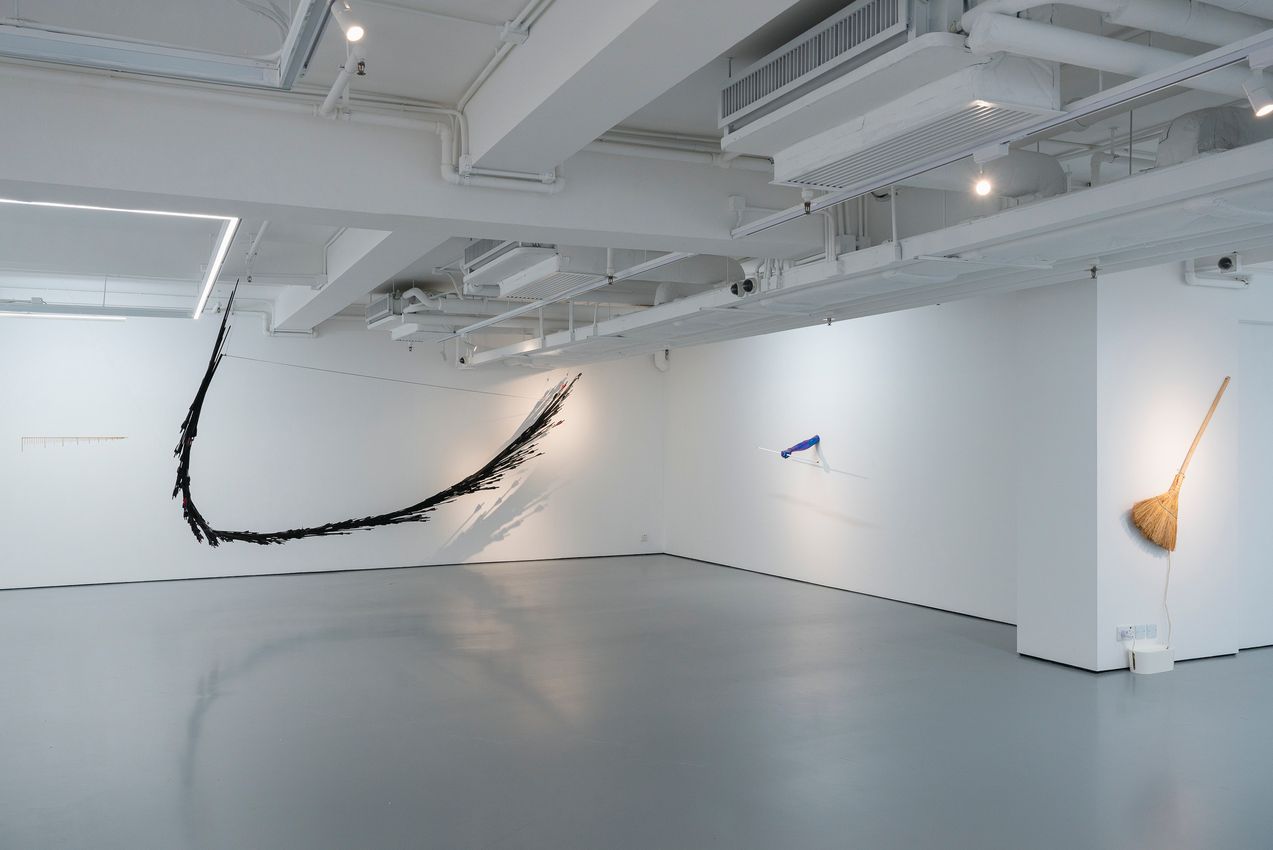
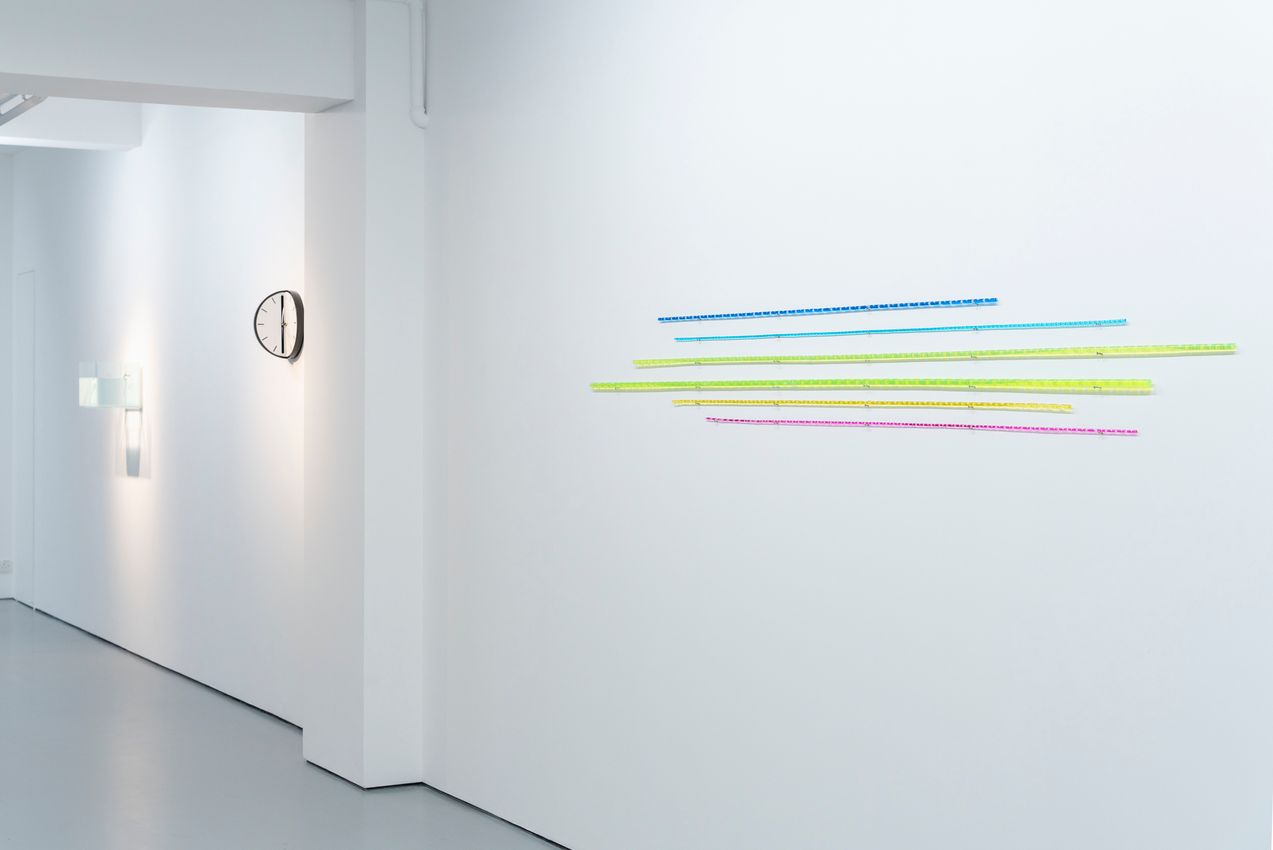
Set Arrows into Bow (2022) mimics a temporary stability. Arrows are gathered and tied together on both ends with a bowstring, then pulled taut to form a huge bow. The work itself deprives the arrows of their original utilitarian function and subordinates them to the rules of form, reminiscent of how isolated individuals are coerced into the unconscious obeying of social distancing measures. The ineffable tension of the arrows and bow becomes a meaningful, even poetic, existence. Spirit Level (2022) is composed of hundreds of mini bubble levels presented horizontally in a line on the wall. Similarly, the irony of transforming a level measuring tool into a level line renders the item’s intended use obsolete.
Living in seclusion within his studio space, Zhou Wendou also created works that revolve around and reflect on time. Immersion Time (2022) questions whether time in water is lengthened or shortened, concentrated or diluted. Does increased water resistance slow down the clock hands’ movement? Who Stole My Time (2022) is a self-deceiving tool, where the clock hands are hidden as the clock is folded. The work simulates how time can trick human minds; though time is always ticking away, our awareness of time fades. Both works illustrate an unexplainable yet provoking concern as well as a confusion against the concept of time caused by being withdrawn from society for a prolonged period of time.
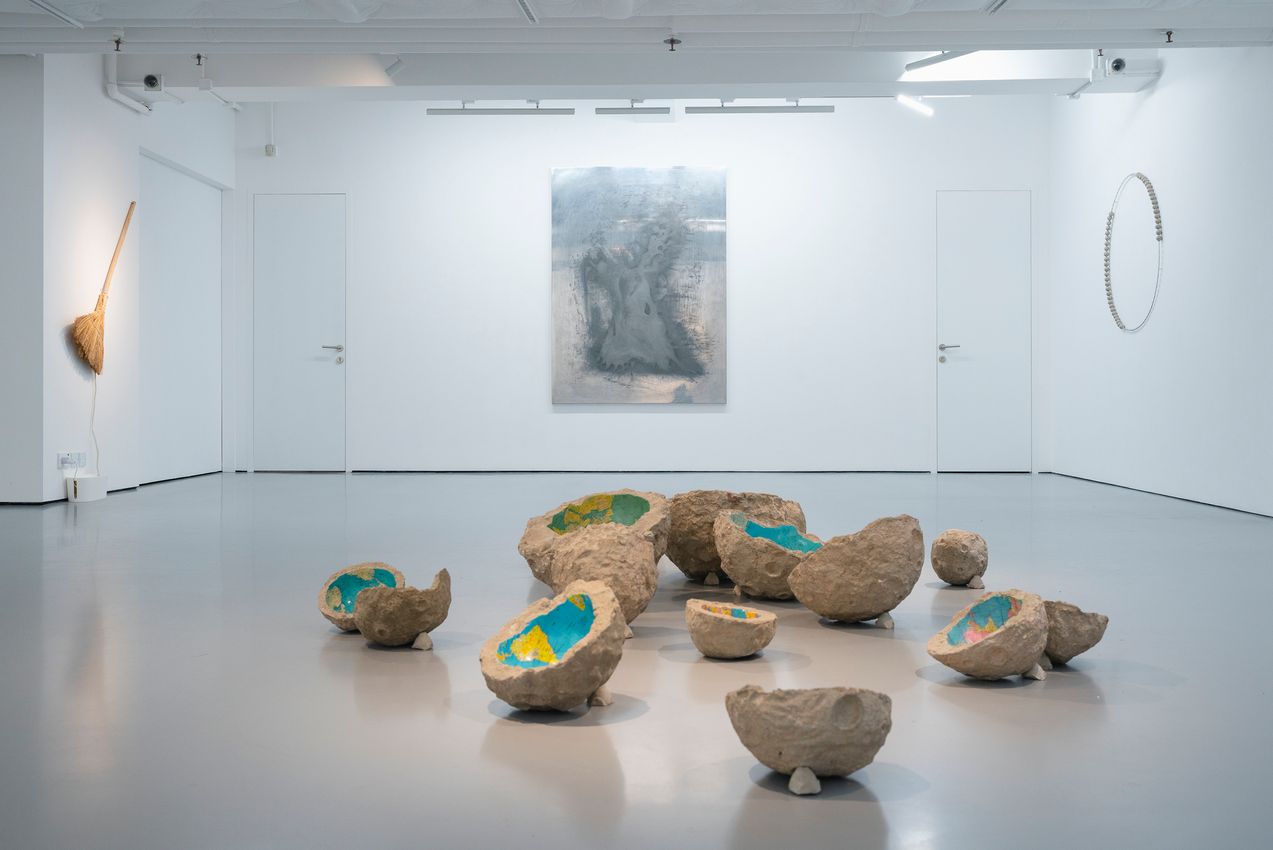
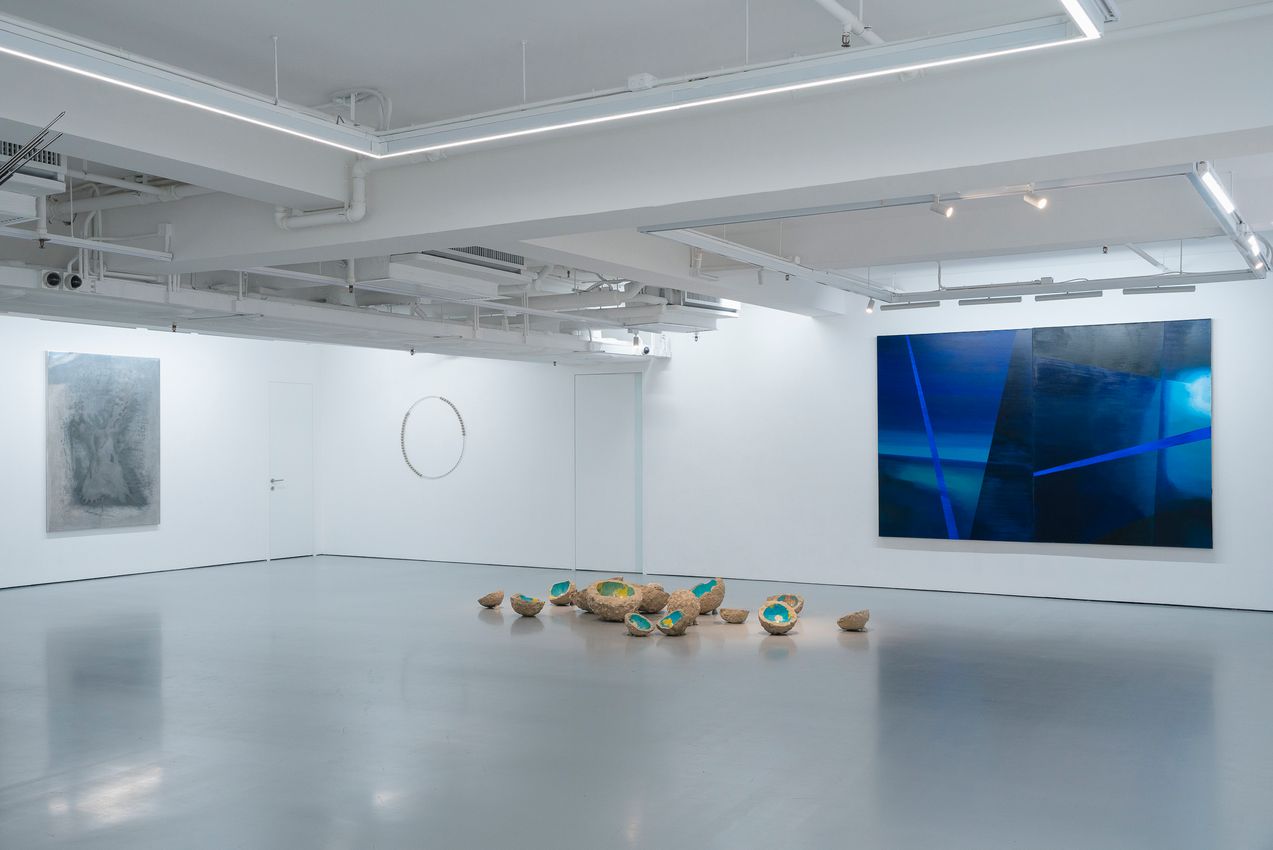
While human beings suffered physically and mentally from the sweep of the virus, the physical world is becoming more broken than ever. Plagues and wars have worsened the impact made in the past few years, making the world order even more fragile and fragmented. Untitled 2022 consists of smashed cement spheres scattered on the gallery floor, echoic of the artist’s metaphoric view of today’s world. Its cement outer layer symbolizes the sealed cage of human loneliness, where human beings live in a blind box arrogantly and omnipotent. Its negative space, a reversed globe, mirrors the fragmentation, an involution and self-enclosure of the current world. The work is Zhou Wendou’s self-reflection on his role as a human living on Earth - People often believe that they are the authority and that they have the power to control everything. Yet, every encounter leads to different consequences and endings, sometimes even destruction. Ultimately, humans only have control over their own recollections and sentiments. To the artist, fragments of memory symbolize emotional alienation and isolation, which can be seen as an attempt to overcome loneliness and the passage of time. It is Zhou Wendou’s hope that visitors will resonate spiritually, be inspired and provoked by his endeavor in conquering the endless cycle of loneliness through their journey in time.
Zhou Wendou was born in 1970 in Beijing. In 1998, he went to Spain studying painting. In his ten years’ learning and artistic career in Spain, his creation has gone from Painting to “Installation + Photography”, and finally installation, which experienced a natural transformation process. After returning to China in 2008, his Western style creation opened a different perspective for Chinese contemporary art. His works possess the humorous banter and good manner, being different from such so-called art creations that are thought as “contemporary”.


DE SARTHE is a pioneering platform for boundary-pushing contemporary art from Asia. It has also contained an influential international presence in modern and post-war art since 1977.

A respected voice in contemporary art discourse.
Focusing on ambitious storytelling and insightful art-world commentary. Ocula Magazine publishes in-depth interviews, critical essays and timely analysis on the artists, exhibitions and ideas driving the global art world.
Learn more about Ocula Magazine
Showcasing the best of the art world.
Ocula partners with galleries from around the world to highlight their artists, artworks and exhibitions. Gallery membership is by application and invitation, with each member vetted by an independent panel.
Learn more about Ocula Membership

Specialises in the sale of major artworks.
Led by a team with deep ties to the world’s leading auction houses, galleries and collectors. Ocula’s advisory team offers bespoke services to high-net-worth clients from around the world who are looking to acquire the best of contemporary and modern art.
Learn more about our team and services