



Press Release

Artist Statement: Body Lesson

This summer, I found myself working in the studio, bare-shouldered and drenched in sweat, as it trickled down the curves of my body, pooling at my waist. I quickly learned that wearing at least a worn T-shirt helped me maintain some semblance of control. In moments of sudden emotion or melancholy, tears would join the mix, and during my menstrual cycle, the sensations intensified, as my entire being felt the rush of fluids from within. Each day, the subtle cyclical changes of my body and mind left their traces on the canvas.

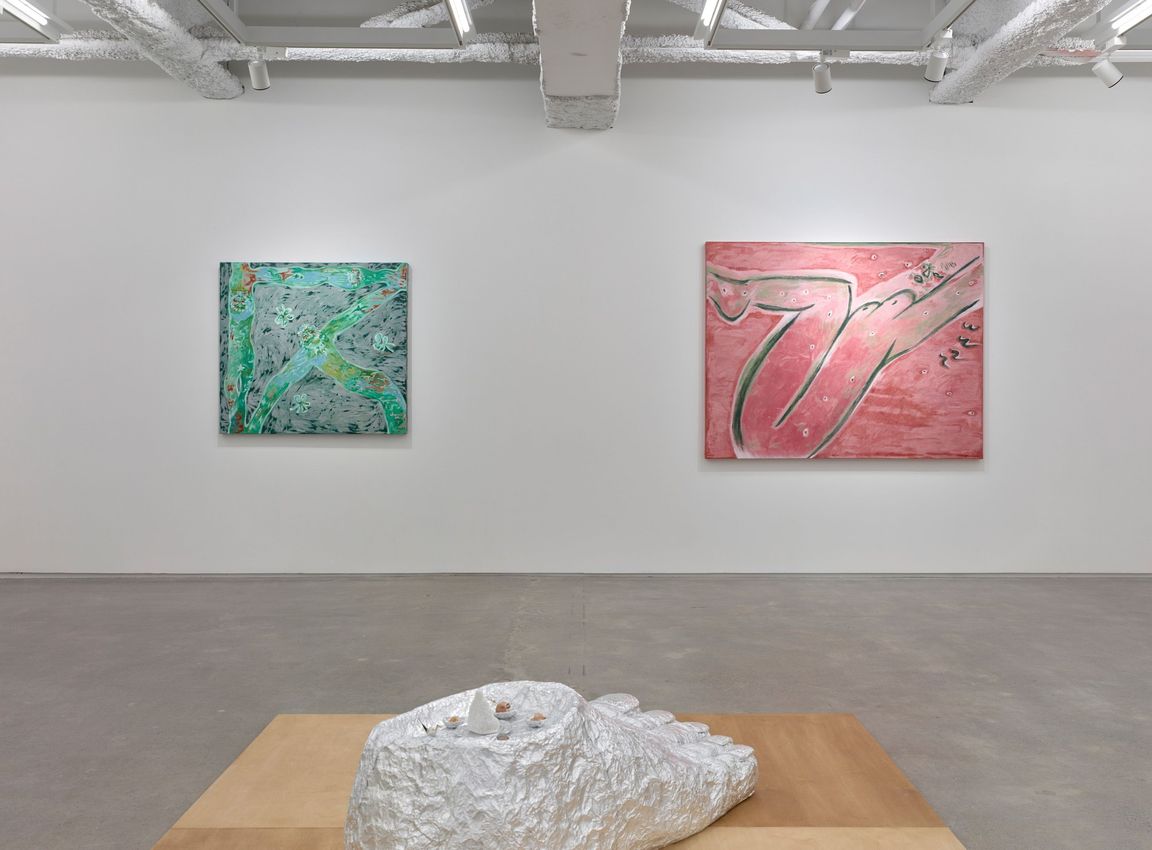
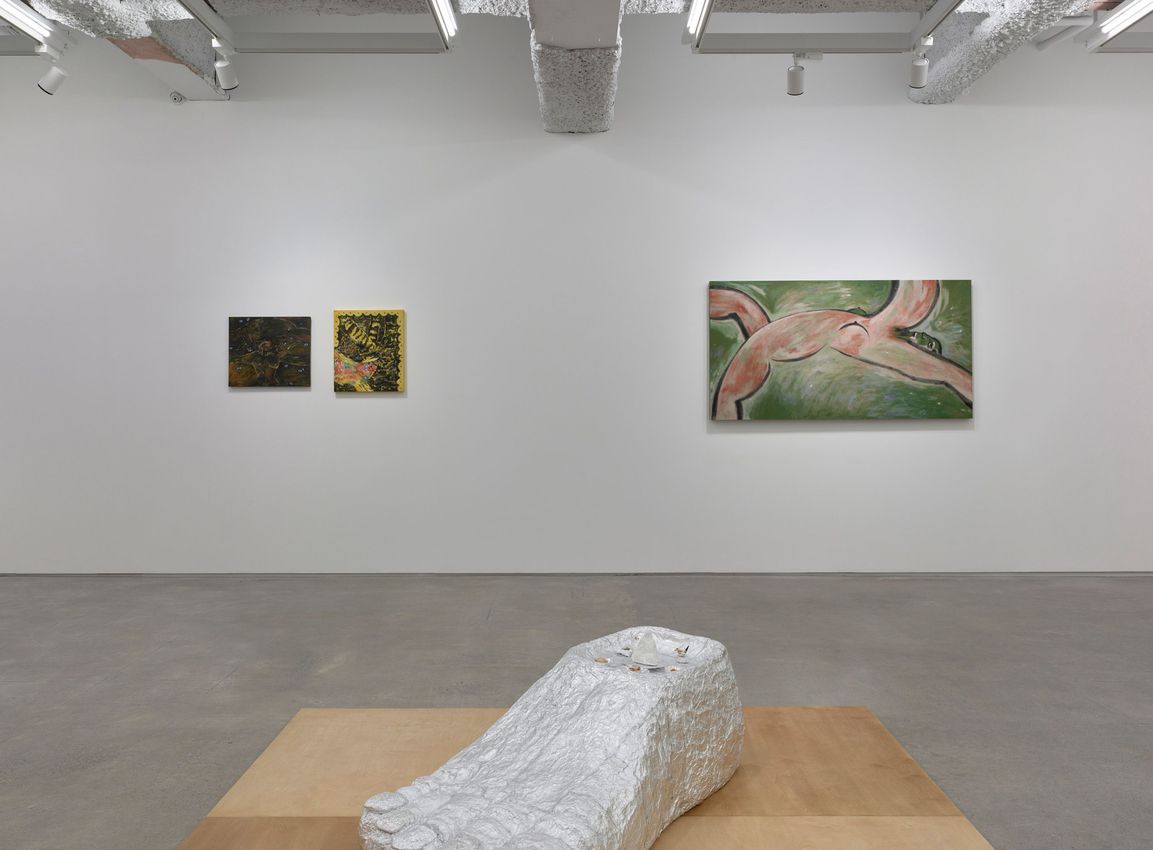
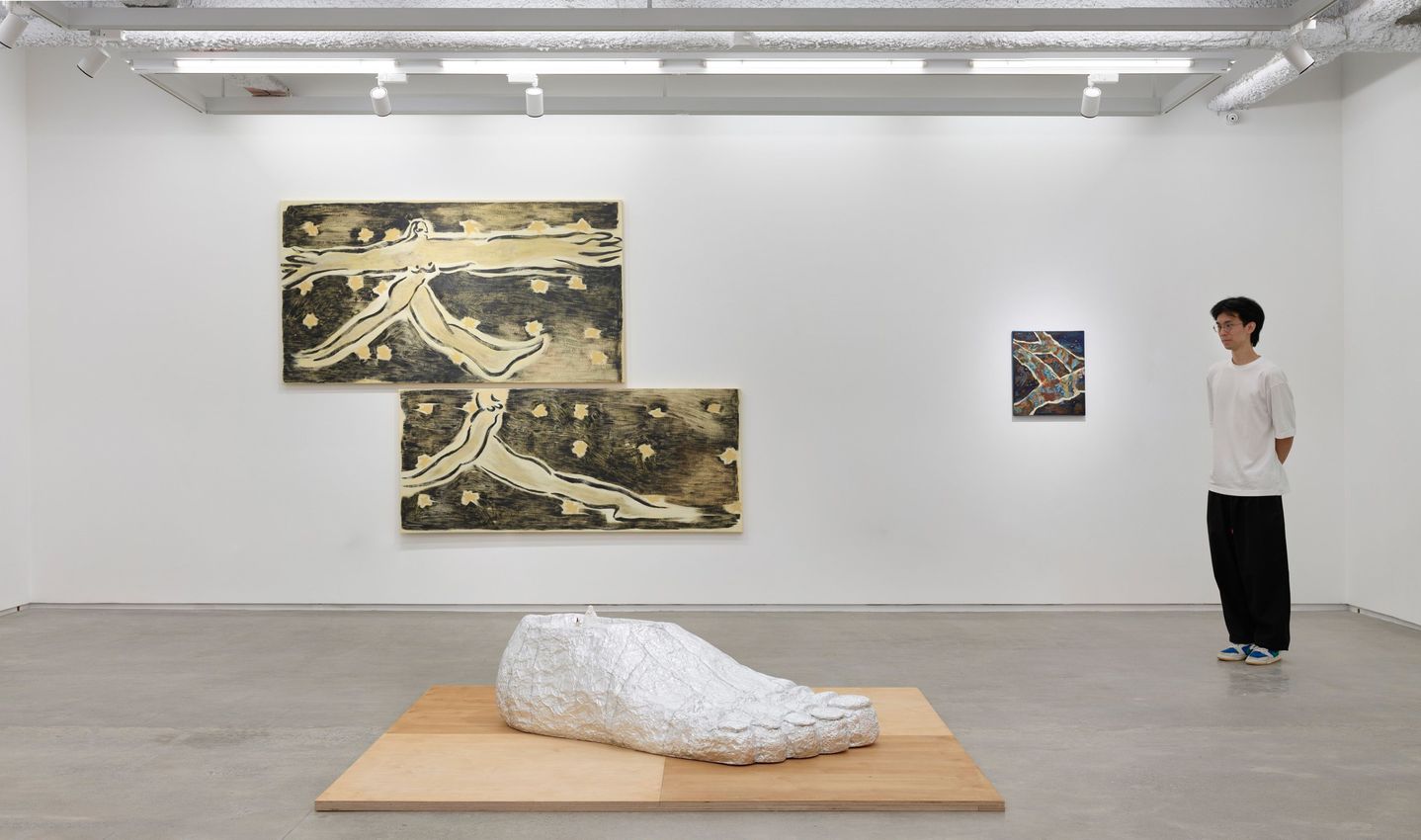
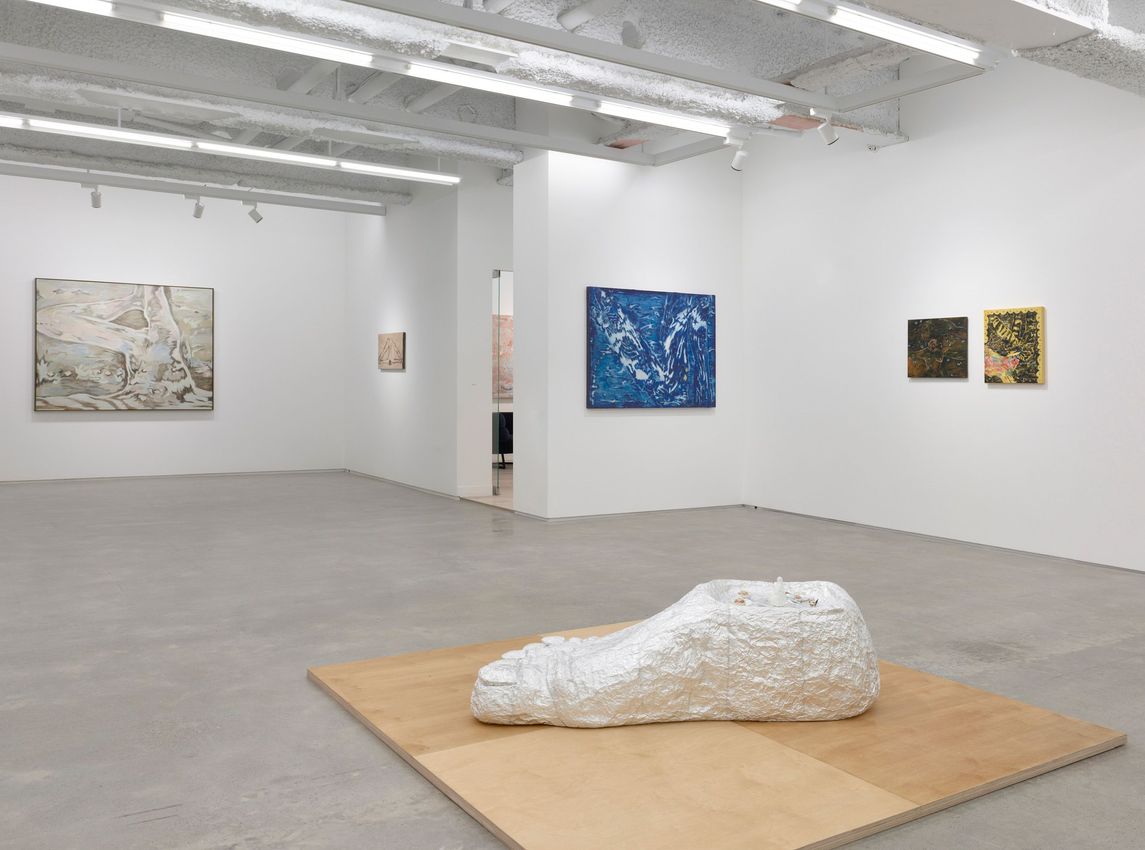
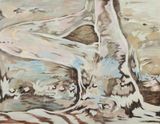
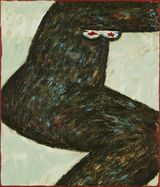
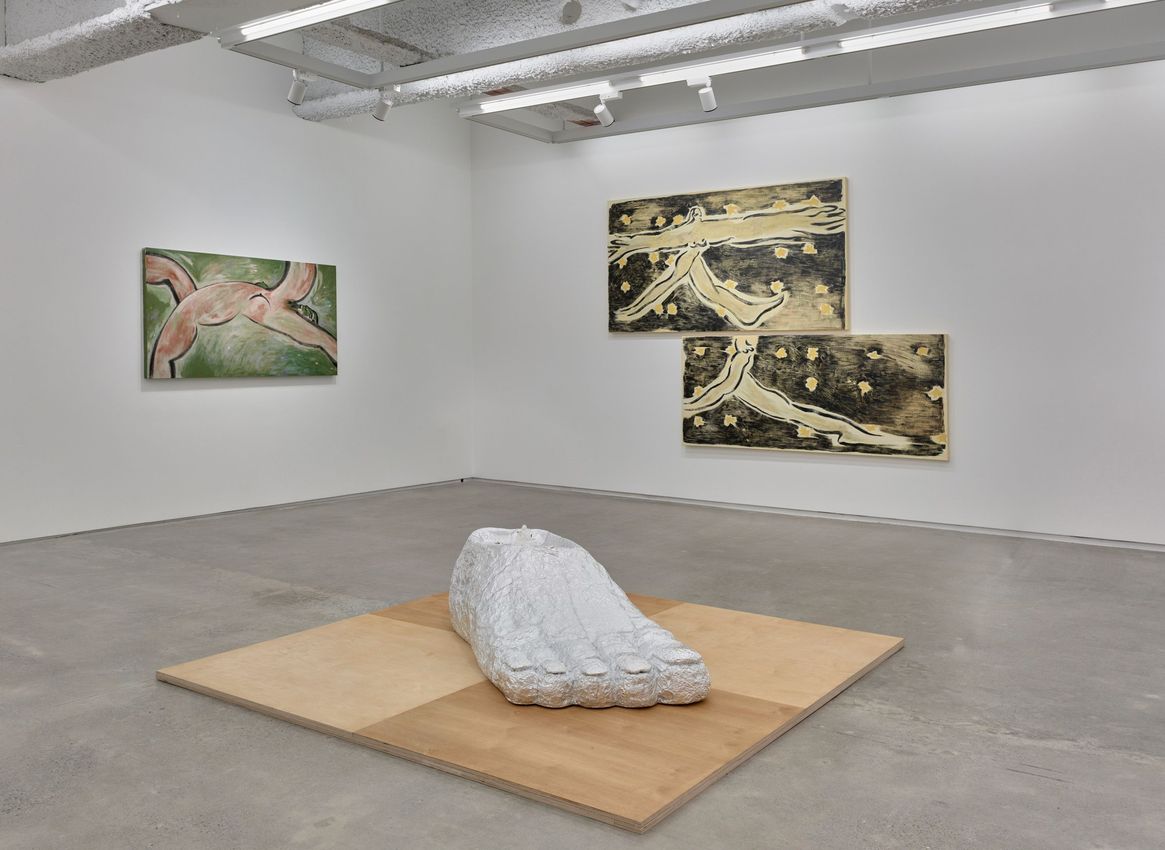
I flow with these bodily fluids, experiencing the ebb and flow of life and death at various levels of awareness . Within the body lies a power I call ” resilience,” a balance between rigidity and flexibility, a convergence of yin and yang. It is not about being invincible; rather, it embodies a relaxed strength. This state is profoundly beautiful, both physically and spiritually, as it yearns to stretch, expand, and merge—much like the universe itself. We are miniature universes, both grand and insignificant. As we marvel at the cosmos, we must remember that the same universe exists within us. My work Big Man captures this essence of the body’s desire to expand.

I often ponder whether one person truly has so much to express. If so, why do I frequently find myself blank during the act of creation? Each time I regain my senses, I question who it was that held the brush.

In preparing for this exhibition, I embraced a primitive existence, akin to a caveman, which brought me profound peace and joy. I simplified my creative process, returning to instinct. When creation transcends the need to express intellectual ideas and becomes as fundamental as eating, drinking, and other physiological needs, I begin to sense the divinity hidden within the mundane. As articulated in Islamic thought, “There is no form and no appearance, and thus means being omnipresent, being everywhere , with no beginning and no end.” This notion is captivating! Especially when working on large pieces, I would often find myself kneeling, only to realize I needed knee pads after developing small sores. The act of moving in and out of the studio took on a ritualistic quality, leaving me exhausted each night. Immersed in this process, I would eat only when hungry and sleep when tired, feeling myself shrink while the space around me expanded, gradually reclaiming my breath. I would inhale slowly, hold my breath, let the brush pause, and as thoughts continued to flow, I would exhale deeply, making bold strokes until I reached a point of stillness, returning to zero.

Every thought of an artist is channeled through the body, creating a rhythm on the canvas. I see artists as practitioners, with their artworks serving as tangible records of their journeys. To walk inward, blindfolded, until the concept of “self” dissolves. In the absence of this self, the identity of the artist becomes irrelevant. I have grown to love this feeling of liberation.

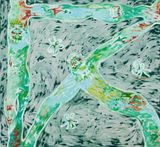
During the creation of Caveman’s Garden, I experienced an unprecedented dialogue with the work. Initially, I was too eager, but it taught me that a calm demeanor requires patience, and that the softness gained through time can withstand infinite expansion. Each piece is like a child, an archetype of personality before socialization. I never know what the final outcome will be or how to begin. Thus, the early stages of creation demand immense energy to establish a rapport and dialogue with the work, allowing the rest to unfold naturally.

The title of the exhibition is Body Lesson.

Living in the city for an extended period has made my body feel as rigid as concrete. The people around me resemble the cold, fractal shapes of buildings. This inability to extend and express often brings me pain—physically and mentally. Layers of politeness, morality, legality, and political correctness create a hard shell around our minds, making us resemble clams, with only a withered body inside.

Pure vitality is continuously analyzed and re-analyzed through algorithms, standardization, and data—BMI, WHR, body fat percentages. The more we dissect the physical, the further we drift from the spiritual. The recent discussions surrounding XY chromosomes at the Olympics exemplify how rational analysis can stifle pure vitality. Body and mind are intertwined; when the body loses faith, so too does the mind and society. Faith represents the core of a life’s operation, a pure energy. As the garden of spirituality withers, we risk forgetting how to feel. If we forget to feel, we forget to love. Over-reliance on instruments for judgment leads to a loss of precious intuition and vitality, leaving us unaware of our body’s desires.

The greatest gift our physical bodies offer is awareness; without the body, awareness fades. In urban environments, our capacity for awareness is severely hindered, with our primary experiences stemming from technological products of the concrete jungle. When our senses are unfulfilled, the body withers. In this new era, we often speak of being ourselves and loving ourselves, but how can we “be” or “love” when our senses are dulled? Over time, this becomes a soulless slogan, as our awareness is obscured. Life seeks an outlet, prompting our minds to construct standardized narratives to hypnotize one another. It is a madness we fail to recognize—our own desiccation.

I find solace in traditional therapies such as acupuncture, massage, gua sha, and cupping. These physical experiences are a wellspring for my creativity. By maintaining focus, I can delve deeper into awareness, akin to the spirit of yoga. Beyond the physical, our bodies possess subtler dimensions, each ancient tradition offering its own philosophies and practices that resonate across time and space. The potential of the physical body is vast, extending beyond current scientific understanding. Through these nuanced experiences, we can traverse all boundaries.

Consider “pain,” a sensation many avoid. Modern society often suppresses even minor discomfort with painkillers, unconsciously linking “pain” with “danger” and “negativity.” Yet, all sensations are neutral; their value is subjective. Pain serves as a language through which the body communicates with us. Suppressing it robs us of the opportunity to engage with our bodies. Pain is a survival mechanism; without it, we might not even realize we’ve injured ourselves. We are born from our mother’s pain, and ancient sacred tattoos are often completed through the experience of pain. In this light, can pain not also be beautiful? Pain can be transcended; all sensations can be traversed, for everything abides by the law of impermanence. The inner self is not a passive recipient but an active participant. When we begin to journey inward and rewrite our habitual responses to sensation, we initiate a true dialogue with our bodies and the universe.

In essence, the work of the body is “awareness.” How we experience our physical selves reflects how we confront death. Perhaps, midway through life, a part of our physical being will depart the ship first, like a lifeboat. Leaving is the final and most challenging lesson. It is a farewell to the vessel that has provided all our experiences, a farewell to our physical bodies. This is why some civilizations and philosophies view life as a practice in facing death.

This lesson has shadowed us for millennia. From the ancient Gilgamesh, the pharaohs of Egypt, the resurrection of Christ, the reincarnation of Buddha, to today’s AI robots.

Some bodies turn toward the underworld, others toward the afterlife; some bear the weight of sin awaiting redemption, while others embrace pain and ecstasy. The myriad forms of flesh have flowed continuously since time immemorial. Life and death may indeed be one and the same. While we possess physical bodies, we refer to it as “life.” The physical body grants us awareness, and through this awareness, we transcend the physical. It is a precious key, the very starting point of all things. Regardless, as long as we live, we cannot escape this lesson.

I hope that one day we can all return to our physical selves, even if just a little closer. Without judgment, only pure experience. Step by step, we will journey back to that pure land, as if returning home.

Though it is indeed a difficult path.

-Ling Yung, 14 August 2024

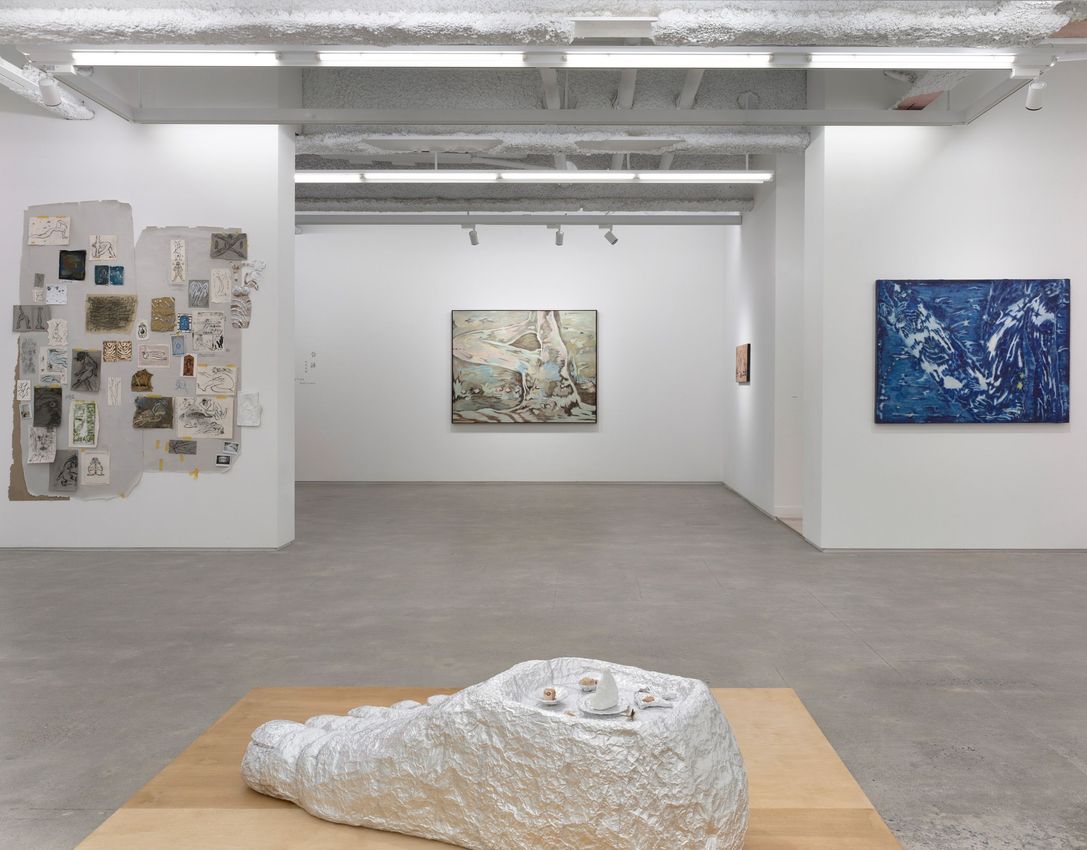
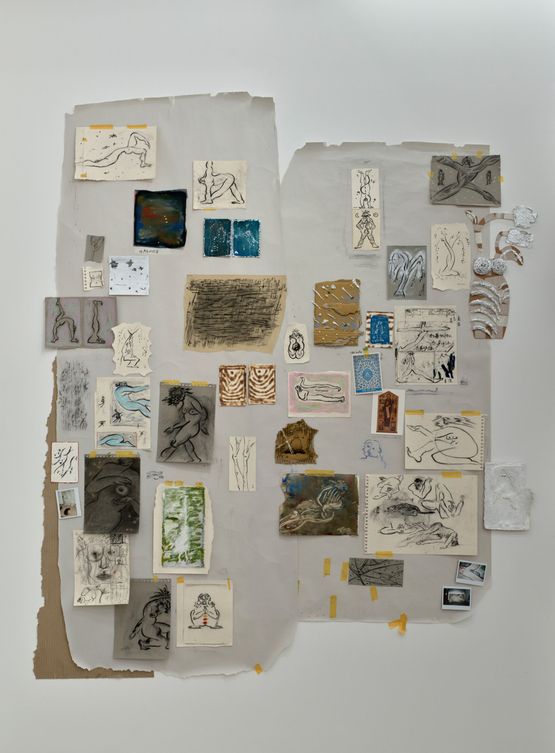
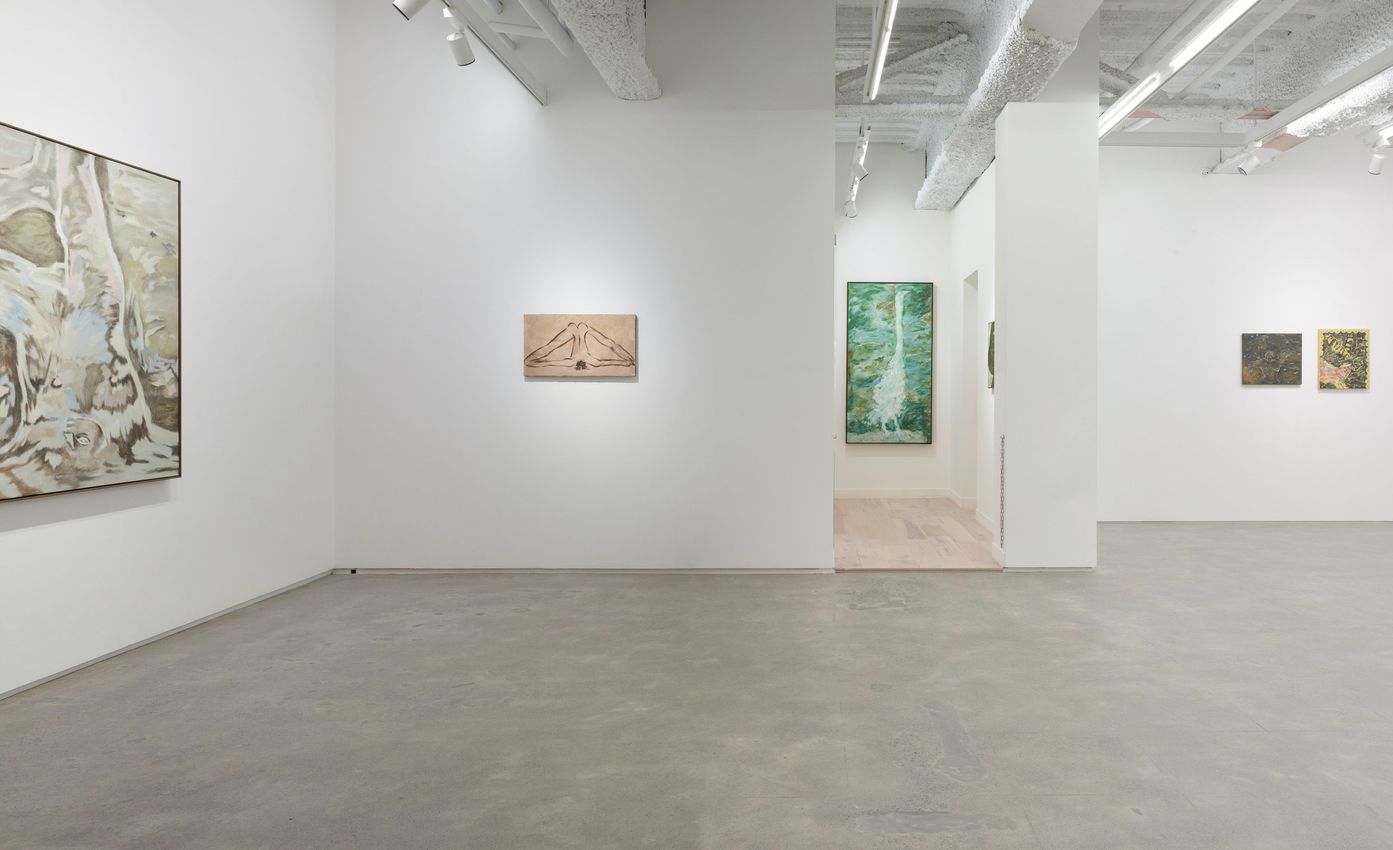
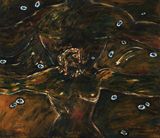
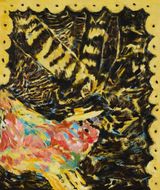
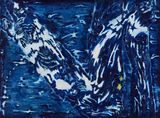
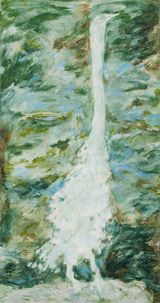
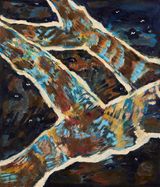
Each Modern is pleased to announce the first solo exhibition of Ling Yung in Taiwan, following her successful solo presentation at Gallery Weekend Beijing 2024. Born in 1992 and with a background in fashion design, Ling Yung is known for her profound inner expression and delicate perception, which permeate her artistic creations. Her paintings draw inspiration from figures, animals, landscapes, and the natural world, continuously evolving as they gracefully oscillate between subtle emotions and mythical abstraction, characterized by intuitive lines, dynamic brushstrokes, and a vibrant color palette.

Ling Yung first captured attention with her solo exhibition “A Woman Without Makeup” at Each Modern’s online viewing room in 2020, followed by her participation in the group exhibition “Paprika” at Each Modern in 2022. In 2024, she presented “As Within, So Without” during Gallery Weekend Beijing, which serves as a prelude to her upcoming exhibition in Taiwan. Both of this year’s solo exhibitions feature large-scale new works alongside exquisite pieces on paper.

“As Within, So Without” symbolizes the artist’s personal journey, with the heavenly stems and five elements metaphorically reflecting her understanding of Eastern philosophy. In contrast, “Body Lesson” represents the connection between the artist’s body and spirit, embodying her awareness of every moment and every inch of her being.

Ling’s lush, brushstroke-filled paintings create an immersive realm, inviting viewers to wander and appreciate the depth of her work. As Ling describes, her creations serve as a form of “connection,” leading to a renewed yearning for faith in nature, spirit, and the body in this new era.

Read More

Installation Views

About the Artist

Lin Yung (b. 1992) was born in Taichung, Taiwan. With the background in Costume Design, Ling Yung found an objection to the stereotypical image of models in the fashion industry. In pursuit of warmth and personal appeal, Ling turns to the fine art’s realm and develops her unique artistic language.

View Artist Profile

Also Exhibiting at Each Modern

About the Gallery

WE BELIEVE THAT ART GENERATES VALUE AND CONTINUES TO SHAPE THE FUTURE.

View Gallery Profile
Address
3/F 97 Sec.2 Dunhua S. Rd
Da’an Dist
Taipei
Taiwan
Opening Hours
Wednesday - Saturday
12:30 - 18:30
(1)
Taipei 3/F 97 Sec.2 Dunhua S. Rd, Da’an Dist
Each Modern
3/F 97 Sec.2 Dunhua S. Rd, Da’an Dist, Taipei, Taiwan
+886 2 2752 7002
https://eachmodern.com/en/

Opening hours
Wednesday - Saturday
12:30 - 18:30
The art world in focus