Press Release

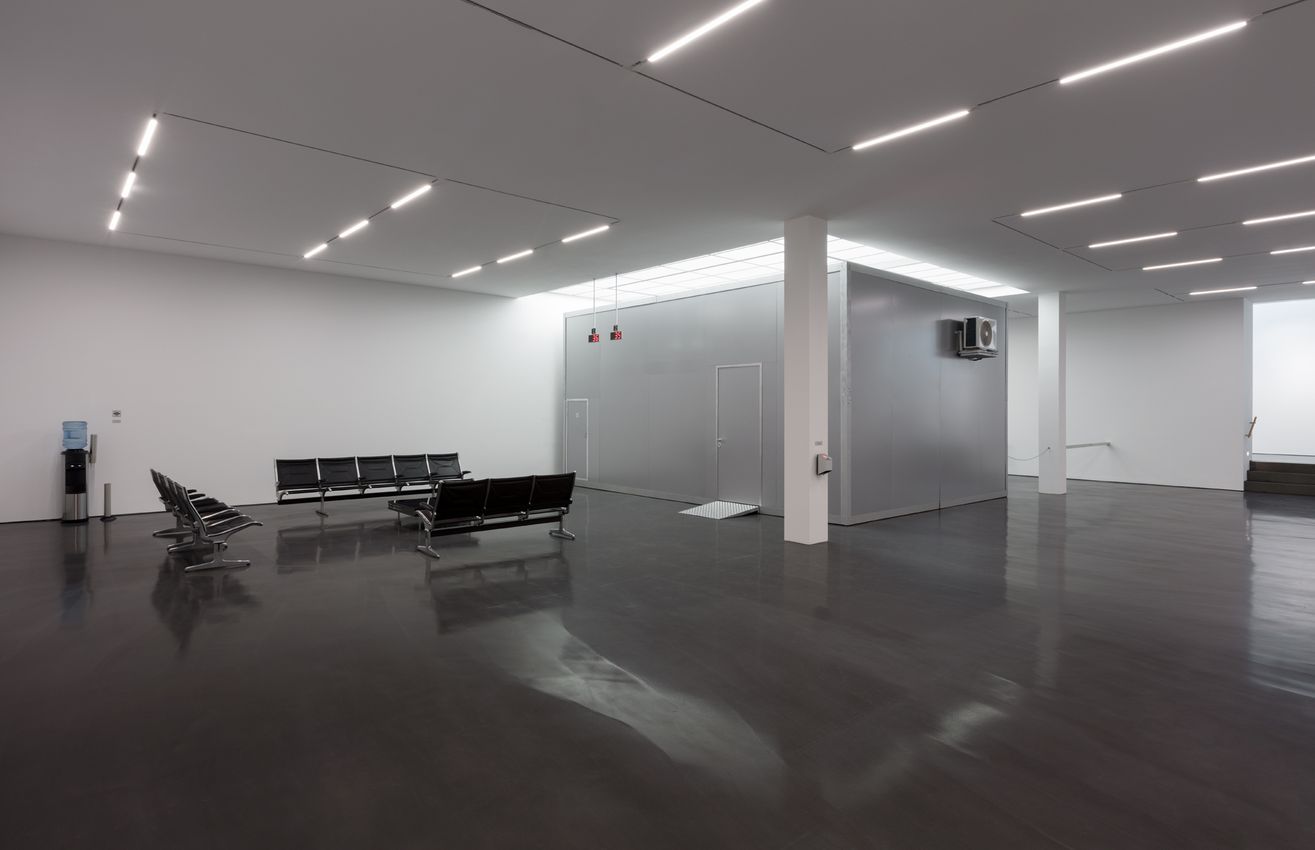
Esther Schipper is pleased to announce Simon Fujiwara‘s first solo exhibition with the gallery. The artist, who joined the gallery in January 2018, will present a new large-scale installation, which will feature an immersive simulator experience. The exhibition opens on August 31 and runs through September 30, 2018.

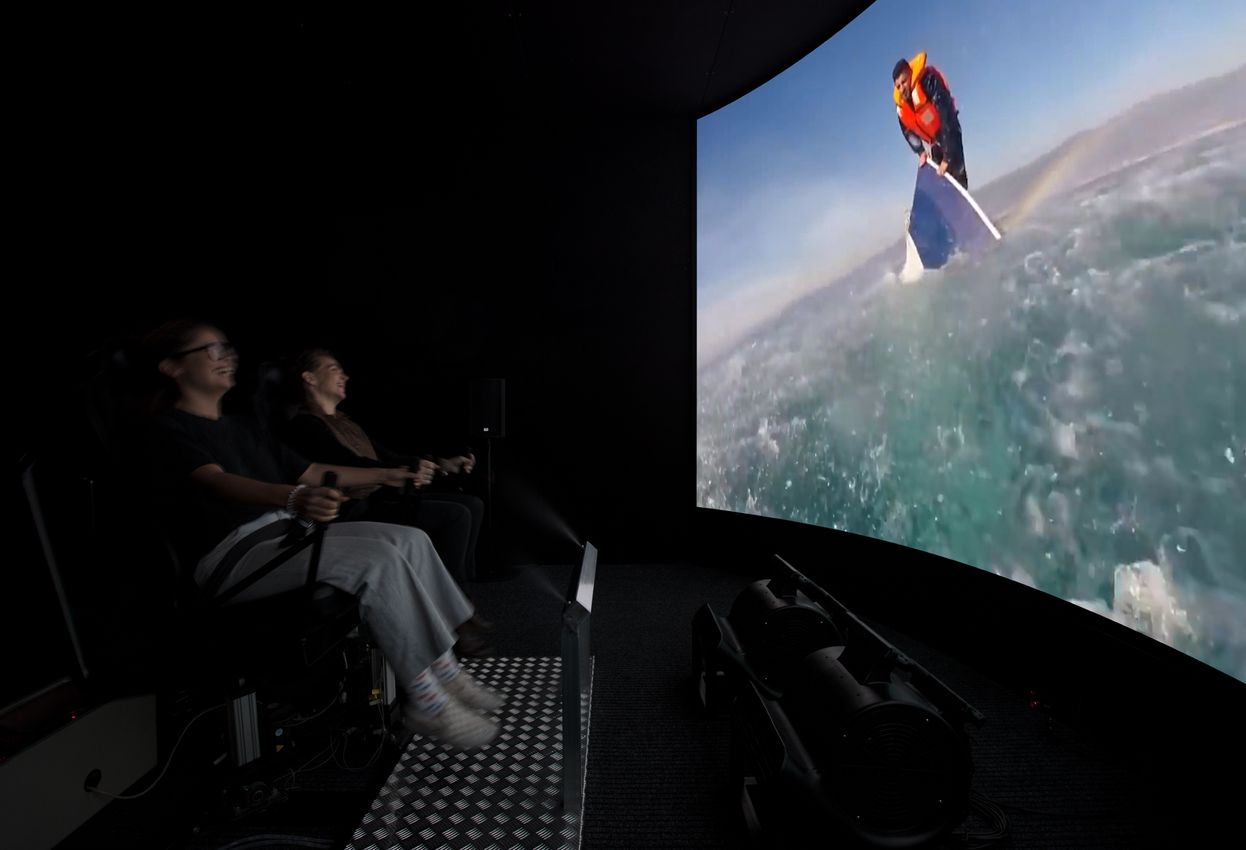
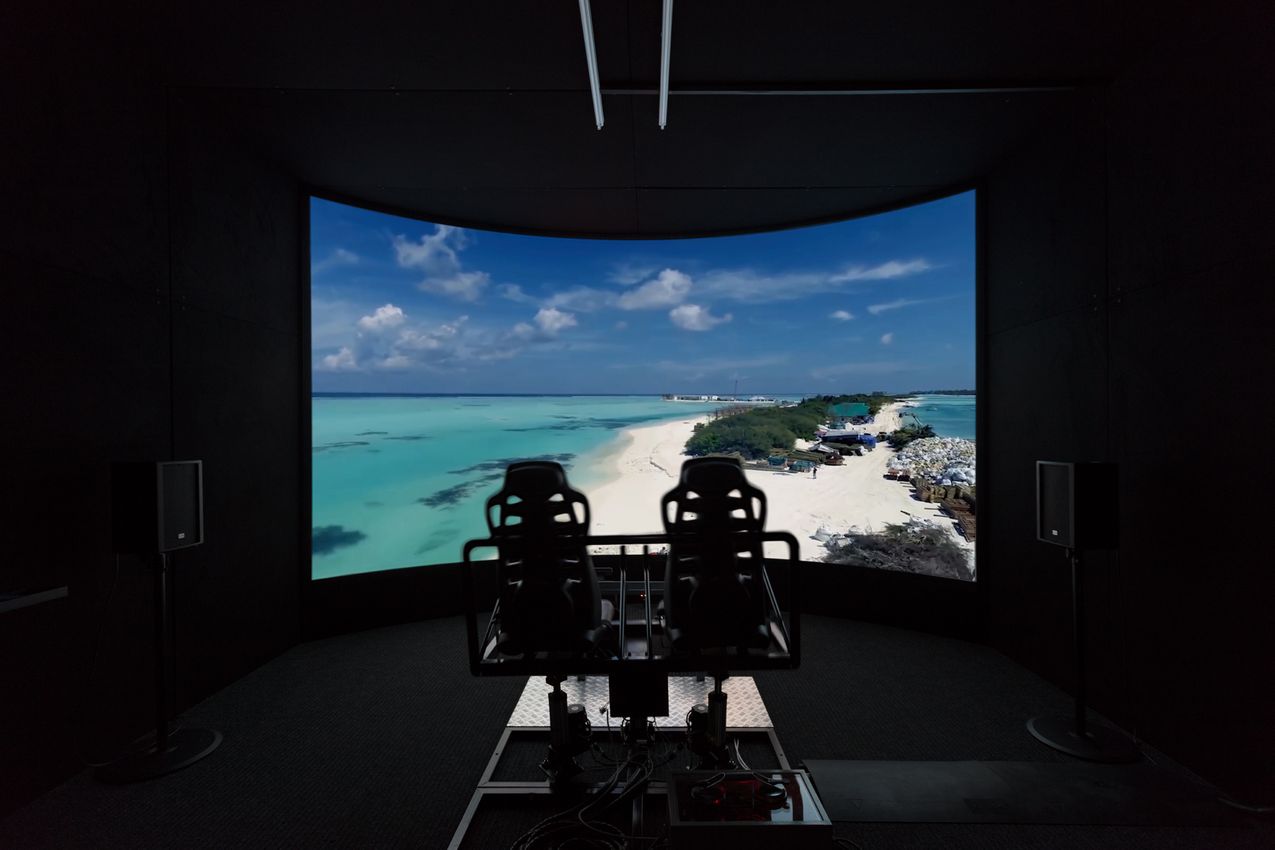
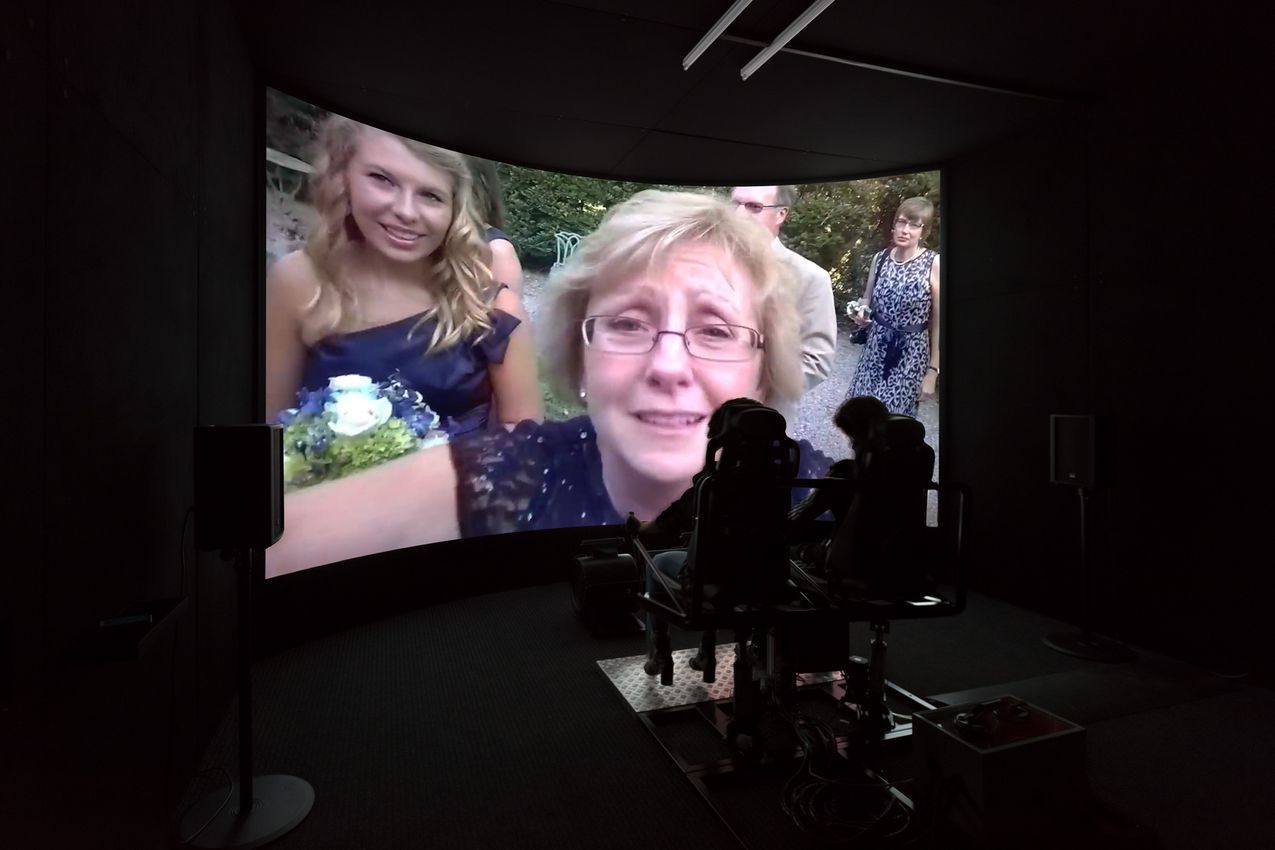
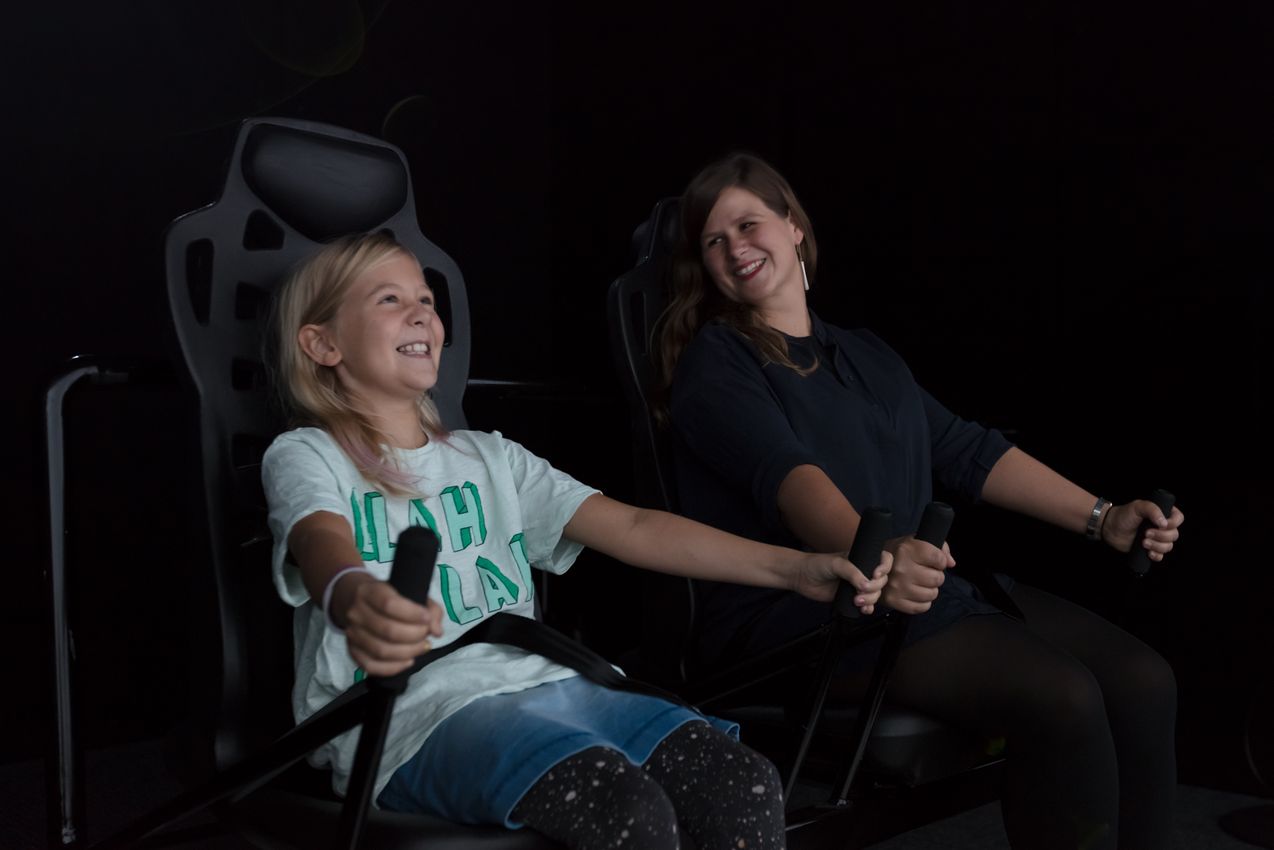
Empathy I was inspired by the artists’ experiences of several sites of popular leisure, from mass historical tourist attractions such as Neuschwanstein Castle to theme parks such as Disneyland Paris. Closely collaborating with a company that produces theme park rides, Fujiwara began to develop his own immersive simulator experience that, rather than dealing with fantasy or historical experiences, brings the viewers into the ‘real world’ by simulating found footage and first person perspective camerawork. Fujiwara’s simulator ride not only physically mimics the gestures of the various people’s experiences in the film, but also suggests a physical connection between the images on the screen and the audience’s own bodies through the synchronisation of the motion platform seating.

Fujiwara’s point of departure for this work was his interest in the accelerated dynamics of today’s production and consumption of images and the increasing fetishisation of the individual experience and in an age of mass social media. In Empathy I, Fujiwara radically shifts the focus from the image to the body, describing the work as a ‘sculptural experience’ rather than a film. Experienced in an intimate setting–the work can only be viewed by two visitors at a time–Empathy I translates and augments a range of the experiences of others–from the tragic, ecstatic to the banal–into one’s own physical experience. As such, the duration of the work is a function of the human body’s biological constraints, and its content selected according to the brain’s ability to register meaning under such intense simulated physical conditions. In this sense the images evoke the primary bodily experience of danger, stillness and speed, sadness and pleasure.

In a socio-technological climate where the individual is increasingly prized over group or mass identification, Empathy I reflects on an increasingly simulated world which is at once thrillingly emotive and disturbingly efficient.

Over the past decade, Fujiwara (born 1982 in London, lives and works in Berlin) has become known for his staging of large, complex exhibitions that explore the deeply rooted mechanisms of identity construction for both individuals and societies. Addressing the inherent contradictions of image and narrative making–from social media and self-presentation to marketing and history formation–Fujiwara revels in the complexity and paradox of our simultaneous quest for fantasy and authenticity. Crossing multiple media, from sculpture and installation to video and painting and mining worlds as diverse as advertising and archaeology, Fujiwara’s works are a constant reportage on the real-world sources from which they draw inspiration. However, rather than simply presenting commentary, the artist creates a unique universe of his own-one that is populated with challenging and often absurd new narratives that are as intellectually rigorous as they are emotionally stimulating.

The catalogue of Fujiwara’s major solo presentation at the Kunsthaus Bregenz, Hope House, is forthcoming in August. The book features essays by Joshua Simon, Thomas D. Trummer and Norman Rosenthal and complete documentation of the exhibition which included a full-scale replica of the Anne Frank House Museum reconstructed within the Kunsthaus Bregenz that took its inspiration from a ‘build your own’ model of the Anne Frank House Museum and a comprehensive overview of recent work.

Read More

Installation Views

About the Artist

Simon Fujiwara’s early installations and narrative performances (2008–2012) largely traced his own identity formation as a multi-part auto-fiction presented through the re-staging of his own childhood events, reconstructions of historical places associated with his conception and the mythologising of his origins as an artist. His work can be seen as a complex response and sometimes critique of the increasing cultural obsession with self-presentation that new technologies offered to his generation. Working often in collaboration with others in the telling of supposedly personal stories, Fujiwara’s work explores the concept of the contemporary individual –self-determined, self-narrativised, unique–and presents a highly contingent notion of the self that can only be defined through the participation of others.

View Artist Profile

Also Exhibiting at Esther Schipper

About the Gallery

Esther Schipper founded the gallery in 1989 in Cologne. In 1997 the gallery relocated to Berlin. Through more than three decades of continuous exhibition practice, the gallery has established itself as a major force not only in Germany but in an international context, with offices in Paris and Seoul and representatives in France, Spain, the United States, Latin America, South Korea, Taiwan and China. The gallery holds up to ten gallery exhibitions as well as multiple off-site projects each year and participates in leading art fairs across the globe.

View Gallery Profile
Address
Potsdamer Strasse 81E
Berlin
Germany
Opening Hours
Tues - Sat, 11am - 6pm
And by appointment
(1)
Berlin Potsdamer Strasse 81E
Esther Schipper
Potsdamer Strasse 81E, Berlin, Germany
+49 303 744 331 33
http://www.estherschipper.com

Opening hours
Tues - Sat, 11am - 6pm
And by appointment
The art world in focus