Tutto fu ambito
e tutto fu tentato.
Ah perché non è infinito
come il desiderio, il potere
umano?
—Gabriele D’Annunzio*
Gagosian is pleased to announce Tutto, an exhibition of new paintings by Walton Ford at 522 West 21st Street.
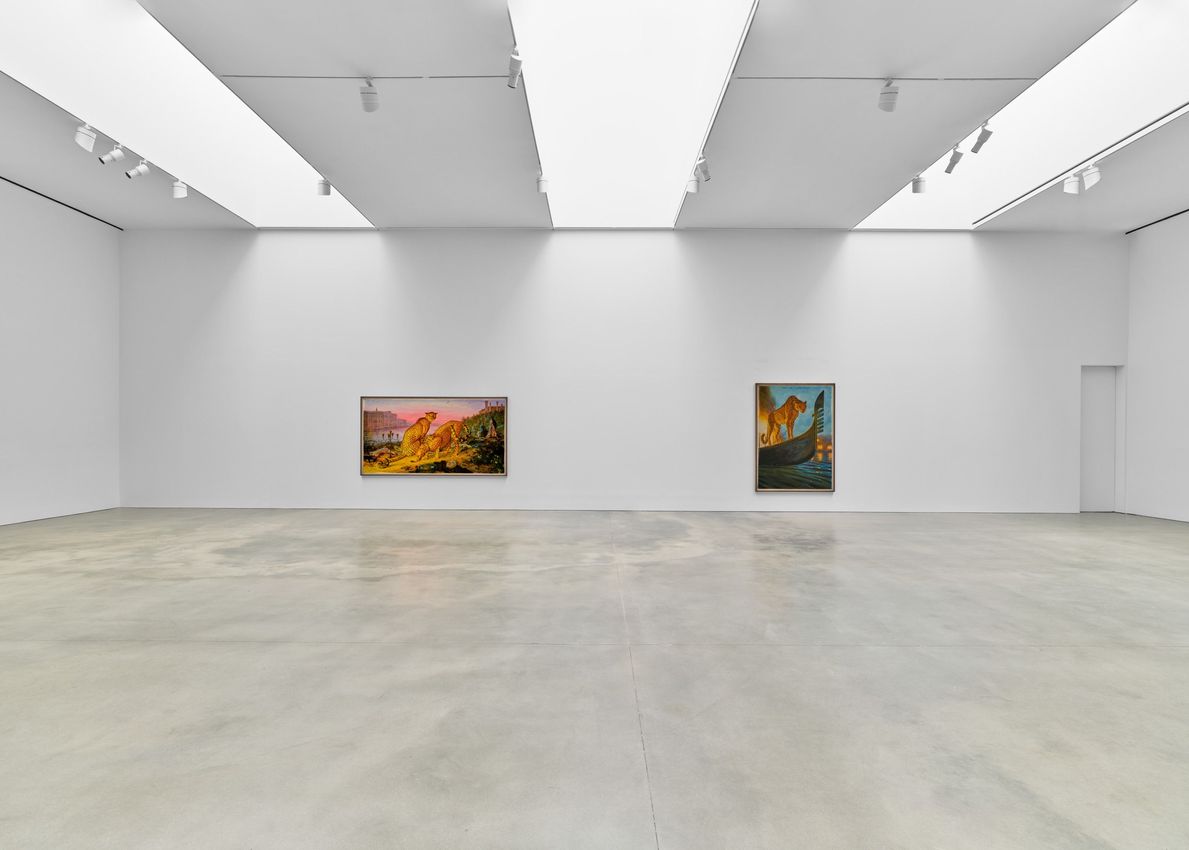
Ford’s practice centers on how animals are represented and the intersections of animal and human lives. Tutto is his first body of work to focus on a single individual: the eccentric Milanese heiress Luisa Casati (1881–1957). Depicting the exotic animals that she kept, Ford portrays her years in Venice shortly before World War I.
Known as La Marchesa, Casati was one of Europe’s wealthiest women and is legendary for her extravagant pursuit of aesthetic extremes and social recognition. Startled onlookers describe how she wore snakes as necklaces, walked with a pair of cheetahs in Venice’s piazzas, and attended an opera clad in a headdress of peacock feathers that were stained with the blood of a freshly killed chicken.
Declaring her desire to be “a living work of art,” Casati commissioned elaborate dresses from leading costumiers of the era including Paul Poiret and Léon Bakst, designer for the Ballets Russes. Obsessed with immortalizing her image, she was the subject of portraits by artists such as Giovanni Boldini, Romaine Brooks, Adolf de Meyer, Augustus John, Man Ray, and Kees van Dongen, and a patron of projects by the Futurists. In 1910, Casati leased the Palazzo Venier dei Leoni on Venice’s Grand Canal, an eighteenth-century structure that would later be occupied by Peggy Guggenheim, and which today houses Guggenheim’s collection. Casati transformed its rooms and gardens into a lavish setting for her theatrically bohemian soirées.
Reinforcing her fierce reputation, Casati also accumulated exotic animals, including greyhounds, white peacocks and albino blackbirds, parrots, monkeys, a python, and most famously, cheetahs. Ford imagines episodes from the marchesa’s life at the end of the Belle Époque from the perspective of these creatures. “I wanted” he notes, “to paint pictures about the world’s fastest animals living a fast life with a wild woman in Venice.”
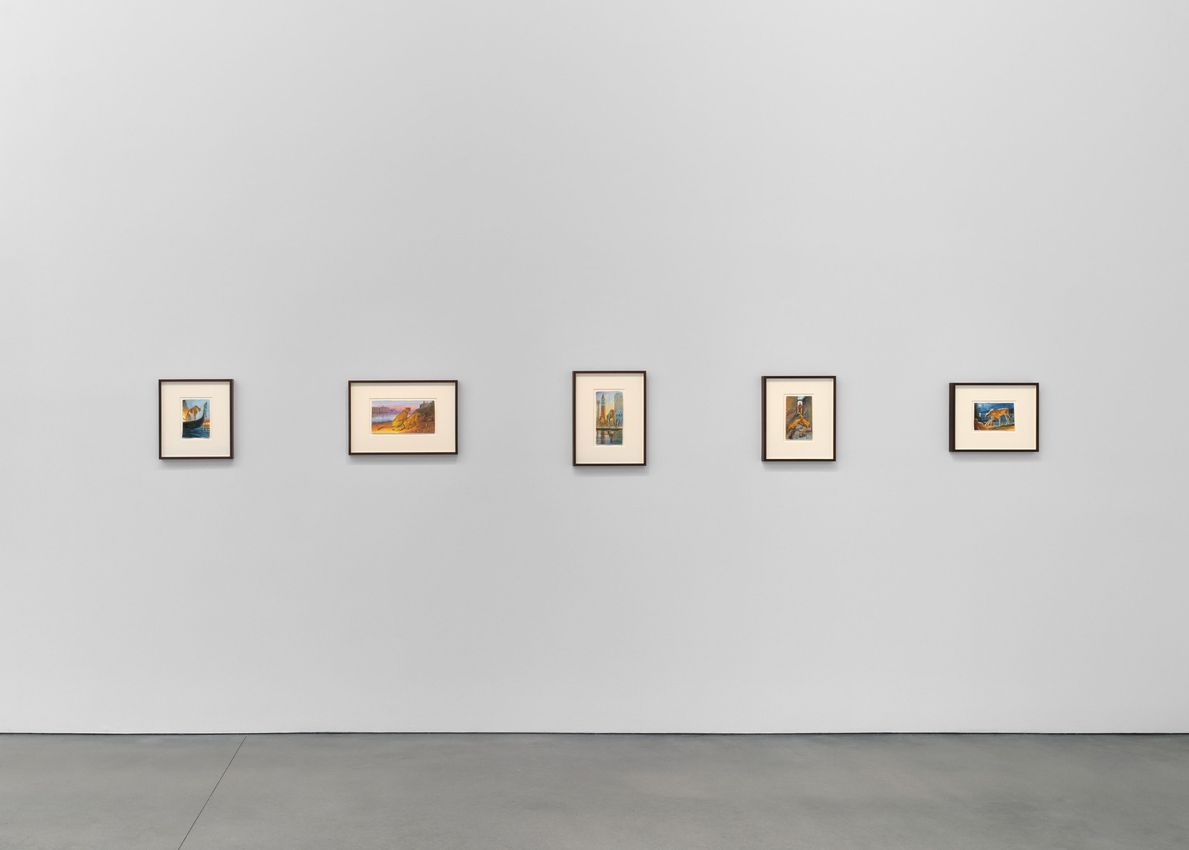
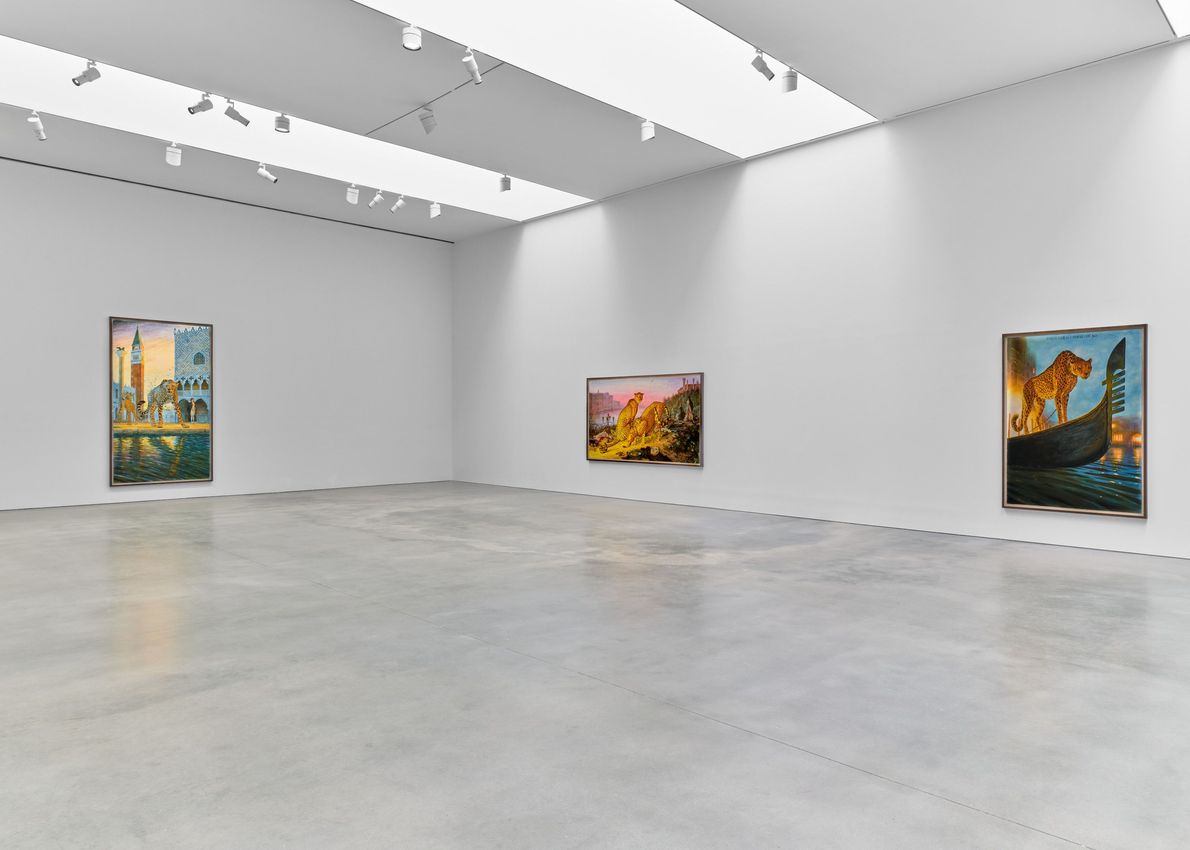
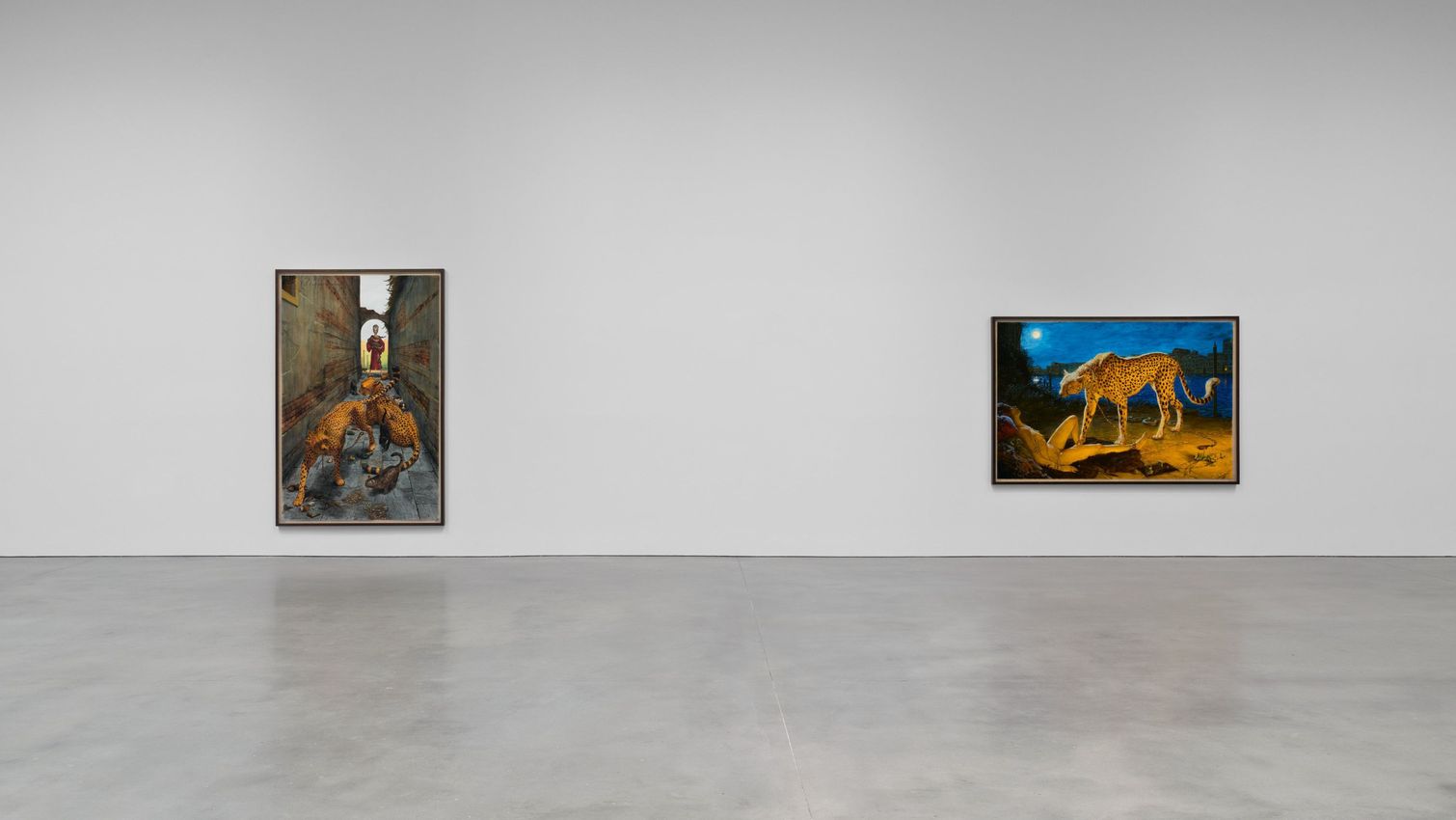
In La levata del sole (2025), Ford envisions Casati at sunrise, wearing only a fur coat as she strolls around Piazza San Marco with a pair of cheetahs in jeweled collars. Set on her palazzo’s rooftop terrace, La Marchesa (2024) focuses on the regal cats as they scavenge for food amid candelabras, bottles, goblets, discarded clothing, masks, and a tambourine—the remains of an elaborate masquerade that double as allegories of excess. Casati appears in the background, standing topless in an eighteenth-century tricorn hat, next to one of the attendants whom she hired for their dramatic presence.
A nocturnal scene on the palazzo’s dock, Tutto fu ambito e tutto fu tentato (2025) pictures one of the cheetahs eyeing the marchesa, nude and sleeping next to an opium pipe. The painting’s title, and that of the exhibition, comes from a poem by Gabriele D’Annunzio, a prominent writer of the era who had a long and tumultuous affair with Casati.
The cheetah in Forse che sì forse che no (2024) stands snarling in a gondola before iconic Venetian architecture, with glowing entranceways that suggest both evening illumination and flames. The painting is named after D’Annunzio’s 1910 novel (whose title translates as Maybe Yes, Maybe No), which was inspired in part by Casati. The writer would have a second career as an Italian nationalist during and after the war, devising a theatrical politics that presaged Italian fascism. Taking on substantial debts, Casati would by the 1930s lose her fortune and her menagerie of animals, going on to a relatively meager life in London.
*Everything was dared
and everything attempted.
Ah, why is human power
not as infinite as desire?


Walton Ford’s monumental watercolors expand the visual language and narrative scope of traditional natural history painting, meditating on the often violent and bizarre moments at the intersection of human culture and the natural world. Although human figures rarely appear in his paintings, their presence is always implied.


A respected voice in contemporary art discourse.
Focusing on ambitious storytelling and insightful art-world commentary. Ocula Magazine publishes in-depth interviews, critical essays and timely analysis on the artists, exhibitions and ideas driving the global art world.
Learn more about Ocula Magazine
Showcasing the best of the art world.
Ocula partners with galleries from around the world to highlight their artists, artworks and exhibitions. Gallery membership is by application and invitation, with each member vetted by an independent panel.
Learn more about Ocula Membership

Specialises in the sale of major artworks.
Led by a team with deep ties to the world’s leading auction houses, galleries and collectors. Ocula’s advisory team offers bespoke services to high-net-worth clients from around the world who are looking to acquire the best of contemporary and modern art.
Learn more about our team and services