Press Release

“Attached as we are to the senses, we manifest the sheer porousness of boutiques. The boutiques are categories. We have plenty of time. The problem is not how to stop, but how to articulate the politics of their passage. Every culture is the terrible gush of its splendid outward forms.”

—Lisa Robertson, Spatial Synthetics: A Theory

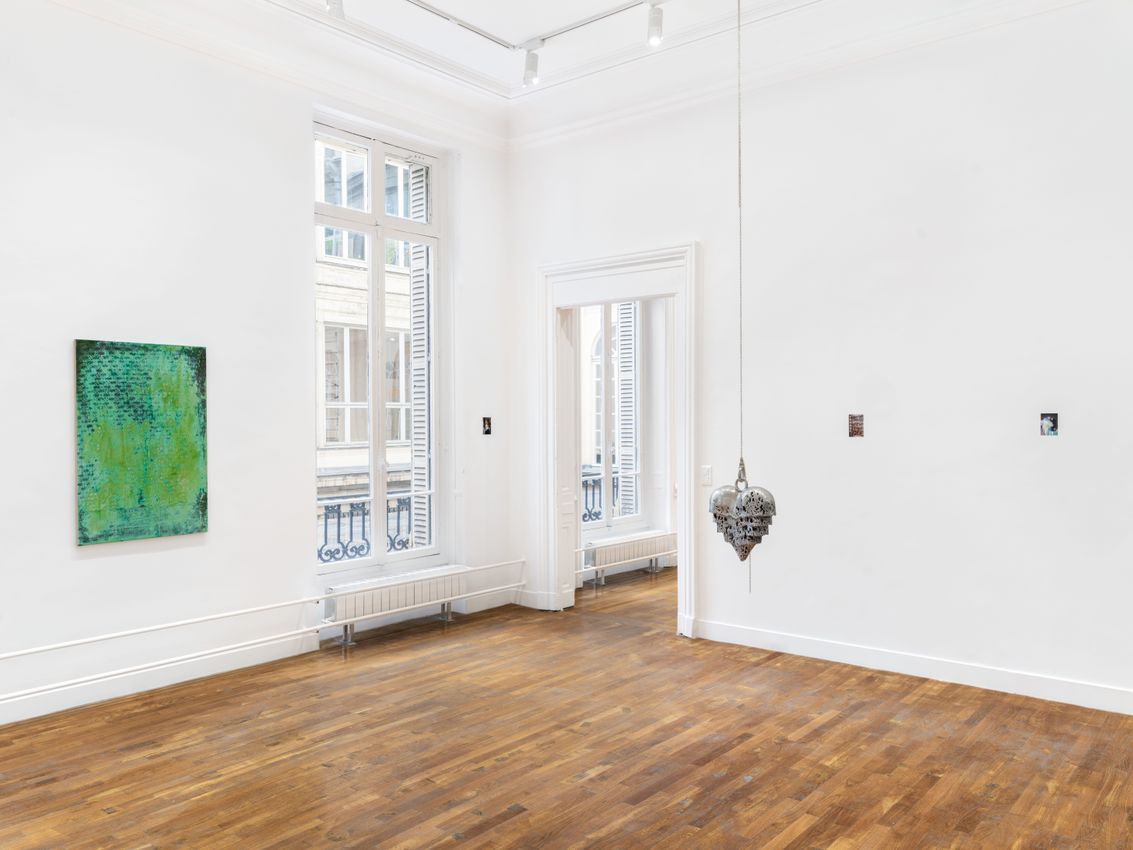
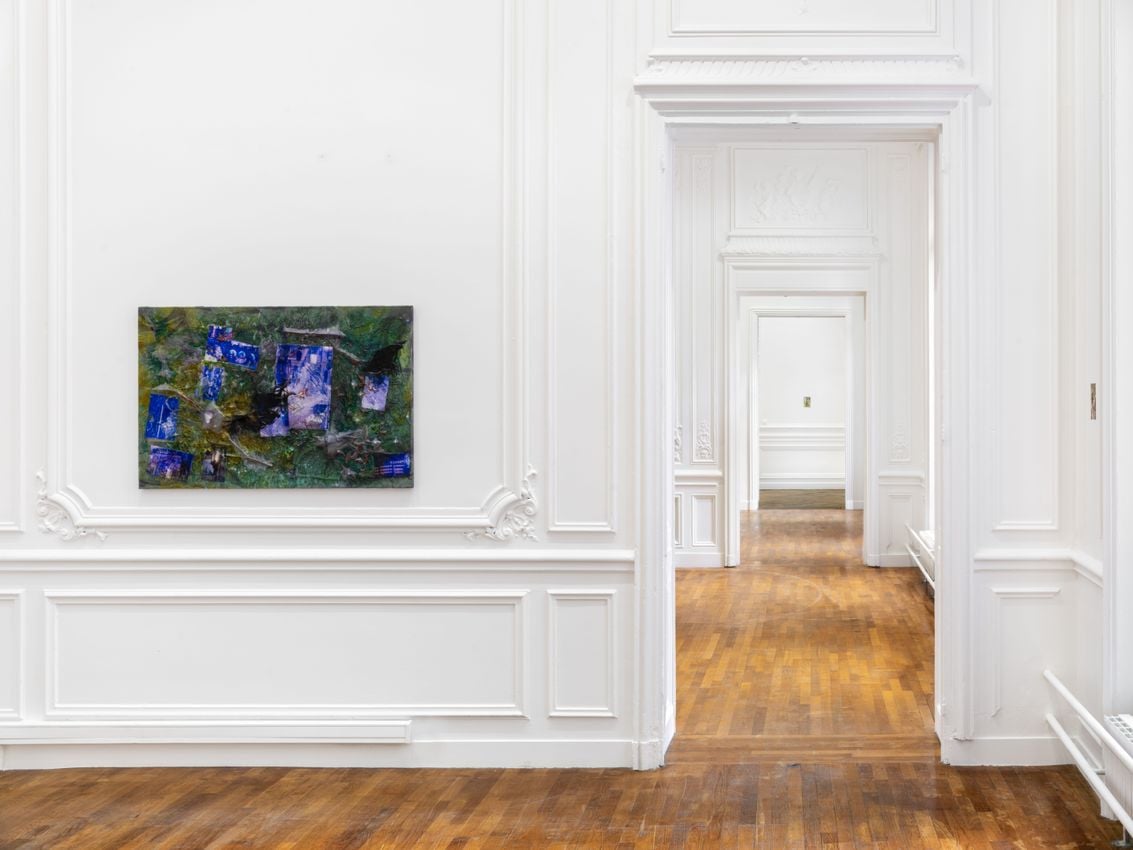
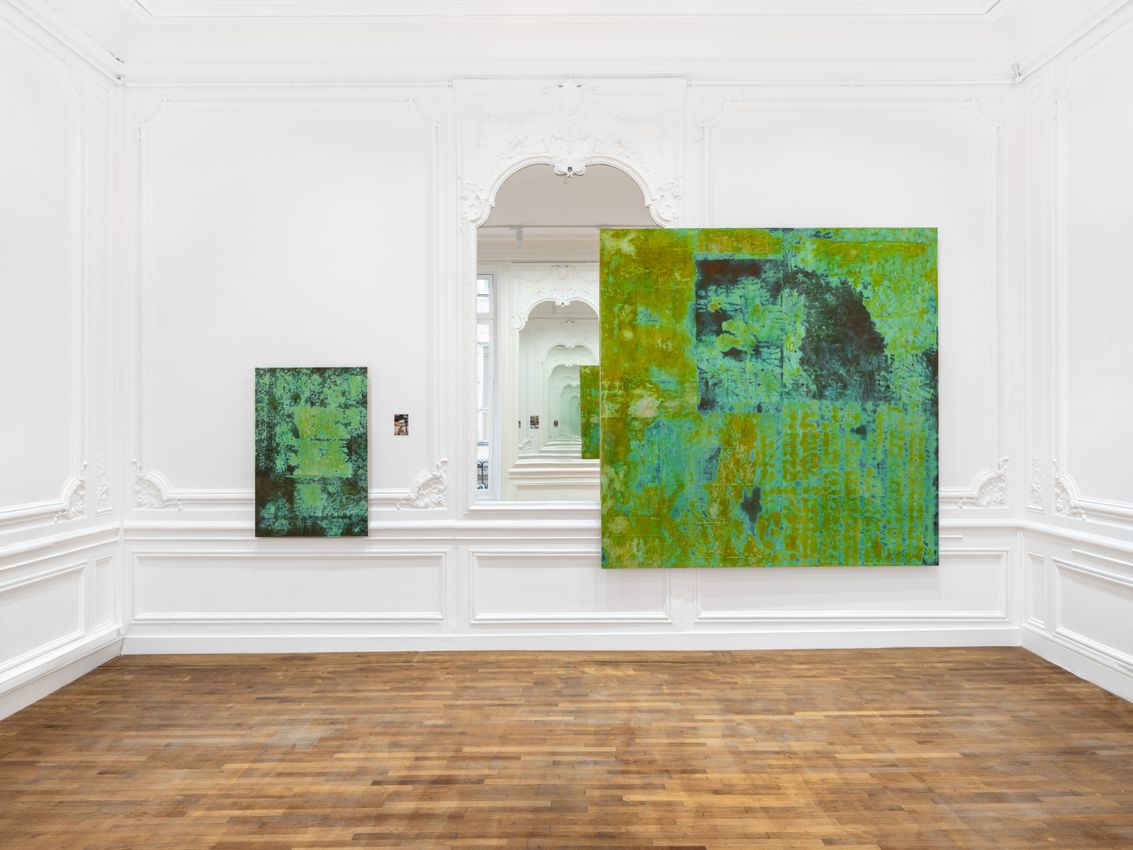
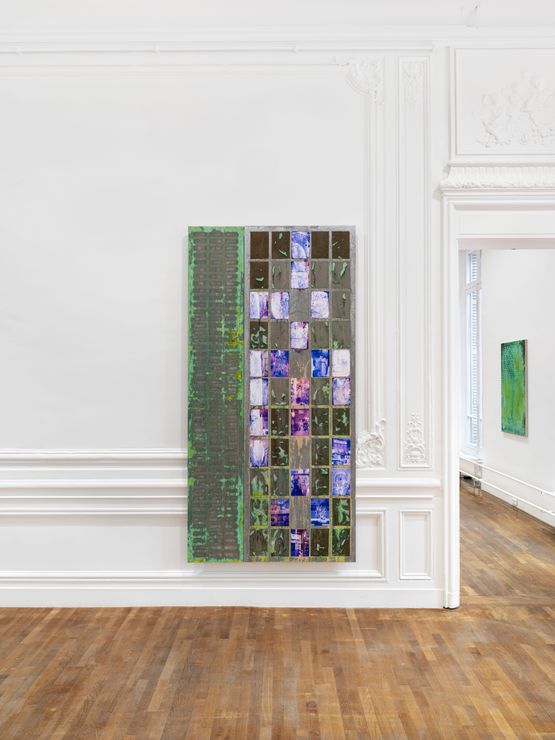
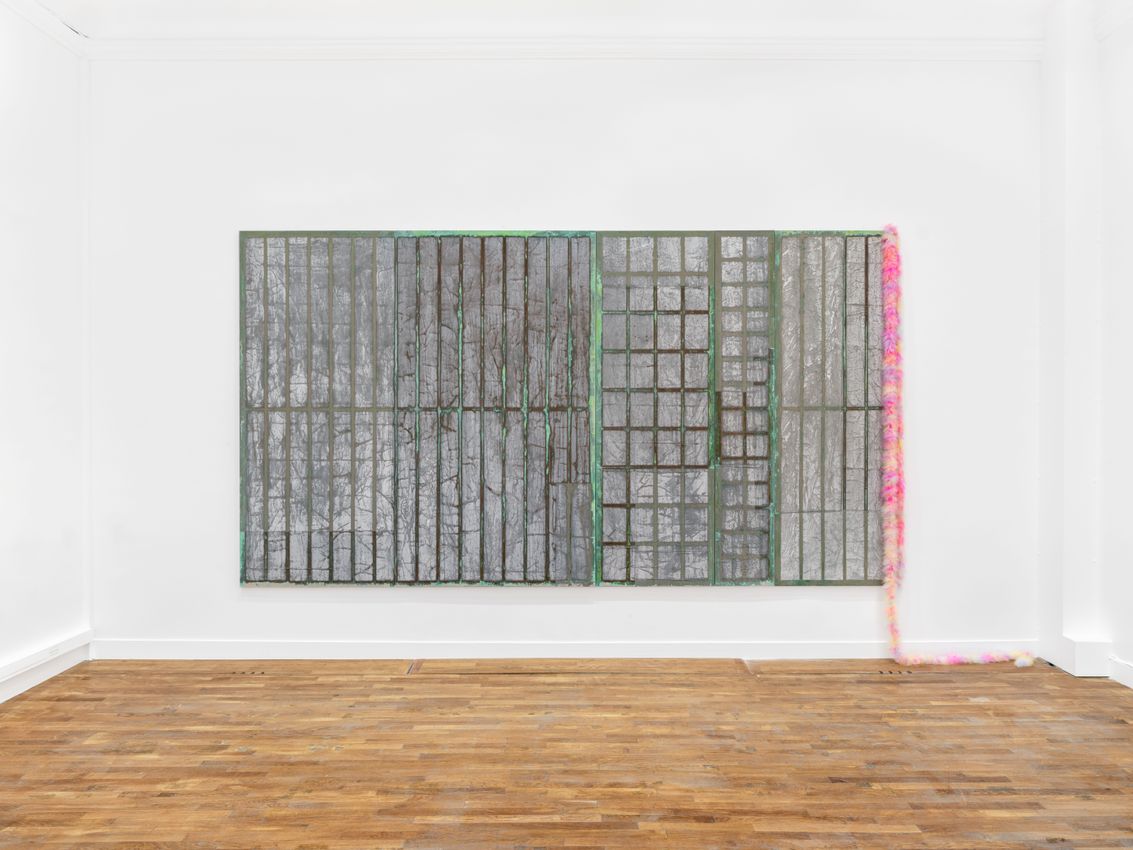
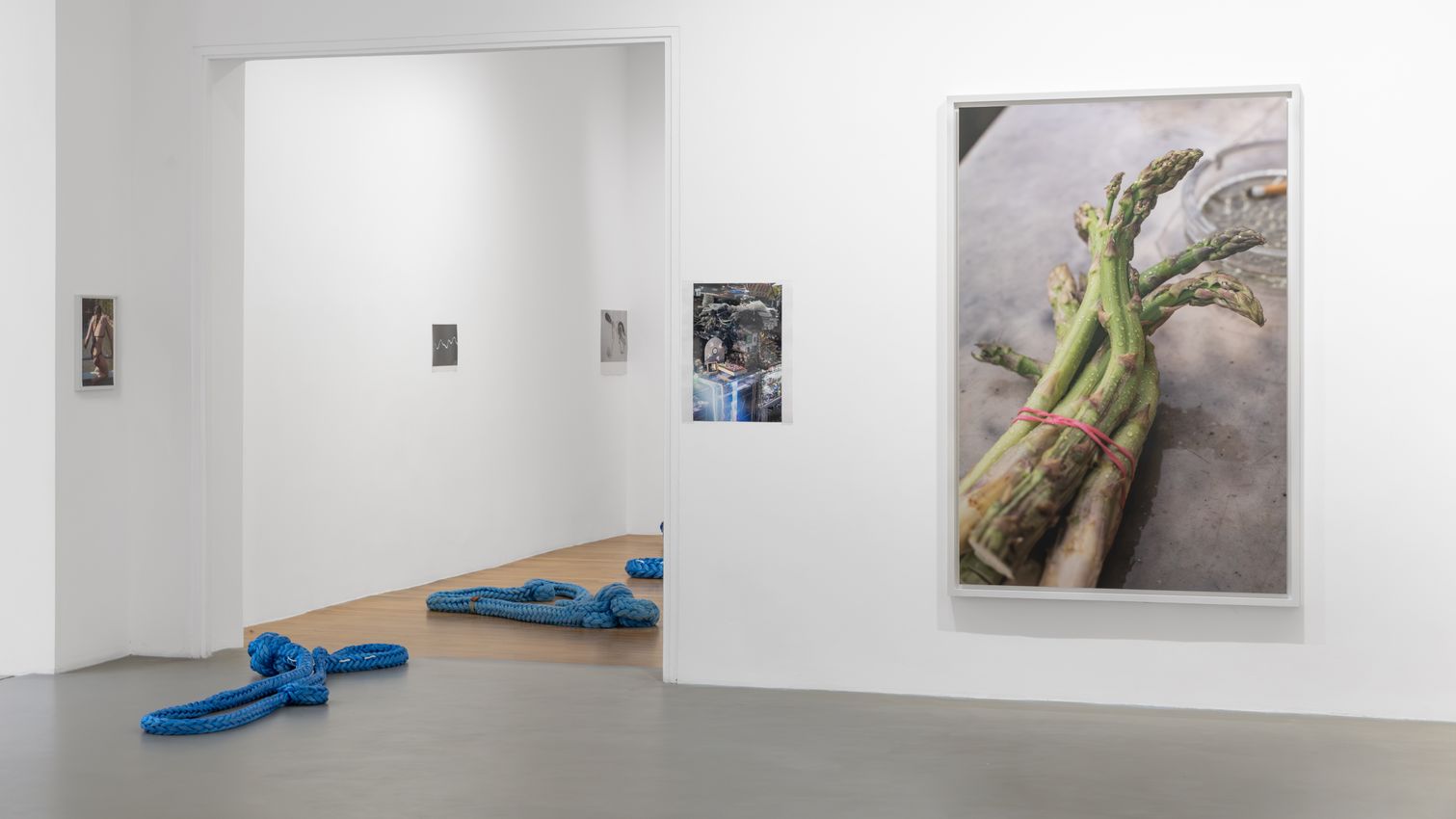
For Lies, her second exhibition at the gallery, Mimosa Echard presents two entangled bodies of work: a continuation of her oxidised metallic tableaux and a new series of photographs taken in a 1920s Parisian arcade.

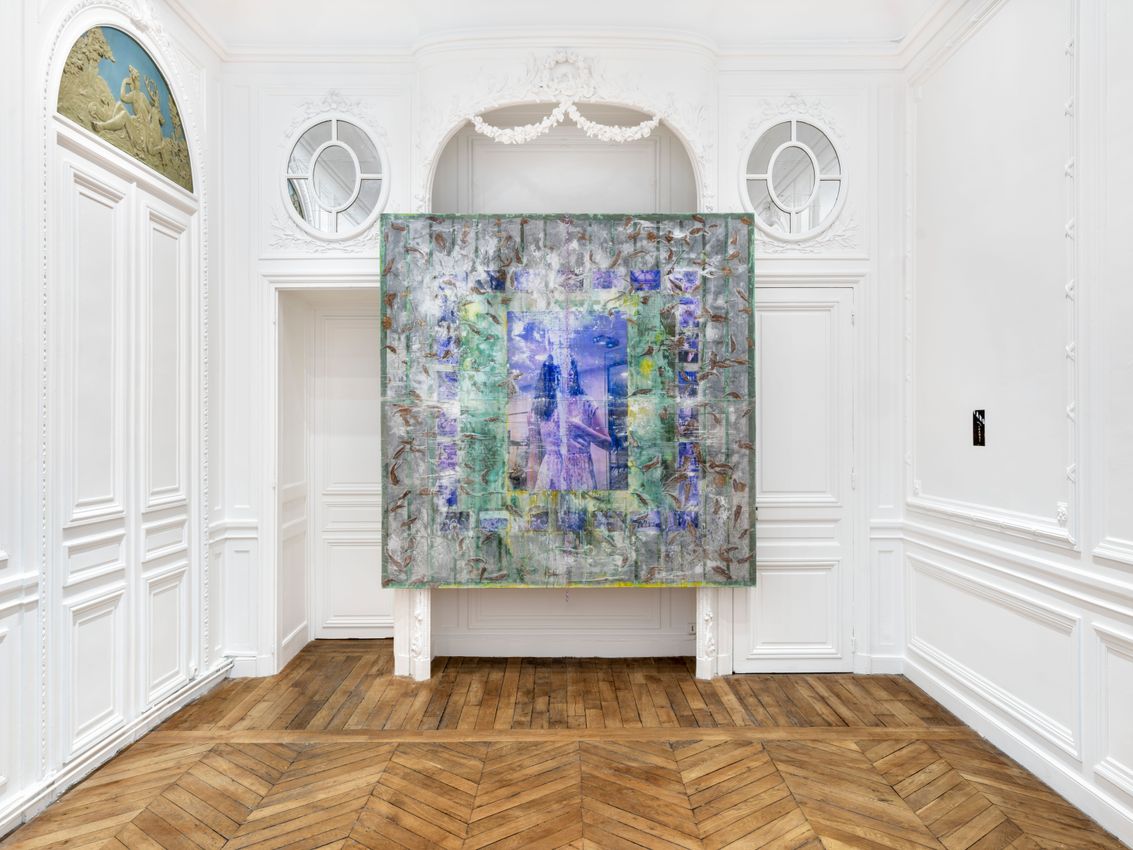
Conceived as a modular system, the tableaux are made from electromagnetic shielding fabric, a conductive material used to create radiation-free enclosures. These impenetrable surfaces are overlaid with grids of domestic aluminium foil—a material also associated with electro-sensitive protection and paranoia—which are then exposed to various corrosive liquids, deteriorating into bleeding surfaces of green and silver. Superimposed onto the ornate Haussmanian architecture of the gallery space, their oversized and purposefully awkward dimensions synthesize object with architecture, evoking doors, windows, or motherboards, as well as meteorological and infra-red imagery.

In Lies, these tableaux become the background to a photographic parade of mannequins, knick-knacks, and other forms of dead stock that accumulate in Les Arcades des Champs Élysées. Once a bath house and famous cabaret, the passage now stands as an anachronistic ‘non-place’, liquified by the globalised flows of bodies and commodities, a tourist trap where various incongruous items are consumed. Over many months, Echard shot these items in their ‘natural environment’, casting them in an inanimate psycho-drama where humans have been replaced by their supposed objects of desire and identification.

A collage of two forms and two spaces, enmeshed through acid rain and accessorised with lace veils, boas and charms, Lies continues Echard’s conceptual and material exploration of photography as an inherently vulnerable medium, as both penetrated surface and theatre of artificial projection. Through juxtaposing the ‘pleasure architectures’ of the last two centuries—the fantasy of a radiation-free ‘safe space’ and the origins of urban consumerist experience—Echard meditates on the erotics of contemporary flesh, its inescapable desire to become image.

Spatial Synthetics: A Theory by Lisa Robertson

We want an intelligence that’s tall and silver, oblique and black, purring and amplifying its décor; a thin thing, a long thing, a hundred videos, a boutique. Because we are both passive and independent, we need to theorize. We are studying the synthesis of sincerity, the synthetics of space, because they are irreducible and contingent. We are shirking the anxiety of origin because we can. We want to really exercise fate with extremely normal things such as our mind.

A city is a flat massive thing already. We’re out at the end of a lane looking south with normal eyes. Here is what we already know: the flesh is lovely and we abhor the prudery of monuments. But a pavilion is good. We believe a synthetic pavilion is really very good. Access would be no problem since we really enjoy our minds. Everything is something. The popular isn’t pre-existent. It’s not etiquette. We try to remember that we are always becoming popular.

Spatial synthetics irreparably exceed their own structure. For example: Looking west, looking west, looking east by northeast, looking northwest, looking northeast, looking west, loading wool, looking west, looking north, looking east, looking west, looking north, looking northeast, looking northeast, looking west, looking west, looking west, tracks are oldest, looking south, looking north, looking north, looking east, looking west, looking west by southwest; thus, space. And not by means other than the gestural. Pretty eyes. Winds.

Now the entire aim of our speculative cognition amplifies the synthetic principle. Everything glimmers, delights, fades, goes. We drift through the cognition with exceptional grace. Attached as we are to the senses, we manifest the sheer porousness of boutiques. The boutiques are categories. We have plenty of time. The problem is not how to stop the flow of items and surfaces in order to stabilize space, but how to articulate the politics of their passage. Every culture is the terrible gush of its splendid outward forms.

Although some of us love its common and at times accidental beauty, we’re truly exhausted by identity. Then we sink to the ground and demand to be entertained. We want to design new love for you because we are hungry for imprudent, sensational, immodest, revolutionary public gorgeousness. We need dignity and texture and fountains. What is the structure of freedom? It is entirely synthetic.

The most pleasing civic object would be erotic hope. What could be more beautiful than to compile it with our minds, converting complicity to synthesis? A synthetics of space improvises unthought shape. Suppose we no longer call it identity. Spatial synthetics cease to enumerate how we have failed. Enough dialectical stuttering. We propose a theoretical device that amplifies the cognition of thresholds. It would add to the body the vertiginously unthinkable. That is, a pavilion.

Read More

Installation Views

About the Artist

Born in 1986 in Alès, France. Lives and work in Paris, France.

View Artist Profile

Also Exhibiting at Galerie Chantal Crousel

About the Gallery

Located on rue Charlot in the 3rd arrondissement in Paris, Galerie Chantal Crousel presents a selection of artists highly diverse in their national and cultural origins and mediums who together contribute to a universal visual language.

View Gallery Profile
Address
10 rue Charlot
Paris
France
Opening Hours
Tuesday - Friday, 10am - 6pm
Saturday, 11am - 7pm
(1)
Paris 10 rue Charlot
Galerie Chantal Crousel
10 rue Charlot, Paris, France
+33 142 773 887
http://www.crousel.com

Opening hours
Tuesday - Friday, 10am - 6pm
Saturday, 11am - 7pm
The art world in focus