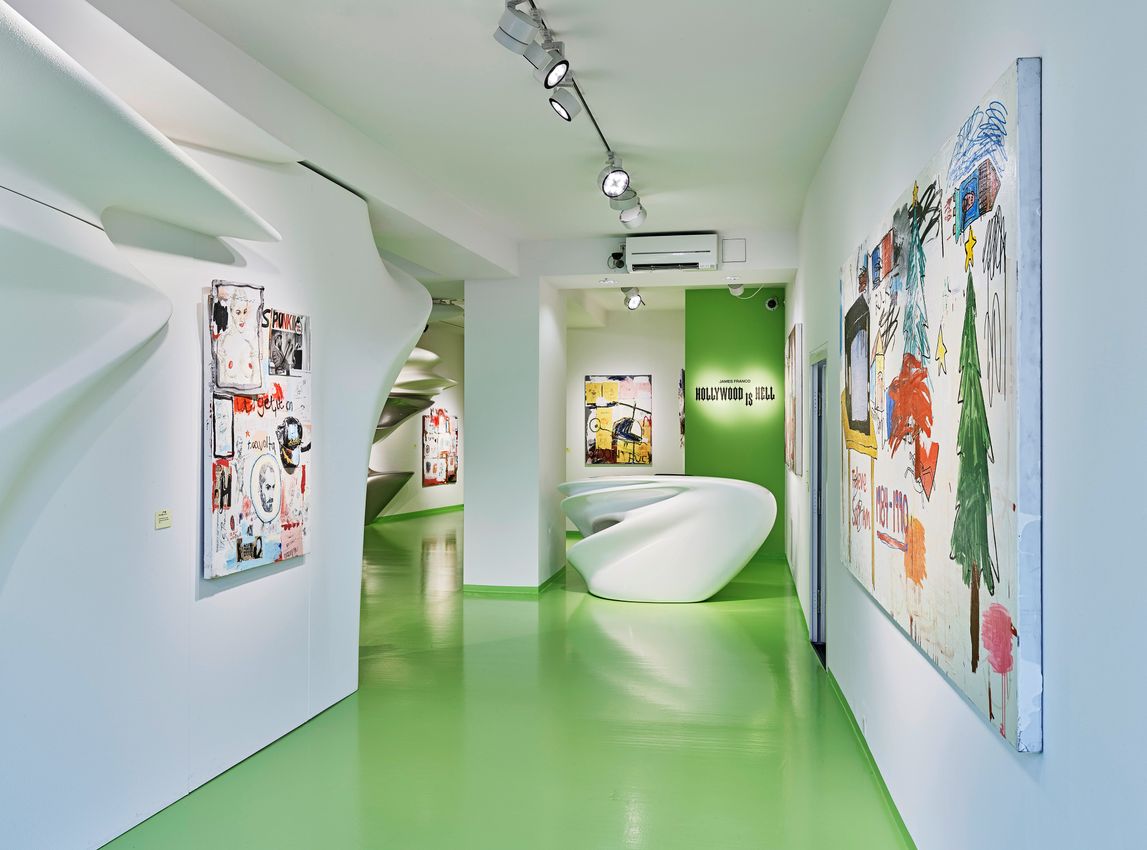
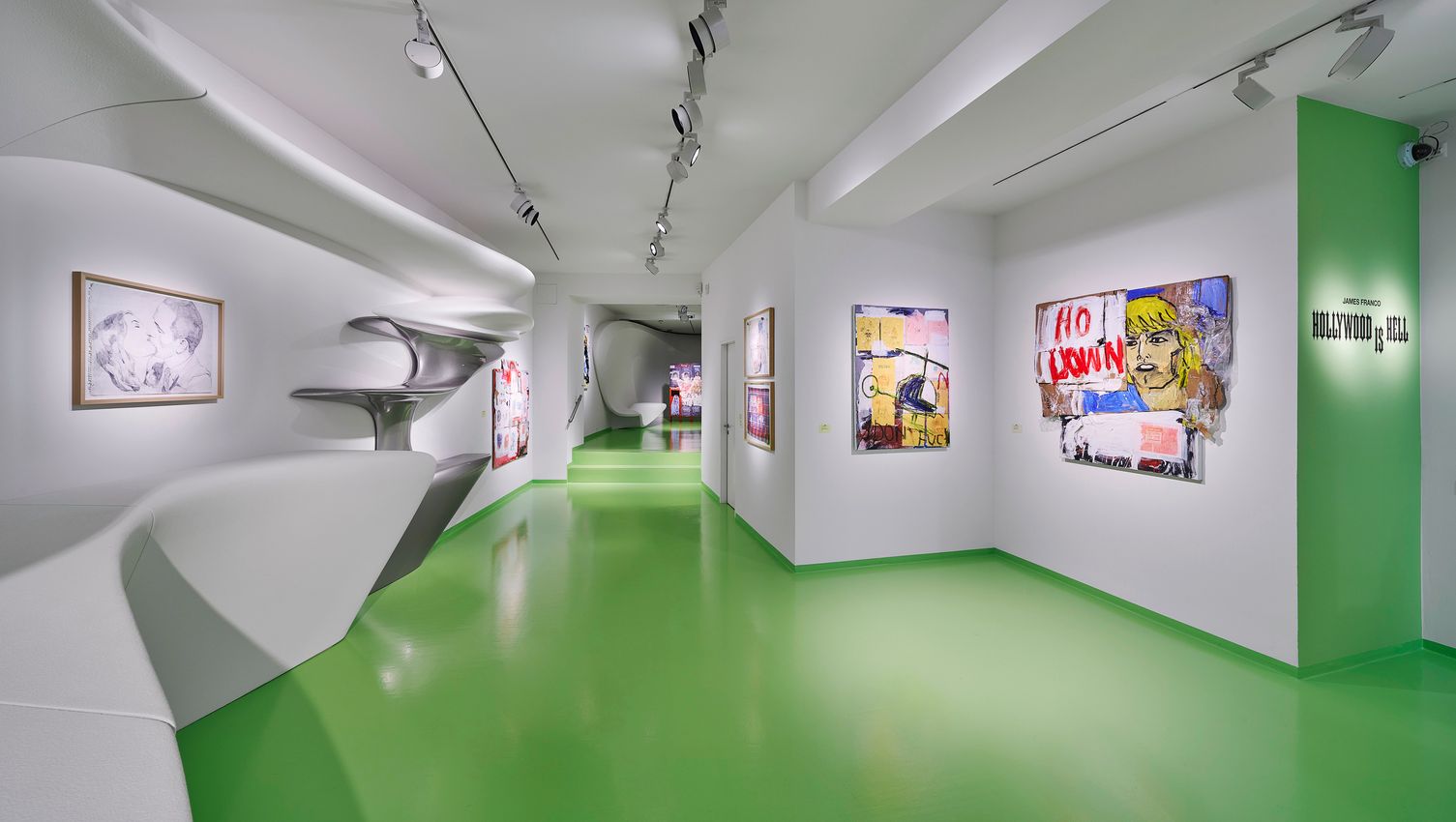
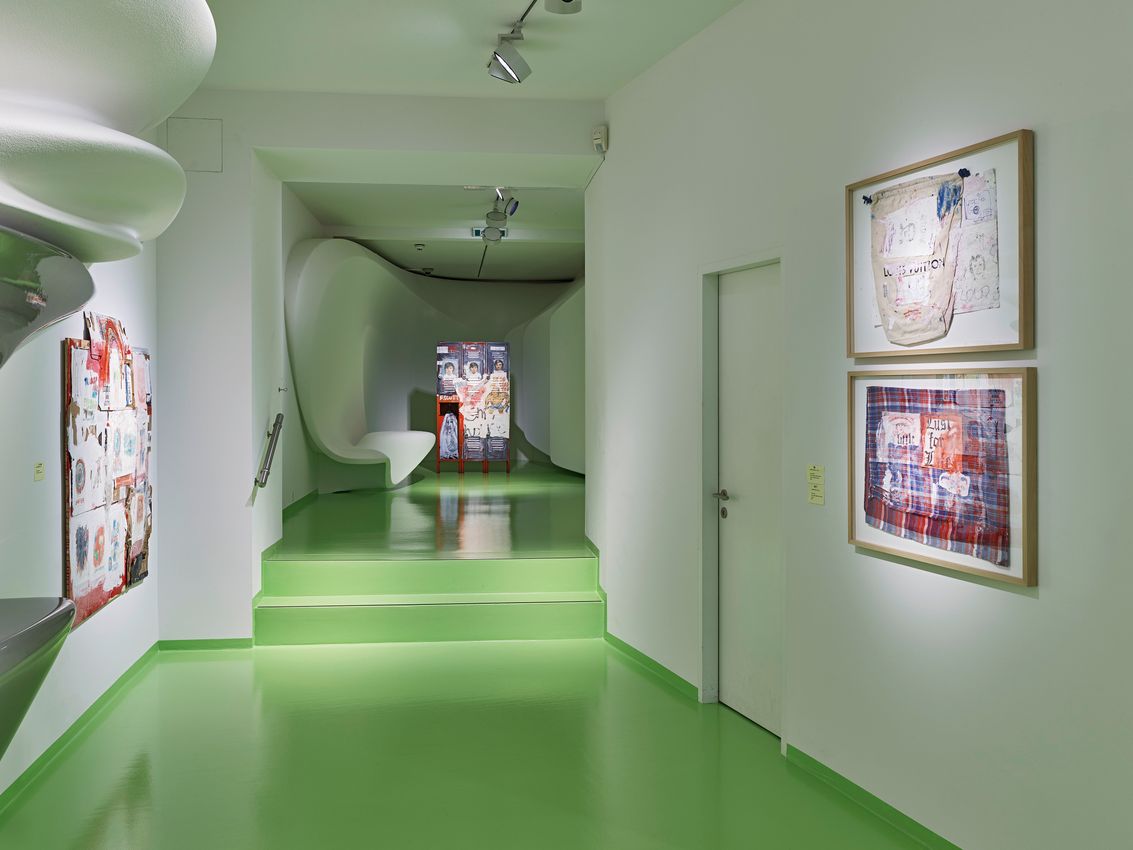
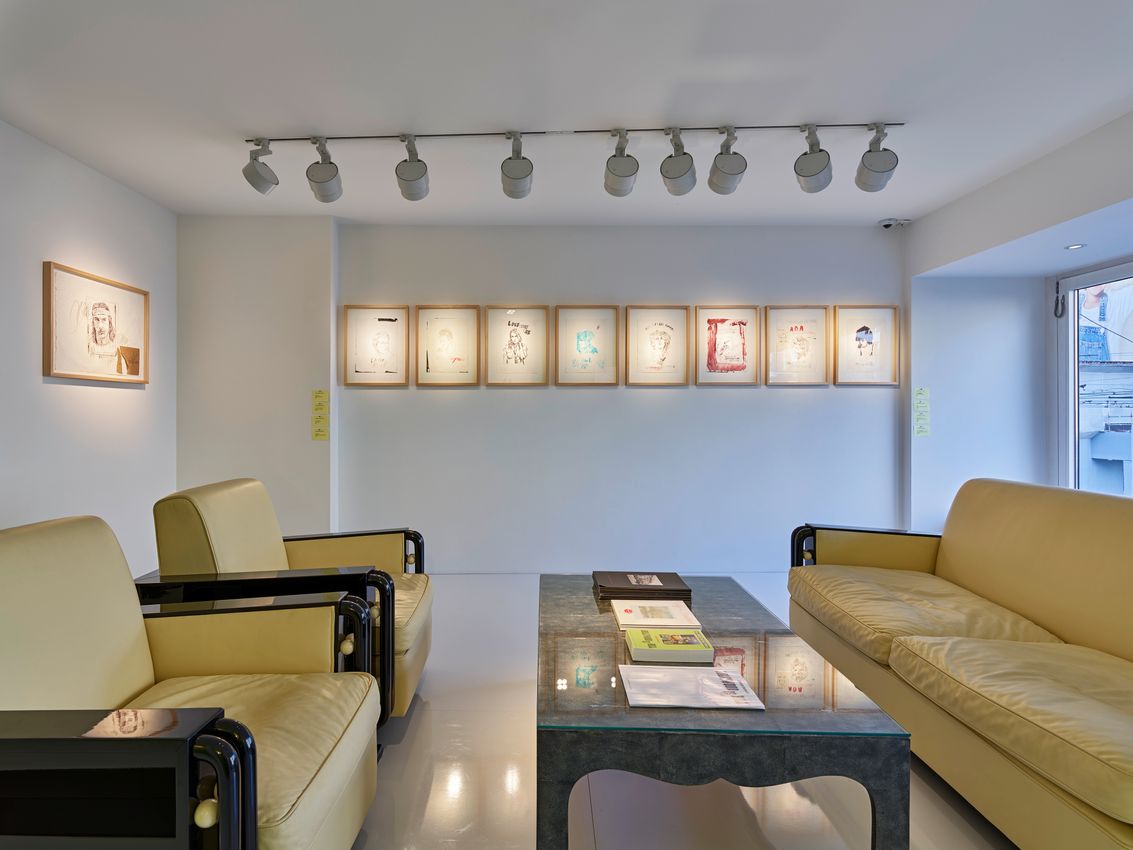
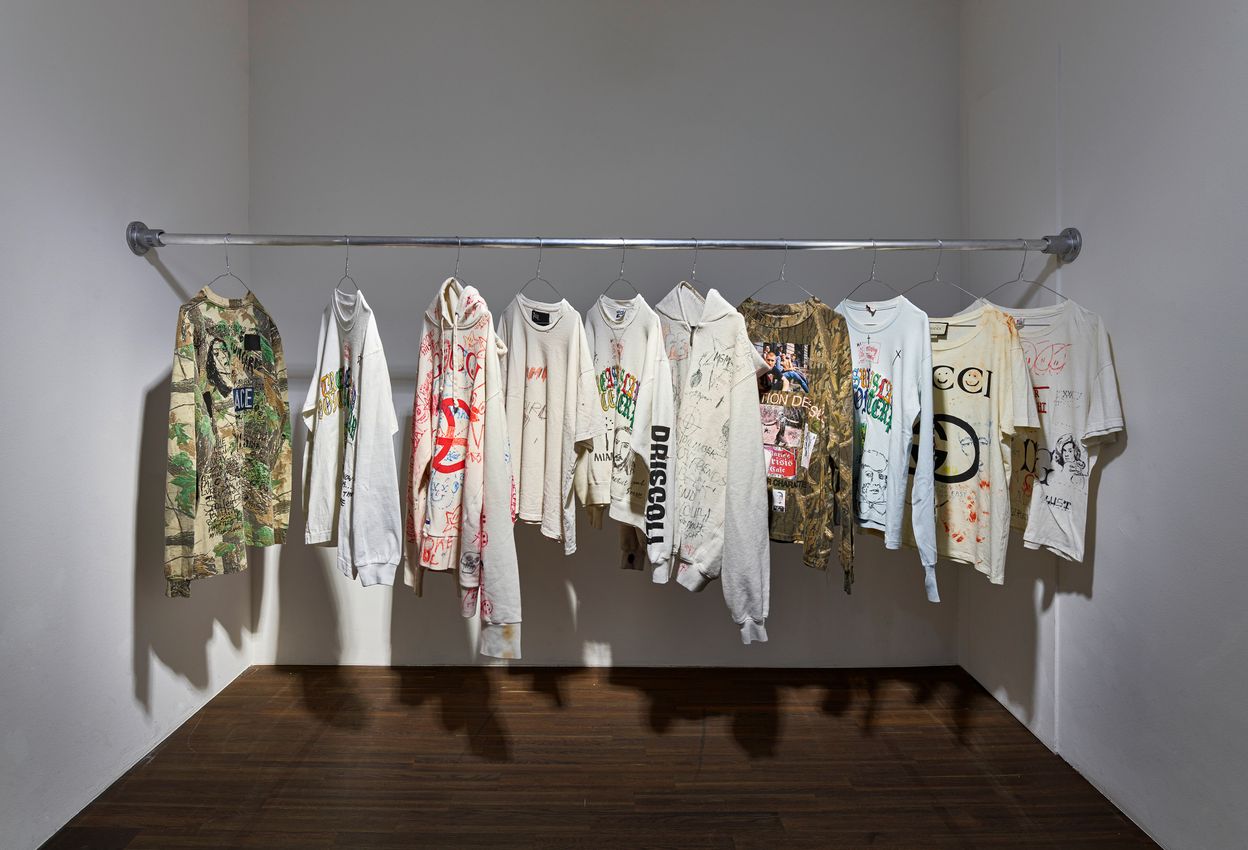
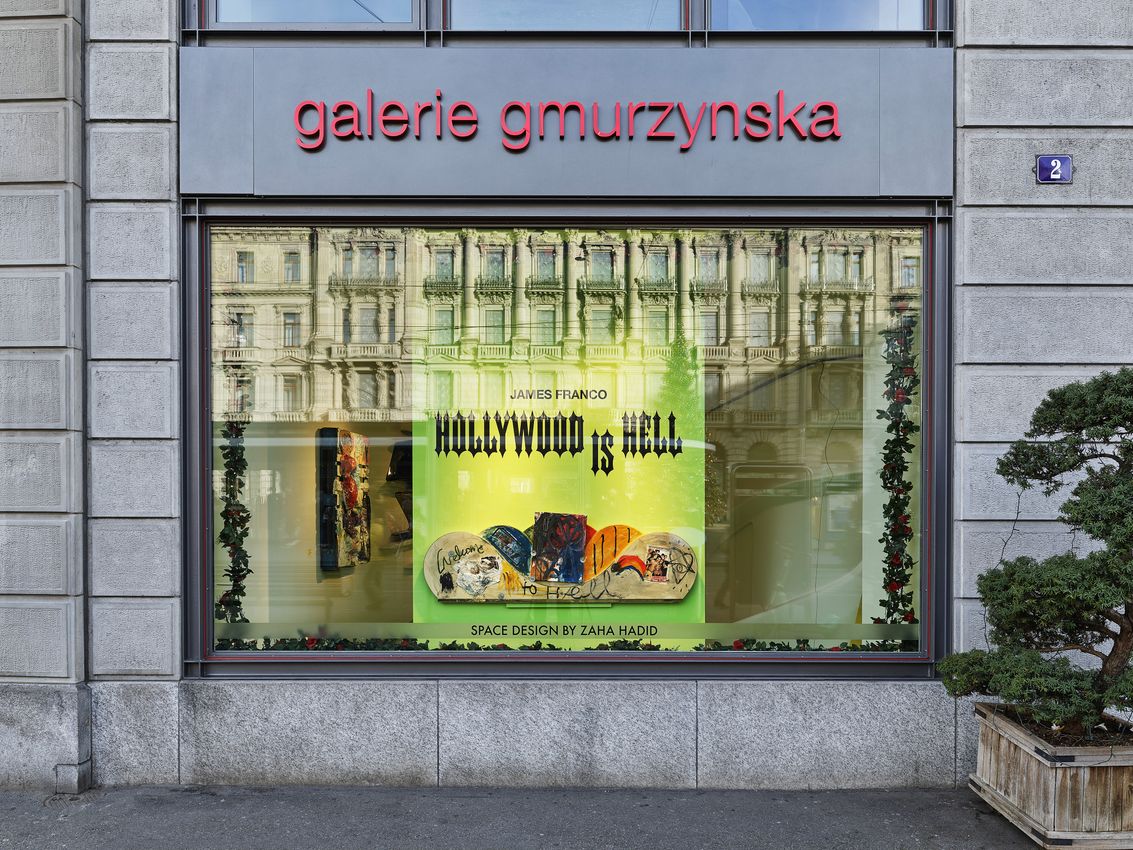
James Franco is certainly the only Hollywood star to read Marcel Proust on Spiderman films sets. Twice Golden Globe-awarded (2002 for James Dean role; 2018 for The Disaster Artist), Oscar-nominated, the 46 year old actor played in some hundred films and series since he was 16. Actor-director-producer, James Franco has been parallelly acting in life as an academic with a PhD from Yale, a writer publishing poetry, a model for Gucci, and mostly as a visual artist since his teenage years developing a considerable visual work mixing painting, video art and performance. After shows with MOCA Los Angeles (Rebel, 2012, along with artists friends Paul McCarthy, Douglas Gordon, Ed Ruscha...) and in galleries including Pace and Gagosian, Franco presents his new exhibition at Galerie Gmurzynska, Zurich, titled Hollywood is Hell. A powerful series of rough and complex collages composed of various layers of images and signs, symbols and text.
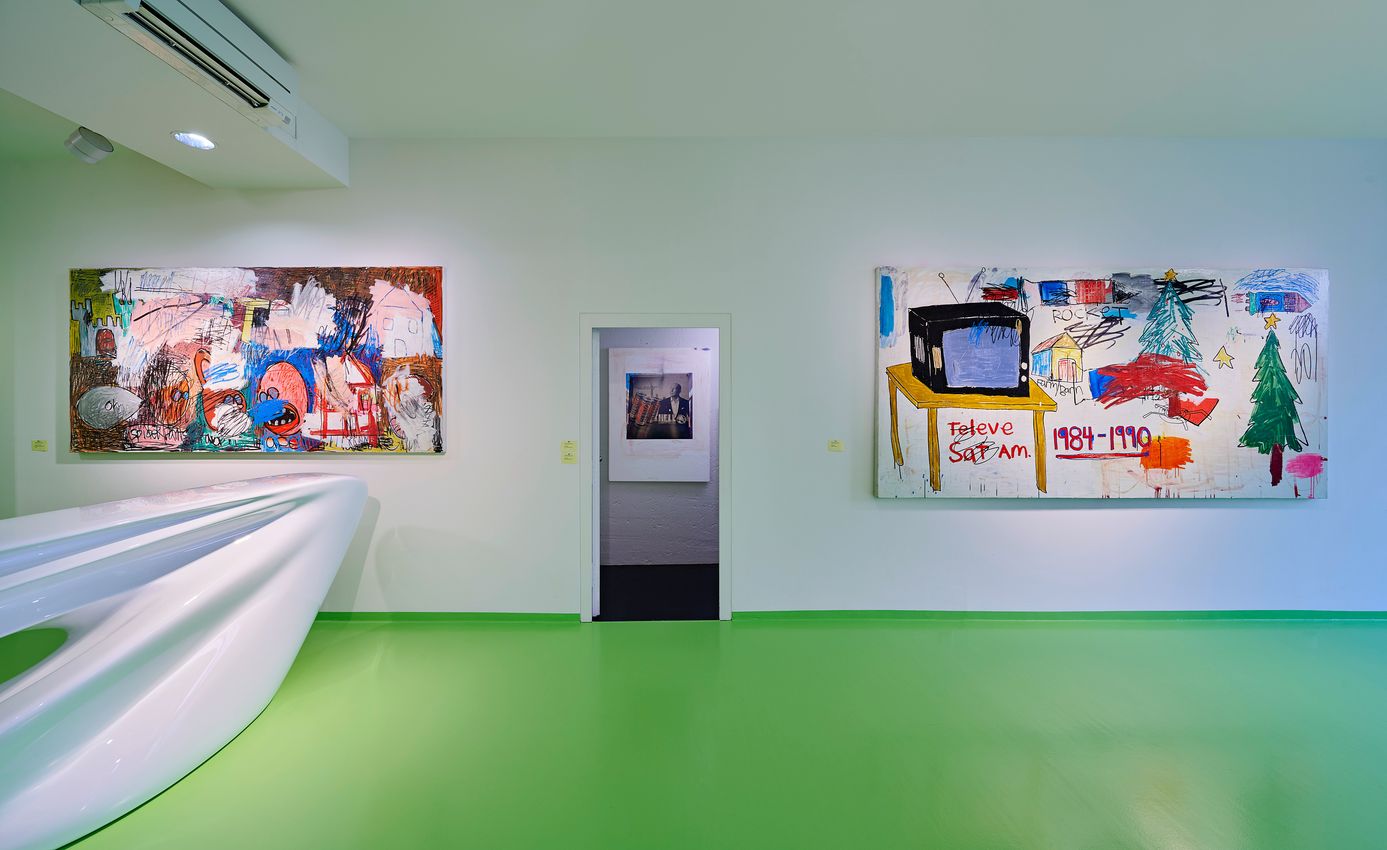
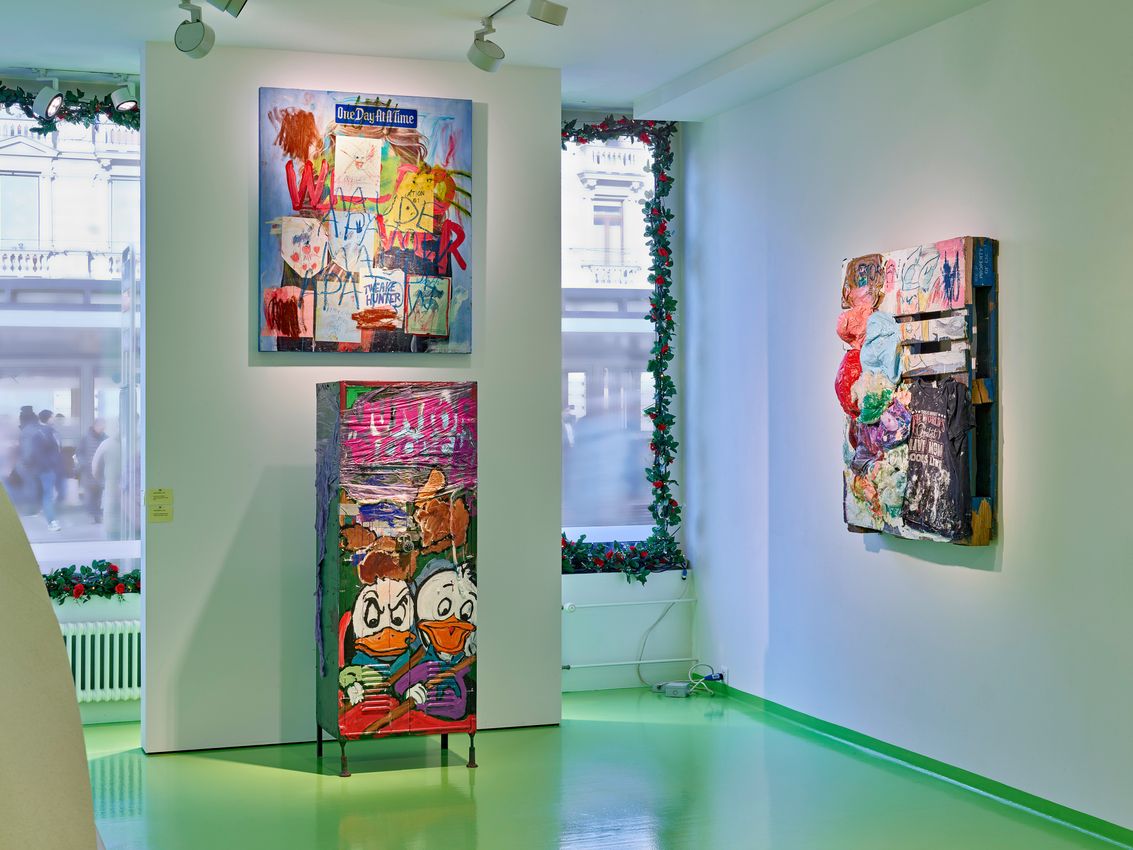
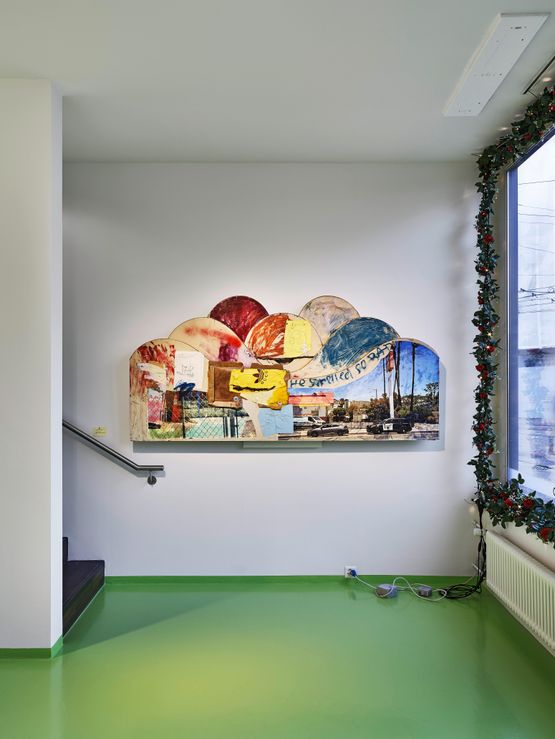
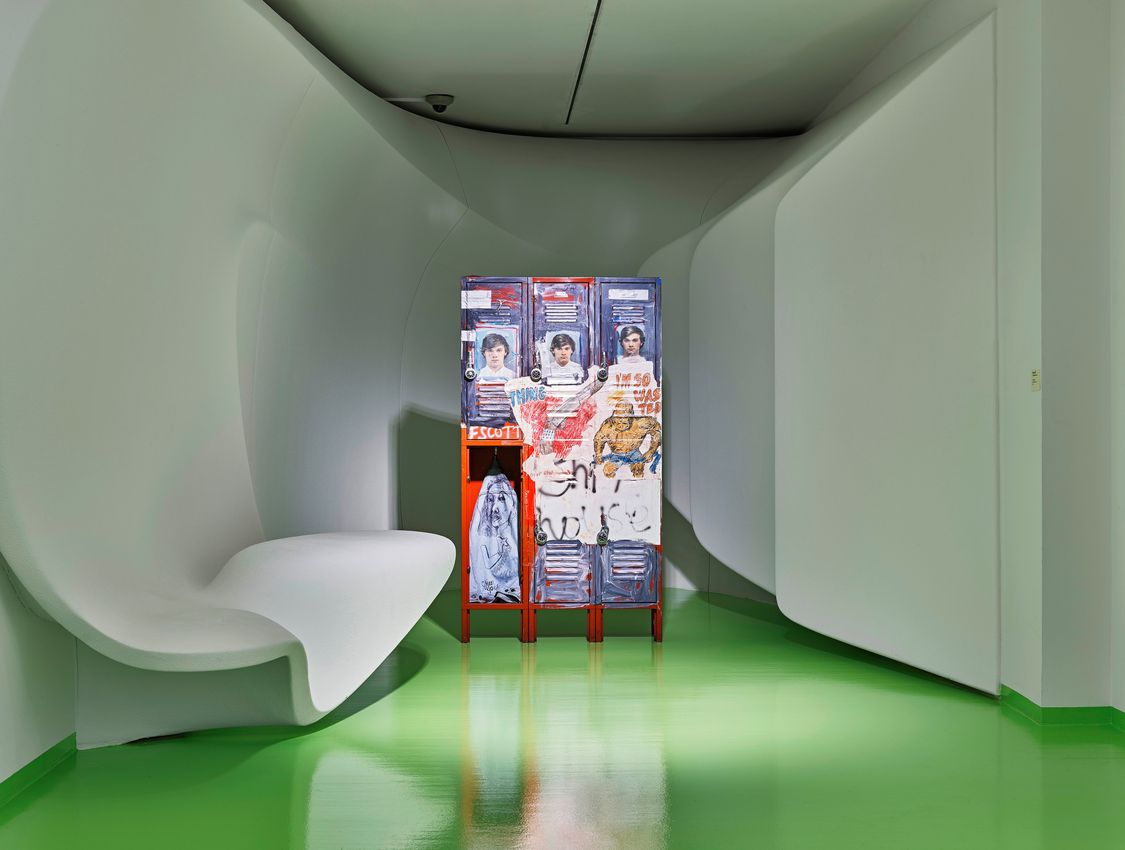
28 shocking canvases and objets d’art appearing as destroyed posters on the street walls of some dirty district will be on display: those collages represent for James Franco “a portrait of Los Angeles during Covid, the artist explains. The streets were empty, the posters damaged on the walls... It was a sort of almost post-apocalyptic atmosphere. I lived at that time near the Hollywood cemetery, where so many stars are buried, and I was walking there. Dreamland had became for me a waste land. And this shit is actually how the dream factory looks like”. One of those collages on canvas is purposely titled: Hollywood is Hell. The whole series of works, exhibited for the first time, constitutes a kind of deconstruction of a certain glamorous mythology of Hollywood. Masculinity is devastated—from Bruce Willis’ figure to Batman icon, through Jordan and Travolta—as one of the pillars of a decadent mass entertainment culture. It may come as no surprise that James Franco loves William Burroughs’ literature and his deconstructed writing. Those collages are true deconstructed works. James Franco likes more than everything to walk on the opposite side of the shinning Dream City fantasy. In the highly-standardized Hollywood system, art eventually became a kind of refuge for the actor, the last place of freedom.
“We are in a world that is saturated with different forms of media; we spend half our lives engaged with different forms of social media, entertainment media, and work-related media. Television, movies, video games, and the Internet have woven themselves into the fabric of our lives; their influence has helped shape who we are. Artists are no longer like Wordsworth walking around the hills looking for inspiration; flowers and trees are not our experience, mass media creates our shared experience.”
—James Franco
A few years ago, Franco’s performance, titled Collage, consisted of layers of live pieces of theatre, choreography, video projections, already about Hollywood and the tabloids. Collage was undoubtedly James Franco’s creative destiny. Cinema (editing) is mainly a collage. James’ life has been a collage of activities and works. There are many layers in Franco’s work, many lives in an immense career dealing with the most varied visual expressions. “Collaging all those different mediums and forms of expression: this is my way”, Franco resumes. During the two years it took him to create this last series of paintings exhibited at Galerie Gmurzynska, Franco revisited works he had made when he was twenty and intervened in them today. Half of the series are therefore like double works: two works in one each time. “I started to make collages of new canvases on old canvases, then I repaint over them, the artist explains. So it becomes a kind of collage of my younger self with the new self. But the younger self was also in a way a product of Hollywood, when I was mostly an actor. So it is really my young actor self being sort of repurposed and put in to the collages.” It is an exhibition working as a kind of mirror of the artist-actor’s permanent quest for authenticity.
The exhibition is accompanied by a catalogue including an original essay by academic curator Jérôme Neutres, based on his recent conversations with James Franco, as well as an interview by Magnus Resch.


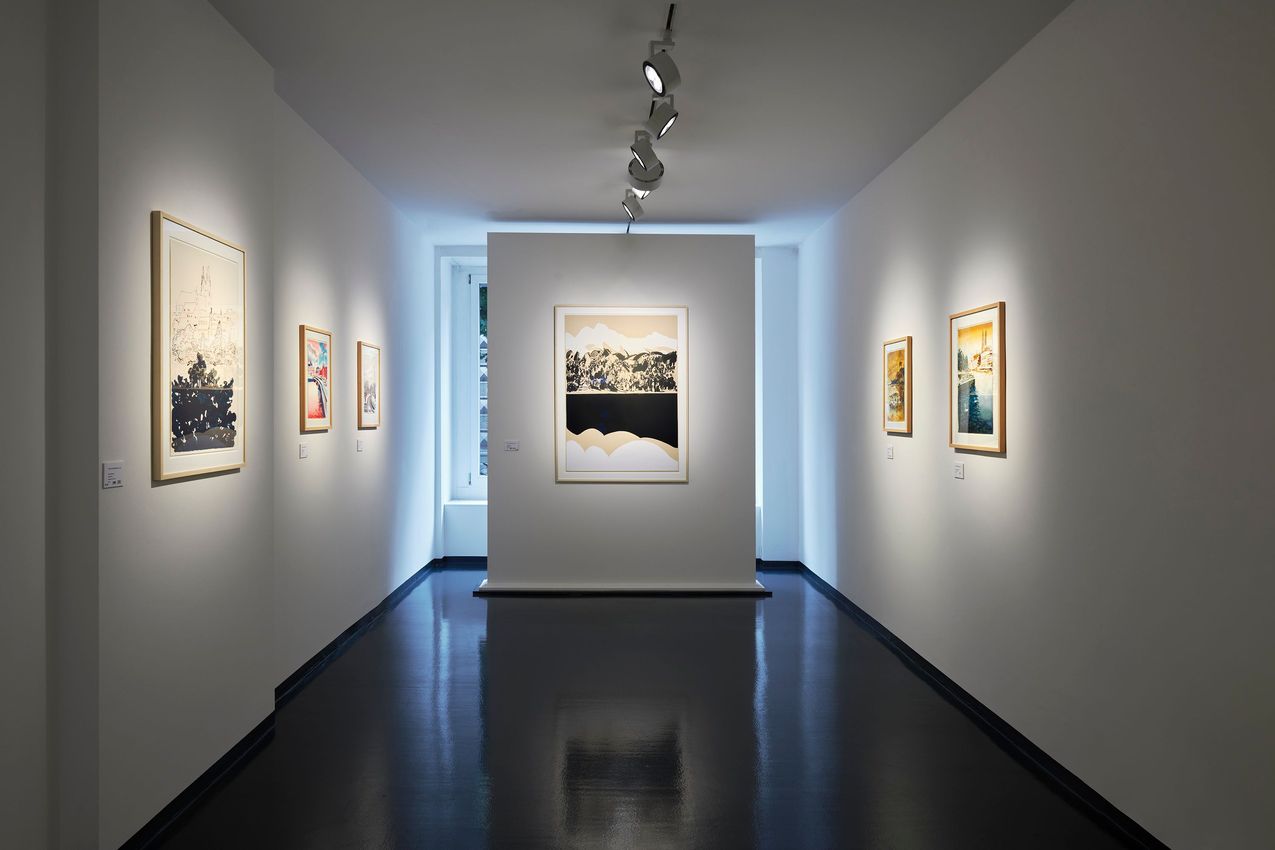
Forty years after its establishment, Krystyna Gmurzynska and Mathias Rastorfer relocated the gallery from Cologne to its new flagship location in Zurich’s Paradeplatz in 2005. The building that currently houses the gallery dates back to 1857 and it is the same building in which the Dada movement was founded in 1917. The first exhibition in Zurich was a solo exhibition by Alexander Calder entitled, The Modernist, that was thoroughly endorsed by the Calder Foundation, which described it is as, ‘rare to experience a presentation of this quality outside of a museum’. As with each exhibition at the gallery the show featured a fully illustrated catalogue with important essays.
Galerie Gmurzynska continues to present unique exhibitions that are both historically well researched and scientifically documented. It also continues to work with leading art historians as well as collaborating with museums on exhibitions and for the enlargement of their permanent collections. Additionally, it currently participates in several art fairs such as Art Basel Miami Beach, Art Basel Hong Kong, Frieze Masters in London, Salon in New York and Art Basel, Switzerland. In the past it has taken part in FIAC, Abu Dhabi and PAD New York.

A respected voice in contemporary art discourse.
Focusing on ambitious storytelling and insightful art-world commentary. Ocula Magazine publishes in-depth interviews, critical essays and timely analysis on the artists, exhibitions and ideas driving the global art world.
Learn more about Ocula Magazine
Showcasing the best of the art world.
Ocula partners with galleries from around the world to highlight their artists, artworks and exhibitions. Gallery membership is by application and invitation, with each member vetted by an independent panel.
Learn more about Ocula Membership

Specialises in the sale of major artworks.
Led by a team with deep ties to the world’s leading auction houses, galleries and collectors. Ocula’s advisory team offers bespoke services to high-net-worth clients from around the world who are looking to acquire the best of contemporary and modern art.
Learn more about our team and services