Press Release

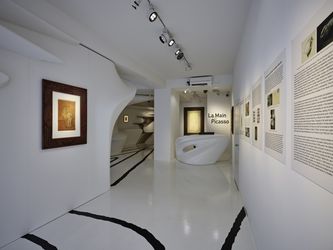
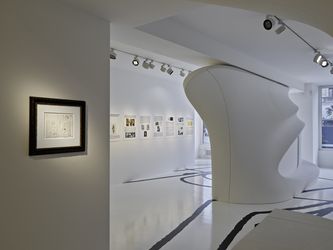
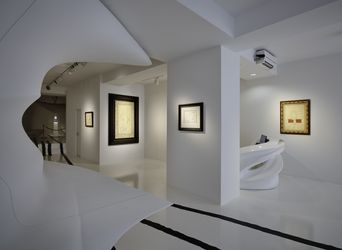
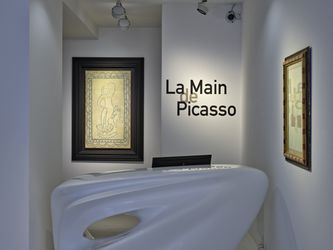
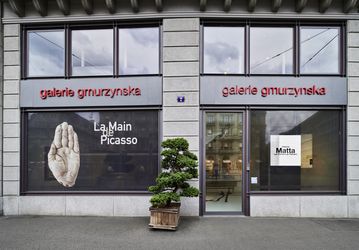
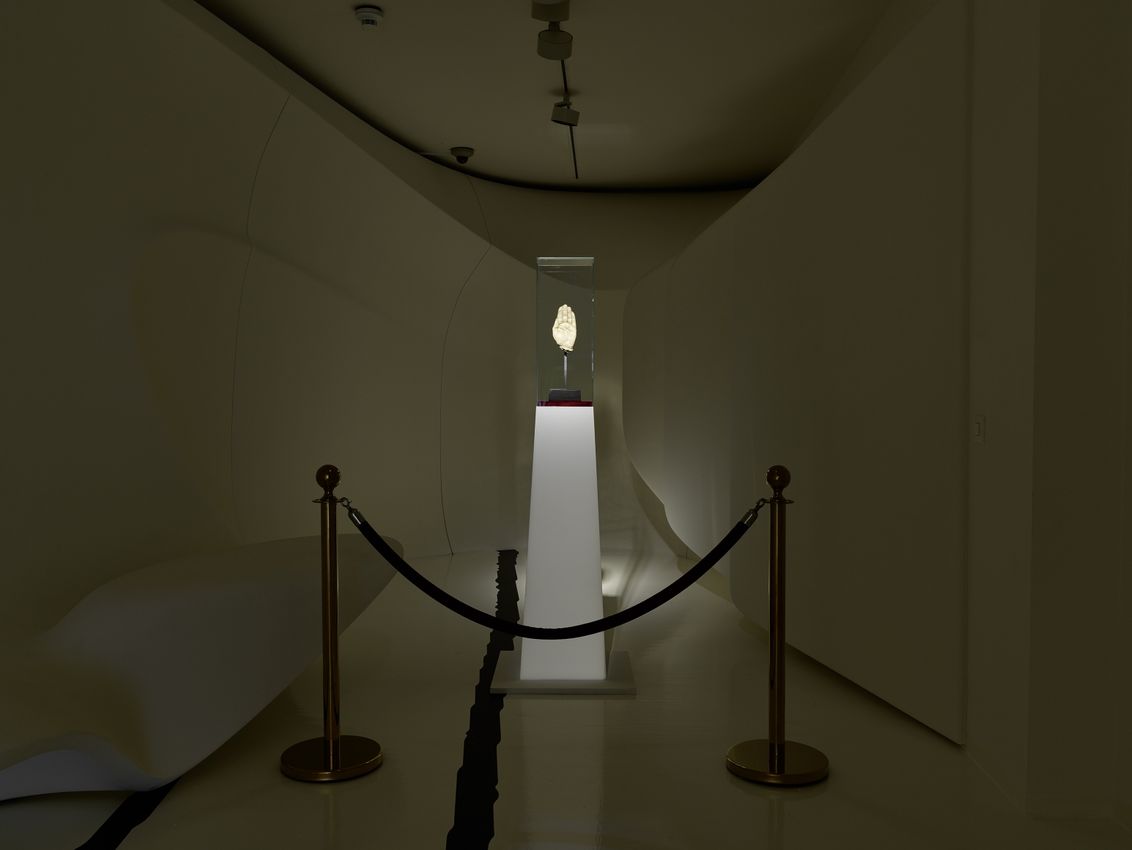
Galerie Gmurzynska is pleased to present in its Zurich Paradeplatz space from June 10th 2022 a rare and singular treasure sculpture by Pablo Picasso, figuring the left hand of the iconic artist. The show is based on an academic essay by Dr Jérôme Neutres entitled God’s Left Hand: Analysis of the plaster sculpture of Pablo Picasso’s palm. Produced in 1937, the same year as Guernica, the plaster sculpture of Pablo Picasso’s left hand is the only known modelling exemplar in Picasso’s oeuvre of his left-hand palm—the only possible life model for the right-handed sculptor—whereas the artist’s hand is a recurring motif in his paintings and sculptures. To Picasso, the hand bespeaks of the academic subject that reveals the artist’s talent; it becomes the symbol of the creative force while representing the bodily part that exemplifies the fate and character of being; lastly, and essentially, the hand is at once motif and subject of the imprint, a theme that fascinated Picasso for he was drawn to art brut and primitive art. It is not coincidental that, for the cover of the first Catalogue Raisonné of Picasso’s sculptures in 1949, Daniel Kahnweiler chose a photograph depicting a plaster sculpture of Picasso’s hand.

Picasso took to sculpting in Barcelona, in the year 1902. He went on to become a prolific sculptor as well as a painter. The work presented here is a single plaster cast of Picasso’s left palm from a series of plaster studies dear to the artist, who fondly called them ‘his plastics’. Between 1930 and 1935 in his sculpting studio at the Château de Boisgeloup, then in Paris until 1944, Picasso devoted himself mostly to plaster, experimenting with modelling, assemblage, and imprints. Influenced—as in his paintings—by primitive sculpture, Picasso engaged in a dialogue with matter, physically confronting his hands with clay, and plaster in particular. Picasso, who deemed the bronze casts of his works as too impersonal, often favoured the final form of the raw material, such as plaster. Speaking of his plaster sculptures, Picasso told his friend and exegete Pierre Daix: ‘They were much more beautiful in plaster... I wouldn’t even consider casting them in bronze at first...’

This unique historic work is listed in the Catalogue Raisonné des sculptures de Picasso (N°220 C), as well as in the following catalogues: Une Collection Picasso, Œuvres de 1937 à 1946, Huiles, Gouaches, Dessins, Collages et Découpages from the ‘Marie-Thérèse Walter’ Collection, Galerie Krugier, Geneva, December 1973 (introductory illustration); and Picasso. The Sculpture, Galleria Borghese, Rome, from 24 October 2018 to 3 February 2019 (pp. 186-187). Owned by a famous collector who acquired it from the Picasso Estate, this mythical work has not been exhibited in public for more than twenty years.

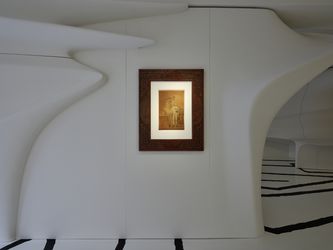
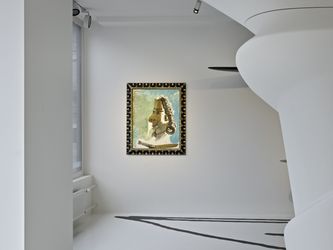
In addition to this seminal work in Picasso’s oeuvre, the exhibition will document Picasso’s wide range of styles and techniques used over his lifetime, by featuring important paintings in oil on canvas or as fresco, as well as works on paper in ink and in gouache.

Read More

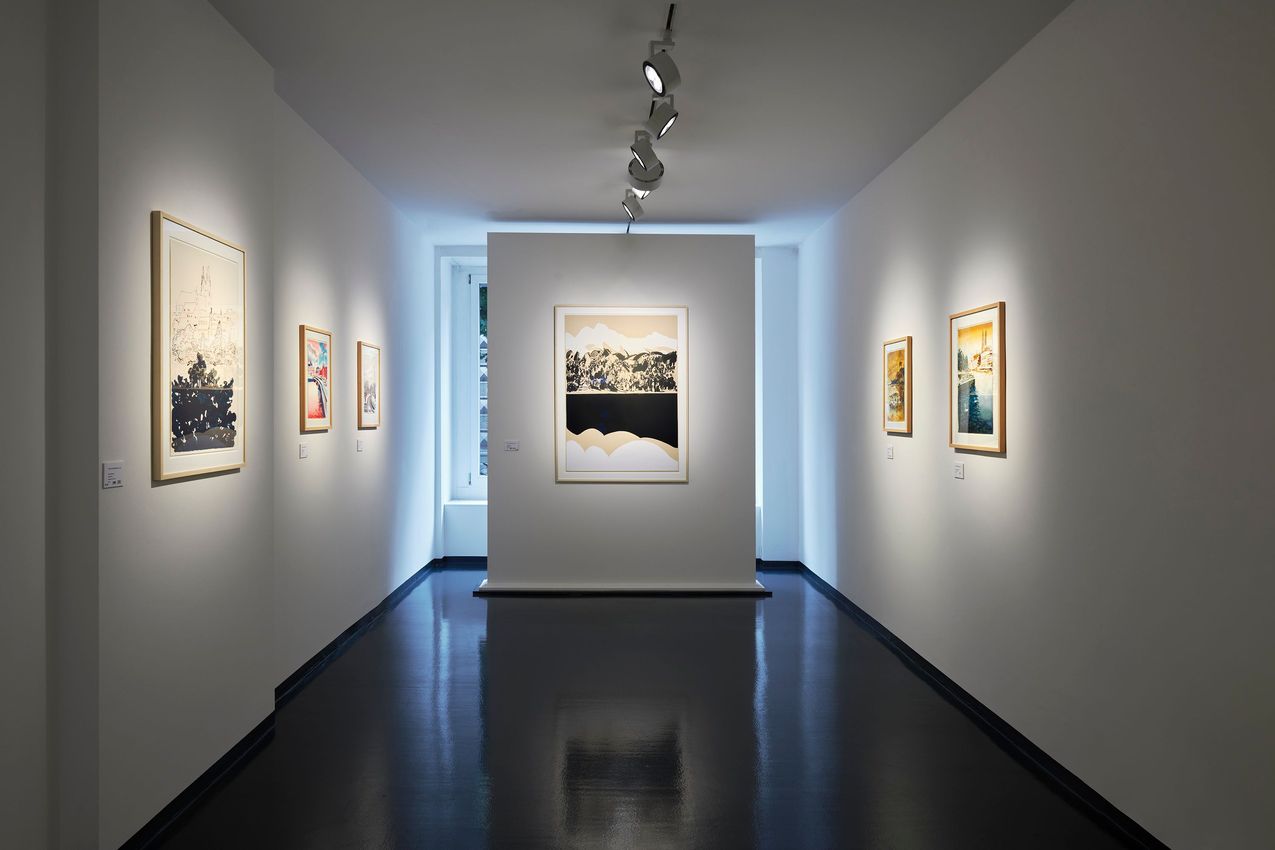
Installation Views

About the Artist

Pablo Picasso was born in Málaga, Spain in 1881 and died in France in 1973. A painter, sculptor, draughtsman, printmaker, decorative artist and writer, he dominated 20th-century European art and was central in the development of the image of the modern artist. Painting was his principal medium, but his sculptures, prints, theatre designs and ceramics all had an impact on their respective disciplines. Even artists not influenced by the style or appearance of his work had to come to terms with its implications.

View Artist Profile

Also Exhibiting at Galerie Gmurzynska

About the Gallery
GALERIE GMURZYNSKA is an international art gallery with locations in Zurich, Zug and St. Moritz, Switzerland, that specialises in modern and contemporary art as well as Russian avant-garde.

The gallery was founded in 1965 in Cologne, Germany by Antonina Gmurzynska. From the beginning, the gallery was interested in organising exhibitions that had a documentary character both through the choice of themes and through its publications.

In 1996 Mathias Rastorfer became a partner of both extensions of the gallery, having been with it since 1991 when he left his position as Associate Director at Pace Gallery in New York. Under his influence and in addition to the gallery’s traditional repertoire, the work of contemporary artists such as Donald Judd, Louise Nevelson and Yves Klein amongst others, was incorporated. Ten years later the gallery opened its third branch in St. Moritz at Via Serlas, in 2003.

Forty years after its establishment, Krystyna Gmurzynska and Mathias Rastorfer relocated the gallery from Cologne to its new flagship location in Zurich’s Paradeplatz in 2005. The building that currently houses the gallery dates back to 1857 and it is the same building in which the Dada movement was founded in 1917. The first exhibition in Zurich was a solo exhibition by Alexander Calder entitled, The Modernist, that was thoroughly endorsed by the Calder Foundation, which described it is as, ‘rare to experience a presentation of this quality outside of a museum’. As with each exhibition at the gallery the show featured a fully illustrated catalogue with important essays.

Galerie Gmurzynska continues to present unique exhibitions that are both historically well researched and scientifically documented. It also continues to work with leading art historians as well as collaborating with museums on exhibitions and for the enlargement of their permanent collections. Additionally, it currently participates in several art fairs such as Art Basel Miami Beach, Art Basel Hong Kong, Frieze Masters in London, Salon in New York and Art Basel, Switzerland. In the past it has taken part in FIAC, Abu Dhabi and PAD New York.

View Gallery Profile
Address
Paradeplatz 2
Zurich
Switzerland
Opening Hours
Mon - Fri, 10am - 6.30pm
Sat, 10am - 4pm
(1)
Zurich Paradeplatz 2
Galerie Gmurzynska
Paradeplatz 2, Zurich, Switzerland
+41 442 267 070
http://www.gmurzynska.com

Opening hours
Mon - Fri, 10am - 6.30pm
Sat, 10am - 4pm
The art world in focus