





CARRIE MAE WEEMS
b. 1953, United StatesCarrie Mae Weems is a leading American artist whose work across photography, text, fabric, audio, digital images, installation and video examines how power, history, visual culture and identity shape daily life. Over more than four decades she has developed a conceptually rigorous yet accessible practice that investigates racism, sexism, class and state violence, while foregrounding the depth, beauty and complexity of Black experience as part of a broader human story.
Awards, Honours and Recent Major Exhibitions
Among the most highly honoured artists of her generation, Weems received the National Medal of Arts in 2024 from President Joe Biden, the highest artistic distinction awarded by the U.S. government. Her accolades also include the Hasselblad Award (2023), Ford Foundation Art of Change Fellowship (2016), W.E.B. Du Bois Medal (2015), MacArthur Fellowship (2013), U.S. Department of State Medal of Arts (2012), Bernd and Hilla Becher Prize (2011), a Pollock-Krasner Foundation photography grant (2002) and a Smithsonian Fellowship (1987).
Recent museum projects underline the scope of Weems’s influence: Carrie Mae Weems: The Heart of the Matter at Gallerie d’Italia, Turin (2025), a major retrospective developed with Aperture; Carrie Mae Weems: Remember to Dream at the Hessel Museum of Art, CCS Bard (2024); The Shape of Things at LUMA Arles (2021–22); and The Evidence of Things Not Seen, organised by Württembergischer Kunstverein Stuttgart and travelling to Kunstmuseum Basel.
Weems’s artwork is represented in the collections of leading museums including the Metropolitan Museum of Art and the Museum of Modern Art, New York; Tate Modern, London; the Museum of Fine Arts, Houston; and the Museum of Contemporary Art, Los Angeles, underscoring her central place in recent art history.
Early Life, Education and Artistic Formation
Born in 1953 in Portland, Oregon, Weems initially trained as a dancer, studying modern dance with Anna Halprin in San Francisco in the early 1970s before turning to photography in her twenties. A first camera, given as a birthday gift, led to early projects such as Environmental Profits and the long-running series Family Pictures and Stories (1978–84), intimate photographs that trace the lives of her relatives and the movement of Black families from the U.S. South to the North. Encounters with The Black Photographers Annual and time spent at the Studio Museum in Harlem—where she studied with Dawoud Bey and worked with photographers including Anthony Barboza—gave her both a community and a model for a critically engaged practice.
Weems went on to earn a BFA from California Institute of the Arts (1981), an MFA from the University of California, San Diego (1984), and an MA in folklore from the University of California, Berkeley (1987), training that underpins her lifelong interest in narrative, oral history and the politics of representation.
Practice: photography, narrative and power
From the late 1970s onwards, Weems has used staged and documentary images, sound, text and moving image to construct layered narratives about race, gender, class and authority. Early series such as Family Pictures and Stories (1978–84), Ain’t Jokin’ (1987–88) and American Icons (1988–89) confront stereotypes, racist humour and internalised prejudice, using images and captions to expose how ideology circulates through everyday language and popular culture. By the late 1980s she had turned away from straight documentary toward constructed scenes, diptychs and triptychs that “look like documents but are in fact staged,” using herself and others as performers within carefully choreographed tableaux.
Breakthrough ‘Kitchen Table Series’ and Key Photo-Text Works
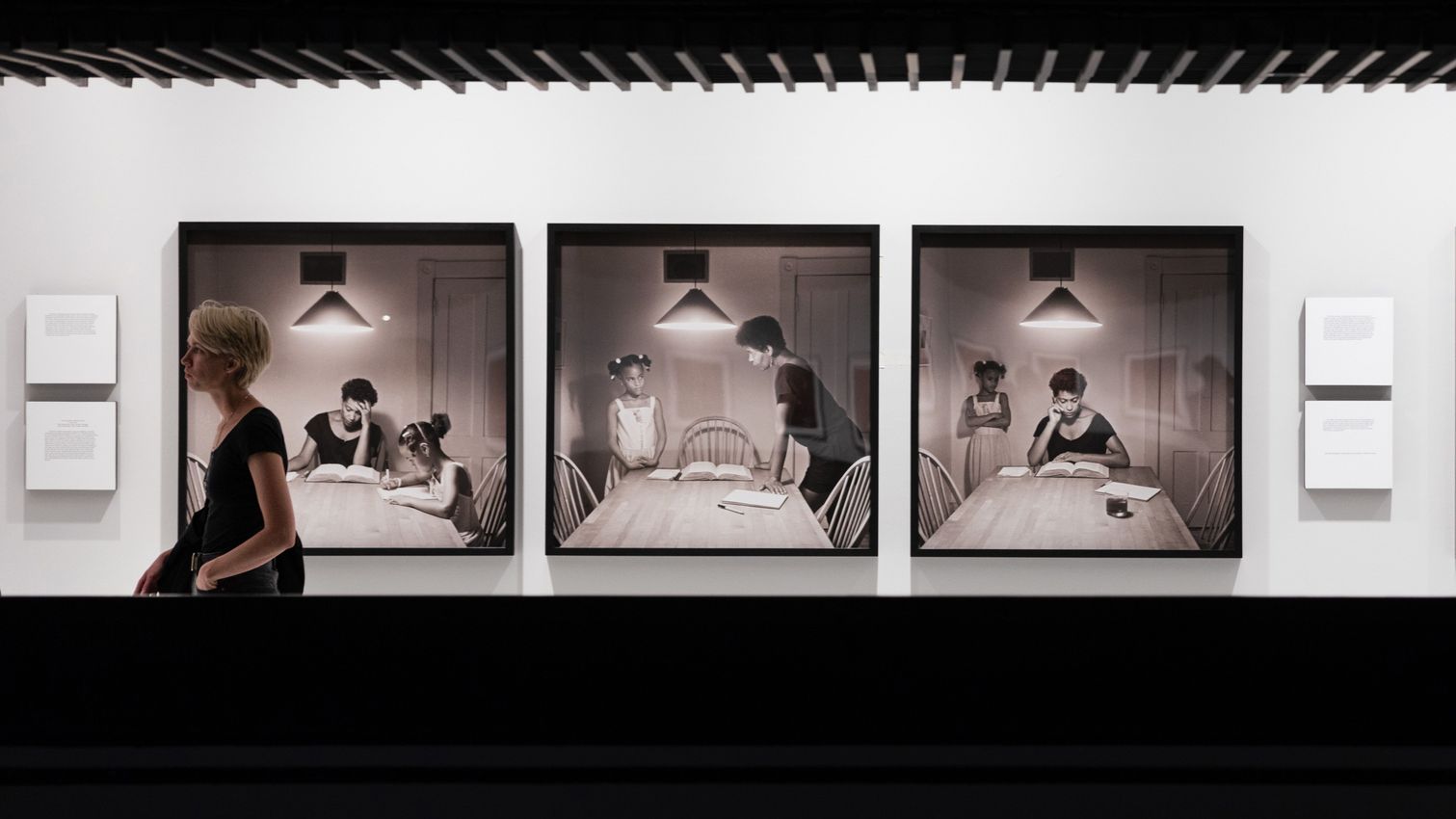
Weems’s breakthrough Kitchen Table Series (1990) stages a sequence of black-and-white photographs in which she plays a woman negotiating love, motherhood, friendship and solitude around a single, spotlighted kitchen table. The work uses a modest domestic set to address broader questions of intimacy, gender roles and power, and has become a landmark in both her career and feminist image-making more broadly.
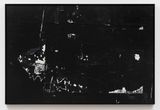
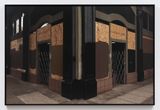
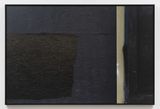
Subsequent projects extend this inquiry into history and institutions. In From Here I Saw What Happened and I Cried (1995–96), Weems re-photographs and tints archival portraits of enslaved and colonised subjects, overlaying them with searing textual commentary that turns ethnographic images into sites of mourning and political critique. The Hampton Project (2000) revisits photographs from a historically Black college to question narratives of uplift and assimilation, while The Museum Series (2006–ongoing) places Weems’s silhouetted figure before the facades of major Western museums, asking who is included in or excluded from dominant cultural histories. More recent works such as The Shape of Things (2021), Painting the Town (2021) and A Land of Broken Dreams (2021–22) respond directly to the 2020 racial-justice protests and the ongoing violence of white supremacy, turning boarded-up storefronts, news images and theatrical installations into meditations on protest, grief and resistance.
Education, Activism and Performance-Based Projects
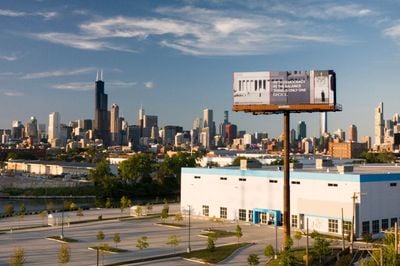
Education and activism are integral to Weems’s practice. She frequently works in civic and academic contexts—from billboards and public squares to universities—using art as a platform for public dialogue about race, gender and democracy. At Brown University she led Varying Shades of Brown (2023), a campus-wide project addressing race and institutional memory through exhibitions, performances and conversations. Her multi-disciplinary performances and films—including Grace Notes: Reflections for Now (2016) and The Baptism (2020)—extend her visual language into sound, music and theatre, exploring the idea of grace and collective mourning in the face of anti-Black violence.
Key Solo Museum Exhibitions
- Carrie Mae Weems: Three Decades of Photography and Video (2013–14), Frist Center for the Visual Arts, Nashville; travelled to Portland Art Museum; Cleveland Museum of Art; Cantor Center for Visual Arts, Stanford; Solomon R. Guggenheim Museum, New York.
- Carrie Mae Weems: The Museum Series (2014), Studio Museum in Harlem, New York.
- Carrie Mae Weems: The Shape of Things (2021), Park Avenue Armory, New York; version later shown at LUMA Arles, France (2021–22).
- Carrie Mae Weems: Reflections for Now (2023), Barbican, London—her first major UK survey.
- Carrie Mae Weems: The Evidence of Things Not Seen (2023–24), Württembergischer Kunstverein, Stuttgart; travelled to Kunstmuseum Basel.
- Carrie Mae Weems: Remember to Dream (2024–25), Hessel Museum of Art, CCS Bard, Annandale-on-Hudson.
- Carrie Mae Weems: The Heart of the Matter (2025–26), Gallerie d’Italia, Turin; travelling to FOMU Antwerp.
Important Group and Two-Person Museum Exhibitions
- Dawoud Bey & Carrie Mae Weems: In Dialogue (2021–23), Grand Rapids Art Museum; travelled to Museum of Fine Arts, St. Petersburg; Seattle Art Museum; Getty Center, Los Angeles; Tampa Museum of Art.
- A Movement in Every Direction: Legacies of the Great Migration (2022–23), Mississippi Museum of Art; Brooklyn Museum.
- Sharjah Biennial 15 (2023), Sharjah Art Foundation.
Awards and Honours
- National Medal of Arts, United States (2024).
- Hasselblad Award (2023).
- W.E.B. Du Bois Medal, Harvard University (2015).
- MacArthur Fellowship (2013).
- U.S. Department of State Medal of Arts (2012).
- Bernd and Hilla Becher Prize (2011).
- Ford Foundation Art of Change Fellowship (2016).
- Pollock-Krasner Foundation photography grant (2002).
- Smithsonian Fellowship (1987), alongside earlier NEA grants, the Rome Prize, the Louis Comfort Tiffany Award and the Congressional Black Caucus Foundation’s Lifetime Achievement Award.
Collections and Current Practice
Weems’s work is held in major public collections including the Metropolitan Museum of Art and Museum of Modern Art in New York, Tate Modern in London, the Museum of Fine Arts, Houston, the Museum of Contemporary Art, Los Angeles, and many others. Based in Syracuse, New York, where she has long been associated with the photography organisation Light Work, she continues to develop new bodies of work and large-scale institutional projects while mentoring younger artists and serving in academic and civic roles.
Through her sustained investigation of history, representation and power, Carrie Mae Weems has profoundly reshaped understandings of photography and lens-based art, influencing generations of artists and viewers and redefining how images participate in the politics of seeing.
Carrie Mae Weems FAQs
Who is Carrie Mae Weems, and what is she known for?
Carrie Mae Weems is an American photographer and multidisciplinary artist best known for conceptually driven, image-and-text–based works that examine race, gender, class and power in the United States. Her influential projects—from Family Pictures and Stories and Kitchen Table Series to From Here I Saw What Happened and I Cried—use staged and archival photographs, video and installation to question how images construct history and shape Black experience.
What is the significance of Carrie Mae Weems’s Kitchen Table Series?
Kitchen Table Series (1990) is widely regarded as Carrie Mae Weems’s breakthrough body of work and a landmark in contemporary photography and feminist art. By performing multiple roles around a single kitchen table, Weems uses a Black domestic interior to stage universal questions about love, labour, family, desire and self-definition, while challenging stereotypical representations of Black women in visual culture.
How does Carrie Mae Weems address race and power in her photography?
Across series such as Ain’t Jokin’, American Icons, From Here I Saw What Happened and I Cried and The Museum Series, Carrie Mae Weems exposes the racism embedded in jokes, archives, museum displays and everyday imagery. She frequently reworks historical photographs, adds text and inserts her own figure into spaces of authority to reveal how visual culture sustains structural inequality and to imagine more inclusive ways of seeing.
What are some of Carrie Mae Weems’s most important exhibitions and career milestones?
Some of Carrie Mae Weems’s most important exhibitions and career milestones include the touring survey Carrie Mae Weems: Three Decades of Photography and Video; major solo exhibitions such as The Shape of Things, Reflections for Now, The Evidence of Things Not Seen and The Heart of the Matter; and honours including the MacArthur Fellowship, Hasselblad Award and U.S. National Medal of Arts. These exhibitions and awards have cemented her reputation as a central figure in contemporary photography and lens-based art.
Where can I see Carrie Mae Weems’s work in museums and collections?
Carrie Mae Weems’s work is held in major public collections including the Metropolitan Museum of Art and Museum of Modern Art in New York, Tate Modern in London, the Museum of Fine Arts, Houston and the Museum of Contemporary Art, Los Angeles. Her photographs and installations are frequently shown in museum retrospectives, biennials and thematic group exhibitions focused on Black art, feminist art, conceptual photography and the politics of representation.
Ocula | 2026

Works at Goodman Gallery








Recently Exhibited




Works Elsewhere











Carrie Mae Weems in Ocula Magazine








Explore and Follow Artists Shaping Contemporary Art
A respected voice in contemporary art discourse.
Focusing on ambitious storytelling and insightful art-world commentary. Ocula Magazine publishes in-depth interviews, critical essays and timely analysis on the artists, exhibitions and ideas driving the global art world.
Learn more about Ocula Magazine
Showcasing the best of the art world.
Ocula partners with galleries from around the world to highlight their artists, artworks and exhibitions. Gallery membership is by application and invitation, with each member vetted by an independent panel.
Learn more about Ocula Membership
Specialises in the sale of major artworks.
Led by a team with deep ties to the world’s leading auction houses, galleries and collectors. Ocula’s advisory team offers bespoke services to high-net-worth clients from around the world who are looking to acquire the best of contemporary and modern art.
Learn more about our team and services