‘Purity and danger are intertwined, as danger arises when boundaries are violated.’—Mary Douglas
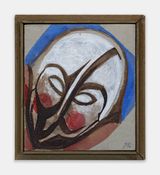
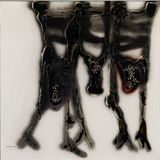
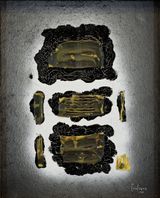
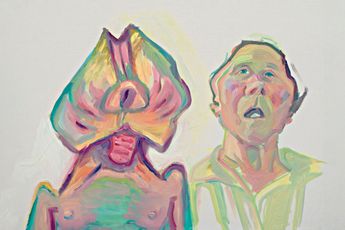
To coincide with Kunsttage Basel, we open our second exhibition at our new Basel location which will be a group showing of works by women artists, including Louise Bourgeois, Maria Lassnig, Meret Oppenheim, Alina Szapocznikow, Irène Zurkinden, Lee Lozano, Hannah Villiger and Carol Rama.
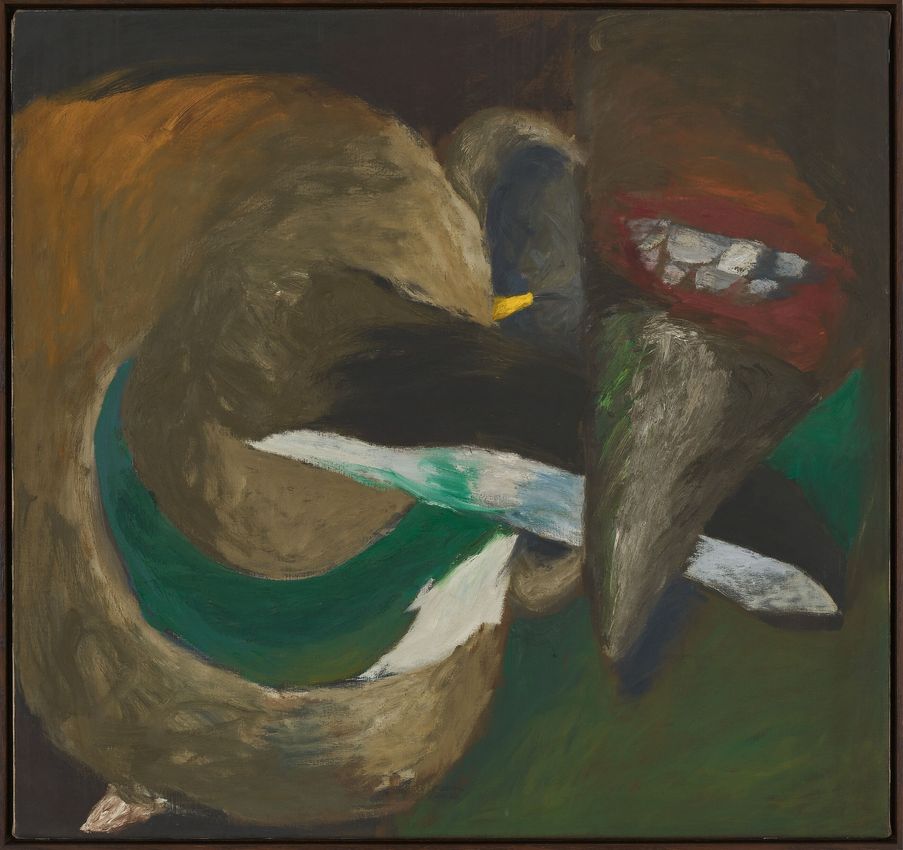
The exhibition is titled ‘Körperlich’, meaning ‘bodily’ in English. The artists included are each concerned with the body, exploring its role in the construction and expression of identity. Although the emphasis is on the physiognomy of the body and its organs, the feelings portrayed within the works on view are those that emanate from deep inside: love, desire, fear, anger, hysteria—visceral emotions which reveal themselves through bodily expression. The works on display range from portraiture, depicting images of the nude body and representations of corporeal parts, to semi-abstract images that suggest bodily forms. Through their work, these artists pose questions about bodily integrity, about control of the body, asking ultimately who has power and autonomy over our bodies, especially those that are gendered as female.
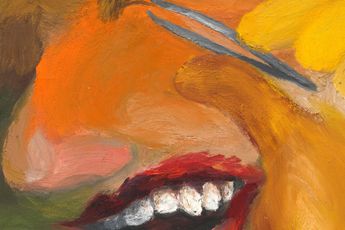
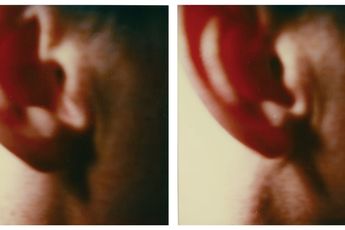
In some of the works, figures are blurred and fragmented, evoking difficult histories, personal and political conflict or violence. Whereas in Carol Rama’s ‘La guerra è astratta’ (1970) or Alina Szapocznikow’s sculpture of a disembodied mouth indicate the disowned physical self in the face of oppression, Hannah Villiger’s photographic work ‘Skulptural (Sculptural)’ (1986), a simple polaroid of an ear, might reference the last sense to be lost in the dying body, the ultimate fading of our conscious bodily existence.
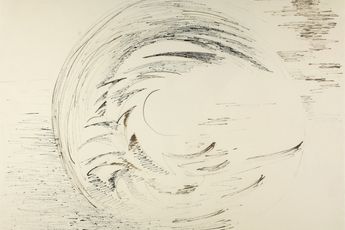
While the work of the artists on view sometimes seek to celebrate the body and play on notions of beauty and gender according to the traditional portrayal of the body in art, they nevertheless problematise these depictions and explore layers of complexity to this tradition such as in the painting ‘Nue’ (1934) by Irène Zurkinden, who also explores a variety of bodily movements in her expressive drawings. The artists presented challenge the tradition of the nude, expressing it often as a fractured, disintegrating and unstable body, as it appears in the watercolour works of Lassnig and the painting by Lozano.
Depictions of male bodies and forms also appear, for instance in three drawings by Meret Oppenheim showing delicate featured young men, or in her painting ‘Männlicher Kopf in der Diagonale (Man’s Head at a Diagonal)’ (1977), rendered in a soft palette of pastels, which foregrounds androgenous representations and the question of the conventional boundaries of gender.
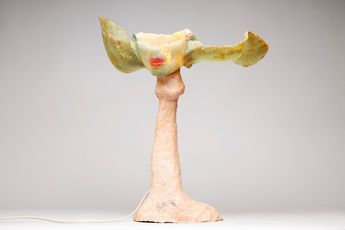
The artists included could be said to engage with the legacies of a Freudian understanding of the unconscious as it is expressed through a desiring body, but their work also anticipates feminist critiques of this concept, for example, through Julia Kristeva’s theory of abjection – a reminder of the material realities of the (female) body. Elements of organicism and abjection are explored in relation to the body in the hanging sculpture by Louise Bourgeois and Rama’s mixed media canvas from 1969, where the emphasis is on materiality. In works by Meret Oppenheim, aspects of nature are displayed, incorporating flowers or animal bodies in states of strange or surreal metamorphosis, as seen in ‘Tisch mit Vogelfüssen’ (1939 (executed 1983)) or the nearabstract ‘Nebelblume’ (1974).
Together, the artists in this exhibition grasp, investigate and express the complexities of the construction of self that comes from our bodies.


A respected voice in contemporary art discourse.
Focusing on ambitious storytelling and insightful art-world commentary. Ocula Magazine publishes in-depth interviews, critical essays and timely analysis on the artists, exhibitions and ideas driving the global art world.
Learn more about Ocula Magazine
Showcasing the best of the art world.
Ocula partners with galleries from around the world to highlight their artists, artworks and exhibitions. Gallery membership is by application and invitation, with each member vetted by an independent panel.
Learn more about Ocula Membership

Specialises in the sale of major artworks.
Led by a team with deep ties to the world’s leading auction houses, galleries and collectors. Ocula’s advisory team offers bespoke services to high-net-worth clients from around the world who are looking to acquire the best of contemporary and modern art.
Learn more about our team and services