




VICTOR MAN
b. 1974, RomaniaShrouded in darkness and allegory, the art of Victor Man combines figurative painting, literature, and layered symbolism to produce enigmatic, deeply psychological artworks that have established him as one of the most distinctive voices in contemporary art.
Early Years
Born in Cluj, Romania in 1974, Victor Man studied at the University of Art and Design in Cluj-Napoca. After a formative period living in Israel and Germany, he returned to Romania, where he became associated with the so-called Cluj School—a generation of artists who emerged from Transylvania following the fall of Communism. While linked to this movement, Man’s practice is solitary and poetic, drawing from a wide range of historical, philosophical, and literary influences. He lives and works in Cluj, and is represented by Gladstone Gallery and Galeria Plan B.
Methodology
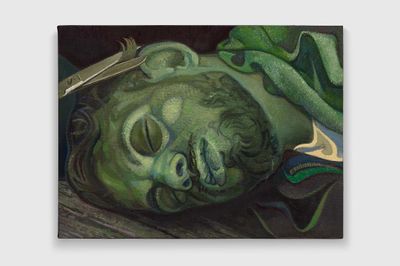
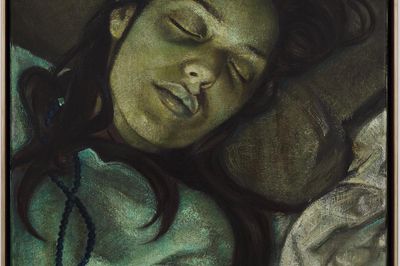
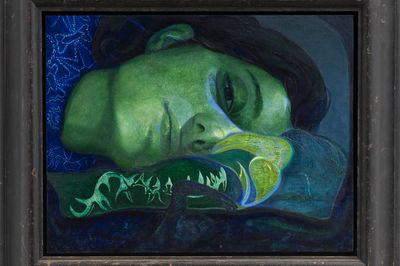
Victor Man works primarily in oil on canvas, applying thin, translucent layers that evoke the look of aged frescoes or devotional panels. His process is slow and deliberate, allowing each painting to emerge gradually from darkness. Often rendered in a muted range of greens, greys and browns, his works possess a chiaroscuro intensity that gives them a timeless, spectral quality. Techniques drawn from early Renaissance painting—such as sfumato, egg tempera effects, and indirect lighting—infuse the surface with psychological depth. The figures he depicts often appear and recede simultaneously, caught in a liminal state that resists certainty.
Subject Matter
The subject matter of Victor Man’s art is rich with allusion and ambiguity. Figures are often fragmented or obscured—partially hidden by shadow, hair, or mask—and appear alongside recurring motifs such as candles, books, birds, and flowers. Drawing on literary sources including Lucian Blaga, Freud, and Christian mysticism, Man’s work explores enduring themes of memory, mortality, identity, and the unconscious. While his figures sometimes resemble self-portraits or saints, they are not meant to depict specific individuals, but rather to embody archetypes and psychic states. Time in his paintings feels suspended, inviting slow contemplation.
Beyond Painting
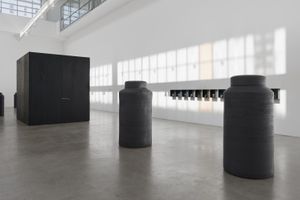
Though best known for painting, Victor Man frequently incorporates other materials into his practice. Sculptural works—often in bronze or wood—echo religious relics or archaeological fragments, creating a dialogue between the ancient and the contemporary. Text also plays a central role, not just as inspiration but as material: excerpts from poetry or philosophy are integrated into installations, titles, and exhibition design. In projects such as The Chandler’s Veil (2020–2022), paintings were shown alongside sculptural and textual components to form a cohesive spatial narrative. This multimedia approach enhances the sense of ritual, mystery, and layered meaning in his exhibitions.
Exhibitions
Victor Man has been the subject of both solo exhibitions and group exhibitions at important institutions. A selection of important exhibitions are provided below.
Solo Exhibitions
- Victor Man: The Lines of Life, Städel Museum, Frankfurt (2023)
- Victor Man: Eyelids, Towards Evening, Fondazione Sandretto Re Rebaudengo, Turin (2022)
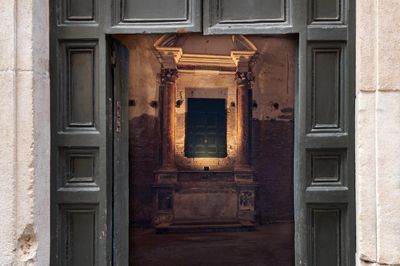
- Victor Man: 1837, Abbozzo per un Autoritratto, Sant’Andrea de Scaphis, Rome (2021)
- El candelero. Victor Man, Museo Tamayo, Mexico City (2018)
- Entrelacs – Victor Man invites Navid Nuur, Centre d’Édition Contemporaine, Geneva (2018)
- Victor Man, Musée d’Art Moderne Grand-Duc Jean (MUDAM), Luxembourg (2012)
- Victor Man: On relative loneliness, Galleria d’Arte Moderna e Contemporanea di Bergamo (GAMeC), Bergamo (2008)
Group Exhibitions
- Copyists, Centre Pompidou-Metz, France (2025)
- Summer Exhibition, Fondation Beyeler, Basel (2024)
- Lacan, the Exhibition: When Art Meets Psychoanalysis, Centre Pompidou-Metz, France (2023)
- Common Ground: UCCA 15th Anniversary Patrons Collection Exhibition, UCCA Center for Contemporary Art, Shanghai (2022)
- Fore-edge Painting, Museum of Contemporary Art of Rome (2021)
- These Strangers...Painting and People, Stedelijk Museum voor Actuele Kunst (S.M.A.K.), Ghent (2016)
- Romanian Pavilion, 56th Venice Biennale, Venice (2015)
Critical Reception
Victor Man’s practice has been featured in leading magazines including ARTnews, Christie’s, and Frieze. In Ocula Magazine, director Rory Mitchell noted of Man’s work: ‘Typically working with oils on a small scale, Man is able to achieve a depth of colour and atmosphere in his portraits with a poignant, dreamlike ambivalence.’
Victor Man FAQs
What themes does Victor Man explore in his art?
Victor Man’s art explores complex themes including memory, time, mortality, myth, identity, and the unconscious. His paintings often depict shadowy figures, fragments of bodies, and symbolic objects that resist direct interpretation, encouraging introspection and open-ended meaning. Drawing from literature, religion, psychoanalysis, and history, his works meditate on the passage of time and the fragility of human experience. Rather than offering narratives, Man’s art constructs a psychological atmosphere—one that hovers between past and present, real and imagined.
What is the Cluj School, and how is Victor Man connected?
The Cluj School refers to a loosely affiliated group of contemporary artists based in Cluj-Napoca, Romania, known for their focus on figurative painting and often dark, introspective subject matter. Emerging after the fall of Communism, the group has gained international recognition for its technically accomplished, conceptually rich works. Victor Man is considered one of its most influential figures, although his practice stands apart through its symbolic depth, literary references, and engagement with spiritual and philosophical questions.
What is Victor Man’s highest result at auction?
Victor Man’s highest result at auction was achieved with Weltinnenraum (World Within), which sold at Christie’s London in June 2023 for £1.734 million (including fees), setting a new world record for the artist. Estimated at £100,000–£150,000, it realised more than 17 times its high estimate. Another major sale was The Chandler, which sold at Sotheby’s London in March 2024 for £406,400 (with fees), more than quadrupling its £80,000 estimate—further confirming strong demand for Victor Man’s artworks.
Ocula | 2025
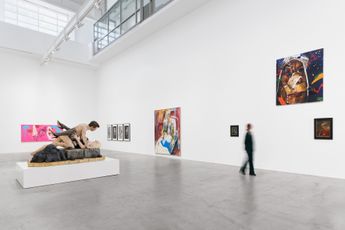
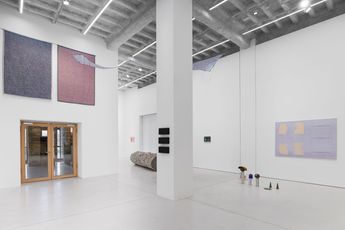
Explore Victor Man's Exhibitions

















Explore and Follow Artists Shaping Contemporary Art
A respected voice in contemporary art discourse.
Focusing on ambitious storytelling and insightful art-world commentary. Ocula Magazine publishes in-depth interviews, critical essays and timely analysis on the artists, exhibitions and ideas driving the global art world.
Learn more about Ocula Magazine
Showcasing the best of the art world.
Ocula partners with galleries from around the world to highlight their artists, artworks and exhibitions. Gallery membership is by application and invitation, with each member vetted by an independent panel.
Learn more about Ocula Membership
Specialises in the sale of major artworks.
Led by a team with deep ties to the world’s leading auction houses, galleries and collectors. Ocula’s advisory team offers bespoke services to high-net-worth clients from around the world who are looking to acquire the best of contemporary and modern art.
Learn more about our team and services