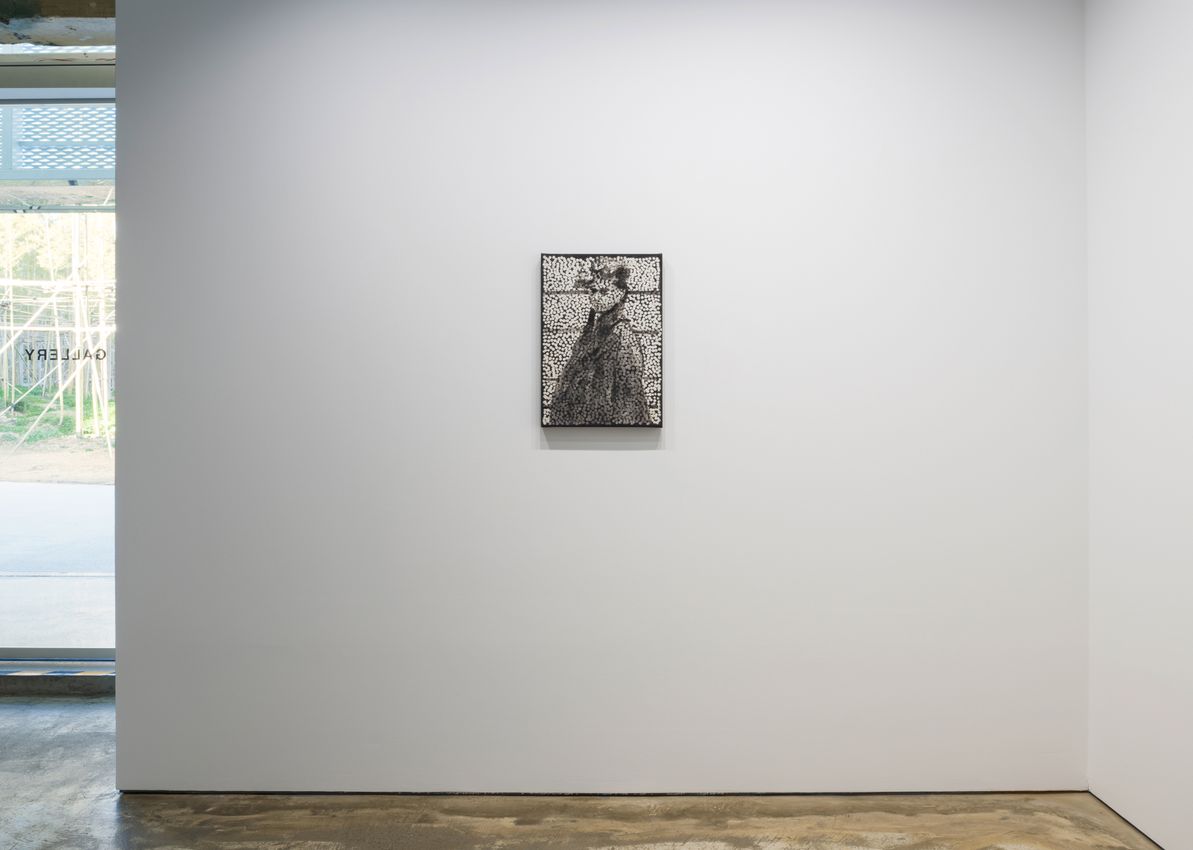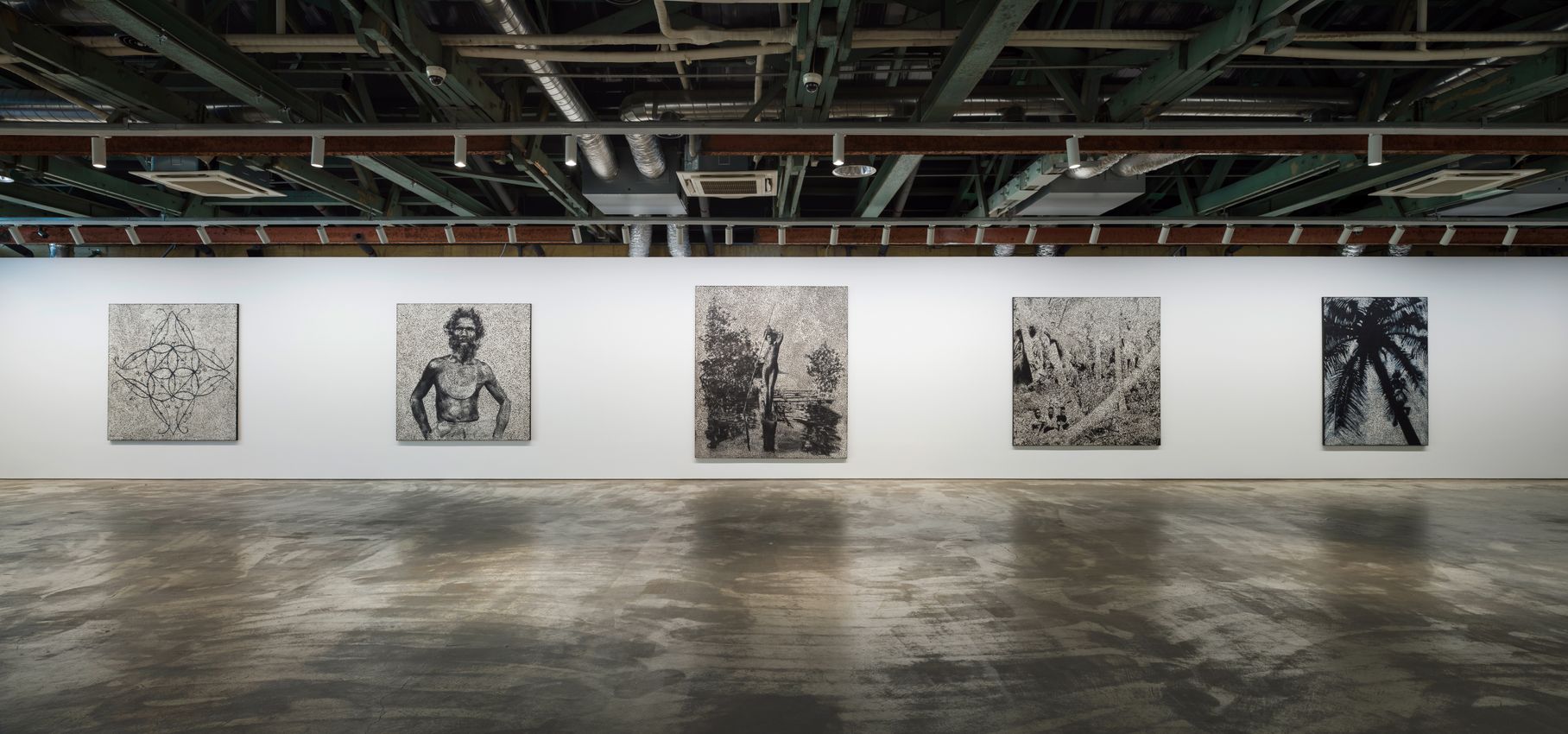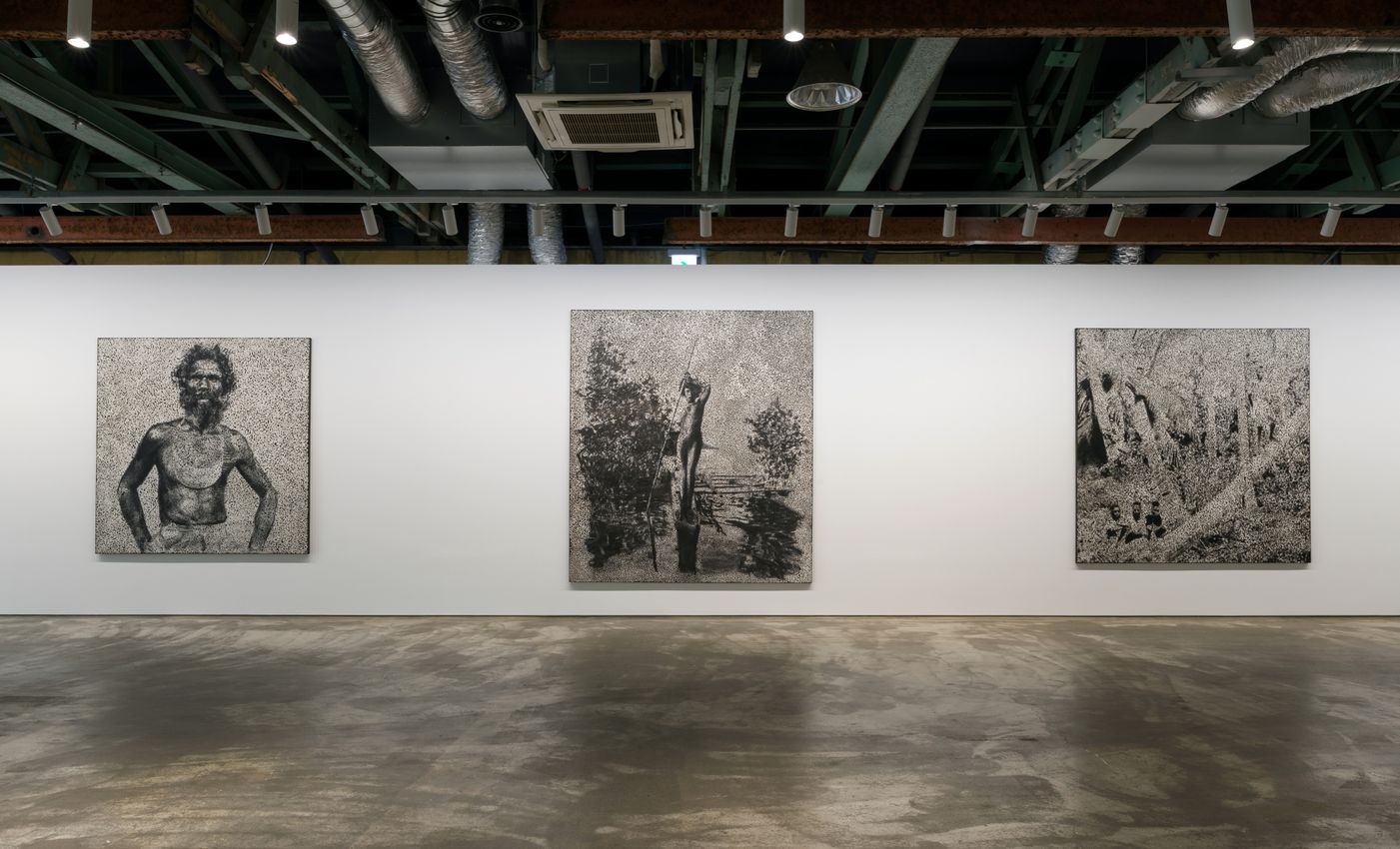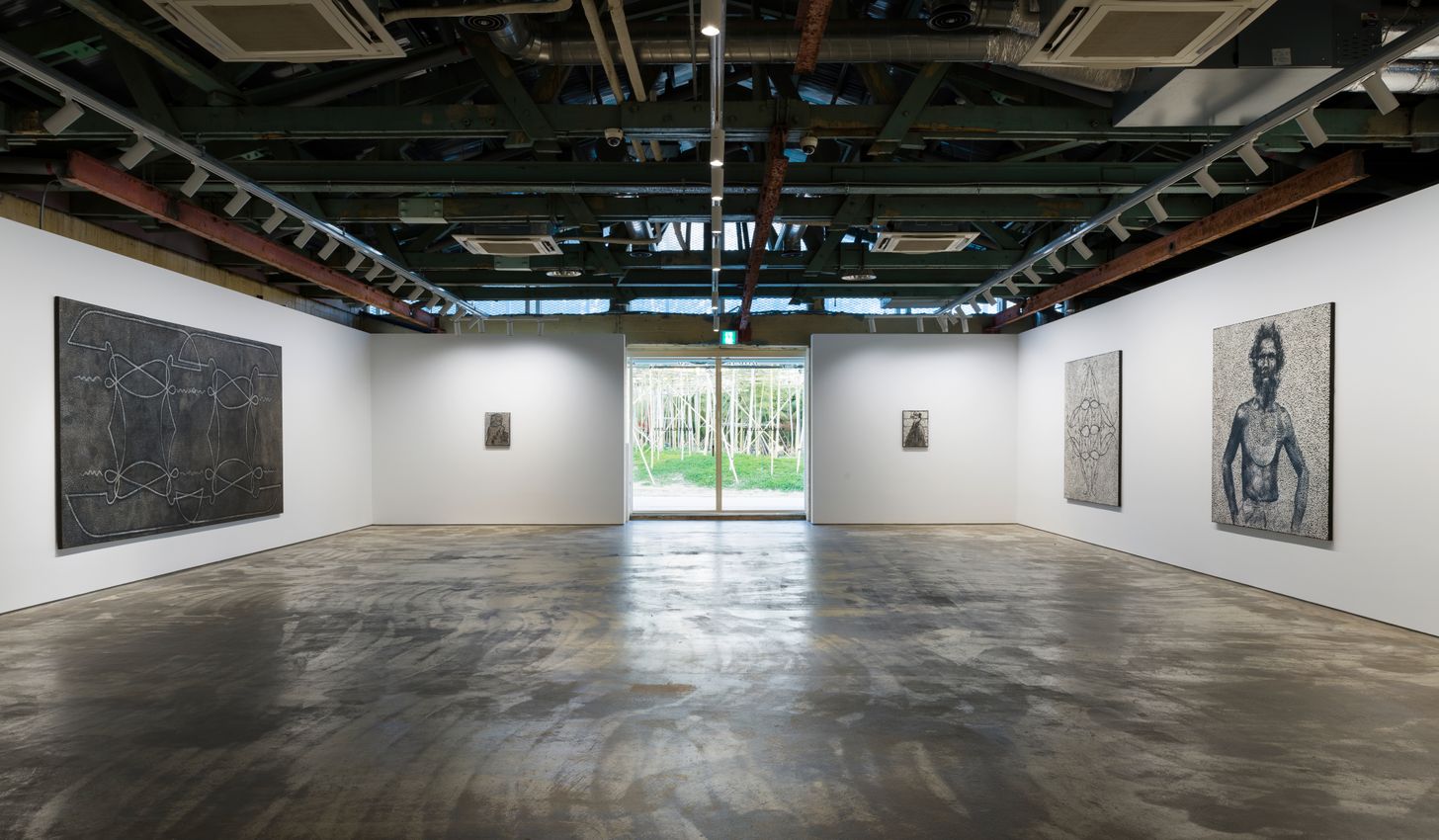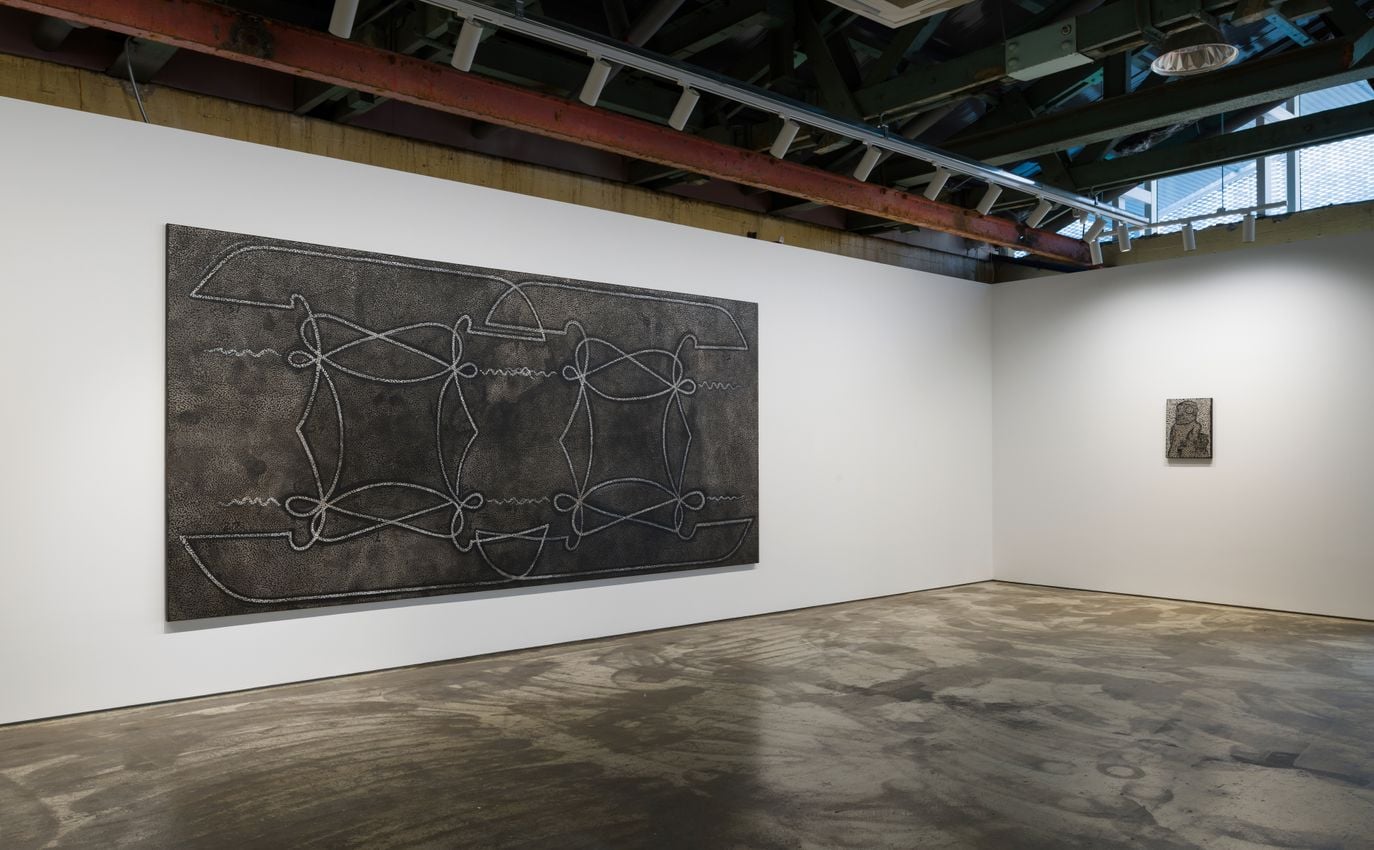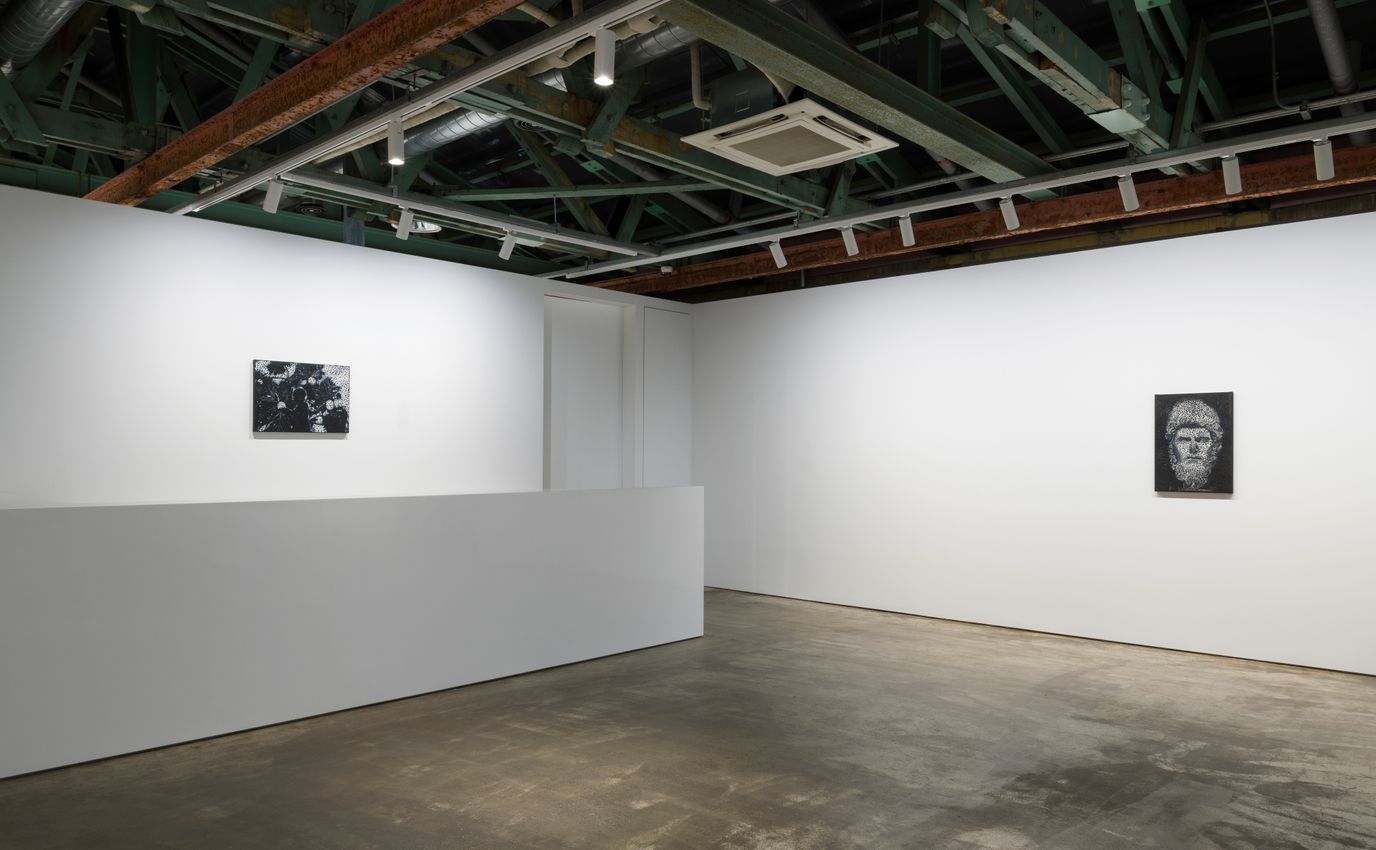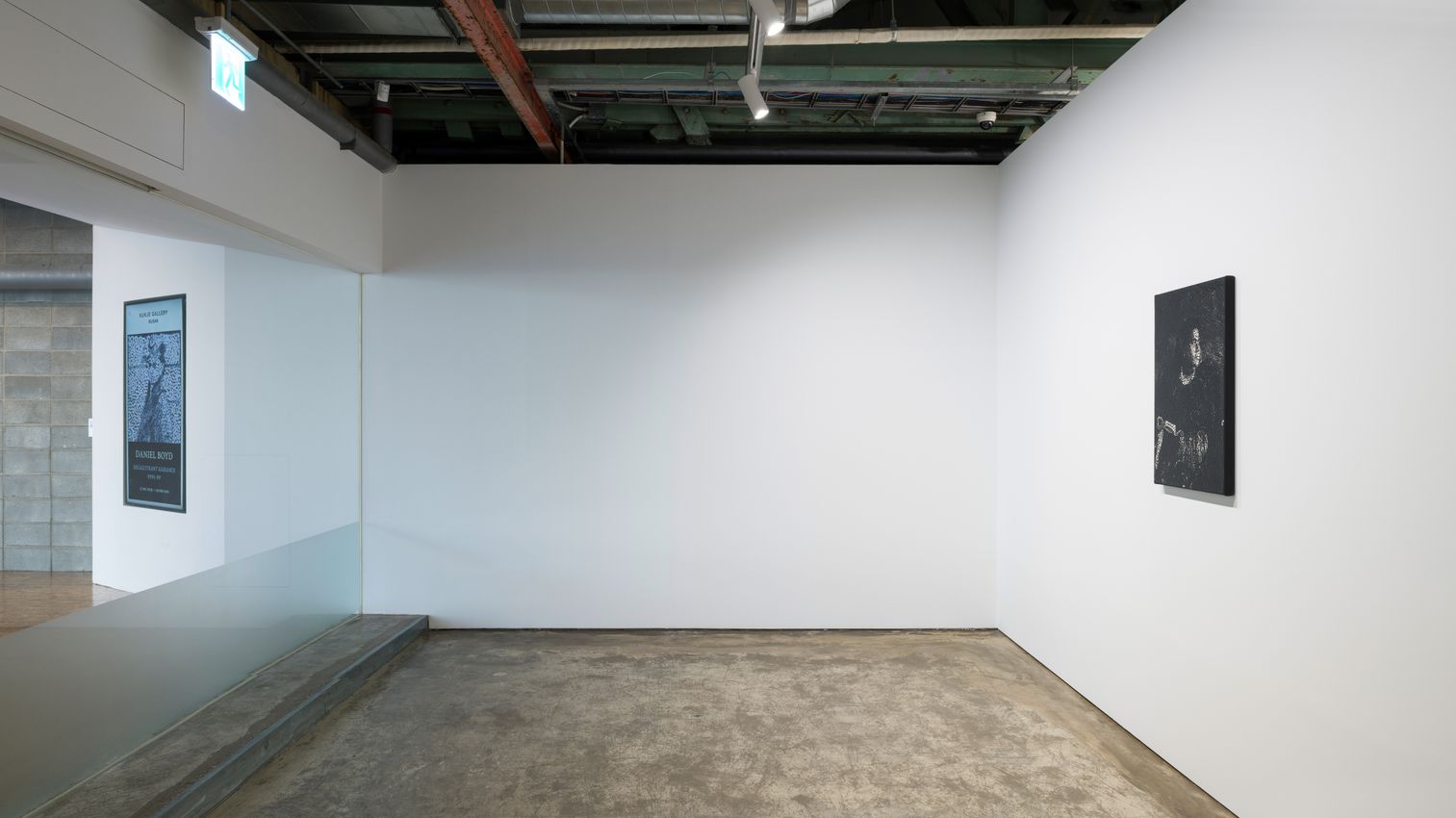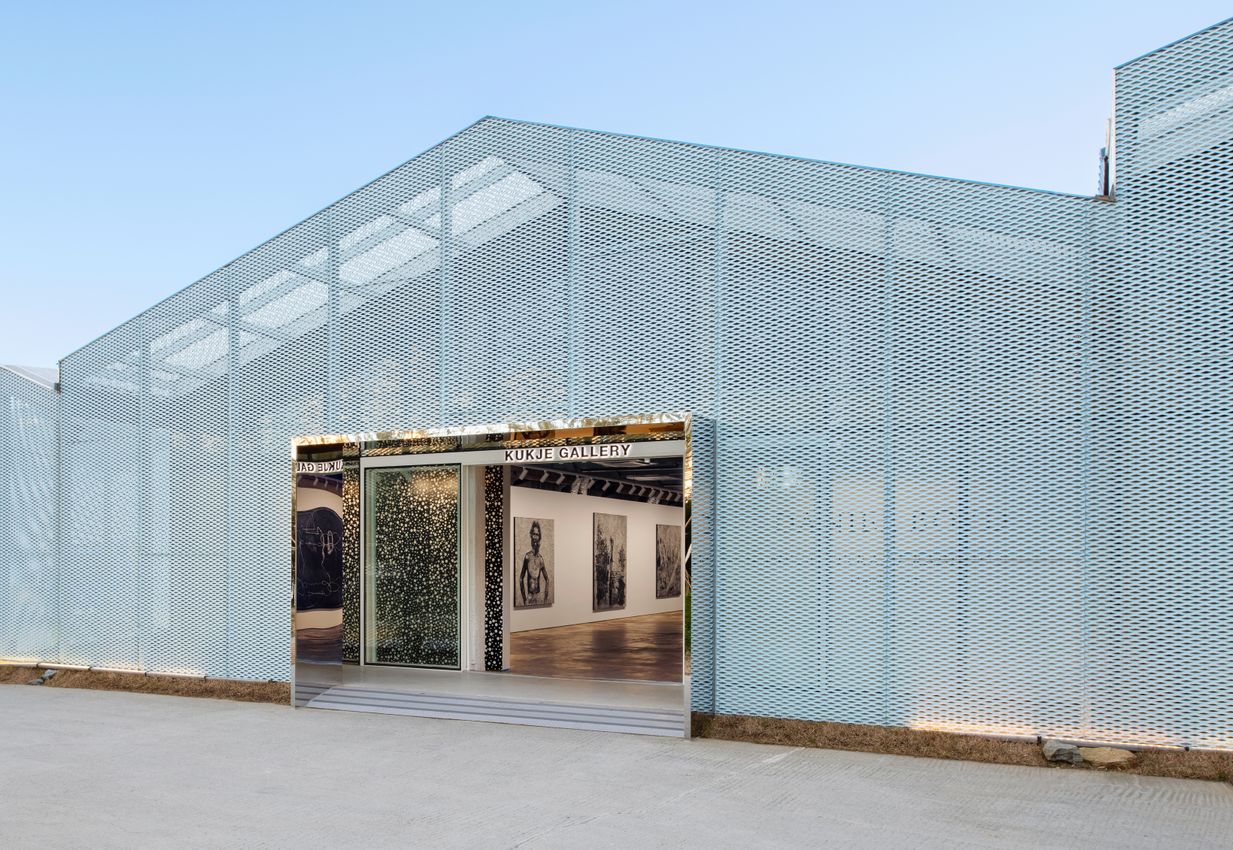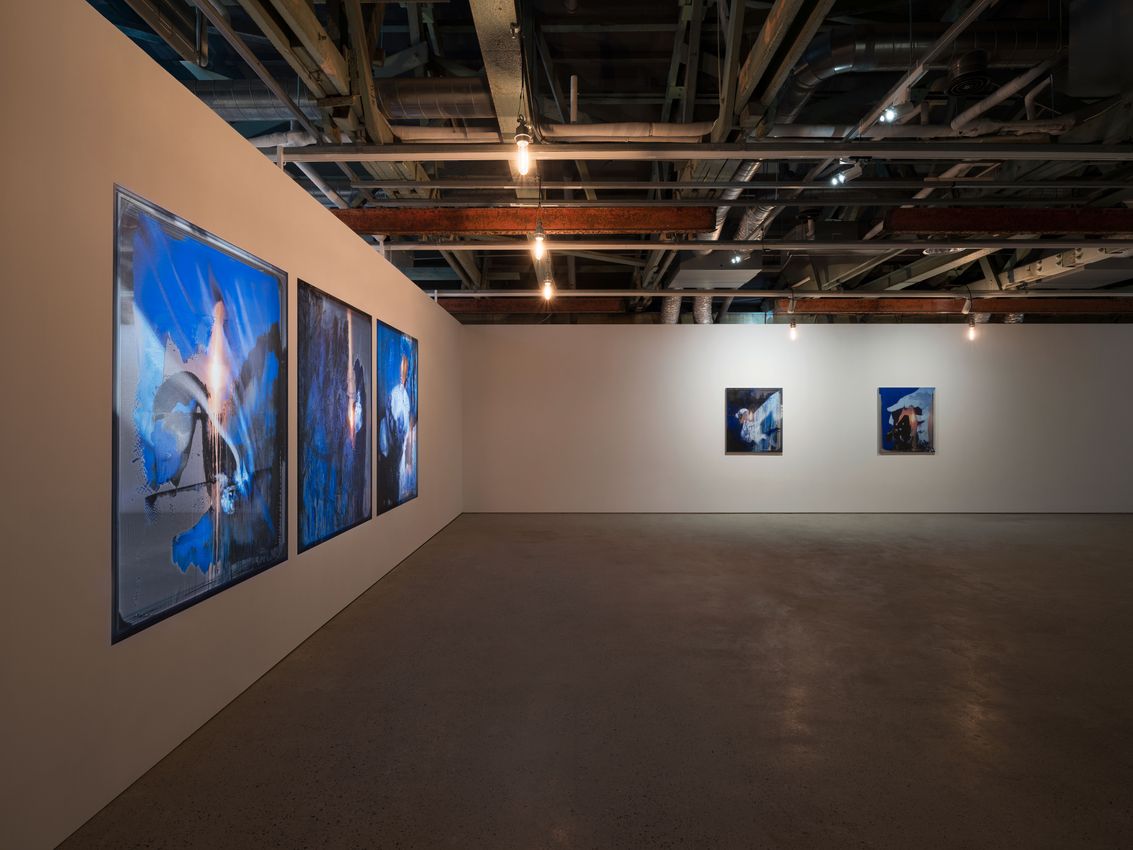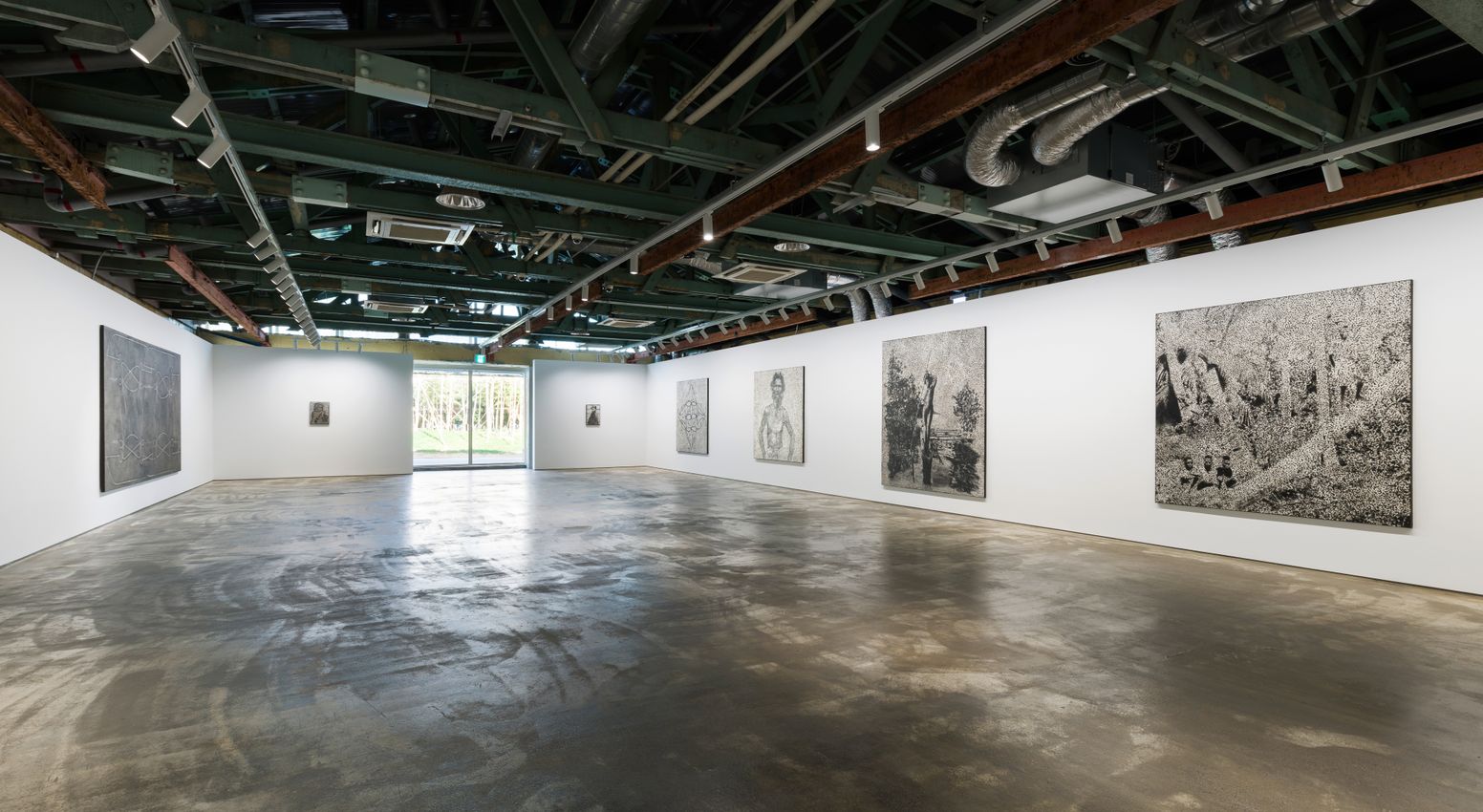
Kukje Gallery is pleased to present Recalcitrant Radiance, a solo exhibition of the Australian artist Daniel Boyd at the gallery’s Busan space on view from December 13, 2019, to February 29, 2020. The exhibition marks the artist’s first solo presentation in Korea. Over the years, Boyd has questioned and challenged the preexisting romanticist notions behind the colonial history of Australia, seeking to restore the perspectives often overlooked in hegemonic historical discourse. The show presents the artist’s new paintings that reflect his artistic practice of reconsidering the world’s order across different temporalities and borders.
Stemming from the words of the French philosopher Édouard Glissant, ‘The experience of the abyss is inside and outside of the abyss,’ the exhibition comprises of new paintings that oscillate between the dualities of light and darkness, knowledge and ignorance, information and non-information. The artist, who continuously explores the ways in which we understand the universe, emphasizes the importance of plurality in the collective consciousness of humanity. Hence, he raises awareness to the fact that history is a subjective narrative as he persistently cross-examines Eurocentric thoughts and perspectives. In particular, the artist engages with his Aboriginal and Vanautan heritage in reinterpreting Australian colonial history, often re-appropriating images of icons that played significant roles in the formation of the nation’s history.
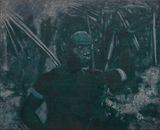
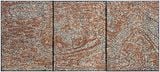
The paintings showcased in Recalcitrant Radiance align within the same context of re-examining the normality of historical perspectives. Boyd questions the cannoned notion of ‘beauty’ and the authority behind such designation of value through his representations of the Pacific Belle. His line drawings that trace the anthropological documentations of sand drawings from the Pentecost Island, Vanuatu, visit his personal ancestry as he once again draws on a trans-temporal trajectory of information from ananonymous man on the homeland of his great grandfather to the anthropologist and then back to the artist. Most vividly tapping into his interest in exploring the empirical lens through which the oppressor projects a dominant narrative onto the landscape is the painting of Kwame Nkrumah, president of the first African nation to gain independence from the British.
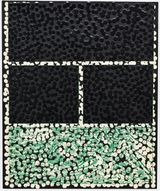
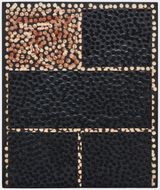
Boyd’s paintings do not reveal the entirety of the depicted message at one glance. Much of the paintings consist of clear white dots of glue applied to the canvas that cover a large part of the image underneath. Each ‘dot’ acts as a ‘lens’ through which the artist views the world; by installing numerous lenses, the artist tries to read the world as multiple histories as opposed to a singular narrative. The dots covering the surface of Boyd’s paintings in part emulate traditional Aboriginal painting techniques, connecting him to his ancestral roots in not just content but also in form. Each dot conveys and visualizes the calculated information between black and white, darkness and light. In this way, the viewer understands the painting in actively connecting the domains between the positive and the negative, and realigning the viewpoints between the past and present.
As such, Boyd’s works cultivate a multiplicity of perspectives and viewpoints as they delay the immediate delivery of a singular meaning. It is up to us, the viewers, to fill and enlighten the dark void of the unknown with each of our knowledge and different backgrounds, completing the picture from disparate vantage points.
Daniel Boyd is an Indigenous Australian multidisciplinary artist. His paintings, installations, and sculptures are informed by his Kudjla/Gangalu heritage, and examine Eurocentric narratives around Australia’s colonial history.


Kukje Gallery launched its first-ever Busan outpost in August 2018. Founded in 1982 and based in Seoul, Kukje Gallery opened its Busan branch in F1963, a cultural complex located in Mangmi-dong, Suyeong-gu, Busan, in order to showcase works by a roster of internationally acclaimed contemporary artists as well as provide vital context with which to read their works to the regional audiences in the city. F1963, a cultural complex which used to be a wire factory, is Busan’s main attraction with more than 1,000,000 visitors per year and houses Sukcheon Hall (performance/exhibition space), a café, bookstore, restaurant, and various other cultural spaces.

A respected voice in contemporary art discourse.
Focusing on ambitious storytelling and insightful art-world commentary. Ocula Magazine publishes in-depth interviews, critical essays and timely analysis on the artists, exhibitions and ideas driving the global art world.
Learn more about Ocula Magazine
Showcasing the best of the art world.
Ocula partners with galleries from around the world to highlight their artists, artworks and exhibitions. Gallery membership is by application and invitation, with each member vetted by an independent panel.
Learn more about Ocula Membership

Specialises in the sale of major artworks.
Led by a team with deep ties to the world’s leading auction houses, galleries and collectors. Ocula’s advisory team offers bespoke services to high-net-worth clients from around the world who are looking to acquire the best of contemporary and modern art.
Learn more about our team and services