Press Release

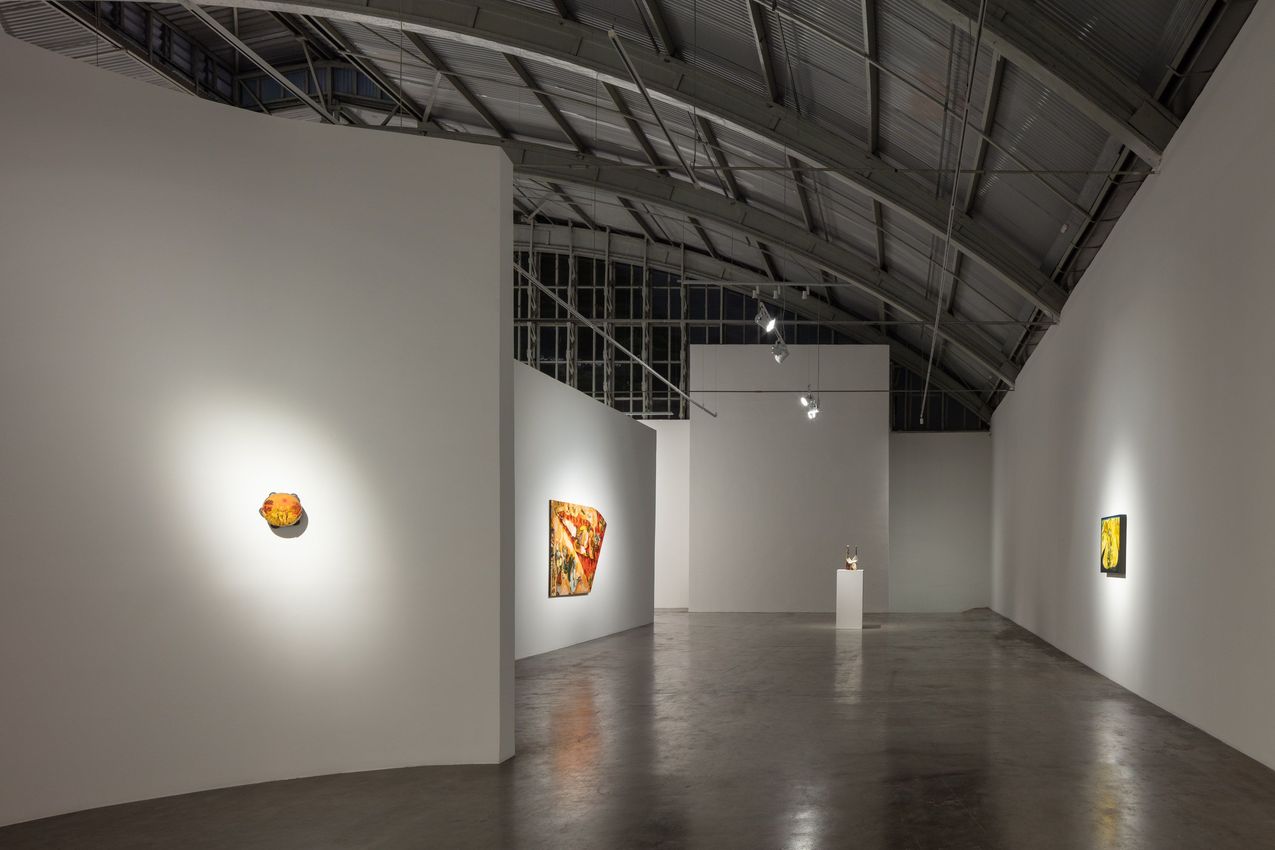
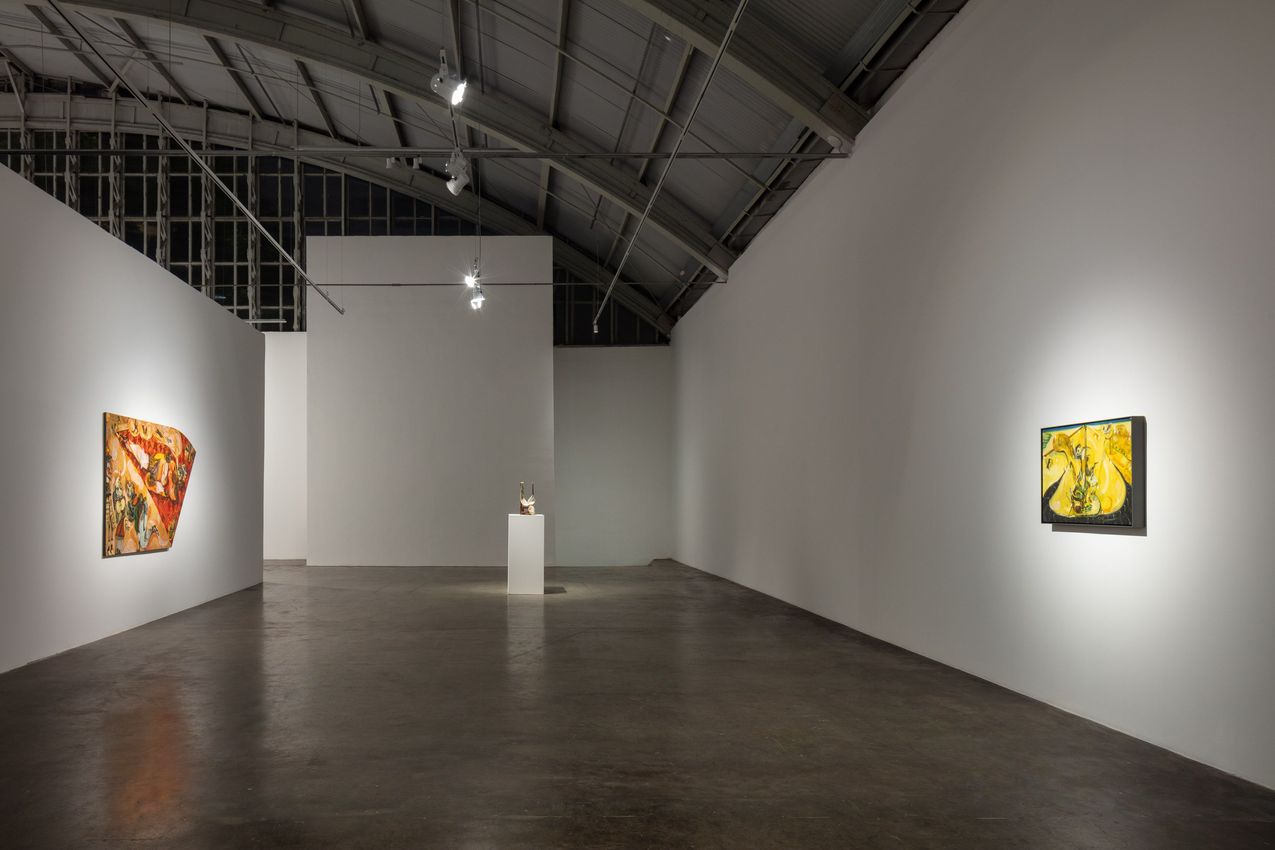
Mendes Wood DM is pleased to present Um galo sozinho não tece uma manhã, Guglielmo Castelli’s first exhibition in Brazil.

A painter from Turin, Castelli refined his craft during academic training in scenography – a discipline that has shaped his painterly practice, especially his rendition of space and architectural interiors. While his aesthetic is rooted there, a critique of bourgeois culture marks his intellectual horizon. The painterly surface is not an expression of mere technical virtuosity but a battleground on which Castelli makes sense of the surrounding culture: the weight of heritage, high culture’s relationship to conservatism versus the popular, and the possibility of total upheaval.

The exhibition takes its title from a verse by Brazilian poet João Cabral de Melo Neto: Um galo sozinho não tece uma manhã [One rooster alone does not tell a morning]. The verse appears in A educação pela pedra [Education by Stone], a collection published in 1966 when Brazil was governed by a military dictatorship that cracked down on artists and intellectuals with increasing violence over the subsequent years. The metaphor of the rooster only able to call forth the morning’s brightness if accompanied by multiple other proves perennial – an ode to the multitude and collaboration, resonating, too, with an art historical principle of Brazilian geometric abstraction: the whole is more than the sum of its parts.

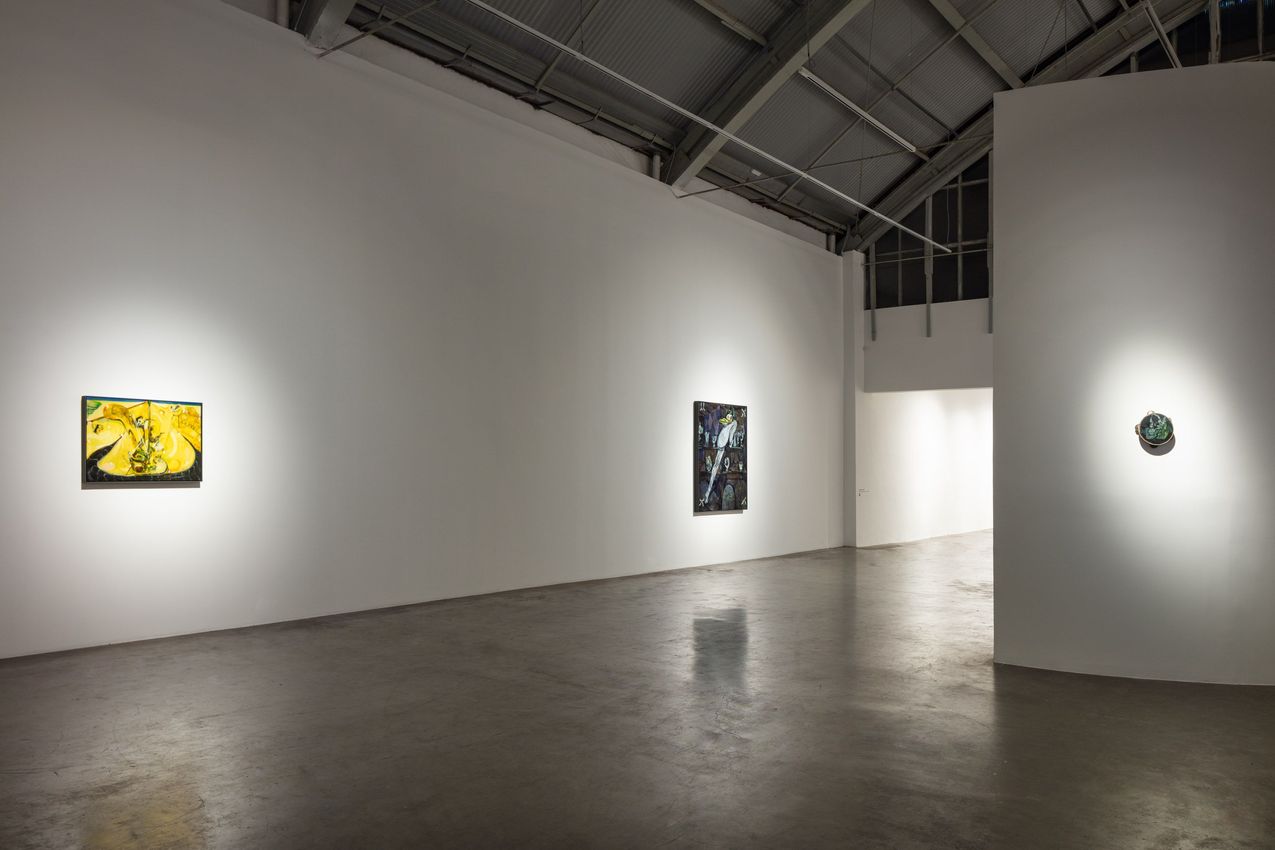
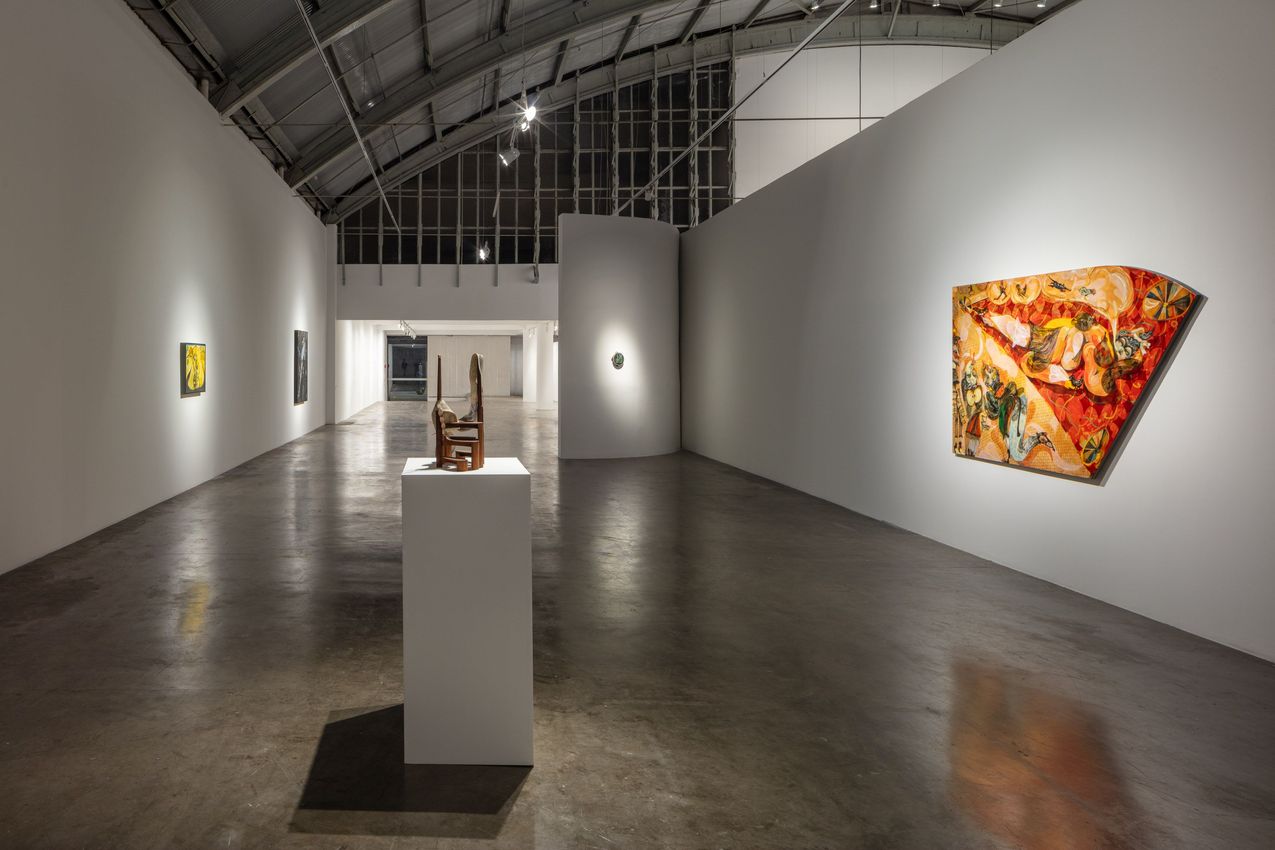
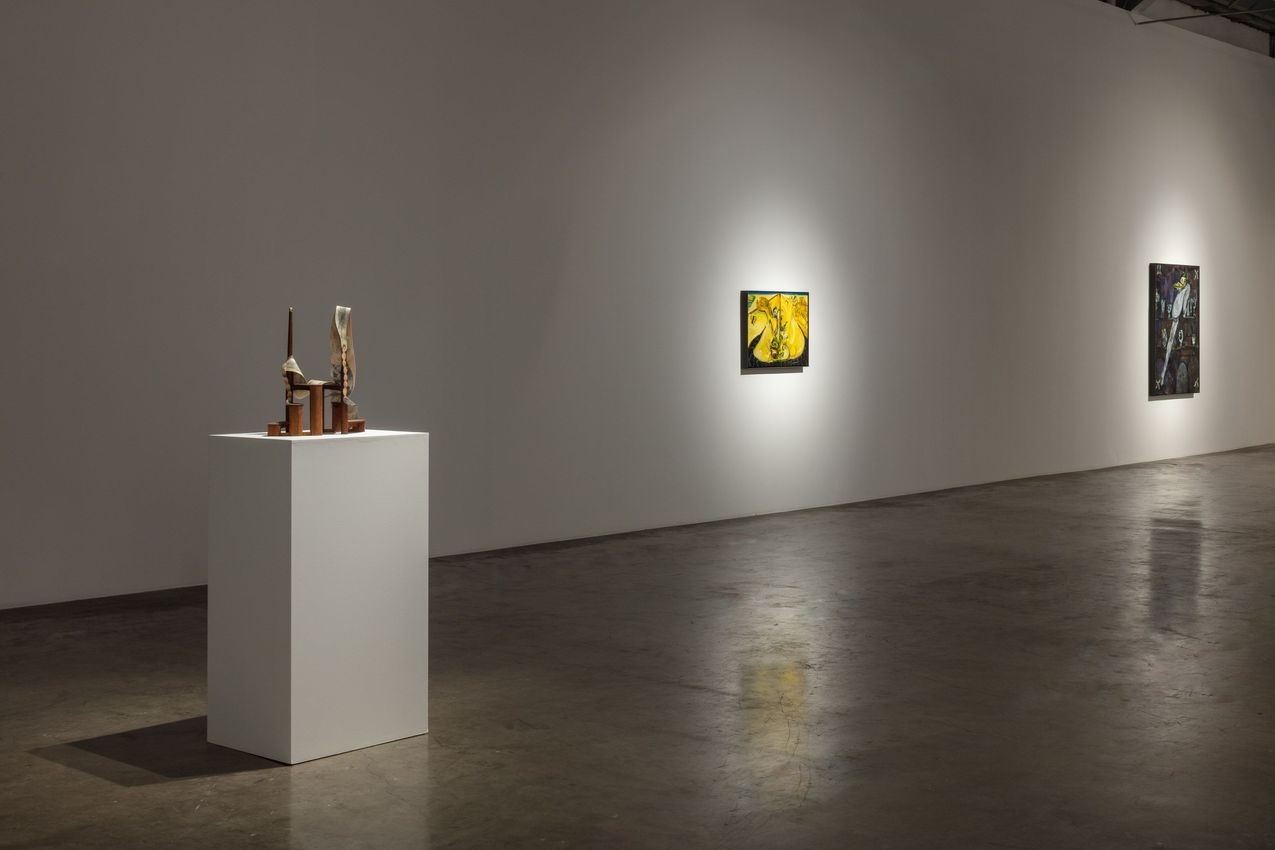
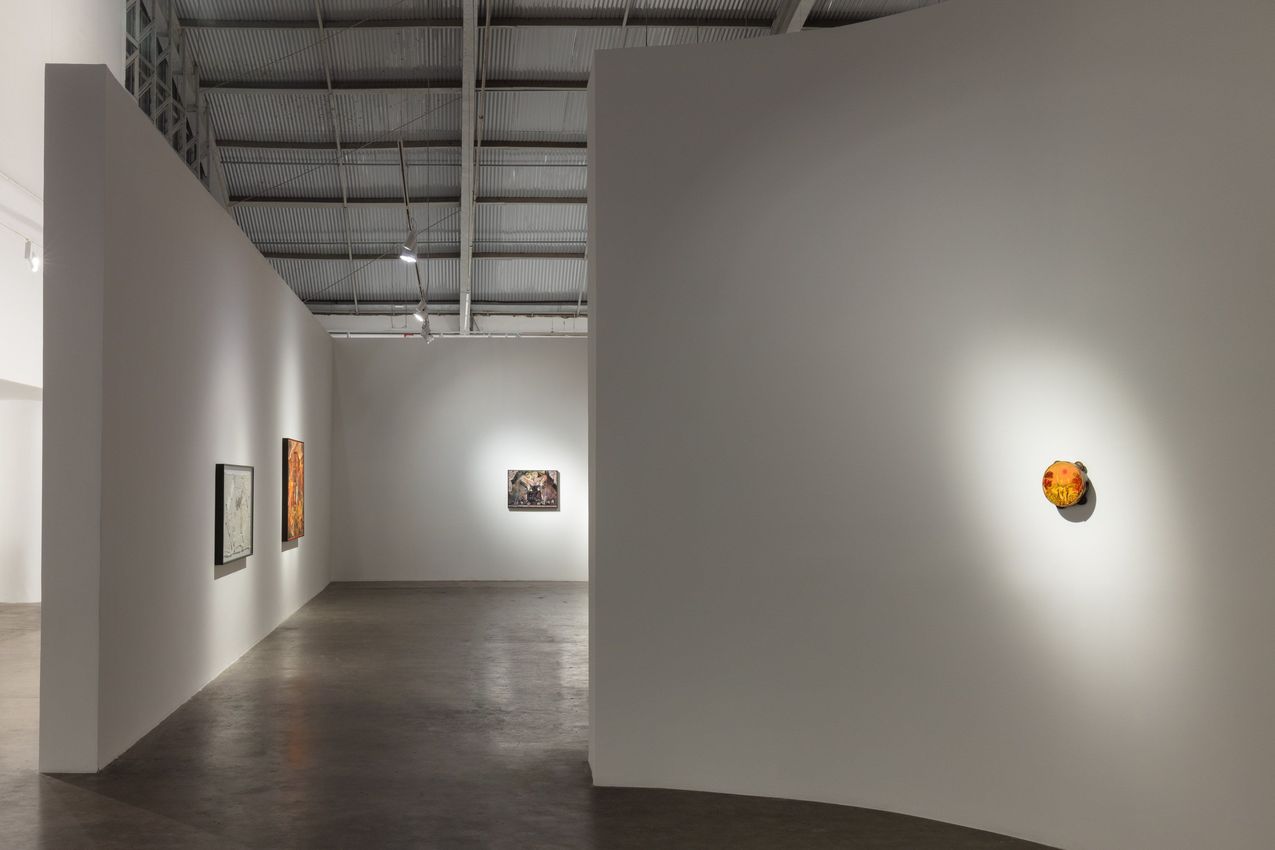
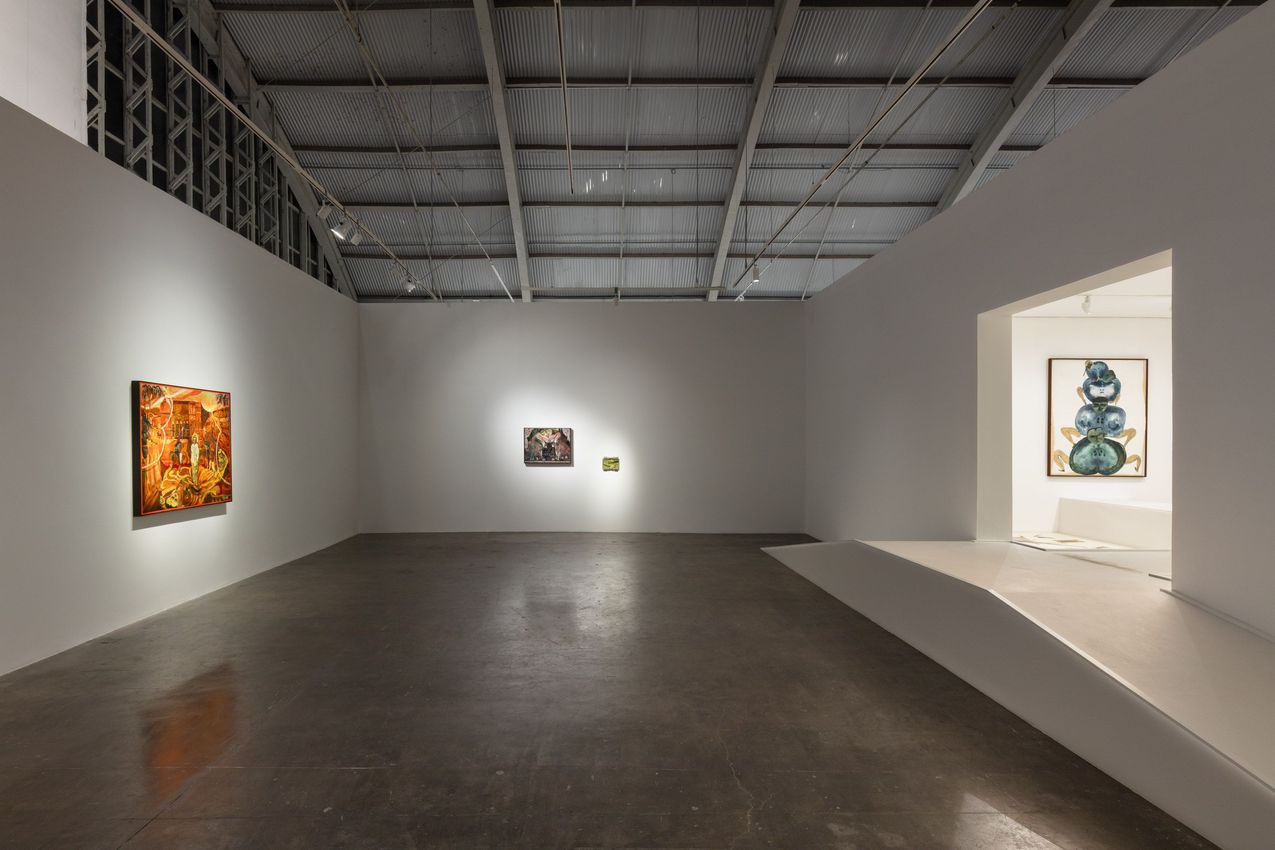
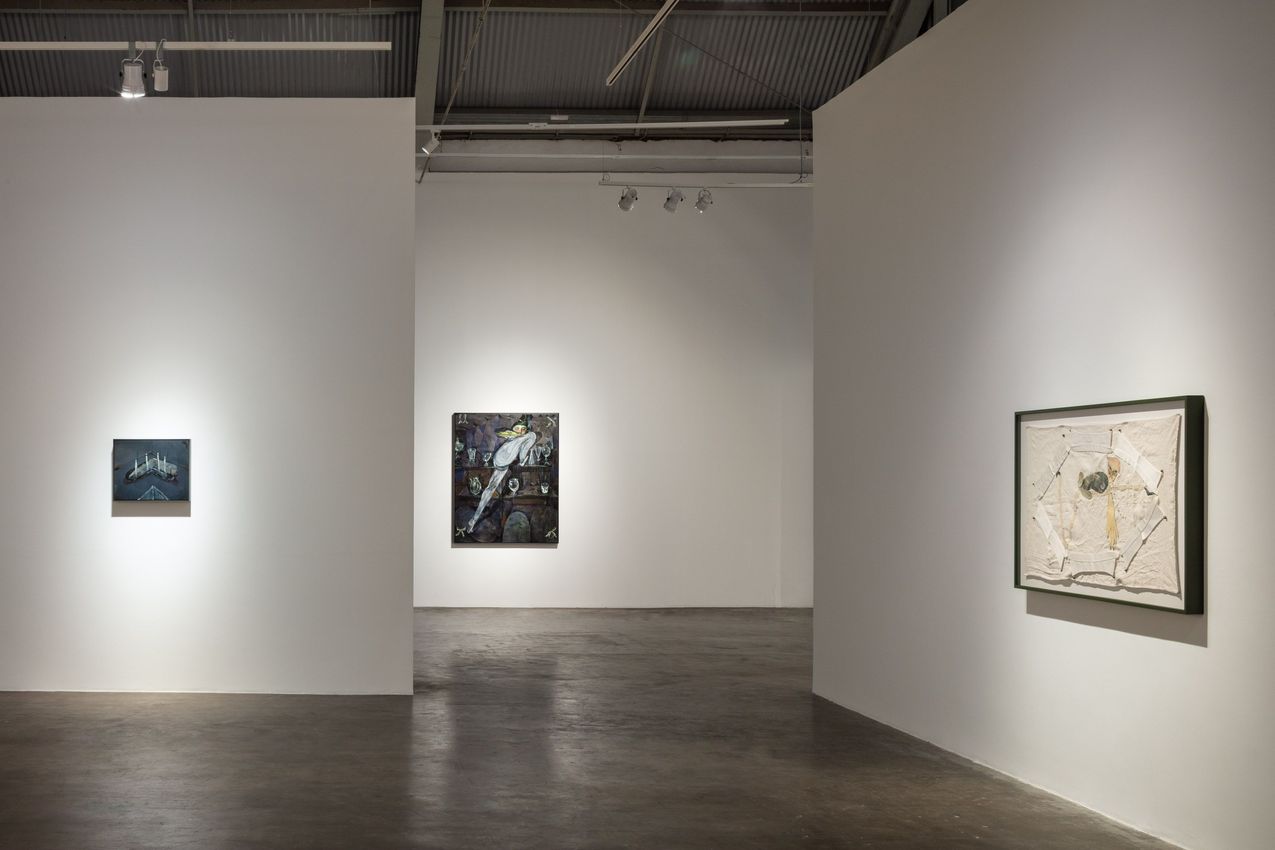
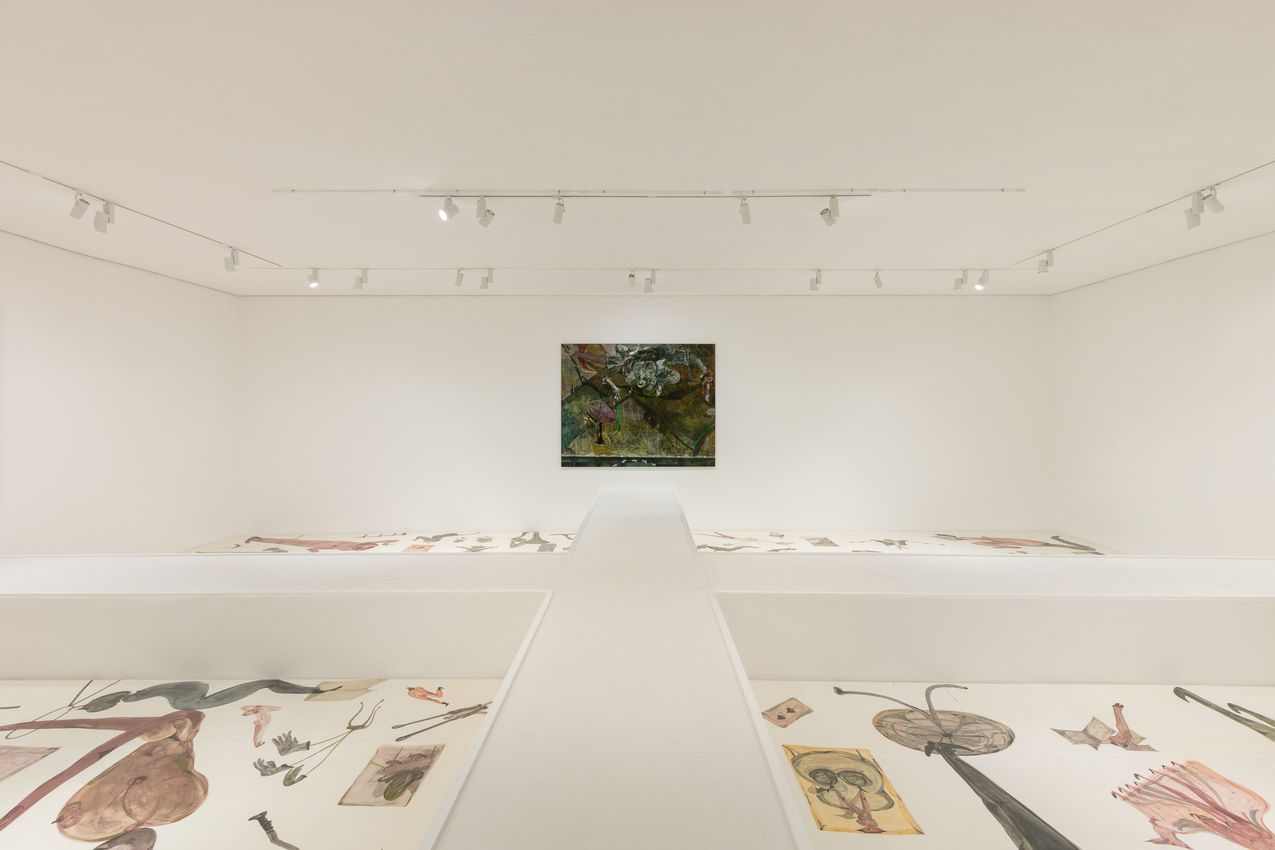
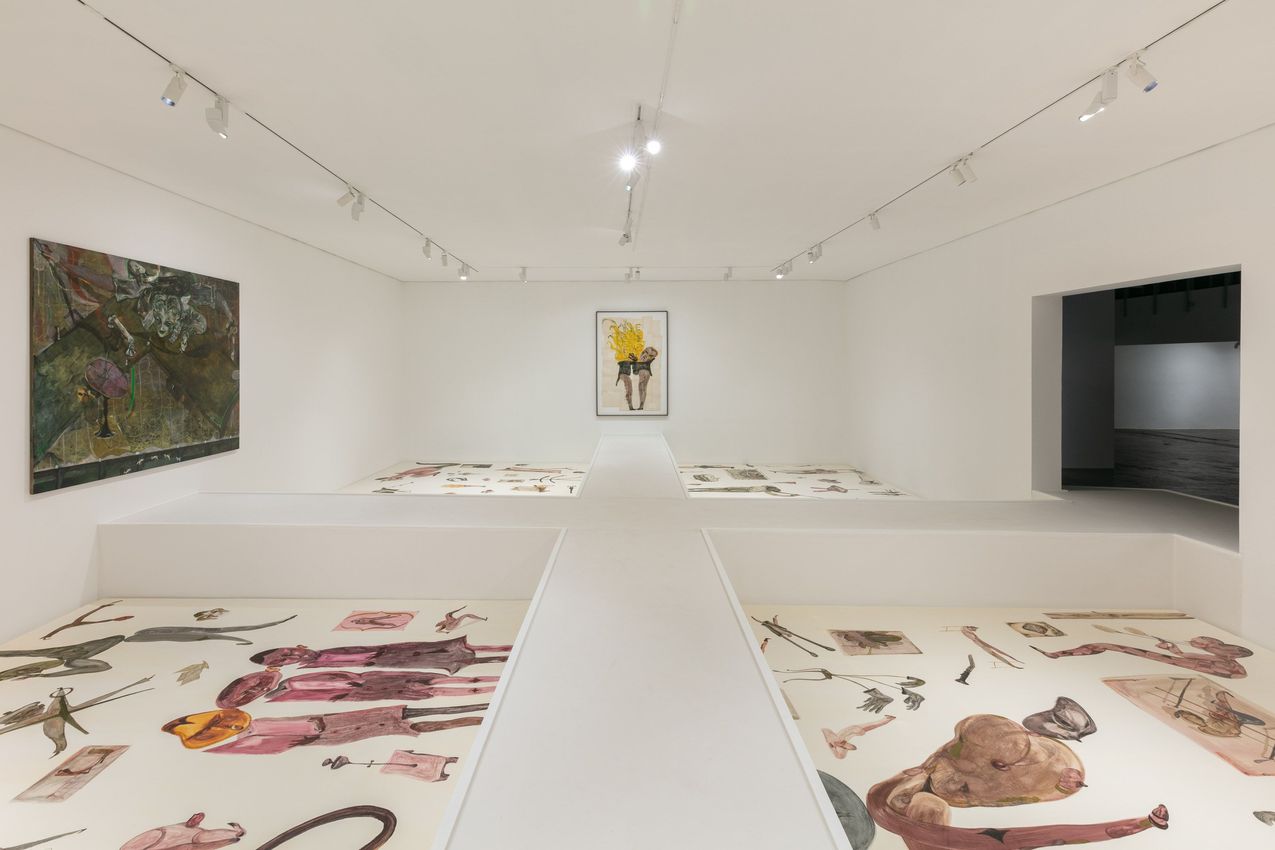
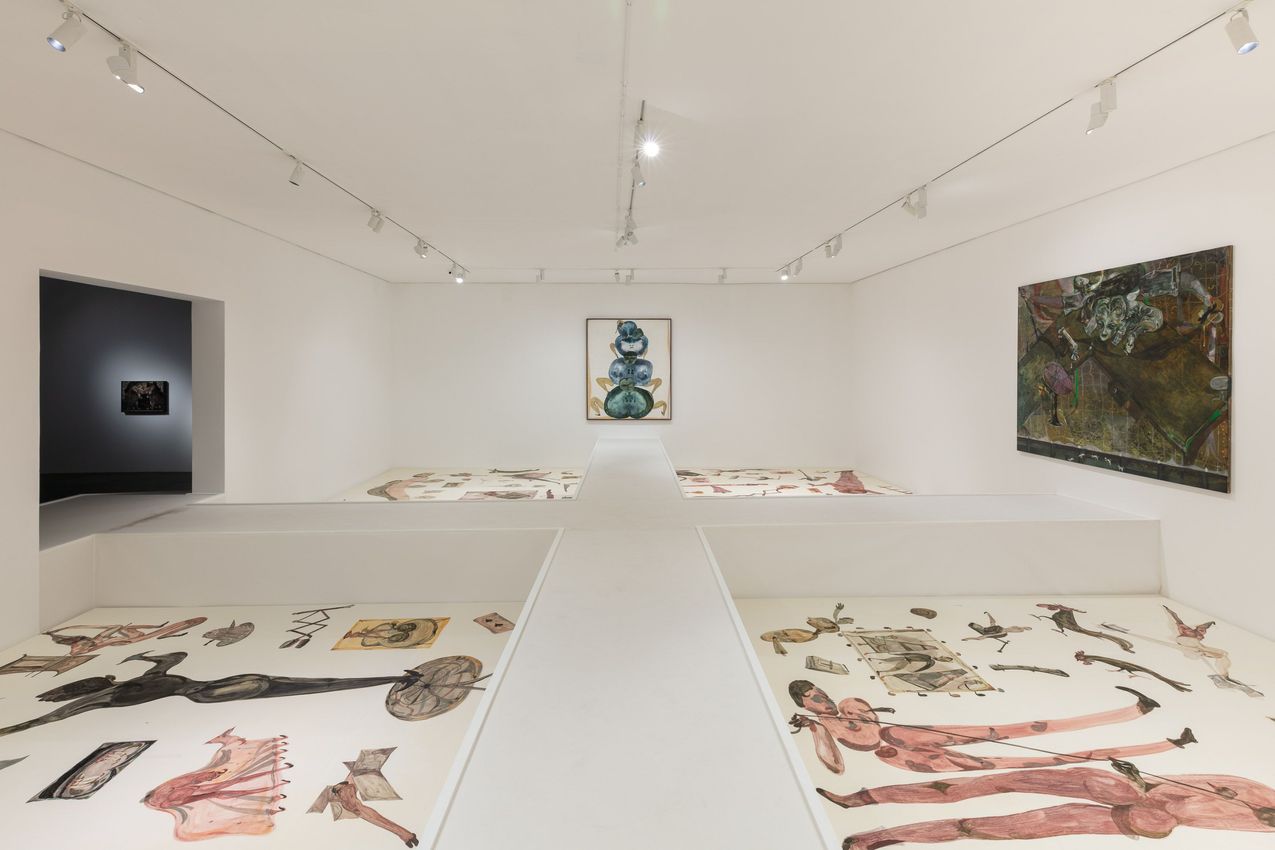
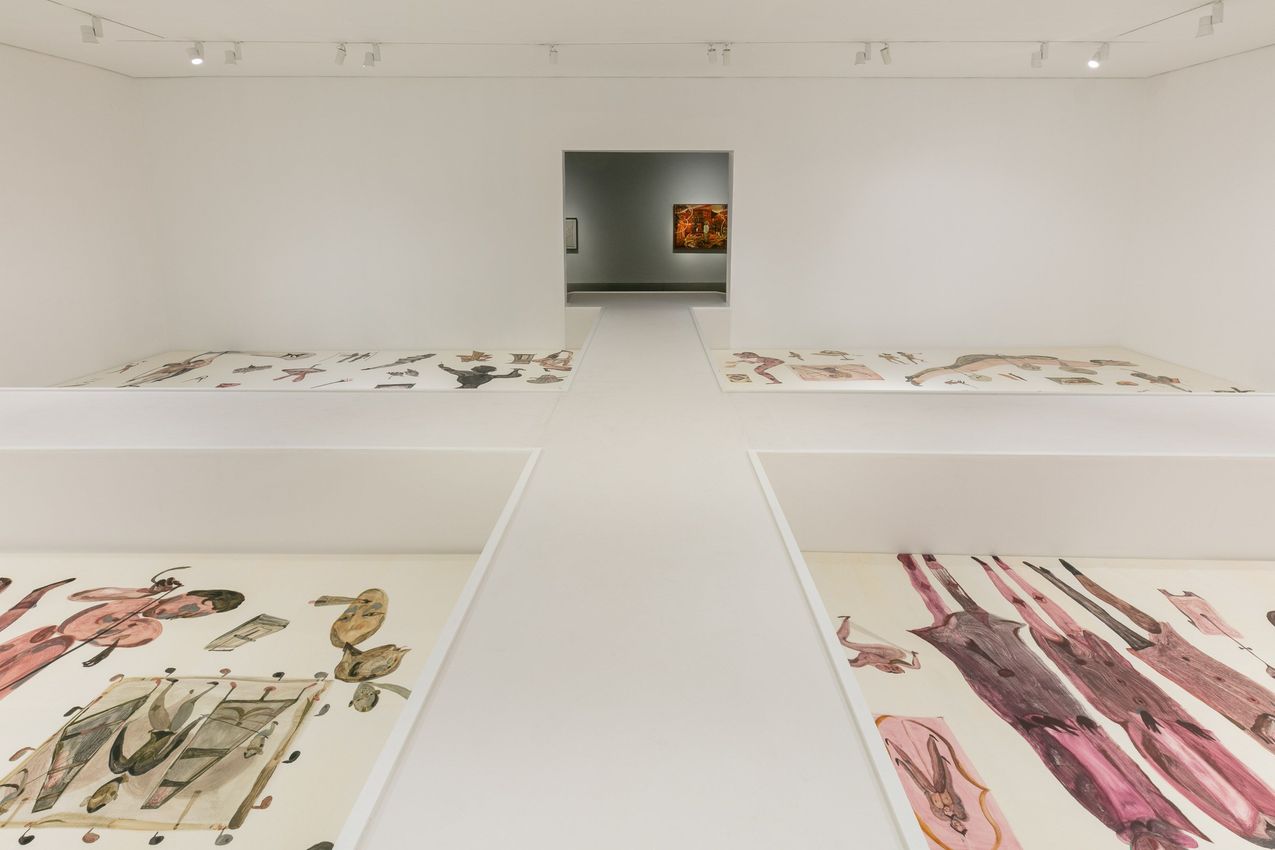
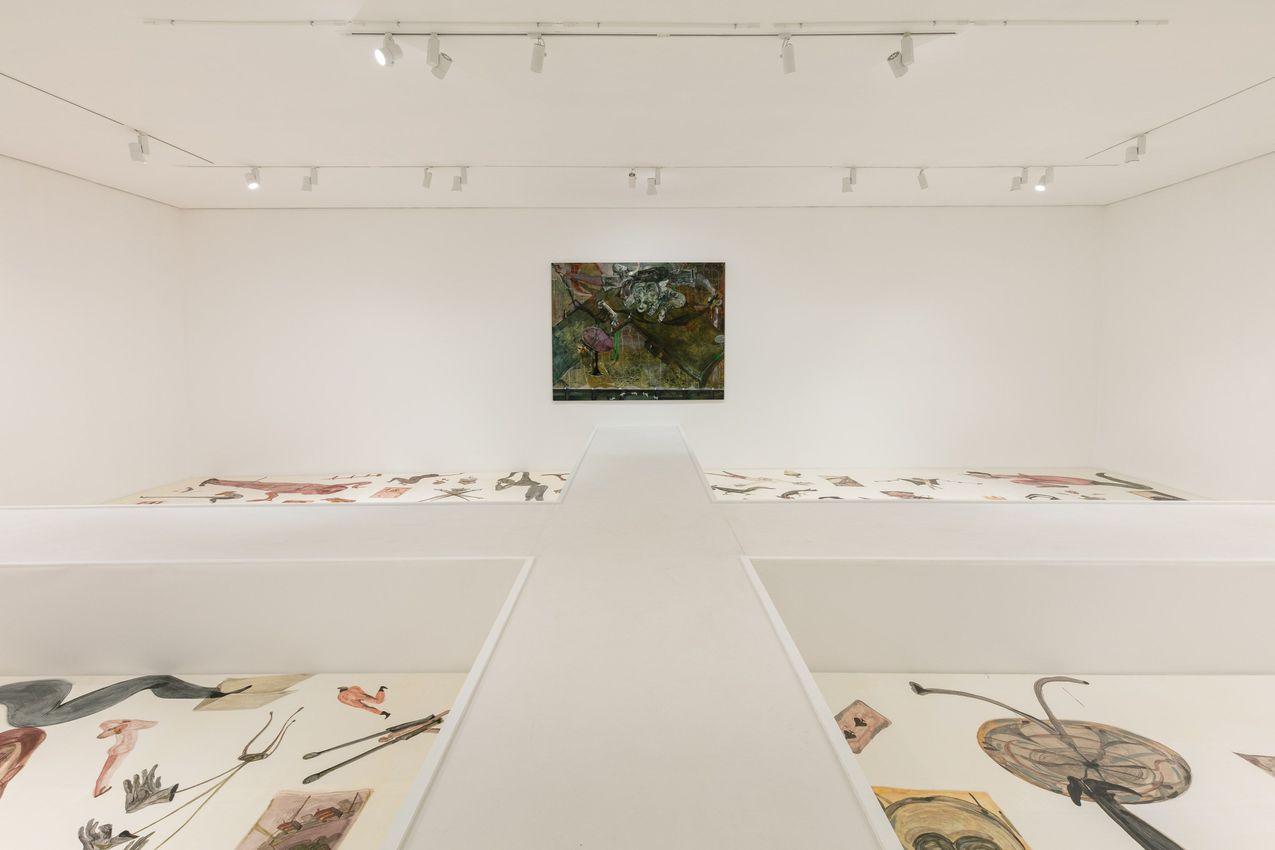
Castelli approaches the idea of the collective through spatial and formal compositions, expanding his practice for the first time into an immersive environment at Mendes Wood DM’s São Paulo gallery. A raised platform alters the viewer’s perception, producing a sense of disorientation that corresponds to the perspectives in his large-scale works. Being raised above ground creates a vertigo effect, amplifying the destabilising nature of Castelli’s spatial interventions. The drawings that cover the floor below heighten the onlooker’s awareness of their own corporeality in relation to Castelli’s contortionist and fragmented figures.

Notably drawing from diverse abstract tendencies without adhering to a singular school, Castelli traces geometries of space, figures, and forms through a sort of pareidolia (the perception of familiar patterns in abstract forms), which he describes as “liquefaction and emergence.” Simultaneously, revolutionary shifts and tensions unfold across Castelli’s process and explorations: “The exercise of and subjection to power” is something that, in his words, “surrounds us, conditions us, and shapes us, whether we are conscious of it or not.” The artist’s latest works draw parallels between Brazil’s political landscape and contemporary debates in Italy, where Fascism has resurfaced.

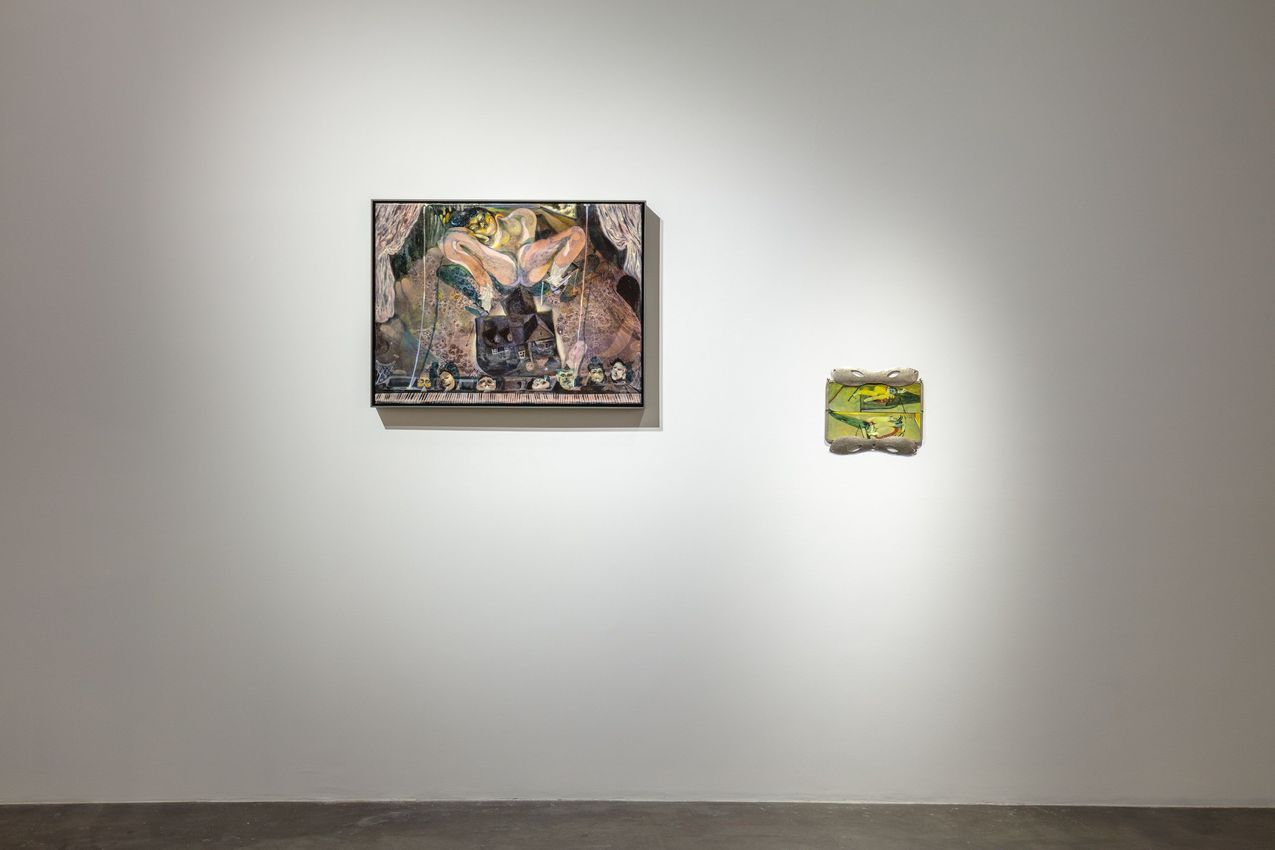
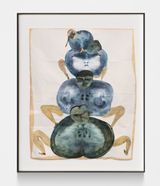
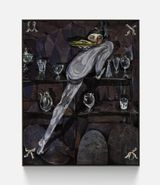
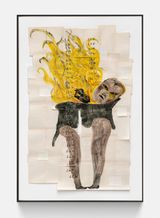
Yet, Castelli’s paintings do not deliver explicit political narratives. Engaging on a more oneiric level, oil paint is layered skillfully, creating turbulent atmospheres reminiscent of gothic literature through depictions of fragmented, contorted figures, masks, and limbs. Unlike Surrealists, whose work often emerged from automatism or subconscious exploration, Castelli’s approach departs from abstraction and is rooted in considerations around the relationship of form to substance. His work is a methodical engagement with the materiality of paint, its capacities for distortion, and its ability to reveal structures within chaos.

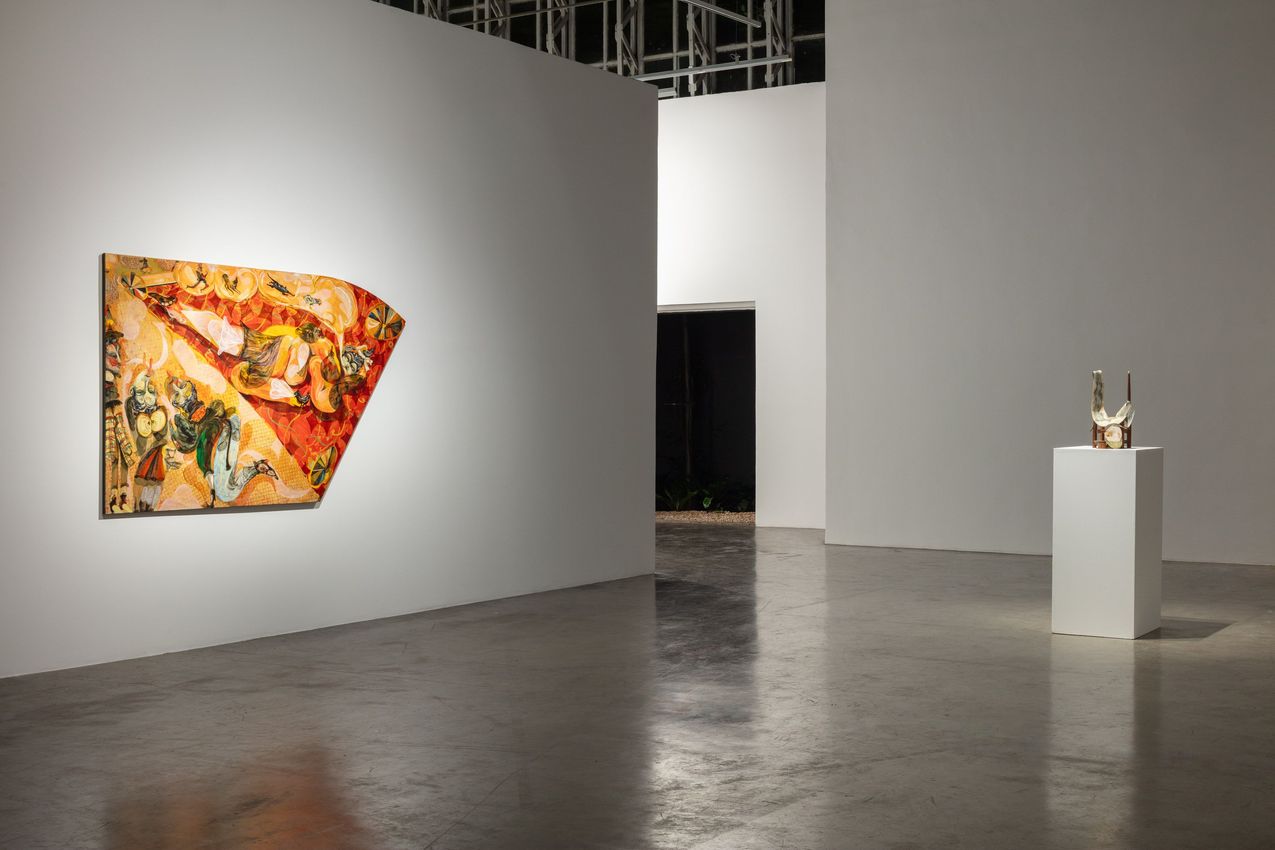
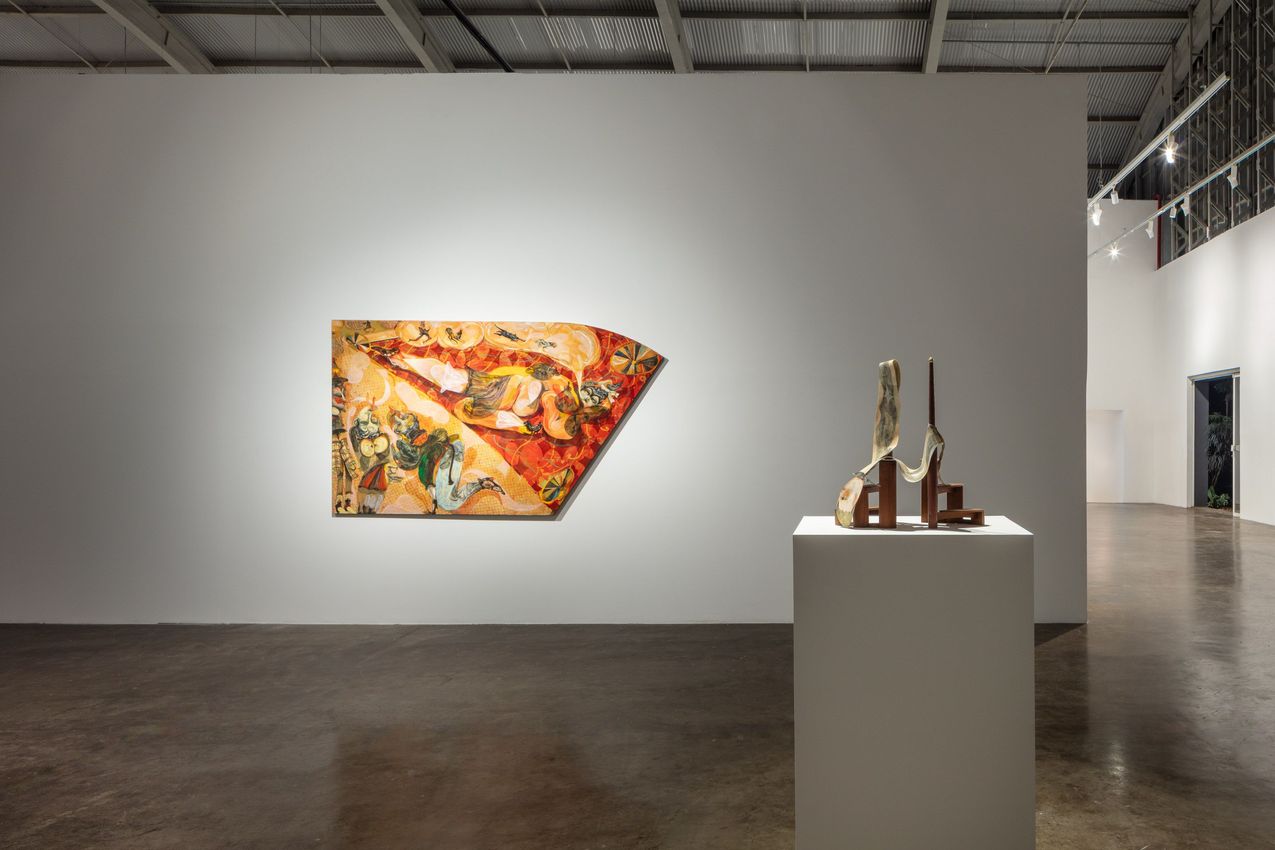
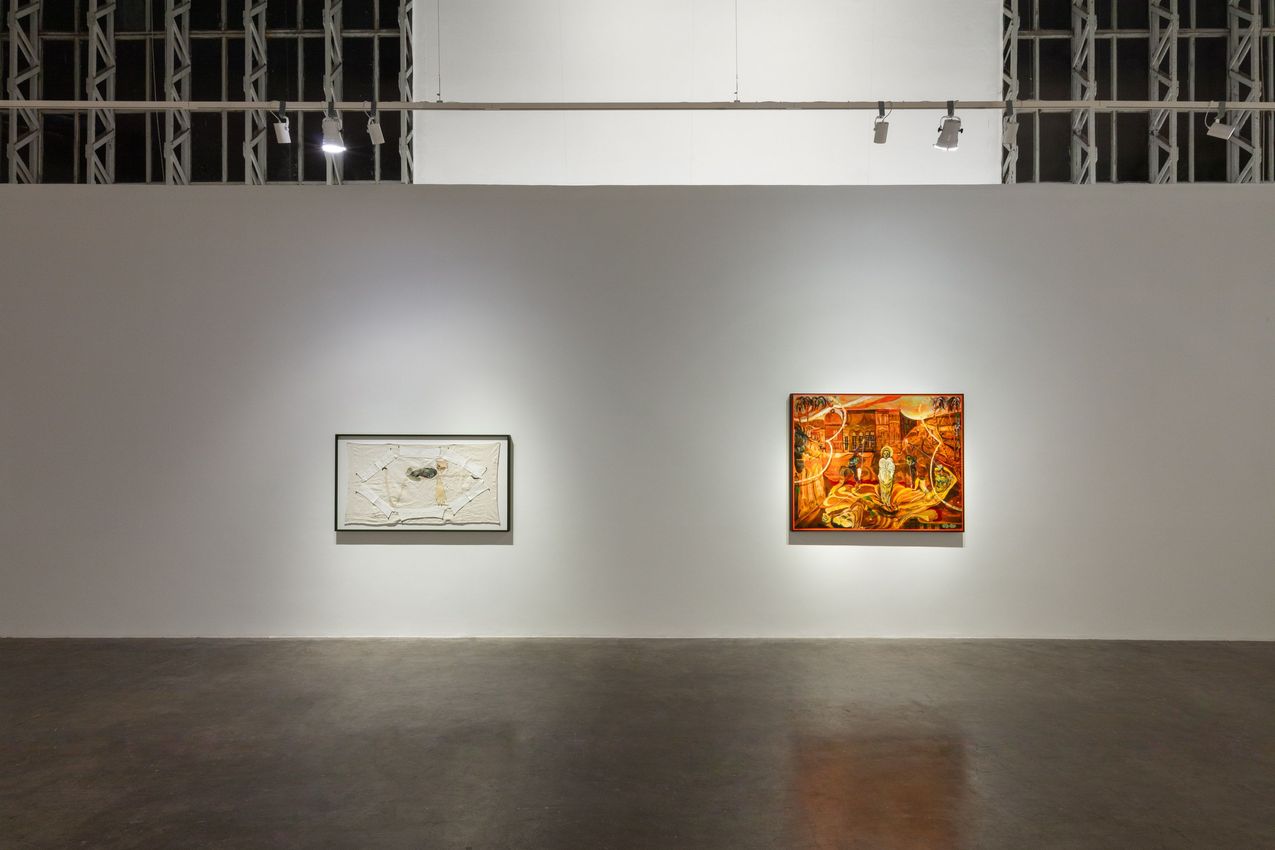
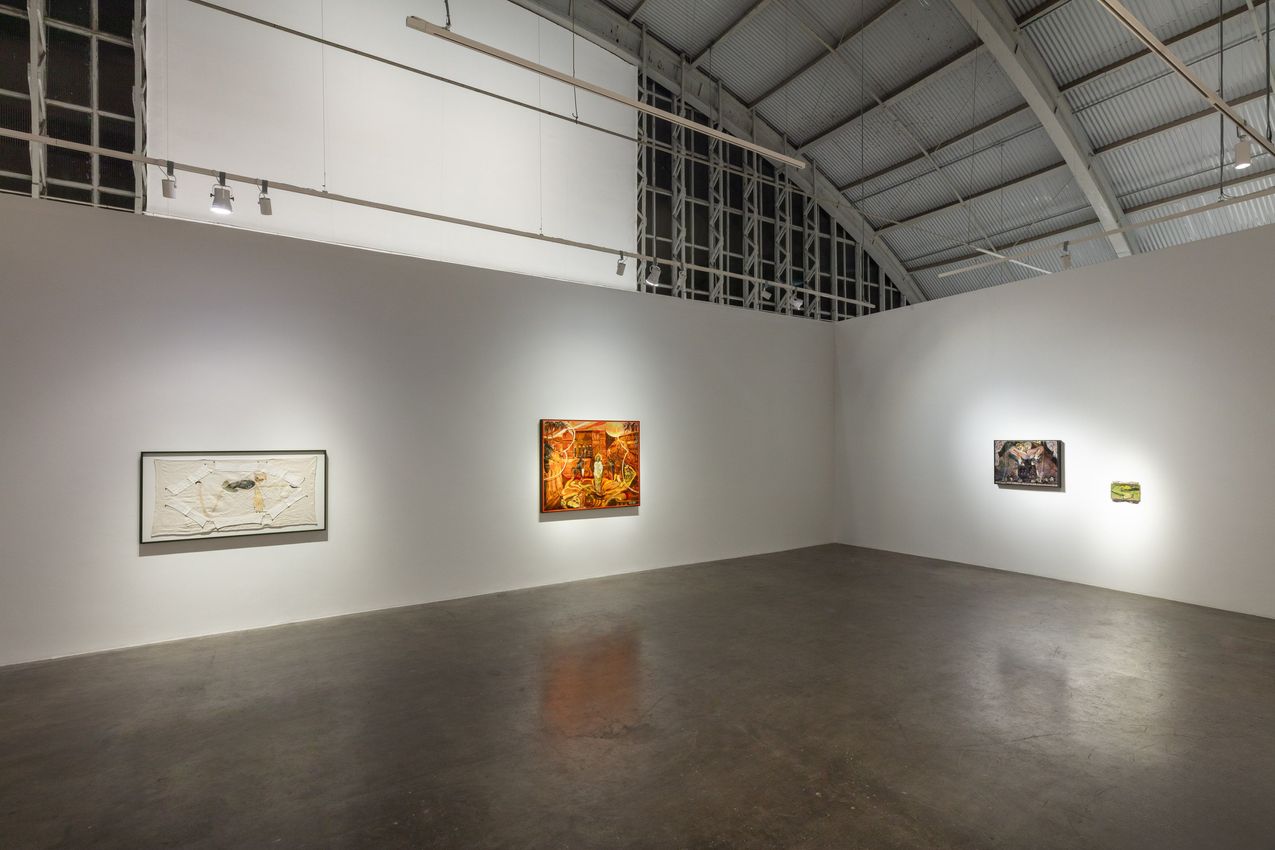
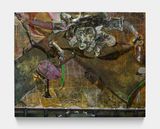
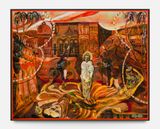
New works reflecting Castelli’s first visit to Brazil are distinguished by a palette of orange, red, and yellow. Pan de Queijo (2024) presents a disorienting cityscape, where the architecture is ambiguously European or colonial, its perspective warped. The title’s deliberate misspelling of “pão de queijo” reinforces a sense of displacement. The central figure finds itself within this skewed landscape, caught between structures that, while familiar, remain unstable. Castelli’s systematic questioning of his own heritage resurfaces in a different key when confronted with the question of coloniality in Brazil. The canvas seems to ask: “How does a gaze shaped by European artistic conventions shift in a postcolonial context? How can a European artist critically address and reform European culture from Brazil? How can differences in perspective be accounted for?”

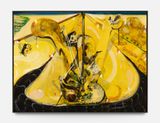
Moleque (2024) pays homage to Italian-Brazilian pioneer of modernism Alfredo Volpi (1896–1988). His Bandeirinhas [small flags] signified a modernism tied to popular culture. Castelli scatters these flags around two figures, children playing, a rooster, and two dogs fighting, evoking a street scene. In this work, the Bandeirinhas become a reproducible device, much like a grid – canonical modernism’s ubiquitous tool – which also appears in Oh after, after (2024). Castelli deploys the Bandeirinha as the tell-all of modernism but in a way geared toward the popular.

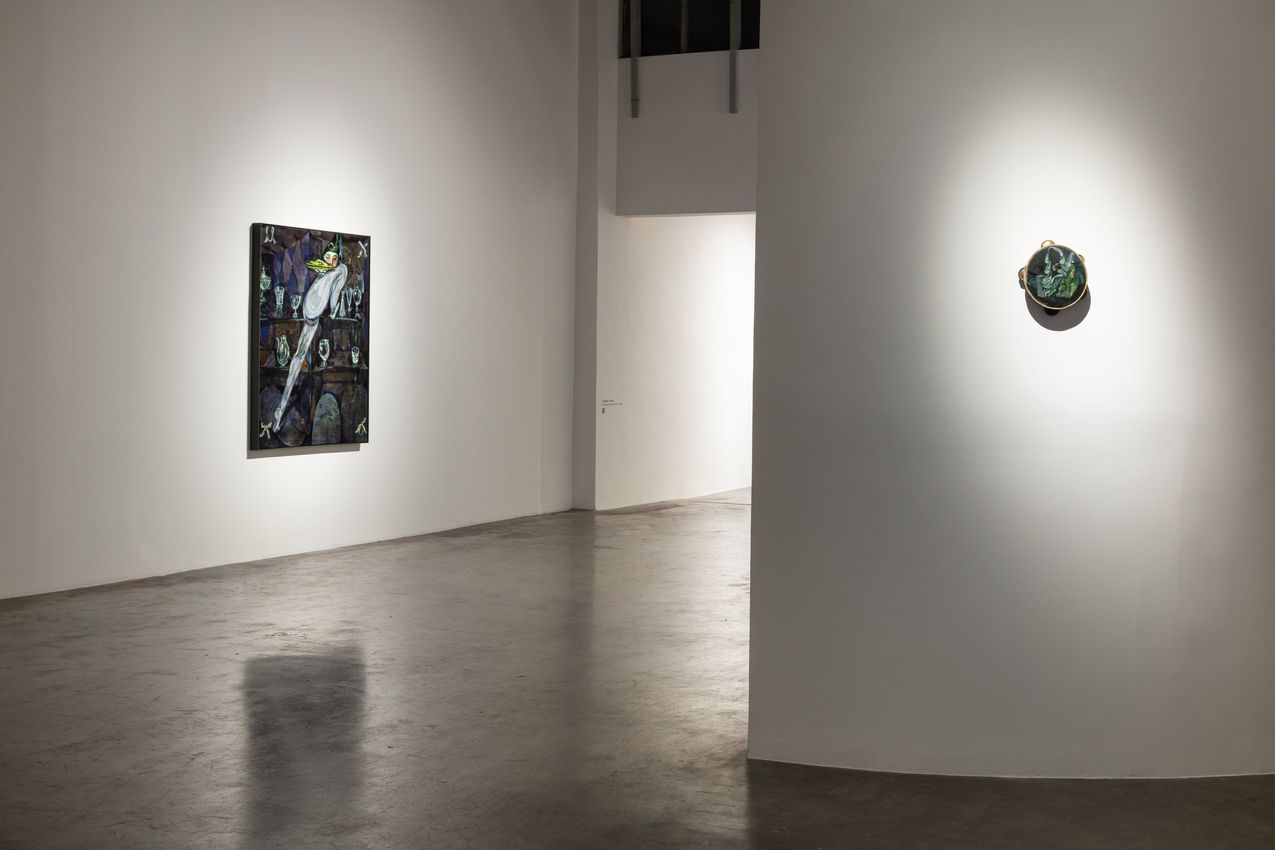
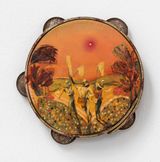
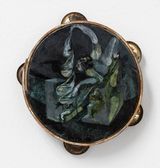
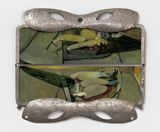
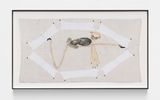
Thinking around the popular emerges also in his choice to exhibit found antique leather tambourines onto which he painted miniature scenes. In _Meia-dia (_2024), figures use butterfly nets in a lush landscape; the act of butterfly hunting seems incongruous with the midday heat implied by the warm palette. Meia-noite (2024) reverts to a darker palette, depicting a fragmented figure on a staircase with ghostlike projections. These works continue Castelli’s search for the relationship between substance and form.

An essay by Sofia Gotti accompanies the exhibition.

Read More

Installation Views

Selected Works

Loading...
About the Artist

Guglielmo Castelli (b.1987, Turin, Italy) lives and works in Turin. His iconographic universe questions the relationship between inner and outer space, between bowels and environment, in a close relationship with literature and the world of theatre and scenography, from which he comes. Released from any constraint, figures slip and overlap on either neutral backdrops or unfamiliar landscapes, challenging the blurred boundaries of the self and resisting a strict notion and distinction between subject and object. From fluid and wide, brushstrokes coagulate into thick knots portraying melancholy, astonishment and wonder, while characters melt into gentle chromatic accents, suspended in uncertain postures that reflect an unsteady grip on reality.

View Artist Profile

Also Exhibiting at Mendes Wood DM

About the Gallery

Intellectually rigorous, politically active, and highly conceptual, the programme of contemporary art gallery Mendes Wood DM places an emphasis on critical conversation, working to embrace the individuality of each artist while also supporting the discovery of intersections between practices that might initially seem disparate.

View Gallery Profile
Address
Rua Barra Funda 216
01152 – 000
São Paulo
Brazil
Opening Hours
Mon - Fri, 11am - 7pm
Sat, 10am - 5pm
(1)
São Paulo Rua Barra Funda 216, 01152 – 000
Mendes Wood DM
Rua Barra Funda 216, 01152 – 000, São Paulo, Brazil
+55 113 081 1735
http://www.mendeswooddm.com

Opening hours
Mon - Fri, 11am - 7pm
Sat, 10am - 5pm
The art world in focus