





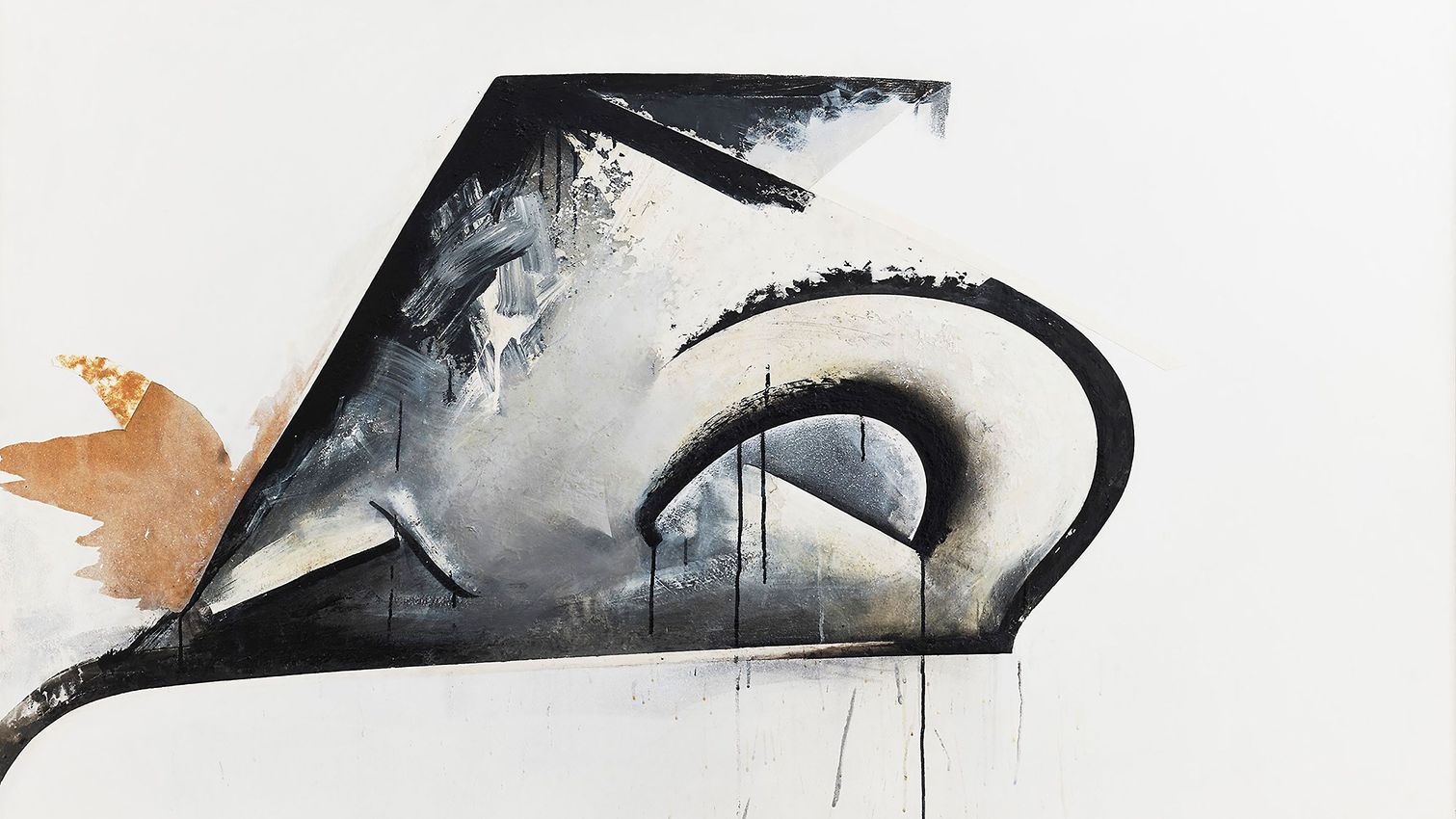
JAY DEFEO
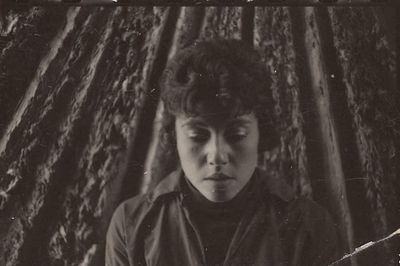
1929-1989, United StatesJay DeFeo was an American artist whose materially intense paintings, drawings, photographs and collages bridged San Francisco’s Beat community and the broader histories of post-war abstract and conceptual art. Celebrated and mythologised for her monumental painting The Rose (1958—66), DeFeo is now recognised for a broader, experimental practice that continues to speak to younger artists and audiences.
Early life, background and the Beat Generation
Jay DeFeo grew up in the San Francisco Bay Area and studied studio art at the University of California, Berkeley, where she completed both bachelor’s and master’s degrees in the early 1950s. A post-graduate travelling fellowship to Europe and North Africa proved pivotal: based in Florence, she immersed herself in Renaissance painting, evolving a distinct language of abstraction shaped by Abstract Expressionism, the geometry of Italian architecture, and a long-standing fascination with Asian, African and prehistoric art.
Returning to the Bay Area, DeFeo settled in San Francisco and became a central figure in the city’s Beat-era community of artists, poets and jazz musicians. Her close circle included Wallace Berman, Joan Brown, Bruce Conner, Sonia Gechtoff, Ed Kienholz and fellow artist Wally Hedrick, whom she married in 1954. Curator Walter Hopps was an important early supporter, featuring DeFeo’s work in key gallery and museum exhibitions in the 1950s and 1960s, including the inaugural exhibition of Ferus Gallery in Los Angeles in 1957, followed by several group shows and a solo presentation there in 1960 organised by Hopps and Irving Blum.
Hedrick and DeFeo’s Fillmore Street apartment became a legendary gathering place for the San Francisco Beat community. By the end of the decade, in 1959, DeFeo held her first major solo exhibition at Dilexi Gallery in San Francisco and was included in Dorothy Miller’s landmark exhibition Sixteen Americans (16 December 1959—17 February 1960) at the Museum of Modern Art, New York. Other artists in the MoMA exhibition included Jasper Johns, Ellsworth Kelly, Robert Rauschenberg, Frank Stella, Louise Nevelson.
Jay DeFeo Artworks
Jay DeFeo developed a body of work that moves restlessly between painting, sculpture, photography and collage, using unorthodox materials and processes to push images toward states of near-abstraction. Across four decades, she often began from modest or domestic forms—a camera part, a fan, a tissue box—and reworked them through shifts of scale, contrast and texture until they seemed to hover between object and apparition.
DeFeo’s ‘The Rose’
Begun in 1958, The Rose is DeFeo’s best-known artwork: a nearly three-metre-high painting-sculpture built up over eight years with almost a ton of oil paint, carved and re-layered into a radiating, star-like form. DeFeo referred to it as a ‘marriage of painting and sculpture’. The work’s production overtook her San Francisco studio—famously requiring the removal of a window and part of a wall when it was moved—and its first institutional showing at Pasadena Art Museum and the San Francisco Museum of Art in 1969 confirmed its status as a touchstone of post-war American art.
Serial experiments in drawing, photography and collage
After taking a break from making art in the late 1960s, DeFeo moved to Marin County and then Oakland, where she re-engaged with drawing, photography and collage, often using photocopies to fragment and recombine images. In series such as the camera-based works, Reflections of Africa and the so-called ‘Samurai’ drawings, she translated everyday objects into graphic, architectonic structures, working between graphite, charcoal and photographic processes.
These works laid the groundwork for later paintings on paper and canvas that compress the spatial drama of The Rose into more economical, optically charged images. Exhibitions such as Undersoul: Jay DeFeo (San José Museum of Art, 2019) and Jay DeFeo: A Retrospective (Whitney Museum of American Art and SFMOMA, 2012—2013) have been key in situating these drawings, photographs and collages as equal to the celebrated painting in understanding her legacy.
Late paintings and ongoing influence
In her final decade, while teaching at Mills College in Oakland, DeFeo developed a striking series of paintings that combine crisp, geometric structures with atmospheric grounds, often derived from cropped details of photographs and earlier works. Paintings from this period feature both large, architectonic canvases and smaller, more concentrated compositions in which abstracted figures and forms emerge from tightly calibrated colour and texture.
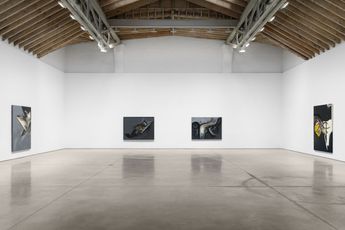
These works—the focus of Garnets on the Boulder: Jay DeFeo Paintings of the 1980s at Paula Cooper Gallery, New York (30 October–13 December 2025)—marked the artist’s return to the medium after many years of primarily photographic and collage-based experimentation. Paintings from this period range from horizontally expansive works such as Grey Profile (1983) to more intimate canvases that compress mountain-like forms and studio objects into dense, luminous surfaces.
In her Ocula MagazineSpotlight, Aimee Walleston characterises the exhibition as revealing a late body of work in which decades of experimentation coalesce, showing how images drawn from earlier photographs, collages and everyday objects are recast as vivid, structurally complex abstractions that reward prolonged looking. These late works highlight DeFeo’s continuous recycling and transformation of motifs across media, attracting a new generation of artists and viewers interested in process, repetition and the slippage between image and object.
Jay DeFeo Exhibitions
Jay DeFeo has been the subject of important institutional exhibitions, and also is well represented by leading galleries, like Paula Cooper. Below is a selection of exhibitions featuring the artist’s works.
- Garnets on the Boulder: Jay DeFeo Paintings of the 1980s, Paula Cooper Gallery, New York, 30 October–13 December 2025
- Jay DeFeo: A Retrospective, Whitney Museum of American Art, New York; San Francisco Museum of Modern Art, San Francisco; other venues, 2012–2013
- Undersoul: Jay DeFeo, San José Museum of Art, San José
- Jay DeFeo: Selected Works 1952–1989, Hosfelt Gallery, San Francisco, in collaboration with The Jay DeFeo Foundation
- Jay DeFeo, Dilexi Gallery, San Francisco, 1959
Select group exhibitions
- Beat Culture and the New America: 1950–1965, Whitney Museum of American Art, New York (with The Rose as a key work)
- Sixteen Americans, Museum of Modern Art, New York, 1959–1960
Select awards and accolades
- Post-graduate travelling fellowship (Sigmund Martin Heller Award), enabling travel in Europe and North Africa, 1951–1953
- Lucie Stern Trustee Professor of Art, Mills College, Oakland
Jay DeFeo FAQs
Who is Jay DeFeo?
Jay DeFeo was an American artist associated with the San Francisco Beat community, known for the monumental painting The Rose and for an experimental practice spanning painting, drawing, collage, photocopies and photography. You can follow Jay DeFeo on Ocula to learn more about her work, find out about art for sale, contact her gallery, and keep up to date with upcoming exhibitions.
Where can I see work by Jay DeFeo?
Major works by Jay DeFeo, including The Rose, are held in museum collections such as the Whitney Museum of American Art in New York and the San Francisco Museum of Modern Art, among others. You can follow Jay DeFeo on Ocula to receive alerts on upcoming exhibitions by the artist.
Are there any lesser known and interesting facts about Jay DeFeo?
Jay DeFeo climbed Mount Kenya in the late 1980s, an experience that fed into the abstract drawing series Reflections of Africa, which she developed from something as modest as a tissue box. You can follow Jay DeFeo on Ocula to receive alerts on news about the artist.
What is a well-known quote associated with Jay DeFeo’s work?
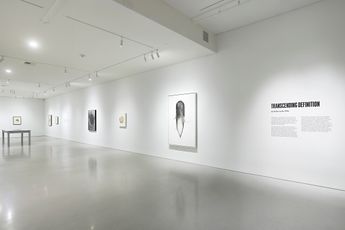
A widely cited remark by Jay DeFeo describes her aim to transform familiar objects into images that “transcend the definition of the objects from which they are derived”, highlighting her interest in pushing everyday forms into more open, ambiguous states. This observation has often been used to frame how her images shift between recognisable motifs and near-abstraction across media.
Where did Jay DeFeo live?
Jay DeFeo spent much of her life in the San Francisco Bay Area, living and working in San Francisco, Marin County and Oakland while teaching at institutions including Mills College. Jay DeFeo and her partner lived in California during the period when she was most active in the Bay Area art community.
How is Jay DeFeo’s name pronounced?
Where can I buy Jay DeFeo’s work?
Jay DeFeo is represented by leading contemporary art galleries, including Paula Cooper Gallery, which work with The Jay DeFeo Foundation to place her artworks with collectors and institutions. Jay DeFeo is represented by leading contemporary art galleries; you can explore Ocula to find out which Ocula galleries represent the artist and enquire directly about buying art by Jay DeFeo, and follow her and her gallery to keep up to date, and you can also get in touch with Ocula’s art advisory team to find out more about buying or selling work by Jay DeFeo.
Ocula | 2025



Explore Jay DeFeo's Exhibitions




Explore and Follow Artists Shaping Contemporary Art
A respected voice in contemporary art discourse.
Focusing on ambitious storytelling and insightful art-world commentary. Ocula Magazine publishes in-depth interviews, critical essays and timely analysis on the artists, exhibitions and ideas driving the global art world.
Learn more about Ocula Magazine
Showcasing the best of the art world.
Ocula partners with galleries from around the world to highlight their artists, artworks and exhibitions. Gallery membership is by application and invitation, with each member vetted by an independent panel.
Learn more about Ocula Membership
Specialises in the sale of major artworks.
Led by a team with deep ties to the world’s leading auction houses, galleries and collectors. Ocula’s advisory team offers bespoke services to high-net-worth clients from around the world who are looking to acquire the best of contemporary and modern art.
Learn more about our team and services