New York – Pace is pleased to present an exhibition of new work by Mary Corse, at its 540 West 25th Street gallery in New York. On view from September 20 to October 26, this presentation marks Corse’s first solo show in the city since 2019 and follows several recent institutional exhibitions by the artist at the Long Museum West Bund in Shanghai and the Amorepacific Museum of Art in Seoul, as well as her 2018 traveling retrospective at the Whitney Museum of American Art in New York and the Los Angeles County Museum of Art. Corse’s upcoming exhibition at Pace will coincide with her participation in _Particles and Waves: Southern California Abstraction and Science, 1945– 1990—_a group exhibition organised as part of the Getty’s PST ART: Art & Science Collide initiative—at the Palm Springs Art Museum in California.
Over the course of her six-decade career, Corse has explored phenomena of light, space, and perception in sublime and boundary-crossing abstractions across mediums. A key member of the Los Angeles artist community from the 1960s to the present, she is often associated with the Light and Space movement but has always been committed to the possibilities of painting, which remains her primary concern. As part of her empirical and highly tactile approach to art making, Corse has continually investigated the ways in which light can be both subject and material. In the late 1960s, while searching for a way to embed light inside her paintings, Corse experienced an epiphany. Driving along the Pacific Coast Highway in Malibu at sunset, she noticed the road markings were progressively illuminated by headlights as she drove along. Investigating the industrial applications that make this effect possible, she discovered glass microspheres—a material used to enhance visibility of road signage. In 1968, Corse began applying these refractive microspheres onto the surfaces of her White Light paintings, endowing these works with a sense of illumination projected from within the picture plane itself.
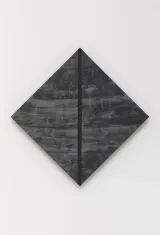
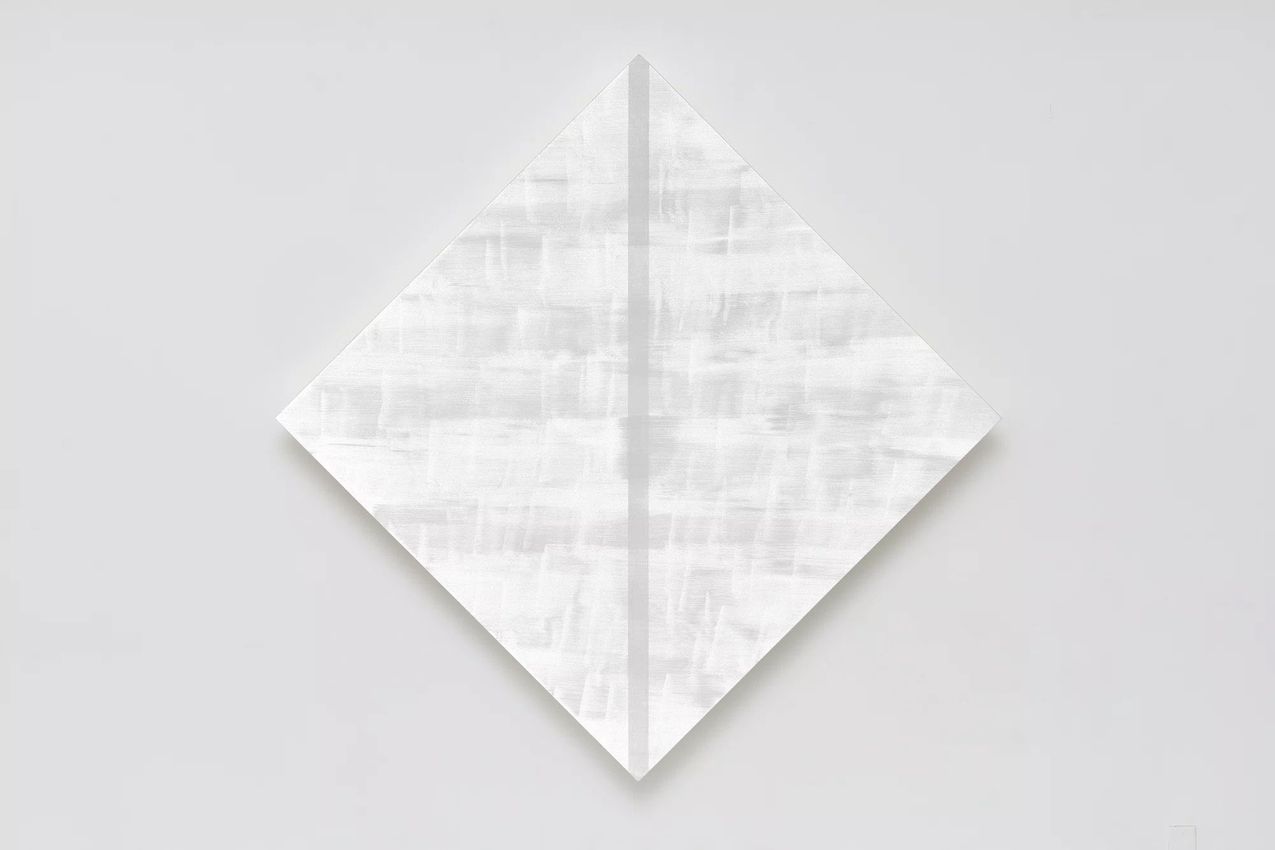
The body of work that Corse will debut in her presentation at Pace in New York this fall centres on a new series of Diamond-shaped paintings, which continue her longstanding practice of incorporating glass microspheres into the painted surface. Corse has experimented with the physical structure of her canvases since her time as a student at the Chouinard Art Institute in Los Angeles between 1964 and 1968. Although she created her first diamond-shaped paintings while still in her 20s, this body of work marks the first diamond-shaped canvases she has made since the 1960s. Corse’s return to the format of the diamond underscores one of the hallmarks of her practice: an interest in recursion and return to early ideas. With these new Diamond paintings, the artist delves ever deeper into the fundamental concepts that animated her practice at its outset. She expands the scope of her inquiry into the metaphysical dimensions of her oeuvre through these new iterations of ideas that have long been essential to the work.
The works in the presentation at Pace, all of which have never before been exhibited, will include Corse’s Halo Room, a new architectural installation that she has been developing over the last several years. This work, which will be installed in the centre of the gallery space, but can also be placed outdoors, offers a participatory, intimate experience of scale, space, and light. When a viewer enters the room, a single interior light projects their shadow onto a White Light painting. The resulting effect produces a glowing halo around the viewer’s shadow, registering their presence but also incorporating it into the painting itself. The installation hinges on the energetic relationship between individual and object, producing a moment of intersubjective collision that facilitates a spiritual manifestation of bodies within space. Up to two participants will be allowed inside the installation at a time, each viewer will only be able to see their own halo, a phenomenon that speaks to the personal nature of experiencing Corse’s art.
Corse’s Halo Room continues and deepens a long tradition of grappling with questions of presence in post-1960s art. In his 1967 essay ‘Art and Objecthood,’ the critic Michael Fried famously condemned Minimal aesthetics for their perceived ‘theatricality.’ Fried contrasted this with an all-over painting, in which the entire composition could be perceived by the viewer all at once, in a single instant. Fried called this quality ‘presentness,’ and in the essay, he famously declared: ‘Presentness is grace.’ Although not a minimalist, Corse is associated with many of the post- 1960s practices to which Fried was referring, having shown with Dick Bellamy’s Green Gallery in New York in the late 1960s. Her new work is equally concerned with questions of presence and presentness. The Halo Room serves as a counterpoint to Fried’s argument, in which the presence and presentness of the viewer within the work itself—both literally and pictorially—becomes a pure expression of grace, a reflection of the ethos that has animated Corse’s practice for decades: the work of art is ‘not on the wall,’ but rather in the viewer’s perception.
Mary Corse (b. 1945, Berkeley, California) investigates materiality, abstraction, and perception through the subtly gestural and precisely geometric paintings that she has made over her fifty-year career. Earning a BFA in 1968 from Chouinard Art Institute, Los Angeles, Corse developed her initial work during the emergence of the Light and Space movement in Southern California. Throughout the 1960s, she experimented with unconventional media and supports, producing shaped canvases, works with plexiglass, and illuminated boxes. In 1968, Corse discovered glass microspheres, an industrial material used in street signs and dividing lines on highways. Combining these tiny refractive beads with acrylic paint, she creates paintings that appear to radiate light from within and produce shifts in appearance contingent on their surroundings and the viewer’s position. Corse’s art emphasises the abstract nature of human perception, expanding beyond the visual to include subtleties of feeling and awareness.


Pace is a global art gallery of and for the future, modeled on a set of core values established during its founding in 1960 and designed to serve its artists, estates, and collectors in a way that is focused, responsive, and aligned with its enduring mission.

A respected voice in contemporary art discourse.
Focusing on ambitious storytelling and insightful art-world commentary. Ocula Magazine publishes in-depth interviews, critical essays and timely analysis on the artists, exhibitions and ideas driving the global art world.
Learn more about Ocula Magazine
Showcasing the best of the art world.
Ocula partners with galleries from around the world to highlight their artists, artworks and exhibitions. Gallery membership is by application and invitation, with each member vetted by an independent panel.
Learn more about Ocula Membership

Specialises in the sale of major artworks.
Led by a team with deep ties to the world’s leading auction houses, galleries and collectors. Ocula’s advisory team offers bespoke services to high-net-worth clients from around the world who are looking to acquire the best of contemporary and modern art.
Learn more about our team and services