Perrotin Seoul is pleased to present Untitled, a solo exhibition byKorean artist Choi Byung-so as its first exhibition of 2026. Thisexhibition marks the first solo presentation of the artist’s worksince his passing in September of last year.
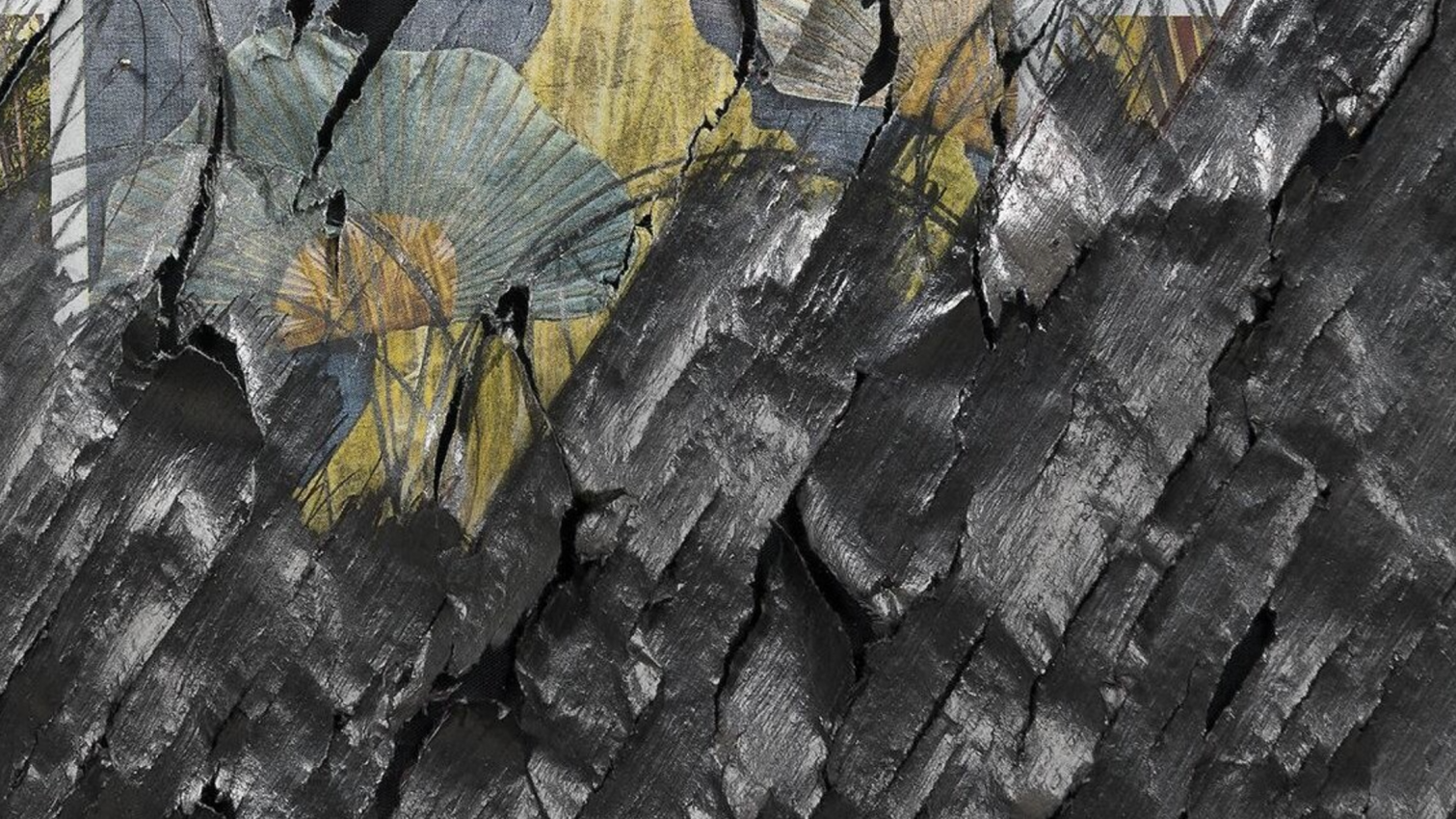
Choi Byung-so developed a distinctive artistic practice through aperformative process of repeatedly erasing printed texts andimages from newspapers and magazines using ballpoint pens orpencils. Through this act, he dismantled the informational andsemantic functions of image and language, reducing them tomaterial form. In this process, paper transcends its role as a meresupport and becomes a site where time and labor accumulate,allowing the artist to reveal a renewed sense of materiality andvisual density.
Focusing on works from the final decade of the artist’s life, thisexhibition offers an in-depth view of Choi’s late practice andserves as an opportunity to reassess the significance of his workwithin the context of Korean contemporary art history.
A FRAGILE, INTENSE, PERSISTENT SONG
“Nothing comes from nothing, and nothing that exists can bedestroyed.”– Democritus
In January 2026, four months after his death, Choi Byung-so’s workis more timely and relevant than ever. Since the previous century, ithas questioned the system of constant accumulation of informationby the media—this flood of news, advertisements, and speech thatoverwhelms and afflicts us. Choi Byung-so understood that this useof language separates us from life’s meaning, from our essentialsignificance, from everything that allows us to live and to think and tobe aware of our existence by a dense and silent presence.
Through a visual and then a conceptual approach, Choi Byung-somoved beyond aesthetic questions alone, adopting a critical stanceand proceeding with a complete reversal of this invasion of messagesand ideologies. His resistance to the alienating manipulations of themassive proliferation of rhetoric and images is a refusal of thetyranny of dysfunctionality. In 2026, this opposition to all that is fakewas more necessary than ever, as power strategies threatened totransform individuals and societies into puppets twisted by anexcess that threatens any attempt at understanding.
Choi Byung-so provides us with a negation of this topsy-turvytheater, offering the experience of a different space that he hascreated as an artist and a painter. The weapon of his resistance isdrawing. Access to this space of liberation takes place through anapproach that obliterates and covers the accumulated phrases withendless lines of ballpoint pen. He does not undo the words; hecrosses them out, changing them into a different kind of writing. Withseriousness and at times with humor, he preserves some magazinetitles as basic philosophical questions, reduced to their clichédmedia formulas: TIME, LIFE....
This life, this real time, are exactly what Choi Byung-so allows us todiscover. Through a patient process of ink drawing, he has stained,streaked, and torn the paper, creating gestures, rhythms, and surfaces that become opportunities to take back possession ofourselves. We experience these novel spaces created by art, whichbecome paintings, sculptures, installations...and then paths andterritories for reclaiming the self, through perception, body, and light.These paths are everywhere and, through the poetic practice of ChoiByung-so, they can come about from “nothing”—from an object,from a microcosm...a pack of cigarettes, a sheet of newspaper. Or,on the contrary, they can be a macrocosm...a set of gatheredpapers, a true cosmos. They are the result of a physical and mentalexperience. A laceration becomes a pathway that passes throughdestruction, that moves through traces and ruins—a kind of creativearcheology that attains dazzling beauty. The beauty of a mass offurrows, an array of gashes, that lead us to a darkness shot throughwith glimmers and exhilarating vibrations. And then we forget thestrategies of grammar, the immediacy of vocabulary, as we find andexperience the silence “of another measure of time.” The time ofescaping the contingency of the society we live in and discovering apenetrating, pared-down experience of boundlessness.
If it were up to him, to the
question of the world, he would
not reply or would hold out
to them in silence, between
waking and sleep
some substance
with a dark and luminous surface.
– Olivier Kaeppelin
Courtesy Perrotin
Choi Byung-So’s works on paper are the result of relentless repetition: drawing over a sheet of newspaper with pencil or black ballpoint pen until the paper’s surface becomes rough and disfigured. He has been employing this method of erasure since the 1970s in order to contemplate the passage of time and reality.


A respected voice in contemporary art discourse.
Focusing on ambitious storytelling and insightful art-world commentary. Ocula Magazine publishes in-depth interviews, critical essays and timely analysis on the artists, exhibitions and ideas driving the global art world.
Learn more about Ocula Magazine
Showcasing the best of the art world.
Ocula partners with galleries from around the world to highlight their artists, artworks and exhibitions. Gallery membership is by application and invitation, with each member vetted by an independent panel.
Learn more about Ocula Membership

Specialises in the sale of major artworks.
Led by a team with deep ties to the world’s leading auction houses, galleries and collectors. Ocula’s advisory team offers bespoke services to high-net-worth clients from around the world who are looking to acquire the best of contemporary and modern art.
Learn more about our team and services