



Press Release

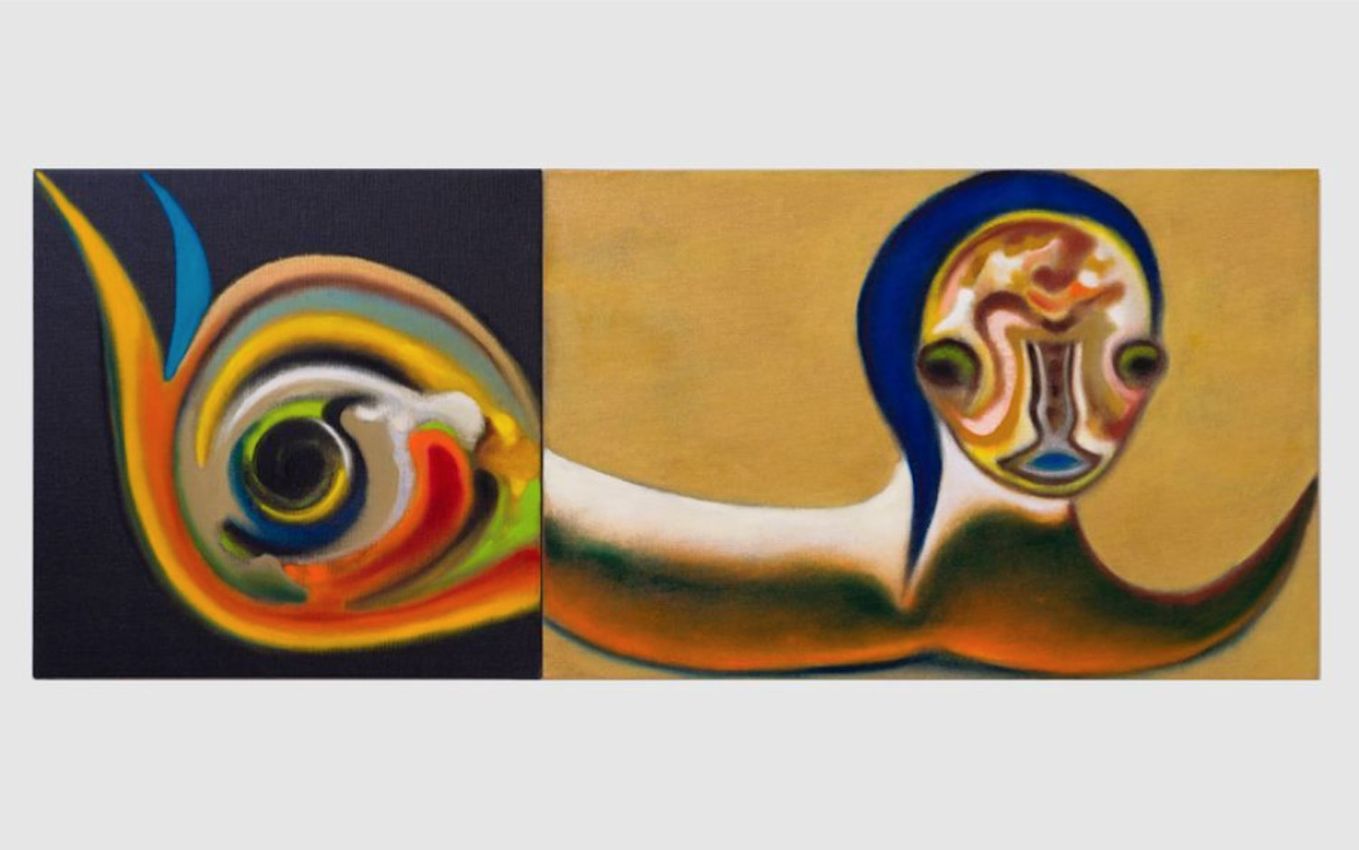
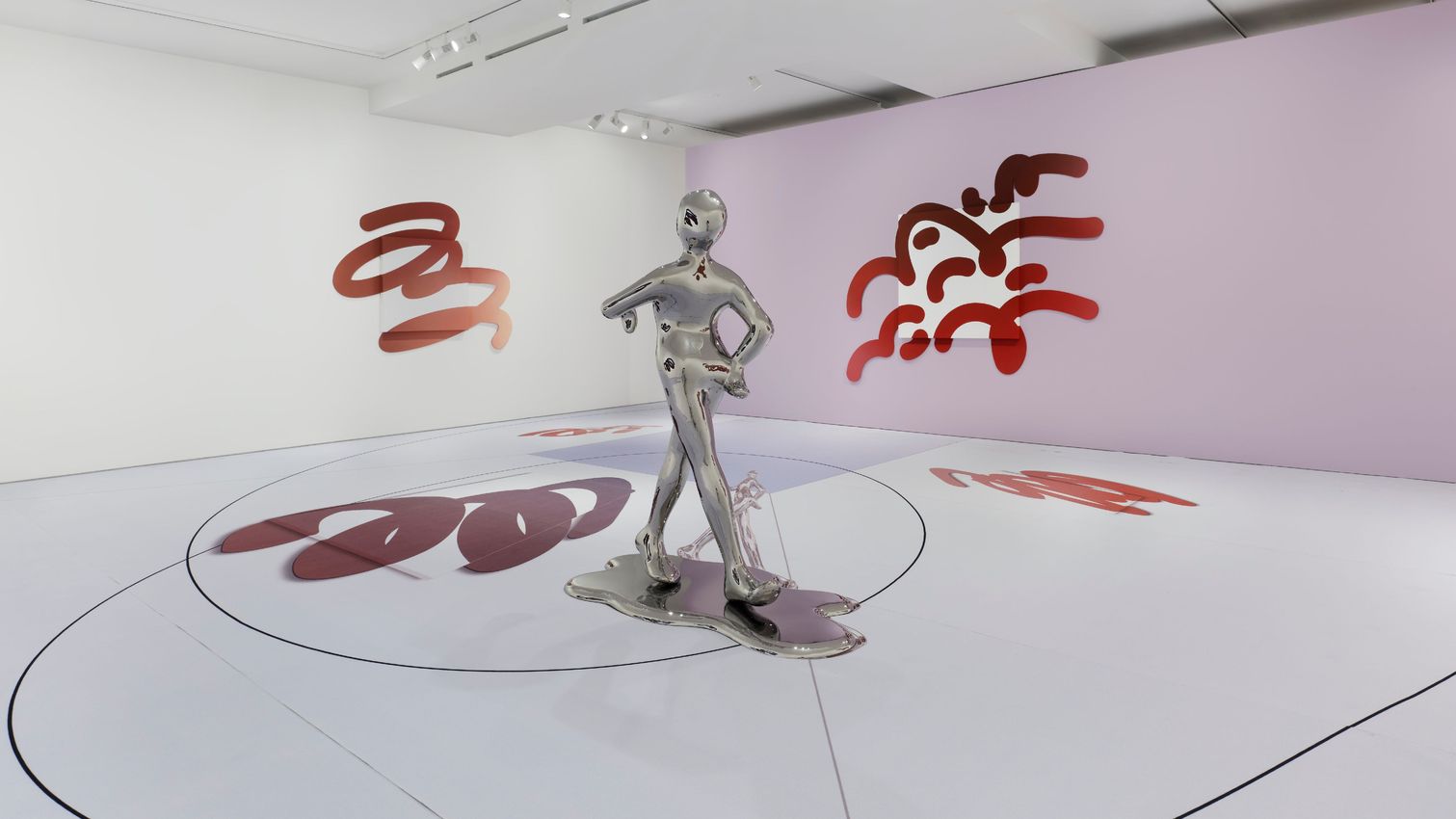
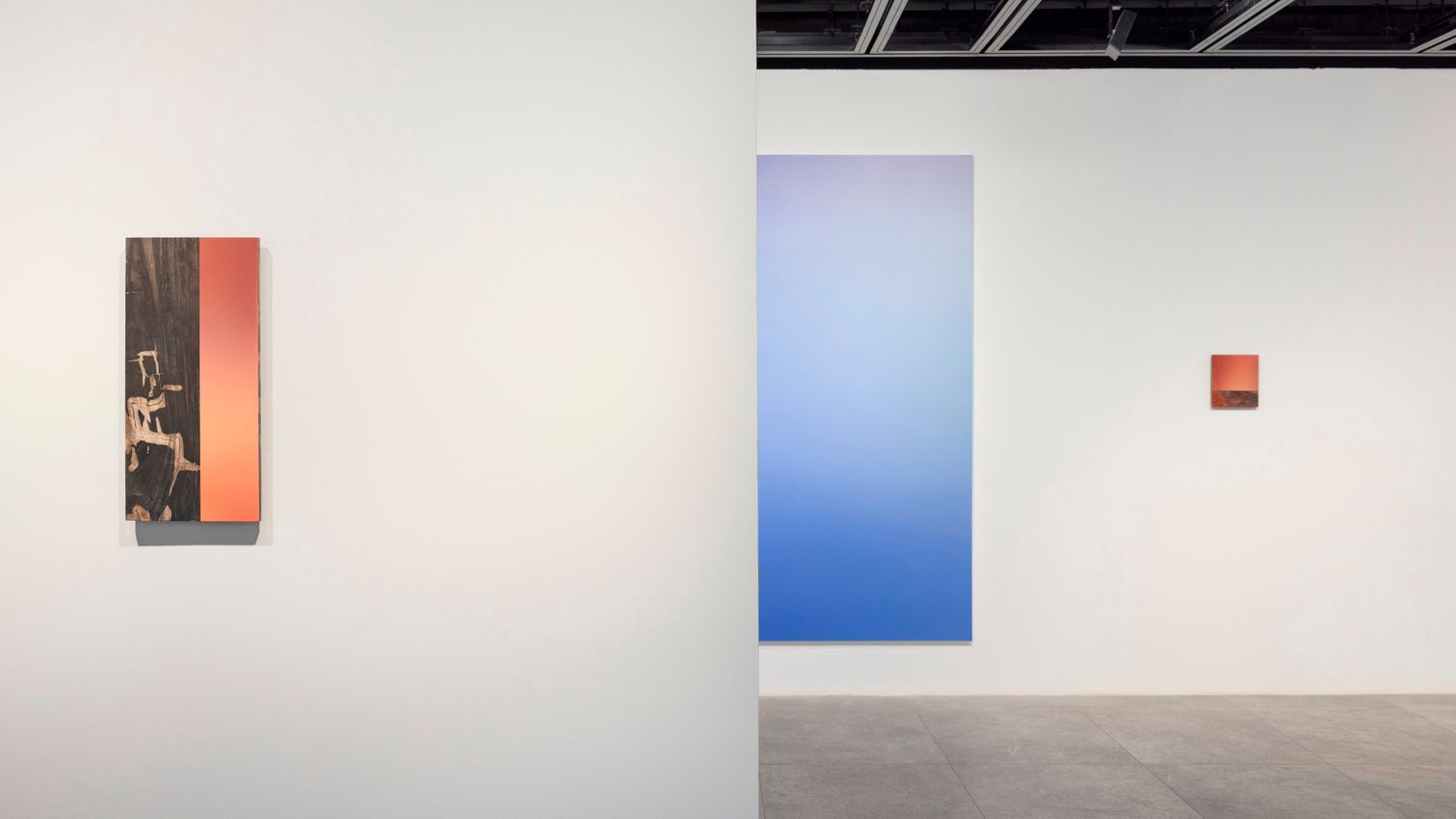
The multimedia works of the Japanese artist Izumi Kato give image to a far-flung future, but also elicit a mystical past. After a 5 year hiatus, Kato returns to New York with an ambitious exhibition of new mixed-media sculptures, installation, and paintings. Enfolding across two floors of the historic Beckenstein building, the exhibition culminates in a tableaux of connected fabric and soft vinyl sculptures, suspended from the gallery’s three-story stairwell.

Viewing the collection of Kato’s works is akin to a gust of bracing air. Delivering a jolt, his artworks are matter of fact forms despite (or in spite) of their preternatural proclivity. Many of his sculptures, which are formed from various materials including wood, soft vinyl, and textiles, incorporate disembodied parts—a second head with a missing mouth stacked atop another, for example, or a smaller twin humanoid held in the hand. While his creatures are creations in their own right, there are vaguely familiar associations to be made, such as wide-eyed figures and semi-recognisable bodily shapes. Yet they are both embryonic and alien, seemingly indifferent to their human-likeness as if in apparent defiance of their own sense of corporeality.

Formally, a spindly leg that winnows into the ether or a bulbous head with a perfectly circular, open mouth appear both fundamental—essential even—and at the same time, grotesque, otherworldly, artificial, serendipitous. The fantasy of their form has the surprising effect of creating a pleasingly dissonant space at odds with itself. Kato’s paintings and sculptures are bold in every way: their sense of scale, their colour palette, and especially in their sophisticated mix of the figurative and folk. Many of the materials the artist chooses to work with, including stones and textiles (which are often sourced from local markets in the place where each project is to be exhibited), have historic precedent in folk art traditions, fusing a backward glance with futuristic overtones. Kato is alert to his medium’s seductive powers. The instant back and forth between commonplace and uncanny sharpens the experience if these works.

Their power is also in their ambiguity. Some sculptures appear ethereal and buoyant, though they are made of solid materials such as wood and soft vinyl. Other sculptures are fashioned from lightweight textiles and yet are bound with chains that connect the sculptural form to the ceiling and the floor. The forms and postures of these fabric tetrapod works can be altered and installed in myriad ways, lending to a sense of a transmogrifying lifeform that would readily exist on a distant planet or a secret underworld. Although the artist does not think of having created his works within any given series, these sedate beings share a vulnerability, but they also seem comfortable in that state of existence. This idea can be linked to the traditional Japanese Shinto belief in animism, whereby supernatural entities or spirits are believed to inhabit all things, including stones and mountains. Kato does not distinguish between painting and sculpture, often combining both mediums in one work. At the artist’s hands, material, form, object, and image are both transformed and transported, exposing the malleability of our reality.

Within a contemporary context, Kato’s practice speaks to the unresolved conflict between the infantilisation of Japanese culture (evident in Japan’s culture of cute) and the continued evolution of Japan’s understanding of its postwar condition. Kato’s work is all the more prescient when considering the altered experiences of time and space that artists in Japan have been responding to after the devastation of the 2011 nuclear disaster. Born in the coastal prefecture Shimane, the countryside of Japan where Shintoism is widely practised today, Kato is a self-described ‘ordinary painter’ whose creations are imbued with extraordinary sensibilities. In 2003, the artist first began making carved sculptures from the same wood that is traditionally used to make Buddhist statues. Then a friend introduced him to soft vinyl that is also used to make children’s toys, which he has been playfully experimenting with since 2012. Now, Kato utilizes a wide range of materials, including stone, acrylic, pastel, camphor wood, and paint.

In his ambiguous figurative motifs, which conjure abstraction, cartoons, and a persistent celestialism, the suggestions of bodies are fragmented or oddly appended. Kato’s latest works are beautiful and bizarre, refined but attuned to an intentional messiness; sumptuous in their moulded shaping and materiality yet economical. They are talismans of a certain destiny.

Text by Tiffany Lambert. Courtesy Perrotin.

Read More
About the Artist

Izumi Kato was born in 1969, in Shimane, Japan. He graduated from the Department of Oil Painting at Musashino University in 1992. He now lives and works between Tokyo and Hong Kong. Since 2000’s, Kato has garnered attention as an innovative artist through exhibitions held in Japan and across the world. In 2007, he was invited to the 52nd Venice Biennale International Exhibition, curated by Robert Storr. Children with disturbing faces, embryos with fully developed limbs or ancestor spirits locked up in bodies with imprecise forms–the creatures summoned by Izumi Kato are as fascinating as they are enigmatic. Their anonymous silhouettes and strange faces with absent features are above all simple forms and strong colours. Their elementary representation, an oval head with two big, fathomlessly deep eyes shows no more than a crudely figured nose and mouth. Bringing to mind primitive arts, their expressions evoke totems and the animist belief that a spiritual force runs through living and mineral worlds alike. The aura that they exude seems to manifest the first movement of life while the intensity of their expression gives us access to a knowledge of man founded less on reason than on intuition. Embodying a primal, universal form of humanity, these magical beings invite viewers to identify themselves as if looking in a mirror.

View Artist Profile

Also Exhibiting at Perrotin

About the Gallery
Emmanuel Perrotin founded his first gallery in 1989 at the age of 21. He has opened since then over 17 different spaces, with the aim of continuing to offer increasingly vibrant and creative environments to experience artists work. He has worked closely with his roster of artists, some since more than 25 years, to help fulfill their ambitious dreams and projects. The gallery is now based in New York, Paris, Hong Kong, Seoul, Tokyo, and participates in all the significant worldwide art fairs each year (Art Basel (Hong Kong, Miami, Basel), Frieze (London, New York), FIAC (Paris), Dallas Art Fair, Art Cologne, Art Stage Jakarta, Expo Chicago, Art021 & West Bund Art & Design, Shanghai, Zona Maco Mexico, amongst others).
View Gallery Profile
Address
130 Orchard Street
New York
United States
Opening Hours
Tuesday – Saturday
10am – 6pm
(1)
New York 130 Orchard Street
Perrotin
130 Orchard Street, New York, United States
+1 212 812 2902
http://www.perrotin.com

Opening hours
Tuesday – Saturday
10am – 6pm
The art world in focus
