




THEASTER GATES
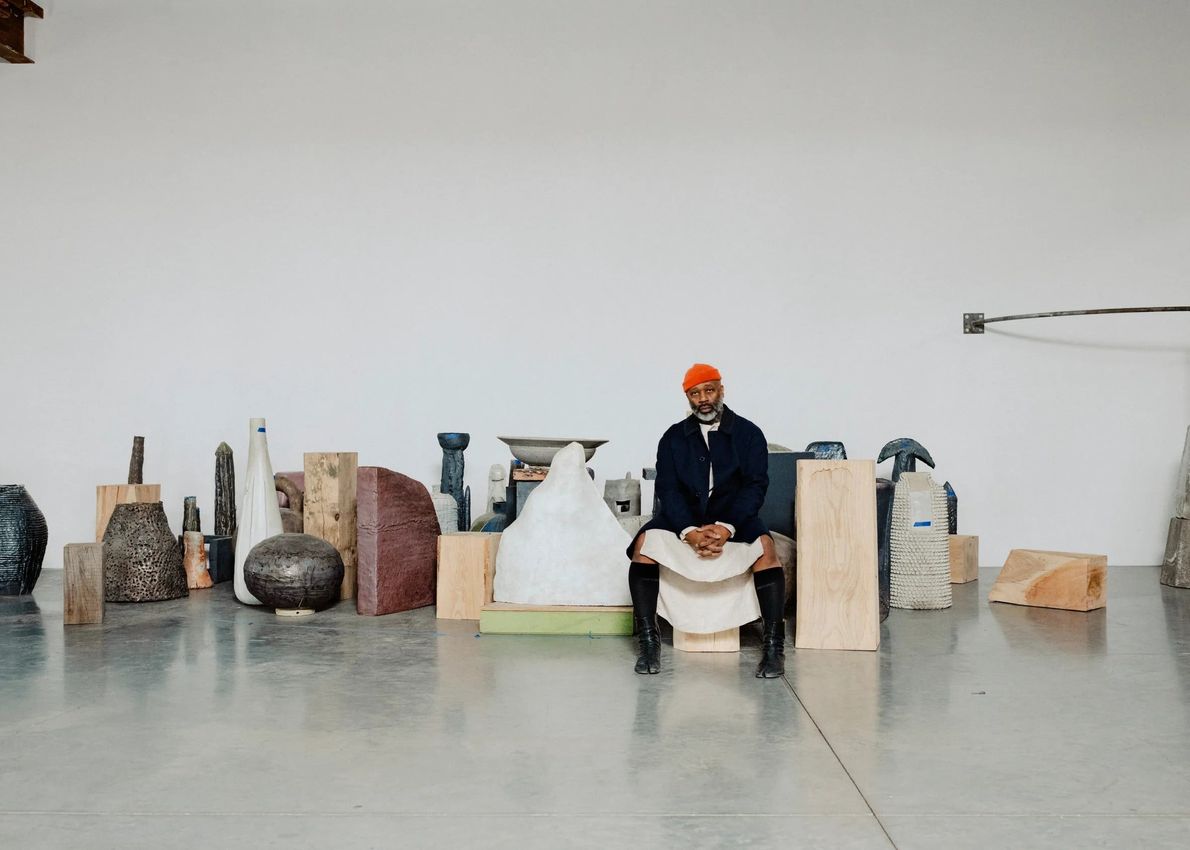
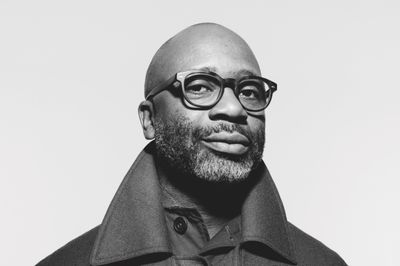
b. 1973, United StatesTheaster Gates is an American artist whose socially engaged practice spans sculpture, installation, performance, urban planning, and architectural intervention, and he is best known for transforming disused buildings and archives into spaces of Black cultural life and collective memory.
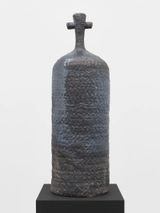
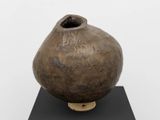
Working from Chicago, he often describes his work as operating at the intersection of city planning, object-making, and spiritual inquiry, combining salvaged materials with sound, design, and performance to address the politics of race, space, and value. Signature initiatives such as the Dorchester Projects (from 2009), the Rebuild Foundation, and the Stony Island Arts Bank, alongside series including the ‘Civil Tapestry’ works and his ongoing tar paintings and vessels, have positioned him as a leading figure in contemporary social practice art.
Gates has presented major exhibitions and commissions at institutions such as Palais de Tokyo in Paris, Tate Liverpool, the Mori Art Museum in Tokyo, the New Museum in New York while receiving honours including the Nasher Sculpture Prize, the Kurt Schwitters Prize, Artes Mundi 6, and a Guggenheim Fellowship. In 2025 he was commissioned to create a monumental frieze for the Obama Presidential Center in Chicago.
Early life and Career
Born in Chicago in 1973, Gates grew up in a working-class family; his father’s work as a roofer would later shape both his materials and metaphors. He first began working with clay while studying at Iowa State University in Ames, where he completed a BS in 1996, before travelling to Tokoname, Japan, to study pottery.
Gates went on to receive an MA in fine arts and religious studies from the University of Cape Town in 1998 and an MA in urban planning from Iowa State University in 2006, combining interests in ceramics, theology, and the built environment. These strands came together in his early performance Plate Convergence (Hyde Park Art Center, Chicago, 2007), a staged dinner based on a fictional collaboration between a Black family and a Japanese ceramicist, which foreshadowed his fusion of storytelling, social ritual, and sculptural form.
Works, Series and Methods
Much of Gates’ work unfolds through architectural and urban interventions that treat buildings as both sculptural objects and social tools. In 2010 he founded the Rebuild Foundation, a non-profit platform dedicated to neighbourhood regeneration, community arts programming, and cultural development in Chicago, particularly on the city’s South Side. Through Rebuild, more than 40 buildings have been rescued from abandonment and reimagined as libraries, archives, performance venues, and housing, including projects such as the Stony Island Arts Bank, St Laurence School, and the Dorchester Art and Housing Collaborative.
At Documenta 13 in Kassel (2012), Gates extended this work into a transatlantic project with 12 Ballads for Huguenot House, in which derelict 19th-century buildings in Kassel and Chicago were partially dismantled and rebuilt using each other’s materials, then activated through live performances. Across these initiatives, salvaged objects—pews, glass slides, books, and archival materials—are redeployed as living repositories of Black cultural memory
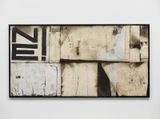
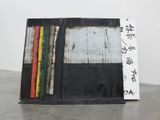
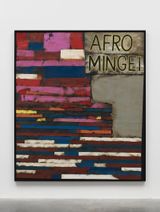
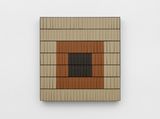
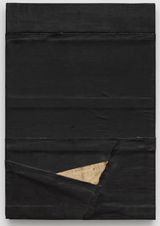
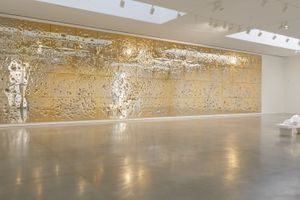
In sculpture and painting, Gates frequently uses found and industrial materials from his immediate environment. Beginning in 2011, the Civil Tapestry series stitched salvaged fire hoses over wooden supports, producing abstract, minimalist compositions that nonetheless recall the violent suppression of Civil Rights demonstrations using high-pressure hoses. In 2012 he introduced tar as a central medium, creating dense, high-relief paintings that pay tribute to his father’s roofing work; later bronze wall reliefs translate scarred, tar-papered roof surfaces into a durable, monumental register.
Gates is also a key figure in contemporary archival practice, treating collections as materials to be reorganised, reprinted, and performed. In 2018 he launched Black Madonna Press to distribute works drawn from his extensive holdings of print and photographic media, and his ongoing project Black Image Corporation (2018–) re-presents images from the Johnson Publishing Company—publisher of Ebony and Jet—to foreground historic portrayals of Black middle-class life. Selections from this archive, together with furnishings and ephemera from Johnson Publishing’s offices, have featured in exhibitions at Kunstmuseum Basel, Osservatorio Fondazione Prada in Milan (later travelling to Gropius Bau, Berlin), and Haus der Kunst in Munich.
Since 2009, Gates has led the Black Monks, a musical ensemble that channels secular and sacred Black music through experimental improvisation and dialogue. He has brought this performative practice into museums through projects such as the Processions series at the Hirshhorn Museum and Sculpture Garden in Washington, DC (2016–19), which investigated “sonic imagination” and celebrated Black history and culture through workshops, marches, and concerts
Themes and Context
Across architecture, sculpture, performance, and sound, Gates’ practice interrogates how race, class, and the built environment intersect, asking how art might repair or reconfigure places marked by disinvestment and historical erasure. His work is often situated within social practice and Black conceptual art, yet it also engages land art, craft traditions, and minimalism through a disciplined use of modular forms and industrial materials.
A recurring concern is the status of Black objects, images, and spaces, with Gates positioning himself as a “keeper of objects” who extends the lives of culturally significant materials while challenging their historical marginalisation. Projects such as Young Lords and Their Traces at the New Museum (2022), Black Chapel for the Serpentine Pavilion in London (2022), and Afro-Mingei at the Mori Art Museum in Tokyo (2024) frame his practice as a dialogue between Black histories, global craft lineages, and contemporary social practice, including his long-standing engagement with Japanese ceramics and folk-craft philosophy.
Exhibitions, Commissions and Recognition
Gates has staged major solo exhibitions at institutions including the Studio Museum in Harlem, Palais de Tokyo in Paris, Tate Liverpool, the Smart Museum of Art at the University of Chicago, Haus der Kunst in Munich, the Walker Art Center in Minneapolis, Kunstmuseum Basel, the National Gallery of Art in Washington, DC, the New Museum in New York, and the Mori Art Museum in Tokyo. In 2022 the New Museum organised Young Lords and Their Traces, his first museum survey, while the same year he designed Black Chapel, the twenty-first Serpentine Pavilion in London, as a space for contemplation, gathering, and sound
In 2024–25, the Mori Art Museum presented Theaster Gates: Afro-Mingei, the largest solo exhibition in Japan by a Black artist, focusing on the influence of Japanese traditions on his hybrid practice. In 2025 the Rebuild Foundation opened the Land School in Chicago, transforming a former elementary school into a site for cultural programming, educational initiatives, and archival stewardship, and Gates undertook a major commission to create a monumental frieze for the Obama Presidential Center, set to open in 2026.
Gates is a professor at the University of Chicago and served as artist-in-residence at the Getty Research Institute in Los Angeles in 2018–19. His awards include Artes Mundi 6 (2017), the French government’s Chevalier de l’Ordre national de la Légion d’honneur, the Frederick Kiesler Prize for Architecture and the Arts (2021), the Isamu Noguchi Award (2023), the Vincent Scully Prize from the National Building Museum in Washington, DC (2023), and a Guggenheim Fellowship awarded in 2025, alongside earlier honours such as the Nasher Sculpture Prize and the Kurt Schwitters Prize.
Theaster Gates FAQs
What is Theaster Gates best known for?
Theaster Gates is best known for transforming abandoned buildings, archives, and everyday materials into cultural hubs that serve Black communities, particularly on Chicago’s South Side. Projects like Dorchester Projects, the Rebuild Foundation, and the Stony Island Arts Bank exemplify how his work merges architecture, social practice, and archival stewardship.
How does Theaster Gates combine art and urban planning?
Drawing on his MA in urban planning and background in ceramics, Gates treats buildings, land, and organisational structures as artistic media alongside sculpture and performance. Through initiatives such as Rebuild Foundation and 12 Ballads for Huguenot House, he uses planning tools—acquisition, adaptive reuse, and community engagement—to test new models for cultural infrastructure and urban repair.
What themes does Theaster Gates explore in his work?
Gates’ work explores Black history, spirituality, labour, and the politics of space, focusing on how value is assigned to people, places, and objects. He often addresses histories of segregation and disinvestment, asking how art can honour, repair, or reconfigure those narratives through material transformation and collective activity.
Where can I see Theaster Gates’ work?
Gates’ work can be seen in museums and institutions worldwide, including the New Museum, Mori Art Museum, Tate Liverpool, Haus der Kunst, Kunstmuseum Basel, and the National Gallery of Art in Washington, DC. His ongoing projects in Chicago—such as the Stony Island Arts Bank, Rebuild Foundation sites, and the Land School—offer additional opportunities to encounter his practice in situ.
What is Theaster Gates: Afro-Mingei about?
Theaster Gates: Afro-Mingei at the Mori Art Museum (2024–25) brought together major works and new commissions to connect Black cultural traditions with the Japanese Mingei movement’s focus on everyday craft and collective making. The exhibition framed Gates’ practice as a dialogue between Black aesthetics, Japanese folk-craft philosophies, and contemporary social practice, highlighting his long-standing engagement with clay and craft lineages.
Ocula | 2026

Theaster Gates' Exhibitions Opening Soon


















Theaster Gates in Ocula Magazine








Explore and Follow Artists Shaping Contemporary Art
A respected voice in contemporary art discourse.
Focusing on ambitious storytelling and insightful art-world commentary. Ocula Magazine publishes in-depth interviews, critical essays and timely analysis on the artists, exhibitions and ideas driving the global art world.
Learn more about Ocula Magazine
Showcasing the best of the art world.
Ocula partners with galleries from around the world to highlight their artists, artworks and exhibitions. Gallery membership is by application and invitation, with each member vetted by an independent panel.
Learn more about Ocula Membership
Specialises in the sale of major artworks.
Led by a team with deep ties to the world’s leading auction houses, galleries and collectors. Ocula’s advisory team offers bespoke services to high-net-worth clients from around the world who are looking to acquire the best of contemporary and modern art.
Learn more about our team and services