




LÉON WUIDAR
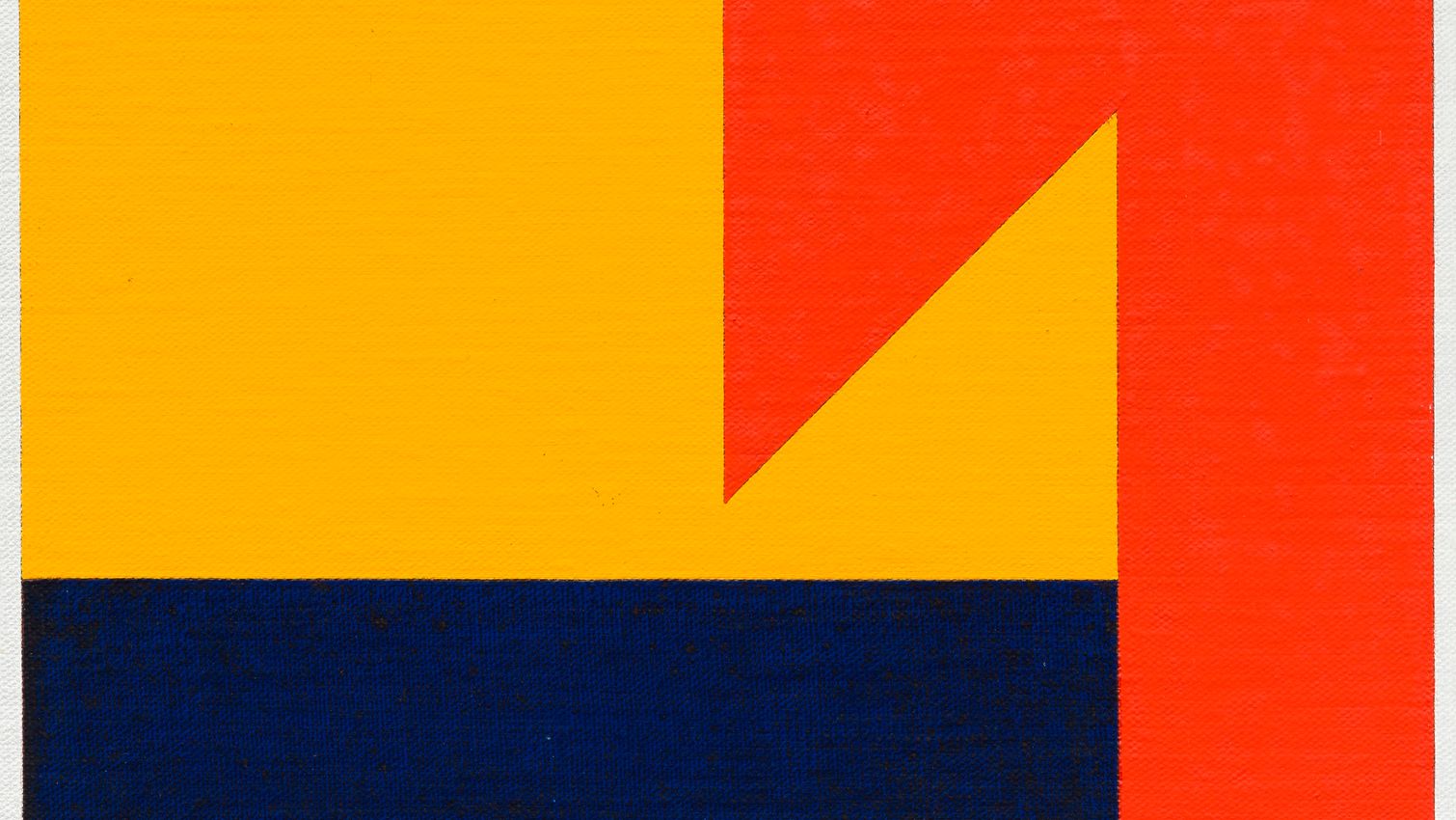
b. 1938, BelgiumA critical figure in contemporary art in Belgium, painter Léon Wuidar has built a reputation across Europe through his carefully constructed geometric abstractions.
Early Years
Léon Wuidar was born in 1938 in Liège, Belgium, just before the outbreak of the Second World War. Much of his childhood was spent alone, discovering collapsed buildings and abandoned spaces, which would later influence his artistic practice. His childhood was also marked by an interest in painting. The artist recalls seeing colour reproductions of Ben Nicholson paintings at a second-hand bookstore as a revelation for his artistic practice.
Wuidar started his career as a self-taught painter in 1955, beginning by exploring figurative painting. In the 1960s his practice evolved toward geometric abstraction. He has since actively exhibited throughout Europe for more than six decades.
In addition to his practice, Wuidar has been a drawing teacher since 1959, and began teaching graphic art at the Académie des Beaux Arts in Liège in the mid-1970s. He then dedicated himself full-time to painting at the age of 60. He continues to live and work in his hometown of Liège.
Léon Wuidar Artworks
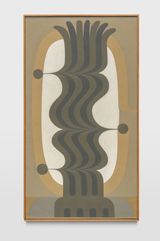
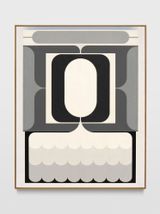
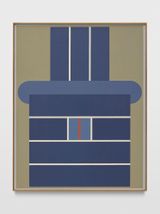
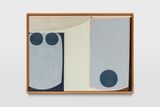
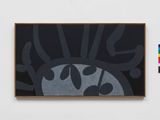
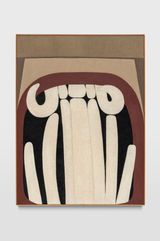
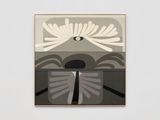
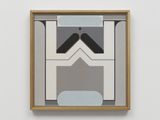
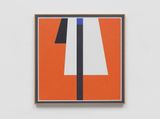
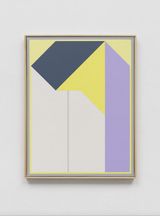
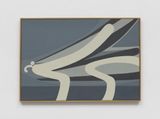
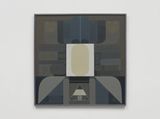
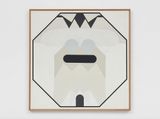
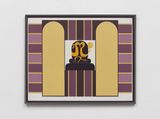
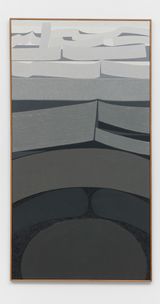
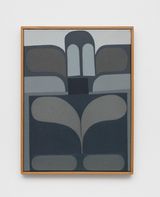
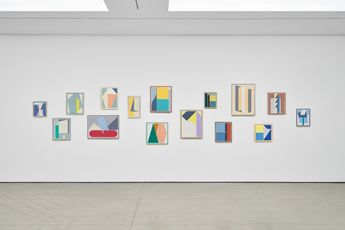
The meticulous nature of the artist is evident—from his choice of shapes in a composition, to his restrained colour palette, even to the thin wooden frames that adorn each of his canvases. He looks to modern artists such as Paul Klee and the Surrealists for inspiration, in addition to the Classical world, as he aims to create work marked by a sense of balance.
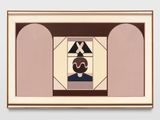
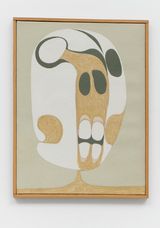
Wuidar’s work may at first glance appear conceptual, but the meaning or representation behind each painting is often quite concrete. In the mid-1980s, the artist began to incorporate letters and words in his compositions, as well as figures. Other paintings represent everyday objects or include art historical references. These clever integrations of representation and abstraction reflect the humour often associated with Wuidar’s practice.
Although best known for his paintings, Wuidar is a multidisciplinary artist, having worked with techniques as diverse as wood bas-relief and bookmaking and, since the 1990s, he has also worked with collage. In addition, the artist has kept a regular record of drawings and graphic research in his sketchbooks for the past five decades, reflecting his diligent nature and forming an important archive of the development of his long and varied career.
Since the 2010s, Wuidar’s later paintings have moved towards an even more reduced geometry and increasingly luminous colour, refining the ‘radical simplicity and extreme subtlety’ noted by curator Hans Ulrich Obrist.
Architectural Collaborations
Wuidar’s practice is heavily marked by his friendship with famed Belgian architect Claude Vandenhove, who also designed the artist’s Brutalist home and studio. The architectural connections are evident in his canvases with their strong sense of geometry. Wuidar has also worked on projects with many other prominent Belgian architects.
Wuidar and Vandenhove met in the 1960s and went on to work together on various projects, notably the Sart Tilman Hospital in Liège in the 1970s. This project involved other artists engaged with geometric abstraction, such as Daniel Buren and Sol LeWitt. Wuidar’s career evidently rests within this legacy of abstract painting in the 20th century.
Collections
Léon Wuidar’s work is represented in collections throughout Europe, including Fernmeldetechnisches Zentralamt, Darmstadt, Germany; Dorstener Maschinenfabrik, Dorsten, Germany; Fondation IDAC, Mondriaanhuis, Amersfoort, Netherlands; Musée des Beaux-Arts, Brussels, Belgium; Bibliothèque royale Albert 1er (now KBR Museum), Brussels, Belgium; and Musée de l’Art Wallon, Liège, Belgium; Centre Pompidou, Paris; Frac Normandie, Rouen; Longlati Foundation, Shanghai; Hall Art Foundation, Derneburg; IKOB, Eupen; La Boverie and Musée en plein air du Sart Tilman, Liège.
Léon Wuidar Exhibitions
Léon Wuidar has been the subject of both solo and group exhibitions.
Solo exhibitions include:
- Léon Wuidar, White Cube Paris (2026)
- Léon Wuidar, White Cube, Hong Kong (2024);
- Léon Wuidar, White Cube Mason’s Yard, London (2022);
- Léon Wuidar. À perte de vue, Mac’s, Musée des Arts Contemporains, Grand-Hornu, Belgium (2021);
- Léon Wuidar, Museum Haus Konstruktiv, Zürich, Switzerland (2020); Musée des beaux-arts, Verviers, Belgium (2001); Centre d’Art Contemporain, Brussels, Belgium (2000); and Musée Félicien Rops, Namur, Belgium (1999).
Group exhibitions include: Peinture partagée, Maison de la Culture, Namur, Belgium (2015); Abstractions géométriques belges, BAM, Mons, Belgium (2014); M’as-tu vu?, Palais des académies, Brussels, Belgium (2013); Un siècle d’art abstrait, Musée René Magritte, Brussels, Belgium (2010); Le cube au carré, Musée Félix De Boeck, Drogenbos, Belgium (2008).
Wuidar’s work also appeared in group shows Giants, Rodolphe Janssen, Brussels (2024), and ’Monument to the Unimportant’, Pace Gallery, New York (2025–26).
Website and Instagram
Léon Wuidar’s website can be found here.
Articles
Articles on Leon Wuidar have been published in various publications, including The Guardian, Gallery Viewer, and COLLECT.
Léon Wuidar FAQs
Who is Léon Wuidar?
Léon Wuidar (born 1938, Liège) is a Belgian painter known for rigorously composed geometric abstractions that often reference architecture and memory. Over more than six decades, he has become a key figure in European geometric abstraction while also teaching drawing and graphic arts.
What characterises Léon Wuidar’s painting style?
Léon Wuidar’s paintings are defined by precise geometric forms, carefully calibrated colour, and a quiet sense of humour that emerges through titles, typographic forms, and subtle references to everyday objects. Though visually minimal, the works often encode very specific memories, dates, or architectural impressions, giving them a narrative and emotional depth.
How does architecture influence Léon Wuidar’s work?
Léon Wuidar’s long friendship and collaboration with architect Charles (Claude) Vandenhove, who designed his Brutalist home and studio near Liège, strongly shaped his visual language. His compositions frequently resemble imagined floorplans or façades, using walls, openings, and corridors as abstract building blocks on the canvas.
Where has Léon Wuidar exhibited recently?
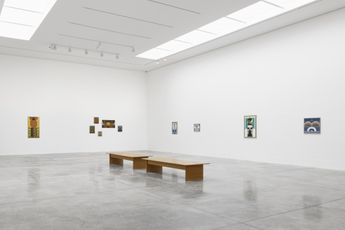
Having been represented by White Cube, Léon Wuidar’s solo exhibitions include shows at White Cube Mason’s Yard, London (2022), and a focused survey at White Cube Paris in 2026, presenting paintings from the 1960s–70s. His work has also featured in institutional shows such as Léon Wuidar. À perte de vue at MAC’s Grand-Hornu (2021) and earlier retrospectives in Switzerland and Belgium.
In which collections can Léon Wuidar’s work be found?
Léon Wuidar’s paintings are held in European and international collections including Centre Pompidou (Paris), Frac Normandie (Rouen), Longlati Foundation (Shanghai), Hall Art Foundation (Derneburg), and several museums in Liège and Brussels. Corporate and public commissions in Germany, the Netherlands, and Belgium further attest to his longstanding institutional recognition.
Ocula | 2026

View Léon Wuidar's Artworks

























Explore and Follow Artists Shaping Contemporary Art
A respected voice in contemporary art discourse.
Focusing on ambitious storytelling and insightful art-world commentary. Ocula Magazine publishes in-depth interviews, critical essays and timely analysis on the artists, exhibitions and ideas driving the global art world.
Learn more about Ocula Magazine
Showcasing the best of the art world.
Ocula partners with galleries from around the world to highlight their artists, artworks and exhibitions. Gallery membership is by application and invitation, with each member vetted by an independent panel.
Learn more about Ocula Membership
Specialises in the sale of major artworks.
Led by a team with deep ties to the world’s leading auction houses, galleries and collectors. Ocula’s advisory team offers bespoke services to high-net-worth clients from around the world who are looking to acquire the best of contemporary and modern art.
Learn more about our team and services