




LEE BUL
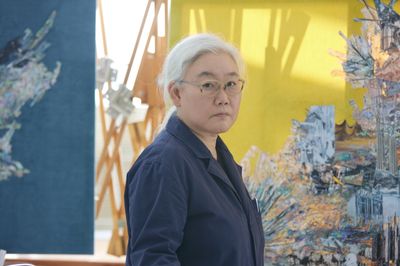
b. 1964, South KoreaLee Bul (b. 1964, Yeongju, South Korea) works across performance, sculpture, drawing, painting, installation, architecture, and video. Her work engages themes of utopian and dystopian imagination, technological transformation, modernity’s failures, and the fragility of human ambition, often through cyborg bodies, architectural fragments, and speculative landscapes. She lives and works in Seoul and is widely regarded as one of the most influential artists of her generation.
Background and early works
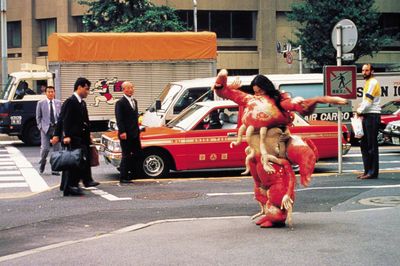
Born to dissident parents during the military dictatorship of Park Chung-hee, Lee Bul’s childhood was shaped by political repression, underground activism, and frequent relocations, experiences that later informed her critical stance toward power and ideology. After earning a BFA in sculpture from Hongik University in 1987, she became known in the late 1980s and early 1990s for experimental street performances in South Korea and Japan, during which she wore soft, biomorphic sculptures that were described as simultaneously alluring and grotesque. These early works examined censorship, state violence, and gender roles in Korean society, positioning the female body as both vulnerable and resistant.
Significant early works include:
- Cravings (1989): In this performance, Lee appeared as a monstrous figure whose tentacles and exposed viscera evoked shared anxieties under censorship and civil unrest. The imagery and soft prosthetic forms from Cravings later evolved into the long‑running ‘Monster’ series (1998–2011), in which the wearable sculptures became freestanding, hybrid bodies hovering between the organic and the mechanical.
- Abortion (1989): Performed suspended upside down, this work provoked controversy for confronting social conventions surrounding women’s bodies, sexuality, and reproductive autonomy in Korea. Around the same time, Lee was involved in the underground collective Museum, an avant‑garde group of artists, performers, and musicians in Seoul that played an important role in the city’s alternative art scene.
Throughout the 1990s, Lee’s practice continued to probe the human body in relation to beauty, mortality, and technology, often using unstable or perishable materials. A key example is Majestic Splendor (1997), first presented at The Museum of Modern Art (MoMA), New York, which consisted of sequined and beaded fish left to decay in display units; the work was removed early due to the smell, yet subsequently reconfigured for other venues, including the Lyon Biennale. By staging the transformation from seduction to repulsion, Lee exposed the inevitable cycles of life, death, and decay beneath surfaces of ornament and glamour.
Cyborgs, Utopian Landscapes, and Post 2000s
Lee Bul’s iconic ‘Cyborg’ (1997–2011) series investigates the desire for the perfect body and the entanglement of the organic and the technological. Works such as Cyborg Red and Cyborg Blue (1997) feature silicone casts of female figures derived from Greco‑Roman statuary, interrupted by mechanical joints and absent limbs, suggesting both empowerment and fragmentation. Frequently read as feminist critiques, these female‑coded cyborgs question social expectations of idealised feminine bodies and the promise of techno‑perfection.
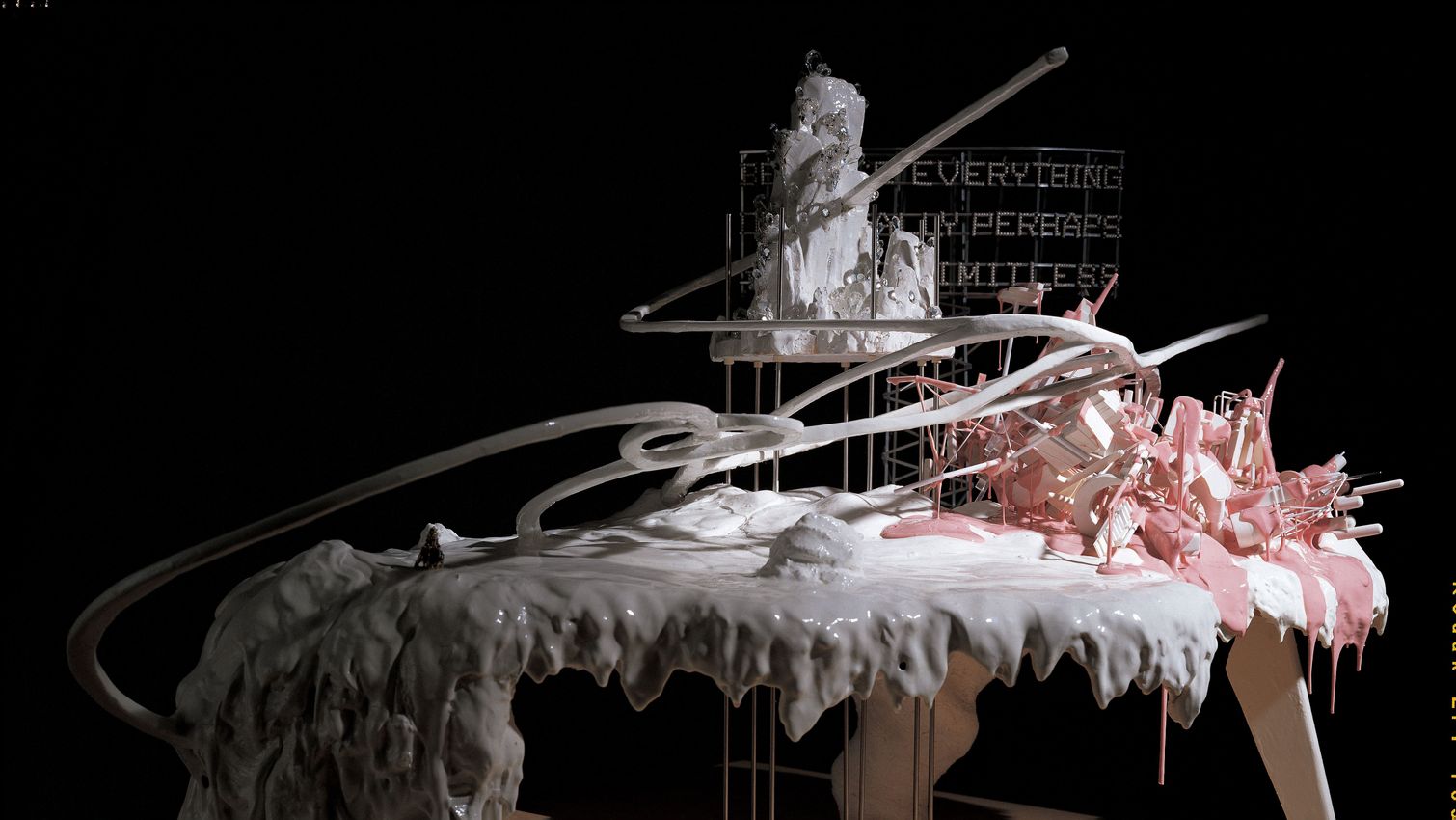
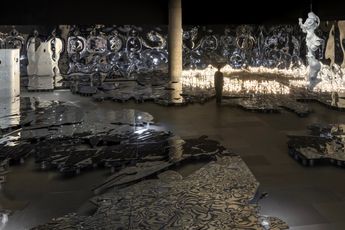
From the mid‑2000s onward, Lee shifted toward model‑like environments and architectural installations that reflect on utopian thinking and its collapse. Her ongoing ‘Mon grand récit’ series (2005–) stages intricate topographies of ruins, small‑scale railways, LED signage, and precarious structures, evoking both modernist dreamscapes and their breakdown. These works crystallised in the expansive exhibition Utopia Saved (2020) at Manege Central Exhibition Hall, St Petersburg, which brought together architectural sculptures, environmental installations, and drawings dealing with utopian desire and historical trauma. As noted in contemporary criticism, the exhibition invited viewers to sense both the textures of utopia and its loss, foregrounding the tension between visionary ambition and its failures. Writing for Ocula Magazine in November 2020, Stephanie Bailey noted that the exhibition ‘is as much about sensing utopia’s textures as it is about feeling its loss’.
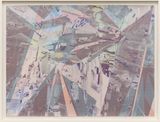
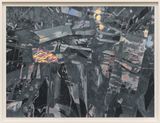
Reflective and crystalline materials become central in works such as After Bruno Taut (Devotion to Drift) (2013), a suspended environment of crystal beads, chains, and mirrors inspired by the German architect Bruno Taut and his Glass Pavilion. Lee’s use of reflectivity links early 20th‑century utopian modernism to the memory of militarised South Korea, turning shining surfaces into devices for both projection and critical reflection. In parallel, she has developed painting series such as ‘Perdu’, which combine mother‑of‑pearl with paint to create luminous, fractured surfaces; these works were the focus of her first dedicated painting presentation in Hong Kong, organised by Lehmann Maupin at Hong Kong Spotlight by Art Basel in 2020. The presentation was included in Ocula Magazine‘s ’Hong Kong Spotlight: Six Artists to Watch’.
Recent Projects and Surveys
Genesis Facade Commission:
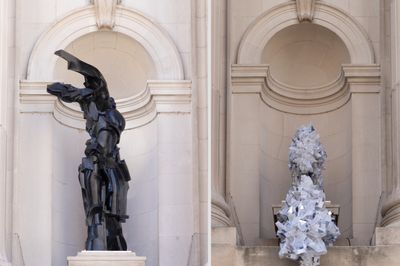
In 2024, The Metropolitan Museum of Art in New York invited Lee Bul to create a major façade commission for its Fifth Avenue building, titled Long Tail Halo, which remained on view until June 2025. The project extended her interest in visionary structures and suspended forms into the public realm, embedding speculative architecture into one of the world’s most visible museum façades.
From 1998 to Now
In 2026, Lee Bul: From 1998 to Now opened at M+, signaling the artist’s first major presentation in Hong Kong and one of the most comprehensive surveys of her career to date, featuring more than 200 works from the late 1990s to 2024 drawn from her studio and collections across Asia and beyond. The M+ presentation grew from a 2025 iteration in Seoul that debuted at Leeum Museum of Art, including an additional group of early works from the late 1980s to early 2000s, as well as recent pieces created in 2024, offering audiences a rare opportunity to trace key developments in her practice.
Institutional Shows
In addition to the aforementioned survey, Lee Bul has also been the subject of numerous museum shows, including:
- Hayward Gallery, London (Lee Bul: Crashing, 2018)
- Martin Gropius Bau, Berlin (Lee Bul: Crash, 2018)
- Palais de Tokyo, Paris (Aubade III, 2015)
- Mori Art Museum, Tokyo (From Me Belongs to You Only, 2012)
- National Museum of Modern and Contemporary Art, Seoul (MMCA Hyundai Motor Series: Lee Bul, 2014)
Awards and Honours
Lee Bul has been awarded numerous accolades, including:
- Ruth Baumgarte Art Prize (2023)
- Honorary Doctorate, School of the Art Institute of Chicago (2022)
- Ho-Am Prize for the Arts (2019)
- Officier Ordre des Arts et des Lettres, France (2016)
- Noon Award, Gwangju Biennale Foundation (2014)
Lee Bul FAQs
Who is Lee Bul?
Lee Bul (b. 1964, Yeongju, South Korea) is a leading contemporary artist whose interdisciplinary practice spans performance, sculpture, installation, painting, architecture, and media art. She is widely regarded as one of the most influential Asian artists of her generation and lives and works in Seoul.
What is Lee Bul known for?
Lee Bul is best known for her cyborg sculptures and installations, her early performance works critiquing gender and power, and her ambitious architectural and utopian landscapes that explore the rise and fall of modernity.
What themes does Lee Bul explore in her work?
Lee Bul’s work addresses utopia and dystopia, technological transformation, the relationship between body and machine, the failures of modernist ideals, and the politics of gender, power, and memory. She often reflects on the tension between human aspiration and the fragility or collapse of grand narratives of progress.
What is Lee Bul’s current exhibition at M+ in Hong Kong?
M+ in Hong Kong is currently presenting Lee Bul: From 1998 to Now, a major survey of the artist’s work co‑organised with Leeum Museum of Art in Seoul. The exhibition brings together more than 200 works tracing her practice from the late 1990s to recent years, including large‑scale installations, cyborg sculptures, and works on paper and canvas.
What materials does Lee Bul use?
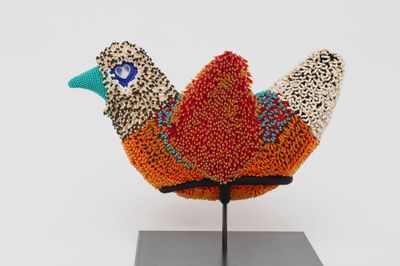
Lee Bul’s works often feature unconventional materials like mother-of-pearl, silicone, fiberglass, lacquer, beads, chains, and mirrors.
What awards has Lee Bul received?
Lee Bul has received numerous accolades including the Ruth Baumgarte Art Prize (2023), Ho-Am Prize for the Arts (2019), and an honorary doctorate from the School of the Art Institute of Chicago (2022).
Ocula | 2026











Explore Lee Bul's Exhibitions




Lee Bul in Ocula Magazine








Explore and Follow Artists Shaping Contemporary Art
A respected voice in contemporary art discourse.
Focusing on ambitious storytelling and insightful art-world commentary. Ocula Magazine publishes in-depth interviews, critical essays and timely analysis on the artists, exhibitions and ideas driving the global art world.
Learn more about Ocula Magazine
Showcasing the best of the art world.
Ocula partners with galleries from around the world to highlight their artists, artworks and exhibitions. Gallery membership is by application and invitation, with each member vetted by an independent panel.
Learn more about Ocula Membership
Specialises in the sale of major artworks.
Led by a team with deep ties to the world’s leading auction houses, galleries and collectors. Ocula’s advisory team offers bespoke services to high-net-worth clients from around the world who are looking to acquire the best of contemporary and modern art.
Learn more about our team and services