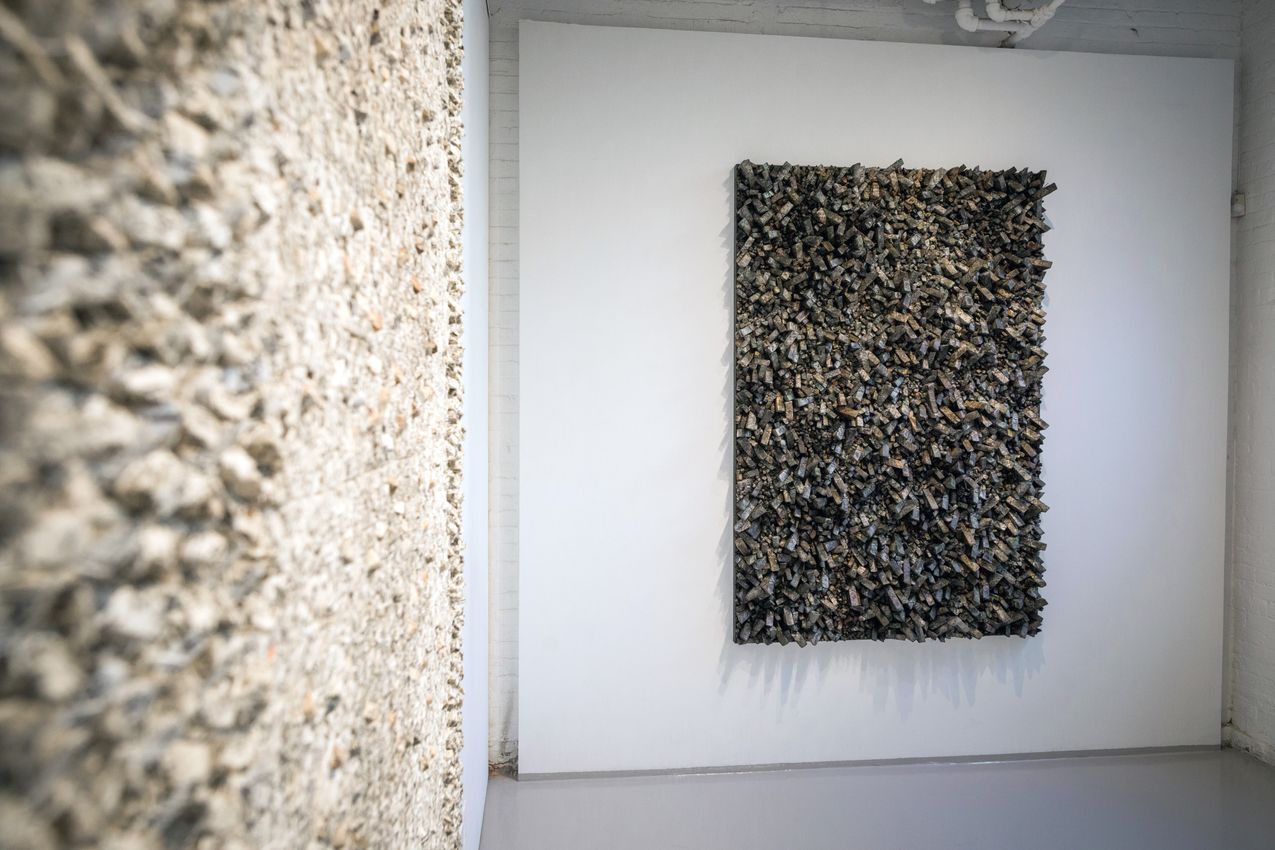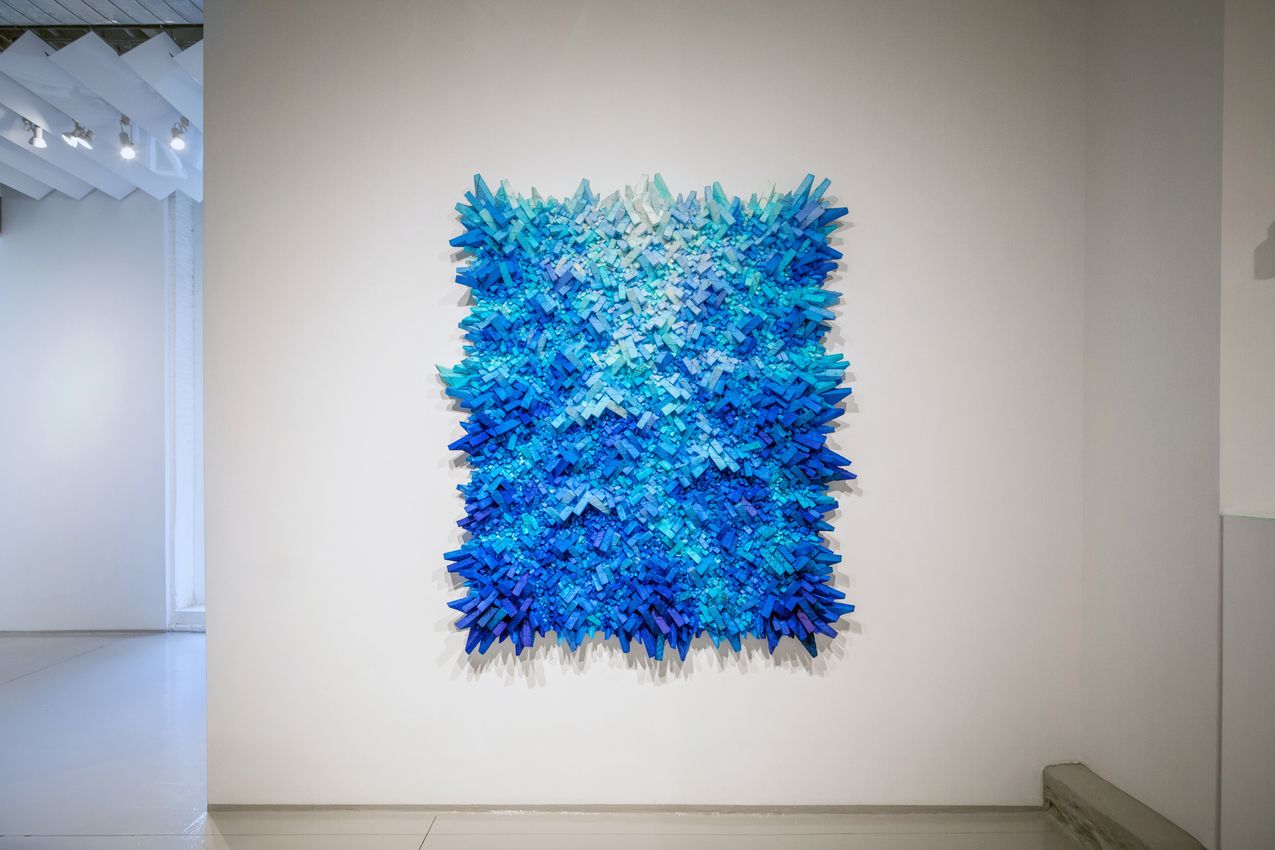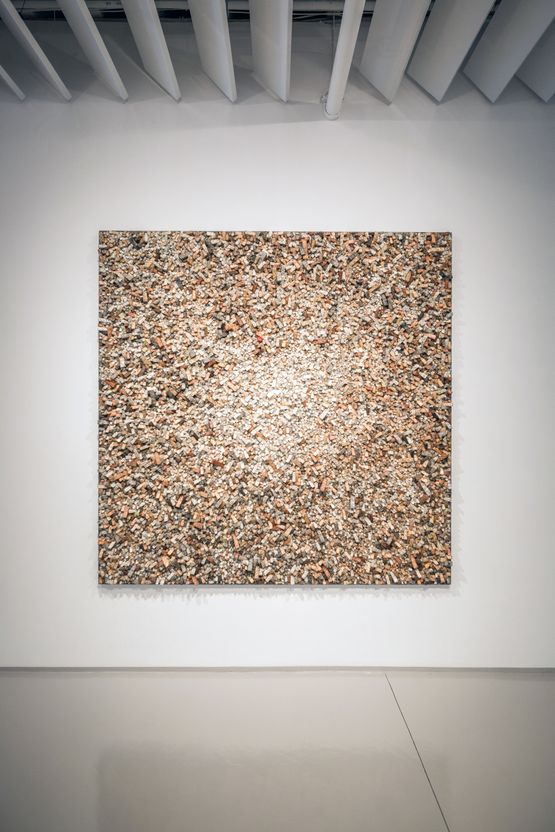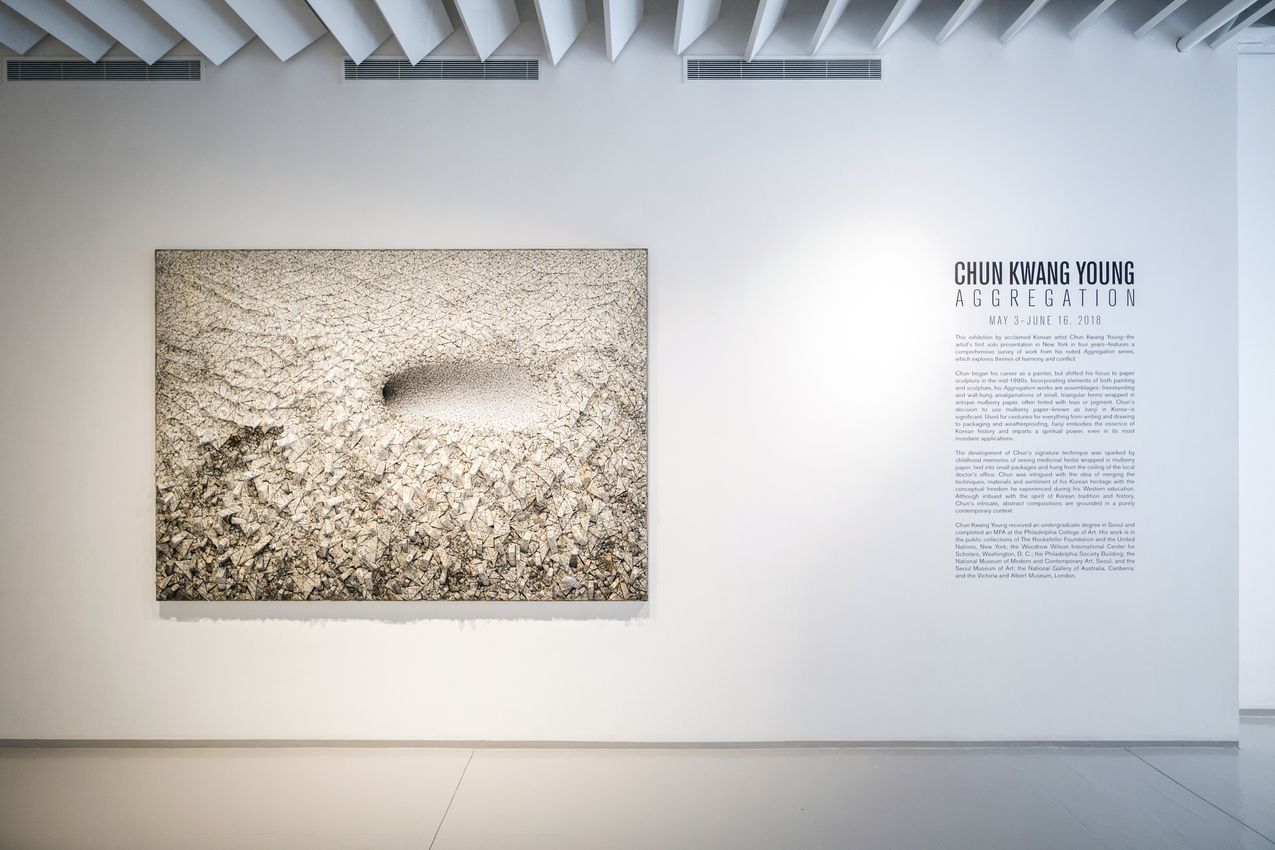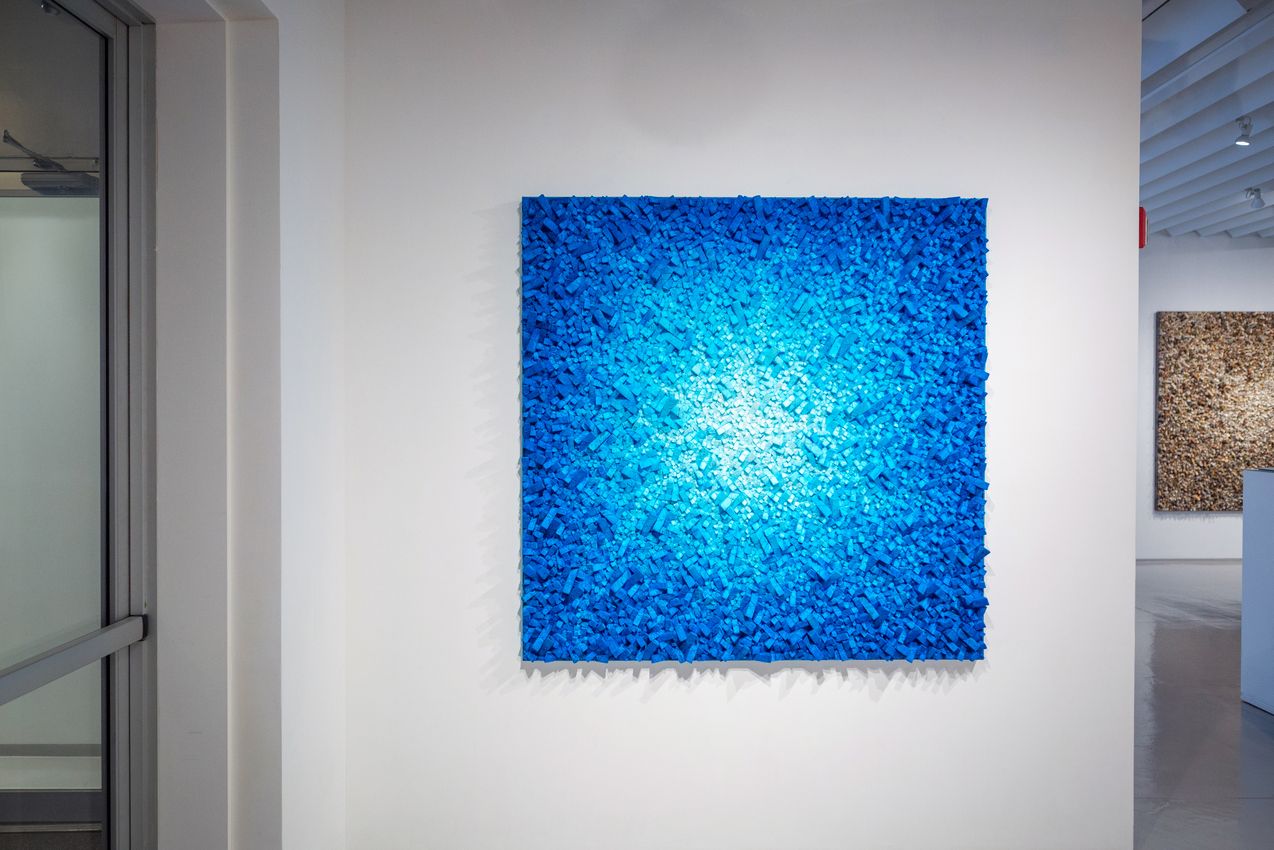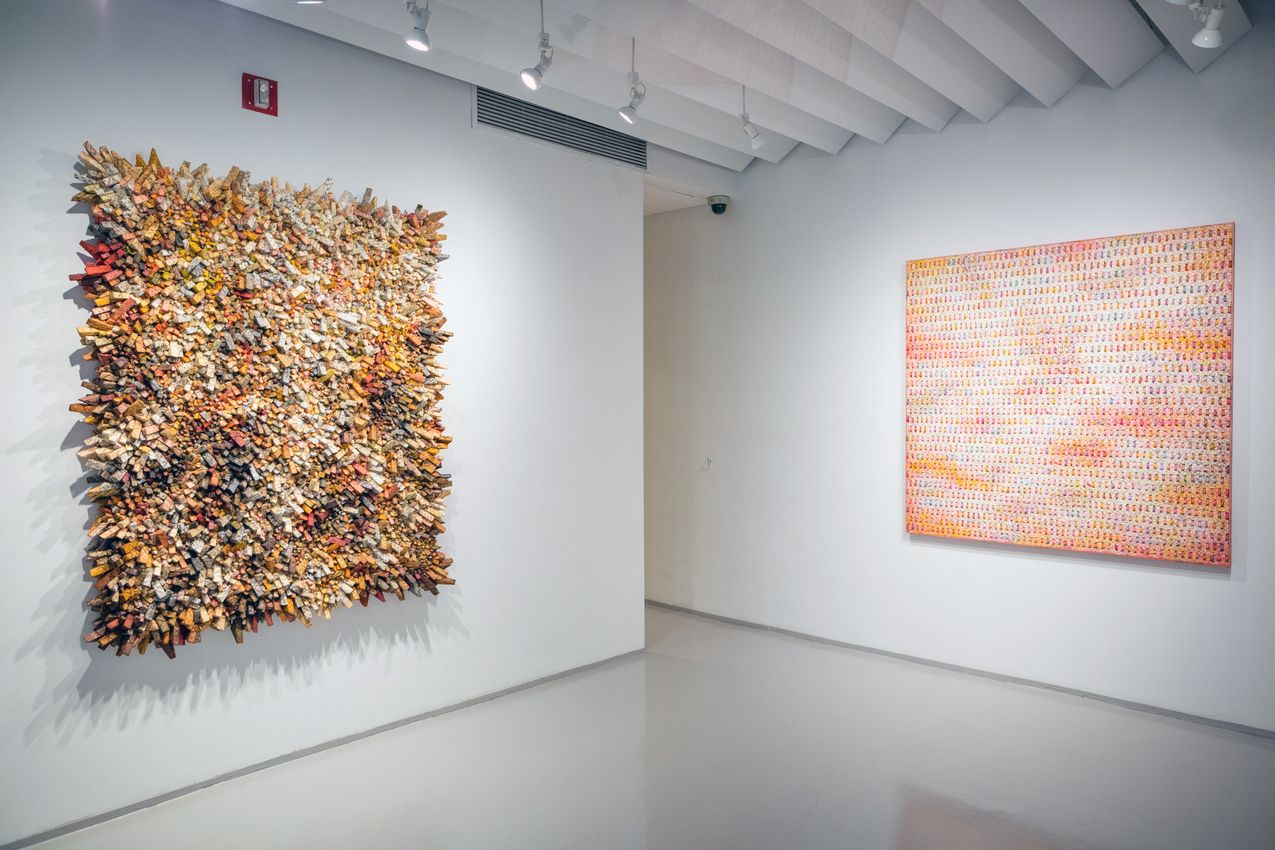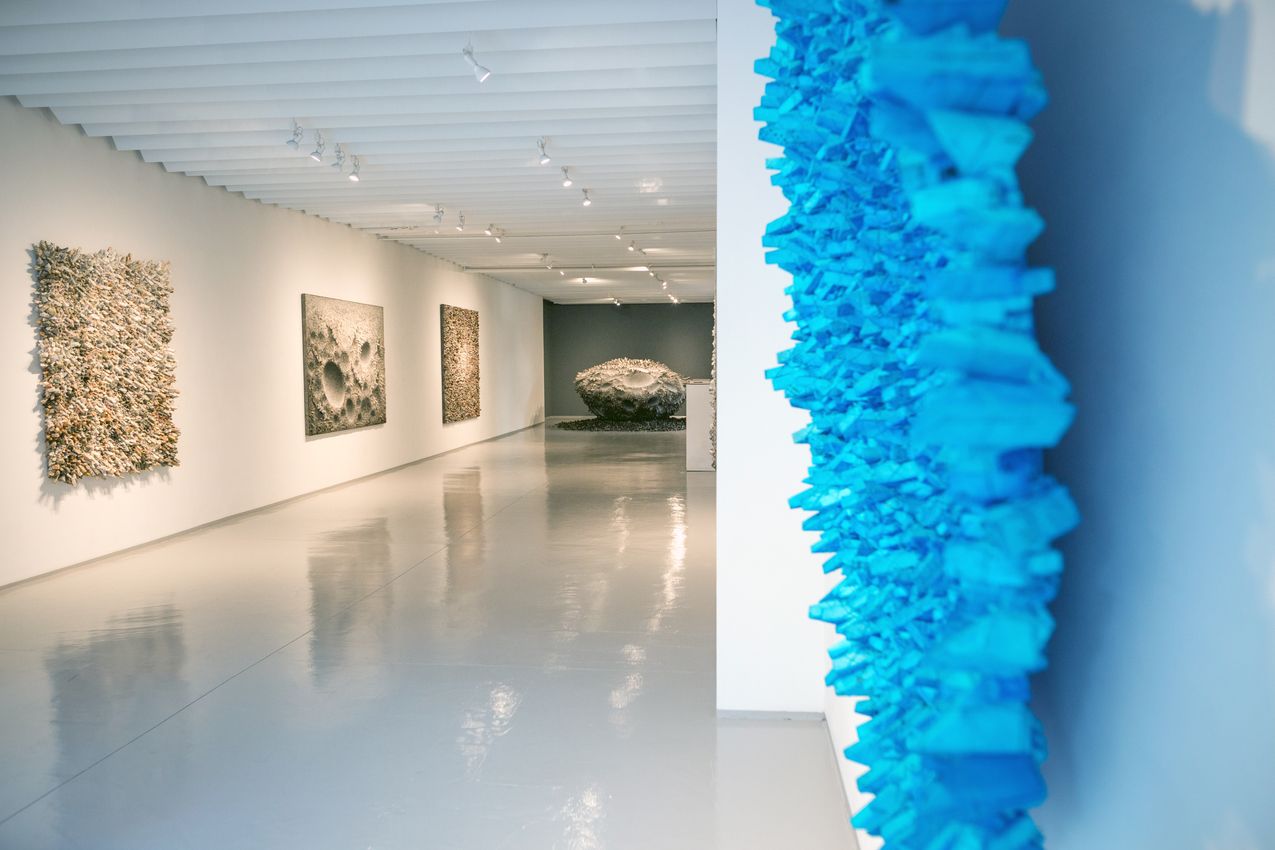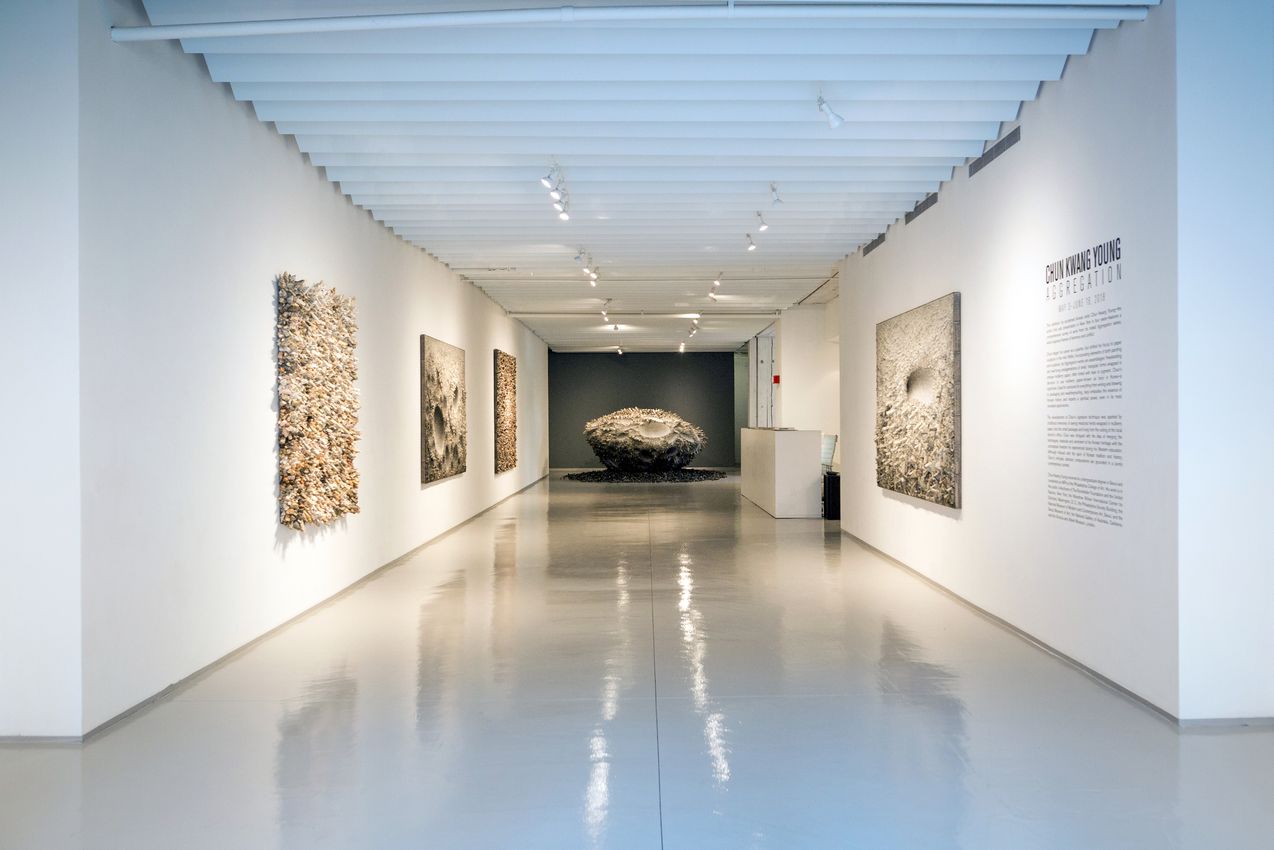
Sundaram Tagore Gallery is pleased to present a solo exhibition by acclaimed Korean artist Chun Kwang Young. The show—the artist’s first in New York in four years—features a comprehensive survey of work from his noted ‘Aggregation’ series, which explores themes of harmony and conflict.
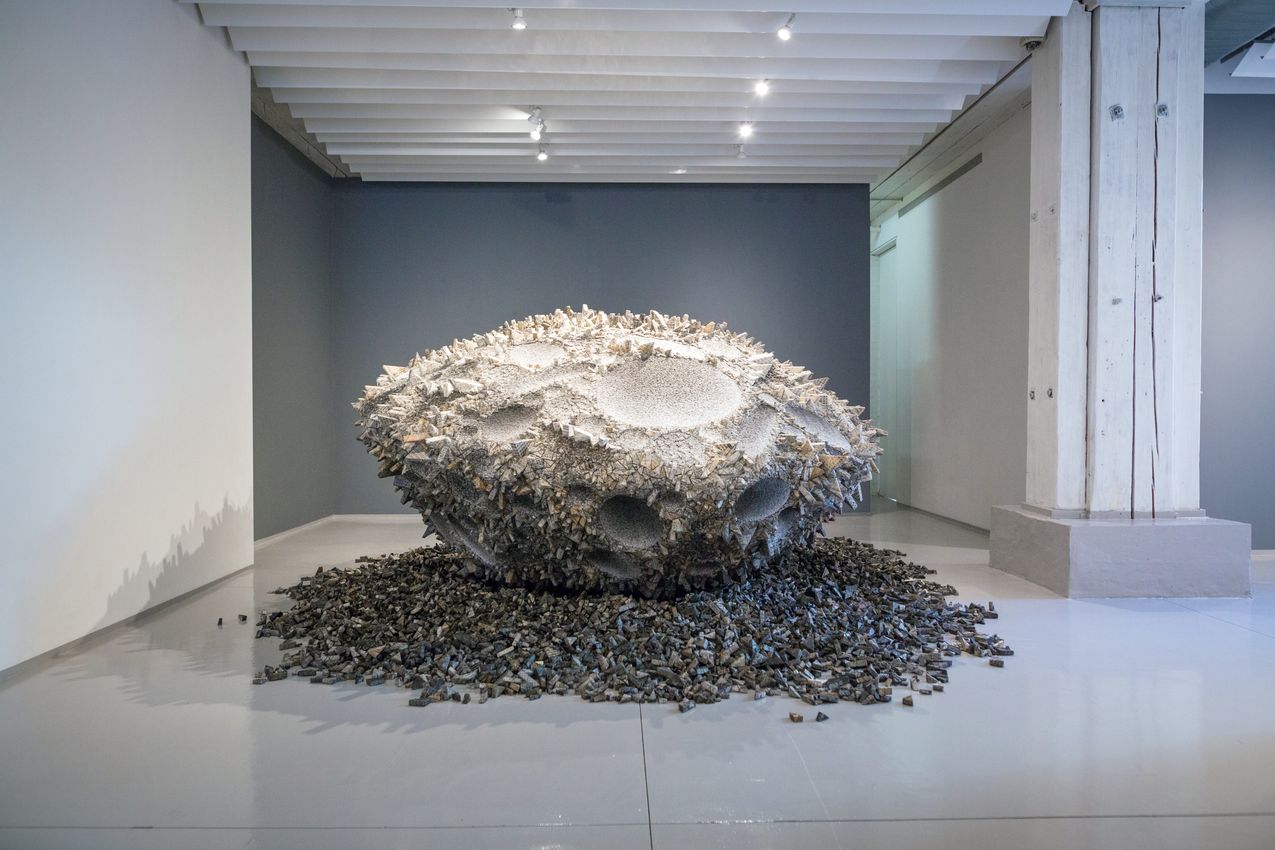
Chun Kwang Young began his career as a painter, but shifted his focus to paper sculpture in the mid-1990s. Incorporating elements of both painting and sculpture, Chun’s Aggregations are assemblages: freestanding and wall-hung amalgamations of small, triangular forms wrapped in antique mulberry paper, often tinted with teas or pigment.
Born in Hongchun, South Korea, in 1944, Chun grew up during the end of Japanese colonisation and the brutality of the Korean War. In the early 1970s, he moved to the United States to pursue a Master’s Degree at Philadelphia College of Art, where he was deeply drawn to Abstract Expressionism. ‘It seemed to be the best way to freely express my surprise and sadness at witnessing the huge gap between idea and reality,’ he says.
Over time, Chun became disillusioned with the materialistic drive that seemed to fuel the American dream and feelings of loneliness intensified his longing for home. During this period, Chun’s paintings, which explored the effects of light and colour, reflected his interest in Abstract Expressionism, however, he ultimately found the expression inauthentic. Chun decided to return to Korea and focus on developing his own methodology, one that was wholly unique and reflective of his history and cultural identity.
The development of Chun’s signature technique was sparked by childhood memories of seeing medicinal herbs wrapped in mulberry paper, tied into small packages and hung from the ceiling of the local doctor’s office. He became intrigued with the idea of merging the techniques, materials and sentiment of his Korean heritage with the conceptual freedom he experienced during his Western education.
Chun’s decision to use mulberry paper—known as hanji in Korea—is significant. It embodies the essence of Korean history and imparts a spiritual power, even in its most mundane applications. Derived from native trees and prized for its strength and ability to resist water, hanji has been used in Korea for centuries for everything from writing and drawing to packaging and weatherproofing.
With history in mind, Chun sources paper from antique books printed. ‘The hanji that I am currently using are from books between fifty and a hundred years old,’ he says. ‘Each has its history and each generation of our ancestors’ joys and sorrows can be seen in the thousands of aggregated fingerprints that make my work even more mystical and precious. It’s almost as if these fingerprints are trying to have a conversation with me, to explain their reasons for being there.’ To create his compositions, Chun starts with the triangular forms, which are individually cut from polystyrene, wrapped in hanji and tied with a string made from the same material. He then adheres each wrapped piece to a flat support or sculptural substructure. Once adhered, some of the forms are painted by hand. The process, multifaceted and repetitive in nature, necessitates an almost meditative approach.
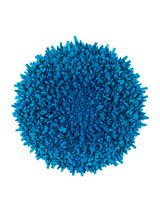
Chun’s arrangements vary from seemingly uniform surfaces to works that burst from their frames, constituting low reliefs. His palette ranges from subtle, sepia-toned hues, which naturally result from the teas he uses to tint the paper, to pigments in vibrant blue, red, orange and yellow. Some of the works employ subtle shifts in tone and colour to create the illusion of craters, dips and depressions. Rendered in a restrained palette of natural hues, the overall effect is organic, geological—almost cosmic in appearance.
Over the years, Chun’s Aggregations have become more colourful and evolved in complexity and scale, but the use of mulberry paper remains at the core of his practice. Although imbued with the spirit of Korean tradition and history, Chun’s work, with its intricate, abstract compositions, is grounded in a purely contemporary context.
A printed catalogue with an essay by Dr. Marius Kwint, reader in Visual Culture, School of Art and Design, University of Portsmouth, U.K., accompanies the exhibition.
Korean artist Chun Kwang Young incorporates elements of both painting and sculpture in his practice. He is best known for his acclaimed Aggregation series: freestanding and wall-hung amalgamations of small, triangular forms wrapped in antique mulberry paper, often tinted with teas or pigment.


Established in 2000 in New York City, Sundaram Tagore Gallery represents established and emerging artists from around the globe, specialising in work that is aesthetically and intellectually rigorous, infused with humanism and art historically significant. The gallery was founded with a mission to show that some of the best and most meaningful art was being created by artists deeply engaged in cross-cultural explorations. Our international roster of artists cross cultural and national boundaries, synthesising Western visual language with forms, techniques and philosophies from Asia, the Subcontinent and the Middle East. More than twenty years later, we continue to champion artists, particularly women and those from underrepresented cultures, whose work exemplifies our interconnectedness.

A respected voice in contemporary art discourse.
Focusing on ambitious storytelling and insightful art-world commentary. Ocula Magazine publishes in-depth interviews, critical essays and timely analysis on the artists, exhibitions and ideas driving the global art world.
Learn more about Ocula Magazine
Showcasing the best of the art world.
Ocula partners with galleries from around the world to highlight their artists, artworks and exhibitions. Gallery membership is by application and invitation, with each member vetted by an independent panel.
Learn more about Ocula Membership

Specialises in the sale of major artworks.
Led by a team with deep ties to the world’s leading auction houses, galleries and collectors. Ocula’s advisory team offers bespoke services to high-net-worth clients from around the world who are looking to acquire the best of contemporary and modern art.
Learn more about our team and services