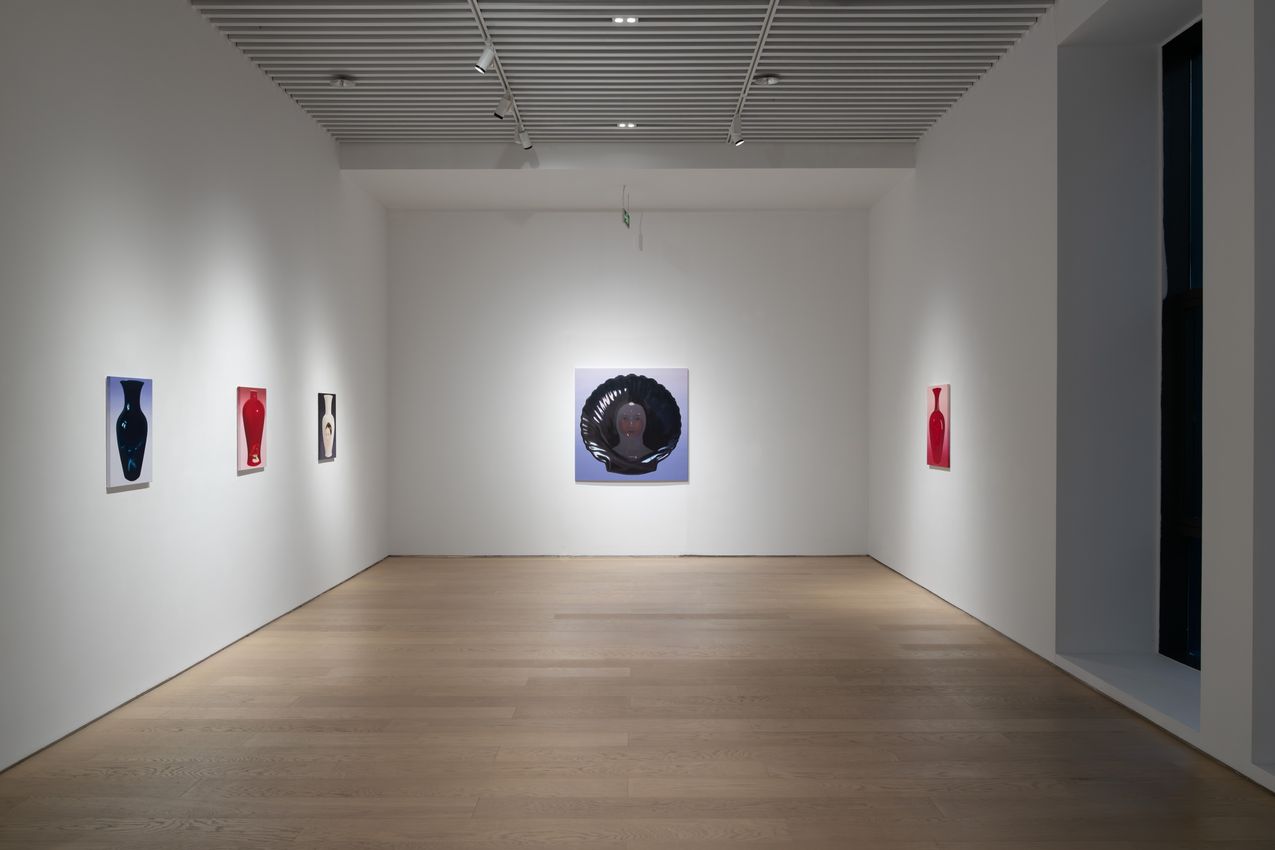
We have long sought to understand the world by assigning names and meanings to what is visible and invisible, establishing systems of classification and order through which we make sense of our surroundings. Some things come to be regarded as familiar and natural, while others are perceived as strange or unfamiliar. These distinctions shape not only how we see the world, but also how we encounter and relate to other forms of existence. Over time, they become embedded in established ways of thinking, sometimes limiting the boundaries of what we are able to understand.
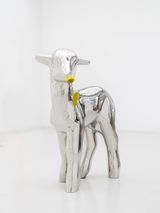
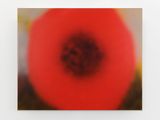
Imagination · Begegnung · Asombro invites us to reconsider the boundaries of the world we have come to take for granted. Through distinct media and visual languages, Hyungkoo Lee, Yves Scherer and Olga Esther explore relationships between life and the body, humans and nature, reality and imagination, and the individual and society. Their works unsettle familiar perceptions, establish unexpected affinities with what initially appears strange, and bring to light aspects of the world that might otherwise go unnoticed. Imagination allows us to envision possibilities beyond the familiar, while encounters with different forms of existence open up new ways of seeing the world. In these moments, the familiar can reveal unexpected sources of wonder.
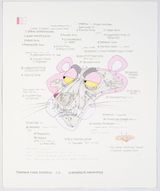
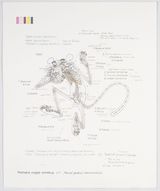
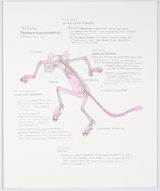
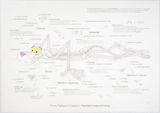
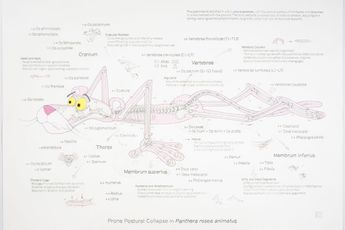
Hyungkoo Lee’s practice examines how life and the body are understood, defined and classified. Through his ANIMATUS series, the artist reconstructs fictional characters from animation and comics as anatomically structured beings, probing the boundaries between reality and fiction. The five drawings from the series Panthera rosea animatus, presented in this exhibition, extend this enquiry through the visual language of scientific documentation. Executed in pencil and acrylic on paper, they depict pink animal forms alongside anatomical structures, annotations and records. Their compositions recall anatomical illustrations and natural history specimens, as though documenting an actual species under scientific investigation.
By adopting the conventions of scientific observation and documentation, Lee lends physical form and internal order to an imagined being. The meticulous rendering of anatomical details and the arrangement of elements resembling scientific records give these creatures the appearance of actual organisms. The act of documenting an imaginary species as though it were real calls into question the criteria by which we distinguish the possible from the impossible, and the real from the imagined.
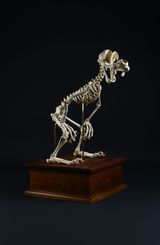
Ridicularis, also included in the exhibition, extends this enquiry from the two-dimensional image into three-dimensional space. Constructed from resin, aluminium rods, stainless steel wire, springs, oil paint and brass components, the sculpture reveals an intricate structure reminiscent of an animal skeleton. Its slender lines and articulated elements suggest the internal framework of a living body, evoking an anatomical specimen belonging to a creature that might once have existed.
Where the drawings resemble entries in an illustrated natural history catalogue, the sculpture gives the imagined creature a physical presence in space. Through these distinct forms, Lee explores how an invented life form might acquire the material appearance of an actual organism. His work ultimately raises a fundamental question: what does it mean to exist, and through what conditions do we recognise something as living?
Across ANIMATUS, Lee moves between reality and fiction, endowing imagined beings with anatomical structures and physical substance. By reconstructing creatures that have never existed as though they were once living organisms, he invites us to reconsider the systems of scientific knowledge and classification through which we make sense of the world. What constitutes evidence of existence, and how are the things we accept as true established through observation and interpretation?
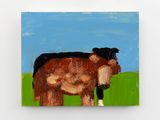
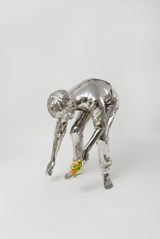
Yves Scherer turns his attention to the world around us, capturing the relationships that emerge between its diverse forms of life and matter. Human figures, animals, flowers, landscapes and everyday objects occupy his works, assuming different configurations across painting, sculpture and other media. Each retains its own character and presence, while their coexistence gives rise to unexpected visual relationships. Rather than treating the human and natural worlds as separate domains, Scherer brings them into a shared visual space, inviting us to reconsider our own place within it. Familiar subjects acquire new associations, drawing attention to the beings and objects that might otherwise pass unnoticed.
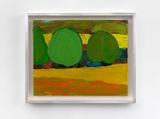
This sensibility is evident in the pastoral landscapes of Pleasures and Days and the floral imagery of Chappella and Flowers. Nature emerges as a presence in its own right, each form sustaining its particular character and rhythm of life. Through rich colours and delicately rendered forms, Scherer evokes personal memories and sensory associations, allowing the natural world to be encountered anew. His works suggest that attending to the diverse forms of life and matter around us offers another way of understanding our surroundings. They also quietly remind us that we, too, belong to this shared environment.
Olga Esther revisits narratives accumulated through mythology, fairy tales and popular culture. Passed down and retold across generations, these stories carry assumptions about beauty, morality and the social roles a given society regards as desirable. The figures who are to be rescued and those who perform the act of rescue, the positions of protagonists and supporting characters, and the standards by which beauty and goodness are defined all appear to have been established as a matter of course. Yet who determines these roles, and whose values do they uphold?
Drawing on familiar fairy-tale imagery and fantastical scenes, Esther re-examines the conventions embedded within these narratives. By approaching their characters and situations from alternative perspectives, she unsettles established roles and expectations, prompting us to question long-held assumptions about beauty and identity. Figures traditionally relegated to the margins come into focus, while seemingly fixed relationships give way to other possibilities. Imagination becomes a means of challenging the rules of a world that appears already determined, opening familiar narratives to new interpretations. To reread these stories is to reconsider whom we place at the centre and whom we leave at the periphery, revealing that the structures through which we understand the world need not remain as they are.
Although the three artists approach their subjects through distinct visual languages, their practices converge in a shared impulse to question what we have come to accept as given. Lee gives imagined life forms the anatomical structures of actual organisms, challenging the criteria through which existence is recognised. Scherer reveals the diversity of the world through the coexistence of humans, nature and objects. Esther revisits familiar narratives to expose the social conventions and values embedded within them. Each, in a different way, unsettles established perceptions and opens up possibilities beyond familiar ways of seeing.
To understand something is often to name it, assign meaning to it and situate it within the framework of what we already know. Yet not every form of existence or experience can be fully accounted for by established criteria. Forms that resist familiar systems of knowledge, encounters with beings that defy expectation, and unfamiliar dimensions within stories long taken for granted all introduce fissures into the world we believe we know. Such fissures are not simply disruptions; they mark the beginning of an encounter with possibilities beyond the limits of our existing understanding.
Imagination extends beyond the capacity to picture what does not yet exist; it allows us to envision familiar realities otherwise. Encounter involves more than looking at what differs from ourselves. It means recognising differences and remaining open to the relationships that may emerge from it. Wonder arises when the familiar ceases to appear self-evident, revealing meanings and possibilities that had previously escaped our attention. These are not separate experiences, but interconnected ways of engaging with and understanding the world anew.
Imagination · Begegnung · Asombro offers no single answer to how the world should be understood. Instead, it invites us to suspend familiar judgements and remain attentive to the unfamiliar forms, narratives and relationships that emerge between different ways of being. Perhaps one of the most distinctive experiences art can offer is not simply the revelation of an unfamiliar world, but the opportunity to encounter, with renewed eyes, the world we have been looking at all along.


Tang Contemporary Art was established in 1997 in Bangkok, and now institutes over 48,000 square feet of gallery spaces in Bangkok, Beijing, Hong Kong, and Seoul. The gallery has also recently opened its headquarters space in Beijing, covering a building of 6 storeys. Tang Contemporary Art is fully committed to curating critical projects and exhibitions, as well as collaborating with other art museums and institutions, to promote Chinese contemporary art regionally and worldwide, and encourage a dynamic exchange between Chinese artists and those abroad.

A respected voice in contemporary art discourse.
Focusing on ambitious storytelling and insightful art-world commentary. Ocula Magazine publishes in-depth interviews, critical essays and timely analysis on the artists, exhibitions and ideas driving the global art world.
Learn more about Ocula Magazine
Showcasing the best of the art world.
Ocula partners with galleries from around the world to highlight their artists, artworks and exhibitions. Gallery membership is by application and invitation, with each member vetted by an independent panel.
Learn more about Ocula Membership

Specialises in the sale of major artworks.
Led by a team with deep ties to the world’s leading auction houses, galleries and collectors. Ocula’s advisory team offers bespoke services to high-net-worth clients from around the world who are looking to acquire the best of contemporary and modern art.
Learn more about our team and services